American neo-Nazi Robert Rundo’s six-year “battle with the feds”—a fight that spans two dismissals, three appellate reversals, and an extradition and deportation from at least two countries—concludes today with his sentencing to federal prison for attacking ideological opponents at political rallies across California in 2017.
Along with several members of the Rise Above Movement, a fight club-cum-street gang Rundo cofounded with fellow extremist Ben Daley in Southern California during the peak of the alt-right movement, Rundo was convicted on 2018 charges of conspiracy to violate the federal Anti-Riot Act for training and planning a series of attacks on political opponents at rallies across California and Unite the Right in Virginia the year prior. While Rundo may be locked behind bars for years, the movement he created is running wild around the globe.
In the interceding years since his initial arrest, indictment, imprisonment, and flight from the US after his case was initially dismissed in 2019, Rundo helped mastermind an international network of RAM clones known as “Active Clubs.” A transnational alliance of far-right fight clubs that closely overlap with skinhead gangs and neofascist political movements in North America, Europe, the Antipodes, and South America, the Active Club network is proliferating internationally. There are dozens of Active Clubs in the United States, United Kingdom, Ireland, France, Germany, Holland, Scandinavia, Australia, and Colombia, according to the groups’ presence on Telegram and extremism researchers.
Seemingly harmless from the outside, Active Clubs are small groups of young men who go on hikes, train in combat sports, weight-lift, and build camaraderie—all part of the Rise Above Movement’s original program. But the darkness is in the details: The groups’ membership often overlaps with other extremist organizations like Patriot Front, criminal skinhead groups like the Hammerskins, and other violent extremists in foreign nations. Some US-based Active Clubs are branching out into political intimidation and violence, like the Rise Above Movement before them.
“I definitely do believe that in the future there needs to be a mass movement, a mass organization, but when it comes for that, do you really want a bunch of guys coming strictly from the online world to come join a mass movement without having any experience or skills?” Rundo said in a video posted online shortly before his March 2023 arrest in Bucharest, Romania. “Active clubs are a great local way to start guys off as they come from the online world into the real world, to learn actual skills.”
Hannah Gais, a senior research analyst at the Southern Poverty Law Center who has long researched Rundo and his associates, says the Active Club model stands out for its low barrier to entry, emphasis on positive community building to draw new blood from outside of extremist circles, and a ready-made international network. “The model has really made it easier to facilitate those transnational connections,” Gais says. “If you’re not an organization, then you can network with whoever you want.”
India has approved its One Nation One Subscription (ONOS) scheme that aims to transform access to academic resources. It will provide access to nearly 13,000 journals from 30 international publishers to over 6300 central and state government-run higher education and R&D institutions in the country starting on 1 January 2025.
The government has allotted INR60 billion (£555 million) to the scheme over the next three years which will also be used to create a digital access platform to be coordinated by the Information and Library Network (INFLIBNET). Publishers that have signed up include Spring Nature, Elsevier and the American Chemical Society.
In a press conference led by Ajay Kumar Sood, the government’s principal scientific adviser (PSA) highlighted that the One Nation scheme will improve access to academic resources. The first phase of ONOS is expected to increase the number of users of online journals, including students, faculty and researchers, from 5.7 million to 17.8 million. In the second phase ONOS will be expanded to private institutions via a public–private partnership.
‘We firmly believe in the power of equitable access to knowledge to drive societal progress and innovation,’ Venkatesh Sarvasiddhi, managing director, Springer Nature India, one of the publishers included in the scheme, told Chemistry World. ‘The ONOS initiative represents a positive step in democratising access to high-quality scientific literature and fostering a culture of research and discovery across India.’
Eldho Mathews, programme officer at the Kerala State Higher Education Council, highlighted the benefits of a centralised system. In the past, Indian universities had access to journals through INFLIBNET funded by the government. When the service was discontinued many universities were forced to take on individual subscriptions, creating a significant financial strain.‘The new system is substantially more economical than purchasing individual journal subscriptions for Indian academic and research institutions, offering a more streamlined and cost-effective approach to accessing scholarly literature,’ added Mathews.
However, Muthu Madhan, a visiting scholar at the DST Centre for Policy Research at the Indian Institute of Science, has a different take. He believes that ONOS may result in higher expenses while offering little value in return.
In an article, Madhan mentioned that negotiating with for-profit journal publishers, whether alone or as a group, usually ends in the publishers’ favour. ‘The justification for the cost increase [that]“more will have access” is unconvincing and merely echoes a flimsy reason used by publishers to defend higher fees,’ wrote Mandhan citing a statement made by Devika Madalli from INFLIBNET. Madalli explained that ONOS, while expanding access to scholarly articles, will not save the government money, adding that expenditure on journals would double.
ONOS was first proposed by former PSA K Vijay Raghavan in 2020. Rahul Siddharthan, a computational biologist who attended the 2019 meeting on ONOS organised by the former PSA, said that this initiative could benefit government and state organisations that can’t afford international publications. However, he pointed out that the 2024 ONOS announcement didn’t touch on article processing charges (APC) levied for publishing a paper in a journal. Siddharthan believes that addressing APCs should be a priority as they can create a significant barrier for Indian researchers seeking to publish in reputable journals. ‘Typically publishing is funded via your research grant,’ Siddharthan told Chemistry World. ‘And people in many fields don’t have research grants and, even if they do, it might not cover that cost in India. And these journals started off by saying they would waive these charges for those who can’t pay, but in practice they often refuse.’
In a 10 December press conference, the office of the PSA said discounts on APCs will be provided for Indian authors as far as possible.
ArcticNet, a leading Network of Centres of Excellence in Canada, discusses the latest scientific priorities in Arctic research and how it is tackling these urgent climate challenges.
The Arctic has become a focal point for scientific inquiry as the effects of climate change increasingly reshape this unique and fragile region. Once seen as a distant frontier, the Arctic now plays a critical role in understanding global environmental shifts. Researchers from across disciplines are working together to uncover how the rapid warming in this area is influencing ecosystems, weather patterns, and human communities, not only in the far North but across the entire planet. With the Arctic warming at an unprecedented rate, the stakes for understanding these changes and developing sustainable solutions have never been higher.
Today’s scientific efforts in the Arctic extend far beyond documenting environmental changes. Researchers are also grappling with complex social, economic, and geopolitical issues. Indigenous communities, whose livelihoods and cultures are deeply intertwined with the land and sea, are among the first to experience the impacts of the shifting Arctic environment. Their traditional knowledge is crucial to gaining a full picture of the changes underway.
In this interview, Executive Director Dr. Christine Barnard and Scientific Director Dr. Philippe Archambault detail how ArcticNet is working to advance Arctic research, strengthen relationships with Indigenous communities, and cultivate the next generation of Arctic expertise.
What are some of the main scientific priorities for Arctic research today?
In my opinion, it’s certainly climate change with its all-encompassing and far-reaching impacts. The Arctic is warming four times faster than southern regions of the planet, so it acts as a sentinel for change.
What happens in the Arctic will likely happen years later in more southern latitudes. The impacts are far-reaching, including changing landscapes, infrastructure, sea ice levels, and sea ice duration. For instance, the time that the Arctic Ocean is covered with ice is decreasing. We also see changes in wildlife migration, species distribution, and zoonoses, which are diseases carried by wildlife. These changes impact ecosystems and communities that depend on wildlife. Everything in the North affects northern communities, whether it’s their ability to travel on sea ice for subsistence hunting or accessing hunting and gathering zones.
Climate change has huge impacts on landscapes, ecosystems, and geosystems. One example is thawing permafrost, which impacts natural landscapes. Permafrost is ground that has been frozen for several years, and when it starts to thaw, the landscape changes. This can lead to drainage, the creation of wetlands, or infrastructure challenges for anything built on permafrost. These landscape changes affect both natural and built environments, impacting ecosystems and people living on permafrost. This is a major issue that spans engineering innovations and community livelihoods. Sea ice dynamics are also changing, making sea ice pathways and the weather less predictable, which affects ship navigation and community safety on the ice. Terrestrial and marine species could also have their distribution modified due to climate change, bringing new realities to Northern communities.
Another critical issue is green energy sources for remote communities—how to provide sustainable energy in harsh climates with low maintenance requirements. Most of the Canadian North relies on biannual deliveries of fuel, which is unsustainable for both the environment and the communities. Addressing this disparity in services between the North and South is important, too. The scientific priorities are wide-ranging, from natural sciences and engineering to social and economic change and education, particularly with the increasing Inuit population.
Why is a multidisciplinary approach important for addressing Arctic research?
Complex questions require interconnected solutions. The effects of climate change in the Arctic are often cascading and compounding. The integration of different disciplines and knowledge systems is critical for addressing these priorities in a comprehensive way.
If you focus on just one aspect, you can miss key pieces of the puzzle. A multidisciplinary approach offers a holistic perspective, observing the system as a whole, rather than just one issue. Indigenous perspectives have always had this holistic approach to ecosystems, looking at the interconnectedness of elements within them. Science has traditionally been siloed by discipline, but now we’re embracing the idea that multiple disciplines are needed to fully address these complex systems, particularly in Arctic research.
ArcticNet funds projects that involve many thematic areas, one of which is the marine system. Over the last twenty years, one project has dedicated years to studying how climate change impacts ecosystem function and biodiversity in Arctic waters. However, some questions require a collaborative approach beyond the expertise of marine biology.
During the ArcticKelp project, a team utilized both modelling and fieldwork to suggest that retreating ice cover allows more sunlight to penetrate Arctic waters, enhancing the growth of macroalgae, such as kelp. These kelps offer numerous benefits, from carbon sequestration to serving as a traditional food and potential income source for local communities.
However, directly measuring and mapping the diversity of kelp along the remote and changing Canadian Arctic coast posed a significant challenge. To address this, the team needed to develop new sensor technology capable of operating in the icy depths of the Arctic Ocean and to incorporate local knowledge from Northern communities. This endeavour required the integration of various disciplines and expertise, including engineers, marine biologists, and members of Indigenous communities.
By combining these diverse fields and knowledge bases, the interdisciplinary team successfully developed a sensor using fluorescent LIDAR (light detection and ranging) technology. This sensor can identify, quantify, and characterize kelp species in the Arctic region. Additionally, leveraging local knowledge enabled them to cover more ground in the Arctic through collaboration with Northern communities. This interdisciplinary approach provides valuable insights into the ecology of ocean-floor kelp forests and the marine life that depends on them.
What are some of the challenges and benefits of multidisciplinary teams in Arctic research?
The challenges are immense, primarily because there’s a significant difference between students working in a lab in the South, within a university or research centre, and those working in the field. In Northern Canada, the territory is vast, open, and remote. We have multiple teams distributed across this expansive area, often in extremely harsh and complex conditions. On top of this, it’s essential to engage Indigenous peoples actively, ensuring their participation in the project. This involves recognizing and respecting their contributions and adhering to principles of co-development, particularly with Inuit communities. The National Inuit Strategy on Research (NISR), published by Inuit Tapiriit Kanatami (ITK), must be considered when conducting research with Inuit communities and in Inuit Nunangat (Inuit homelands). So, in addition to the harsh climate and difficult working conditions, how we conduct the research, especially in partnership with Indigenous peoples, is just as important.
Some researchers working in remote sites face significant logistical challenges, including the high cost and difficulty of accessing certain areas.
Specialized training is often required for students, such as polar bear safety, firearms handling, glacier navigation, and managing emotional distress in isolated environments. Students may also need training in emergency procedures, like helicopter evacuation or research vessel safety.
The range of skills students must acquire before heading into the field is staggering. This includes not only logistical and safety training, but also ethical training and cultural awareness when working with Indigenous communities. As mentioned earlier, fieldwork in the North is vastly different from lab work in the South—not only due to the harsh environmental conditions but also the cultural sensitivity required for collaboration, training, and co-development with Indigenous peoples.
Moreover, when working with Indigenous communities, researchers need to acknowledge that their research priorities may not align with those of the community. It’s crucial to respect the community’s agenda and be prepared for it to change upon arrival, as local emergencies or other priorities may take precedence. Researchers, often pressured by their own project timelines, must adapt to the community’s pace.
When working with an Indigenous community, you’re engaging with a different reality. The need for adaptation can be challenging, especially if you’re not well-prepared or fully aware of the community’s activities. For instance, during hunting season, many community members may leave, creating a mass exodus from the area.
These are just some of the factors that make Arctic research complex yet special and unique. Beyond training and cultural awareness, there are also various permits and licensing requirements in Canada, which can be somewhat complicated. In some parts of Nunavut, depending on whether you’re working in a provincial or national park, you may need to fill out multiple permits months in advance of your fieldwork. This is another hurdle to plan for.
How does inclusive research contribute to a more holistic understanding of the Arctic?
Inclusive research means including different age groups, nationalities, and, most importantly, Indigenous participants. At ArcticNet, team composition is critical—we aim for diversity in our research teams, including early career researchers, Indigenous researchers, and women, ensuring gender parity. Over the years, we’ve seen that increased diversity leads to more productive and diverse perspectives in research outcomes.
In terms of Indigenous knowledge, there’s a focus on blending traditional knowledge with scientific innovation. Indigenous knowledge offers valuable insights into ecosystems that are often overlooked in scientific studies. Incorporating these perspectives leads to a more comprehensive understanding of the Arctic’s complexities.
How does ArcticNet facilitate collaboration between national and international researchers?
We believe we offer a wide range of opportunities for collaboration. One of our key strengths is our workshops and meetings, which provide excellent platforms for networking and knowledge sharing. Every December, we host a large annual meeting with over 1,500 participants, of which more than 30% are northerners—people from the North who come to meet researchers and share their own findings. Additionally, many international participants from outside Canada join these meetings, further expanding the networking possibilities.
We also collaborate on joint funding initiatives, particularly for graduate students. We co-fund students across different countries and facilitate information sharing through webinars. For example, we started hosting joint webinars with networks in Iceland, Ireland, and Scotland to ensure that knowledge and research on the Arctic, including the realities of conducting Arctic research, are shared across borders. This international networking helps share best practices, increase reach, and promotes knowledge mobilization.
Next year, we will also fund Canadian experts—both Indigenous and academic—to participate in Arctic Council working groups. Supporting our experts in this way is critical because it enables them to contribute the knowledge developed in Canada while also bringing back valuable insights from international collaborations.
Overall, these activities—including networking, knowledge mobilization, and sharing best practices—are ways our network can contribute to both national and international collaborations. It’s a win-win, as we facilitate exchanges of knowledge and expertise across borders.
How do you act as a bridge between Western scientific knowledge and Indigenous knowledge?
We think it’s still a challenge because the way data and knowledge are captured can be so different. It’s about how you convey that knowledge and how you adapt it. For scientific knowledge, our ‘bread and butter’ is peer-reviewed articles. That’s what we live by, and it’s how scientists are evaluated. But, such scientific publications are less directly impactful to Indigenous experts and communities. So, how do you bridge that gap?
We do this by exploring different knowledge mobilization opportunities and ways of sharing knowledge, crossing bridges between those different systems. Including Indigenous researchers as authors or co-authors in scientific articles is crucial to ensure their perspectives are captured in a meaningful, scientific way. Also, using diverse media, art, and methods of sharing beyond scientific publications is important.
For example, we’re finding really creative ways to communicate scientific results to communities, such as through art, media, or cartoons, and it’s working quite well. Integrating Indigenous knowledge into research is essential. Researchers need to hear from local communities about where they think the best sampling sites are for wildlife, ice, or sediment types. We’ve found that when researchers engage with communities, they gain far more information than what’s available in journals or government publications.
Do you have examples where Indigenous knowledge has really enhanced a project?
A permafrost research project comes to mind where geomorphologists had mapped out areas for research based on aerial photos, but when they consulted with the local community, the community pointed out slumping areas and water accumulation zones that the researchers hadn’t identified. This boots-on-the-ground knowledge was critical and greatly complemented the research.
What strategies does ArcticNet use to train and support its highly qualified personnel and researchers?
We focus on training and funding, as well as fostering opportunities for students and early-career scientists to participate in decision-making. We have early-career scientists on our research management committees and board of directors, ensuring they are part of the entire research process. This provides a unique opportunity for them to grow within the research ecosystem, from fieldwork to supporting the management research networks.
Our students are the next Arctic leaders and researchers. We encourage them to take advantage of networking opportunities because the Arctic research community is relatively small, and it’s essential to build connections early. ArcticNet is like a family; even though it’s made up of hundreds of people, there’s a strong sense of connectedness and belonging.
What do you see as the most significant opportunities for Arctic research in the coming years?
One of the biggest opportunities—and challenges—is making a clearer connection between scientific knowledge and Indigenous knowledge. We’ve made progress, but we still have work to do. Achieving a perfect partnership and integration of these knowledge systems would help us better understand the changes happening in the Arctic.
It’s important to note that different countries are at different stages in recognizing the importance of Indigenous participation. Canada is a world leader in this regard, and many look to us to learn how we include Indigenous voices and knowledge in our research.
One thing the book is particularly effective at is deflating the myth that these entrepreneurs were somehow gifted seers of (and investors in) a future the rest of us simply couldn’t comprehend or predict.
Sure, someone like Thiel made what turned out to be a savvy investment in Facebook early on, but he also made some very costly mistakes with that stake. As Lalka points out, Thiel’s Founders Fund dumped tens of millions of shares shortly after Facebook went public, and Thiel himself went from owning 2.5% of the company in 2012 to 0.000004% less than a decade later (around the same time Facebook hit its trillion-dollar valuation). Throw in his objectively terrible wagers in 2008, 2009, and beyond, when he effectively shorted what turned out to be one of the longest bull markets in world history, and you get the impression he’s less oracle and more ideologue who happened to take some big risks that paid off.
One of Lalka’s favorite mantras throughout The Venture Alchemists is that “words matter.” Indeed, he uses a lot of these entrepreneurs’ own words to expose their hypocrisy, bullying, juvenile contrarianism, casual racism, and—yes—outright greed and self-interest. It is not a flattering picture, to say the least.
Unfortunately, instead of simply letting those words and deeds speak for themselves, Lalka often feels the need to interject with his own, frequently enjoining readers against finger-pointing or judging these men too harshly even after he’s chronicled their many transgressions. Whether this is done to try to convey some sense of objectivity or simply to remind readers that these entrepreneurs are complex and complicated men making difficult decisions, it doesn’t work. At all.
For one thing, Lalka clearly has his own strong opinions about the behavior of these entrepreneurs—opinions he doesn’t try to disguise. At one point in the book he suggests that Kalanick’s alpha-male, dominance-at-any-cost approach to running Uber is “almost, but not quite” like rape, which is maybe not the comparison you’d make if you wanted to seem like an arbiter of impartiality. And if he truly wants readers to come to a different conclusion about these men, he certainly doesn’t provide many reasons for doing so. Simply telling us to “judge less, and discern more” seems worse than a cop-out. It comes across as “almost, but not quite” like victim-blaming—as if we’re somehow just as culpable as they are for using their platforms and buying into their self-mythologizing.
“In many ways, Silicon Valley has become the antithesis of what its early pioneers set out to be.”
Marietje Schaake
Equally frustrating is the crescendo of empty platitudes that ends the book. “The technologies of the future must be pursued thoughtfully, ethically, and cautiously,” Lalka says after spending 313 pages showing readers how these entrepreneurs have willfully ignored all three adverbs. What they’ve built instead are massive wealth-creation machines that divide, distract, and spy on us. Maybe it’s just me, but that kind of behavior seems ripe not only for judgment, but also for action.
So what exactly do you do with a group of men seemingly incapable of serious self-reflection—men who believe unequivocally in their own greatness and who are comfortable making decisions on behalf of hundreds of millions of people who did not elect them, and who do not necessarily share their values?
You regulate them, of course. Or at least you regulate the companies they run and fund. In Marietje Schaake’s The Tech Coup, readers are presented with a road map for how such regulation might take shape, along with an eye-opening account of just how much power has already been ceded to these corporations over the past 20 years.
PELSA allows for systematic analysis of ligand-binding proteins, their binding sites, and local binding affinities in cell lysate. Credit: LI Kejia
In a study published in Nature Methods, a research group developed a highly sensitive proteomics method called peptide-centric local stability assay (PELSA), which enables the simultaneous identification of ligand-binding proteins and their binding sites in complex systems. PELSA is broadly applicable to diverse ligands including metabolites, drugs, and pollutants.
The biochemical functions of proteins invariably involve interactions with ligands of some type, which act as enzyme substrates or inhibitors, signaling molecules, allosteric modulators, structural anchors, etc. Monitoring protein-ligand interactions is thus essential for characterizing proteins with unknown functions, for investigating regulatory mechanisms in cell metabolism, and for elucidating drug mechanisms of action. Knowledge of the ligand-binding regions is also extremely valuable for structure-based drug design and biological hypothesis generation.
Traditional methods for determining binding sites and affinities typically require the purification of recombinant proteins, which can be both time-consuming and labor-intensive. In addition, purified proteins may not fully replicate their native cellular state, resulting in inaccurate affinity measurements.
Modification-based proteomics methods offer a powerful solution for identifying ligand-binding proteins and their sites directly in native cellular lysates. However, they often require ligand modification, which can affect ligand activity and cannot be applicable to ligands that cannot be modified.
In the method proposed in this study, the researchers led by Prof. Ye Mingliang from the Dalian Institute of Chemical Physics of the Chinese Academy of Sciences (CAS), collaborating with Prof. Luo Cheng’s group from the Shanghai Institute of Materia Medica of CAS, used a large amount of trypsin (E/S ratio of 1:2) to directly generate small peptides from native proteins.
As these peptides are generated under native conditions, their abundance represents a measurement of proteins’ local stability. The large amount of trypsin ensured that even protein segments in low energy states could be cleaved, resulting in the generation of a large number of peptides reflecting a protein’s local stability.
These peptides were separated from the partially-digested proteins, collected and directly analyzed by mass spectrometry. By measuring the peptide abundance in ligand-treated and vehicle-treated samples, the ligand-binding regions and the corresponding binding proteins can then be determined.
PELSA has showed superior sensitivity in target protein identifications. For example, in identifying the target proteins of a pan-kinase inhibitor staurosporine, PELSA showed a 12-fold increase in kinase target identification compared to the state-of-art modification-free method, LiP-MS.
Compared to the widely-used thermal proteome profiling (TPP) technique, which lacks binding site information, PELSA identified 2.4-fold more kinase targets. Dose-dependent PELSA experiments can measure local affinity, providing insights into the dynamic protein structural changes upon ligand binding under physiological conditions.
Metabolites, known for their structural diversity and often low-affinity binding to proteins, pose challenges. PELSA proved particularly effective for the systematic identification of metabolite-binding proteins.
Discover the latest in science, tech, and space with over 100,000 subscribers who rely on Phys.org for daily insights.
Sign up for our free newsletter and get updates on breakthroughs,
innovations, and research that matter—daily or weekly.
For example, PELSA identified 40 candidate target proteins for alpha-ketoglutarate in HeLa cell lysates, 30 of which were well-known binding proteins of alpha-ketoglutarate, demonstrating the method’s high sensitivity and reliability. In addition, PELSA identified binding proteins for other metabolites, such as folate, leucine, fumarate, and succinate, showcasing its broad applicability.
PELSA can directly detect ligand-induced local stability shifts of proteins in total cell lysate without the need for chemical modification of ligands.
It is broadly applicable to diverse ligands, and allows for systematic analysis of ligand-binding proteins, their binding sites, and local binding affinities in cell lysate, where proteins carry physiological post-translational modifications and are associated with interacting proteins.
More information:
Kejia Li et al, A peptide-centric local stability assay enables proteome-scale identification of the protein targets and binding regions of diverse ligands, Nature Methods (2024). DOI: 10.1038/s41592-024-02553-7
Provided by
Chinese Academy of Sciences
Citation:
Proteomics method identifies ligand-binding proteins and binding sites in complex systems (2024, December 13)
retrieved 13 December 2024
from https://phys.org/news/2024-12-proteomics-method-ligand-proteins-sites.html
This document is subject to copyright. Apart from any fair dealing for the purpose of private study or research, no
part may be reproduced without the written permission. The content is provided for information purposes only.
Established in 2023, the LIFE Research Institute at the Technological University of the Shannon (TUS) is forging a series of bioscience research and technological innovations for the health and wellbeing of people and the planet.
Biological sciences lie at the heart of many essential aspects of society, from health, sport, agriculture, food, sanitation, and ecosystem preservation to the latest medical advances and being prepared for future pandemics.
For the first time in history, humanity has been able to control and implement science and technological developments with the power to meet global challenges. Bioscience innovations can supersede many conventional resources depleting polluting materials and processes. This progress coincides with increasing business and consumer demand and adoption of green technologies, which is driving an unprecedented need for advanced, high-performance biotechnologies and biomaterials.
At LIFE RI, we work in tandem with nature, with expert understanding and talent in harnessing relationships between the microstructure of biomaterials and their macroscopic functions to deliver key solutions that enable performance enhancement and meet health and environmental challenges.
Healthy sustainable society
The sustainable health and wellbeing of our global community and our environment are essential for the prosperity of our populations. Achieving healthy ecosystems means embracing new biotechnologies and bio-regenerative resources that benefit both the planet and humanity.
LIFE RI’s expertise in human nutrition, microbial science, food product innovation, and medicinal biologics drives groundbreaking solutions within bio-inspired circular economic models. By merging scientific advancements, industry collaboration, and public engagement, we promote adopting new bioprocessing methods that support sustainable, circular industrial practices and equip citizens for a healthy, sustainable future.
Sport and exercise promotion for optimal health and wellbeing
The SHE Research Centre is at the forefront of addressing the gender data gap in sport, health, and exercise science. Focusing on society’s least active members, particularly girls and women, the Centre develops evidence-based strategies to enhance physical activity, improve health outcomes, and optimise athletic performance. This work is essential for improving population health and wellness while promoting equity in sports experiences.
Current projects include analysing the sex-specific experiences of female athletes to improve health and performance, creating an innovative hydrogel for bioactive nutrient delivery with a focus on polyphenols, and assessing the impact of lifestyle interventions on childhood cancer survivors.
By tackling these critical challenges, the SHE Research Centre is paving the way for a healthier and more inclusive future.
National Bioeconomy Campus to bolster circularity for meat, agri-food and biomass sectors
This campus provides a means to bridge the gap between fundamental and early-stage applied biotransformation research, demonstration, and market implementation, leading to full industrial adoption.
Upscaling bioprocessing of complete bioresources, such as all left-over meat parts, to pilot level is being developed using best-practice methodologies to achieve processing circularity. Barriers, including the competitiveness of bio-based products and weak primary producer value chains, are being addressed to enable the transition to circular and sustainable models.
These demonstration projects will showcase Ireland’s response to the need for biobased process scaling and inspire others to undertake similar work. Bioprocessing.
BioWetlands in-action and visual archetype of the ‘bioeconomy’
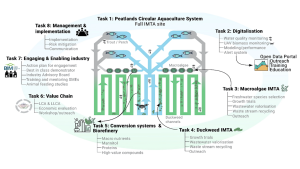
Aquatic plants have higher photosynthetic efficiencies than land-based biomass production. Performing as a circular peatland with integrated feeding and nutrition aquaculture, the Mount Lucas site showcases how environmentally friendly practices can operate, producing new feeds and food ingredients from cultivated duckweed and macroalgae, using agri-food waste streams.
This integrated-multitrophic aquaculture/aquatech (IMTA) site also facilitates renewable living organisms, such as perch and rainbow trout, which can be used to produce food and energy.
Plans are in place to establish a biorefinery and bioresource conversion systems for manufactured products spanning cosmetics, textiles, bio fertilisers/biostimulants, packaging, bio-oils, pharmaceuticals, biologics for high-value compounds and biofuels. Carbon sequestration using algae farming for carbon absorption from the atmosphere. Onsite wind turbines provide energy generation to power the onsite facilities, promoting a zero waste/energy approach.
New plastics circularity frontiers revealing routes to the circular plastics economy
Prototype Low-carbon, industrial-grade plastic packaging with circular lifecycles is being developed as a direct alternative to current polluting petroleum-based plastics.
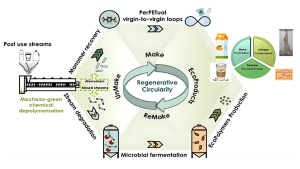
Akin to nature’s cycles, the new packaging operates within regenerative loops. Continuous Make-Unmake–Remake circularity enables fully circular life cycles where post-use ‘unmake’ is performed using in-house advanced fermentation, followed by ‘remaking’ within continuous loops. Advanced property features span processability, durability, mechanical performance, aesthetics, moisture and gas barrier properties, adhesivity and biodegradability).
For example, barrier properties include high gas barrier packaging equivalent to petrol-based Ethylene vinyl alcohol (EVOH) prototypes that can be used for pre-cooked foods, dairy, and meat products. Adhesive properties can be used for paper cups and plastic packaging sealant applications with equivalent performance to conventional synthetic adhesives.
Conventional petrochemical-based plastics can be replaced with lower production and disposal carbon footprint packaging, which prevents waste plastics pollution.
Transforming plastic waste: The Twinn4MicroUp project
The Twinn4MicroUp project is an ambitious initiative dedicated to tackling one of the world’s most pressing environmental challenges—plastic waste. With the active involvement of TUS, this project focuses on pioneering microbe-based solutions to upcycling plastic waste into valuable, sustainable bioproducts.
By leveraging advanced biotechnology, Twinn4MicroUp aims to reduce environmental pollution while creating economic opportunities through innovative reuse of plastic materials. The project is funded through the European Union’s Horizon Europe call, HORIZON-WIDERA-2023, which focuses on enhancing research and innovation capabilities across Europe.
TUS plays a pivotal role in driving research and fostering collaboration among international partners, ensuring cutting-edge advancements and real-world applicability. At its core, this project reimagines plastic waste as a resource, aligning science and sustainability to protect the planet for future generations.
Tackling plastic pollution through education: The ToyStories project
The ToyStories project, funded by the Irish Research Council, is an innovative initiative designed to raise awareness about plastic pollution and its impact on the environment by engaging over 400 children across Ireland in 2023.
The project targets young people aged 12-16 and uses interactive workshops and creative activities to educate participants about the dangers of plastic waste and the importance of sustainability. Students learn about the life cycle of plastics, the environmental consequences of mismanagement, and actionable solutions, fostering a deeper understanding of circularity and eco-friendly practices.
By working with schools in multiple Irish counties, ToyStories seeks to empower children to become environmental advocates and embrace sustainable behaviours. The project’s hands-on approach not only informs but inspires, encouraging young participants to think critically about their role in addressing global challenges like plastic pollution and climate change.
At LIFE RI, we collaborate with nature, leveraging expertise in bioscience technologies and integrating across a broad range of priority disciplines to deliver high-performance solutions that address pressing health and environmental challenges. The adoption and incorporation of new bioscience and technology innovations into everyday life pave the way to achieving better health and wellness for society while fostering a world that thrives in balance with nature.
Many children in the US seem to be using chatbots to help them with their schoolwork
Photononstop/Alamy
Seven in 10 secondary school students have used large language models (LLMs) for their studies, according to a survey of more than 300 US pupils.
“I realised that a lot of the people around me were using large language models, and more specifically ChatGPT, for a lot of school assignments,” says Tiffany Zhu, an 11th-grade student (equivalent to year 12 in the UK) at The Harker School in San Jose, California.
Started more than 50 years ago, data storage company Western Digital is one of the world’s largest computer hard disk drive manufacturers, and produces solid-state drives (SSDs) and flash memory devices. Western Digital makes all the essentials for home office and business digital storage, whether you want to back up via cloud storage, easily take your presentation on a USB flash drive to your next important meeting, or upgrade your home security surveillance’s storage system, Western Digital has what you need—and we have promo codes to help you save.
Get 10% Off With a Western Digital Coupon Code
Right now, you can save 10% on your first order when you sign up to receive emails from Western Digital. All you need to do is head to Western Digital’s promo page, where you’ll input your email to sign up for special offers, promotions, and that Western Digital promo code for 10% off. The code will be sent to your inbox where you can use it to save on tech essentials.
Does Western Digital Have Free Shipping?
Western Digital has even more ways to save, with free standard shipping on eligible orders of $50 or more for non-members. Western Digital members receive free standard shipping on all eligible orders in the lower 48.
Additional Western Digital Deals
Western Digital has education discounts, where students and teachers can get up to 15% off purchases after verifying their status with Youth Discount. Once their identity is verified, they’ll get a voucher code sent to their inbox to use at checkout. Western Digital also has a 15% discount for seniors 55 years or older. Seniors just need to verify their status with Senior Discount. Once age is verified, folks will get a Western Digital promo code sent to their email to save.
In a commitment to sustainability, Western Digital has a program with Easy Recycle, where you can safely dispose of NAS systems and internal or external HDDs and SSDs. (They’ll also recycle devices from any manufacturer, not just Western Digital). As a token of appreciation for participating in their initiative for a greener future, participants can get 15% off their next purchase of $50 or more.
Precisely modulating the reactivity of force-sensitive molecules—or mechanophores—could be useful for tuning the properties of functional materials, such as force-responsive polymers. However, current modulation strategies rely heavily on meticulously designing or significantly changing the actual mechanophore structure, a process that is often challenging, time-consuming, and typically requires reconstructing the molecules from scratch.
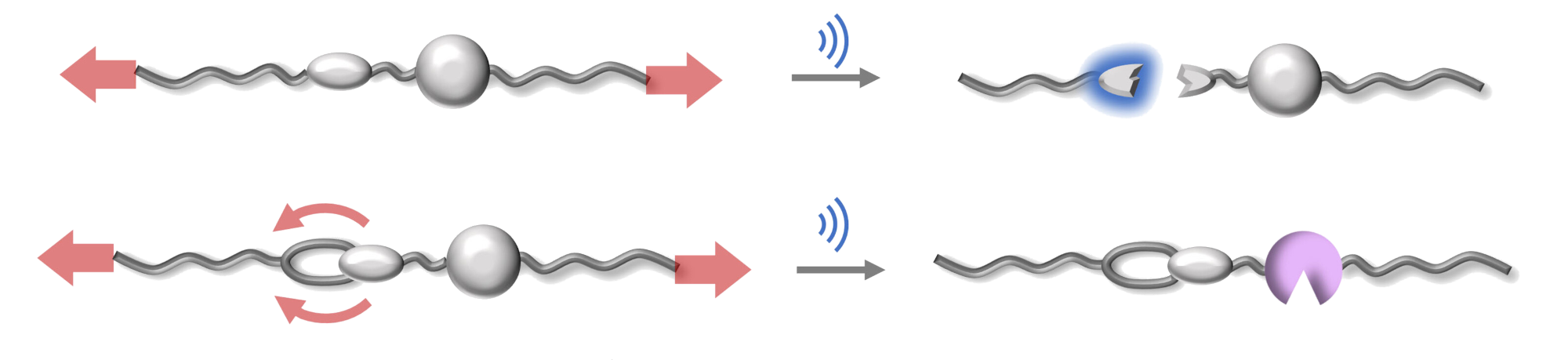
Hai Qian, Fudan University, Shanghai, China, and colleagues have developed a new “pulling strategy” to modulate the reactivity of a mechanophore, specifically an anthracene-maleimide adduct, by introducing a ring-shaped unit. In a “traditional” linear structure (pictured above on the left), long chains are attached to the mechanophore at a single point each. In the team’s modified cyclic structure (pictured above on the right), a ring-like structure is attached to two different atoms that are located on opposing sides of the anthracene’s central ring.
The researchers found that this new pulling strategy leads to a significant suppression of the mechanophore’s reactivity and activation efficiency, reducing them by approximately 92 % and 88 %, respectively, without needing extensive structural modifications.
To show that this strategy can also be used in multi-mechanophore systems, the team combined either a linear anthracene-maleimide mechanophore (pictured below in the first row) or a “cyclic” one (pictured below in the second row) with a spiropyran mechanophore, achieving hierarchical mechanochromism.
The resulting tandem systems provide different optical outputs because a different mechanophore is activated first: The anthracene-maleimide unit is broken first in the “linear” variant (pictured in blue), while the spiropyran is “pulled apart” and activated first in the system using the cyclic pull structure on the anthracene-maleimide adduct (pictured in purple). Overall, the work provides new possibilities for the development of advanced functional materials with complex responses to mechanical force.
Ferrocene could be useful in the development of molecular machines, in particular, “wheel-and-axle”-types of machines. The motion of such molecular machines can be controlled by external stimuli, e.g., by electrical signals. For ferrocene, a change in the relative conformation of its cyclopentadienyl rings, i.e., an internal rotation, can be caused by a redox reaction that changes the state of the iron center between Fe2+ and Fe3+. However, the sandwich complex has a tendency to decompose when deposited onto noble metal substrates, which makes it challenging to use in this context.
Masaki Horie, National Tsing Hua University, Hsinchu, Taiwan, Toyo Kazu Yamada, Chiba University, Japan, and colleagues have stabilized ferrocene on a Cu(111) surface by pre-coating the surface with a monolayer of a tetrabrominated crown ether and by linking the ferrocene to an ammonium group that acts as an anchor. The team used 4,4′,5,5′-tetrabromodibenzo[18]crown-6 ether for the monolayer coating and [ferrocenylmethyl(methyl)ammonium]+(PF6)− as the ammonium salt.
Using scanning tunneling microscopy (STM), the researchers found that the resulting ferrocene derivative performs a reversible lateral sliding motion on the surface (pictured) upon the application of an electrical voltage, i.e., it acts as a controllable molecular machine. This motion is caused by a change in the oxidation state of Fe, leading to twisting and sliding. Upon removing the applied voltage, the molecule returns to its original position, demonstrating that the motion is reversible and can be controlled using electrical signals. Overall, the work can provide useful information for the development of new nanomolecular devices using on-surface, bottom-up processes.