Category: Trending

  • Turns Out There’s One Animal Powerful Enough to Mess With Lions’ Feeding Habits

    Turns Out There’s One Animal Powerful Enough to Mess With Lions’ Feeding Habits

    [ad_1]

    In a stark example of how everything on our living planet is interconnected, one species of tiny, invasive insects has reduced lions’ abilities to feast on zebras.

    As we humans are causing so many different changes to our environment all at once, it’s not always easy to pin the consequence on the disturbance that produced it.

    So University of Wyoming zoologist Douglas Kamaru and colleagues performed a series of experiments to untangle the mess of species interactions on Kenya’s savanna to discover an outsized impact a mere ant is having on the ecosystem’s top predator.

    Invasive big-headed ants (Pheidole megacephala) have hitched a ride with us from a Pacific island to many continents, including Africa, likely travelling by potted plant.

    The researchers compared areas of the savannah that had been invaded by big-headed ants to places these ants had yet to reach. The untouched areas had substantially more tree cover.

    In the areas with less trees, lions (Panthera leo) had less cover from which to ambush zebras (Equus quagga) from, leading to almost three times as many zebras escaping from the big cat’s grasp.

    These kind of interdependencies that cross different levels of a food chain are called trophic cascades.

    There is some evidence lions may be switching to relying on other prey as a consequence, the researchers explain.

    As whistling thorn tree coverage declined, zebra kills by lions dropped from 67 to 42 percent, while buffalo kills rose from 0 to 42 percent between 2003 to 2020. But it’s too early to know the full ramifications of lions’ increasing difficulties hunting zebras.

    So how do ants impact tree coverage?

    The connections are often hard to see, even in well-studied ecosystems, so we often don’t realize they’re there until we’ve hacked them apart and are met with the consequences.

    It turns out the trees missing from the invasive ants territory, the whistling thorn trees (Vachellia drepanolobium) have a mutually beneficial relationship with the local acacia ants (Crematogaster sp.). The trees provide the ants with food and shelter and in turn the ants aggressively protect the trees from their biggest predator: hungry elephants.

    But the invasive ants, who live underground, slaughter the native species and feast on their eggs, larvae and pupae. So without the dissuasive stings of acacia ants on the whistling thorns, elephants are free to browse and break the trees up to seven times more in the invasive ants’ territory.

    “By controlling biophysical structure across landscapes, a tiny invader reconfigured predator-prey dynamics among iconic species,” the researchers explain in their paper.

    This demonstrates how critical species interactions do not necessarily always involve the food chain. Other kinds of relationships between species, like the symbiotic mutualism between ants and trees can be just as significant.

    These interdependencies are more important to understand than ever, seeing as the many disturbances we humans are creating are rapidly unraveling complex systems of interactions that form a functioning ecosystem – from relocating invasive species to the mere sound of our voices everywhere.

    “In an era characterized by rapid environmental change, such applied ecological research is critical to understand how disturbance alters ecosystem structure and function,” says University of British Columbia zoologist Kaitlyn Gaynor in an accompanying commentary on the paper.

    “Ultimately, the conservation of healthy ecosystems requires not only the prevention of species extinction but also the identification and preservation of the most important interactions among species.”

    This research was published in Science Advances.

    [ad_2]

    Source link

  • Simulations Reveal HIV’s Circus Trick For Invading The Nucleus of a Host’s Cell

    Simulations Reveal HIV’s Circus Trick For Invading The Nucleus of a Host’s Cell

    [ad_1]

    Scientists have made an important discovery in understanding how the Human Immunodeficiency Virus – better known as HIV – breaks into the nucleus of a cell, enabling it to replicate and spread.

    This process has been something of a mystery until now, and the research team from the University of Chicago says that their findings will help in understanding HIV and its impact on the body. Ultimately, it could lead to better treatments.

    To find out exactly how HIV invades a cell nucleus, simulations featuring thousands of proteins were run, looking at the HIV capsid (the capsule containing the virus material) and the cell’s nuclear pore complex; the mailbox-slot through which genetic information is sent and delivered.

    Cell simulations
    Numerous simulations were run to test cell interactions. The aqua pill-shaped object is a model of the HIV capsid, and the red and black objects are components of the nuclear pore complex. (Hudait and Voth, PNAS, 2024)

    “The pore complex is an incredible piece of machinery,” says theoretical chemist Gregory Voth from the University of Chicago. “It can’t let just anything into the nucleus of your cell, or you’d be in real trouble, but it’s got to let quite a bit of stuff in. Somehow, the HIV capsid has figured out how to sneak in.”

    “The problem is, we can’t watch it live: you have to go to heroic experimental efforts to even get a single, moment-in-time snapshot.”

    The simulations revealed that the HIV capsid wedges itself in, smallest end first, before applying what’s known as an electrostatic ratchet. The researchers compare it to a seatbelt in a car, getting tighter and tighter.

    Another key finding was that the flexibility and deformation of both the capsid and the pore are crucial in allowing the capsid through. The capsid develops regions of less ordered molecules in order to accommodate the extra pressure, and the researchers think this might explain their cone-like shape.

    Previously, researchers weren’t certain whether the capsid stayed fully intact as it squeezed through the pore complex. Having a better insight into what’s happening here will help in the study of cell interactions more generally.

    “I think this modeling also gives us a new way to understand how many things get into the nucleus, not just HIV,” says Voth.

    This is just one of several steps in the infection process, though is essential to the way HIV infection sustains itself in its host’s body. Being able to stop that would be a significant step forward in finding a full cure for the virus.

    Any treatment that somehow interrupts this sneaky ratcheting method would harm HIV’s chances of survival, and the researchers suggest there are potentially a number of ways to go about it.

    “For example, you could try to make the HIV capsid less elastic, which our data suggests would hamper its ability to get inside the nucleus,” says chemist Arpa Hudait, from the University of Chicago.

    The research has been published in PNAS.

    [ad_2]

    Source link

  • 6-Million-Year-Old Ape’s Ear Suggests We Learned to Walk Upright in 3 Steps

    6-Million-Year-Old Ape’s Ear Suggests We Learned to Walk Upright in 3 Steps

    [ad_1]

    From a four-limbed scramble to a two-legged amble – the knack for strutting our stuff on our hind limbs is one of the more obvious features distinguishing us humans and our ilk from great apes and earlier ancestors.

    Unfortunately physical evidence of the transition is scarce. With so many possible ways the process could have taken place, it’s hard to say with certainty how our anatomy and its mechanical functions evolved.

    A new study of an ancient ape’s inner ear suggests that the evolution of human bipedalism was not a sudden uprising, but a three-part process that bridged the gap between swinging in trees and standing on solid ground.

    This new evidence comes from skulls of Lufengpithecus, an ape that lived in East Asia around 6 million years ago.

    Some features of Lufengpithecus‘ teeth suggest it was a primitive ancestor of modern-day orangutans, which clamber about in tree canopies. However, other analyses of its skull place Lufengpithecus closer to African apes, such as gorillas and chimpanzees, known for their knuckle-walking.

    This in-betweenness makes Lufengpithecus an interesting ape to study when the patchiness of the fossil record has meant scientists haven’t been able to piece together the sequence of how early humans began to walk.

    For their new study, Yinan Zhang, a paleontology doctoral student at the Chinese Academy of Sciences, and colleagues peered inside Lufengpithecus‘ ear, which might seem like an odd place to look for evidence of how a long-extinct creature moved.

    Scientists have been clued into the vestibular system as a way to study how early humans and our relatives moved since at least 1994, when Dutch anatomist Fred Spoor and colleagues scanned the inner ear bones of more than 150 living and extinct primates.

    The vestibular system of the inner ear, with its three, looping semicircular canals, sends information to the brain about an animal’s position and motion in space. The canals are filled with fluid and fine hairs that sense movement, helping with balance.

    “The size and shape of the semicircular canals correlate with how mammals, including apes and humans, move around their environment,” explains Zhang, the first author of the study.

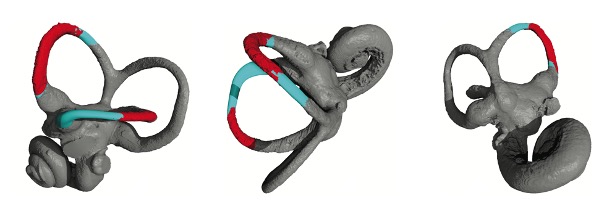
    Three images showing shape of an ancient ape's inner ear from different angles.
    The shape of Lufengpithecus‘ inner ear was reconstructed from CT scans. (Xijun Ni/Chinese Academy of Sciences)

    Zhang and colleagues digitally scanned three Lufengpithecus fossils excavated in southern China in the 1970s and 1980s, in which the bony labyrinths of the inner ear had been preserved when other parts of the skulls had been crushed.

    The inner ear’s bony labyrinth consists of three semicircular canals at one end, the spiral-shaped cochlea at the other, and the central vestibule in between.

    “Using modern imaging technologies, we were able to visualize the internal structure of fossil skulls and study the anatomical details of the semicircular canals to reveal how extinct mammals moved,” says Zhang.

    Comparing the size and shape of Lufengpithecus‘ inner ear to those of extinct and living apes, including humans, and early human ancestors such as Australopithecus, the researchers were able to piece together a clearer picture of how early human ancestors began to walk.

    “Our study points to a three-step evolution of human bipedalism,” explains Terry Harrison, senior author of the study and New York University anthropologist.

    Before Lufengpithecus, the earliest apes moved from branch to branch suspended by only their arms, like gibbons do today, Harrison says.

    Then, Lufengpithecus emerged, representing an intermediary figure who climbed, clambered, and swung through trees while also moving about on four limbs on the ground, and using two limbs when holding onto branches.

    The analysis suggests that Lufengpithecus closely resembled how the last common ancestor of apes and humans moved around, and it was from this mix of movements that human bipedalism eventually evolved.

    That conclusion fits well with previous findings that have also suggested bipedalism emerged gradually, with ancestors holding themselves steady on trees and branches as they slowly found their feet.

    “Even though humans generated bipedalism during their evolutionary history, we did come from a group of very unusual primates that developed unique ways of moving around their environment,” Harrison told Laura Baisas at Popular Science. “So we are an oddity.”

    The study has been published in The Innovation.

    [ad_2]

    Source link

  • US Is Dealing With an ‘Out-of-Control’ STI Epidemic

    US Is Dealing With an ‘Out-of-Control’ STI Epidemic

    [ad_1]

    The US is dealing with an “out-of-control” epidemic of sexually transmitted infections, according to the National Coalition of STD Directors.

    The warning comes after the release of an annual data report on STIs by the US Centers for Disease Control and Prevention (CDC).

    The exasperation of public health officials can be felt in the very first sentence of the online announcement.

    “Yet again,” the CDC website reads, “more than 2.5 million cases of chlamydia, gonorrhea, and syphilis were reported in the United States.”

    STI Annual Data
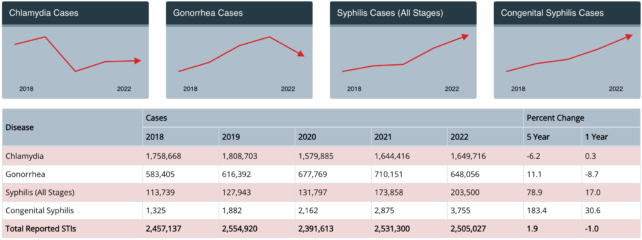
    Trends in annual reported STI cases from 2018 to 2022. (CDC)

    The most common STI in the US in 2022 was chlamydia, which has remained in the top spot for years now. Nevertheless, it is the recent rise in syphilis that is concerning health officials most.

    According to CDC data, syphilis cases of all stages have increased by 80 percent in the past five years.

    While most think of adults contracting STIs, syphilis threatens the lives of babies, too. When a child contracts syphilis from the mother during pregnancy or birth, it is known as congenital syphilis.

    In 2022, more than 3,700 of these cases were officially reported in the US. That’s a 937 percent increase in a single decade.

    The good news is that syphilis is curable with the right antibiotics. The bad news is that until the infection is diagnosed and treated, it can cause irreversible damage to the body. In babies, syphilis is particularly dangerous, sometimes causing developmental delays, seizures, or even death.

    In adults, syphilis is spread via vaginal, anal, or oral sex, and it tends to progress in stages. The primary stage usually involves sores around the mouth or genitals, while the secondary stage can trigger rashes on the body and flu-like symptoms, including fever, headache, sore throat, and fatigue.

    These first two stages are when the infection is most contagious. Rarely does the disease progress to the third stage, which can impact the organs and prove fatal.

    The fact that early stages of syphilis are increasing by roughly 10 percent a year is highly concerning, and threatens the health of babies nationwide.

    In just a single year, congenital syphilis cases have increased by 31 percent in the US. Black or African American children were disproportionately affected.

    While nearly every single state reported a case of congenital syphilis in 2022, the states of Texas, California, Arizona, Florida, and Louisiana represented 57 percent of all reports.

    “Tragically,” writes Laura Bachmann, the CDC Director for STD Prevention, “these infections resulted in 282 stillbirths and infant deaths in 2022.”

    Such dire outcomes are hardly inevitable. Timely syphilis testing and treatment during pregnancy could have prevented 88 percent of these cases, experts say.

    So why isn’t that happening?

    “The STI field has reached a tipping point,” Bachmann continues.

    “We have long known that these infections are common, but we have not faced such severe effects of syphilis in decades. Recent public health emergencies diverted program resources and threatened the health of those already disproportionately affected by STIs. We must move now to pick up the pieces.”

    Officials at the CDC are calling for “swift innovation and collaboration” from all public health experts who play a role in STI prevention.

    Their voices are already being joined by numerous health associations, including the National Association of County and City Health Officials (NACCHO), the American Sexual Health Association, the American Academy of Family Physicians, and the National Coalition of STD Directors (NCSDDC).

    “The CDC’s latest STI data shows that our nation is facing a rapidly deteriorating public health crisis with real lives at stake,” reads a statement from the NCSDDC.

    “STIs – especially syphilis – will continue to spiral out of control until the administration and Congress provide communities with the funding they need to provide the most basic screening, treatment, and prevention services.”

    While President Biden has put together a multi-agency plan to address America’s rising STI cases, funding for the endeavor remains uncertain.

    Last year, NCSDDC Director David Harvey warned that if President Biden continued to cut health funding overall, his gesture toward STI prevention will inevitably fail.

    “The Biden administration deserves praise for putting the spotlight on the most severe consequence of the nation’s STI epidemic – congenital syphilis,” reads the NCSDDC’s most recent announcement.

    “But we know all too well that federal leadership will prove hollow if communities don’t have the funding they need to get the job done.”

    [ad_2]

    Source link

  • Measles Cases Soaring Worldwide as WHO Reports Alarming 45-Fold Rise in Europe

    Measles Cases Soaring Worldwide as WHO Reports Alarming 45-Fold Rise in Europe

    [ad_1]

    In recent weeks a series of measles alerts have been issued around Australia, including in New South Wales, Victoria and Queensland, after the identification of a small number of cases in travellers returning from overseas.

    Meanwhile, places such as the United States and the United Kingdom have been contending with larger measles outbreaks.

    In fact, the World Health Organization reported a 45-fold increase in measles cases in Europe last year, with 42,200 cases recorded in 2023 compared to 941 in 2022.

    In South Asia, India and Pakistan have also recently reported outbreaks.

    So what’s the risk of a larger outbreak in Australia? Fortunately it’s likely to be quite low – but ensuring we continue to have high rates of vaccination coverage is crucial.

    Remind me – what is measles?

    Measles is a highly infectious viral disease. It spreads through tiny droplets when an infected person coughs or sneezes. Measles is so contagious that if one infected person comes into contact with ten unvaccinated people, they can infect nine of them.

    It can take around ten to 12 days for symptoms to appear after a person has been exposed to the virus.

    Although measles is characterised by a rash, symptoms are generally cold-like to begin with, including a fever, runny nose, fatigue, and sore or red eyes. The rash, which is not itchy, emerges two or three days later and spreads from the face down the body.

    Sometimes measles can lead to secondary infections such as an ear infection, diarrhoea or pneumonia. In rare cases measles can cause encephalitis (inflammation of the brain).

    In severe cases measles can lead to hospitalisation and death. We saw this in 2019 in the Pacific Island nation of Samoa. Out of 5,667 infections in a four-month period, 81 died, mostly young children.

    Vaccination works

    Vaccination is the most effective strategy to protect against measles. Two doses of the MMR vaccine (given to children at 12 months and 18 months in Australia) provide protection against measles, mumps and rubella.

    Babies under one year have natural protection from their mums that wears off gradually. Infants six to 11 months can be vaccinated if they will be travelling internationally, but will still need to take a further two doses.

    Once vaccinated, the chance of getting measles is very low and you are considered protected for life.

    However, about one in 100 people who are vaccinated may still contract measles if they’re exposed to the virus. Although it’s not entirely clear why this happens, the infection in a vaccinated person is generally mild.

    Vaccination rates are faltering

    Globally, there has been a drop in childhood vaccinations over the course of the COVID pandemic. This is likely due to a range of factors including declining trust in vaccines, misinformation and disruptions to access.

    In Europe, the proportion of children who received a first dose of the MMR vaccine dropped from 96% in 2019 to 93% in 2022, and from 93% to 91% for the second dose.

    This is important because about 95% vaccination coverage is needed to achieve herd immunity against measles. Under this scenario, those who are not vaccinated will be protected because the virus won’t spread.

    In the UK, health authorities have expressed alarm at the number of children who have not been vaccinated, with reports up to almost half of children in parts of London have not received both shots.

    As of September 2023, the Australian government reported immunisation rates across all childhood vaccinations of 93.26% for one-year-olds, 91.22% for two-year-olds, and 94.04% for five-year-olds. There are slight disparities between different states and territories and among some population groups.

    Boosting vaccination coverage

    While we appear to be quite close to the herd immunity threshold for measles and not in immediate danger of an outbreak, we still need to be vigilant.

    Australia has an excellent outbreak surveillance in place in all states for infectious diseases including measles. But outbreaks are occurring globally, and are liable to take hold when people are unvaccinated or under-vaccinated.

    So we need to be alert in all states, increase surveillance at international transit points, and continue to increase immunisation coverage, especially among young children. Educating parents and the wider community about the importance of MMR vaccines is key.

    It’s never too late to be vaccinated against measles if you missed out as a child, or are unsure if you’ve had two doses. As a single infected traveller can cause an outbreak, vaccination is particularly important if you travel frequently.

    If you’re unsure of your vaccination status, you can ask your GP or check your own or your children’s record through the Australian Immunisation Register.

    If you suspect you or someone in your family is infected it’s important to stay isolated and contact your doctor. They will confirm the infection by referring you for a blood test and possibly a RT-PCR test.

    Jaya Dantas, Deputy Chair, Academic Board; Dean International, Faculty of Health Sciences and Professor of International Health, Curtin University

    This article is republished from The Conversation under a Creative Commons license. Read the original article.

    [ad_2]

    Source link

  • Financial Stress Could Impact Your Health More Than Grief, Study Finds

    Financial Stress Could Impact Your Health More Than Grief, Study Finds

    [ad_1]

    Financial strain can impact far more than just a person’s mental health.

    A nationally representative study from the United Kingdom has found evidence that stress over money is tied to long-term changes in key health markers, including those associated with the immune system, the nervous system, and the hormonal system.

    Scientists at University College London (UCL) and Kings College in the UK say that their analysis is the first to explore how different types of chronic stress relate to markers of health in older cohorts.

    The data for the study included nearly 5,000 adults over the age of 50.

    Of all six common stressors examined in this cohort – including financial strain, caregiving, disability, bereavement, illness, and divorce – financial strain was associated with the riskiest health profiles in the long run.

    These risk profiles were established using four biomarkers in the blood: cortisol, which is a hormone produced in response to stress, C-reactive protein (CRP) and fibrinogen, which are immune players that respond to inflammation, and insulin-growth factor-1 (IGF-1), which is linked to aging and longevity.

    Participants in the study who reported being generally stressed were 61 percent more likely to belong to the high-risk category than the moderate- or low-risk categories at a four-year follow-up.

    People who were stressed by finances alone, however, were nearly 60 percent more likely to show a high-risk profile four years later.

    For every added stress, like divorce, that likelihood jumped by 19 percent.

    These associations remained significant irrespective of genetics, socioeconomics, age, sex, or lifestyle factors.

    “We found that financial stress was most detrimental to biological health, although more research is needed to establish this for certain,” says epidemiologist Odessa Hamilton from UCL.

    “This may be because this form of stress can invade many aspects of our lives, leading to family conflict, social exclusion, and even hunger or homelessness.”

    The results don’t necessarily mean that stress is directly causing long-term health issues, but it does suggest that stress has a significant impact on the aging body, and some forms of stress might have greater physical effects than others.

    Acute stress is known to trigger a cascade of hormonal changes in the body, which increase breathing, blood pressure, and heart rate. The immune system also responds by producing more pro-inflammatory molecules.

    This is why staying in an elevated state of stress can lead to chronic immune activation, which could exacerbate physical and mental sicknesses.

    “When the immune and neuroendocrine systems function well together, homeostasis is maintained and health is preserved,” explains Hamilton.

    “But chronic stress can disrupt this biological exchange and lead to disease.”

    In the current study, financial stress, bereavement, and longstanding illness showed the greatest long-term changes in immune and neuroendocrine biomarkers. This indicates an ongoing physical effect of chronic stress.

    Of course, four biomarkers are limited in what they can actually tell us about human health. In the current study, for instance, higher alcohol consumption (more than three drinks a week), was associated with a lower risk profile.

    This may be due to the fact that alcohol has anti-inflammatory effects, but it doesn’t necessarily mean increasing your drinking is beneficial for human health overall.

    The vast majority of participants included in the current analysis were White, which also limits what can be said of the associations, especially as ethnic groups tend to experience higher levels of stress overall.

    Nevertheless, researchers at UCL conclude that “the synergistic immune and neuroendocrine response to stress represents an important target for clinical intervention. Intervening on these processes could alter the course of disease.”

    The study was published in Brain, Behavior and Immunity.

    [ad_2]

    Source link

  • We Finally Know How Ancient Roman Concrete Was Able to Last Thousands of Years

    We Finally Know How Ancient Roman Concrete Was Able to Last Thousands of Years

    [ad_1]

    The ancient Romans were masters of building and engineering, perhaps most famously represented by the aqueducts. And those still functional marvels rely on a unique construction material: pozzolanic concrete, a spectacularly durable concrete that gave Roman structures their incredible strength.

    Even today, one of their structures – the Pantheon, still intact and nearly 2,000 years old – holds the record for the world’s largest dome of unreinforced concrete.

    The properties of this concrete have generally been attributed to its ingredients: pozzolana, a mix of volcanic ash – named after the Italian city of Pozzuoli, where a significant deposit of it can be found – and lime. When mixed with water, the two materials can react to produce strong concrete.

    But that, as it turns out, is not the whole story. In 2023, an international team of researchers led by the Massachusetts Institute of Technology (MIT) found that not only are the materials slightly different from what we may have thought, but the techniques used to mix them were also different.

    The smoking guns were small, white chunks of lime that can be found in what seems to be otherwise well-mixed concrete. The presence of these chunks had previously been attributed to poor mixing or materials, but that did not make sense to materials scientist Admir Masic of MIT.

    “The idea that the presence of these lime clasts was simply attributed to low quality control always bothered me,” Masic said back in January 2023.

    “If the Romans put so much effort into making an outstanding construction material, following all of the detailed recipes that had been optimized over the course of many centuries, why would they put so little effort into ensuring the production of a well-mixed final product? There has to be more to this story.”

    Masic and the team, led by MIT civil engineer Linda Seymour, carefully studied 2,000-year-old samples of Roman concrete from the archaeological site of Privernum in Italy. These samples were subjected to large-area scanning electron microscopy and energy-dispersive x-ray spectroscopy, powder X-ray diffraction, and confocal Raman imaging to gain a better understanding of the lime clasts.

    One of the questions in mind was the nature of the lime used. The standard understanding of pozzolanic concrete is that it uses slaked lime. First, limestone is heated at high temperatures to produce a highly reactive caustic powder called quicklime, or calcium oxide.

    Mixing quicklime with water produces slaked lime, or calcium hydroxide: a slightly less reactive, less caustic paste. According to theory, it was this slaked lime that ancient Romans mixed with the pozzolana.

    Based on the team’s analysis, the lime clasts in their samples are not consistent with this method. Rather, Roman concrete was probably made by mixing the quicklime directly with the pozzolana and water at extremely high temperatures, by itself or in addition to slaked lime, a process the team calls “hot mixing” that results in the lime clasts.

    “The benefits of hot mixing are twofold,” Masic said.

    “First, when the overall concrete is heated to high temperatures, it allows chemistries that are not possible if you only used slaked lime, producing high-temperature-associated compounds that would not otherwise form. Second, this increased temperature significantly reduces curing and setting times since all the reactions are accelerated, allowing for much faster construction.”

    And it has another benefit: The lime clasts give the concrete remarkable self-healing abilities.

    When cracks form in the concrete, they preferentially travel to the lime clasts, which have a higher surface area than other particles in the matrix. When water gets into the crack, it reacts with the lime to form a solution rich in calcium that dries and hardens as calcium carbonate, gluing the crack back together and preventing it from spreading further.

    This has been observed in concrete from another 2,000-year-old site, the Tomb of Caecilia Metella, where cracks in the concrete have been filled with calcite. It could also explain why Roman concrete from seawalls built 2,000 years ago has survived intact for millennia despite the ocean’s constant battering.

    So, the team tested their findings by making pozzolanic concrete from ancient and modern recipes using quicklime. They also made a control concrete without quicklime and performed crack tests. Sure enough, the cracked quicklime concrete was fully healed within two weeks, but the control concrete stayed cracked.

    The team is now working on commercializing their concrete as a more environmentally friendly alternative to current concretes.

    “It’s exciting to think about how these more durable concrete formulations could expand not only the service life of these materials, but also how it could improve the durability of 3D-printed concrete formulations,” Masic said.

    The research has been published in Science Advances.

    A version of this article was first published in January 2023.

    [ad_2]

    Source link

  • Biogen’s Controversial Alzheimer’s Drug Withdrawn From Market

    Biogen’s Controversial Alzheimer’s Drug Withdrawn From Market

    [ad_1]

    A controversial Alzheimer’s drug that was trumpeted as the first to ever treat the cognitive decline associated with the devastating brain disorder has been pulled from the market, its maker Biogen announced Wednesday.

    The US Food and Drug Administration awarded accelerated approval to Aduhelm in June 2021, a decision that was highly contentious at the time because the agency overruled its own independent advisors, who found there was insufficient evidence of benefit.

    At least three of the 11-member independent committee that voted unanimously against recommending the drug subsequently resigned, and US congressional investigators slammed the accelerated approval as “rife with irregularities.”

    Biogen said it was discontinuing Aduhelm to put more resources into Leqembi, a newer Alzheimer’s medicine that was fully approved last year under the traditional regulatory pathway.

    “When searching for new medicines, one breakthrough can be the foundation that triggers future medicines to be developed,” said Christopher Viehbacher, president and CEO of the Cambridge, Massachusetts-based biotech firm.

    “Aduhelm was that groundbreaking discovery that paved the way for a new class of drugs and reinvigorated investments in the field.”

    Aduhelm, a monoclonal antibody that targets the build-up of a protein called amyloid beta in the brain tissue which is thought to be a cause of Alzheimer’s, was tested in two late-stage human trials.

    It showed a reduction in cognitive decline in one of the studies, but not the other.

    According to a congressional report from December 2022, the FDA “considered Aduhelm under the traditional approval pathway used for most drugs for nine months, before abruptly changing course and granting approval under the accelerated approval pathway after a three-week review period.”

    The report said that FDA interactions with Biogen were “atypical” and included a failure to properly document contacts between agency staff and the drug maker.

    The FDA and Biogen had also “inappropriately collaborated” on a joint briefing document for a key advisory committee, it said.

    “FDA’s approval process was rife with irregularities.”

    As for Biogen, the report said the company “viewed Aduhelm as an unprecedented financial opportunity – estimating a potential peak revenue of $18 billion per year.”

    The congressional panel pointed to an “unjustifiably high price” for Aduhelm of $56,000 a year for patients.

    Biogen’s Leqembi, which it co-manufactures with Eisai of Japan, is now the only US-approved treatment for Alzheimer’s. It also targets amyloid beta and has been found to modestly reduce cognitive decline in patients with early-stage disease.

    Donanemab, developed by Eli Lilly, could be next to get the green light after performing similarly in clinical trials.

    Alzheimer’s is the most common form of dementia. More than one in nine people over 65 develop the condition, which worsens over time, robbing them of their memories and independence, according to the US Alzheimer’s Association.

    © Agence France-Presse

    [ad_2]

    Source link

  • Critically-Endangered North Atlantic Right Whale Found Dead, Tangled in Rope

    Critically-Endangered North Atlantic Right Whale Found Dead, Tangled in Rope

    [ad_1]

    A North Atlantic right whale was found dead off the coast of Martha’s Vineyard, in a blow to efforts to protect the critically endangered species.

    The female whale was found on Joseph Sylvia State Beach, Massachusetts, on Sunday, according to the National Oceanic and Atmospheric Administration (NOAA).

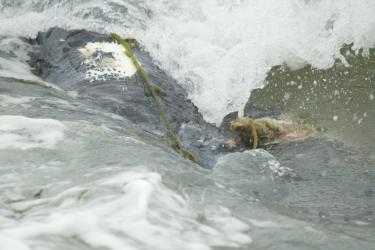
    Her tail was tangled up in thick rope, some of which was found to be deeply embedded in its skin.

    The cause of death has not yet been found. Law enforcement officials are examining the rope, and authorized officials are planning to carry out an autopsy, NOAA said.

    A picture shows the tale of the whale.
    A close-up of the whale’s tail. An arrow points to a rope embedded deep into the whale’s skin. (Woods Hole Oceanographic Institution/Michael Moore NOAA Permit # 24359)

    “While we don’t know the cause of death yet, we know that entanglements can lead to long-term suffering and death,” said Sarah Sharp, an animal rescue veterinarian with the International Fund for Animal Welfare.

    The individual is thought to have been a juvenile because of its size.

    This loss is concerning for the endangered population, Gib Brogan, a campaign director at Oceana, an international conservation group, told The New York Times.

    “It’s devastating to hear about another loss to North Atlantic right whales,” he said.

    “This death is even more troubling when it is a female calf that could have gone on to have many calves of her own for decades to come,” he said.

    rope going across and under whale and snarl of rope emerging from injury
    Close up showing rope going across and under whale and snarl of rope emerging from the injury. (Woods Hole Oceanorgraphic Institution/Michael Moore NOAA Permit # 24359)

    While beachings are not uncommon, the death of a North Atlantic right whale prompts alarm bells.

    North Atlantic right whales are endangered animals, which means they are at risk of extinction. They were heavily over hunted by whalers in the 1800s, and have struggled to recover.

    The population, which has been on the endangered list since 1970, now only has around 360 individuals. Of those, fewer than 70 are females of reproductive age.

    It is the latest in a string of deaths, sicknesses, and injuries affecting the whales off the coast of Canada and the United States.

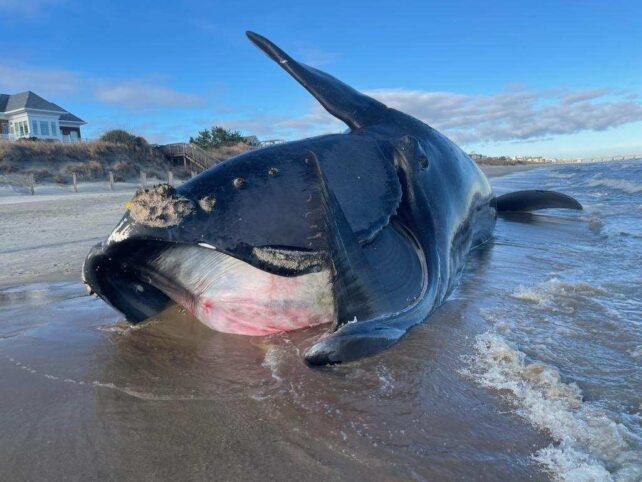
    A dead North Atlantic right whale stranded on Virginia Beach
    A dead North Atlantic right whale stranded on Virginia Beach in 2023. (Credit: Virginia Aquarium, taken under NOAA permit #24359)

    NOAA declared an Unusual Mortality Event (UME) for the area in 2017. The primary threats to the species at the moment are ” entanglement in fishing gear and vessel strikes,” NOAA said, warning that about a third of deaths likely go unreported.

    The UME now affects more than 20 percent of the population, “which is a significant impact on an endangered species where deaths are outpacing births.”

    This individual was the 37th documented mortality in this UME.

    This article was originally published by Business Insider.

    More from Business Insider:

    [ad_2]

    Source link

  • There’s a Surprising Link Between Music And Brain Health

    There’s a Surprising Link Between Music And Brain Health

    [ad_1]

    With the number of people who are living with dementia continuing to rise, scientists are looking for ways to prevent or delay it – and it appears that playing a musical instrument could be one approach worth exploring.

    A team led by researchers from the University of Exeter in the UK analyzed data on 1,107 people over the age of 40 without a dementia diagnosis, mapping cognitive ability against self-reported musical ability, whether or not they played a musical instrument or sang in a choir, and their music listening habits.

    The analysis showed “significantly better performance” in working memory and executive function from those who played a musical instrument, as well as associations between singing and executive function, and overall musical ability and working memory. There was no equivalent improvement based on music listening habits.

    “A number of studies have looked at the effect of music on brain health,” says Anne Corbett, a cognitive psychologist from the University of Exeter. “Overall, we think that being musical could be a way of harnessing the brain’s agility and resilience, known as cognitive reserve.”

    This idea of cognitive reserve is exactly what it sounds like – a buffer against the effects of aging. The thinking is that people with a larger cognitive reserve, in part built up through lifestyle choices and activities, are less susceptible to diseases such as Alzheimer’s.

    Despite the strong links shown here, they don’t prove cause and effect; other factors may be at play too. Those with a higher income might be able to afford both music lessons and a better quality diet, for example, and it could be the diet that is driving improved brain performance.

    However, it makes sense that playing an instrument would help to keep the brain well exercised, and it’s an association that has been spotted in several previous studies too – adding to the likelihood that there’s something going on here.

    “Although more research is needed to investigate this relationship, our findings indicate that promoting musical education would be a valuable part of public health initiatives to promote a protective lifestyle for brain health, as would encouraging older adults to return to music in later life,” says Corbett.

    If you’re thinking of learning to play an instrument – or perhaps going back to one – the cognitive boost was highest when it came to the keyboard, with those who tinkled the ivories generally showing far better performance in all three working memory tasks.

    Across all instruments, continuing to play in later life led to increased benefits.

    One of the individuals the researchers contacted was 78-year-old Stuart Douglas from Cornwall in the UK, who plays the accordion in a band. He backed up the idea that regularly playing an instrument can keep the mind sharp in later life.

    “We regularly play at memory cafes so have seen the effect that our music has on people with memory loss, and as older musicians ourselves we have no doubt that continuing with music into older age has played an important role in keeping our brains healthy,” says Douglas.

    The research has been published in the International Journal of Geriatric Psychiatry.

    [ad_2]

    Source link