Tag: aircraft

  • Modern fuel-efficient jets can cause more warming than older planes

    Modern fuel-efficient jets can cause more warming than older planes

    [ad_1]

    Contrails are clouds produced by water vapour condensing on soot emitted by jet engines

    Markus Mainka / Alamy Stock Photo

    Aeroplanes that fly at higher altitudes can create longer-lasting vapour trails that are likely to cause more global warming. Since private jets and modern fuel-efficient jets fly higher than other passenger jets, these aircraft may be causing even more warming than previously thought.

    The findings could help airlines work out which routes to fly to minimise contrails, says Edward Gryspeerdt at Imperial College London. “If we could predict the contrail-forming regions of the atmosphere well enough, you could route aircraft around them, which would reduce this effect.”

    In some conditions, the soot particles emitted by jet engines can seed the formation of ice particles in the wake of aircraft, forming clouds known as contrails that have an overall warming effect. As much as half of the warming effect of aviation is estimated to be due to contrails, rather than the carbon dioxide emissions.

    How long contrails persist largely determines how much warming they cause, but their persistence is difficult to study. Gryspeerdt’s team has combined flight data and satellite observations to match specific aircraft to contrails, and see how the type of aircraft relates to persistence.

    This has only been performed on a small scale before because it was done manually. But by using artificial intelligence, the team could analyse 64,000 flights. This revealed that private jets and more fuel-efficient jets, which typically cruise at around 12 kilometres (38,000 feet), a kilometre higher than other planes, are more likely to generate longer-lasting contrails. “It was not what we expected,” says Gryspeerdt.

    Not all the soot particles emitted by an aircraft turn into ice particles, he says. What the team thinks is happening is that when an aircraft flies higher, a higher proportion of soot particles seed ice particles, but the overall size of ice particles is smaller.

    Smaller ice particles fall more slowly, so take longer to fall to regions where the air is relatively warmer and where they sublimate back into water vapour. This means contrails persist for longer and cause more warming.

    However, because the properties of these higher-altitude contrails are a bit different, the team cannot say exactly how much warming they cause. So it is not clear if the additional warming caused by longer-lasting contrails outweighs the avoided warming due to the lower fuel use of modern planes.

    What is clear is that the impact of private jets is being underestimated. “They are having an even more outsized impact on the climate per passenger than we thought,” says Gryspeerdt.

    Because contrails are more visible over oceans, and because the team only had data from a single geostationary satellite, they also looked only at flights over the western Atlantic, around Bermuda.

    The findings may not apply to flights further north, for instance over Greenland and Iceland, says Gryspeerdt, because the air at high altitudes is drier and contrails are less likely to form.

    “The study highlights the significant non-CO2 climate impact of aircraft operating at high altitudes, primarily due to the persistent contrails they produce,” says Krisztina Hencz at Transport & Environment, an environmental advocacy organisation in Europe.

    High altitudes are mainly used by long-haul flights, Hencz says, but long-haul flights have been excluded from a European Union scheme that aims to reduce the non-CO2 warming. It also shows the importance of switching to fuels that generate fewer soot particles, she says.

    Topics:

    [ad_2]

    Source link
  • Anduril Is Building Out the Pentagon’s Dream of Deadly Drone Swarms

    Anduril Is Building Out the Pentagon’s Dream of Deadly Drone Swarms

    [ad_1]

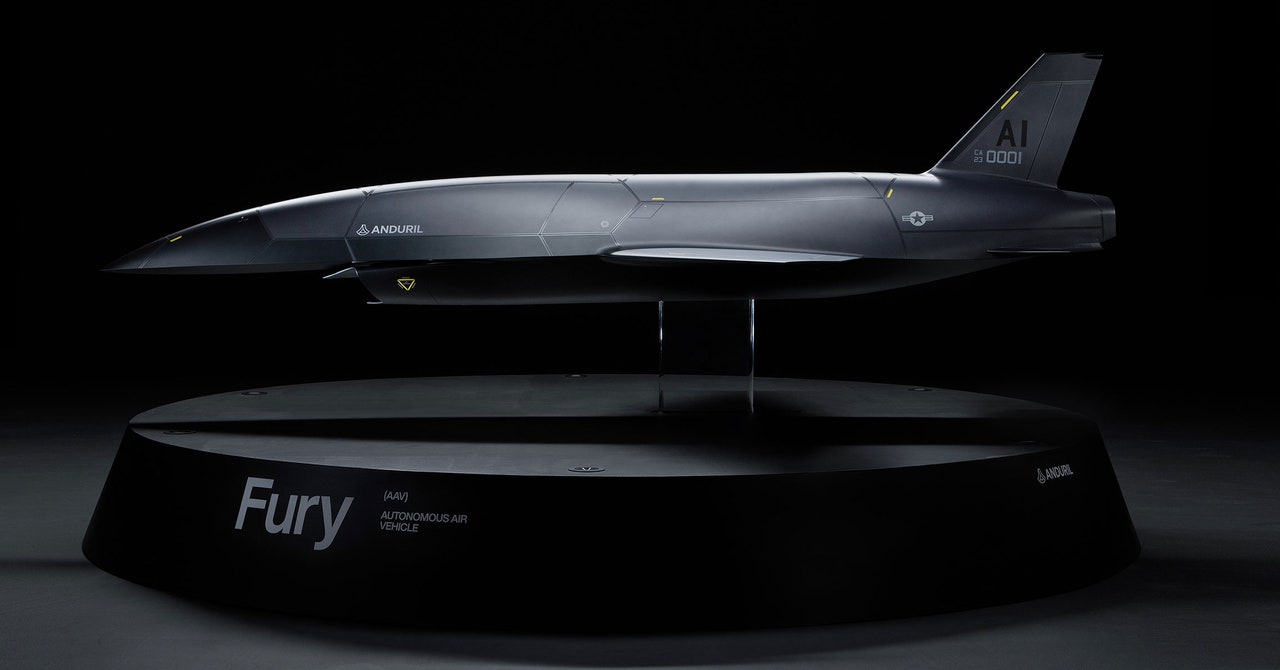
    When Palmer Luckey cofounded the defense startup Anduril in 2017, three years after selling his virtual reality startup Oculus to Facebook, the idea of a twentysomething from the tech industry challenging the giant contractors that build fighter jets, tanks, and warships for the US military seemed somewhat far-fetched. Seven years on, Luckey is showing that Anduril can not only compete with those contractors—it can win.

    Last month, Anduril was one of two companies, along with the established defense contractor General Atomics, chosen to prototype a new kind of autonomous fighter jet called the Collaborative Combat Aircraft, or CCA, for the US Air Force and Navy. Anduril was chosen ahead of a pack of what Beltway lingo dubs “defense primes”—Boeing, Lockheed Martin, and Northrup Grummond.

    “Anduril is proving that with the right team and business model, a seven-year-old company can go toe-to-toe with players that have been around for 70+,” Luckey wrote on social media platform X shortly after the contract was announced. The company declined to make anyone available for this article.

    That business model has seen Anduril focus on showing that it can rapidly deliver drones, submarines, and other hardware infused with advanced software at relatively low cost. It also reflects a shift in America’s war-fighting outlook toward quicker development of less expensive systems that feature more software and autonomy.

    Investors seem to think it’s working. Anduril has raised a total of $2.3 billion in funding, according to Pitchbook which tracks startup investment and, according to The Information, is seeking $1.5 billion more.

    Courtesy of U.S. Department of Defense

    Anduril’s prototype CCA aircraft, named Fury, is still at an early stage of development. Another test aircraft will be developed by General Atomics, a 68-year-old defense firm with a history of making remotely operated systems that include the MQ-9 Reaper, which played a key role in the US expansion of drone warfare in the 2000s.

    The US Air Force wants the new CCA drones to be more capable and more independent than existing uncrewed craft, which still depend heavily on ground staff. They are envisioned performing a wide range of missions, including reconnaissance, air strikes, and electronic warfare—either alone or in collaboration with aircraft piloted by a human or autonomously. A core part of the program is developing new artificial intelligence software to control the aircraft that can operate autonomously in a wider range of situations than existing military systems, which are typically autonomous only in narrow circumstances.

    “This is a big shift,” says Stacie Pettyjohn, a senior fellow at the Center for a New American Security , a Washington, DC, think tank. She says that the US military has so far mostly used AI for target recognition and planning rather than for controlling systems. The CCA project is “a huge step forward for uncrewed systems and for the Air Force and Navy,” she says.


    [ad_2]

    Source link

  • What’s the Safest Seat on an Airplane?

    What’s the Safest Seat on an Airplane?

    [ad_1]

    The back, though liable to separate from the plane in a catastrophic crash, is more likely to stay intact than the front and middle portions that are still connected to the engines.

    “The rear section often will break off,” Adjekum says, meaning the latter section of the plane from behind the wings. “Lots of that kinetic energy goes with the front of the aircraft and leaves the back intact.”

    Meet in the Middle

    The middle section of the plane has a lot going for it in the event of a bumpy flight. The point where the wings meet at the center makes a more stable base that serves as the center of gravity for the plane, making it less inclined to bounce around when hitting turbulence.

    “A lot of the oscillatory forces from turbulence are better when you’re in the midsection than the tail section,” Adjekum says. The plane essentially works like a cantilever when it hits bumps midair. “So if you are riding the turbulence, it’s like a seesaw with you on the extended portion of the saw.”

    While the middle may be better for turbulence, it’s not necessarily ideal for a catastrophic situation. After all, the middle section is typically where the fuel cells are positioned, meaning if a fire is involved, you’re right on top of the gas tank.

    What the middle does have going for it is easier access to the emergency exits in the center of the plane. The closer you are to the exits, the better your chances of survival after a crash.

    Aisle, Middle, Window

    OK, so toward the back of the plane yet still close to an emergency exit is probably your safest bet. You’ve got your row, but now which seat to pick?

    Again, there are advantages and disadvantages of each option. Sitting in the aisle gets you closer to whatever exit you might need to head to in an emergency but also leaves you more vulnerable to getting walloped by falling luggage or loose debris hurtling down the aisle. Sitting by the window lets you see what’s going on outside, giving you a situational advantage, but it leaves you pinned against the wall and waiting until the other people in your row squeeze out first. Occupying the middle gives you a couple of human shields on either side of you to cushion any potential blows, but the middle seat is uncomfortable and an unpopular first choice.

    Exit Strategy

    If you’ve got aviation anxiety, all this back-and-forth of trying to figure out the perfect spot to sit is likely to only cause you more inner turbulence. Frankly, it’s probably not worth the worry.

    Airplane accidents are ridiculously rare. According to data from International Air Transport Association, which represents the global airline industry, there was one accident that resulted in fatalities among 37.7 million flights in 2023. But when accidents do happen, each one is a little different and will affect the plane in different ways. Ultimately, Adjekum says, your chances of making it through an emergency in flight has less to do with where you happen to sit and more with how well trained your flight crew is—and how closely you listen to their instructions. (That’s why they’re all so serious about you paying attention to those safety announcements.)

    “Anytime you sit in an aircraft, the first thing to do is to have situational awareness,” Adjekum says. “Listen to the instructions from the cabin crew, because they know their job and they are there to ensure that you are safe, no matter where you are seated.”

    [ad_2]

    Source link