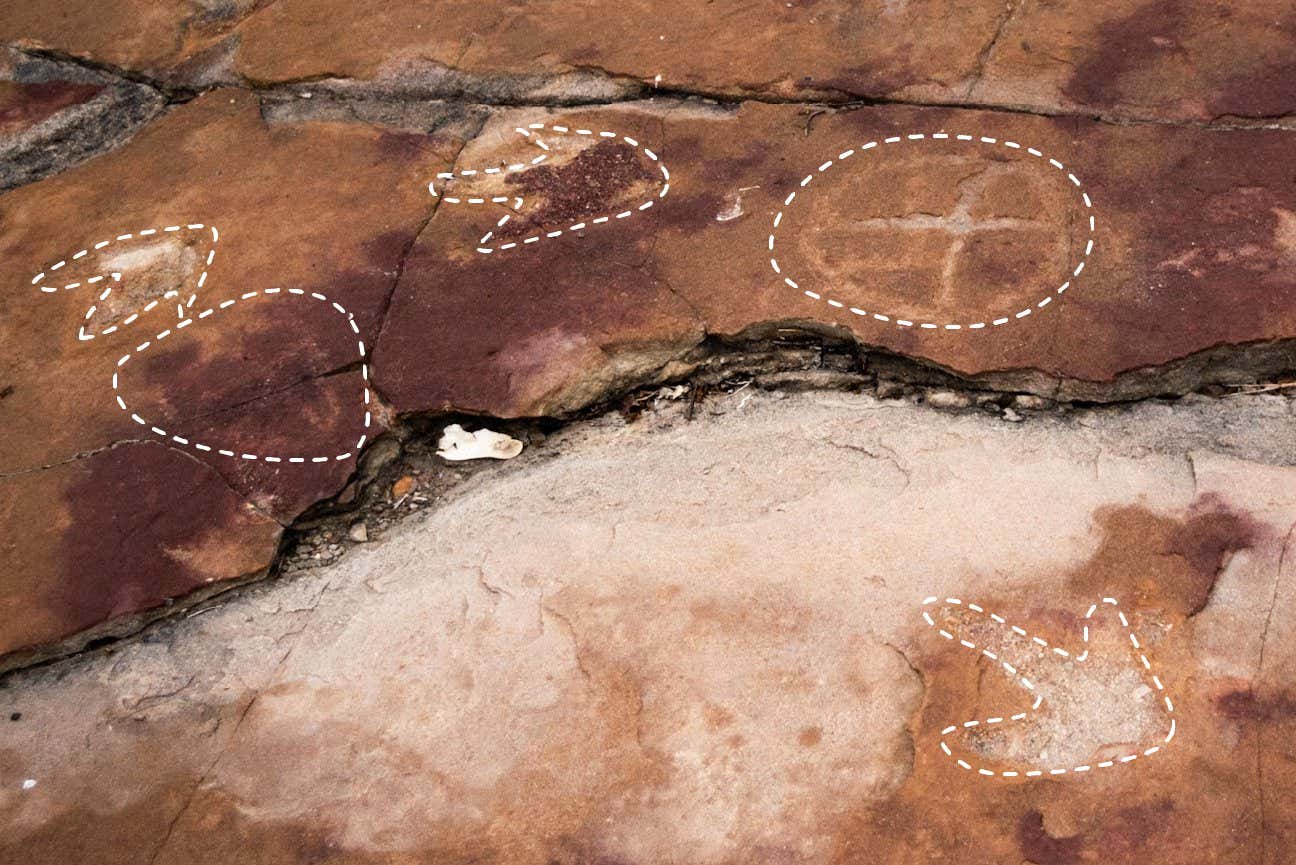
Dinosaur footprints and rock carvings, both highlighted with dashed lines, at the Serrote do Letreiro site in Brazil
Leonardo Troiano/ National Institute of Historic and Artistic Heritage, Brazil
Mysterious rock carvings found next to dinosaur tracks in Brazil suggest ancient people discovered the footprints thousands of years ago and recognised them as meaningful.
The Serrote do Letreiro site in Paraíba state features the footprints of theropod, sauropod and ornithopod dinosaurs from the Early Cretaceous Epoch, between 145 million and 100 million years ago. Adjacent to these are numerous rock carvings, or petroglyphs, predominantly circular with radial lines and other abstract motifs.…
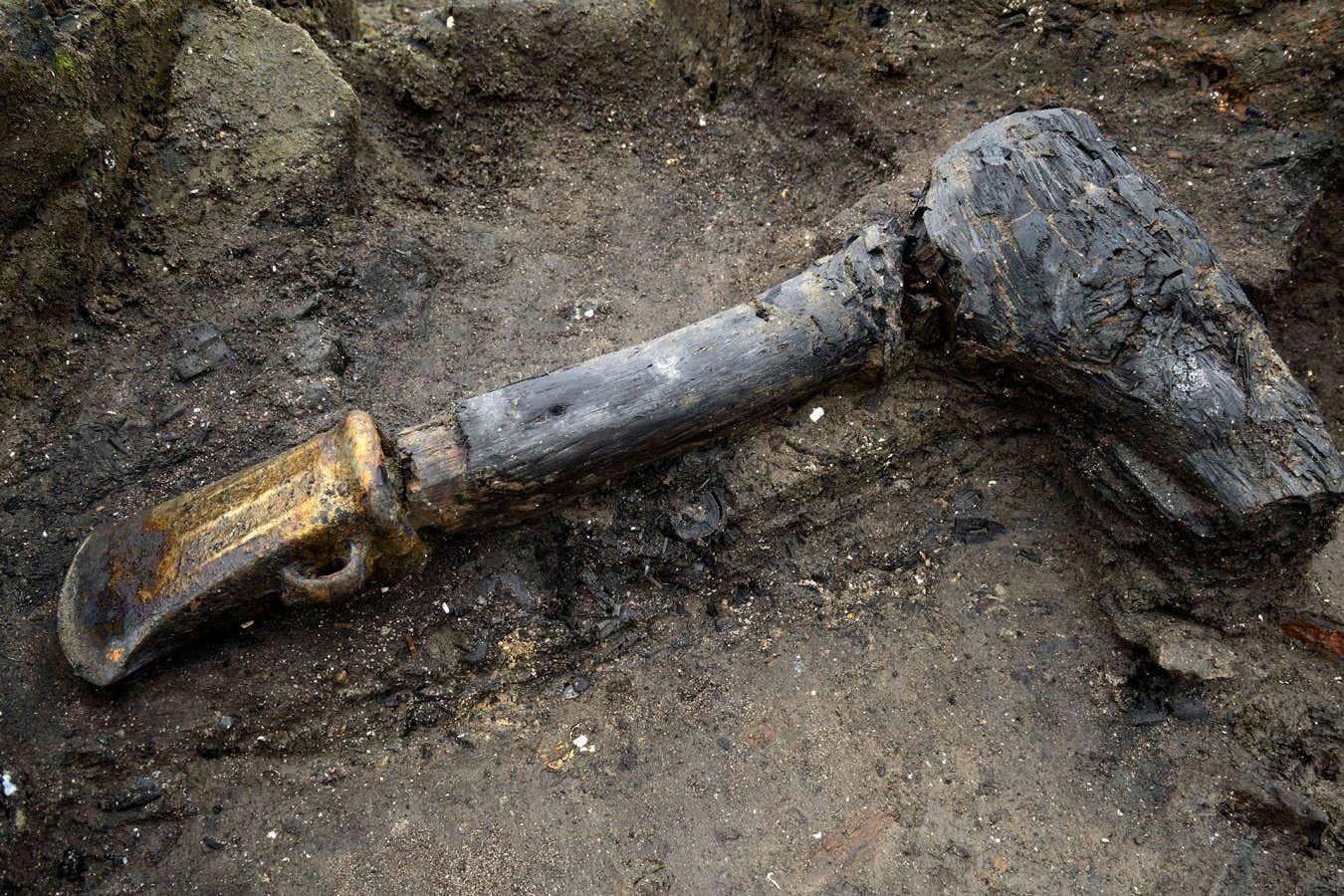
An intact hafted axe found under one of the structures that burnt down at the Must Farm site
Cambridge Archaeological Unit
The remains of a Bronze Age settlement in eastern England have been exquisitely preserved after being destroyed by a fire 3000 years ago. An examination of the site gives us an extraordinary snapshot of how Britons lived at the time, from what people may have eaten for breakfast to the tools they used to build houses.
Archaeologists first stumbled across ancient wooden posts at Must Farm quarry, near the small town of Whittlesey, in 1999. The small-scale investigations that followed sought to figure out whether there was anything interesting there, says Chris Wakefield at the University of York in the UK. But it wasn’t until 2015 that Wakefield and his colleagues conducted a full-scale excavation of the site.
The team uncovered the structural remains of four large roundhouses – circular dwellings usually made of wood with thatched conical roofs – dating back to between 3000 and 2800 years ago. Wooden stumps suggest these were built on stilts, connected by wooden walkways, over a small river that ran through the area. Based on the size of the channel, there may have been about 10 roundhouses at the settlement, says Wakefield.
Tree-ring analysis on wood from the structures suggests the settlement was destroyed a year after its construction, with the houses falling into the muddy water below. The waterlogged, oxygen-scarce environment prevented the settlement from degrading, preserving it in unprecedented detail, says Wakefield. Charring on the objects from the fire also provided a protective layer against environmental decay. “Pretty much everything that had been there in time of the fire inside these people’s houses has been preserved to find nearly 3000 years later,” says Wakefield.
The way items fell into the mud gave clues to the layout of each house. As you step through the door, the kitchen area tended to be in the east side of the house, with a sleeping area in the north-west and pens for livestock in the south-east.
Chemical analysis of kitchenware, including pots, bowls, cups and jars, suggests that the settlement’s prehistoric inhabitants probably ate porridge, cereals, honey and stews made with beef, mutton and fish.
“This is the best evidence we have on understanding prehistoric diet and cooking practices,” says Rachel Pope at the University of Liverpool in the UK. “It’s the closest we’ll ever get to walking through the doorway of a roundhouse 3000 years ago and seeing what life was like inside.”
Illustration depicting daily life in one of the Must Farm structures
Judith Dobie/Historic England
Toolboxes filled with axes, sickles and razors were a staple in every household. “One of the most beautiful objects that one of my colleagues found was an incredible two-part hafted axe,” says Wakefield. “What was so amazing about this particular design is that the axe head itself was inserted into an extra bit of wood that you could swap out.”
The garments recovered at the site have a lush, velvety feel – they were made of some of the finest textiles produced in Europe at that time, says Wakefield. Decorative beads, which may have been used in necklaces, were also found across the site, possibly coming from elsewhere in Europe or the Middle East.
The settlement has been likened to the ancient Roman town of Pompeii, which was entombed in ash after a volcanic eruption in AD 79. “Archaeologists sometimes talk of a Pompeii-like discovery – a moment frozen in time – and this is one of those, a burnt-down settlement that gives us an intimate view into people’s lives just before the fire and in the months running up to it around 2900 years ago,” says Michael Parker Pearson at University College London.
“Must Farm is more than a once-in-a-generation site. It is very likely that there will never be a site that tells us more about Bronze Age Britain,” says Richard Madgwick at Cardiff University, UK.
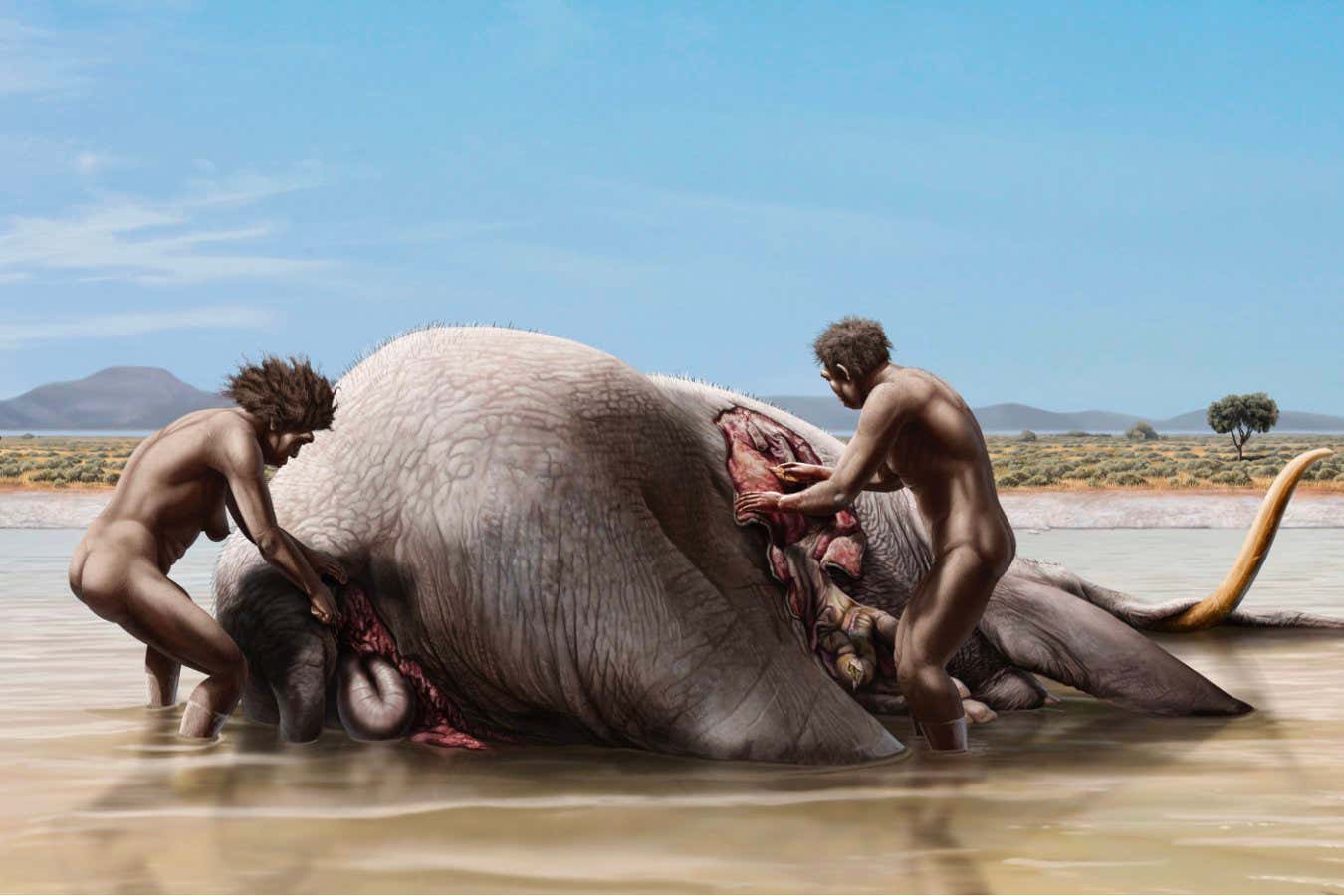
A southern mammoth skeleton found in Spain bears cut marks from stone tools and bite marks from carnivore teeth, suggesting that both hominins and felids feasted on its meat
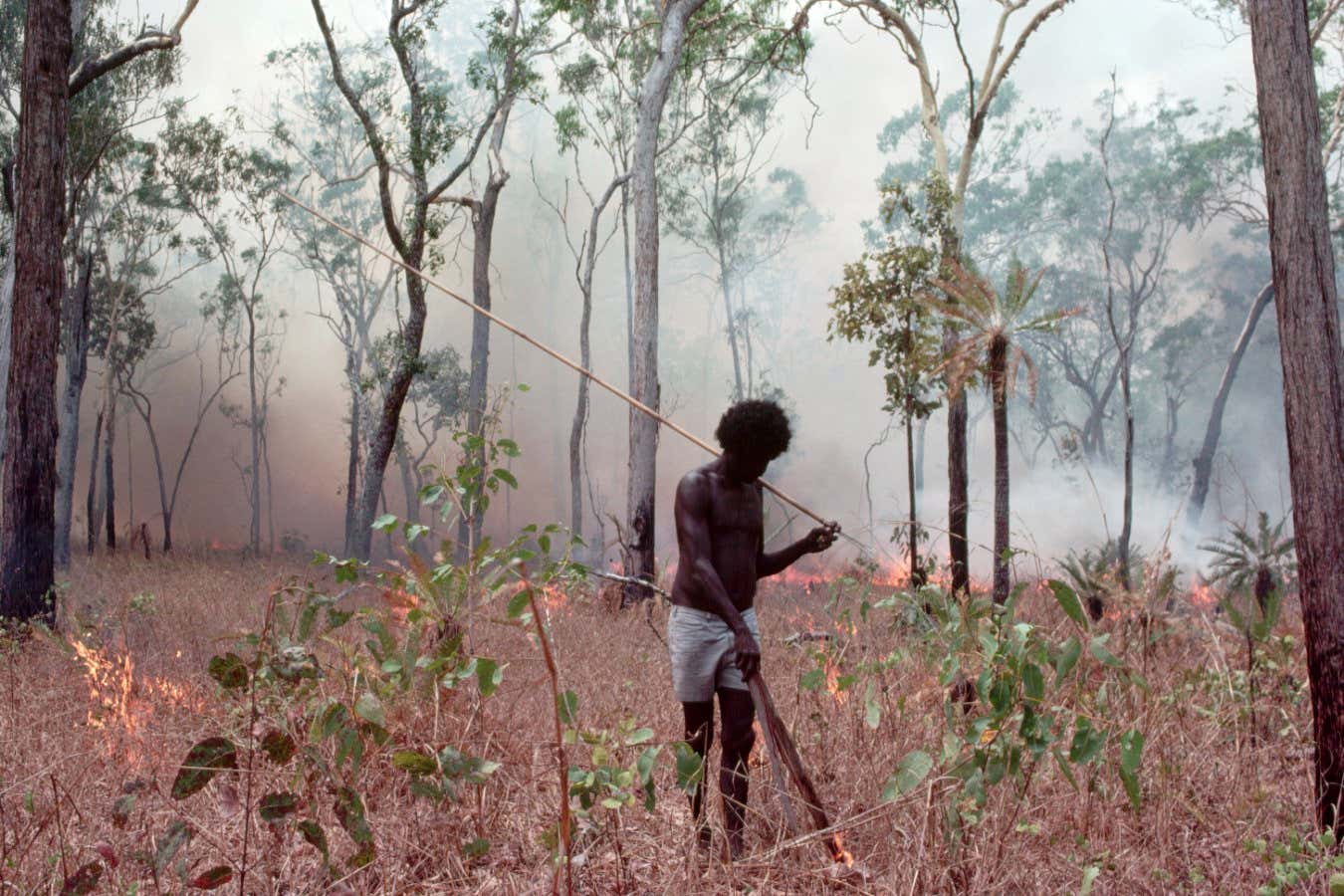
Aboriginal people use fires to manage the landscape
Penny Tweedie/Getty Images
Indigenous Australians have been managing the environment with fire for at least 11,000 years, according to an analysis of sediment cores retrieved from an ancient lake.
Michael Bird at James Cook University in Cairns, Australia, says the findings suggest that a return to an Indigenous regime of more frequent but less intense fires could reduce the risk of catastrophic bushfires and improve environmental management.
It has long been known that Australia’s first peoples, who are thought to have been on the continent for 65,000 years, carefully managed the landscape with fire to make it easier to move around and hunt prey. They also figured out that this benefited some animals and plants that they preferred and reduced the risk of more dangerous fires.
However, it has been difficult to establish how long this has been happening for, says Bird. That is because most waterways completely dry out in the dry season each year and the carbon in their sediments is destroyed.
Girraween Lagoon, near Darwin in the Northern Territory, is a massive sinkhole covering an area of about 1 hectare that has stayed permanently wet for at least 150,000 years. As the climate changed over millennia, so, too, did the vegetation around the sinkhole. “From Girraween Lagoon, we have got 150,000 years’ worth of sediment that has never dried out,” says Bird.
By analysing sediment cores from the lagoon’s bed, Bird and his colleagues were able to study three key metrics: the accumulation of micro-charcoal particles, the proportion of burnt material in the charred vegetation matter and a measure of the amount of the different kinds of carbon that remain after burning.
The first two metrics allow researchers to infer the intensity of fires, while the third indicates whether fires were cool enough to leave traces of grasses preserved.
Prior to the arrival of people, natural fires in the savannahs of northern Australia were ignited by lightning late in the dry season, when vegetation and the landscape had almost fully dried out. This kind of higher-intensity fire combusts biomass more completely, particularly fine fuels such as grass and litter, leaving less charred remains from grasses.
Indigenous fire regimes, on the other hand, burn frequently but with much less heat, affect small areas and are limited to the ground layer, promoting a mosaic of vegetation and helping to protect biodiversity.
Bird says the more recent layers in the cores show clear evidence of more frequent fires and grasses that haven’t been fully combusted, indicating cooler fires. These kinds of fires are a sharp departure from the previous natural pattern of fires and provide the tell-tale fingerprint of Indigenous fire management, he says.
Researchers collect sediment cores at Girraween Lagoon in Northern Territory, Australia
Michael Bird
This signal can be seen in sediments dating back to at least 11,000 years ago, the study found, but before that point the metric for the proportion of grasses and tree remains becomes harder to study. Bird says there are hints of a human burning signal from as early as 40,000 years ago, but the evidence isn’t as clear-cut.
“It means that for at least 11,000 years, the savannah has grown up with humans,” he says. “The biodiversity has grown up with that fire regime. Take that kind of burning away and you start to see significant problems with biodiversity.”
David Bowman at the University of Tasmania, Australia, says the paper highlights the twin importance of climate and humans in shaping fire regimes.
“Separating climate from anthropogenic – and importantly Indigenous – fire management is a hugely important topic,” he says. “We are battling to counteract climate-driven wildfires globally and such a deep-time perspective will be an invaluable addition to current research and development of sustainable fire management.”
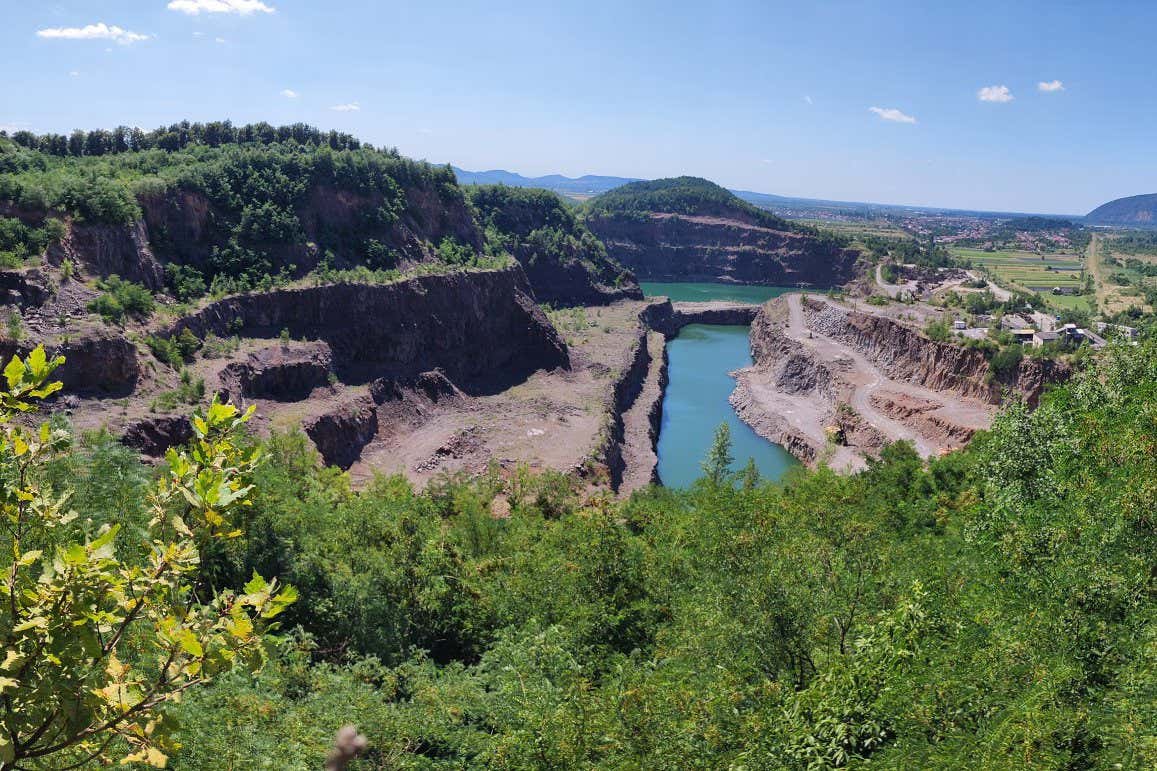
Korolevo quarry in Ukraine, one of the oldest hominin sites in Europe
Roman Garba
Molecular dating has revealed that an area in Ukraine was occupied by humans 1.4 million years ago, making it one of the oldest hominin sites in Europe and possibly the oldest.
The site, at Korolevo in western Ukraine, has been studied since the 1970s. A large number of stone tools have been found buried in layers of sediment beside an outcrop of volcanic rock suitable to be made into tools.
“This was like a magnet for bringing the people there, and they were camping nearby,” says Roman Garba at the Czech Academy of Sciences in Prague.
No bones have been found as the soil is too acidic to preserve them, he says, but it is assumed that the hominins were Homo erectus, a species that evolved around 2 million years ago and spread from Africa to Europe and Asia.
While it has been clear that early hominins were present at the Korolevo site repeatedly over hundreds of thousands of years, we haven’t known exactly when they were present. But Garba’s team has now dated the oldest layer containing tools to 1.4 million years ago, using a technique called cosmogenic nuclide dating.
This method relies on cosmic rays that are so energetic that they can split the nuclei of atoms and generate unusual isotopes. However, these isotopes form only on exposed areas, as these cosmic rays don’t penetrate far into solid objects.
Once objects are buried, radioactive isotopes generated by cosmic rays decay into other isotopes, allowing the time of burial to be determined.
Another early hominin site in Dmanisi in Georgia has been dated to 1.7 million years ago, while other sites in France and Spain are around 1.2 million years old. This suggests that early humans moved from Africa through Georgia and into Ukraine, then west into the rest of Europe, says Garba, though it is also possible that some crossed the Bosphorus Strait in Turkey.
It has been suggested that some hominins crossed the Gibraltar Strait to reach Spain when sea levels were lower than present, then moved east into the rest of Europe, but there is no evidence to support this, says Garba.
While part of Georgia is in Europe geographically and the whole country is seen as part of Europe politically, the site of Dmanisi is geographically located in Asia, says Garba. So he and his team regard Korolevo as the oldest human site in Europe that has been reliably dated.
“Korolevo represents, to our knowledge, the earliest securely dated hominin presence in Europe,” the paper states.
“I agree that the new age estimates are important, and they support the idea of an early east-west dispersal,” says Chris Stringer at the Natural History Museum in London.
Garba says that while it is possible that these other sites are as old, the dating of them is questionable. “We can’t be as sure about them,” he says. “They are not secure or not robust.”
People in India have a wide range of Neanderthal DNA in their genomes
Debajyoti Chakraborty/NurPhoto via Getty Images
The largest ever genome study of South Asian people has discovered a wide range of Neanderthal DNA sequences in modern Indian people. The findings raise the possibility of building a full Neanderthal genome from living humans, instead of relying on DNA from ancient remains.
All modern humans except African people retain an average of around 1 to 2 per cent of their genetic ancestry from archaic hominins, including Neanderthals and Denisovans. African people also get about 0.5…
ANOTHER year, another really good book from archaeologist Alice Roberts. Part of me almost wants to find that the quality has slipped, just for the sheer surprise – but no, her standards are as high as ever.
Roberts may be the UK’s best-known archaeologist, in part due to her many TV appearances. She has also written a string of books, including Wolf Road, her first children’s novel. Her specialism is osteoarchaeology, the…
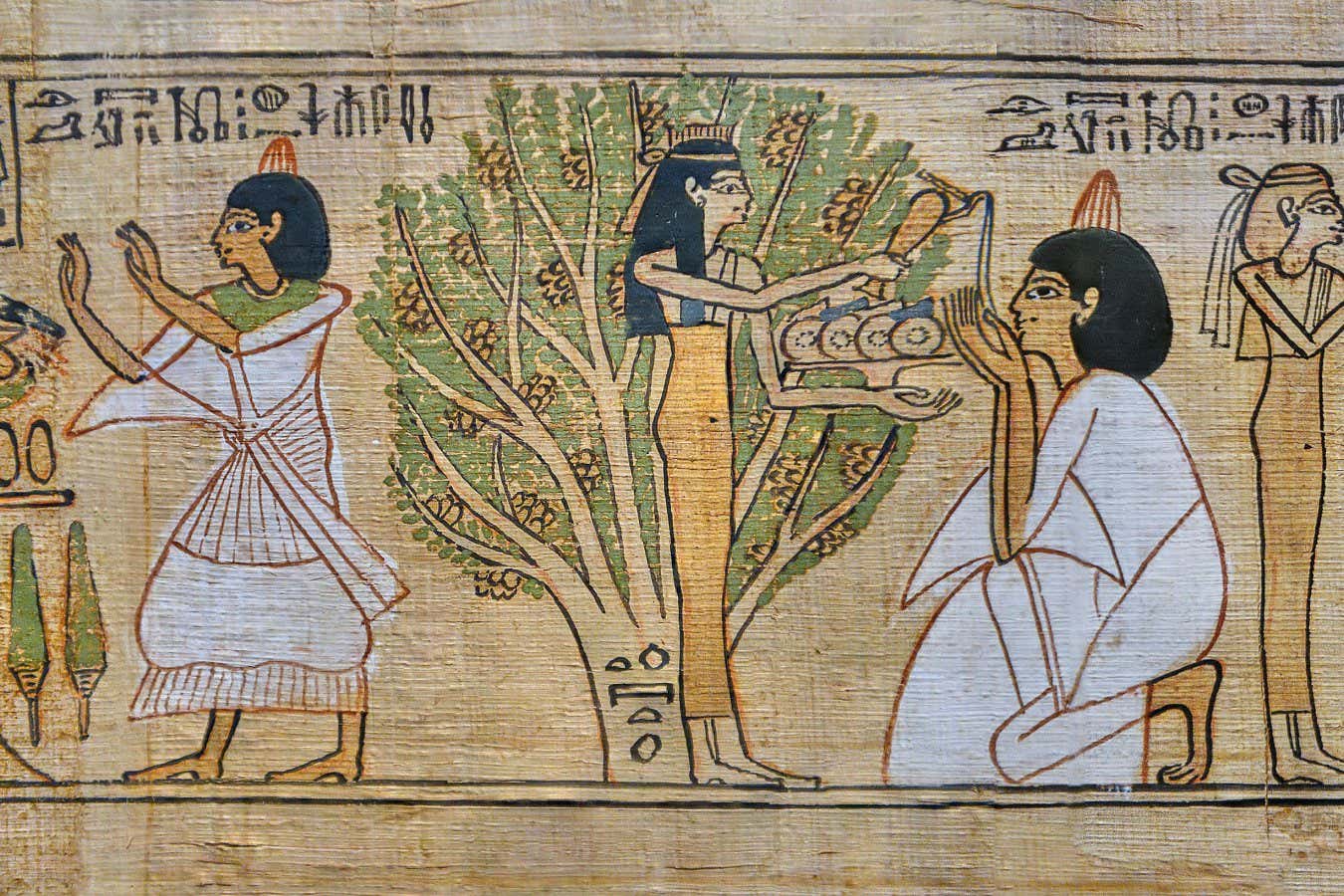
Ancient Egyptian papyrus scrolls can be damaged by fungi
Paul Williams / Alamy
Wasabi vapours are potent enough to kill fungi growing on painted papyrus fragments – all without damaging the fragile artefacts or altering the appearance of their vivid colours.
The unique disinfecting strategy could help archaeologists and museums preserve documents written on paper made from the papyrus plant, a material used for thousands of years in ancient Egypt, Greece and the Roman Empire. “The bio-deterioration of papyri is a worldwide problem,” says Hanadi Saada at the Grand Egyptian Museum in Egypt.
Fungus can damage delicate papyrus, but some disinfectants can be just as harmful. So Saada and her colleagues are studying less harsh “green” treatments. In this experiment, they mixed up a paste of wasabi – the popular Japanese condiment derived from a plant related to horseradish and mustard – and placed it on aluminium foil next to papyrus samples.
Instead of risking historical papyrus artefacts, the researchers prepared replicas for the experiment. The modern papyrus samples were painted different colours, such as red, yellow and blue, and then heated to 100°C (212°F) in an oven for 120 days to simulate the natural ageing of papyrus over 1000 years. Finally, they were exposed to several fungal species that are known to infest archaeological papyri.
After three days, the wasabi treatment had eliminated the fungal contamination without impacting the papyrus samples’ pigments. A follow-up check one month later showed the same result.
Current papyrus storage methods involve folders lined with special blotting material to protect against humidity changes, which provide a “passive way of preventing fungal growth and deterioration”, says Jessica Byler at the Penn Museum in Pennsylvania.
But Byler acknowledges that fungal prevention is not always guaranteed using the standard methods, and so “our team of conservators are interested to learn more about innovative eco-friendly techniques within the field of conservation”.
The Grand Egyptian Museum team plans to go ahead with using the wasabi treatment for archaeological papyri. The researchers will also test whether the spicy condiment is equally effective at disinfecting other artefacts made from wood, paper and textiles.
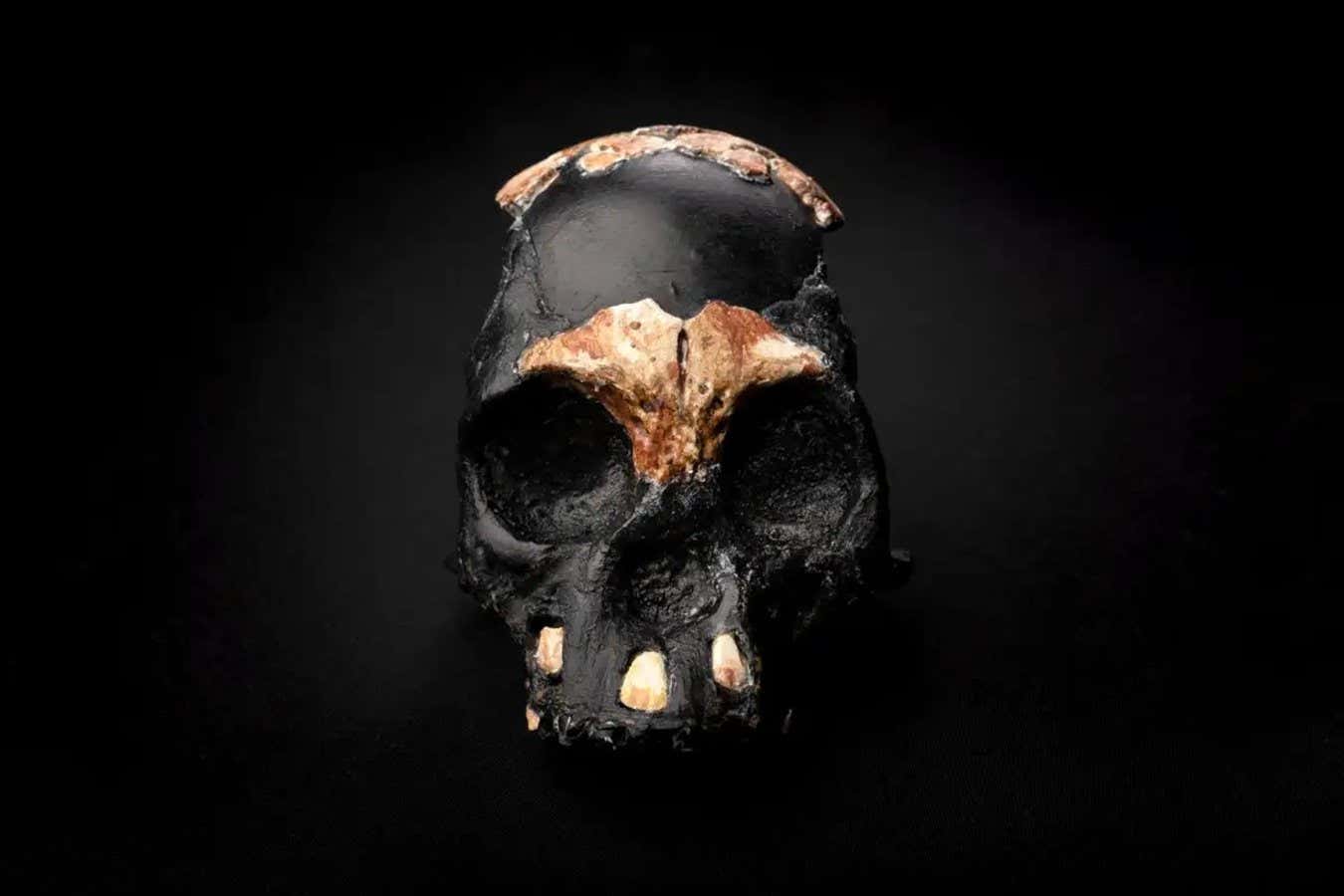
A reconstruction of the skull of a Homo naledi child
Brett Eloff Photography/Wits University
This is an extract from Our Human Story, our newsletter about the revolution in archaeology. Sign up to receive it in your inbox for free every month.
The word “fossil” is one that I type out rather frequently. You’ll often read stories about new hominin remains in which they are described as fossils. But hang on. Fossils take a long time to form, so how old does a human bone or tooth need to be before it counts as a fossil? Should…
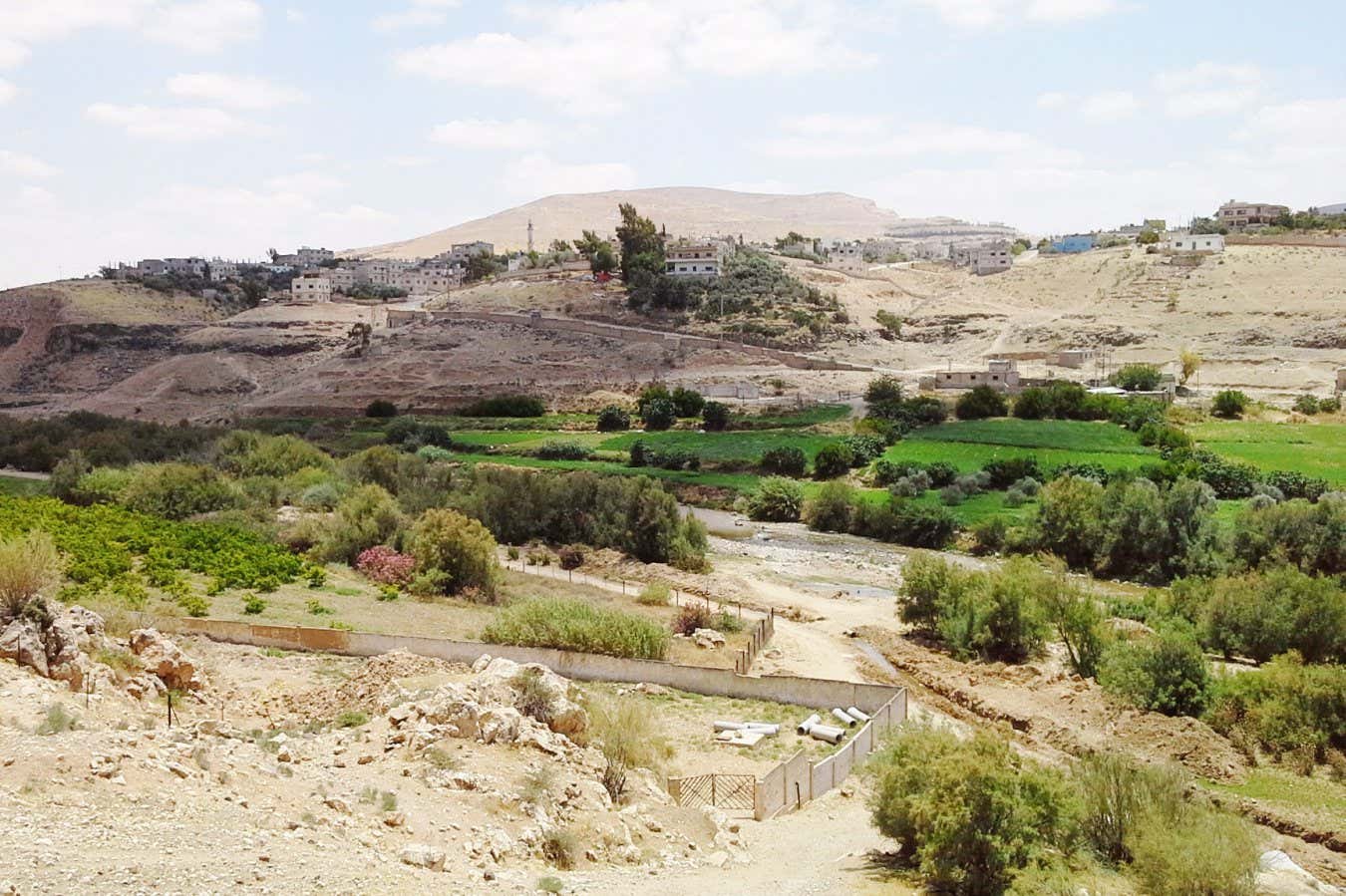
Our hominin ancestors originated in Africa and the consensus is that they didn’t leave there until about 1.8 million years ago, but stone tools found in Jordan challenge the idea