Tag: Anthropology

  • Price, T. D., Tiesler, V. & Freiwald, C. Place of origin of the sacrificial victims in the Sacred Cenote, Chichén Itzá, Mexico. Am. J. Phys. Anthropol. 170, 98–115 (2019).

    Article 
    PubMed 

    Google Scholar
     

  • Kristan-Graham, C. et al. Twin Tollans: Chichén Itzá, Tula and the Epiclassic to Early Postclassic Mesoamerican World (Dumbarton Oaks, 2007).

  • Beck, L. A. & Sievert, A. K. in Interacting with the Dead: Perspectives on Mortuary Archaeology for the New Millennium (eds Rakita, G. et al.) 290–304 (Univ. Press Florida, 2005).

  • Márquez Morfín, L. & Schmidt, P. in Investigaciones Recientes en el área Maya. Vol. II. Memorias de la XVII Mesa Redonda (1981) 89–104 (Sociedad Mexicana de Antropología, 1984).

  • Coe, M. D. in The Maya Vase Book: A Corpus of Rollout Photographs of Maya Vases (eds Kerr, B. & Kerr, J.) 161–184 (Kerr Associates, 1989).

  • Cobos, R. & Winemiller, T. L. The Late and Terminal Classic-period causeway systems of Chichen Itza, Yucatan, Mexico. Anc. Mesoam. 12, 283–291 (2001).

    Article 

    Google Scholar
     

  • Tiesler, V. in Stone Houses and Earth Lords: Maya Religion in the Cave Context (eds Prufer, K. M. & Brady, J. E.) 341–364 (Univ. Press Colorado, 2005).

  • Miller, V. E. in New Perspectives on Human Sacrifice and Ritual Body Treatments in Ancient Maya Society (eds Tiesler, V. & Cucina, A.) 165–189 (Springer New York, 2007).

  • Graña-Behrens, D., Prager, C. & Wagner, E. The hieroglyphic inscription of the ‘High Priest’s Grave’ at Chichén Itzá, Yucatán, Mexico. Mexicon 21, 61–66 (1999).


    Google Scholar
     

  • Dahlin, B. H. Climate change and the end of the Classic period in Yucatán. Resolving a paradox. Anc. Mesoam. 13, 327–340 (2002).

    Article 

    Google Scholar
     

  • Roys, R. L. The Book of Chilam Balam of Chumayel (Univ. Oklahoma Press, 1967).

  • Tozzer, A. M. Chichen Itza and its Cenote of Sacrifice: A Comparative Study of Contemporaneous Maya and Toltec (Harvard Univ., 1957).

  • Anda, G. D., Tiesler, V. & Zabala, P. in Los Investigadores de la Cultura Maya Vol. 12, 376–386 (Universidad Autónoma de Campeche, 2004).

  • Márquez Morfín, L. in Los Niños Como Actores Sociales Ignorados. Levantando el Velo, una Mirada al Pasado (ed. Márquez Morfín, L.) 253–282 (ENAN-INAH, 2006).

  • Baudez, C.-F. & Latsanopoulos, N. Political structure, military training and ideology at Chichen Itza. Anc. Mesoam. 21, 1–20 (2010).

    Article 

    Google Scholar
     

  • Cagnato, C. Underground pits (chultunes) in the southern Maya lowlands: excavation results from Classic period Maya sites in northwestern Petén. Anci. Mesoam. 28, 75–94 (2017).

    Article 

    Google Scholar
     

  • Puleston, D. E. An experimental approach to the function of Classic Maya chultuns. Am. Antiq. 36, 322–335 (1971).

    Article 

    Google Scholar
     

  • Brady, J. & Layco, W. Maya cultural landscapes and the subterranean: assessing a century of chultun research. Int. J. Archaeol. 6, 46–55 (2018).

    Article 

    Google Scholar
     

  • Prout, M. G. & Brady, J. E. Paleodemographics of child sacrifice at Midnight Terror Cave: reformulating the emphasis of Maya sacrificial practices. Archaeol. Discov. 6, 1–20 (2018).

    Article 

    Google Scholar
     

  • Ardren, T. Empowered children in Classic Maya sacrificial rites. Child. Past 4, 133–145 (2011).

    Article 

    Google Scholar
     

  • MacLeod, B. & Puleston, D. E. in Tercera Mesa Redonda de Palenque (eds Robinson, M. G. & Jeffers, D. C.) 71–77 (Herald Printers, 1978).

  • Moyes, H. & Brady, J. E. in Sacred Darkness: A Global Perspective on the Ritual Use of Caves (ed. Moyes, H.) 151–170 (Univ. Press Colorado, 2014).

  • del Castillo Chávez, O. & Williams-Beck, L. Rituales k’ex al Dios Del Maíz En Chichén Itzá y Mayapán: Una Tradición Ritual Del Clásico al Postclásico (Centro Regional Yucatán del INAH, 2020).

  • Willard, T. A. The City of the Sacred Well (Century, 1926).

  • Arnold, C. & Frost, F. J. T. The American Egypt: A Record of Travel in Yucatan (Hutchinson, 1909).

  • Cucina, A. & Tiesler, V. in The Bioarchaeology of Space and Place (ed. Wrobel, G. D.) 225–254 (Springer, 2014).

  • de Landa, D., Tozzer, A. M. & Bowditch, C. P. Landa’s Relación de Las Cosas de Yucatan: A Translation (Harvard Univ., 1941).

  • Clendinnen, I. Ambivalent Conquests. Maya and Spaniard in Yucatan, 1517–1570 (Cambridge Univ. Press, 2003).

  • Vågene, Å. J. et al. Salmonella enterica genomes from victims of a major sixteenth-century epidemic in Mexico. Nat. Ecol. Evol. 2, 520–528 (2018).

    Article 
    PubMed 

    Google Scholar
     

  • Llamas, B. et al. From the field to the laboratory: controlling DNA contamination in human ancient DNA research in the high-throughput sequencing era. Sci. Technol. Archaeol. Res. 3, 1–14 (2017).


    Google Scholar
     

  • Fellows Yates, J. A. et al. Reproducible, portable and efficient ancient genome reconstruction with nf-core/eager. PeerJ 9, e10947 (2021).

    Article 
    PubMed 
    PubMed Central 

    Google Scholar
     

  • Mathieson, I. et al. Genome-wide patterns of selection in 230 ancient Eurasians. Nature 528, 499–503 (2015).

    Article 
    ADS 
    CAS 
    PubMed 
    PubMed Central 

    Google Scholar
     

  • Immel, A. et al. Analysis of genomic DNA from medieval plague victims suggests long-term effect of Yersinia pestis on human immunity genes. Mol. Biol. Evol. 38, 4059–4076 (2021).

    Article 
    CAS 
    PubMed 
    PubMed Central 

    Google Scholar
     

  • Fu, Q. et al. A revised timescale for human evolution based on ancient mitochondrial genomes. Curr. Biol. 23, 553–559 (2013).

    Article 
    CAS 
    PubMed 
    PubMed Central 

    Google Scholar
     

  • Lamnidis, T. C. et al. Ancient Fennoscandian genomes reveal origin and spread of Siberian ancestry in Europe. Nat. Commun. 9, 5018 (2018).

    Article 
    ADS 
    PubMed 
    PubMed Central 

    Google Scholar
     

  • Lamnidis, T. C. pMMRCalculator. GitHub https://github.com/TCLamnidis/pMMRCalculator (2020).

  • Götz, C. M. La alimentación de los mayas prehispánicos vista desde la zooarqueología. An. Antropol. 48, 167–199 (2014).


    Google Scholar
     

  • Herrera Flores, D. A. & Markus Götz, C. La alimentación de los antiguos mayas de la península de Yucatán: consideraciones sobre la identidad y la cuisine en la época prehispánica. Estud. Cult. Maya XLIII, 69–98 (2014).

    Article 

    Google Scholar
     

  • Kennett, D. J. et al. Early isotopic evidence for maize as a staple grain in the Americas. Sci. Adv. 6, eaba3245 (2020).

    Article 
    ADS 
    CAS 
    PubMed 
    PubMed Central 

    Google Scholar
     

  • Staller, J. E., Tykot, R. H. & Benz, B. F. in Histories of Maize in Mesoamerica (eds Staller, J. et al.) Ch. 11 (Routledge, 2010).

  • Fernández Souza, L., Toscano, L. & Zimmermann, M. De Maíz y de Cacao: Aproximaciones a la Cocina de las Elites Mayas en Tiempos Prehispánicos. In: Hernández Álvarez, H., et al. Estética y Poder en la Ciencia y la Tecnología, Mérida pp 107–130 (UADY, 2014).

  • Zimmermann, M. Starch grain extraction in lime-plastered archaeological floors. Sci. Technol. Archaeol. Res. 7, 31–42 (2021).


    Google Scholar
     

  • Somerville, A. D., Fauvelle, M. & Froehle, A. W. Applying new approaches to modeling diet and status: isotopic evidence for commoner resiliency and elite variability in the Classic Maya lowlands. J. Archaeol. Sci. 40, 1539–1553 (2013).

    Article 

    Google Scholar
     

  • White, C. D. & Schwarcz, H. P. Ancient Maya diet: as inferred from isotopic and elemental analysis of human bone. J. Archaeol. Sci. 16, 451–474 (1989).

    Article 

    Google Scholar
     

  • Wright, L. E. & White, C. D. Human biology in the Classic Maya collapse: evidence from paleopathology and paleodiet. J. World Prehist. 10, 147–198 (1996).

    Article 

    Google Scholar
     

  • Tykot, R. H. in Archaeological Chemistry Vol. 831 (ed. Jakes, K.) 214–230 (American Chemical Society, 2002).

  • Scherer, A. K. Bioarchaeology and the skeletons of the Pre-Columbian Maya. J. Archaeol. Res. 25, 133–184 (2017).

    Article 

    Google Scholar
     

  • Mansell, E. B., Tykot, R. H., Freidel, D. A., Dahlin, B. H. & Ardren, T. in Histories of Maize: Multidisciplinary Approaches to the Prehistory, Linguistics, Biogeography, Domestication and Evolution of Maize (eds Staller, J. et al.) 173–185 (Elsevier, 2010).

  • Posth, C. et al. Reconstructing the deep population history of Central and South America. Cell 175, 1185–1197 (2018).

    Article 
    PubMed 
    PubMed Central 

    Google Scholar
     

  • Reich, D. et al. Reconstructing Native American population history. Nature 488, 370–374 (2012).

    Article 
    ADS 
    CAS 
    PubMed 
    PubMed Central 

    Google Scholar
     

  • Kennett, D. J. et al. South-to-north migration preceded the advent of intensive farming in the Maya region. Nat. Commun. 13, 1530 (2022).

    Article 
    ADS 
    CAS 
    PubMed 
    PubMed Central 

    Google Scholar
     

  • Patterson, N. et al. Ancient admixture in human history. Genetics 192, 1065–1093 (2012).

    Article 
    PubMed 
    PubMed Central 

    Google Scholar
     

  • Bergström, A. et al. Insights into human genetic variation and population history from 929 diverse genomes. Science https://doi.org/10.1126/science.aay5012 (2020).

  • Mallick, S. et al. The Simons Genome Diversity Project: 300 genomes from 142 diverse populations. Nature 538, 201–206 (2016).

    Article 
    ADS 
    CAS 
    PubMed 
    PubMed Central 

    Google Scholar
     

  • Schraiber, J. G. Assessing the relationship of ancient and modern populations. Genetics 208, 383–398 (2018).

    Article 
    PubMed 

    Google Scholar
     

  • González-Oliver, A., Márquez-Morfín, L., Jiménez, J. C. & Torre-Blanco, A. Founding Amerindian mitochondrial DNA lineages in ancient Maya from Xcaret, Quintana Roo. Am. J. Phys. Anthropol. 116, 230–235 (2001).

    Article 
    PubMed 

    Google Scholar
     

  • Ochoa-Lugo, M. I. et al. Genetic affiliation of pre-Hispanic and contemporary Mayas through maternal lineage. Hum. Biol. 88, 136–167 (2016).

    Article 
    PubMed 

    Google Scholar
     

  • Mizuno, F. et al. Characterization of complete mitochondrial genomes of indigenous Mayans in Mexico. Ann. Hum. Biol. 44, 652–658 (2017).

    Article 
    PubMed 

    Google Scholar
     

  • Bodner, M. et al. The mitochondrial DNA landscape of modern Mexico. Genes 12, 1453 (2021).

    Article 
    CAS 
    PubMed 
    PubMed Central 

    Google Scholar
     

  • Ruiz-Linares, A. et al. Admixture in Latin America: geographic structure, phenotypic diversity and self-perception of ancestry based on 7,342 individuals. PLoS Genet. 10, e1004572 (2014).

    Article 
    PubMed 
    PubMed Central 

    Google Scholar
     

  • Chacón-Duque, J. C. et al. Latin Americans show wide-spread Converso ancestry and imprint of local Native ancestry on physical appearance. Nat. Commun. 9, 5388 (2018).

    Article 
    ADS 
    PubMed 
    PubMed Central 

    Google Scholar
     

  • Ongaro, L. et al. Evaluating the impact of sex-biased genetic admixture in the Americas through the analysis of haplotype data. Genes 12, 1580 (2021).

  • Ongaro, L. et al. The genomic impact of European colonization of the Americas. Curr. Biol. 29, 3974–3986 (2019).

    Article 
    CAS 
    PubMed 

    Google Scholar
     

  • Shriver, M. D. et al. The genomic distribution of population substructure in four populations using 8,525 autosomal SNPs. Hum. Genom. 1, 274 (2004).

    Article 
    CAS 

    Google Scholar
     

  • Duforet-Frebourg, N., Luu, K., Laval, G., Bazin, E. & Blum, M. G. B. Detecting genomic signatures of natural selection with principal component analysis: application to the 1000 Genomes data. Mol. Biol. Evol. 33, 1082–1093 (2016).

    Article 
    CAS 
    PubMed 

    Google Scholar
     

  • Auton, A. et al. A global reference for human genetic variation. Nature 526, 68–74 (2015).

    Article 
    ADS 
    PubMed 

    Google Scholar
     

  • Amorim, E. et al. Genetic signature of natural selection in first Americans. Proc. Natl Acad. Sci. USA 114, 2195–2199 (2017).

    Article 
    ADS 
    CAS 
    PubMed 

    Google Scholar
     

  • Villalobos-Comparán, M. et al. The FTO gene is associated with adulthood obesity in the Mexican population. Obesity 16, 2296–2301 (2008).

    Article 
    PubMed 

    Google Scholar
     

  • Ortega, P. E. N. et al. Association of rs9939609-FTO with metabolic syndrome components among women from Mayan communities of Chiapas, Mexico. J. Physiol. Anthropol. 40, 11 (2021).

    Article 
    PubMed 
    PubMed Central 

    Google Scholar
     

  • Lara-Riegos, J. C. et al. Diabetes susceptibility in Mayas: evidence for the involvement of polymorphisms in HHEX, HNF4α, KCNJ11, PPARγ, CDKN2A/2B, SLC30A8, CDC123/CAMK1D, TCF7L2, ABCA1 and SLC16A11 genes. Gene 565, 68–75 (2015).

    Article 
    CAS 
    PubMed 

    Google Scholar
     

  • Ojeda-Granados, C. et al. Dietary, cultural and pathogens-related selective pressures shaped differential adaptive evolution among Native Mexican populations. Mol. Biol. Evol. 39, msab290 (2022).

    Article 
    CAS 
    PubMed 

    Google Scholar
     

  • Kofler, R. & Schlötterer, C. Gowinda: unbiased analysis of gene set enrichment for genome-wide association studies. Bioinformatics 28, 2084–2085 (2012).

    Article 
    CAS 
    PubMed 
    PubMed Central 

    Google Scholar
     

  • Lindo, J. et al. A time transect of exomes from a Native American population before and after European contact. Nat. Commun. 7, 13175 (2016).

    Article 
    ADS 
    CAS 
    PubMed 
    PubMed Central 

    Google Scholar
     

  • Penman, B. S., Ashby, B., Buckee, C. O. & Gupta, S. Pathogen selection drives nonoverlapping associations between HLA loci. Proc. Natl Acad. Sci. USA 110, 19645–19650 (2013).

    Article 
    ADS 
    CAS 
    PubMed 
    PubMed Central 

    Google Scholar
     

  • Buckee, C. O., Gupta, S., Kriz, P., Maiden, M. C. J. & Jolley, K. A. Long-term evolution of antigen repertoires among carried meningococci. Proc. R. Soc. B 277, 1635–1641 (2010).

    Article 
    PubMed 
    PubMed Central 

    Google Scholar
     

  • Barquera, R. et al. Diversity of HLA Class I and Class II blocks and conserved extended haplotypes in Lacandon Mayans. Sci. Rep. 10, 3248 (2020).

    Article 
    ADS 
    CAS 
    PubMed 
    PubMed Central 

    Google Scholar
     

  • Gonzalez-Galarza, F. F. et al. Allele frequency net database (AFND) 2020 update: gold-standard data classification, open access genotype data and new query tools. Nucleic Acids Res. 48, D783–D788 (2020).

    CAS 
    PubMed 

    Google Scholar
     

  • Gómez-Casado, E. et al. Origin of Mayans according to HLA genes and the uniqueness of Amerindians. Tissue Antigens 61, 425–436 (2003).

    Article 
    PubMed 

    Google Scholar
     

  • Dunstan, S. J. et al. Genes of the class II and class III major histocompatibility complex are associated with typhoid fever in Vietnam. J. Infect. Dis. 183, 261–268 (2001).

    Article 
    CAS 
    PubMed 

    Google Scholar
     

  • Dunstan, S. J. et al. Variation at HLA-DRB1 is associated with resistance to enteric fever. Nat. Genet. 46, 1333–1336 (2014).

    Article 
    CAS 
    PubMed 
    PubMed Central 

    Google Scholar
     

  • de Vries, R. R. P., Meera Khan, P., Bernini, L. F., van Loghem, E. & van Rood, J. J. Genetic control of survival in epidemics. J. Immunogenet. 6, 271–287 (1979).

    Article 
    PubMed 

    Google Scholar
     

  • Reynisson, B., Alvarez, B., Paul, S., Peters, B. & Nielsen, M. NetMHCpan-4.1 and NetMHCIIpan-4.0: improved predictions of MHC antigen presentation by concurrent motif deconvolution and integration of MS MHC eluted ligand data. Nucleic Acids Res. 48, W449–W454 (2020).

    Article 
    CAS 
    PubMed 
    PubMed Central 

    Google Scholar
     

  • Fuchs, K. M. & D’Alton, M. E. in Obstetric Imaging: Fetal Diagnosis and Care (eds Copel, J. A. et al.) 639–641 (Elsevier, 2018).

  • Christenson, A. J. Popol Vuh. Sacred Book of the Quiché Maya People (Transl.) (Univ. Oklahoma Press, 2007).

  • Saturno, W. A., Stuart, D. & Taube, K. in XVIII Simposio de Investigaciones Arqueológicas en Guatemala (eds LaPorte, J. P. et al.) Ch. 60 (Museo Nacional de Guatemala, 2004).

  • Acuña-Alonzo, V. et al. A functional ABCA1 gene variant is associated with low HDL-cholesterol levels and shows evidence of positive selection in Native Americans. Hum. Mol. Genet. 19, 2877–2885 (2010).

    Article 
    PubMed 
    PubMed Central 

    Google Scholar
     

  • León-Mimila, P. et al. Genome-wide association study identifies a functional SIDT2 variant associated with HDL-C (high-density lipoprotein cholesterol) levels and premature coronary artery disease. Arterioscler. Thromb. Vasc. Biol. 41, 2494–2508 (2021).

    Article 
    PubMed 
    PubMed Central 

    Google Scholar
     

  • Fritz, J., Lopez-Ridaura, R., Choudhry, S., Razo, C. & Lamadrid-Figueroa, H. The association of Native American genetic ancestry and high-density lipoprotein cholesterol: a representative study of a highly admixed population. Am. J. Hum. Biol. 32, e23426 (2020).

    Article 
    PubMed 

    Google Scholar
     

  • Scherer, A. K., Wright, L. E. & Yoder, C. J. Bioarchaeological evidence for social and temporal differences in diet at Piedras Negras, Guatemala. Latin Am. Antiq. 18, 85–104 (2007).

    Article 

    Google Scholar
     

  • Wright, L. E. & Schwarcz, H. P. Stable carbon and oxygen isotopes in human tooth enamel: identifying breastfeeding and weaning in prehistory. Am. J. Phys. Anthropol. 106, 1–18 (1998).

    Article 
    CAS 
    PubMed 

    Google Scholar
     

  • Acuña-Soto, R., Stahle, D. W., Therrell, M. D., Griffin, R. D. & Cleaveland, M. K. When half of the population died: the epidemic of hemorrhagic fevers of 1576 in Mexico. FEMS Microbiol. Lett. 240, 1–5 (2004).

    Article 
    PubMed 

    Google Scholar
     

  • Cook, S. F. & Simpson, L. B. The Population of Central Mexico in the Sixteenth Century Vol. 31 (Univ. California Press, 1948).

  • Marr, J. S. & Kiracofe, J. B. Was the huey cocoliztli a haemorrhagic fever? Med. Hist. 44, 341–362 (2000).

    Article 
    CAS 
    PubMed 
    PubMed Central 

    Google Scholar
     

  • Cook, N. Born to Die: Disease and New World Conquest, 1492–1650 (Cambridge Univ. Press, 1998).

  • Cook, S. F. & Borah, W. The Indian Population of Central Mexico, 1531–1610 (Univ. California Press, 1960).

  • Zambardino, R. A. Mexico’s population in the sixteenth century: demographic anomaly or mathematical illusion? J. Interdiscipl. Hist. 11, 1–27 (1980).

    Article 

    Google Scholar
     

  • Crosby, A. W. Virgin soil epidemics as a factor in the aboriginal depopulation in America. William Mary Q. 33, 289–299 (1976).

    Article 
    CAS 
    PubMed 

    Google Scholar
     

  • Crosby Jr, A. W. The Columbian Exchange: Biological and Cultural Consequences of 1492 (Greenwood, 1972).

  • Real Academia de la Historia & del Paso & Troncoso, F. Relaciones Geograficas de La Diocesis de Mexico: Manuscritos de La Real Academia de La Historia de Madrid y Del Archivo de Indias En Sevilla. Anos 1579–1582 (Est. tipografico ‘Sucesores de Rivadeneyra,’ Sevilla, 1905).

  • Viesca, C. in Ensayos Sobre la Historia de las Epidemias en México (eds Florescano, E. & Elsa, M.) 157–165 (Instituto Mexicano del Seguro Social, 1982).

  • Márquez Morfín, L. La sífilis y su carácter endémico en la ciudad de México. Hist. Mex. 64, 1099–1161 (2015).

  • Key, F. M. et al. Emergence of human-adapted Salmonella enterica is linked to the Neolithization process. Nat. Ecol. Evol. 4, 324–333 (2020).

    Article 
    PubMed 
    PubMed Central 

    Google Scholar
     

  • Barquera, R. et al. The immunogenetic diversity of the HLA system in Mexico correlates with underlying population genetic structure. Hum. Immunol. 81, 461–474 (2020).

    Article 
    CAS 
    PubMed 

    Google Scholar
     

  • de Buenaventura, J., Guerrero, G., Solís Robleda, G. & Bracamonte y Sosa, P. Historias de la Conquista del Mayab, 1511–1697 (Universidad Autónoma de Yucatán, Facultad de Ciencias Antropológicas, 1994).

  • Góngora-Biachi, R. A. La fiebre amarilla en Yucatán durante las épocas precolombina y colonial. Rev. Bioméd. 11, 301–307 (2000).

    Article 

    Google Scholar
     

  • Patch, R. W. Sacraments and disease in Mérida, Yucatán, Mexico, 1648–1727. Historian 58, 731–743 (1996).

    Article 

    Google Scholar
     

  • Potter, D. F. Prehispanic architecture and sculpture in Central Yucatan. Am. Antiq. 41, 430–448 (1976).

    Article 

    Google Scholar
     

  • Andrews IV, E. W. in Handbook of Middle American Indians: Guide to Ethnohistorical Sources Vol. 13 (ed. Wauchope, R.) 288–330 (Univ. Texas Press, 1964).

  • Andrews, A. P., Andrews, E. W. & Castellanos, F. R. The northern Maya collapse and its aftermath. Anc. Mesoam. 14, 151–156 (2003).

    Article 

    Google Scholar
     

  • Hermes, B. & Calderón, Z. in El Sitio Maya de Topoxté. Investigaciones en una Isla del Lago Yaxhá, Petén, Guatemala (ed. Wurster, W. W.) 66–74 (Verlag Philipp von Zabern, 2000).

  • Milbrath, S. in New Directions in American Archaeoastronomy (Proc. 46th International Congress of Americanists) (ed. Aveni, A. F.) 57–79 (BAR International, 1988).

  • Andrews, E. W. Balankanche, Throne of the Tiger Priest (Middle American Research Institute, 1970).

  • Ubelaker, D. H. Human Skeletal Remains: Excavation, Analysis, Interpretation (Aldine, 1978).

  • Hernández Espinosa, P. O. La Regulación Del Crecimiento de La Población En El México Prehispánico (Instituto Nacional de Antropología e Historia, 2006).

  • Verdugo, C. et al. Implications of age and sex determinations of ancient Maya sacrificial victims at Midnight Terror Cave. Int. J. Osteoarchaeol. 30, 458–468 (2020).

    Article 

    Google Scholar
     

  • Karnes, J. H. et al. Phenome-wide scanning identifies multiple diseases and disease severity phenotypes associated with HLA variants. Sci. Transl. Med. 9, eaai8708 (2017).

  • Fernández-Torres, J., Flores-Jiménez, D., Arroyo-Pérez, A., Granados, J. & López-Reyes, A. HLA-B*40 allele plays a role in the development of Acute Leukemia in Mexican population: a case-control study. BioMed. Res. Int. 2013, 705862 (2013).

    Article 
    PubMed 
    PubMed Central 

    Google Scholar
     

  • Brown, T. A., Nelson, D. E., Vogel, J. S. & Southon, J. R. Improved collagen extraction by modified Longin method. Radiocarbon 30, 171–177 (1988).

    Article 
    CAS 

    Google Scholar
     

  • Stuiver, M. & Polach, H. A. Discussion reporting of 14C data. Radiocarbon 19, 355–363 (1977).

    Article 

    Google Scholar
     

  • Reimer, P. J. et al. The IntCal20 Northern Hemisphere radiocarbon age calibration curve (0–55 cal kBP). Radiocarbon 62, 725–757 (2020).

    Article 
    CAS 

    Google Scholar
     

  • Ramsey, C. B. & Lee, S. Recent and planned developments of the program OxCal. Radiocarbon 55, 720–730 (2013).

    Article 
    CAS 

    Google Scholar
     

  • Błaszczyk, D. et al. Social status and diet. Reconstruction of diet of individuals buried in some early medieval chamber graves from Poland by carbon and nitrogen stable isotopes analysis. J. Archaeol. Sci. Rep. 38, 103103 (2021).


    Google Scholar
     

  • Pérez-Ramallo, P. et al. Stable isotope analysis and differences in diet and social status in northern Medieval Christian Spain (9th–13th centuries CE). J. Archaeol. Sci. Rep. 41, 103325 (2022).


    Google Scholar
     

  • Ambrose, S. H. & Norr, L. in Prehistoric Human Bone: Archaeology at the Molecular Level (eds. Lambert, J. B. & Grupe, G.) 1–37 https://doi.org/10.1007/978-3-662-02894-0_1 (Springer, 1993).

  • Richards, M. P. & Hedges, R. E. M. Stable isotope evidence for similarities in the types of marine foods used by late Mesolithic humans at sites along the Atlantic coast of Europe. J Archaeol. Sci. 26, 717–722 (1999).

    Article 

    Google Scholar
     

  • van Klinken, G. J. Bone collagen quality indicators for palaeodietary and radiocarbon measurements. J. Archaeol. Sci. 26, 687–695 (1999).

    Article 

    Google Scholar
     

  • DeNiro, M. J. Postmortem preservation and alteration of in vivo bone collagen isotope ratios in relation to palaeodietary reconstruction. Nature 317, 806–809 (1985).

    Article 
    ADS 
    CAS 

    Google Scholar
     

  • Rohland, N. & Hofreiter, M. Comparison and optimization of ancient DNA extraction. Biotechniques 42, 343–352 (2007).

    Article 
    CAS 
    PubMed 

    Google Scholar
     

  • Dabney, J. et al. Complete mitochondrial genome sequence of a Middle Pleistocene cave bear reconstructed from ultrashort DNA fragments. Proc. Natl Acad. Sci. USA 110, 15758–15763 (2013).

    Article 
    ADS 
    CAS 
    PubMed 
    PubMed Central 

    Google Scholar
     

  • Briggs, A. W. et al. Patterns of damage in genomic DNA sequences from a Neandertal. Proc. Natl Acad. Sci. USA 104, 14616–14621 (2007).

    Article 
    ADS 
    CAS 
    PubMed 
    PubMed Central 

    Google Scholar
     

  • Gansauge, M.-T. & Meyer, M. Single-stranded DNA library preparation for the sequencing of ancient or damaged DNA. Nat. Protoc. 8, 737 (2013).

    Article 
    PubMed 

    Google Scholar
     

  • Gansauge, M.-T. & Meyer, M. in Ancient DNA: Methods and Protocols (eds Shapiro, B. et al.) 75–83 (Springer New York, 2019).

  • Gansauge, M.-T., Aximu-Petri, A., Nagel, S. & Meyer, M. Manual and automated preparation of single-stranded DNA libraries for the sequencing of DNA from ancient biological remains and other sources of highly degraded DNA. Nat. Protoc. 15, 2279–2300 (2020).

    Article 
    CAS 
    PubMed 

    Google Scholar
     

  • Meyer, M. & Kircher, M. Illumina sequencing library preparation for highly multiplexed target capture and sequencing. Cold Spring Harb. Protoc. 5, pdb.prot5448 (2010).

    Article 

    Google Scholar
     

  • Rohland, N., Harney, E., Mallick, S., Nordenfelt, S. & Reich, D. Partial uracil-DNA-glycosylase treatment for screening of ancient DNA. Phil. Trans. R. Soc. B 370, 20130624–20130624 (2014).

    Article 

    Google Scholar
     

  • Gnirke, A. et al. Solution hybrid selection with ultra-long oligonucleotides for massively parallel targeted sequencing. Nat. Biotechnol. 27, 182–189 (2009).

    Article 
    CAS 
    PubMed 
    PubMed Central 

    Google Scholar
     

  • Fu, Q. et al. DNA analysis of an early modern human from Tianyuan Cave, China. Proc. Natl Acad Sci USA 110, 2223–2227 (2013).

    Article 
    ADS 
    CAS 
    PubMed 
    PubMed Central 

    Google Scholar
     

  • Fu, Q. et al. An early modern human from Romania with a recent Neanderthal ancestor. Nature 524, 216–219 (2015).

    Article 
    ADS 
    CAS 
    PubMed 
    PubMed Central 

    Google Scholar
     

  • Barquera, R. et al. Origin and health status of first-generation Africans from early Colonial Mexico. Curr. Biol. 30, 2078–2091 (2020).

    Article 
    CAS 
    PubMed 

    Google Scholar
     

  • Rohrlach, A. B. et al. Using Y-chromosome capture enrichment to resolve haplogroup H2 shows new evidence for a two-path Neolithic expansion to Western Europe. Sci. Rep. 11, 15005 (2021).

    Article 
    CAS 
    PubMed 
    PubMed Central 

    Google Scholar
     

  • Schubert, M., Lindgreen, S. & Orlando, L. AdapterRemoval v2: rapid adapter trimming, identification and read merging. BMC Res. Notes 9, 88 (2016).

  • Lander, E. S. et al. Initial sequencing and analysis of the human genome. Nature 409, 860–921 (2001).

    Article 
    ADS 
    CAS 
    PubMed 

    Google Scholar
     

  • Li, H. & Durbin, R. Fast and accurate long-read alignment with Burrows–Wheeler transform. Bioinformatics 26, 589–595 (2009).

    Article 
    CAS 

    Google Scholar
     

  • Jónsson, H., Ginolhac, A., Schubert, M., Johnson, P. L. F. & Orlando, L. MapDamage2.0: fast approximate Bayesian estimates of ancient DNA damage parameters. Bioinformatics 29, 1682–1684 (2013).

    Article 
    PubMed 
    PubMed Central 

    Google Scholar
     

  • Korneliussen, T. S., Albrechtsen, A. & Nielsen, R. ANGSD: analysis of next generation sequencing data. BMC Bioinf. 15, 356 (2014).

    Article 

    Google Scholar
     

  • Schiffels, S. sequenceTools. GitHub https://github.com/stschiff/sequenceTools.git (2018).

  • Andrews, R. M. et al. Reanalysis and revision of the Cambridge reference sequence for human mitochondrial DNA. Nat. Genet. 23, 147 (1999).

    Article 
    CAS 
    PubMed 

    Google Scholar
     

  • Weissensteiner, H. et al. HaploGrep 2: mitochondrial haplogroup classification in the era of high-throughput sequencing. Nucleic Acids Res. 44, W58–W63 (2016).

    Article 
    CAS 
    PubMed 
    PubMed Central 

    Google Scholar
     

  • Vianello, D. et al. HAPLOFIND: a new method for high-throughput mtDNA haplogroup assignment. Hum. Mutat. 34, 1189–1194 (2013).

    Article 
    PubMed 

    Google Scholar
     

  • Durinck, S., Spellman, P. T., Birney, E. & Huber, W. Mapping identifiers for the integration of genomic datasets with the R/Bioconductor package biomaRt. Nat. Protoc. 4, 1184–1191 (2009).

    Article 
    CAS 
    PubMed 
    PubMed Central 

    Google Scholar
     

  • Szolek, A. et al. OptiType: precision HLA typing from next-generation sequencing data. Bioinformatics 30, 3310–3316 (2014).

    Article 
    CAS 
    PubMed 
    PubMed Central 

    Google Scholar
     

  • Cao, K. et al. Analysis of the frequencies of HLA-A, B and C alleles and haplotypes in the five major ethnic groups of the United States reveals high levels of diversity in these loci and contrasting distribution patterns in these populations. Hum. Immunol. 62, 1009–1030 (2001).

    Article 
    CAS 
    PubMed 

    Google Scholar
     

  • Yunis, E. J. et al. In Encyclopedia of Molecular Cell Biology and Molecular Medicine, Vol. 13 (ed. Meyers, R. A.) pp 192–215 (John Wiley & Sons, 2006).

  • R Core Team. R: A Language and Environment for Statistical Computing https://www.r-project.org/ (Foundation for Statistical Computing, 2021).

  • Benjamini, Y., Kenigsberg, E., Reiner, A. & Yekutieli, D. FDR adjustments of microarray experiments (FDR-AME). MathTauAcIl 1, 1–3 (2005).


    Google Scholar
     

  • Penman, B. S. & Gupta, S. Detecting signatures of past pathogen selection on human HLA loci: are there needles in the haystack? Parasitology 145, 731–739 (2018).

    Article 
    CAS 
    PubMed 

    Google Scholar
     

  • Wang, P. et al. Peptide binding predictions for HLA DR, DP and DQ molecules. BMC Bioinf. 11, 568 (2010).

    Article 

    Google Scholar
     

  • Moutaftsi, M. et al. A consensus epitope prediction approach identifies the breadth of murine T(CD8 +)-cell responses to vaccinia virus. Nat. Biotechnol. 24, 817–819 (2006).

    Article 
    CAS 
    PubMed 

    Google Scholar
     

  • Di, D., Simon Thomas, J., Currat, M., Nunes, J. M. & Sanchez-Mazas, A. Challenging ancient DNA results about putative HLA protection or susceptibility to Yersinia pestis. Mol. Biol. Evol. 39, msac073 (2022).

    Article 
    CAS 
    PubMed 
    PubMed Central 

    Google Scholar
     

  • Bryc, K. et al. Genome-wide patterns of population structure and admixture among Hispanic/Latino populations. Proc. Natl Acad. Sci. USA 107, 8954–8961 (2010).

    Article 
    ADS 
    CAS 
    PubMed 
    PubMed Central 

    Google Scholar
     

  • Alexander, D. H., Novembre, J. & Lange, K. Fast model-based estimation of ancestry in unrelated individuals. Genome Res. 19, 1655–1664 (2009).

    Article 
    CAS 
    PubMed 
    PubMed Central 

    Google Scholar
     

  • Schiffels, S. Xerxes CLI software. GitHub https://github.com/poseidon-framework/poseidon-framework.github.io/blob/master/xerxes.md (2022).

  • Nägele, K. et al. Genomic insights into the early peopling of the Caribbean. Science 369, 456–460 (2020).

    Article 
    ADS 
    PubMed 

    Google Scholar
     

  • Nakatsuka, N. et al. A paleogenomic reconstruction of the deep population history of the Andes. Cell 181, 1131–1145 (2020).

    Article 
    CAS 
    PubMed 
    PubMed Central 

    Google Scholar
     

  • Scheib, C. L. et al. Ancient human parallel lineages within North America contributed to a coastal expansion. Science 360, 1024–1027 (2018).

    Article 
    ADS 
    CAS 
    PubMed 

    Google Scholar
     

  • Fernandes, D. M. et al. A genetic history of the pre-contact Caribbean. Nature 590, 103–110 (2021).

    Article 
    ADS 
    CAS 
    PubMed 

    Google Scholar
     

  • John, L. et al. The genetic prehistory of the Andean highlands 7000 years BP though European contact. Sci. Adv. 4, eaau4921 (2018).

    Article 

    Google Scholar
     

  • Capodiferro, M. R. et al. Archaeogenomic distinctiveness of the Isthmo-Colombian area. Cell 184, 1706–1723 (2021).

    Article 
    CAS 
    PubMed 
    PubMed Central 

    Google Scholar
     

  • Moreno-Mayar, J. V. et al. Terminal Pleistocene Alaskan genome reveals first founding population of Native Americans. Nature 553, 203–207 (2018).

    Article 
    ADS 
    CAS 
    PubMed 

    Google Scholar
     

  • Moreno-Mayar, J. V. et al. Early human dispersals within the Americas. Science 362, eaav2621 (2018).

    Article 
    ADS 
    PubMed 

    Google Scholar
     

  • Rasmussen, M. et al. The ancestry and affiliations of Kennewick Man. Nature 523, 455–458 (2015).

    Article 
    ADS 
    PubMed 
    PubMed Central 

    Google Scholar
     

  • Schroeder, H. et al. Origins and genetic legacies of the Caribbean Taino. Proc. Natl Acad. Sci. USA 115, 201716839 (2018).

    Article 

    Google Scholar
     

[ad_2]

Source link

  • How men evolved to care for babies — before society got in the way

    How men evolved to care for babies — before society got in the way

    [ad_1]

    Father Time: A Natural History of Men and Babies Sarah Blaffer Hrdy Princeton Univ. Press (2024)

    Primatologist Sarah Hrdy never questioned the idea that hands-on childcare was mainly women’s work — until her first grandchild was born. Then, while watching her son-in-law willingly care for his baby, she began to wonder whether the trend of fathers getting more involved with their children was merely down to cultural change in the decades since she had kids, or whether it could be explained by biology.

    In Father Time, Hrdy takes us on a quest through vertebrate evolution and history to discover when and how men — unlike other male great apes — began to nurture their young. Ultimately, Hrdy finds that the idea of men caring for babies is not as evolutionarily unusual as she had initially surmised. She surprises herself by concluding that men can be every bit as protective and nurturing as the most committed mother.

    Hrdy’s preconceptions of parenting stemmed from half a century studying the reproductive strategies of primates. Her graduate studies were steeped in Darwinian logic, which emphasized that male behaviour is driven by the need to outcompete rivals for mates — a way of being that requires little direct contact with infants. Her early fieldwork in India on Hanuman langur monkeys (Semnopithecus entellus) reinforced this view. Resident male langurs, she observed, paid little to no attention to the young in their group, but incoming males deliberately killed the babies of other males to hasten mating with resident females. Similarly, male apes generally shun infants, and are more likely to kill a newborn than nurture it.

    A rare mammal

    To explore what makes humans different, Hrdy begins her book by going back to our vertebrate origins. Parental care among fish and amphibians is just as likely to be done by males as by females. But in only 5% of mammalian species do males care for their young. Despite the differences in behaviours between fish and mammals, the hormonal and neurological mechanisms that promote parental care in the two groups are similar.

    In mammals, pregnancy and feeding babies trigger the release of hormones, such as prolactin and oxytocin, in the mother’s brain. In humans, these then encourage nurturing behaviours and produce a feeling of bonding towards the infant. But, as Hrdy notes, historically it did not occur to scientists to study how caring for babies might affect male biology.

    The author’s summary of the scant literature reinforces her argument that male nurturing is, like female care, a product of biology. In humans, men who care for infants experience profound biological changes. In the weeks before their baby is born, men experience a surge in prolactin. In the months after birth, their levels of testosterone levels drop and those of the bonding hormone oxytocin rise. Nurturing can also produce changes in the brain: scans of men who are the primary carer of an infant show that their brains light up in response to a crying baby, in much the same way as do the brains of mothers who are the main carers.

    Cultural changes

    Next, the author investigates the evolutionary events that set humans apart from other great apes. At the time of our last common ancestor with chimpanzees (Pan troglodytes) and bonobos (Pan paniscus) — around five million to six million years ago — most other ape species had gone extinct, owing to cooling global temperatures and shrinking forests. Yet our hominin ancestors persevered, despite the fact that their large-brained offspring were weaned off milk earlier than those of other great apes, and required more food than mothers alone could provide through foraging. Male hunters, evolutionary anthropologists reason, must have learnt to share resources with children.

    False clown anemonefish (Amphriprion ocellaris) tending its eggs

    Male clownfish are the main carers for their eggs.Credit: Scubazoo/SPL

    Some researchers have argued that this responsibility-sharing behaviour relied on males being sure of which children were theirs. But Hrdy points out that, among living hunter-gatherers, most of the meat is shared widely — it does not go directly to a hunter’s children. She posits that our ancestors became cooperative breeders, with groups of parents providing support, care and food for growing children together. And she argues that social selection — the subset of natural selection influenced by the behaviour of other individuals — had a central role in this change in parenting, with selection favouring men who had a reputation for cooperation and sharing food, making them more attractive as partners and group members.

    The final chapters of the book focus on the cultural context of human fatherhood, and the ways in which men’s relationships with children have changed over the past few millennia. Hrdy argues that men were more involved in childcare before the invention of agriculture, and the ethnographic data from contemporary hunter-gather populations support her conclusion. Once agriculture was adopted — bringing with it the need to protect resources such as land and livestock — men tended to remain near their kin, whereas women moved away from their families when they married.

    This led to patriarchal systems, increased segregation of men and women in domestic and social spheres, and thus fathers spending less time near their children. The trend continued in market economies, in which men adopted the role of breadwinner and worked outside the house. The most recent generation has seen some erosion of gender barriers, and men have actively been taking on childcare duties. But, as Hrdy discusses, those preferring more conventionally defined roles for mothers and fathers have been pushing back against these changes.

    As always, Hrdy’s writing is a joy to read. Her previous books have focused on female care of offspring and on the broader role of non-parental (typically female) caretakers in shaping human evolution, some of which is rehashed in Father Time. But the focus on fatherhood and men’s biological responses to babies is new. And her model for how male care evolved in humans is plausible (if necessarily speculative).

    Father Time will be valued by anyone interested in male care of infants and children. Hrdy’s broad, accessible writing will appeal to non-scientists, but her peers will appreciate her summary of current research on the hormonal and neurobiological aspects of male care. As a biological anthropologist focused on fatherhood and men’s investments in children, I certainly learnt a great deal.

    Competing Interests

    The author declares no competing interests.

    [ad_2]

    Source link

  • Ancient Maya burned their dead rulers to mark a new dynasty

    Ancient Maya burned their dead rulers to mark a new dynasty

    [ad_1]

    Maya ornament

    An ornament found with the burned remains of royal people at a Maya temple

    Dr Christina T. Halperin

    Around 1200 years ago in a Maya city, the bones of several royal people were burned and unceremoniously discarded within the foundations of a new temple. These recently discovered remains may have marked a fiery political transition at a time of upheaval in the Maya world.

    “When we first started excavating, we had no idea what this was,” says Christina Halperin at the University of Montreal. She and her colleagues made the discovery in 2022 at the archaeological site of Ucanal, located in present-day Guatemala.

    The researchers found the deposit mixed in with rocks beneath a pyramid temple structure. The deposit contained the bones of at least four people, along with thousands of ornamental fragments and beads. The bones of two individuals and many of the ornaments showed evidence of burning at high temperature.

    It was clear this wasn’t a normal set of remains, says Halperin. But it was the nosepiece and obsidian eye discs of a burial mask that made clear they were royal individuals. She says sifting these clues from the ash “took forever”.

    Despite their apparent highborn origins, the royals’ burned remains were not carefully buried but were instead “dumped there”, says Halperin. Radiocarbon dating of the bones and ash also indicated at least one individual had died up to a century before the remains were burned between AD 773 and 881. This suggests the bones were exhumed from a previous burial and then burned.

    This timing corresponds with the rise of a new leader at Ucanal named Papmalil, an outsider who came to power amid a wider unravelling of Maya society. Within that context, the researchers think the deposit may be the product of what is known as the “fire-entering rite”, a Maya ritual that dramatically marked the destruction and end of the previous dynasty and the preeminence of the next. “This rite seems to be both an act of veneration, but also an act of destruction,” says Halperin.

    Simon Martin at the University of Pennsylvania says the discovery provides vivid physical evidence for the theory that influence from outside cultures contributed to radical shifts in Maya society during this period. “These are the ancestors. These are the forebears,” he says. “To do this kind of thing is really tearing all of that up.”

    Topics:

    [ad_2]

    Source link

  • Indigenous Australian fire-stick farming began at least 11,000 years ago

    Indigenous Australian fire-stick farming began at least 11,000 years ago

    [ad_1]

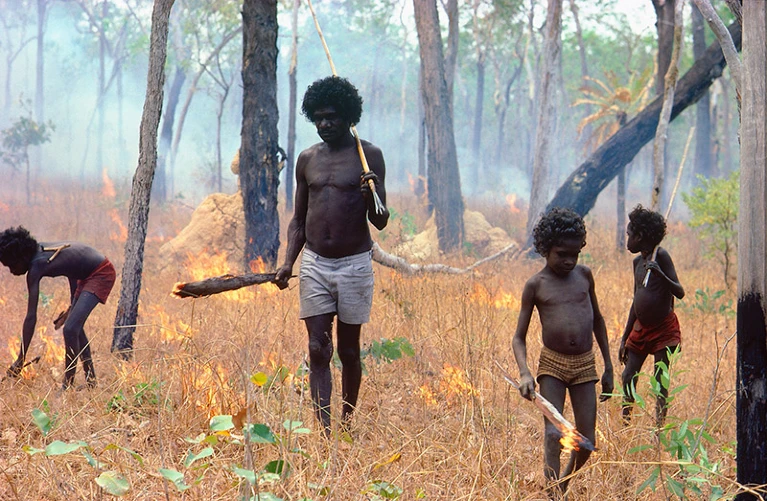
    Aboriginal elder George Milpurrurr shows his children how to make a controlled fire to burn off dangerous dry grass.

    Northern Australian elder George Milpurrurr shows the next generation how to do a cultural burn.Credit: Penny Tweedie/Alamy

    Indigenous Australians have been using fire to shape the country’s northern ecosystems for at least 11,000 years, according to charcoal preserved in the sediment of a sinkhole. The study was published on 11 March in Nature Geoscience1.

    The practice of cultural burning, also known as ‘fire-stick farming’, is integral to Indigenous Australian culture and history, and is understood to have profoundly altered landscapes across the country.

    Fire-stick farming involves introducing frequent, low-intensity fires in small areas of the landscape in a patchy, ‘mosaic’ pattern, and is done early in the dry season. The practice is important culturally and environmentally; in particular, it reduces the amount of fuel available for burning and therefore decreases the intensity of wildfires that might spark late in the dry season because of lightning strikes or other triggers.

    Archaeological evidence indicates that humans have continuously occupied the Australian continent for at least 65,000 years2, but little is known about when the practice of fire-stick farming began.

    “You need a really long record that goes back before people were here so you can see what the natural world — the definitively unimpacted world, if you’d like — looks like and then you’ve got enough of a record to be able to see if anything changed,” says study co-author Michael Bird, a geologist at James Cook University in Cairns, Australia.

    The researchers found that record in the sediment of Girraween Lagoon, a permanent water body formed in a collapsed sinkhole near Darwin in the Northern Territory. The lagoon is an important site for the traditional owners of the land, the Larrakia Nation, and was made famous by the crocodile attack scene in the 1986 film Crocodile Dundee.

    Because the lagoon has remained full, its sediments offer a continuous record of deposition that has not been disturbed by drying out and cracking. Bird and his colleagues were able to extract a core from the bottom of the lagoon that provided a 150,000-year-long record of changes in the type and geochemistry of the deposited charcoal, and in the accumulation of pollen.

    Change in the charcoal

    The team notes that, around 11,000 years ago, the changes in the charcoal deposits point to alterations in the intensity of fires in the area.

    Without human influence, fires are less frequent but have enough intensity to burn trees and leave behind charcoal, says Bird.

    “A less-intense fire doesn’t get into the crown — it’s burning what’s on the ground,” he says. The grass, as well as twigs and fallen tree leaves, are more likely to become charcoal than the trees themselves, he adds.

    Because tree-derived charcoal has higher concentrations of the isotope carbon-13 than does charcoal from grasses, the researchers analysed the composition and geochemistry of the burnt residue in the sample. The authors found a sustained change from low-frequency, high-intensity fires — the ‘natural’ fire regime — to more frequent but less intense ones, which they suggested was the result of Indigenous fire-stick farming.

    The authors ruled out climate change as the cause of the shift by using the ratio of tree pollen to grass pollen as a type of climate history to show that vegetation changes did not explain the shift in the charcoal record.

    However, Bird notes that European colonization has mostly brought an end to cultural burning practices, and has shifted fire intensity back towards a natural pattern. “Because we’ve had, 10,000 plus years of a particular fire regime, it’s the release from that fire regime that’s actually creating quite significant issues,” he says, suggesting that this shift has contributed to the return of more high-intensity wildfires.

    Joe Fontaine, a fire ecologist at Murdoch University in Perth, Australia, says that the growing understanding of how cultural burning has shaped the Australian landscape, particularly in the northern regions, is crucial for contemporary fire-management practices, which to a large extent have excluded Indigenous people and their expertise.

    “The barriers to doing cultural burning, in our arcane system of laws and bureaucracy,” are challenging to overcome, Fontaine says. There are also many more permanent structures in the landscape nowadays than there were before colonization, he says, so the challenge is to work out where and how cultural burning can be restored as a practice.

    The continuing work that “puts cultural burning practices out there and establishes it as something that really existed, is crucial to the evolution of contemporary fire management,” he says.

    [ad_2]

    Source link

  • Oldest stone tools in Europe hint at ancient humans’ route there

    Oldest stone tools in Europe hint at ancient humans’ route there

    [ad_1]

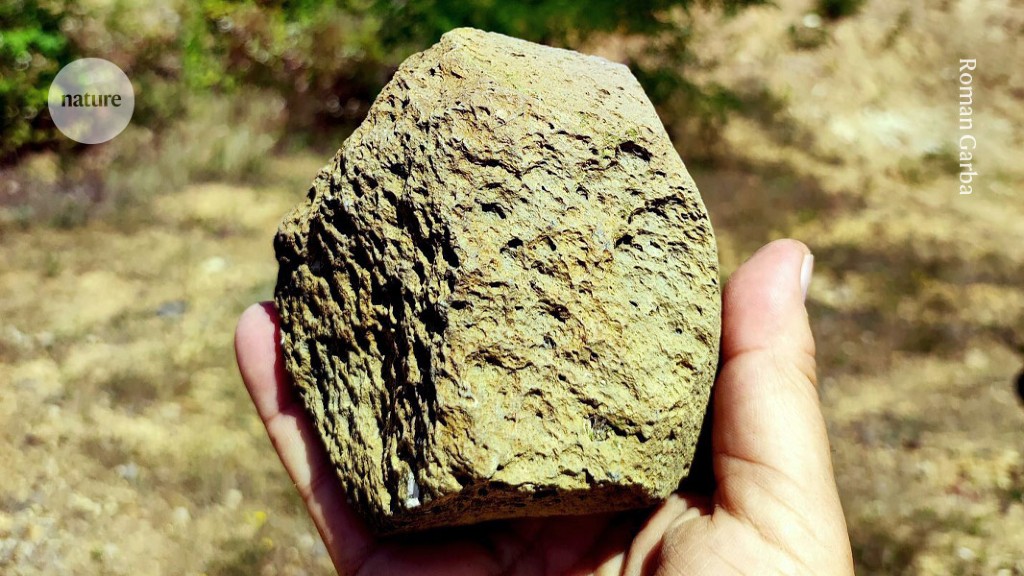
    Close up view of a stone tool possibly from Layer VII at Korolevo I.

    A stone tool from the archaeological site of Korolevo in western Ukraine.Credit: Roman Garba

    Stone tools found in western Ukraine date to roughly 1.4 million years ago1, archaeologists say. That means the tools are the oldest known artefacts in Europe made by ancient humans and offer insight into how and when our early relatives first reached the region.

    The findings support the theory that these early arrivals — probably of the versatile species Homo erectus — entered Europe from the east and spread west, says study co-lead author Roman Garba, an archaeologist at the Czech Academy of Sciences in Prague. “Until now, there was no strong evidence for an east-to-west migration,” he says. “Now we have it.”

    Prehistoric sites documenting the presence of human ancestors in Europe before 800,000 years ago are extremely rare, says Véronique Michel, a geochronologist at the University of Côte d’Azur in Nice, France, who was not involved in the research. “This new study adds another piece to the puzzle [of] the dispersal of early hominins in Europe.”

    The findings were published on 6 March in Nature.

    Set in stone

    The tools were discovered in the 1980s at the Korolevo archaeological site near Ukraine’s border with Romania, yet no one had been able to precisely date them.

    To do so, Garba and his colleagues used a dating method based on cosmogenic nuclides — rare isotopes generated when high-energy cosmic rays collide with chemical elements in minerals on Earth’s surface. Changes in the concentrations of these cosmogenic nuclides can reveal how long ago a mineral was buried. By calculating the ratio of specific cosmogenic nuclides in the sediment layer in which the tools were buried, the team estimated that the implements must be 1.4 million years old. The dating analyses, Michel says, “appear highly reliable”.

    Until now, the earliest precisely dated evidence of hominins in Europe comprised fossils2 and stone tools3 found in Spain and France. Both are 1.1 million to 1.2 million years old.

    Intrepid travellers

    The dates of the Korolevo tools lead the researchers to speculate that the human ancestors who made them were H. erectus, the only archaic humans known to have lived outside Africa about 1.4 million years ago. What’s more, the Korolevo tools resemble those found at archaeological sites in the Caucasus Mountains that have been linked to H. erectus and dated to about 1.8 million years ago, says Mads Knudsen, a geoscientist at Aarhus University in Denmark, who co-led the study. However, Knudsen adds, Korolevo’s most ancient layer of sediment didn’t yield any fossilized human remains, so it is impossible to say for sure that the tools were made by H. erectus.

    Geographically, Korolevo lies between older archaeological sites at the intersection of Asia and Europe, and younger sites in southwestern Europe. The findings give a fuller picture of the direction of travel probably taken by the first Europeans, supporting the idea that they spread from east to west — perhaps along the valleys of the Danube River, Garba says.

    Korolevo is a treasure trove of prehistoric remains, says study co-author Vitaly Usyk, an archaeologist affiliated with the National Academy of Sciences of Ukraine in Kyiv, who visited the site last year with Garba for the first time since the Russian invasion of Ukraine in 2022. The Korolevo site is relatively safe and hasn’t been damaged during the war, although the area is now overgrown with vegetation, Garba says. “I can imagine doing fieldwork there even now.”

    However, Usyk notes, few scientists can participate in field research at Korolevo or anywhere else in the country, because of travel restrictions or because they have fled the conflict. Usyk himself left Ukraine in 2022 and is now working at the Institute of Archaeology in Brno, Czech Republic, with a fellowship that allows him to continue doing his research. “Would I like to go back [to Ukraine]? Yes, of course,” he says. “I would like to organize expeditions to Korolevo to help other scientists reveal how ancient humans came from Africa to Europe.”

    [ad_2]

    Source link

  • A mobile DNA sequence could explain tail loss in humans and apes

    A mobile DNA sequence could explain tail loss in humans and apes

    [ad_1]

    Nature, Published online: 28 February 2024; doi:10.1038/d41586-024-00309-z

    The lack of a tail is one thing that separates apes — including humans — from other primates. Insertion of a short DNA sequence into a gene that controls tail development could explain tail loss in the common ancestor of apes.

    [ad_2]

    Source link

  • Why reciprocity is common in humans but rare in other animals

    Why reciprocity is common in humans but rare in other animals

    [ad_1]

    Nature, Published online: 21 February 2024; doi:10.1038/d41586-024-00308-0

    Reciprocal cooperation can be advantageous, but why it is more common in humans than in other social animals is a puzzle. A modelling and experimental study pinpoints the conditions needed for reciprocity to evolve.

    [ad_2]

    Source link