Tag: Artificial Intelligence

  • Scientists Develop Chemical Synthesis Robot That Outperforms Human Chemists in Speed and Accuracy

    Scientists Develop Chemical Synthesis Robot That Outperforms Human Chemists in Speed and Accuracy

    [ad_1]

    RoboChem

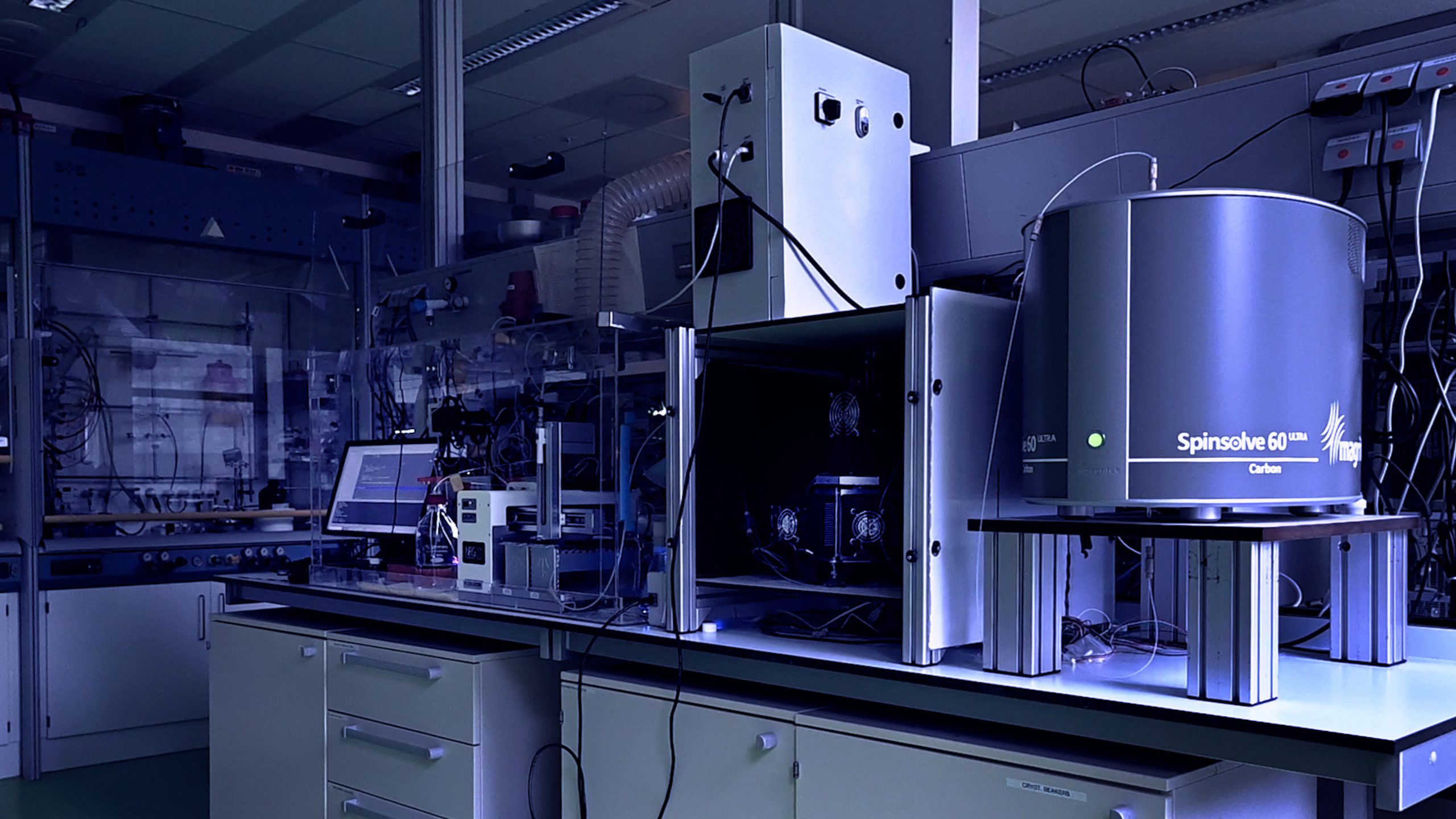
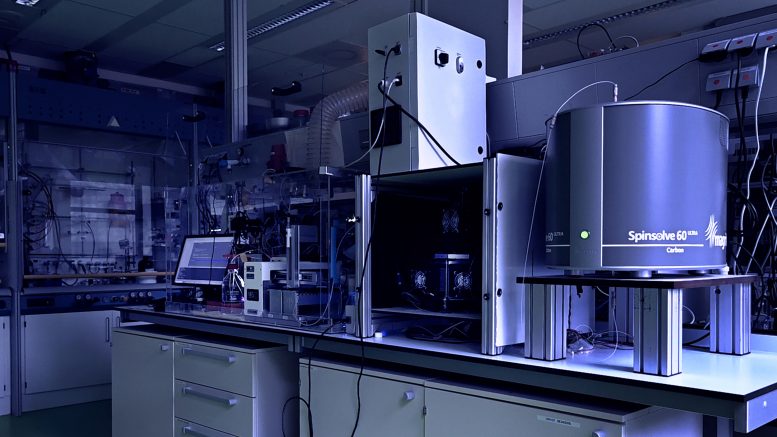
    RoboChem is an autonomous benchtop platform for fast, accurate, and around-the-clock chemical synthesis. Credit: University of Amsterdam

    Chemical researchers at the University of Amsterdam have created a self-operating chemical synthesis robot equipped with an AI-based machine-learning system, named ‘RoboChem’. This compact laboratory instrument surpasses human chemists in speed and precision, while also displaying a high level of ingenuity. As the first of its kind, it could significantly accelerate the chemical discovery of molecules for pharmaceutical and many other applications. RoboChem’s first results were recently published in the journal Science.

    RoboChem was developed by the group of Prof. Timothy Noël at the UvA’s Van ‘t Hoff Institute for Molecular Sciences. Their paper shows that RoboChem is a precise and reliable chemist that can perform a variety of reactions while producing minimal amounts of waste. Working autonomously around the clock, the system delivers results quickly and tirelessly.


    Time-lapse of RoboChem. Credit: University of Amsterdam

    Noël: ‘In a week, we can optimize the synthesis of about ten to twenty molecules. This would take a PhD student several months.’ The robot not only yields the best reaction conditions, but also provides the settings for scale-up. ‘This means we can produce quantities that are directly relevant for suppliers to the pharmaceutical industry, for example.’

    RoboChem’s ‘brain’

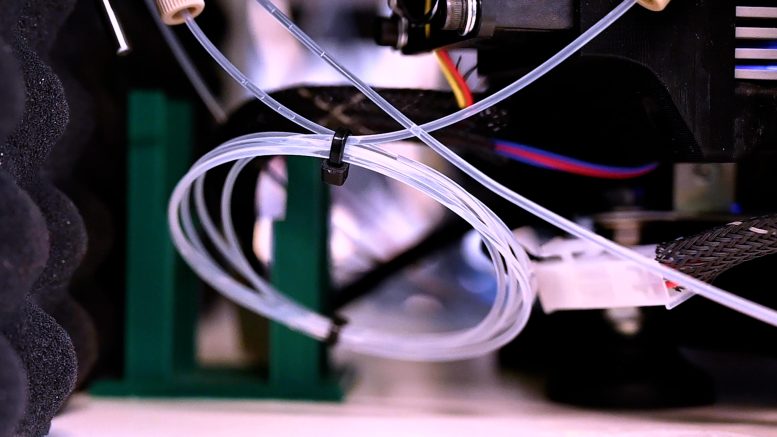
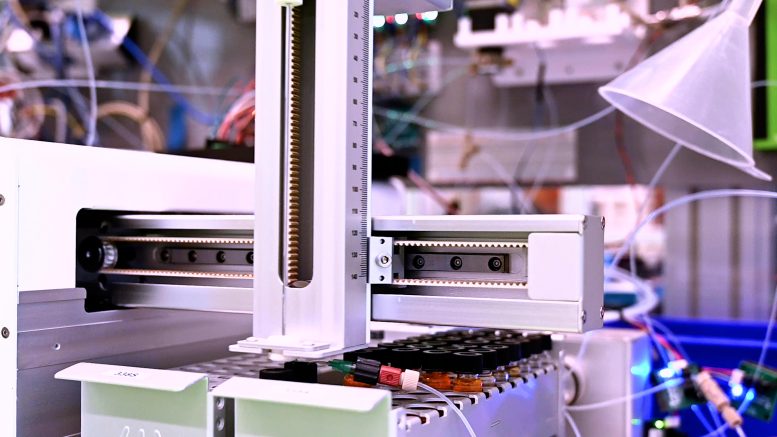
    The expertise of the Noël group is in flow chemistry, a novel way of performing chemistry where a system of small, flexible tubes replaces beakers, flasks, and other traditional chemistry tools. In RoboChem, a robotic needle carefully collects starting materials and mixes these together in small volumes of just over half a milliliter.
    Flow Chemistry in RoboChem

    RoboChem is based on the principles of Flow Chemistry. Reactions are carried out in volumes of just 650 microliter, flowing through small tubes. Credit: University of Amsterdam

    These then flow through the tubing system towards the reactor. There, the light from powerful LEDs triggers the molecular conversion by activating a photocatalyst included in the reaction mixture. The flow then continues towards an automated NMR spectrometer that identifies the transformed molecules. These data are fed back in real time to the computer that controls RoboChem.

    ‘This is the brain behind RoboChem,’ says Noël. ‘It processes the information using artificial intelligence. We use a machine learning algorithm that autonomously determines which reactions to perform. It always aims for the optimal outcome and constantly refines its understanding of the chemistry.’
    Robotic Needle

    A robotic needle sampler selects precise quantities of various reagents and skilfully mixes these to create a reaction solution. Credit: University of Amsterdam

    Impressive ingenuity

    The group put a lot of effort into substantiating RoboChem’s results. All of the molecules now included in the Science paper were isolated and checked manually.

    Noël says the system has impressed him with its ingenuity: ‘I have been working on photocatalysis for more than a decade now. Still, RoboChem has shown results that I would not have been able to predict. For instance, it has identified reactions that require only very little light. At times I had to scratch my head to fathom what it had done. You then wonder: would we have done it the same way? In retrospect, you see RoboChem’s logic. But I doubt if we would have obtained the same results ourselves. Or not as quickly, at least.’
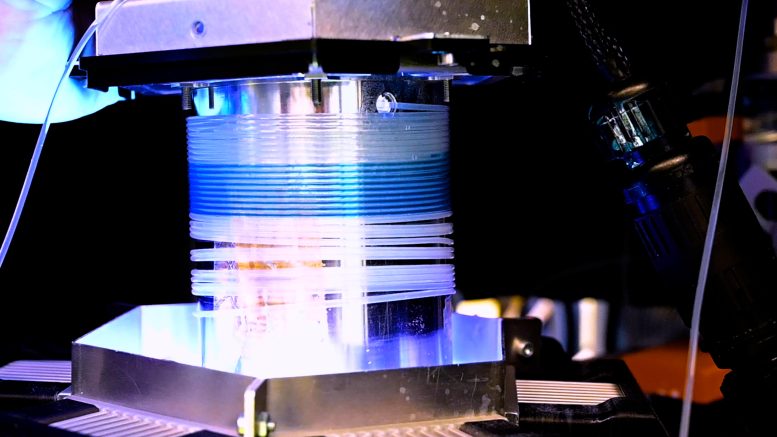
    Photochemical Reactor

    At the heart of RoboChem is a powerful photochemical reactor featuring an array of very powerful LEDs that illuminate the reaction solution. Here the molecules are transformed according to the instructions from the AI controller. Credit: University of Amsterdam

    The researchers also used RoboChem to replicate previous research published in four randomly selected papers. They then determined whether Robochem produced the same – or better – results. ‘In about 80% of the cases, the system produced better yields. For the other 20%, the results were similar,’ Noël says. ‘This leaves me with no doubt that an AI-assisted approach will be beneficial to chemical discovery in the broadest possible sense.’

    Breakthroughs in chemistry using AI

    According to Noël, the relevance of RoboChem and other ‘computerised’ chemistry also lies in the generation of high-quality data, which will benefit the future use of AI. ‘In traditional chemical discovery, only a few molecules are thoroughly researched. Results are then extrapolated to seemingly similar molecules. RoboChem produces a complete and comprehensive dataset where all relevant parameters are obtained for each individual molecule. That provides much more insight.’
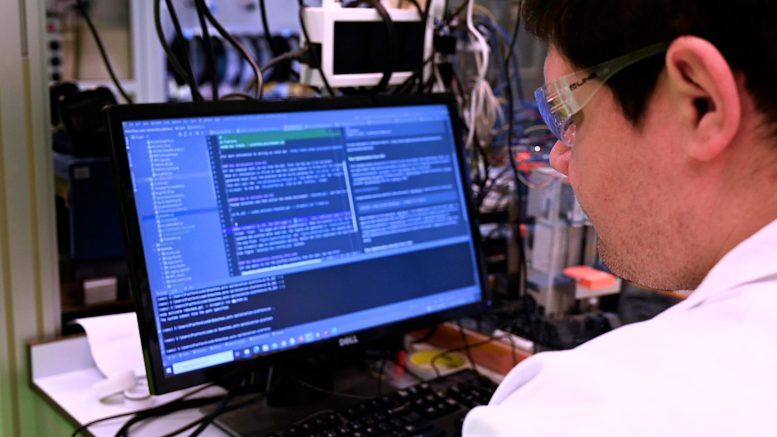
    Setting Up RoboChem

    RoboChem applies a machine-learning algorithm that processes the data obtained from the system. It decides which reactions to execute, always aiming for the optimal outcome. Human intervention only takes place at the beginning, setting up the stock solutions and starting the RoboChem session. Credit: University of Amsterdam

    Another feature is that the system also records ‘negative’ data. In current scientific practice, most published data only reflects successful experiments. ‘A failed experiment also provides relevant data,’ says Noël. ‘But this can only be found in the researchers’ handwritten lab notes. These are not published and thus unavailable for AI-powered chemistry. RoboChem will change that, too. I have no doubt that if you want to make breakthroughs in chemistry with AI, you will need these kinds of robots.’

    Reference: “Automated self-optimization, intensification, and scale-up of photocatalysis in flow” by Aidan Slattery, Zhenghui Wen, Pauline Tenblad, Jesús Sanjosé-Orduna, Diego Pintossi, Tim den Hartog and Timothy Noël, 26 January 2024, Science.
    DOI: 10.1126/science.adj1817


    [ad_2]

    Source link

  • LinkedIn’s New AI Chatbot Wants to Help You Find Your Next Job

    LinkedIn’s New AI Chatbot Wants to Help You Find Your Next Job

    [ad_1]

    LinkedIn is rolling out new features that give premium users looking for a job some artificial-intelligence-powered assistance. The tools use generative AI to advise people whether they may be a good fit for open jobs listed on the platform and how to better tailor their profiles to stand out.

    The new AI features are powered by OpenAI’s technology and are indicated by a sparkle emoji under job listings on LinkedIn. Clicking on it opens a chat window where a person can type queries about a job or select prewritten questions such as “Am I a good fit for this role?” Answers are provided in the form of brief bullet points sourced from scraping company profiles and other information on LinkedIn.

    The automated helper can also answer more specific queries about a job posting, company benefits or culture, or the industry a job is part of. LinkedIn is making the same tools available to help users extract career advice from posts and articles shared on the platform’s feed.

    The updates attempt to solve a longstanding problem: Job hunting sucks. Rohan Rajiv, a director of product management at LinkedIn, likens the process to having to climb over a high wall. The applicant is on one side, unable to see what a company wants to see in a job candidate or what the likelihood of getting an offer. “You’re really hoping that you can reach out to the other side of the wall and figure out: What are my chances here? What is it like to work there?” Rajiv says.

    Some job seekers are already used to tapping AI for help. The advent of generative AI has spurred the appearance of tools that apply to jobs automatically, recruit candidates, and write cover letters.

    LinkedIn is owned by Microsoft, OpenAI’s most significant backer, which has rolled out a series of AI powered “copilots” to help people get things done at work with its productivity tools. The work-centric social network is adding these features in beta mode as the tech industry confronts another uncertain year marked by more layoffs.

    More than 400,000 people have lost jobs in the past two years, according to Layoffs.fyi, a site that tracks layoff announcements in the tech industry. LinkedIn itself cut more than 600 workers last fall. Job seekers have described a nightmare hunt for work, spending their 9 to 5 applying for new roles for weeks.

    Although getting laid off is rarely welcome, the current state of the tech industry is relatively favorable to job seekers. The industry’s unemployment rate sits at just 2.3 percent, according to a January report from CompTIA, a nonprofit trade association for the US IT industry. That’s lower even than the record low set this month by the US national unemployment rate, at 3.4 percent, according to the Department of Commerce. And there are 392,000 open roles in the tech industry across the US, according to CompTIA.

    Grueling Experience

    Even in a favorable job market, securing a new position is often a lengthier process than it has been in the past. Employers have broadened the application process, adopting complex candidate management platforms and requiring more interviews, working interviews, and tests.

    The average recruitment process in the US now lasts 43 days, according to 2023 research from The Josh Bersin Company, a human resources advisory group. Many job seekers feel burned out. A February report from CompTIA found that nearly half looking for jobs in the tech industry cite the time commitment required as a top challenge. The same survey found evidence that workers are adopting tech-powered shortcuts: 17 percent of respondents had used AI to match their skills to a potential job, while 30 percent said they planned to do so.

    [ad_2]

    Source link

  • Confessions of an AI Clickbait Kingpin

    Confessions of an AI Clickbait Kingpin

    [ad_1]

    “I’m not a fan of AI,” Nebojša Vujinović Vujo says. The admission surprises me: He has built a bustling business by snapping up abandoned news outlets and other websites and stuffing them full of algorithmically generated articles. Although he accepts that his model rankles writers and readers alike, he says he’s simply embracing an unstoppable new tool—large language models—in the same way people rationally swapped horse-drawn buggies for gas-powered vehicles. “I hate cars. They’re making my planet bad,” he says. “But I’m not riding a horse anymore, right? I’m driving a car.”

    I connected with Vujo after digging into the strange afterlife of indie women’s blog The Hairpin, which shut down in 2018. Last month, its website reawakened. In place of the voicey, funny blog posts it was known for, the site began churning out AI-generated, search-engine-optimized pablum about dream interpretations and painfully generic relationship advice like “effective communication is vital.”

    When I emailed an address listed on the zombie site’s About Us page, Vujo responded, claiming that it was just one of more than 2,000 sites he operates, in an AI-content-fueled fiefdom built by acquiring once-popular domains fallen on hard times. He’s the CEO of the digital marketing firm Shantel, which monetizes its AI-populated sites through programmatic ads, sponsored content, and selling the placement of “backlinks” to website owners trying to boost their credibility with search engines. He often targets distressed media sites because they have built-in audiences and a history of ranking highly in search results.

    The foundation of that business is a long-established practice known as domain squatting—buying up web domains that once belonged to established brands and profiting off their reputations with Google and other search engines. Lily Ray, senior director of SEO at the marketing agency Amsive, calls it “the underbelly of the SEO industry.” But Vujo is part of a wave of entrepreneurs giving this old trade a new twist by using generative AI.

    It’s dusk where I live in Chicago when I talk via Zoom with Nebojša Vujinović Vujo. (Although that’s the name he gives me, he has sometimes gone by just Nebojša Vujinović, including on the registration information for some of his domains.) It’s midnight in Belgrade, Serbia, where he lives with his girlfriend and their toddler, but he’s wide awake and chatty. Vujo attributes his erratic sleep schedule to years of late nights working as a DJ and still makes music—he likes to mix pop with Balkan folk and is working on a new song called “Fat Lady.” But right now he’s eager to talk, human-to-human, about his AI-fueled hustle.

    He gets why writers are unhappy that their work has been erased and replaced by clickbait. (The Hairpin’s founding editor, Edith Zimmerman, calls his version of the site “grim.”) But he defends his choices, pointing out that his life has been tougher than that of the average American blogger. Although ethnically Serbian, Vujo was born in what is now known as Bosnia and Herzegovina, and his family fled during the breakup of Yugoslavia. “I had two wars I escaped. I changed nine elementary schools because we were moving. We were migrants,” he says. “It was terrible to grow up in this part of the world.” He says his economic options have been limited, and this was simply a path available to him.

    Vujo also insists that he does have editorial standards; although the majority of the blog posts he publishes are created with ChatGPT, he employs a staff of about a dozen human editors to check its work to avoid anything outright offensive. “Maybe it would be better for you that I’m a bad guy,” he tells me. “Better for your story. But I’m just an ordinary guy.”

    Easy, Fast, and Insane

    Vujo’s first big domain squatting victory came in 2017 when Italian chef Antonio Carluccio died, and it appears someone forgot to renew one of the websites associated with him. Vujo still talks about his good luck in scooping up the domain and turning it into a cooking-themed content mill. “It’s mine now,” he tells me cheerfully. “He almost invented carbonara—he’s a big celebrity!” Vujo has since also picked up Pope2you.net, formerly an official Vatican website meant to connect Pope Benedict XVI with younger believers, and TrumpPlaza.com, named after residential towers in Jersey City, New Jersey, codeveloped by former President Trump.

    Vujo says his most significant—and consistently profitable—purchase is women’s media outlet The Frisky, which he acquired not long after he scored the Carluccio site. “It cost a lot—all the money that I had—but that was my opportunity,” he says. “It was life-changing.” (BuzzFeed News reported on the purchase in 2019.) Vujo says the site generated over $500,000 in the first year he bought the domain. In addition to healthy income from ads and clients willing to pay for backlinks, the brand was a magnet for companies willing to pay for sponsored posts. Because the outlet had long embraced risque topics, Vujo says sex toy companies are eager to do business with him.

    [ad_2]

    Source link

  • UK research investment will boost semiconductor chip technology

    UK research investment will boost semiconductor chip technology

    [ad_1]

    New funding and support has been unveiled today to back British scientists working on world-leading semiconductor chip technology development, which could help power advancements in AI and underpin the technologies needed to reach net zero.

    Two new ‘Innovation and Knowledge Centres’ will receive £11m each to help bring new semiconductor chip technologies to market.

    To coincide with the Department for Science, Innovation and Technology’s one-year anniversary, two new research hubs in Southampton and Bristol have received a cash injection to boost silicon photonics and compound semiconductors research.

    Semiconductors are a key component in nearly every electrical device in the world, from mobile phones to medical equipment.

    They underpin future technologies in net zero, AI, and quantum technology, and are increasingly recognised as an area of global strategic significance.

    Advancing chip technology at the new hubs

    Each £11m site will help convert scientific findings into business realities. They will support promising research and projects, offering researchers access to state-of-the-art prototyping technology essential for testing their complex designs and nurturing early-stage companies.

    This includes empowering spin-outs with training, workshops, and vital industry contacts, ensuring they are fully equipped for when their products are market-ready.

    The REWIRE facility at the University of Bristol will support semiconductor chip technology companies across the South West and Wales, helping to accelerate the UK’s net zero ambition by advancing high-voltage electronic devices with cutting-edge compound semiconductors.

    The Cornerstone Information and Knowledge Centre in Southampton will build on the University’s specialism in silicon photonics. This is an emerging area of research in semiconductors, where light is used to communicate information instead of electricity – meaning the chips made using this technology are much quicker than standard semiconductors.

    World-leading silicon photonics researcher Professor Graham Reed, who will lead the Cornerstone facility, said: “The Cornerstone IKC will unite leading UK entrepreneurs and researchers, together with a network of support to improve the commercialisation of semiconductors and deliver a step-change in the chip technology industry.”

    Delivering on the ambitions of the National Semiconductor Strategy

    Further funding of £4.8m in 11 semiconductor skills projects nationwide aims to elevate talent across all educational tiers, from school through to university and beyond.

    This funding will not only raise awareness of the chip technology industry but also help to address key gaps in the UK’s workforce talent and training framework.

    The centres will help to deliver on the ambitions of the government’s £1bn National Semiconductor Strategy, a 20-year plan detailing how the government will drive forward the UK’s strengths and skills in design, R&D and compound semiconductors.

    This investment is a clear example of the government’s commitment to working in partnership with industry to support chip technology and achieve the goals of the National Semiconductor Strategy, building on our strengths to grow the UK’s sector.

    Saqib Bhatti, Minister for Tech and the Digital Economy, concluded: “This investment marks a crucial step in advancing our ambitions for the semiconductor industry, with these centres helping bring new technologies to market in areas like net zero and AI, rooting them right here in the UK.

    “Just nine months into delivering on the National Semiconductor Strategy, we’re already making rapid progress towards our goals.

    “This isn’t just about fostering growth and creating high-skilled jobs; it’s about positioning the UK as a hub of global innovation, setting the stage for breakthroughs that have a worldwide impact.”

    [ad_2]

    Source link

  • Mystery Company Linked to Biden Robocall Identified by New Hampshire Attorney General

    Mystery Company Linked to Biden Robocall Identified by New Hampshire Attorney General

    [ad_1]

    On Tuesday, New Hampshire Attorney General John Formella said that a Texas-based telecom company was behind the reportedly AI-generated robocalls impersonating President Joe Biden that went out ahead of the state’s presidential primary last month.

    At a press conference on Tuesday, Formella announced that he had identified Life Corporation and its owner, Walter Monk, as the source behind the thousands of calls, and announced that his office issued a cease-and-desist letter to the company and had opened a criminal investigation into the matter. The Federal Communications Commission sent its own cease-and-desist letters to Life Corporation, as well as another Texas company, Lingo Telecom, the alleged voice service provider of the calls.

    “Ensuring public confidence in the electoral process is vital,” Formella said at the Tuesday press conference. “We’re providing this update and information today to assure the public that we take this seriously and that this is one of our most important priorities. We are also providing this update and information to send a strong message of deterrence to any person or entity who would attempt to undermine our elections through AI or other means.”

    Formella said that anywhere from 5,000 to 25,000 of these robocalls were placed ahead of the New Hampshire primary to mimicked Biden and discourage voters from voting. “Your vote makes a difference in November, not this Tuesday,” the robocall said.

    In January, WIRED reported that two teams of researchers had determined that the call was created with voice-cloning software from the AI startup Eleven Labs. The company declined to take responsibility for the Biden clone, telling WIRED that it was “dedicated to preventing the misuse of audio AI tools.”

    Last week, the FCC put out a new proposal to ban robocalls that used AI-generated voices by updating the Telephone Consumer Protection Act, or TCPA, a 1991 law that regulates telemarketers. The FCC has used the TCPA in the past to go after junk callers, including conservative activists Jacob Wohl and Jack Burkman. In 2021, the FCC fined the pair more than $5 million for violating the law after they placed calls threatening to release the personal information of voters if they voted by mail in the 2020 election.

    “Consumers deserve to know that the person on the other end of the line is exactly who they claim to be,” FCC Chairwoman Jessica Rosenworcel said in a statement on Tuesday.

    [ad_2]

    Source link

  • This robot can figure out how to open almost any door on its own

    This robot can figure out how to open almost any door on its own

    [ad_1]


    A wheeled robot set loose on a college campus has figured out how to open all kinds of doors and drawers while rolling around in the real world.

    The robot adapted to new challenges on its own – paving the way for machines capable of independently interacting with physical objects. “You want the robots to work autonomously… without relying on humans to keep giving examples at test time for every new kind of scenario that you’re in,” says Deepak Pathak at Carnegie Mellon University (CMU) in Pennsylvania.

    Pathak and his colleagues initially trained the robot through imitation learning, providing visual examples of how to open objects such as doors, cabinets, drawers and refrigerators. They then turned it loose on the CMU campus to try opening doors and cabinets it had never encountered before. This required the robot to adapt to each new object using artificial intelligence that rewarded it for figuring things out.

    The robot typically spent from 30 minutes to an hour learning how to consistently open each object, says Haoyu Xiong at CMU, who built the robot and scouted out the campus for a wide variety of test locations. The team included 12 training objects for practice and then eight additional objects as a test of the robot’s capabilities.

    Although its initial success rate was about 50 per cent on average, the robot sometimes completely failed to open a new object when first starting out. By the end, its success rate rose to about 95 per cent.

    In addition to learning on the fly, it had to be able to physically handle heavy doors,  says Russell Mendonca at CMU. Achieving both goals cost $25,000, he says, which is much less expensive than other robotic systems with adaptive learning capabilities.

    The robotic demonstration outside the lab “marks a concrete step toward more general robotic manipulation systems”, says Yunzhu Li at the University of Illinois Urbana-Champaign. “Opening doors and drawers – a seemingly simple task for humans – is actually surprisingly difficult for robots,” he says.

    Topics:

    [ad_2]

    Source link

  • Meta Will Crack Down on AI-Generated Fakes—but Leave Plenty Undetected

    Meta Will Crack Down on AI-Generated Fakes—but Leave Plenty Undetected

    [ad_1]

    Meta, like other leading tech companies, has spent the past year promising to speed up deployment of generative artificial intelligence. Today it acknowledged it must also respond to the technology’s hazards, announcing an expanded policy of tagging AI-generated images posted to Facebook, Instagram, and Threads with warning labels to inform people of their artificial origins.

    Yet much of the synthetic media likely to appear on Meta’s platforms is unlikely to be covered by the new policy, leaving many gaps through which malicious actors could slip. “It’s a step in the right direction, but with challenges,” says Sam Gregory, program director of the nonprofit Witness, which helps people use technology to support human rights.

    Meta already labels AI-generated images made using its own generative AI tools with the tag “Imagined with AI,” in part by looking for the digital “watermark” its algorithms embed into their output. Now Meta says that in coming months it will also label AI images made with tools offered by other companies that embed watermarks into their technology.

    The policy is supposed to reduce the risk of mis- or disinformation being spread by AI-generated images passed off as photos. But although Meta said it is working to support disclosure technology in development at Google, OpenAI, Microsoft, Adobe, Midjourney, and Shutterstock, the technology is not yet widely deployed. And many AI image generation tools are available that do not watermark their output, with the technology becoming increasingly easy to access and modify. “The only way a system like that will be effective is if a broad range of generative tools and platforms participated,” says Gregory.

    Even if there is wide support for watermarking, it is unclear how robust any protection it offers will be. There is no universally deployed standard in place, but the Coalition for Content Provenance and Authenticity (C2PA), an initiative founded by Adobe, has helped companies start to align their work on the concept. But the technology developed so far is not foolproof. In a study released last year, researchers found they could easily break watermarks, or add them to images that hadn’t been generated by AI to make it appear that they had.

    Malicious Loophole

    Hany Farid, a professor at the UC Berkeley School of Information who has advised the C2PA initiative, says that anyone interested in using generative AI maliciously will likely turn to tools that don’t watermark their output or betray its nature. For example, the creators of the fake robocall using President Joe Biden’s voice targeted at some New Hampshire voters last month didn’t add any disclosure of its origins.

    And he thinks companies should be prepared for bad actors to target whatever method they try to use to identify content provenance. Farid suspects that multiple forms of identification might need to be used in concert to robustly identify AI-generated images, for example by combining watermarking with hash-based technology used to create watch lists for child sex abuse material. And watermarking is a less developed concept for AI-generated media other than images, such as audio and video.

    “While companies are starting to include signals in their image generators, they haven’t started including them in AI tools that generate audio and video at the same scale, so we can’t yet detect those signals and label this content from other companies,” Meta spokesperson Kevin McAlister acknowledges. “While the industry works towards this capability, we’re adding a feature for people to disclose when they share AI-generated video or audio so we can add a label to it.”

    Meta’s new policies may help it catch more fake content, but not all manipulated media is AI-generated. A ruling released on Monday by Meta’s Oversight Board of independent experts, which reviews some moderation calls, upheld the company’s decision to leave up a video of President Joe Biden that had been edited to make it appear that he is inappropriately touching his granddaughter’s chest. But the board said that while the video, which was not AI-generated, didn’t violate Meta’s current policies, it should revise and expand its rules for “manipulated media” to cover more than just AI-generated content.

    McAlister, the Meta spokesperson, says the company is “reviewing the Oversight Board’s guidance and will respond publicly to their recommendations within 60 days in accordance with the bylaws.” Farid says that hole in Meta’s policies, and the technical focus on only watermarked AI-generated images, suggests the company’s plan for the gen AI era is incomplete.

    [ad_2]

    Source link

  • UK introduces bold measures to strengthen AI regulation

    UK introduces bold measures to strengthen AI regulation

    [ad_1]

    The UK is on course for more agile AI regulation, backing regulators with the skills and tools they need to address the risks and opportunities of AI as part of the government’s response to the AI Regulation White Paper consultation today.

    The AI regulation measures come as £10m in funding has been announced to prepare and upskill regulators to address the risks and harness the opportunities of this defining technology.

    The fund will help regulators develop cutting-edge research and practical tools to monitor and address risks and opportunities in their sectors, from telecoms and healthcare to finance and education.

    Examples could include new technical tools for examining AI systems.

    Helping key regulators navigate AI measures

    Many regulators have already taken action. For example, the Information Commissioner’s Office has updated guidance on how our strong data protection laws apply to AI systems that process personal data to include fairness and has continued to hold organisations accountable, such as through issuing enforcement notices.

    However, the UK government wants to build on this by further aiding them with AI regulation as use of the technology ramps up.

    The UK’s agile regulatory system will simultaneously allow regulators to respond rapidly to emerging risks while giving developers room to innovate and grow in the UK.

    In a drive to boost transparency and provide confidence to British businesses and citizens, key regulators, including Ofcom and the Competition and Markets Authority, have been asked to publish their approach to managing the technology by 30 April.

    It will see them set out AI-related risks in their areas, detail their current skillset and expertise to address them, and plan how they will approach AI regulation over the coming year.

    The UK will become a leader in AI safety

    This forms part of the AI Regulation White Paper consultation response, published today, which carves out the UK’s own approach to regulation and will ensure it can quickly adapt to emerging issues and avoid placing burdens on businesses which could stifle innovation.

    ai regulation
    © shutterstock/Beautrium

    This approach to AI regulation will mean the UK can be more agile than competitor nations while also leading AI safety research and evaluation, charting a bold course for the UK to become a leader in safe, responsible AI innovation.

    Secretary of State for Science, Innovation, and Technology Michelle Donelan said: “The UK’s innovative approach to AI regulation has made us a world leader in both AI safety and AI development.

    “I am driven by AI’s potential to transform our public services and the economy for the better – leading to new treatments for cruel diseases like cancer and dementia and opening the door to advanced skills and technology that will power the British economy of the future.”

    Other initiatives for responsible AI regulation

    Meanwhile, almost £90m will go towards launching nine new research hubs across the UK and a partnership with the US on responsible AI regulation.

    The hubs will support British AI expertise in harnessing the technology across areas including healthcare, chemistry, and mathematics.

    £19m will also go towards 21 projects to develop innovative, trusted, and responsible AI and Machine Learning solutions to accelerate the deployment of these technologies and drive productivity.

    These measures sit alongside the £100m invested by the government in the world’s first AI Safety Institute to evaluate the risks of new AI models and the global leadership shown by hosting the world’s first major summit on AI safety at Bletchley Park in November.

    “I welcome the UK government’s statement on the next steps for AI regulation, and the balance it strikes between supporting innovation and ensuring AI is used safely and responsibly,” stated Lila Ibrahim, Chief Operating Officer of Google DeepMind.

    Markus Anderljung, Head of Policy at Centre for the Governance of AI, added: “The UK’s approach to AI regulation is evolving in a positive direction: it heavily relies on existing regulators, takes concrete steps to support them, while also investing in identifying and addressing gaps in the regulatory ecosystem.”

    [ad_2]

    Source link

  • Shaping a sustainable and innovative future

    Shaping a sustainable and innovative future

    [ad_1]

    With a commitment to collaboration and demonstrated leadership in energy, health and Artificial Intelligence, the University of Alberta is a critical partner in solving the world’s most pressing challenges.

    In the heart of the province of Alberta, the University of Alberta (U of A) stands as a beacon of innovation, shaping a future that addresses the grand challenges of our time. With a commitment to collaborative excellence, the U of A seamlessly integrates its leadership in energy, health, and artificial intelligence (AI), enabling a multidisciplinary approach that propels groundbreaking research and innovation forward.

    With the recent expansion of Horizon Europe, the world’s most extensive research and innovation funding programme, into Canada, the University of Alberta is poised to be a key partner of choice in developing solutions to the world’s most pressing challenges. Garnering more than $550m (€375.9m) annually in sponsored research revenue, the
    U of A stands as an intellectual powerhouse. Collaborations with over 150 companies, contributing more than $36m (€24.6m) annually, underscore the tangible support from industry for the U of A’s numerous research initiatives.

    Darren Fast, Associate Vice-President (Innovation, Knowledge
    Mobilization & Partnerships), University of Alberta.

    Pioneering sustainable energy solutions

    Alberta, a global energy hub, has a key contributor in the U of A. Recognised as Canada’s top university in energy research, the U of A boasts a strong network of industry, government, academic, and community partners. This collaborative ethos extends beyond the institution, fostering an ideal environment for testing and commercialising scalable solutions that drive the transition to more sustainable energy technologies.

    World-renowned energy researchers – including 19 Canada Research Chairs, a federal programme that recognises research excellence in engineering and the natural sciences, health sciences, humanities, and social sciences – coupled with cutting-edge facilities, position the U of A as a global leader in developing and commercialising net-zero energy solutions.

    As Alberta increasingly focuses on hydrogen as a sustainable energy source, the U of A’s research focuses on overcoming challenges associated with next-generation hydrogen technologies. From developing catalysts for turquoise, blue, and green hydrogen production to designing safe and effective transportation and storage systems, the U of A collaborates closely with the Alberta Hydrogen Centre of Excellence.

    In Carbon Capture, Utilisation and Storage (CCUS), the University of Alberta leverages expertise in point-source and direct air capture, geological storage, and carbon dioxide utilisation. Aiming to reduce the cost of CCUS, the U of A explores synergies like co-locating direct air capture plants near CO2 hubs. This strategy not only lowers the cost of harmful emissions but also identifies valuable products manufactured, including carbon fibre from bitumen, using CO2 as a raw material.

    Related research initiatives include developing new materials for CO2 capture, integrating them into processes, and offering a test bed in collaboration with the Alberta Carbon Conversion Technology Centre. The U of A leads in advanced modelling and experimental methods for identifying storage sites, monitoring and forecasting, and ensuring the safety and efficiency of CCUS technologies.

    Meanwhile, in the waste streams of Alberta’s oil and gas industry, critical minerals lie in wait to be responsibly reclaimed and utilised. Collaborating with an extensive network of academic, industrial, and Indigenous groups, the U of A addresses key technical, economic, environmental, and social challenges, ensuring a robust national critical minerals value chain. As energy systems evolve, new tools will be required to measure and address the environmental impacts of both new and legacy technologies. At the University of Alberta, work in this area provides rapid, accurate, cost-effective monitoring, mitigation, remediation and reclamation technologies and processes.

    In the area of critical minerals, research spans a range of areas, from exploring and identifying rare earth elements and uranium deposit potentials to developing technologies for extracting lithium from brines and collaborating with major mining companies to enhance production. This leading-edge work promises not only environmental sustainability but also economic and technological advancement.

    Transformative health solutions

    At the forefront of health innovation, the University of Alberta leads in biomanufacturing, leveraging its expertise to address critical health challenges. With a strategic focus on the Canadian Critical Drug Initiative (CCDI) and its role as the central institution in the PRAIRIE Hub for Pandemic Preparedness, the U of A is shaping a resilient future in healthcare.

    A beacon of progress, the U of A collaborates with Applied Pharmaceutical Innovation (API) to spearhead the CCDI. This groundbreaking initiative is poised to revolutionise small-molecule drug production, representing the majority of drugs administered in Canada. With the potential to create up to 1,000 high-paying jobs, the CCDI addresses immediate healthcare needs and provides a stable revenue source for the region.

    University of Alberta

    Recognising its cross-disciplinary strength in combating COVID-19 and potential pandemic diseases, the U of A has taken the lead in the PRAIRIE Hub for Pandemic Preparedness. Positioned as the central institution, the U of A collaborates with major partners across Canada, including the University of Calgary, the University of Saskatchewan, the University of Manitoba, and more. This collaborative effort accelerates developing and commercialising vaccines, antivirals, and diagnostics, ensuring a robust response to future health crises.

    The U of A’s proactive stance in establishing the PRAIRIE Hub receives significant support, with a $2m (€1.4m) allocation over four years and access to a potential $570m (€323m) in federal funding. By safeguarding Canada and the world against potential pandemic pathogens, the U of A’s leadership in the PRAIRIE Hub exemplifies its commitment to advancing solutions for a resilient and prepared future in healthcare.

    As the U of A pioneers innovative health solutions, the CCDI initiative and the PRAIRIE Hub reinforce the university’s pivotal role in shaping a robust and responsive healthcare ecosystem.

    AI leadership

    In the dynamic landscape of AI and machine learning, the University of Alberta stands as a global leader, home to some of the world’s top researchers in these transformative fields. Recognised for its exceptional contributions, the U of A has secured $100m (€68.7m) in funding for AI since 2017, reflecting its commitment to pushing the boundaries of AI research and application.

    Boasting one of Canada’s oldest and largest computing science departments, the U of A has earned an international reputation for advancing both the foundations and applications of computing. Meanwhile, a commitment to AI education has led to the creation of Everywhere, a new course at the U of A to equip students across disciplines with crucial AI understanding in collaboration with the Alberta Machine Intelligence Institute (Amii).

    The course marks just one example of the U of A’s collaboration with Amii, a globally recognised hub for AI excellence and one of Canada’s three named institutes in the Pan-Canadian AI Strategy. The two organisations work closely to advance leading-edge AI and machine learning research, support talent recruitment and development, and provide pathways for emerging researchers and academics to collaborate directly with industry partners.

    In AI in health, the Medical Informatics Group collaborates extensively with medical researchers and clinicians to develop meticulous diagnostics. Their focus spans various medical domains, including cancers (breast, brain, and leukaemia, among others), transplant, diabetes, stroke, and depression, showcasing the broad societal impact of AI in healthcare.

    This unified vision integrates AI with the U of A’s groundbreaking work in energy and health, positioning the university at the forefront of innovation. A multidisciplinary approach emphasises the interconnectedness of energy and environment, health, and artificial intelligence, exemplifying the U of A’s commitment to shaping a sustainable and technologically advanced future.

    Forging a path to tomorrow

    The University of Alberta’s journey through energy, health, and artificial intelligence is not merely a collection of disparate achievements; it is a tapestry woven with threads of innovation, collaboration, and commitment. The seamless integration of these pillars reflects the U of A’s dedication to addressing the grand challenges of our time.

    As a global leader, the U of A’s cutting-edge research and collaborative ethos propel us toward a future where sustainability, health, and technology converge. The intertwining narratives of net-zero energy solutions, transformative healthcare, and AI leadership demonstrate the university’s capabilities and role as a positive change catalyst.

    The recent agreement between Canada and the European Union to allow Canadian institutions to pursue research as part of the Horizon Europe programme provides new opportunities for the U of A to collaborate. The Horizon Europe research objectives for climate, energy and health are areas where the University of Alberta has demonstrated world-leading expertise. Pursuing those opportunities will further the U of A’s place as an essential partner of choice for like-minded organisations working to address today’s global challenges.

    Please note, this article will also appear in the seventeenth edition of our quarterly publication.

    [ad_2]

    Source link

  • Ancient Herculaneum scroll piece revealed by AI – here’s what it says

    Ancient Herculaneum scroll piece revealed by AI – here’s what it says

    [ad_1]

    The winners of the Vesuvius Challenge grand prize used technology to decipher a damaged papyrus scroll

    Vesuvius Challenge

    Artificial intelligence has helped decipher an ancient papyrus scroll, which was transformed into a lump of blackened carbon by volcanic ash from Mount Vesuvius in AD 79. The first passages of readable text reveal never-before-seen musings from a Greek philosopher.

    The discovery nabbed the $700,000 grand prize in the Vesuvius Challenge, and used a combination of 3D mapping and AI techniques to detect ink and decipher letter shapes within segments of scrolls known as the Herculaneum papyri, which had been digitally scanned. The combined efforts of the winning team members – Youssef Nader, Luke Farritor and Julian Schilliger – could pave the way for more discoveries from additional papyrus scrolls that were once housed in a library in the ancient Roman town of Herculaneum.

    “I think it’s going to be a huge boon to our knowledge of ancient philosophy, just gigantic – a staggering amount of new text,” says Michael McOsker at the University College London, who was not involved in the discovery.

    The winning submission met the Vesuvius Challenge criteria of deciphering more than 85 per cent of characters in four passages consisting of 140 characters each – and as a bonus, it included another 11 columns of text for a total of more than 2000 characters.

    Those rediscovered Greek letters reveal the thoughts of Philodemus, who is thought to have been the philosopher-in-residence at the library that housed the Herculaneum papyri. The deciphered text focuses on how the scarcity or abundance of food and other goods impacts the pleasure they deliver. That fits Philodemus’s Epicurean school of philosophy, which prioritised pleasure as the main goal in life. His 2000-year-old writing even appears to possibly take a dig at the Stoic school of philosophy that has “nothing to say about pleasure”.

    And the Vesuvius Challenge isn’t over. Its 2024 goals include figuring out how to scale up the 3D scanning and digital analysis techniques without becoming too expensive. The current techniques cost $100 per square centimetre, meaning that it could cost between $1 million and $5 million to virtually unroll an entire scroll – and there are 800 scrolls waiting to be deciphered.

    “Realistically, the vast majority of the known, already unrolled library is Epicurean philosophy and that’s what we should expect, but there are also important Stoic texts, maybe some history and some Latin literature. Complete texts of authors like Ennius or Livius Andronicus, early Roman authors [whose works] did not survive, would be great,” says McOsker. “Epicurus’s Symposium, in which he wrote about the biology of wine consumption, would be a lot of fun.”

    Topics:

    [ad_2]

    Source link