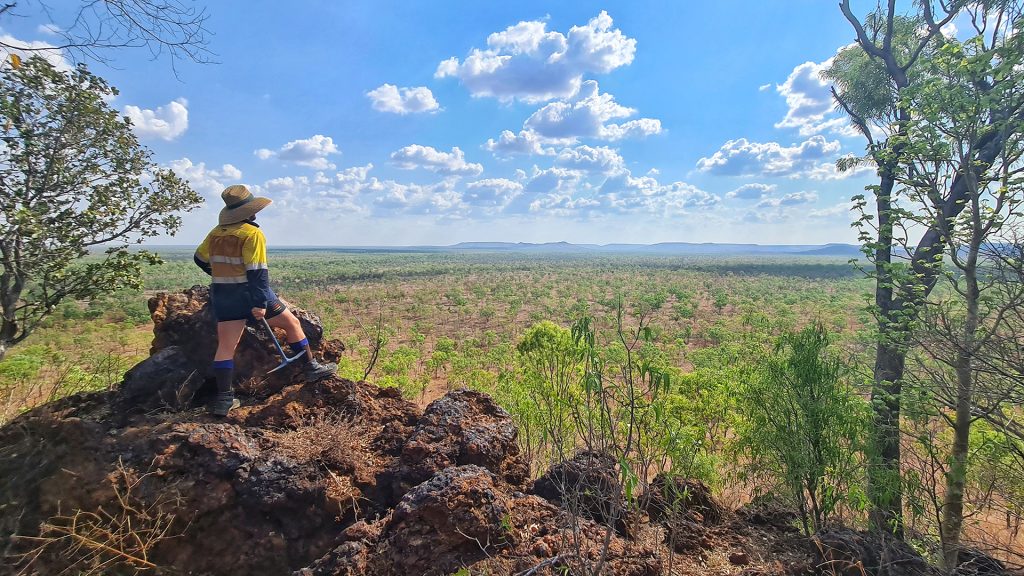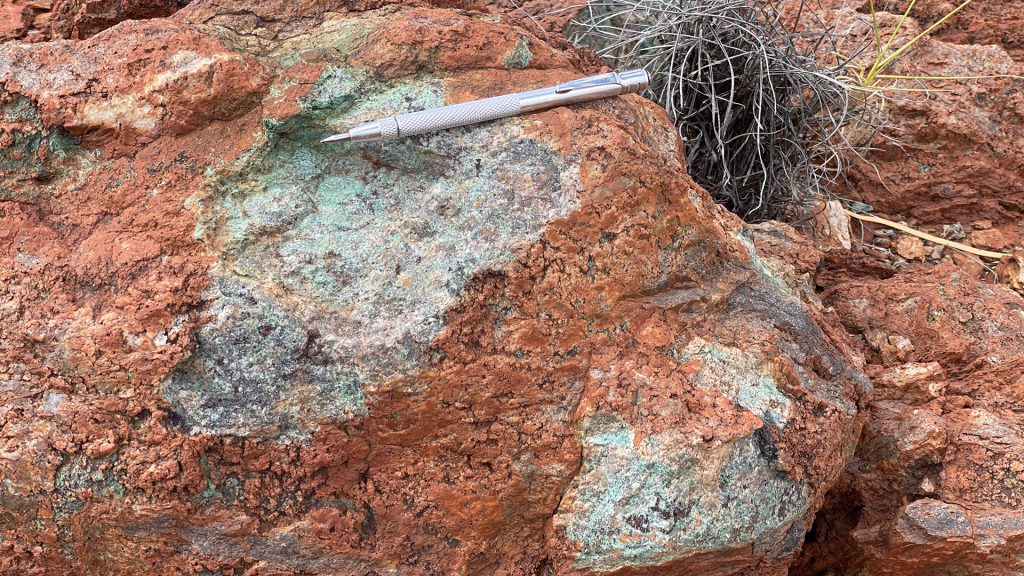
Tag: Australia

  • A deep dive into Rincon Resources’ West Arunta project

    A deep dive into Rincon Resources’ West Arunta project

    [ad_1]

    Rincon Resources’ exploration of Australia’s newest critical mineral province, the West Arunta Region, has yielded highly promising results thus far.

    Rincon Resources is an Australian minerals exploration company with a keen eye on Western Australia’s mineral-rich landscapes, where it has set its sights on unlocking the untapped potential for big copper and rare earth element (REE) deposits.

    Boasting a portfolio of highly prospective projects, Rincon is making notable progress, particularly within the dynamic West Arunta region, which is fast earning acclaim as one of Australia’s most exciting critical mineral provinces.

    This article offers detailed insight into Rincon’s West Arunta Project, shedding light on its promising copper and REE prospects while highlighting recent developments that underscore its trajectory towards success.

    Discovering West Arunta’s mineral wealth

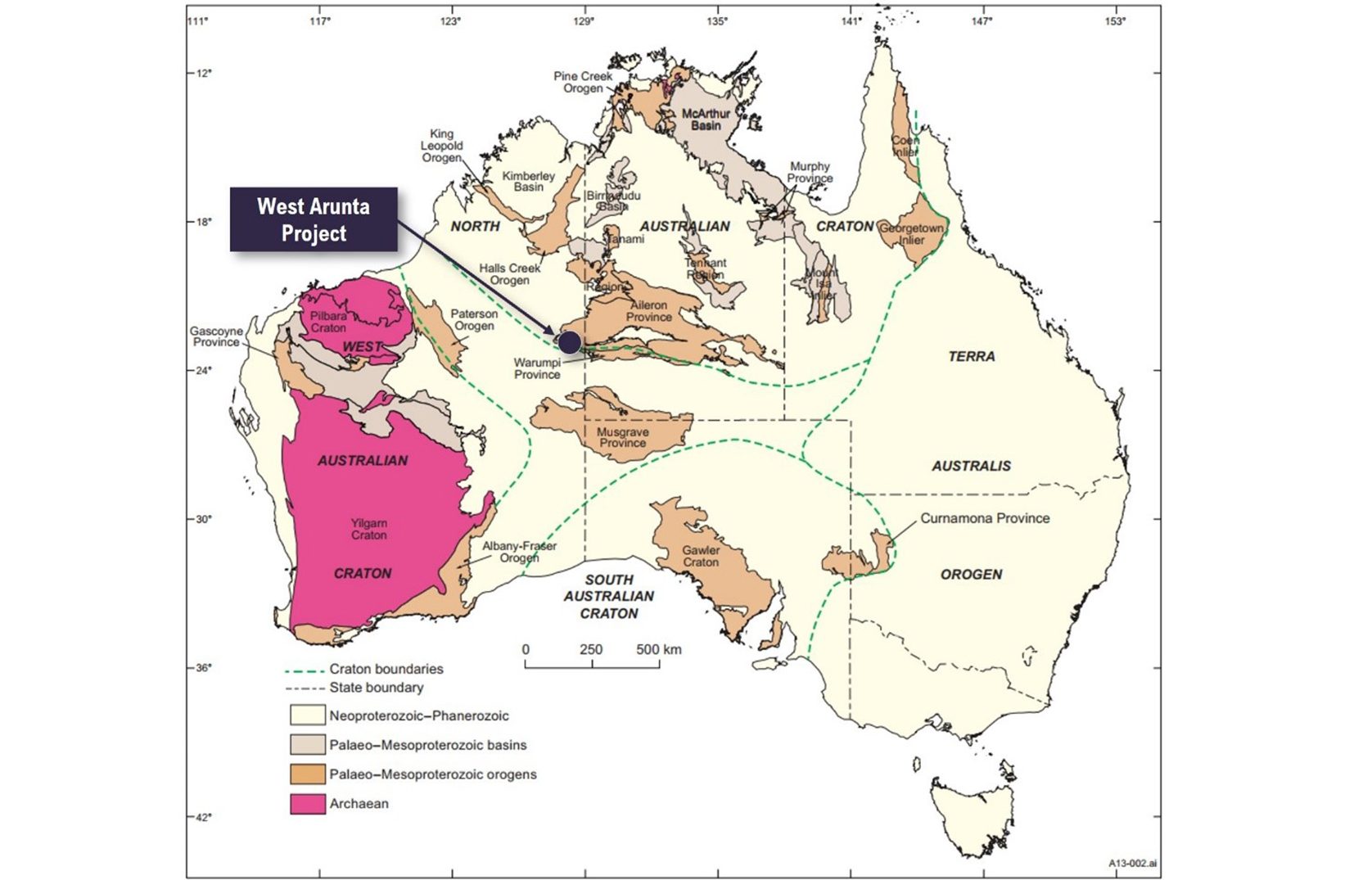
    Rincon’s West Arunta Project, spanning over 260km², is located along the Central Australian Suture, a major zone of structural complexity that separates the Aileron and Warumpi Provinces and marks the southern margin of the North Australian Craton (Fig. 1).
    west arunta
    Fig. 1: Simplified tectonic map of Australia showing craton boundaries and significant regions of Archean and Paleo-Mesoproterozoic rocks. Geological regions after Hutchison (2012); craton boundaries after Cawood and Korsch (2008)

    Renowned for its geological significance, this region has witnessed a recent surge in exploration activity, highlighted by WA1 Resources’ 2022 discovery of the massive high-grade ‘Luni’ niobium/REE deposit, which, alongside its well-documented copper, gold, and uranium prospects, has catapulted the area into the spotlight.

    Historic exploration and potential at West Arunta

    The West Arunta Project brags a rich history of exploration, supported by Ashburton Minerals’ pivotal and recent advancements of widespread significant copper mineralisation at Pokali, validating it as an Iron Oxide Copper-Gold (IOCG) system during the mid-2000s.

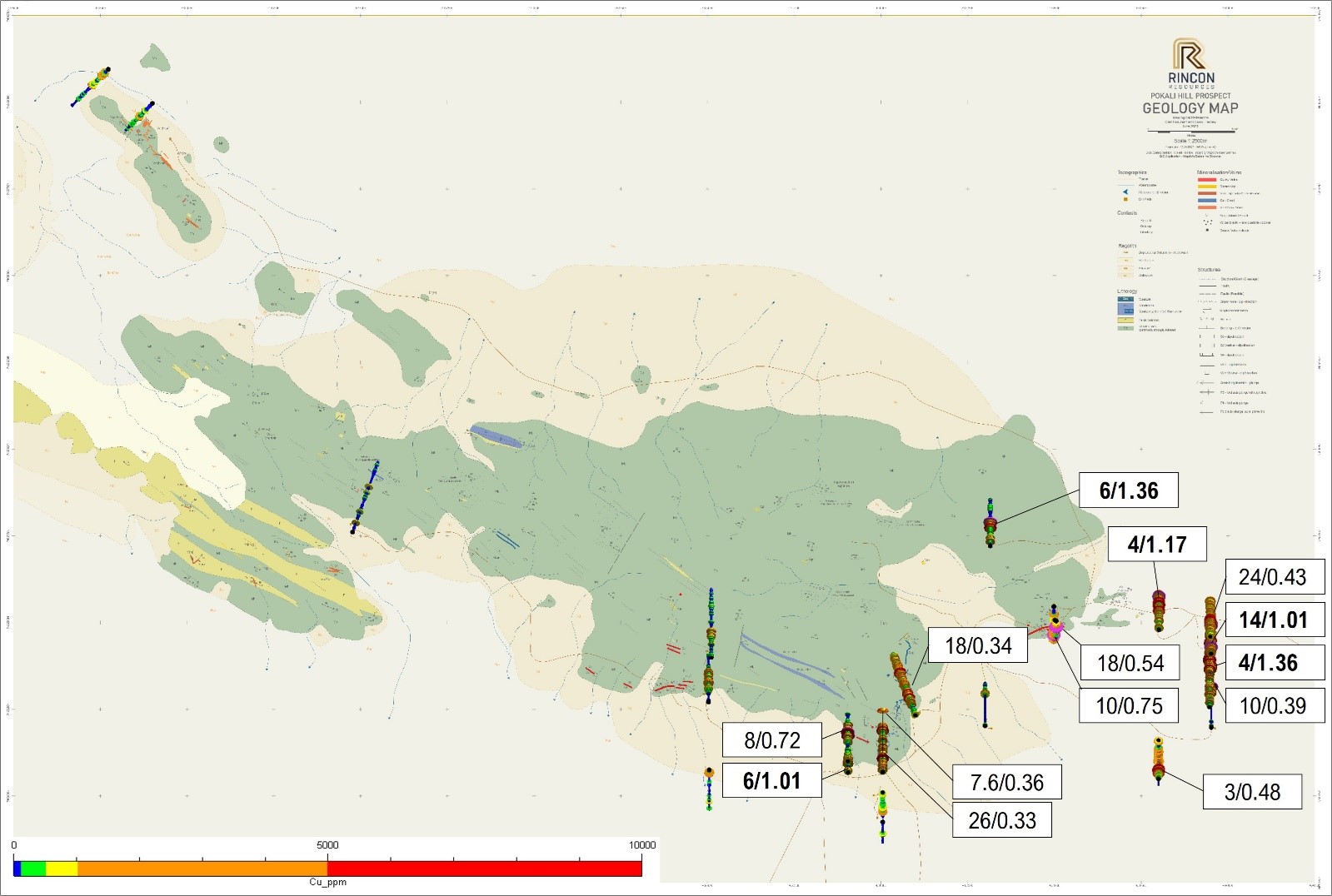
    Notable historical drilling results include: 14m @ 1.01% Cu from 168m (PKC024), contained within a mineralised zone of 62m @ 0.39% Cu, and 6m @ 1.36% Cu from 100m within a mineralised zone of 32m @ 0.46% Cu (PKC023).

    Unearthing potential in 2021

    In 2021, amidst negotiations with the Kiwirrkurra People for land access, Rincon focused on establishing the groundwork for a robust exploration campaign. This involved conducting photo-geological mapping, site reconnaissance, rock-chip sampling, and target generation, as well as acquiring, re-processing, and interpreting historical geophysical datasets.

    The photo-geological mapping exercise unveiled more than twenty initial target areas warranting further investigation, whilst geophysical data re-processing and interpretation offered new and valuable insights into the project’s structural framework, guiding Rincon’s early exploration approach.

    Paving the way for 2022

    Building upon its 2021 technical successes, Rincon expanded its project landholding by acquiring additional exploration licenses and secured its first co-funding grant of $150,000 through the Western Australian Government’s Exploration Incentive Scheme (EIS) for a maiden diamond drilling programme, demonstrating its dedicated pursuit of regional exploration advancement.
    west arunta
    Fig. 2: Drilling by Ashburton Minerals identified widespread copper mineralisation (>= 0.3% Cu) at Pokali East/South (6/1.36 = 6 @ 1.36% Cu)

    Following the eventual execution of a Land Access Agreement with the Kiwirrkurra People, the company promptly commenced a heritage clearance survey, a vital precursor to the planned EIS co-funded diamond drilling programme. The West Arunta Project was gearing up for a significant exploration phase in late 2022.

    Progressing through 2022

    Rincon intensified its focus on IOCG-style copper mineralisation, elevating thirteen of its initial twenty targets for further investigation. Central to this effort was the Pokali Prospect, where plans were now well underway for an inaugural RC and diamond drilling campaign to test two high-priority gravity targets at the earliest opportunity.

    The final step before turning the drill bit was obtaining a Ministerial Entry Permit and a Consent to Mine endorsement from relevant Government departments. These were received in October 2022, ultimately too late to commence drilling that year, but permitted the company to conduct its first site reconnaissance visit and an airborne geophysics survey.

    Advancements in 2023: The hunt for REEs commences

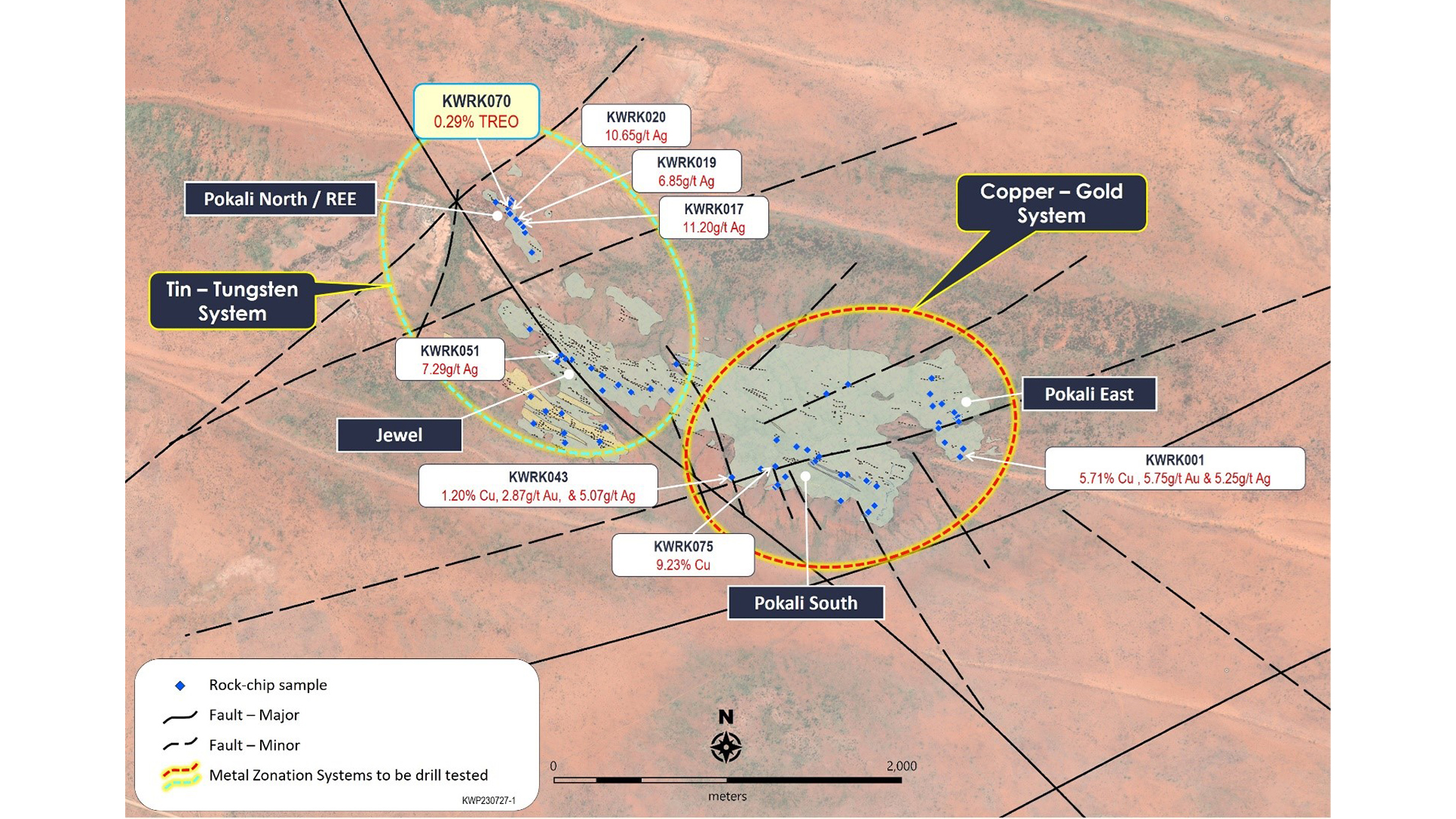
    Entering 2023, Rincon’s operations regained momentum as results from an airborne geophysics survey identified several new anomaly areas east of Pokali. Mapping and rock-chip sampling efforts also unveiled significant gold, copper, and silver findings at Pokali East, alongside a promising new REE zone of interest at Pokali North. Notable rock-chip results reported by the company include:

    Pokali East

    KWRK075 – 9.23% Cu
    KRWK001 – 5.71% Cu, 5.75g/t Au & 5.25g/t Ag
    KWRK043 – 1.20% Cu, 2.87g/t Au & 5.07g/t Ag

    Pokali North

    KWRK094 – 0.48% TREO
    KWRK104 – 0.43% TREO
    KWRK070 – 0.29% TREO
    KWRK107 – 0.26% TREO
    KWRK017 – 11.2g/t Ag
    KWRK020 – 10.7g/t Ag

    The initial REE result of 0.29% (2,900 ppm) TREO at Pokali North spurred the company to adopt a dual exploration strategy focusing on both copper and REEs. Remarkably, the REE anomalism is also proximally adjacent to the high-grade copper mineralisation at Pokali East, together forming a combined copper/REE system spanning over five kilometres in strike length, emphasising the significant scale of the system.

    In light of the new findings showcasing the extensive and diverse mineralisation throughout the entire outcropping area of Pokali, the company enlisted an independent expert geochemist to review and interpret both its new and existing geochemical datasets.

    Unsurpisingly, the review confirmed there was a massive hydrothermally driven mineralisation system at Pokali, characterised by two distinct and discrete metal zonations derived from separate fluid source types, oxidising (Pokali East) or reducing (Pokali North).

    A copper-gold-silver dominant system exists at Pokali East, as expected. This is contrasted by a tin-tungsten dominant system at Pokali North.
    west arunta
    Fig. 3: Pokali Prospect showing target areas, metal systems, significant rockchip results and REE trends

    Put simply, there was at least two separate magmatic intrusion events that pumped in mineralising fluids dominantly enriched with copper-gold-silver or tin-tungsten respectively.

    Notwithstanding this, Rincon also thinks there’s a seperate carbonatite intrusion not far away from Pokali North that delivered the REE enrichment, thought to be overprinting the tin-tungsten system.

    The excitement on the Rincon team is now growing exponentially with the potential of discovering a major deposit!

    Unforeseen challenges and silver linings

    Following the completion of a second heritage clearance survey in September 2023, the company swiftly mobilised to the site in late November to begin its highly anticipated diamond drilling programme to test two deep high-priority gravity targets beneath the metal zonation areas with the aim of discovering rich lodes of copper, gold, or REE’s.

    Unfortunately, despite careful planning, Rincon encountered unforeseen challenges during on-site preparations for drilling. The onset of Australia’s northern wet season forced the deferral of the programme into 2024.

    Despite the setback, Rincon remained steadfast in its commitment to delivering value. Positive results from additional rock-chip sampling completed just ahead of the planned drilling programme reinforced the project’s potential, with additional positive REE results confirming new subtle REE trends that appear to coincide with key structural corridors (Fig. 3).

    Pioneering ahead

    Entering 2024, Rincon Resources sets the stage for significant developments at the West Arunta Project, with the eagerly anticipated diamond drilling programme scheduled to commence in late February. Moreover, Rincon has plans to conduct high-resolution ground gravity, induced polarisation, and passive seismic surveys, along with regional site reconnaissance mapping and sampling over several other priority targets within its project area throughout 2024.

    Rincon remains resolutely committed to unlocking the abundant potential of copper and REEs in Western Australia’s mineral-rich landscapes, with its West Arunta Project emerging as a standout early exploration play. The journey thus far, characterised by successes, hurdles, and resilience, paves the way for an opportune new phase in the exploration of copper and REEs within one of Australia’s most auspicious mineral provinces.

    Please note, this article will also appear in the seventeenth edition of our quarterly publication.

    [ad_2]

    Source link

  • Can Australia lead the global charge?

    Can Australia lead the global charge?

    [ad_1]

    Olimpia Pilch, Co-Founder and Senior Advisor of the Critical Minerals Association Australia, considers the outlook for Australian critical minerals, navigation of turbulent markets, crucial policy changes, and international significance.

    In 2023, Western governments turned to penning strategies, signing agreements and banding together through the Minerals Security Partnership (MSP) – of which Australia is a member – and funding projects across MSP and allied nations. Notably, Australia and the UK signed a statement of intent to support the critical minerals sector, as well as one with Germany; they courted the US and inked the Compact aimed at enhancing bilateral co-operation; shook hands with France over a bilateral agreement on critical minerals; celebrated a milestone in the critical minerals investment partnership with India; and Australia’s Prime Minister Anthony Albanese visited China’s President Xi Jinping in an effort to calm down the turbulent relationship at a time when tensions over critical minerals (especially gallium, germanium, graphite, and rare earths) had been escalating as US and China continue a tit-for-tat.

    For Australia, like many Western nations, China is its biggest trading partner (accounting for 34% of exports), and if prompted, could cause chaos for Australia’s resources sector and, as a result, the economy (with exports of predominantly iron ore, bauxite, gold, coal, and lithium – generating a record AU$455bn in export revenue in the 2022-23 financial year). Maintaining traditional trade relations and the search for new partners has dominated Australia’s strategy on the global stage as a ‘dig-and-ship’ nation that has not yet capitalised on sovereign value-added processing and refining, which remains in the tight grip of China.

    Turbulent markets

    While the Australian Government embarked on a quest for new friends, the industry faced an existential problem. The optimism of analysts projecting astronomical shortfalls between demand for critical minerals and green technologies and supply was not shared by equity markets in 2023.

    Key issues remained: the technologies were not being built at the rate expected, China’s economy was showing signs of a slow-down, and Chinese consumers began falling out of love with electric vehicles (Tesla’s sales alone dropped 17.8% in November 2023 – some attributing this to the China’s phase-out of US$28 billion worth of incentives over 2009-2022).

    Investors had little appetite for backing pre-feasibility exploration projects that would not stack up economically with a downturn in prices. And the sharp downturn came, fuelled by China’s overcapacity and economic slowdown, claiming not only the cash-strapped juniors but also high-cost casualties including – the legendary Mt Isa, Core Lithium’s Grants mine, and Wyloo Metal’s Kambalda – with lithium returns at -81.43%, nickel at -45.21%, and platinum at -7.67% for the year 2023. For better or worse, Australia’s resources sector is paying the price for decisionsmade in Beijing. Troubles in China spell troubles for down under.

    Late-stage critical minerals projects, however – particularly 15 rare earth projects with a proposed investment of $7.3bn – have enjoyed a surge in investment. The Albanese Government also stepped in with an AU$2bn expansion in critical minerals financing aimed at doubling the Critical Minerals Facility’s capacity to finance Australian critical minerals mining and processing projects.

    The story in lithium also continued, with total committed investments increasing by $2.5bn despite the rocky equity markets. However, the spending was committed to either expansions or the bigger end of town rather than junior explorers and their new finds. The increase from $6.7bn in 2022 to $11.8bn in 2023 in the value of committed critical minerals projects, confirms Federal Minister for Resources and Northern Australia Madeleine King’s statement that “the road to net zero runs through Australia’s resources sector” and the world remains hungry for Australia’s resources. However, Australia’s export revenues depend on more than three lithium projects, reaffirming the need for a robust critical minerals strategy.

    Critical Minerals Strategy 2023-2030

    Australia’s Critical Minerals Strategy 2023-2030 focuses on re-positioning the nation as a globally significant producer of raw and processed critical minerals. The strategy aims to incubate the fledgling sector to take advantage of geostrategic and economic benefits associated with resources needed for the energy transition. To successfully move further up the value chain and reap the additional benefits of Australia’s natural endowment, the government will need to focus on creating an enabling business environment that promotes innovation and commercialisation within the midstream processing and refining space.

    The Strategy also focuses on critical minerals’ biggest challenge – financing–specifically that of strategic projects in the midstream. The government aims to support the industry through ‘well-designed support’ to help de-risk projects and attract private investment to projects deemed important to Australia’s goals.

    So far, the Australian Government has awarded A$100m to projects – a drop in the ocean when it comes to building modern and ‘green’ refining facilities that can easily run into the billions. However, the National Reconstruction Fund has AU$1bn earmarked for ‘value-add in resources’. Another AU$50.5m has been committed to establishing the Australian Critical Minerals Research and Development Hub to begin tackling technological challenges that Chinese companies have built expertise in and Australia is found lacking in.

    On the partnership side, diversification and partnerships with like-minded nations (government speak for non-China, Russia, North Korea, or Iran) are highlighted as the Australian Government continues to court potential buyers for its critical minerals. Australia is also committing more resources to monitor whether competitors are investing in the nation’s critical minerals sector, with AU$2.2m to be spent over four years by the Treasury to ‘develop more sophisticated ways of tracking foreign investment patterns.’ This comes as no surprise after the Government blocked a takeover of a lithium miner by a China-linked company. Greater protectionism of Australian sovereignty is likely to ruffle some investors’ feathers, particularly those who have enjoyed decades of quick profits.

    © shutterstock/TippaPatt

    On the environmental, social, and governance (ESG) front, there’s still some debate as to whether Australia is a ‘world leader.’ While it may indeed be the case for Australia in terms of political stability and absence of violence and terrorism; government effectiveness, regulatory quality, and accountability; the rule of law and control of corruption; the critical minerals sector – especially at the project level – has some issues that limit the nation’s ability to claim that title, particularly in indigenous matters and corporate governance. That being said, there are plenty of outstanding projects demonstrating exemplary ESG practices. The Australian Government is also cooperating with international standards bodies and encouraging discussions between the sector and First Nations people under the banner of ‘benefit sharing.’

    Not meeting in the middle

    The strategic role of the midstream cannot be stressed enough. Currently, China monopolises the midstream space globally for many critical minerals – such as gallium, lithium, graphite, and manganese – by Indonesia for nickel, Brazil for niobium, and the US for beryllium. Although many nations have a variety of resources that can be extracted, it is the processing and refining that ultimately add value and influence both the upstream prices and downstream access to critical materials. Moving from a ‘dig and ship model’ is no simple task. The successful creation of an Australian – specifically Australian-owned- midstream industry – will depend on the presence of the following five must-have ingredients:

    • Access to finance deployed at speed (non-traditional – grants, low-interest loans, sovereign guarantees, and underwriting);
    • Access to low-cost, ‘clean’ energy sources;
    • Access to modern infrastructure (that a company does not have to invest in first) such as deep water ports, rail, roads, etc;
    • Industry-orientated innovation and technological developments and;
    • Expert know-how and a highly skilled talent pipeline.

    Given the geopolitical influences on critical minerals value chains and lack of a clear offtake route, private investors are more likely to back Chinese joint ventures or projects with significant Chinese backing, leaving critical minerals projects that are aiming to reposition themselves for the Western market at a disadvantage. This is not surprising as the majority of the demand is in China. Backing a project that is destined for either an unknown or weak market is a risky game, and investors want to both speed up and increase their returns while the demand projections look promising.

    Investors are in the business of making money, not securing Australia’s geostrategic ambitions or sovereignty; the latter two fall within the government’s remit. However, long-term diversification and economic growth require greater public-private partnerships to compete effectively against other nations’ state-controlled competition. Industry needs to contribute expertise and business know-how, and the government must provide some form of counterbalance to international market distortions and geopolitical fallouts.

    The difficulty lies in striking a balance to avoid moving too far away from free-market values.

    However, the market and government are at odds, with some investors calling for less government meddling and greater freedom to cut deals with whomever they want. However, as demonstrated by China, Indonesia, and the US, critical minerals markets and state intervention are unlikely to decouple anytime soon. It is also unlikely that many investors and shareholders will have free license to sell strategic assets to foreign entities of concern without some government intervention.

    It is worth noting that contrary to free-market ideology, leaving the creation of an Australian midstream to the markets will either perpetuate Australia’s current ‘dig and ship model’ or attract competitors willing to accept lower profits for greater market share or even a monopoly. Australian companies venturing further down the value chain face limited options to tap into an alternative downstream market to sell their products, restricted access to alternative capital sources (securing of which typically takes significantly longer than Chinese investment), and technological barriers, including know-how and access to equipment. Naturally, China is unlikely to support the growth of alternative midstream industries and has already restricted the exports of rare earth processing technology.

    Most significantly, Australia, like other nations, cannot compete with China on cost. Instead, technological development and innovation can support ‘economies of flexibility’ focusing on modular plants and processes that can service multiple commodities based on the flow of input material. This would require either co-operation between numerous producers or vertical integration. The location of processing plants and refineries within industrial hubs or clusters can, if strategically planned, create ecosystems of waste-to-reagent use between multiple co-located plants through the adoption of circular economy principles, leading to reductions in cost over time.

    Stiff international competition

    China is not the only worry facing Australia’s critical minerals sector. Domestic issues also stand in the way: Restrictive bureaucracy, changes to industrial policy (e.g. same job, same pay), the inability to streamline planning and permitting across all its States, and a lack of early investment in key supporting infrastructure. These are leaving Australian operations increasingly too expensive for the China-controlled markets, where cheaper alternatives are arising across the global south. African and Latin American jurisdictions increasingly use finance from China, India, Saudi Arabia, and the US. Not only can projects in some global south nations reach production much quicker, but they also come with significantly lower costs and better profit margins.

    That said, the good news is that the stability and reliance of Australia’s established systems position it favourably on the global stage. In its 2022 survey, the Fraser Institute ranked Western Australia and South Australia as second and sixth, respectively, for investment attractiveness globally, while South Australia also ranked third for policy perception.

    Australia also maintains an advantage when it comes to courting carmakers and other OEMs – a reputation for responsible practices. Increasingly, as the carbon craze demands lower footprints, and automakers are terrified of protests against poor mining practices, doing things ‘the right way’ carries certain benefits.

    Yet, globally, price remains king – and so do returns on investment. As Australia’s top diplomats focus on being the key supplier for the world’s energy transition, the balancing act of maintaining a competitive critical minerals sector without sacrificing responsibility while bridging the gap between its free-market ideals and the monopolistic stranglehold of its largest trading partner will be Australia’s most significant challenge.

    Please note, this article will also appear in the seventeenth edition of our quarterly publication.

    [ad_2]

    Source link

  • High grade magnet rare earths in a top tier jurisdiction

    High grade magnet rare earths in a top tier jurisdiction

    [ad_1]

    Explorer Transition Minerals is focused on developing and advancing a portfolio of high-tech and strategic critical metals projects to support the green economy, energy storage markets, and global decarbonisation.

    Australia’s Northern Territory has shot up the ranks of worldwide investment attractiveness based on the latest Fraser Institute annual survey of mining companies. Sitting sixth overall, the survey demonstrates the positive growth in exploration and mining that Australia’s ‘top end’ has experienced concurrently with the release of the country’s significant investment into developing the critical minerals industry.

    It comes as some surprise, then, that Transition Minerals’ Barkly project is just the second rare earths project to achieve formal resource classification (Inferred resource, JORC 2012) in the NT after the progress of Arafura’s (ASX:ARU) Nolans project to development status with the support of crucial partnerships with EV manufacturers Hyundai and Kia. Arafura’s market capitalisation reached over AUD$1.1bn in 2023, providing a tantalising glimpse of the possibilities for Transition Minerals, given its proposed securities exchange listing in 2024.

    Rare earths and vanadium in the Northern Territory

    Following Transition Minerals’ maiden air core drilling programme in the second half of 2022 that was co-funded by the Northern Territory Government, the company has managed to confirm a significant regolith-hosted rare earth deposit underlying a mineralised zone of another critical mineral – vanadium – all within some 30m from the surface.

    These dual resources come with some significant numbers from the first-pass drilling results. This includes 40 million tonnes at a very impressive 2,100 ppm total rare earth oxides (TREO), underlying a vanadium resource of 200 Mt @ 0.12 % V2O5 incorporating the further bonus of a significant gallium contribution.

    But the resources don’t stop there. The formal Mineral Resource Estimation also indicated potential exploration targets (JORC, 2012) for the rare earths of a massive 200-1,000 Mt @ 1,600-1,900 ppm TREO, in addition to 300-1,000 Mt @ 0.12-0.14% V2O5 (plus gallium) residing in the rare earths’ overburden. The JORC Code stipulates that exploration targets are conceptual in nature, that there has been insufficient exploration to estimate a Mineral Resource, and that it is uncertain if further exploration will result in the estimation of a Mineral Resource.

    Further benefits for Transition Minerals

    To further highlight the significant opportunity for Transition Minerals, it has 100% ownership of contiguous landholding of over 7,300 km2 in and around the Barkly rare earths and vanadium resources. This represents an enormous opportunity to discover further extensions and repetitions of the deposits already revealed.

    Most readers will be well aware that not all deposits of rare earths are created equal. Rare earth deposits can be divided, at a simple level, into hard-rock deposits (e.g. Tanbreez, Mountain Pass, Kvanefjeld, Nolans) and regolith-hosted deposits that lie at the surface in highly weathered and generally unconsolidated material. The surficial and ‘easy’ digging nature of regolith-hosted deposits, in conjunction with typically low levels of radionuclides (uranium, thorium), means that these projects have the potential to be economic at relatively low grades of rare earths compared with the hard-rock deposits.

    critical minerals, rare earths

    Transition Minerals’ Barkly deposit exhibits some standout characteristics among the regolith-hosted rare earth deposits. These include an exceptionally high proportion – 33% – of neodymium and praseodymium (Nd, Pr), the major rare earth components of permanent magnets (NdFeB magnets). Permanent magnets convert electrochemical energy into mechanical drive in the rapidly growing electric vehicle market and convert the rotation of wind turbines into electric energy in the globe’s unwavering push for electrification and decarbonisation. Global deposits of rare earths typically only comprise around a 20% proportion of the combined Nd and Pr, thereby highlighting the inherent advantage of the Barkly Project amongst its peers.

    Progress has already been made in developing a mineral processing flowsheet for the Barkly rare earths project. Early diagnostic sighter testing has demonstrated that a very respectable 74% of Nd and Pr can be extracted from a composite bulk sample using a simple two-step hydrometallurgical process. Furthermore, initial tests have separately indicated that the Barkly rare earths material can beneficiate into a concentrated rare earth material via traditional flotation techniques. This can have positive downstream economic benefits for infrastructure size and reagent costs.

    Rare earths and vanadium for the future

    In summary, Transition Minerals has a first-mover advantage in a new rare earths and vanadium district in a top jurisdiction, with an expansive landholding providing plenty of scope for continued exploration success. Its flagship high-grade regolith-hosted Barkly rare earth deposit has an exceptional proportion of key permanent magnet rare earths (Nd, Pr) critical for EVs, wind turbines and the globe’s energy transition and decarbonisation goals.

    Transition Minerals is progressing toward achieving a Tier 1 project with vanadium and gallium credits. It offers a bulk mining, low strip opportunity intended for low cost, hydrometallurgical recovery of critical permanent magnet rare earths.

    International intelligence agencies, such as Adamas Intelligence, project global supply to be in a significant deficit of demand for NdPr by 2030. Transition Minerals has the quality asset that may seriously reduce this supply deficit in the future so that the pervasive growth of EVs and wind turbines can continue unabated.

    Please note, this article will also appear in the seventeenth edition of our quarterly publication.

    [ad_2]

    Source link