Tag: Biopsy

  • Owlstone Medical secures $6.5 million to support development of breath-based diagnostics for infectious disease

    Owlstone Medical secures $6.5 million to support development of breath-based diagnostics for infectious disease

    [ad_1]

    Owlstone Medical (“Owlstone”), the global leader in Breath Biopsy® for applications in early disease detection and precision medicine, today announced it has secured funding from the Bill & Melinda Gates Foundation (“the Gates Foundation” or “the foundation”).

    The funding is comprised of a $5 million equity investment to advance Owlstone’s Breath Biopsy platform and $1.5 million in grant funding to develop breath-based diagnostics and identify breath biomarkers for tuberculosis (TB) and HIV.

    Owlstone, with support from the foundation, is interested in developing new cost-effective detection technologies for volatile organic compounds (VOCs) that could serve as markers of diseases that disproportionately affect the developing world. With the new funding, Owlstone seeks to understand whether this approach is suitable for TB and HIV detection and to explore a path by which breath-based testing could be deployed for rapid screening and earlier diagnosis.

    Early diagnosis is a critical determinant of health outcomes. By enabling swift and non-invasive detection of disease, breath analysis has the potential to save lives and dramatically reduce the burden of illness in resource-constrained settings. This investment by the Gates Foundation is testament to how Owlstone is uniquely positioned to transform infectious disease diagnosis through our Breath Biopsy platform. The funds will accelerate both the discovery and validation of VOC biomarkers, and the development of a fieldable, low cost, simple to use device.”

    Billy Boyle, co-founder and CEO at Owlstone Medical

    The $5 million equity investment will support advancements of the Breath Biopsy platform, including expansion of the Breath Biopsy VOC Atlas1 database and for development of a remote-use real-time breath analyzer. This funding component will be the first time the foundation has taken an equity position in a breath diagnostics company.

    The $1.5 million in grant funding to support the identification of breath biomarkers will be used across two projects:

    • TB: In partnership with the University of Cape Town, South Africa, Owlstone aims to identify a panel of on-breath candidate VOC biomarkers that differentiate TB subjects from healthy controls and to develop breath diagnostic approaches based on exploiting the metabolic features of TB using in vitro approaches.
    • HIV: Working with investigators from Imperial College, UK, and Oxford University, UK, Owlstone will analyze VOCs from blood samples from subjects with HIV and will work to identify a panel of on-breath candidate VOC biomarkers that correlate with HIV viral load.

    The data collected will also be used to populate Owlstone’s Breath Biopsy VOC Atlas further in both areas.

    Activities complementary to this project are underway with the US Department of Defense2 (the ‘EXHALE’ project) where Owlstone is developing a handheld device capable of non-invasive detection of pre-symptomatic respiratory infectious disease, providing further support for Owlstone’s ability to advance the foundation’s mission.

    [ad_2]

    Source link

  • Study reveals how SARS-CoV-2 hijacks lung cells to drive COVID-19 severity

    Study reveals how SARS-CoV-2 hijacks lung cells to drive COVID-19 severity

    [ad_1]

    In a recent study published in the Journal of Experimental Medicine, researchers identified the cellular tropism and transcriptome consequences of severe acute respiratory syndrome coronavirus 2 (SARS-CoV-2) by infecting human lung tissue and using single-cell ribonucleic acid sequencing (scRNA-seq) to rebuild the transcriptional program in “infection pseudotime” for distinct lung cell types.

    Lower respiratory infections, such as coronavirus disease 2019 (COVID-19), are a leading cause of death worldwide, producing pneumonia and acute respiratory distress syndrome. Understanding their early phases is difficult. Researchers used classical histopathological approaches and single-cell multi-omic profiling to infer early phases in human pathogenesis from lung lavage, biopsy, or autopsy materials. These approaches reveal a thorough picture of COVID-19 pneumonia at unparalleled cellular and molecular resolution, implying infection models including alveolar epithelium, capillaries, macrophages, and myeloid cells.

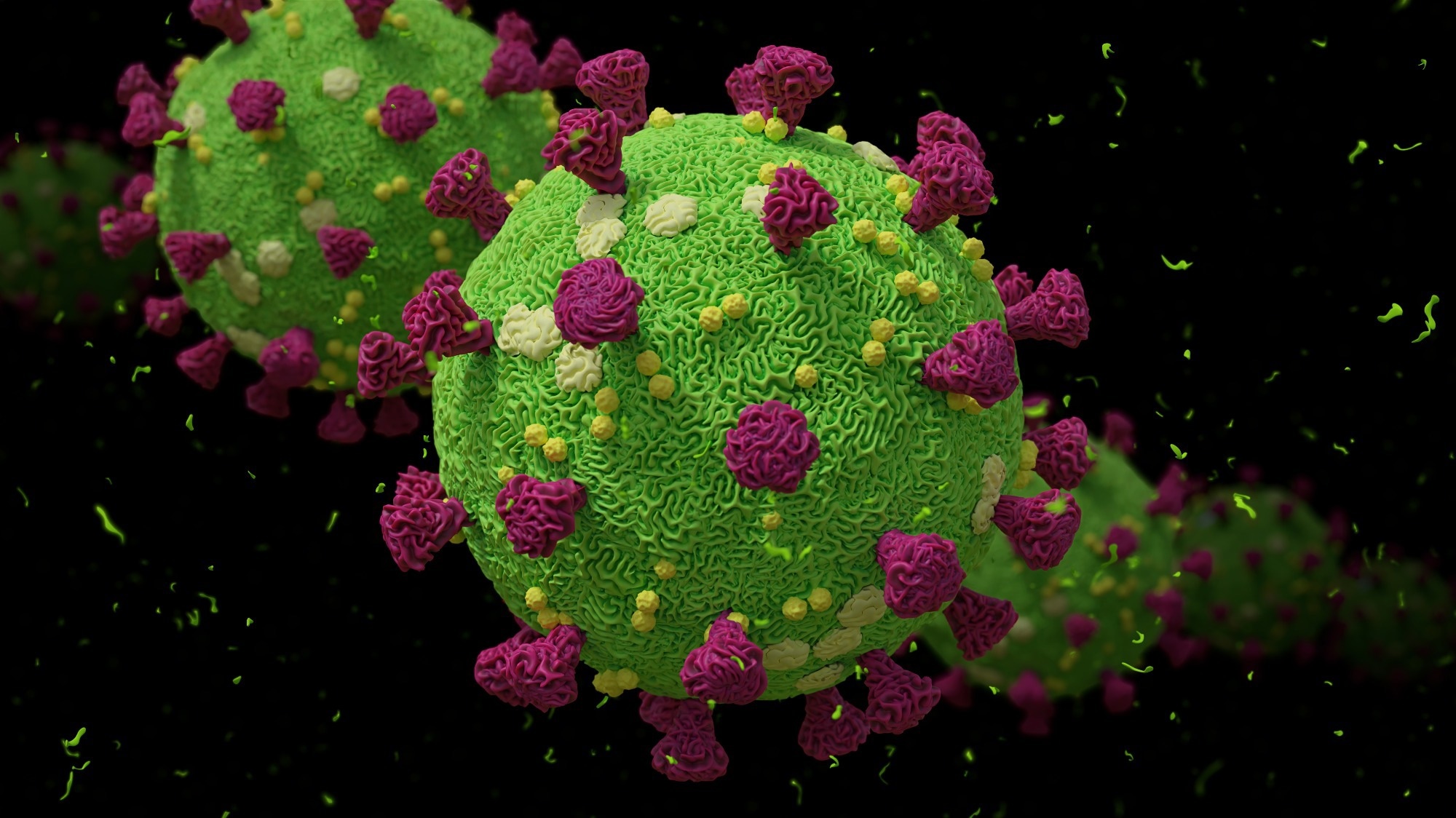
    Study: Interstitial macrophages are a focus of viral takeover and inflammation in COVID-19 initiation in human lung. Image Credit: Dotted Yeti / ShutterstockStudy: Interstitial macrophages are a focus of viral takeover and inflammation in COVID-19 initiation in human lung. Image Credit: Dotted Yeti / Shutterstock

    About the study

    In the present study, researchers developed an experimental COVID-19 model to investigate early molecular processes and pathogenic mechanisms of SARS-CoV-2 infection at the cellular level in native tissues of the human lung.

    The researchers established SARS-CoV-2’s cellular tropism and its unique and dynamic impacts on host cellular gene expression in specific types of lung cells. Prominent targets were lung-resident macrophages, of which one SARS-CoV-2 takes over transcriptomes, inducing a targeted host interferon (IFN) antiviral program, and several chemokines and pro-fibrotic and pro-inflammatory and cytokines signaling to various structural and immunological cells of the lung.

    To determine the early stages of COVID-19 in human lungs, the researchers sliced lung tissue obtained from surgical specimens or organ donor individuals into thick sections and used them for tissue culture analysis. Subsequently, they exposed the tissues to the SARS-CoV-2 USA-WA1 2020 strain at 1.0 multiplicity of infection (MOI) for two hours before allowing the SARS-CoV-2 infection to continue for two to three days. They performed a plaque test on culture supernatants.

    The researchers separated the slices and examined them by scRNA-seq to evaluate host and viral genetic expression during the SARS-CoV-2 infection. They also examined the viral RNA molecules’ junctional structure and processing by analyzing the scRNA-seq dataset with the SICILIAN framework. They used molecular atlas markers to distinguish lung cell types in healthy lung slices and measure viral RNA levels in infected cells.

    The team performed multiplexed single-molecule fluorescence in situ hybridization (smFISH) to confirm lung cell tropism findings and show infected cells. They used single-cell gene expression patterns to identify cellular targets for inflammatory and pro-fibrotic signals elicited by the SARS-CoV-2 infection of a-IMs. They devised a technique for purifying macrophage populations from human lungs with a SARS-CoV-2 spike (S) protein-pseudotyped lentivirus (lenti-S-NLuc-tdT) to investigate lung macrophage entrance routes.

    The researchers productively infected human lung slices cultivated ex vivo with SARS-CoV-2, with production rising between 24 and 72 hours of culture. They heat-inactivated, ultraviolet (UV)-treated, or administered 10.0 µM remdesivir, an RNA-dependent RNA polymerase inhibitor used as a COVID-19 therapeutic, to prevent viral stock infection.

    Results

    The analysis showed that SARS-CoV-2 preferentially infects active interstitial macrophages (IMs), which can amass hundreds of SARS-CoV-2 RNA molecules, comprising >60% of the cell transcriptome and producing dense viral RNA bodies. Infected alveolar macrophages (AMs) exhibit no severe reactions, with spike (S) protein-dependent viral entrance into AMs utilizing angiotensin-converting enzyme 2 (ACE2) and the cluster of differentiation 169 (CD169) and IM entry via CD209.

    They found canonical sub-genomic junctions between the unusual sequence reads beyond their 39 terminal regions, indicating canonical-type SARS-CoV-2 messenger RNA (mRNA) production in the pulmonary cultures. They also found hundreds of new subgenomic junctions, showing a wide range of non-canonical and canonical sub-genomic SARS-CoV-2 RNAs produced during pulmonary infection.

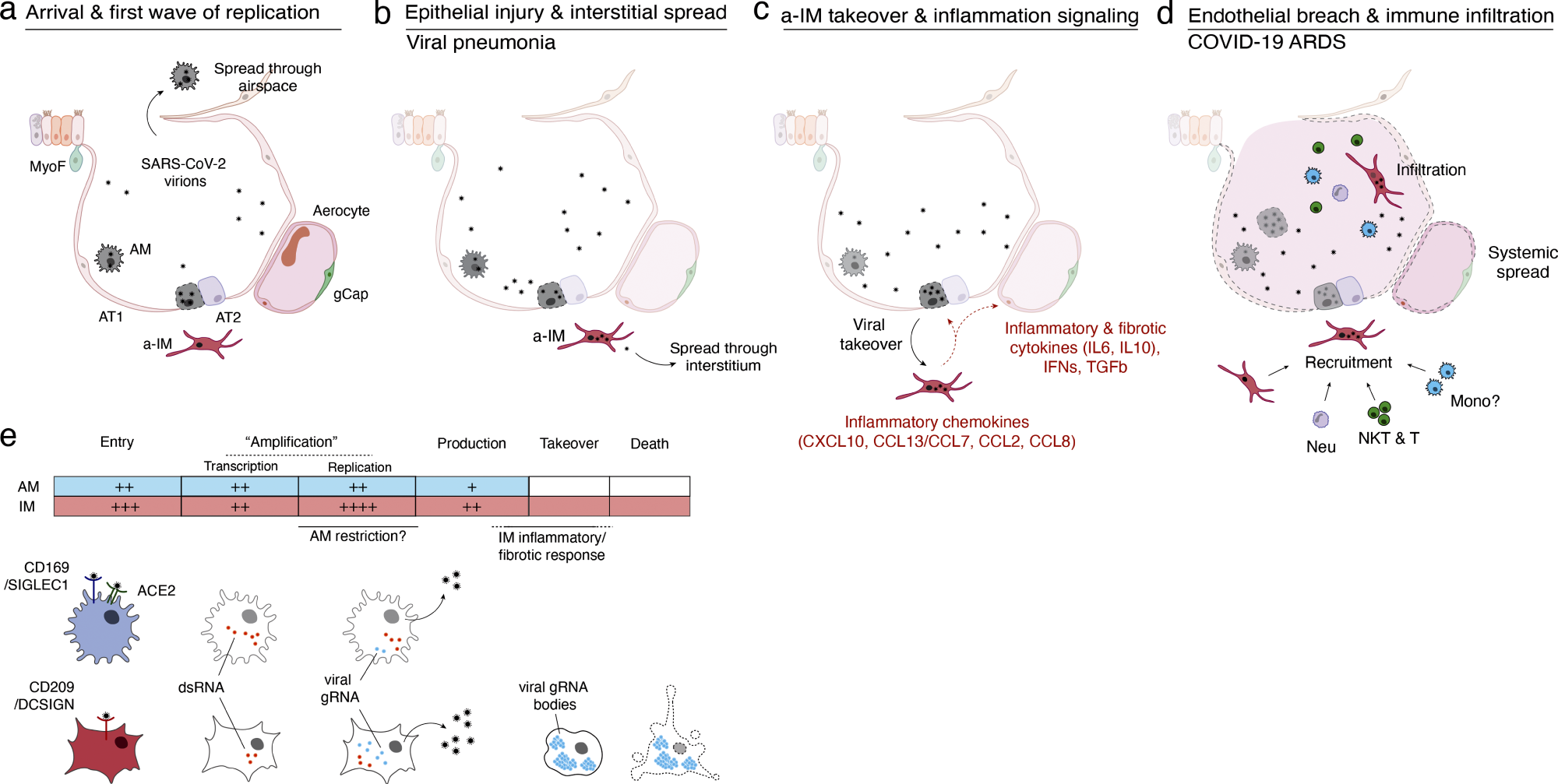
    Model of initiation, transition, and pathogenesis of COVID-19 and the viral lifecycle in AMs and IMs. (a–d) Model of COVID-19 initiation in the human lung and transition from viral pneumonia to lethal COVID-19 ARDS. (a) SARS-CoV-2 virion dissemination and arrival in the alveoli. Luminal AM encounter virions shed from the upper respiratory tract that enter the lung. AMs can express low to moderate numbers of viral RNA molecules and can propagate the infection but “contain” the viral RNA from taking over the total transcriptome and show only a very limited host cell inflammatory response to viral infection. (b) Replication and epithelial injury. SARS-CoV-2 virions enter AT2 cells through ACE2, its canonical receptor, and “replicate” to high viral RNA levels, producing infectious virions and initiating viral pneumonia. (c) a-IM takeover and inflammation signaling. SARS-CoV-2 virions spread to the interstitial space through either transepithelial release of virions by AT2 cells or injury of the epithelial barrier, and enter a-IMs. Infected a-IMs can express very high levels of viral RNA that dominate (“take over”) the host transcriptome and can propagate the infection. Viral takeover triggers induction of the chemokines and cytokines shown, forming a focus of inflammatory and fibrotic signaling. (d) Endothelial breach and immune infiltration. The a-IM inflammatory cytokine IL6 targets structural cells of the alveolus causing epithelial and endothelial breakdown, and the inflammatory cytokines recruit the indicated immune cells from the interstitium or bloodstream, which flood and infiltrate the alveolus causing COVID-19 ARDS. Local inflammatory molecules are amplified by circulating immune cells, and reciprocally can spread through the bloodstream to cause systemic symptoms of cytokine storm. (e) Comparison of the SARS-CoV-2 viral lifecycle in AMs and IMs. Although both can produce infectious virions, note differences in viral entry receptors (AMs can use ACE2 and CD169/SIGLEC1, whereas IMs use CD209); viral RNA transcription of dsRNA intermediates (greater in AMs); replication of full-length genomic RNA (greater in IMs); viral takeover, formation of RNA bodies, and induction of a robust host cell inflammatory response (only in IMs), and cell destruction/death (only in IMs).Model of initiation, transition, and pathogenesis of COVID-19 and the viral lifecycle in AMs and IMs. (a–d) Model of COVID-19 initiation in the human lung and transition from viral pneumonia to lethal COVID-19 ARDS. (a) SARS-CoV-2 virion dissemination and arrival in the alveoli. Luminal AM encounter virions shed from the upper respiratory tract that enter the lung. AMs can express low to moderate numbers of viral RNA molecules and can propagate the infection but “contain” the viral RNA from taking over the total transcriptome and show only a very limited host cell inflammatory response to viral infection. (b) Replication and epithelial injury. SARS-CoV-2 virions enter AT2 cells through ACE2, its canonical receptor, and “replicate” to high viral RNA levels, producing infectious virions and initiating viral pneumonia. (c) a-IM takeover and inflammation signaling. SARS-CoV-2 virions spread to the interstitial space through either transepithelial release of virions by AT2 cells or injury of the epithelial barrier, and enter a-IMs. Infected a-IMs can express very high levels of viral RNA that dominate (“take over”) the host transcriptome and can propagate the infection. Viral takeover triggers induction of the chemokines and cytokines shown, forming a focus of inflammatory and fibrotic signaling. (d) Endothelial breach and immune infiltration. The a-IM inflammatory cytokine IL6 targets structural cells of the alveolus causing epithelial and endothelial breakdown, and the inflammatory cytokines recruit the indicated immune cells from the interstitium or bloodstream, which flood and infiltrate the alveolus causing COVID-19 ARDS. Local inflammatory molecules are amplified by circulating immune cells, and reciprocally can spread through the bloodstream to cause systemic symptoms of cytokine storm. (e) Comparison of the SARS-CoV-2 viral lifecycle in AMs and IMs. Although both can produce infectious virions, note differences in viral entry receptors (AMs can use ACE2 and CD169/SIGLEC1, whereas IMs use CD209); viral RNA transcription of dsRNA intermediates (greater in AMs); replication of full-length genomic RNA (greater in IMs); viral takeover, formation of RNA bodies, and induction of a robust host cell inflammatory response (only in IMs), and cell destruction/death (only in IMs).

    Heat, UV-C inactivation, or remdesivir therapy prevented the development of canonical and non-canonical connections. The team observed SARS-CoV-2 takeover of an activated IM subtype in 176,382 cells with high-quality transcriptomes obtained from infected lung slices of four donor lungs and in 112,359 cells from mock-infected slices (cultured without viral addition) and 95,389 uncultured control cells (directly from freshly cut lung slices). A differential gene expression study of a-IMs over infection pseudotime revealed host gene expression alterations corresponding to SARS-CoV-2 RNA levels.

    The study found that COVID-19 pneumonia infection and takeover cause an early antiviral cell response specific to activated interstitial macrophages, resulting in a powerful immunological and fibrotic signaling center. Inflammasome activation is uncommon and only detectable late in a-IM infection. Blocking antibodies against CD169 and CD209 prevented entrance into IMs and AMs. The study also highlighted IMs as the most vulnerable lung target, with initial emphasis on inflammation and fibrosis. Two unique molecular lineages of macrophage targets react differently to SARS-CoV-2, influencing etiology and treatments.

    [ad_2]

    Source link

  • PET/MRI combination reduces unnecessary prostate biopsies, study shows

    PET/MRI combination reduces unnecessary prostate biopsies, study shows

    [ad_1]

    PET/MRI can improve diagnostic accuracy for prostate cancer patients and help avoid unnecessary biopsies, according to new research published in the April issue of The Journal of Nuclear Medicine. By applying the PRIMARY scoring system to PET/MRI results, researchers found that more than 80 percent of unnecessary biopsies could be avoided at the expense of missing one in eight clinically significant prostate cancer cases.

    The Prostate Imaging Reporting and Data System (PI-RADS) is a five-point scale used to evaluate suspected prostate cancer on MR images. PI-RADS category 3, which presents an unclear suggestion of clinically significant prostate cancer, remains a diagnostic challenge. Although biopsy is recommended under the current guidelines, less than 20 percent of PI-RADS 3 lesions contain clinically significant prostate cancer.

    PI-RADS 3 lesions present a dilemma to both urologists and patients because immediate biopsy could be unnecessary; however, a monitoring strategy could lead to some missed diagnoses of clinically significant prostate cancer. Hence, specifically ruling out clinically significant prostate cancer among PI-RADS 3 lesions has significant clinical implications.”


    Hongqian Guo, MD, urologist at Nanjing Drum Tower Hospital at the Affiliated Hospital of Nanjing University Medical School in Nanjing, China

    In this study, 56 men with PI-RADS 3 lesions underwent 68Ga-PSMA PET/MRI. The five-level PRIMARY system, which is based on a combination of 68Ga-PSMA pattern, localization, and intensity information, was used to report prostate 68Ga-PSMA PET/MRI findings. After imaging, all patients underwent prostate systematic biopsy in combination with targeted biopsy to determine clinically significant prostate cancer.

    Among the 56 patients, clinically significant prostate cancer was detected in eight patients (14.3 percent) by biopsy. When a PRIMARY score of at least four was used to make a biopsy decision in men with PI-RADS 3 lesions, 40 of 48 (83.3 percent) participants could have avoided unnecessary biopsies, at the expense of missing 1 in 8 (12.5 percent) of clinically significant prostate cancer cases.

    “By demonstrating the additive value of 68Ga-PSMA PET/MRI in classifying PI-RADS 3 lesions, this study provides new insight into the clinical indication for 68Ga-PSMA PET/MRI,” noted Guo. “In the future, PI-RADS 3 patients could be referred for 68Ga-PSMA PET/MRI before prostate biopsy.”

    This study was published online in March 2024.

    Source:

    Journal reference:

    Shi, J., et al. (2024). The Value of68Ga-PSMA PET/MRI for Classifying Patients with PI-RADS 3 Lesions on Multiparametric MRI: A Prospective Single-Center Study. The Journal of Nuclear Medicine. doi.org/10.2967/jnumed.123.266742.

    [ad_2]

    Source link

  • the rise of AI in neuro-oncology

    the rise of AI in neuro-oncology

    [ad_1]

    A new review article in npj Precision Oncology summarizes the current state of knowledge about the role of artificial intelligence (AI) in the diagnosis, treatment, and prognosis of brain tumors.

    Study: Artificial intelligence in neuro-oncology: advances and challenges in brain tumor diagnosis, prognosis, and precision treatment. Image Credit: metamorworks/Shutterstock.comStudy: Artificial intelligence in neuro-oncology: advances and challenges in brain tumor diagnosis, prognosis, and precision treatment. Image Credit: metamorworks/Shutterstock.com

    Background

    Brain tumors, although uncommon, pose a significant health challenge globally, with approximately 250,000 new cases each year. In the United States alone, over 96,000 brain tumor cases were reported in 2022, with around 26,600 of these being cancerous.

    Glioblastoma is the most frequently diagnosed type of brain tumor and has a particularly poor prognosis, with only a 7% survival rate five years after diagnosis.

    This highlights the urgent need for improved methods of diagnosing, treating, and forecasting the progression of brain tumors.

    Challenges in managing brain tumors

    Diffuse midline glioma (DMG) in children and glioblastoma in adults are among the toughest brain tumors to treat and are often considered incurable with current medical approaches.

    Tailored treatments stand the best chance of providing a cure with the least possible harm. However, the challenge is that information on diagnosing and treating brain tumors is scattered and hard to come by.

    Only a select number of medical centers have access to the latest treatment techniques. Moreover, much of the available data on these treatments is sourced from just one or a few institutions, limiting the breadth of knowledge and accessibility for many.

    Management approaches and diagnostic criteria based on such data are open to a lack of demographic data and may not be generalizable globally.

    Socioeconomic inequity also contributes to late diagnosis, therapeutic challenges, and reduced survival by restricting access to some key tests and reducing the odds of combination therapies. This includes 06-Methylguanine-DNA-methyltransferase (MGMT) testing for glioblastoma.

    The need for precise diagnosis, staging, and treatment monitoring is difficult to meet in many cases.

    Taking into account the contribution of tumor genotype to the prognosis, limited accessibility for imaging and biopsy, intratumor heterogeneity, and poorly reliable biomarkers to monitor the progress of therapy, there are significant obstacles to the optimal care of these patients.

    The brain tumor paradigm

    In most cases, a suspected brain tumor is diagnosed, beginning with a physical examination and neuroimaging. A biopsy follows this. If possible, the tumor and other biomarkers are removed and subjected to histologic and molecular analysis.

    The choice of therapy depends on available and recommended care practices, clinical trials that are currently going on, the patient’s medical status, and toxicity risks. Magnetic resonance imaging (MRI) is the follow-up modality of choice, sometimes supplemented with cerebrospinal fluid (CSF) or blood tests.

    Decisions regarding brain tumor treatment often involve multidisciplinary meetings between neuro-oncologists, neurosurgeons, neuroradiologists, molecular pathologists, and neuropathologists, underscoring the complexity of these decisions.”

    The advantages of AI

    AI includes machine learning (ML) and deep learning (DL) techniques, computer vision (CV), and the integration of these as Computational Biology. ML excels at pattern recognition and DL in extracting detailed features. CV improves visual interpretation of imaging data to provide medical data.

    Computational biology uses all these methods to parse biological data, helping to understand tumor genetics and molecular biology.

    This study aims to uncover AI-assisted tumor radiology, pathology, and genomics advancements. AI contributes synergistically to all these domains to improve their role as a combined dataset in brain tumor management.

    AI may help clinicians navigate tumor management decisions by improving MRI imaging accuracy and enhancing the speed at which results are available.

    It offers increased sensitivity to anomalies picked up on imaging, detailed image analysis, optimized workflows, comprehensive data analysis from multiple sources, and detecting patterns that could be missed by the human observer.

    AI algorithms help localize tumors more efficiently, avoiding human error. The nnU-Net algorithm excels at tumor segmentation, reducing radiation or surgical harm.

    This enables AI to help diagnose and grade the tumor, determine the prognosis, and plan treatment while setting up a monitoring framework.

    AI may become part of new clinical trials, exploring the feasibility of personalized therapy by leveraging its ability to handle large volumes of data.

    AI uses various data types, including imaging data from MRI and computerized tomography (CT), radiomics, histopathologic data, genomics, molecular biomarkers from tumor cells, and clinical data.

    Neuroimaging often uses pre- and post-contrast T1-weighted, T2-weighted, fluid-attenuated inversion recovery (FLAIR), diffusion-weighted (DWI), and susceptibility-weighted imaging (SWI), as well as, in specialized centers, MR spectroscopy and perfusion imaging.

    Molecular biomarkers include IDH mutations for astrocytomas and oligodendrogliomas, TERT promoter mutations for glioblastomas, EGFR amplification for glioblastomas, gain of chromosome 7 and loss of chromosome 10 for glioblastomas, and MGMT promoter methylation for glioblastomas.

    Non-invasive circulating tumor DNA (ctDNA) analysis is a newer method for diagnosing such tumors.

    AI platforms

    3D U-Net, DeepMedic, and V-Net are AI architectures that help preprocess tumor images, making the analysis more robust and precise. Methylome profiling is useful in classifying brain tumors using AI/MI and systems like DeepGlioma. This uses stimulated Raman histology (SRH) to offer results on GMB molecular diagnosis within 90 seconds.

    Other systems to predict IDH and other mutations based on radiomics data from MRI perfusion scans or 18F-FET PET/CT scans are being explored, such as a deep learning imaging signature (DLIS) and Terahertz spectroscopy.

    ‘Sturgeon’ is another DL method to classify brain tumors intraoperatively using nanopore-sequenced methylation array data. Its 40-minute turnaround time, with >70% accuracy, helps surgical decision-making.

    Prognostic help is being provided from imaging data to predict overall survival and progression-free survival, two key clinical and research metrics.

    Combined with histology and molecular biology, exceptional predictive performance has been demonstrated.

    Integrated approaches

    Multimodal data fusion approaches could help achieve a less invasive and more accurate understanding of brain tumors using multiple data sources. This will eventually help tailor management to the patient.

    The challenge is to extend and diversify the data collection range to other populations and tumor types with standardized features to ensure reproducibility and generalizability.

    The adoption of AI should not worsen healthcare and social inequities, emphasizing the need to remove biases, provide legal support, communicate the scope and benefits with transparency, define responsibilities and keep patients safe.

    Conclusions

    AI has the potential to empower patients by providing personalized information and enabling shared decision-making. However, the equitable access and affordability of AI-driven healthcare need to be addressed to avoid exacerbating existing disparities.”

    [ad_2]

    Source link

  • Skin biopsy for α-synuclein detection proves effective

    Skin biopsy for α-synuclein detection proves effective

    [ad_1]

    In a recent study published in JAMA, researchers evaluated the positivity rate of cutaneous phosphorylated alpha-synuclein protein (P-SYN) deposition among individuals with dementia with Lewy body presence (DLB), Parkinson’s disease (PD), pure autonomic failure (PAF), and multiple system atrophy (MSA).

    Study: Skin Biopsy Detection of Phosphorylated α-Synuclein in Patients With Synucleinopathies. Image Credit: BLACKDAY/Shutterstock.comStudy: Skin Biopsy Detection of Phosphorylated α-Synuclein in Patients With Synucleinopathies. Image Credit: BLACKDAY/Shutterstock.com

    Background

    Synucleinopathies are neurodegenerative illnesses that cause P-SYN accumulation in the peripheral and central nervous systems. They include PD, MSA, DLB, and PAF. These illnesses share clinical characteristics, including progressive impairment and neurodegeneration.

    Current pharmacology lacks disease-modifying medication for these illnesses, and many individuals diagnosed with synucleinopathies face diagnostic delays or misdiagnoses.

    A reliable biomarker for identifying synucleinopathies, such as immunohistochemistry of cutaneous phosphorylated α-synuclein, is urgently needed. This test might be sensitive and specific.

    About the study

    In the present prospective, multicenter, cross-sectional study, researchers investigated whether skin biopsy could detect P-SYN in PD, MSA, DLB, and PAF patients.

    The researchers enrolled clinically confirmed cases of DLB, PD, PAF, or MSA recruited from 19 community-based and 11 academic neurology practices between February 2021 and March 2023, aged between 40 and 99 years.

    Individuals without history or clinical features indicative of a synucleinopathy (such as constipation, hyposmia, dementia, rapid-eye movement [REM] sleep disorder, or mild cognitive impairments) or neurodegenerative disorders comprised the control group.

    The researchers excluded individuals with biopsy-associated risks and synucleinopathy-mimicking diseases. They also excluded those with missing data from questionnaires and clinical examinations. The study exposure was a cutaneous biopsy for P-SYN detection.

    The primary outcome was cutaneous P-SYN detection frequency among individuals with MSA, PD, PAF, or DLB and controls.

    The researchers obtained skin biopsy specimens from the posterior cervical area, 3.0 cm from the spinous process of C-7, and the distal aspects of the leg at a distance of 10 cm from the lateral malleolus, and the thigh 10 cm from the lateral knee.

    The team examined the participants using the Hoehn and Yahr scale, the Movement Disorders Society Unified PD Rating Scale (MDS-UPDRS), the Montreal Cognitive Assessment, and orthostatic blood pressure.

    The participants filled out questionnaires such as the 39-component Parkinson’s Disease Questionnaire, the European Quality of Life questionnaires (EQ-VAS and EQ-5D), the MSA Quality of Life assessment Questionnaire, the rapid eye movement (REM) sleep disorder questionnaire, and the Orthostatic Hypotension Questionnaire.

    The researchers obtained disease symptom and duration data from participant medical records. The referral physician, who evaluated the individual, provided a clinical diagnosis.

    The participant history, examination scores, medical records, and ancillary test results were transmitted to two disease specialists for central review to validate the diagnosis of the particular synucleinopathy based on specified consensus and eligibility criteria for diagnoses or controls.

    Results

    Out of 428 patients (277 with synucleinopathy and 151 controls), 343 were included in the primary analysis [mean age, 70 years; 175 (51%) men]; 223 fulfilled the consensus criteria for synucleinopathy, and 120 met the criterion as controls following expert panel evaluation.

    Among those with synucleinopathy, 96 (28%) were diagnosed with Parkinson’s disease, 50 (15%) with Lewy body dementia, 55 (16%) with multiple system atrophy, and 22 (6.4%) with complete autonomic failure.

    The proportion of participants with P-SYN in their skin was 93% (n = 89) with Parkinson’s disease, 98% (n=54) with multiple system atrophy, 96% (n=48) with Lewy body dementia, and 100% (n=22) with complete autonomic failure; 3.30% (n=4) of controls had cutaneous phosphorylated-SYN deposition.

    P-SYN detection in the subepidermal plexus varied by synucleinopathy subtype, with MSA (49%, n=27) having a higher prevalence than Parkinson’s disease (3.1%, n=3), DLB (10%, n=5), or PAF (9.1%, n=2). There were no infections or significant problems.

    The length-dependent small fiber neuropathy varies amongst synucleinopathy subtypes. Neuropathy was most prevalent in DLB patients (78%, n=39), followed by those with Parkinson’s disease (63%, n = 60), PAF (46%, n=10), and MSA (22%, n=12).

    The overall P-SYN for all research participants corresponded with their exam results and surveys. P-SYN deposition by the study participants was associated with the period since MSA, PAF, and PD diagnosis.

    Conclusions

    The study findings showed that skin biopsy may identify phosphorylated alpha-synuclein among individuals with DLB, PD, PAF, and MSA. The findings demonstrated that cutaneous P-SYN in >92% of participants, with skin biopsies, was tolerated well with minor side effects.

    However, there were 21% of misdiagnosed cases. Accurate diagnosis is critical for patient and family counseling, starting symptomatic treatment, and conducting clinical studies of possible disease-modifying medications.

    Cognitive neurology experts recommend skin biopsy as a novel method for movement problems. The findings might speed up medication development for synucleinopathies by enhancing patient homogeneity in clinical trials.

    More studies are needed to confirm the findings and better understand the potential relevance of skin biopsy detection in clinical treatment.

    Journal reference:

    • Christopher H. Gibbons, MD, MMSc, et al., (2024) Skin Biopsy Detection of Phosphorylated α-Synuclein in Patients With Synucleinopathies, JAMA 2024, doi: 10.1001/jama.2024.0792.

    [ad_2]

    Source link

  • MUTYH gene mutation linked to increased risk of various solid tumors

    MUTYH gene mutation linked to increased risk of various solid tumors

    [ad_1]

    A gene associated with colorectal cancer appears to also play a role in the development of other solid tumors, according to a study of over 350,000 patient biopsy samples conducted by researchers at the Johns Hopkins Kimmel Cancer Center, the Johns Hopkins Bloomberg School of Public Health and Foundation Medicine. 

    Since the early 2000s, scientists have known that inheriting two mutated copies of the gene MUTYH leads to a 93-fold increased risk of colorectal cancer and is a major cause of that cancer in individuals younger than 55. The new study, published online Feb. 23 in JCO Precision Oncology, is the largest analysis to date to investigate whether a single mutated copy of MUTYH also affects one’s risk of developing cancer. 

    We know two missing copies of MUTYH greatly increases the risk of colon cancer, and now it appears that having only one missing copy may lead to a small increased risk of other cancer types.”


    Channing Paller, M.D., study’s lead author, director of prostate cancer clinical research and associate professor of oncology at the Johns Hopkins University School of Medicine

    She co-led the work with Emmanuel Antonarakis, M.D., associate director of translational research at the Masonic Cancer Center and Clark Endowed Professor of Medicine at the University of Minnesota Medical School. He was at Johns Hopkins at the time the research was conducted.

    The gene MUTYH encodes a critical enzyme in the base excision repair (BER) pathway, which fixes DNA damage in human cells. When the BER pathway isn’t working, routine DNA damage is not repaired, leading to additional DNA mutations or cell death. 

    Since 2021, Paller has co-led PROMISE, a genetic registry of patients with inherited mutations in prostate cancer. When one of her patients asked whether his MUTYH mutation, for which he had one defective copy rather than two, affected his aggressive prostate cancer, there was not enough data on MUTYH variants to answer the question, says Paller. Past studies reached conflicting results about whether a single, heterozygous mutation of MUTYH might predispose a person to cancer. 

    In pursuit of an answer, Paller reached out to Foundation Medicine, a Massachusetts-based genomic profiling company that maintains one of the world’s largest cancer genomic databases. With researchers at Foundation Medicine; Alexandra Maertens, Ph.D., of the Center for Alternatives to Animal Testing at the Bloomberg School of Public Health; and others, the team applied an advanced algorithm to analyze the genetic data of 354,366 solid tumor biopsies stored in the Foundation database. 

    Within that population of tumor samples, 5,991 had one working version and one mutated version of MUTYH. Of those, 738 (about 12%) had lost their working copy of the gene, leaving them with just the mutated copy. Those with a single, mutated copy of MUTYH showed a genetic signature, like a fingerprint, of additional genetic mutations and a defective BER pathway. Individuals with that genetic signature had a modest increase in susceptibility to a subset of solid tumors, including adrenal gland cancers and pancreatic islet cell tumors. However, they did not have an increased risk for breast or prostate cancer, resolving the original patient’s question. 

    The results suggests that MUTYH variants might be involved in a broader range of cancers than previously known, Paller says. 

    “The next question is whether this finding has therapeutic implications,” she says. “Can we target the BER pathway for possible drug sensitivities?” If so, doctors might be able to add a new therapeutic approach to their arsenal of tools against solid cancers. 

    Other study co-authors were from Cardiff University School of Medicine in the United Kingdom and the University of Minnesota Masonic Cancer Center in Minneapolis. 

    The research was supported in part by Department of Defense funding from the Congressionally Directed Medical Research Programs (grant W81XWH-22-2-0024), the National Institutes of Health (grant P30CA006973) and Advancing Cancer Treatment.Paller is a consultant or adviser for Dendreon, Omnitura, Exelixis and AstraZeneca; receives research funding from Lilly (Inst); and travel, accommodations and expenses from Bayer. Maertens maintains stock and other ownership interests in Pfizer.

    Source:

    Journal reference:

    Paller, C. J., et al. (2024). Pan-Cancer Interrogation of MUTYH Variants Reveals Biallelic Inactivation and Defective Base Excision Repair Across a Spectrum of Solid Tumors. JCO Precision Oncology. doi.org/10.1200/po.23.00251.

    [ad_2]

    Source link

  • Study reveals breakthrough in non-invasive detection of endometrial cancer

    Study reveals breakthrough in non-invasive detection of endometrial cancer

    [ad_1]

    In a recent study published in eBioMedicine, researchers evaluated proteomic signatures in blood plasma and cervicovaginal fluid to detect endometrial cancer.

    Study: Detection of endometrial cancer in cervicovaginal fluid and blood plasma: leveraging proteomics and machine learning for biomarker discovery. Image Credit: crystal light / Shutterstock.comStudy: Detection of endometrial cancer in cervicovaginal fluid and blood plasma: leveraging proteomics and machine learning for biomarker discovery. Image Credit: crystal light / Shutterstock.com

    Diagnosing endometrial cancer

    The prevalence of endometrial cancer, which is the most common gynecological malignancy in high-income countries, continues to rise throughout the world. Endometrial cancer is amenable to curative hysterectomy when diagnosed early, with a five-year survival rate of over 90% following treatment. Comparatively, individuals with metastatic or advanced disease often have poor outcomes, with the five-year survival rate estimated at 15%.

    Over 90% of females with endometrial cancer present with postmenopausal bleeding, thus triggering urgent investigations through sequential transvaginal ultrasound, hysteroscopy, and endometrial biopsy, all of which could be anxiety-provoking and painful procedures. Therefore, developing simple, cost-effective, and non-invasive tests for early cancer diagnosis is crucial for both patients and clinicians.

    Cervicovaginal fluid, which is a mix of vaginal, uterine, and cervical secretions, has been investigated as a source of biomarkers for inflammatory conditions of the lower reproductive tract, pregnancy-related pathologies, and cervical neoplasia. In fact, one recent study found that cervicovaginal fluid can be used to detect endometrial cancer.

    About the study

    In the present study, researchers evaluate the performance of proteomic signatures from cervicovaginal fluid and plasma for endometrial cancer detection. Cases comprised females with histopathological evidence of endometrial cancer based on hysterectomy, whereas controls included symptomatic females without endometrial cancer or atypical hyperplasia. Individuals with a history of gynecological malignancy or hysterectomy were excluded.

    Cervicovaginal fluid and blood were collected, and mass spectrometry was performed. Digitized proteomic maps were derived using sequential window acquisition of all theoretical mass spectra.

    Spectral data were converted and searched against a human plasma library and a previously published library of 19,394 peptides and 2,425 proteins in the cervicovaginal fluid. Random forest (RF) modeling was used for feature selection. The most discriminatory proteins were ranked based on the mean decrease in accuracy.

    Nested logistic regression models were built by sequentially adding proteins based on their rank. The parsimonious model was identified, and its performance was evaluated by plotting the receiver operating characteristic curve and calculating the area under the curve (AUC). Likelihood ratio tests and Akaike information criteria (AIC) were used to compare the performance of nested models.

    Study findings

    Overall, 118 postmenopausal females with symptoms were included in the study, 53 of whom had confirmed endometrial cancer and 65 with no evidence of cancer. About 86% of the study cohort were White. Individuals with endometrial cancer were likely to be older and have a higher body mass index (BMI) than controls.

    Taken together, 597, 310, and 533 proteins were quantified in the cervicovaginal fluid supernatant, cell pellets, and plasma samples, respectively. Overall, 941 unique proteins were identified across sample types. There was evidence of separation between cancers and controls based on cervicovaginal fluid supernatant proteins.

    Classifiers were selected based on the mean decrease accuracy metric of the RF model. Principal component analyses (PCA) using the top discriminatory proteins revealed more substantial discrimination between cancers and controls.

    The model with the top five discriminatory proteins had the lowest AIC value and was selected as a parsimonious model. This model predicted endometrial cancer with AUC, sensitivity, and specificity of 0.95, 91%, and 86%, respectively.

    Feature selection analysis indicated that 38 proteins were important for discrimination between cancers and controls. Proteins in cervicovaginal fluid cell pellets were less promising as cancer biomarkers than supernatant-derived proteins.

    Fewer differentially expressed proteins were observed in plasma samples between cases and controls as compared to the cervicovaginal fluid, with little evidence of discrimination based on plasma proteins. PCA indicated a modest separation between cancers and controls. A three-plasma biomarker panel predicted endometrial cancer with AUC, sensitivity, and specificity of 0.87, 75%, and 84%, respectively.

    Feature selection analysis revealed six plasma proteins as important classifiers. Furthermore, three- and four-marker panels of cervicovaginal fluid and plasma proteins predicted early-stage endometrial cancer with AUCs of 0.92 and 0.88, respectively. Five- and six-marker panels of cervicovaginal fluid and plasma proteins predicted advanced-stage endometrial cancer with AUCs of 0.96 and 0.93, respectively.

    Conclusions

    Cervicovaginal fluid proteins were more accurate in detecting endometrial cancer than plasma proteins. The five-marker panel of cervicovaginal fluid proteins comprised the immunoglobulin heavy constant mu (IGHM), haptoglobin (HPT), fibrinogen alpha chain (FGA), lymphocyte antigen 6D (LY6D), and galectin-3-binding protein (LG3BP), whereas the three-marker panel of plasma proteins included HPT, proteasome 20S subunit alpha 7 (PSMA7), and apolipoprotein D (APOD).

    Further confirmatory studies using larger cohorts are needed to validate these findings.

    Journal reference:

    • Njoku, K., Pierce, A., Chiasserini, D., et al. (2024). Detection of endometrial cancer in cervicovaginal fluid and blood plasma: leveraging proteomics and machine learning for biomarker discovery. eBioMedicine. doi:10.1016/j.ebiom.2024.105064

    [ad_2]

    Source link

  • Biomechanical model simulates breast tumor growth

    Biomechanical model simulates breast tumor growth

    [ad_1]

    Scientists from Universidad Carlos III de Madrid (UC3M) and Johns Hopkins University (JHU), in the USA, have analyzed the growth of breast tumors from a biomechanical perspective and have created a computational model that simulates the invasion process of cancer cells, depending on the characteristics of the surrounding tissue and cell junctions, among other parameters. This type of model will help predict the evolution of a tumor in patients from its mechanical properties (stiffness, density, etc.) of the surrounding microenvironment, which can be determined through a biopsy or imaging techniques.

    The growth process of a solid tumor involves its expansion through the surrounding tissue, usually composed of a fibrillar matrix (for example, collagen). Its expansion depends on many factors such as the total number of tumor cells, their volume and stiffness, their access to nutrients, and the mechanical properties of the tissue in which they are developing. Supported by experimental in vitro models, these UC3M and JHU researchers have developed a model that allows for simulating the evolution of the tumor growth on a computer, taking these factors into account.

    In this model we have simulated how breast tumor cells invade the surrounding tissue, and how they proliferate more or less depending on how stiff and porous the surrounding tissue is or how strong the cell junctions with other cells are.”


    Daniel García González, Associate Professor in UC3M’s Continuum Mechanics and Structural Analysis Department and head of the ERC 4D-BIOMAP project

    To do this, the researchers have worked with spheroids to simulate how cells behave in a real tumor under different mechanical conditions. These spheroids consist of groups of tumor cells embedded in a fibrillar matrix whose characteristics can be modulated. “They are very powerful systems that are increasingly being used to study tumor behavior and to study possible therapies”, explains another of the researchers, Arrate Muñoz-Barrutia, a Professor in UC3M’s Bioengineering Department.

    Thanks to these spheroids, researchers have been able to modify certain biological or mechanical aspects of these tumors in the laboratory and evaluate how these variables influence cell proliferation and migration. They then transformed these observations into mathematical equations implemented in a computational model. In this way, they were able to test in parallel (in the computer simulator and in the experimental model with the spheroids in the laboratory) the variables that influence the growth of these tumors. “Our new multi-compartment spheroid system allowed us to control and modulate the system’s biomechanical properties via collagen density and E-cadherin expression, which are known to play a role in breast cancer progression. It was very exciting to work with this team to see the story come together from both experimental and computational perspectives”, says another of the study’s authors, Denis Wirtz, from JHU’s Chemical and Biomolecular Engineering Department.

    “While experimentally, proliferation and invasion are often measured as two independent parameters, we observed a strong coupling of these processes. Although they could not be isolated using traditional experimental outputs, the computational model allowed us to study these processes independently and gather insights from the biomechanical properties of our system”, adds another of the JHU team’s researchers, Ashleigh Crawford.

    Future applications of this study are promising, according to the researchers. “If we know which mechanical parameters determine whether the tumor grows more or less, then we could use that data to improve treatment or develop new drugs in the medium or long term”, says Daniel García González. “We think that these studies open the door to the development of technologies that allow us to characterize the mechanics of the tumor, which can add relevant information for the choice of cancer therapy”, adds Arrate Muñoz-Barrutia.

    The team of scientists also highlights the importance of multidisciplinary research in this case, since contributions have been made from computational and mathematical to purely biological fields. “My training as a biomedical engineer, studying at UC3M, has allowed me to collaborate in all parts of this research and to create bridges of communication between disciplines that use different terminologies”, says another of the study’s authors, Clara Gómez Cruz, a PhD student in UC3M’s Continuum Mechanics and Structural Analysis Department.

    This research is part of 4D-BIOMAP (Biomechanical Stimulation based on 4D Printed Magneto-Active Polymer), a project funded by the European Research Council through an ERC Starting Grant from the European Union’s Framework Programme for Research and Innovation, Horizon 2020 (GA 947723). It has also received funding from the USA’s National Institute of Health and National Cancer Institute.

    Source:

    Journal reference:

    Crawford, A. J., et al. (2024). Tumor proliferation and invasion are intrinsically coupled and unraveled through tunable spheroid and physics-based models. Acta Biomaterialia. doi.org/10.1016/j.actbio.2023.12.043.

    [ad_2]

    Source link

  • Revolutionizing prostate cancer diagnostics with 3D pathology and deep learning

    Revolutionizing prostate cancer diagnostics with 3D pathology and deep learning

    [ad_1]

    Prostate cancer stands as a prevalent threat to men’s health, ranking second in cancer-related deaths in the United States. Each year, approximately 250,000 men in the U.S. receive a prostate cancer diagnosis. While most cases have low morbidity and mortality rates, a subset of cases demands aggressive treatment. Urologists assess the need for such treatment primarily through the Gleason score, which evaluates prostate gland appearance on histology slides. However, there’s considerable variability in interpretation, leading to both undertreatment and overtreatment.

    The current method, based on histology slides, has limitations. Only a small fraction of the biopsy is viewed in 2D, risking missed crucial details, and interpretations of complex 3D glandular structures can be ambiguous when viewed on 2D tissue sections. Moreover, conventional histology destroys tissue, limiting downstream analyses. To address these shortcomings, researchers have developed nondestructive 3D pathology methods, offering complete imaging of biopsy specimens while preserving tissue integrity.

    Recent advancements include techniques for obtaining 3D pathology datasets, enabling improved risk assessment for prostate cancer. Research published in Journal of Biomedical Optics (JBO) harnesses the full power of 3D pathology by developing a deep-learning model to improve the 3D segmentation of glandular tissue structures that are critical for prostate cancer risk assessment.

    The research team, led by Professor Jonathan T. C. Liu from the University of Washington in Seattle, trained a deep-learning model, nnU-Net, directly on 3D prostate gland segmentation data obtained from previous complex pipelines. Their model efficiently generates accurate 3D semantic segmentation of the glands within their 3D datasets of prostate biopsies, which were acquired with open-top light-sheet (OTLS) microscopes developed within their group. The 3D gland segmentations provide valuable insights into the tissue composition, which is crucial for prognostic analyses.

    Our results indicate nnU-Net’s remarkable accuracy for 3D segmentation of prostate glands even with limited training data, offering a simpler and faster alternative to our previous 3D gland-segmentation methods. Notably, it maintains good performance with lower-resolution inputs, potentially reducing resource requirements.”

    Professor Jonathan T. C. Liu, University of Washington

    The new deep-learning-based 3D segmentation model represents a significant step forward in computational pathology for prostate cancer. By facilitating accurate characterization of glandular structures, it holds promise for guiding critical treatment decisions to ultimately improve patient outcomes. This advancement underscores the potential of computational approaches in enhancing medical diagnostics. Moving forward, it holds promise for personalized medicine, paving the way for more effective and targeted interventions.

    Transcending the limitations of conventional histology, computational 3D pathology offers the ability to unlock valuable insights into disease progression and to tailor interventions to individual patient needs. As researchers continue to push the boundaries of medical innovation, the quest to conquer prostate cancer enters a new era of precision and possibility.

    Source:

    Journal reference:

    Wang, R., et al. (2024). Direct three-dimensional segmentation of prostate glands with nnU-Net. Journal of Biomedical Optics. doi.org/10.1117/1.jbo.29.3.036001.

    [ad_2]

    Source link

  • Researchers discover a noninvasive, low-cost test to detect oral cancer

    Researchers discover a noninvasive, low-cost test to detect oral cancer

    [ad_1]

    Oral cancers and precancerous mouth lesions are considered especially difficult to diagnose early and accurately.

    For one, biopsies are expensive, invasive, stressful for the patient and can lead to complications. They’re also not feasible if repeated screenings of the same lesion are required.

    But a team of researchers, led by a clinician scientist at the Case Western Reserve University School of Dental Medicine, has discovered a noninvasive, low-cost test to detect oral cancer, monitor precancerous lesions and determine when a biopsy is warranted.

    Their findings, published online March 4 in the journal Cell Reports Medicine, are based on a scoring system linked to the levels of two proteins in cells brushed from suspicious oral lesions of patients at dental clinics or the ear, nose and throat department at University Hospitals (UH).

    One of the proteins (human beta defensin 3 or hBD-3) is expressed at high levels in early-stage oral cancer, while the second (hBD-2) is low or unchanged.

    The ratio of hBD-3 to hBD-2 in the lesion site-;over the ratio of the two proteins on the opposite, normal site-;generates a score, called the beta defensin index (BDI).

    A score above a predetermined threshold implies cancer; anything below does not. Determining the levels of the proteins and quantifying the BDI is done routinely in a lab.

    The BDI was independently validated using identical protocols at CWRU/UH, University of Cincinnati Medical Center and West Virginia University School of Dentistry.

    When we first discovered hBD-3, we saw it acted as a ‘good guy,’ involved in wound-healing and killing microbes. When we found it was regulated the same way certain cells grow uncontrollably, we started studying hBD-3 in the context of oral cancer.”


    Aaron Weinberg, chair of the Department of Biological Sciences at the Case Western Reserve School of Dental Medicine and the study’s lead researcher

    “Imagine our surprise when this Dr. Jekyll turned out to be Mr. Hyde,” he said. “We found it was not only promoting tumor growth but was overexpressed in the early stages of the disease, while another member, hBD-2, wasn’t changing. This difference in levels of expression of the two proteins compared to the opposite side in the same patient led us to examine the BDI’s ability to distinguish cancer from benign lesions.”

    Weinberg credits School of Dental Medicine instructor Santosh Ghosh for navigating the BDI scoring process.

    Head and neck cancer (HNC), of which oral cancer is about 90%, is the seventh-most prevalent malignancy in the world, and developing countries are witnessing a rise in its incidence. HNC makes up about 5% of all cancers worldwide and 3% of all malignancies in the United States, according to the National Institutes of Health. There are about 640,000 cases of HNC per year, resulting in about 350,000 deaths worldwide, mainly in socioeconomically disadvantaged populations and underserved communities.

    The study’s lab-based approach, which is now patented, can reduce biopsies in primary care clinics by 95% because it can tell clinicians who actually needs a biopsy, said Weinberg, also secondarily appointed in the Departments of Pathology and Otolaryngology at the Case Western Reserve School of Medicine. The test can also be used in developing countries where oral cancer is rampant and pathology services are questionable or lacking, he said.

    The positive data from the lab-based approach has inspired the development of a point-of-care (POC) device in collaboration with Umut Gurkan, the Wilbert J. Austin Professor of Engineering at the Case School of Engineering. The POC diagnostic approach measures the protein ratio and could be used directly in a clinic, providing results within half-hour.

    Working through Case Western Reserve’s Technology Transfer Office, a patent for the device is pending, setting up possible manufacturing and clinical validation as a next step.

    Discovery, clinical validation studies and POC technology development were supported by the National Institute of Dental and Craniofacial Research, National Cancer Institute, Case Coulter Translational Research Partnership and Ohio Third Frontier Technology Validation and Start-Up Fund.

    Source:

    Journal reference:

    Ghosh, S. K., et al. (2024) Beta-defensin index: A functional biomarker for oral cancer detection. Cell Reports Medicine. doi.org/10.1016/j.xcrm.2024.101447.

    [ad_2]

    Source link