After surviving building collisions, around 60 per cent of birds die in rehabilitation care
Jeffrey Ji/Shutterstock
More than 1 billion birds in the US may die from colliding with buildings each year – a significant increase from many past estimates. Despite popular belief, skyscrapers aren’t the main culprit.
The disorienting and appealing light from buildings at night, along with confusing reflections from glass during the day, can cause birds to fly into them. Most collisions occur with low-rise buildings like homes, and the problem has worsened in recent decades with increasing light pollution.
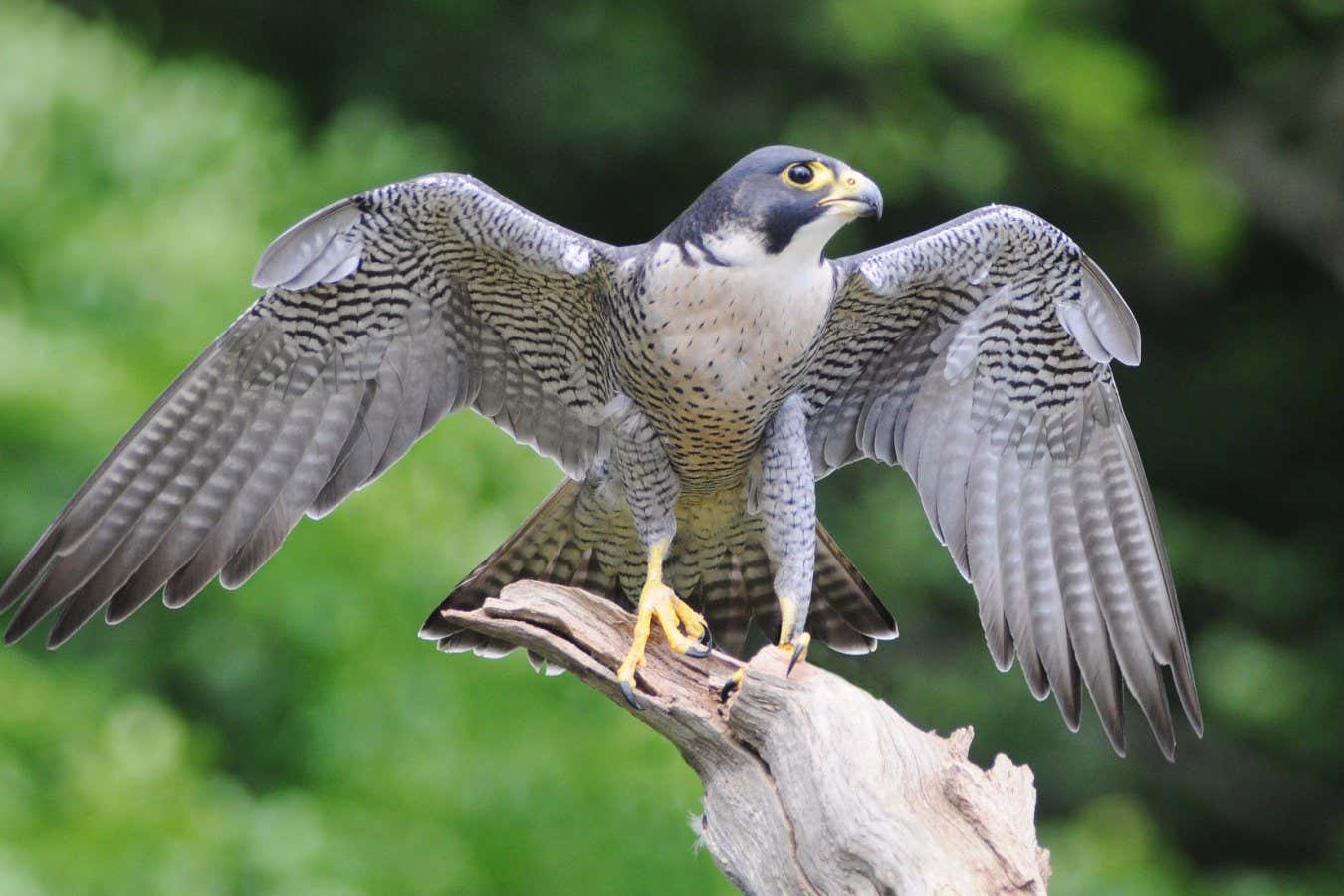
Wildlife biologist Sophie Osborn has spent a career working with birds that have been a feather’s breadth from extinction in the US. Her new book, Feather Trails: A journey of discovery among endangered birds, focuses on the Hawaiian crow, the California condor and the peregrine falcon (also found globally). We have pushed them to the brink, and Osborn describes in painstaking detail the Herculean work to pull them back.
Poking out of the Tasman Sea between Australia and New Zealand is a crooked, crescent-shaped volcanic remnant called Lord Howe Island. The rocky isle, which is 10 kilometres long and 2 kilometres across at its widest, is blanketed in a lush, pristine forest and boasts a sandy, coral-rich lagoon.
“It’s paradise,” says Neal Haddaway, a photographer who went there to document the work of ocean research group Adrift. “The sounds of birds are everywhere, there’s beautiful corals, golden sands.” Among the bird calls is that of the flesh-footed shearwater (Ardenna carneipes), roughly 22,000 of which breed on the island.
Flesh-footed shearwater chick (Ardenna carneipes)
Neal Haddaway
But life there is far from idyllic, and newly hatched shearwater chicks, such as the one pictured above, are under threat from mounting levels of marine plastic pollution. Adult shearwaters often confuse plastic debris in the sea for food and end up giving it to their young. In fact, Adrift researchers have found that chicks are ingesting increasing amounts of plastic every year. One of the team, shown below, is sorting out the chunks of plastic found in the stomach of just a single bird.
As a result, these chicks are increasingly underdeveloped, and dozens die from starvation or plastic-related illnesses annually.
“The island may be magical,” says Haddaway. “But it’s filled with frustration and grief.”
To protect this population of flesh-footed shearwaters, which locals affectionately dub mutton birds (see above) after their purported taste, there needs to be tougher legislation against plastic pollution, he says.
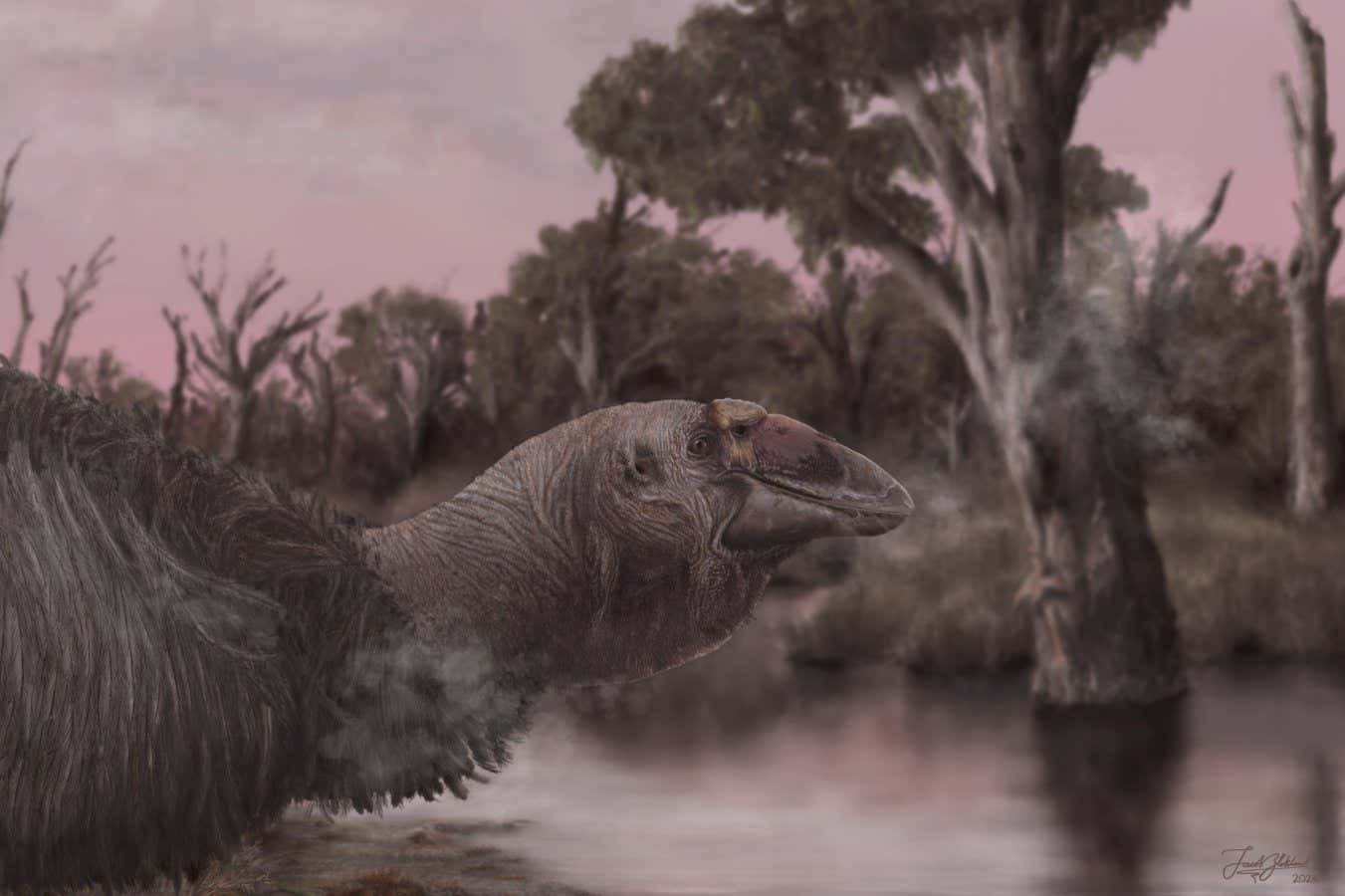
An artistic reconstruction of Genyornis newtoni, an ancient relative of geese
Illustration by Jacob C. Blokland
Australia’s prehistoric thunder birds – once thought to be the ancestors of emus – were, in fact, the biggest geese that ever lived.
The group has been reclassified following the analysis of a 45,000-year-old Genyornis newtoni skull found in a fossil deposit at Lake Callabonna in the South Australian desert.
The newly discovered skull is the first from the extinct species found since 1913 and the only one preserved well enough to allow detailed anatomical study. It is thought that G. newtoni weighed about 230 kilograms and stood over 2.5 metres tall.
However, its close relative, Dromornis stirtoni, reached heights well over 3 metres and weighed up to 600 kilograms, making it not just a contender for biggest bird ever, but by far the largest goose.
When the first thunder bird fossils were found in the 19th century, they were thought to be the ancestors of the ratites, which include emus, cassowaries and ostriches. Others have since argued that the group, formally called the Dromornithidae and comprising eight known species, should be categorised as land fowl, which includes chickens and pheasants.
Now, Phoebe McInerney at Flinders University in Adelaide, Australia, and her colleagues have determined that thunder birds were giant waterfowl and should be moved into the same group as geese, the Anseriformes.
The team was mainly convinced by the anatomy of the beak and skull, including the arrangement of muscles and modifications to the bone where they attach. The structure in Genyornis is near-identical to that of an old waterfowl lineage, the South American screamers. This structure is extremely complex and is unlikely to have evolved independently, says McInerney.
Artistic reconstruction of the skull of Genyornis newtoni, based on the fossil material
Illustration by Jacob C. Blokland
All the thunder birds were vegetarians, she says, though they were probably fierce creatures. “I think they would have been very tough animals,” says McInerney. “They would have been able to defend themselves and would have been quite overwhelming beasts. They would have made very deep and loud calls.”
Adam Yates at the Museum and Art Gallery of the Northern Territory, Australia, says the study is a vindication of his predecessor, Peter Murray, who proposed in the early 1990s that the thunder birds were waterfowl. “So it’s not a shock to me,” says Yates. “But a skull of Genyornis has been hard to find, so it’s great to see its skull finally revealed.”
Many thunder bird species died out prior to the arrival of humans in Australia around 65,000 years ago, with this most likely to have been due to climate change. However, G. newtoni and humans overlapped on the continent for tens of thousands of years and some researchers speculate that hunting also played a role in their demise.
Humans from many cultures tend to associate the nonsense words “bouba” and “kiki” with different shapes – and now it seems that 3-day-old chicks have the same inclinations
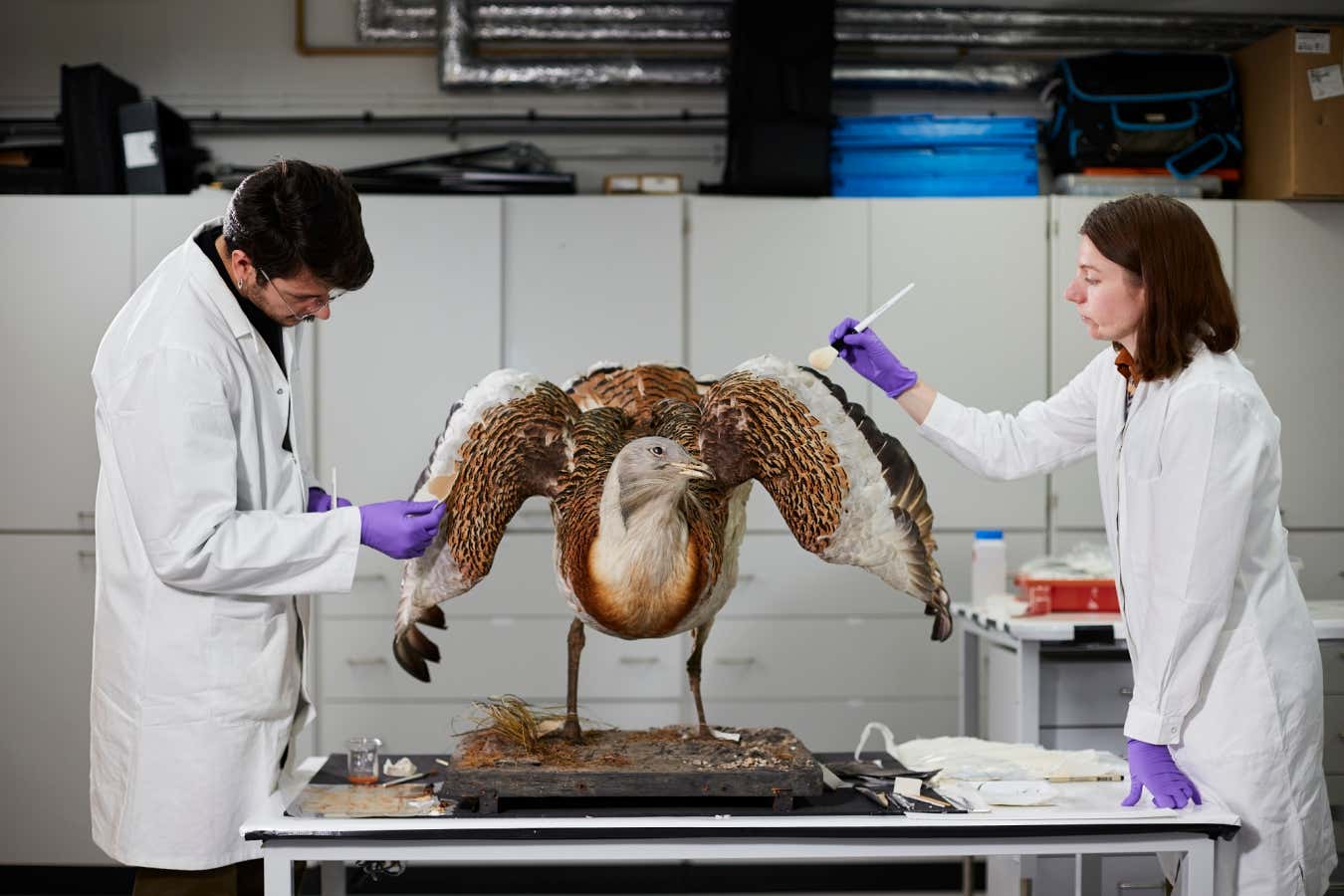
Senior conservator Nikki Harrison and Emanuele Casafredda work on a great bustard specimen
Lucie Goodayle / The Natural History Museum, London
Why were birds the only dinosaurs to survive the fateful asteroid that hit Earth 65 million years ago? A new exhibition sheds light on the extent of birds’ adaptability and the behaviours that allowed them to thrive in all niches.
Birds: Brilliant and Bizarre, created by the UK’s Natural History Museum with the Royal Society for the Protection of Birds, pays tribute to the qualities of what it calls “ultimate survivors”. But it also shows how global…
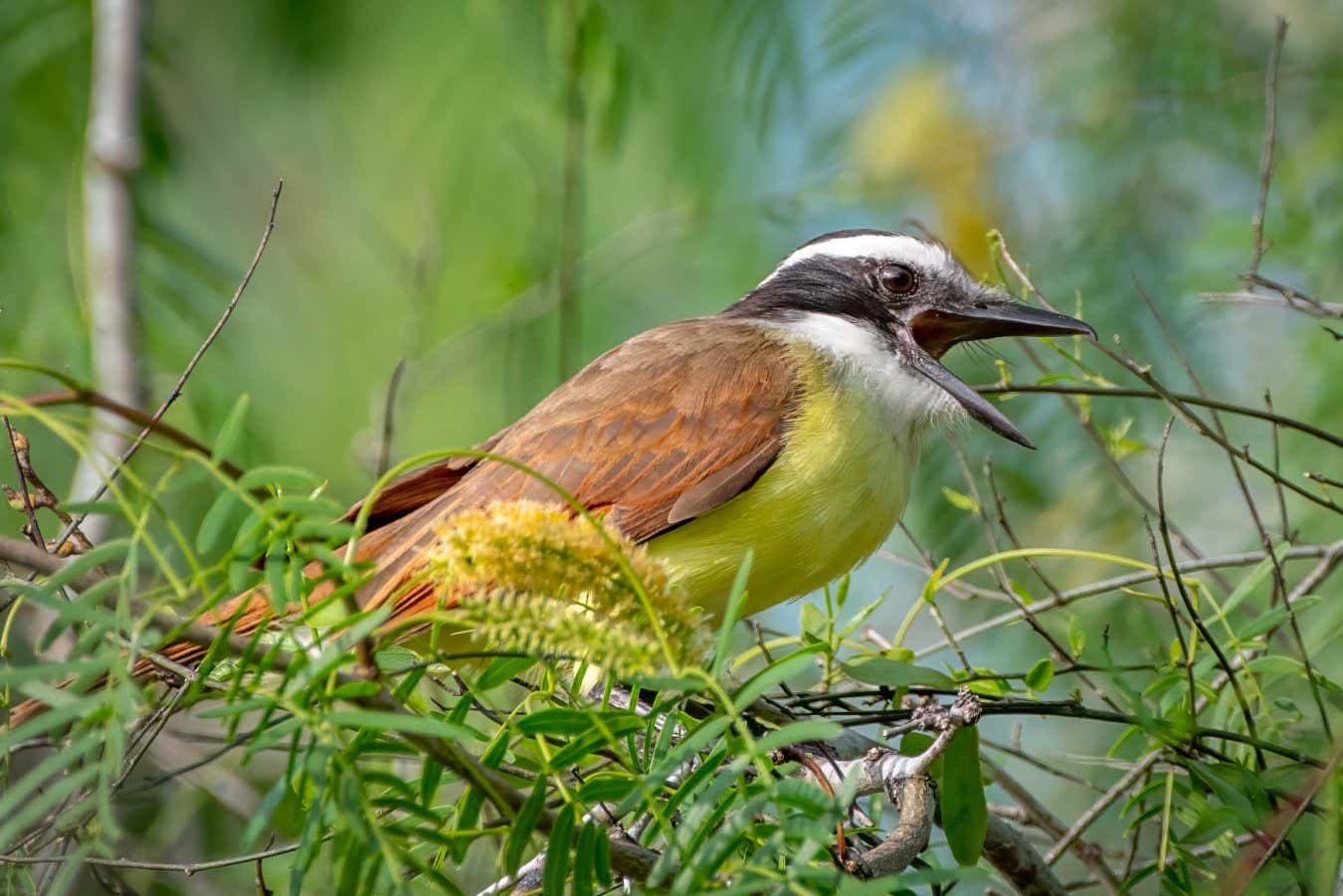
A great kiskadee, a songbird that seems to dream about singing
Gerald DeBoer/Getty Images
We can now listen to songs that a small Argentinian bird thought of in its sleep. Listening to such songs across more species of birds could inform the debate on how birds dream.
Physicist Gabriel Mindlin at the University of Buenos Aires in Argentina got interested in the mechanics of birdsong in the early 2000s, but expected it to be just a “fun detour”. Instead, it led him down the path of trying to hear what happens in birds’…
A scan of a California condor (Gymnogyps californianus) egg has revealed a rarely seen embryonic world. The chick is the 250th condor hatched at a facility helping to bring back the threatened birds from the brink of extinction.
Like each condor egg laid in the San Diego Zoo Wildlife Alliance’s breeding program, this one was closely monitored by veterinary staff to ensure it was growing normally. As part of these regular check-ups, experts “candle” the developing eggs by placing a light against the shell to check the position of the chick inside.
All eggs have an air pocket inside, but this one was in an unusual position, which suggested the chick was contorted. Such a position can harm its chance of hatching successfully. The team decided to do a computed tomography (CT) scan to peek inside the shell – something they have had to do for previous eggs, too.
“We can see the skeleton and air pockets in the egg,” says Nora Willis at the San Diego Zoo Wildlife Alliance. “I’m still blown away by it.”
To their relief, the scan revealed that the chick inside was doing just fine. The condor chick even started “pipping” – one of the early stages of breaking through the shell. The team returned the egg to its nest, where its parents helped the young bird hatch on the morning of March 16. The team named the chick Emaay (pronounced “eh-my”), a word for “sky” from the language of the Kumeyaay, an Indigenous people of California.
The hatch of the new chick, whose sex is not yet determined, marks a notable milestone for the species, which narrowly evaded extinction. The chick’s father, Xol-Xol (pronounced “hole-hole”), was one of just 22 condors surviving in the 1980s that was brought into the breeding program. “It’s kind of like a full circle moment,” says Willis.
As a recent example of what may ensue, Pitesky points to the repeated African swine fever outbreaks across various Asian countries in the past decade, which decimated the pig farming industry to the extent that pork was briefly usurped by poultry as the most widely consumed animal protein on the planet. Pitesky argues, however, that the current model of governments heavily compensating farmers for their livestock losses in the wake of a viral outbreak is financially unsustainable, and more investment needs to be diverted toward AI-driven technologies that can prevent these infections in the first place.
“I work on predictive models, using a combination of weather radar, satellite imagery, and machine learning, to understand how waterfowl behavior around different farms is changing,” says Pitesky. “We can use this information to understand which of the 50,000 to 60,000 commercial poultry facilities in the US are at most risk, and form strategies to protect all the birds in those facilities.”
Technology may ultimately offer a path toward eliminating the virus in commercial poultry. In October, a team of researchers in the UK published a study in the journal Nature Communications demonstrating that it is possible to use the gene-editing tool Crispr to make chickens resistant to avian influenza. This was done through editing genes that make the proteins ANP32A, ANP32B, and ANP32E in chickens, which the virus uses to gain access to chicken cells.
“The currently available methods are the use of strict farm biosecurity, poultry vaccinations in some countries, and massive depopulation of infected or exposed chicken flocks,” says Alewo Idoko-Akoh at the University of Bristol, the lead researcher on the Nature Communications study. “These methods have been partially successful but have so far failed to stop recurrent bird flu outbreaks around the world. Gene editing of chickens to introduce disease resistance should be considered as an additional tool for preventing or limiting the spread of bird flu.”
Pitesky described the paper as “really interesting” but pointed out that it would require widespread public acceptance toward consuming gene-edited chicken for it to become commercially viable. “I think that those technological solutions have a lot of potential, but the issue more than anything, especially in the United States, is sentiment toward chickens that have been genetically modified,” he says.
For now, Iqbal says that the best chance of keeping avian influenza under control is more active surveillance efforts in animal populations around the world, to understand how and where the H5N1 is spreading.
“The surveillance system has been improved, and any infection that appears unusual is thoroughly investigated,” he says of the situation in the US. “This has helped to identify unusual outbreaks, such as infections in goats and cattle.” However, he says, much more work is needed to detect the virus in animals that don’t show signs of disease.
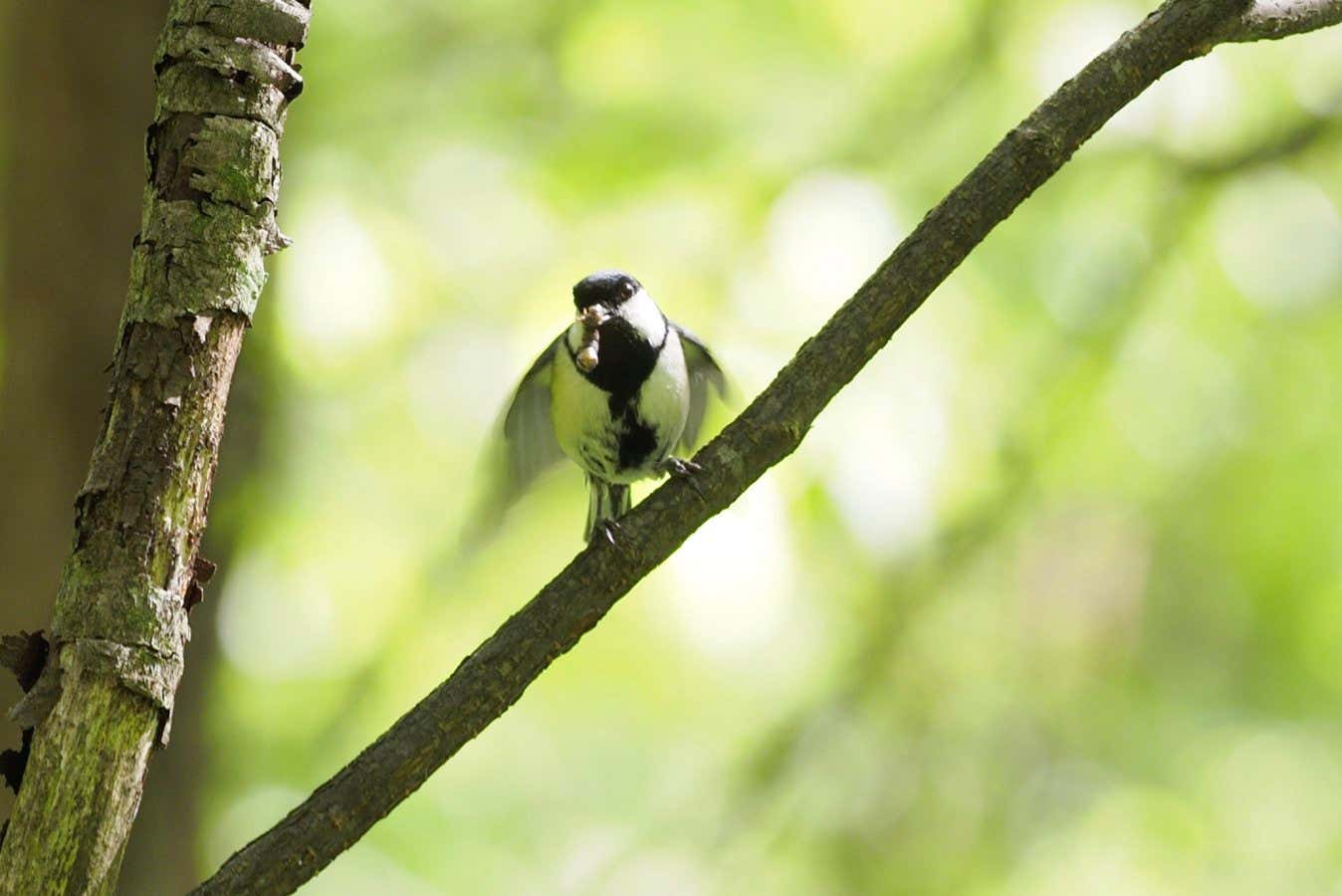
Japanese tits appear to flutter their wings to tell mates to enter the nest, suggesting that birds may communicate with a variety of gestures.
Signals such as waving are a common aspect of communication among people and other great apes. In a bid to learn more about such behaviours in birds, Toshitaka Suzuki at the University of Tokyo and his colleagues have installed hundreds of nest boxes in a forest populated with Japanese tits (Parus minor) near the town of Karuizawa over the past few years.
To mimic the tree cavities that the tits usually dwell in, each box had a 7.5-centimetre-wide hole, just big enough for one bird to squeeze into at a time.
During breeding season, the team observed 321 nest visits across eight breeding pairs, with the tits often having food in tow to feed their hatchlings.
If a couple arrived at the nest together, each tit would perch on a nearby branch before entering. Around 40 per cent of the time, the female fluttered its wings for a few seconds, with its chest facing the male. This was quickly followed by the male entering the nest first, then the female.
However, when neither bird fluttered its wings, which made up 44 per cent of nest visitations, the females usually entered first. Only one male was observed repeatedly fluttering its wings, which was followed by the female entering first. Wing fluttering wasn’t observed at all when each bird arrived separately.
“We can conclude that this wing fluttering conveys ‘after you’, prompting males to enter the nest first,” says Suzuki. “This study is the first to demonstrates that birds can use wing movements to convey a particular meaning.”
The findings suggest that Japanese tits, and possibly other bird species, communicate in a much more intricate way than was previously thought.
“There is a hypothesis that language evolved from gestural communication,” says Suzuki. “So, these studies can help us understand the evolution of complex communication, including our own language.”