Tag: Carbon Capture

  • Unstoppable Catalyst Outsmarts Sulfur to Revolutionize Carbon Capture

    Unstoppable Catalyst Outsmarts Sulfur to Revolutionize Carbon Capture

    [ad_1]

    Greenhouse Gases Industrial Chimney

    Researchers at the University of Toronto Engineering have developed a new catalyst that efficiently converts captured carbon into valuable products such as ethylene and ethanol, even in the presence of sulfur oxide contaminants. This breakthrough offers a more economically viable method for carbon capture and upgrading, potentially revolutionizing industries like steel and cement manufacturing by allowing them to convert CO2 from waste streams more effectively.

    An electrochemical catalyst for converting CO2 to valuable products can stand up to an impurity that poisons current versions.

    A new catalyst enhances the conversion of captured carbon into commercial products, maintaining high efficiency despite sulfur oxide impurities. This innovation could significantly reduce costs and energy requirements in carbon capture technologies, impacting heavy industries.

    A newly designed catalyst created by University of Toronto Engineering researchers efficiently converts captured carbon into valuable products — even in the presence of a contaminant that degrades the performance of current versions.

    The discovery is an important step toward more economically favorable techniques for carbon capture and storage that could be added to existing industrial processes.

    Advancements in Carbon Conversion Technologies

    “Today, we have more and better options for low-carbon electricity generation than ever before,” says Professor David Sinton (MIE), senior author on a paper published in Nature Energy on July 4 that describes the new catalyst.

    “But there are other sectors of the economy that will be harder to decarbonize: for example, steel and cement manufacturing. To help those industries, we need to invent cost-effective ways to capture and upgrade the carbon in their waste streams.”

    New Catalyst To Convert Captured CO2 Gas Into Valuable Products

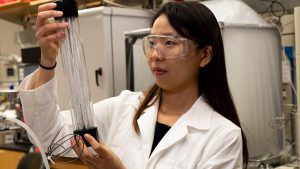
    University of Toronto Engineering PhD students Rui Kai (Ray) Miao (left) and Panos Papangelakis (right) hold up a new catalyst they designed to convert captured CO2 gas into valuable products. Their version performs well even in the presence of sulfur dioxide, a contaminant that poisons other catalysts. Credit: Tyler Irving / University of Toronto Engineering

    Electrolyzer Use in Carbon Transformation

    Sinton and his team use devices known as electrolyzers to convert CO2 and electricity into products such as ethylene and ethanol. These carbon-based molecules can be sold as fuels or used as chemical feedstocks for making everyday items such as plastic.

    Inside the electrolyzer, the conversion reaction happens when three elements — CO2 gas, electrons, and a water-based liquid electrolyte — come together on the surface of a solid catalyst.

    The catalyst is often made of copper but may also contain other metals or organic compounds that can further improve the system. Its function is to speed up the reaction and minimize the creation of undesirable side products, such as hydrogen gas, which reduce the efficiency of the overall process.

    Addressing Catalyst Efficiency Challenges

    While many teams around the world have produced high-performing catalysts, nearly all of them are designed to operate with a pure CO2 feed. But if the carbon in question comes from smokestacks, the feed is likely to be anything but pure.

    “Catalyst designers generally don’t like dealing with impurities, and for good reason,” says Panos Papangelakis, a PhD student in mechanical engineering and one of five co-lead authors on the new paper.

    “Sulphur oxides, such as SO2, poison the catalyst by binding to the surface. This leaves fewer sites for CO2 to react, and it also causes the formation of chemicals you don’t want.

    “It happens really fast: whereas some catalysts can last hundreds of hours on a pure feed, if you introduce these impurities, within minutes they can be down to 5% efficiency.”

    Though there are well-established methods to remove impurities from CO2-rich exhaust gases before feeding them into the electrolyzer, they take time, require energy, and raise the cost of carbon capture and upgrading. Furthermore, in the case of SO2, even a little bit can be a big problem.

    “Even if you bring your exhaust gas down to less than 10 parts per million, or 0.001% of the feed, the catalyst can still be poisoned in under 2 hours,” says Papangelakis.

    Innovations in Catalyst Design

    In the paper, the team describes how they went about designing a more resilient catalyst that could stand up to SO2 by making two key changes to a typical copper-based catalyst.

    On one side, they added a thin layer of polytetrafluoroethylene, also known as Teflon. This non-stick material changes the chemistry at the catalyst surface, impeding the reactions that enable SO2 poisoning to take place.

    On the other side, they added a layer of Nafion, an electrically conductive polymer often used in fuel cells. This complex, porous material contains some areas that are hydrophilic, meaning they attract water, as well as other areas that are hydrophobic, meaning they repel water. This structure makes it difficult for SO2 to reach the catalyst surface.

    Performance Under Adverse Conditions

    The team then fed this catalyst with a mix of CO2 and SO2, with the latter at a concentration of about 400 parts per million, typical of an industrial waste stream. Even under these tough conditions, the new catalyst performed well.

    “In the paper, we report a Faraday efficiency — a measure of how many of the electrons ended up in the desired products — of 50%, which we were able to maintain for 150 hours,” says Papangelakis.

    “There are some catalysts out there that might start at a higher efficiency, maybe 75% or 80%. But again, if you expose them to SO2, within minutes or at most a couple of hours, that drops down to almost nothing. We were able to resist that.”

    Future Directions and Implications

    Papangelakis says that because his team’s approach doesn’t affect the composition of the catalyst itself, it should be widely applicable. In other words, teams that have already perfected high-performing catalysts should be able to use similar coatings to confer resistance to sulfur oxide poisoning.

    Although sulfur oxides are the most challenging impurity in typical waste streams, they are not the only ones, and it’s the full set of chemical contaminants that the team is turning to next.

    “There are lots of other impurities to consider, such as nitrogen oxides, oxygen, etc.,” says Papangelakis.

    “But the fact that this approach works so well for sulfur oxides is very promising. Before this work, it was just taken for granted that you’d have to remove the impurities before upgrading CO2. What we’ve shown is that there might be a different way to deal with them, which opens up a lot of new possibilities.”

    Reference: “Improving the SO2 tolerance of CO2 reduction electrocatalysts using a polymer/catalyst/ionomer heterojunction design” by Panagiotis Papangelakis, Rui Kai Miao, Ruihu Lu, Hanqi Liu, Xi Wang, Adnan Ozden, Shijie Liu, Ning Sun, Colin P. O’Brien, Yongfeng Hu, Mohsen Shakouri, Qunfeng Xiao, Mengsha Li, Behrooz Khatir, Jianan Erick Huang, Yakun Wang, Yurou Celine Xiao, Feng Li, Ali Shayesteh Zeraati, Qiang Zhang, Pengyu Liu, Kevin Golovin, Jane Y. Howe, Hongyan Liang, Ziyun Wang, Jun Li, Edward H. Sargent and David Sinton, 4 July 2024, Nature Energy.
    DOI: 10.1038/s41560-024-01577-9


    [ad_2]

    Source link

  • A Breakthrough in Efficiency and Cost

    A Breakthrough in Efficiency and Cost

    [ad_1]

    Energy Fuel Gas Production Concept Art

    Gas separation is crucial across many industries but often involves energy-intensive processes, such as cooling gases to liquefy and then separate them based on their evaporation temperatures. However, Professor Wei Zhang and his team at the University of Colorado Boulder have developed a new type of porous material that is flexible, sustainable, and energy-efficient. This material can adjust its pore sizes at different temperatures to selectively allow certain gases to pass through, potentially revolutionizing the way gases are separated and reducing the overall energy required for these processes.

    A new porous material allows for efficient, low-energy gas separation and is scalable for industrial use, offering a sustainable alternative to traditional methods.

    Separating gases plays a crucial role in various industries, from medical applications, where nitrogen and oxygen are separated from air, to environmental processes like carbon capture, where carbon dioxide is isolated from other gases, and the purification of natural gas by removing impurities.

    Separating gases, however, can be both energy-intensive and expensive. “For example, when separating oxygen and nitrogen, you need to cool the air to very low temperatures until they liquefy. Then, by slowly increasing the temperature, the gases will evaporate at different points, allowing one to become a gas again and separate out,” explains Wei Zhang, a University of Colorado Boulder professor of chemistry and chair of the Department of Chemistry. “It’s very energy intensive and costly.”

    Much gas separation relies on porous materials through which gases pass and are separated. This, too, has long presented a problem, because these porous materials generally are specific to the types of gases being separated. Try sending any other types of gas through them and they don’t work.

    However, in research published on June 27 in the journal Science, Zhang and his co-researchers detail a new type of porous material that can accommodate and separate many different gases and is made from common, readily available materials. Further, it combines rigidity and flexibility in a way that allows size-based gas separation to happen at a greatly decreased energy cost.
    “We are trying to make technology better,” Zhang says, “and improve it in a way that’s scalable and sustainable.”

    Adding Flexibility

    For a long time, the porous materials used in gas separation have been rigid and affinity-based—specific to the types of gases being separated. The rigidity allows the pores to be well-defined and helps direct the gases in separating, but also limits the number of gases that can pass through because of varying molecule sizes.

    For several years, Zhang and his research group worked to develop a porous material that introduces an element of flexibility to a linking node in an otherwise rigid porous material. That flexibility allows the molecular linkers to oscillate, or move back and forth at a regular speed, changing the accessible pore size in the material and allowing it to be adapted to multiple gases.

    “We found that at room temperature, the pore is relatively the largest and the flexible linker barely moves, so most gases can get in,” Zhang says. “When we increase the temperature from room temperature to about 50 degrees (Celsius), oscillation of the linker becomes larger, causing effective pore size to shrink, so larger gases can’t get in. If we keep increasing the temperature, more gases are turned away due to increased oscillation and further reduced pore size. Finally, at 100 degrees, only the smallest gas, hydrogen, can pass through.”

    The material that Zhang and his colleagues developed is made of small organic molecules and is most analogous to zeolite, a family of porous, crystalline materials mostly comprised of silicon, aluminum, and oxygen. “It’s a porous material that has a lot of highly ordered pores,” he says. “You can picture it like a honeycomb. The bulk of it is solid organic material with these regular-sized pores that line up and form channels.”

    The researchers used a fairly new type of dynamic covalent chemistry that focuses on the boron-oxygen bond. Using a boron atom with four oxygen atoms around it, they took advantage of the reversibility of the bond between the boron and oxygen, which can break and reform again and again, thus enabling self-correcting, error-proof behavior and leading to the formation of structurally ordered frameworks.

    “We wanted to build something with tunability, with responsiveness, with adaptability, and we thought the boron-oxygen bond could be a good component to integrate into the framework we were developing, because of its reversibility and flexibility,” Zhang says.

    Sustainable Solutions

    Developing this new porous material did take time, Zhang says: “Making the material is easy and simple. The difficulty was at the very beginning, when we first obtained the material and needed to understand or elucidate its structure—how the bonds form, how angles form within this material, is it two-dimensional or three-dimensional. We had some challenges because the data looked promising, we just didn’t know how to explain it. It showed certain peaks (x-ray diffraction), but we could not immediately figure out what kind of structure those peaks corresponded to.”

    So, he and his research colleagues took a step back, which can be an important but little-discussed part of the scientific process. They focused on the small-molecule model system containing the same reactive sites as those in their material to understand how molecular building blocks packed in a solid state, and that helped explain the data.

    Zhang adds that he and his co-researchers considered scalability in developing this material, since its potential industrial uses would require large amounts, “and we believe this method is highly scalable. The building blocks are commercially available and not expensive, so it could be adopted by industry when the time is right.”

    They have applied for a patent on the material and are continuing the research with other building block materials to learn the substrate scope of this approach. Zhang also says he sees potential to partner with engineering researchers to integrate the material into membrane-based applications.

    “Membrane separations generally require much less energy, so in the long term they could be more sustainable solutions,” Zhang says. “Our goal is to improve technology to meet industry needs in sustainable ways.”

    Reference: “Molecular recognition with resolution below 0.2 angstroms through thermoregulatory oscillations in covalent organic frameworks” by Yiming Hu, Bratin Sengupta, Hai Long, Lacey J. Wayment, Richard Ciora, Yinghua Jin, Jingyi Wu, Zepeng Lei, Kaleb Friedman, Hongxuan Chen, Miao Yu and Wei Zhang, 27 June 2024, Science.
    DOI: 10.1126/science.adj8791


    [ad_2]

    Source link

  • Cambridge researchers develop charcoal ‘sponge’ for CO2 capture

    Cambridge researchers develop charcoal ‘sponge’ for CO2 capture

    [ad_1]

    Scientists at The University of Cambridge have pioneered an economical and efficient method for creating materials for CO2 capture.

    The innovative CO2 capture method is similar to charging a battery, but instead charges activated charcoal, commonly used in household water filters.

    Charging the charcoal ‘sponge’ with ions forms reversible bonds with CO2 that effectively capture the CO2 from the air.

    Potentially, this method is more energy efficient than traditional carbon capture processes, requiring much lower temperatures.

    The researchers have filed a patent for the method, and the research is being commercialised with the support of Cambridge Enterprise.

    Dr Alexander Forse from the Yusuf Hamied Department of Chemistry, who led the research, explained the significance of the research: “Capturing carbon emissions from the atmosphere is a last resort, but given the scale of the climate emergency, it’s something we need to investigate.

    “The first and most urgent thing we’ve got to do is reduce carbon emissions worldwide, but greenhouse gas removal is also thought to be necessary to achieve net zero emissions and limit the worst effects of climate change. Realistically, we’ve got to do everything we can.”

    Limitations of direct air capture

    Direct air capture, utilising sponge-like materials to extract carbon dioxide from the atmosphere, is a potential carbon capture method.

    However, it is currently costly, energy-intensive, reliant on high temperatures and natural gas, and lacks stability.

    ©shutterstock3rdtimeluckystudio_2194510413

    “Some promising work has been done on using porous materials for carbon capture from the atmosphere,” said Forse. “We wanted to see if activated charcoal might be an option since it’s cheap, stable and made at scale.”

    Activated charcoal for carbon capture

    Activated charcoal is commonly used in purification applications like water filters, but it typically can’t capture CO2 from the air.

    Forse and his colleagues proposed that charging activated charcoal, similar to a battery, could make it suitable for carbon capture.

    When charging a battery, charged ions are inserted into one electrode. The researchers hypothesised that charging activated charcoal with hydroxides, which form reversible bonds with CO2, would enhance its carbon capture capabilities.

    They used a battery-like process to charge inexpensive activated charcoal cloth with hydroxide ions. The cloth, acting like a battery electrode, accumulates hydroxide ions in its pores. After charging, the charcoal is removed, washed, and dried.

    Tests showed that the charged charcoal sponge could successfully capture CO2 directly from the air due to the hydroxide bonding mechanism.

    To release the captured CO2 for purification and storage, the material is heated to reverse the hydroxide-CO2 bonds.

    Unlike current materials that require heating to 900°C, the charged charcoal sponges need only 90-100°C, achievable with renewable electricity. This resistive heating method is faster and less energy-intensive.

    Researchers believe this approach could be useful beyond carbon capture, as the charcoal’s pores and the inserted ions can be adjusted to capture various molecules.

    [ad_2]

    Source link

  • MOF-525 Can Capture and Convert CO2 Into Useful Chemicals

    MOF-525 Can Capture and Convert CO2 Into Useful Chemicals

    [ad_1]

    By

    Refinery Industrial Carbon Capture Concept Art

    Researchers have made a significant advancement in the practical application of a novel material known as MOF-525, a member of the metal-organic frameworks family, which shows great promise in carbon capture and conversion technologies. The team has developed a scalable manufacturing process using solution shearing techniques that allows MOF-525 to be applied in large areas, thus enhancing its effectiveness in capturing and converting carbon dioxide into commercially valuable chemicals. Credit: SciTechDaily.com

    Researchers at the University of Virginia have developed a scalable method for fabricating MOF-525, a material that can effectively capture and convert carbon dioxide into useful chemicals. This breakthrough offers a practical solution for large-scale applications in carbon capture and conversion, presenting significant environmental and energy benefits.

    Scientists have figured out how to take a miracle material, one capable of extracting value from captured carbon dioxide, and do what no one else has: make it practical to fabricate for large-scale application. Researchers at the University of Virginia School of Engineering and Applied Science conducted the study, which was published in ACS Applied Materials & Interfaces.

    The breakthrough from chemical engineering assistant professor Gaurav “Gino” Giri’s lab group has implications for the cleanup of the greenhouse gas, a major contributor to the climate change dilemma. It could also help solve the world’s energy needs.

    The Power of MOF-525

    The substance, called MOF-525, is in a class of materials called metal-organic frameworks.

    “If you can make these MOFs cover large areas, then new applications become possible, like making a membrane for carbon capture and electrocatalytic conversion all in one system,” Giri said.

    Electrocatalytic conversion creates a bridge from renewable energy sources to direct chemical synthesis, taking the burning of carbon dioxide-producing fossil fuels out of the equation.

    Gaurav Giri

    Assistant professor of chemical engineering Gaurav Giri. Credit: Tom Cogill

    Advancing Carbon Capture Solutions

    What gives MOFs superpowers is their ultra-porous, crystalline structures — 3D networks of minute nanoscale cavities that create vast internal surface area and act like a sponge — that can be designed to trap all sorts of chemical compounds.

    Giri’s group reasoned that starting with an inherently scalable synthesis technique — solution shearing — would better their odds. They had already had success shearing simpler MOFs.

    In Giri’s process, the MOF’s components are mixed in a solution, and then spread across a substrate with the shearing blade. As the solution evaporates, chemical linkages form the MOF as a thin film on the substrate. Applying MOF-525 in this way produces an all-in-one membrane for carbon trapping and conversion.

    Scaling Up for Greater Impact

    “The bigger the membrane, the more surface area you have for the reaction, and the more product you could get,” said Prince Verma, a December 2023 Ph.D. graduate from Giri’s lab. “With this process, you can increase the shearing blade width to whatever size you need.”

    The team targeted CO2 conversion to demonstrate their solution shearing approach because carbon capture is widely used to reduce industrial emissions or to remove it from the atmosphere — but at a cost to operators with minimal return on the investment: Carbon dioxide has little commercial value and most often winds up stored indefinitely underground.

    However, with minimal energy input, using electricity to catalyze a reaction, MOF-525 can take away an oxygen atom to make carbon monoxide — a chemical that is valuable for manufacturing fuels, pharmaceuticals, and other products.

    UVA’s Commitment to Green Energy

    The process of accelerating reactions through catalysis, especially electrocatalysis, which consumes less energy than reactions driven by heat or pressure, is essential to a green-energy future — so much so that UVA invested $60 million in catalysis study as part of UVA’s Grand Challenges Investments.

    For that expertise, Giri collaborated with UVA associate professor of chemistry Charles W. Machan.

    “The materials from Gino’s lab help us understand how to enable new, scalable technologies for capture and conversion, which we’re going to need to address the environmental challenges posed by current carbon dioxide concentrations in the atmosphere and rate of emissions,” Machan said. 

    The researchers published their findings in the American Chemical Society journal Applied Materials and Interfaces.

    Reference: “Solution Shearing of Zirconium (Zr)-Based Metal–Organic Frameworks NU-901 and MOF-525 Thin Films for Electrocatalytic Reduction Applications” by Prince K. Verma, Connor A. Koellner, Hailey Hall, Meagan R. Phister, Kevin H. Stone, Asa W. Nichols, Ankit Dhakal, Earl Ashcraft, Charles W. Machan and Gaurav Giri, 13 November 2023, ACS Applied Materials & Interfaces.
    DOI: 10.1021/acsami.3c12011

    Also contributing to the work were Connor A. Koellner, Hailey Hall, Meagan R. Phister, Kevin H. Stone, Asa W. Nichols, Ankit Dhakal and Earl Ashcraft.

    The research was supported by the UVA Environmental Institute; the U.S. Department of Energy, Office of Science, Office of Basic Energy Sciences, Catalysis Science Program; the Nanoscale Materials Characterization Facility at UVA; and the Stanford Synchrotron Radiation Lightsource, SLAC National Accelerator Laboratory.


    [ad_2]

    Source link
  • Ships could store their CO2 emissions in the ocean

    Ships could store their CO2 emissions in the ocean

    [ad_1]

    A start-up is testing a new system to capture carbon dioxide from shipping exhaust and discharge it into the ocean

    Calcarea

    Ships could capture their own carbon dioxide emissions by bubbling exhaust through seawater and limestone, then pouring the water back into the ocean. This could save space and energy compared with other systems, but it is unclear what the environmental impacts might be.

    The system takes advantage of a natural reaction between CO2 and calcium carbonate, also known as limestone. “The ocean has been running exactly this reaction for billions of years,” says Jess Adkins at Calcarea, the start-up behind the technique.

    When seawater absorbs CO2, it becomes acidic enough to break down limestone. The dissolved rock then reacts with CO2 in the water to form bicarbonate minerals, which can remain stable in the ocean for millennia. This is one of the primary ways the planet removes CO2 from the atmosphere over long timescales.

    For decades, Adkins and his colleagues studied how this dynamic affects organisms with shells or skeletons made of calcium, like corals, as the oceans become more acidic due to rising levels of atmospheric CO2. They realised that speeding up the rate at which limestone dissolved would transform more CO2 into stable bicarbonate – and one way to do this was to increase the concentration of carbon dioxide exposed to limestone. “You can make [the reaction] go an order of magnitude faster if you use pure CO2,” says Adkins.

    The researchers have now designed a way to use this process to capture carbon from ships, which are responsible for about 3 per cent of all human-caused CO2 emissions and have limited options to reduce their footprint.

    Adkins says tests in California demonstrated that two prototypes can convert at least 30 per cent of the CO2 in diesel engine exhaust into bicarbonate. They are now working with the research arm of Lomar Shipping, a global shipping company, to test the system on a ship.

    The on-board test would involve compressing exhaust, then bubbling it through large volumes of seawater, using the movement of the ship as a water pump to save on energy. The more acidic water would then flow over crushed limestone to form bicarbonate, before being discharged back into the ocean.

    Adkins says this technique doesn’t use up as much space and is more flexible than other approaches, which require storing captured emissions on board and offloading them at specialised ports. Still, he estimates the Calcarea system would take up about 4 per cent of the space on a large bulk carrier ship sailing on a long voyage.

    Phil Renforth at Heriot-Watt University in the UK says the idea is interesting but could face a few problems. For one, he says the approach is unlikely to ever capture all the CO2 from the exhaust without impractically large reactors. As more options for low-emissions shipping fuels become available, that may prove to be a better option than capturing emissions.

    “We also need to know a lot about the consequences of scaling this up,” he says. Discharging bicarbonates into the ocean wouldn’t be a concern because they are abundant in seawater, but he says other compounds in the exhaust could have negative effects on ecosystems.

    Many ships already use systems that discharge sulphur pollution from exhaust into the ocean. But the agencies that regulate global shipping and international waters remain divided on how to address schemes to store CO2 in the sea.

    Topics:

    [ad_2]

    Source link

  • Exploring CCUS technologies for a net zero future

    Exploring CCUS technologies for a net zero future

    [ad_1]

    The ConsenCUS Project is set to lead the way in electricity-based CCUS technologies to enable a sustainable future.

    Carbon is one of the most important elements in the world. From providing energy to being in the very food that sustains us, it is abundant everywhere. However, when providing us with energy or materials, we also produce carbon emissions that change our climate.

    The 2050 net zero carbon targets are, therefore, vital to humanity’s continued existence, and to mitigating the damage that we have already started to cause our planet.

    As such, there are many initiatives, programmes, and innovations aimed at reducing carbon emissions. Yet, not as many focus on being completely carbon neutral.

    The ConsenCUS project

    A consortium comprised of nineteen partners in academia and industry, ConsenCUS is a project in Carbon Capture, Utilisation, and Storage (CCUS) that aims to achieve true net zero carbon technologies and make them widely available for industry everywhere.

    consencus project
    Serious games help people understand the various aspects of CCUS

    The locations of these partners include: The Netherlands, Denmark, United Kingdom, Romania, Greece, China, and Canada. They have come together with €13m of funding over four years under the Horizon 2020 programme.

    They aim to achieve this by ConsenCUS: CarbOn Neutral cluSters through Electricity-based iNnovations in Capture, Utilisation and Storage.

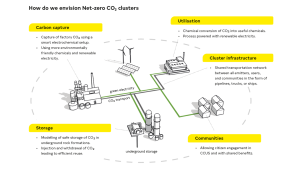
    An example of this is their net-zero Carbon Cluster approach, planning for regions that employ CCUS technologies and bringing together industries, users, storage, and local communities to not only reduce carbon emissions, but bring them down to net zero. The core ingredients of these Clusters will be as follows:

    Carbon capture and utilisation

    Using environmentally friendly chemicals and, crucially, renewable electricity, carbon emissions will be captured in industry, such as within factories. Water-soluble potassium hydroxide will be used as a sorbent to capture carbon dioxide molecules, and will be easy to separate again using a ‘pH swing.’

    From there, the carbon dioxide molecules can be electrochemically converted into much more useful and less harmful chemicals, such as potassium formate. Potassium formate can be used as a preservative, or can be used in protein or fuel production.

    Using (renewable) electricity for both the CO2 capture and conversion process allows for an overall net-zero carbon process, which does not rely on residual or fossil heat like competitive technologies.

    Carbon dioxide storage and transportation

    With the amount of carbon dioxide currently being produced, it is unlikely that all of it will be able to be converted into more useful things. This is what makes carbon storage important, as it still cannot just simply be released into the atmosphere.

    The subsurface is under investigation to make storage areas for carbon dioxide, and is showing promising results. ConsenCUS is modelling whether certain types of rock may be suitable for permanent, but also temporary carbon dioxide storage, in case there will be a need for it in the future.

    All these aspects will be connected safely and efficiently via secure transportation networks between the emitters, users, and communities, utilising pipelines, trucks or ships. Planning such infrastructure for two clusters (North-West and South-East Europe) is one of the key activities in ConsenCUS.

    Community engagement

    To understand what citizens within the Net Zero Carbon Clusters think about CCUS as a technology, an array of community events are being organised in the Netherlands, Denmark, the UK, Greece, and Romania.

    ccus technologies, cosencus project
    How the ConsenCUS consortium envisions net-zero CO2 clusters

    The goals of the community events are to understand the awareness, concerns, and needs of community members concerning the ConsenCUS project’s industrial innovations and CCUS developments more generally. Furthermore, insights and knowledge of community members will help better understand what social, economic, and environmental benefits, risks, and impacts CCUS can have for communities.

    To learn from and understand different communities’ perspectives about CCUS, one of the methods used is a conversation game called PlayDecide. The game is useful when introducing and discussing complex issues and technologies with groups of people who do not have in-depth technical information about a topic.

    ccus technologies
    Possible net-zero-CO2 scenarios for industry employing CCU or CCS with point source or direct air capture. Blue blocks represent centralised CO2 emissions (e.g., industrial plant, power plant) or decentralised CO2 emissions (e.g., aeroplane)

    Results from the project

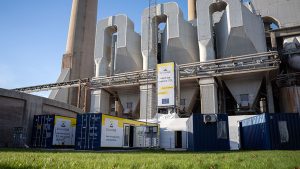
    In 2023, the ConsenCUS demonstration plant was opened at Aalborg Portland’s cement factory in Aalborg, Denmark. This demonstration plant is designed to capture up to 100kg of CO2 per hour and has already shown that carbon dioxide emissions can successfully be captured and converted into formate or formic acid, all through using renewable electricity. This monumental achievement shows that this technology is not only viable, but also has the potential to be scaled up.

    More optimisation will be done on this plant, as it moves to two more sites within two different industries that need to get to net-zero emissions: The oil refinery site of OMV Petrom near Ploiesti, Romania, and Grecian Magnesite in Yerakini, Greece, who along with Aalborg Portland, have all committed to developing and utilising these techniques for a better, carbon-neutral future. The focus for the second and third demonstration campaigns is to reach competitive specific energy consumption (again, with electricity rather than heat-based), the proposed scale, and to demonstrate versatility with respect to the flue gas of different industries.

    consencus project
    The ConsenCUS pilot plant at Aalborg Portland’s cement plant

    The information from this demonstration plant will also inform engagement with local communities and the impact of CCUS upon them.

    Also in 2023, the first Policy Paper was published based on the findings so far. This paper goes over the preliminary outcomes of the ConsenCUS project, and discusses the considerations to be made when deploying CCUS technologies throughout the EU. These considerations are as follows:

    1. The resource and energy use associated with different CO2 capture and conversion processes is different, and therefore should be a key criterion for both policy and permitting.
    2. CCUS pathways (including sub-surface usage) must be fit for eventual operation in a net-zero world.
    3. Any impact assessment of CCUS strategies should include Scope 2 and 3 emissions from the entire CCUS chain.
    4. The CCUS technology pipeline must include multiple scalable, modular capture technologies, given the variety of emitters and industries where CCUS will play a role in decarbonisation.
    5. Shared CO2 transport and storage infrastructure must be subject to rigorous standards and models for sharing liability from CO2 sources and end-users connected to the infrastructure.
    6. Member States should be mandated to set out a comprehensive strategy and funding framework for research and development, innovation, and deployment of CCUS, fostering innovation and learning-by-doing.
    7. The involvement of local communities and stakeholders, including through capacity-building activities, should be a key requirement of CCUS projects.

    These considerations show a commitment to both net zero carbon technologies, but also ensuring that the people and environment in surrounding areas are happy and involved with ConsenCUS’ work.

    The ConsenCUS project is in its final stages now, and with an active demonstration plant and developing policies, is confident that it can lead the way in CCUS technology and make the world a better place.

    Want to learn more about our results? Come to the European Water Technology Week (September 24, Leeuwarden, NL) or save the date for our final ConsenCUS conference, 25-26 February, 2025, Brussels, BE).

    This project has received funding from the European Union’s Horizon 2020 research and innovation programme under grant agreement No 101022484

    Please note, this article will also appear in the 18th edition of our quarterly publication.

    [ad_2]

    Source link

  • A viable interim solution for low-carbon hydrogen production

    A viable interim solution for low-carbon hydrogen production

    [ad_1]

    Nadim Chaudhry, CEO of World Hydrogen Leaders, examines the opportunities for CCUS-enabled low-carbon hydrogen and how US policy is accelerating the advancement of this vital fuel of the future.

    While its relevance in helping to reach climate goals has long been recognised, deployment of carbon capture, utilisation and storage (CCUS) has been slow and consistently accounting for less than 0.5% of global investment in clean energy technologies.

    Although CCUS is not a new technology, and there are currently around 41 operational facilities globally, it has typically been deployed at a small scale – mainly for R&D projects and for enhanced oil recovery.¹  In order for CCUS to meaningfully contribute to climate change goals, the amount of CO2 captured would need to grow four-fold from current levels by 2030.²  However, stronger climate targets and investment incentives are now starting to drive increased momentum into CCUS – and one of the key strategies to provide a boost to the technology is the efficient production of hydrogen.

    The role of CCUS in low-carbon hydrogen production

    Hydrogen is a versatile energy carrier that can help support the decarbonisation of a range of hard-to-abate sectors where electrification from renewable sources cannot deliver the level of energy output required. These include iron, steel, chemicals and cement production, as well as hydrogen-based fuels for aviation, shipping, and long-distance haulage.

    CCUS can facilitate the production of low-carbon hydrogen (sometimes referred to as ‘blue’ hydrogen) from natural gas and provide an opportunity to bring it into new markets in the near term – and at a reasonable cost.

    It can help alleviate pressure on already constrained electricity grids, allowing renewable electricity generation and electrolytic hydrogen production to scale at a more manageable pace. This benefit of CCUS-enabled hydrogen over the next decade has been recognised in the Committee on Climate Change’s recently published 2023 Progress Report to Parliament.

    Today, the cost of CCUS-enabled hydrogen production is likely to be around 50% of hydrogen production via electrolysis powered by renewables-based electricity. While the cost of electrolytic hydrogen is anticipated to reduce over time with the onset of increasingly cheaper electrolysers and renewable electricity, CCUS-equipped hydrogen will most likely remain a competitive option across regions typically associated with low-cost fossil fuels.

    Recently there has been a significant increase in the appetite to develop CCUS projects, with a 50% increase in CO2 capture in the 12 months between 2022 to 2023.³  This has been driven by governments internationally coming under increasing pressure to meet global climate targets, implementing robust legislation and providing clear pricing signals in order to make CCUS commercially viable.

    Despite this positive news, there remain three significant issues. Of the many announced CCUS projects, only around 5% have taken firm investment decisions due to the uncertainty of demand, a lack of clarity around certification and regulation – and, critically – the lack of infrastructure available to actually deliver the hydrogen to customer sites. And according to the IEA, to help deliver a majorly decarbonised heavy industry by 2030, a third of all hydrogen production will need to be dedicated to those hard-to-abate sectors. Currently, these applications only account for around 0.1% today, meaning there is considerably more work to do.

    Challenges with deploying CCUS at scale

    Because CCUS is far from a mature industry, a single stakeholder is typically unable to take on all the expertise, risk and capital expenditure needed across the whole value chain. As such, the most significant challenges with deploying CCUS at scale are the multiple different, distinct stakeholders that need to be co-ordinated, including the industrial plants that are the CO2 emitters themselves, the various CCUS technology suppliers which separate and capture the CO2, providers of processing, compression solutions, transportation solutions and, finally, experienced storage providers who can inject and store the CO2 underground.

    © shutterstock/Keshi Studio

    It is evident that urgent policy action is needed to create demand for low-carbon hydrogen and unlock the necessary investment to accelerate the scale-up of production and the building of delivery infrastructure.

    The US leading the way

    Currently, different policy approaches are being undertaken by governments to encourage the deployment of CCUS at scale. In particular, the United States has provided a much-needed shot in the arm for the infrastructure required to scale up technologies. Incentives under the Inflation Reduction Act (IRA) provide project developers with a $50 per metric tonne of CO2 tax reduction where CO2 is stored in dedicated storage sites. The Infrastructure Investment and Jobs Act passed in November 2021 also provided a combined $15bn to support CCUS and low-carbon hydrogen production.

    The IRA has had a considerable positive impact on hydrogen production, enabling the US to have the largest hydrogen project pipeline of any country. It currently accounts for 18% of the total announced capacity, putting Australia in second place at 14%. And while the percentage of hydrogen projects in the EU surpasses both of those (at 29%), it should be remembered that this figure accounts for the whole of the EU (consisting of 27 countries) and the UK, which ultimately results in relatively minor pipelines per country.

    While Europe may be advancing the highest number of projects overall, the US is considerably closer to offering early scale-up. The generous IRA tax credits eventually help a strong flow of US projects towards final investment decision (FID).

    The majority of announced projects are for green hydrogen, which is produced using renewable energy and electrolysis, and is the cleanest form of hydrogen production. However, it is also expensive, making access to cheaper clean power necessary to achieve the desired economics.

    While most of the recently announced projects are for carbon-free hydrogen, the most advanced projects are dominated by blue hydrogen, especially in the US. Blue hydrogen is mainly produced from natural gas and creates carbon dioxide as a by-product, so it’s a low-carbon solution but not strictly a ‘clean’ one. However, it enjoys a significant cost advantage over green hydrogen, particularly where natural gas is cheap, as in the US and Canada.

    Today, the cost of CCUS-enabled hydrogen production remains around half that of producing hydrogen through electrolysis powered by renewables-based electricity. And while the cost of electrolytic hydrogen will decline over time, with cheaper electrolysers and renewable electricity, CCUS-equipped hydrogen will most likely remain a competitive option in regions with low-cost fossil fuels and CO2 storage resources.

    In discussions with Greg Bean, Director of the Gutierrez Energy Management Institute at the University of Houston, he said: “Recent federal government policies affecting low carbon intensity (LCI) hydrogen – specifically the funding of seven hydrogen hubs, along with  IRA production tax credits for LCI hydrogen and enhanced CCUS tax credits – should accelerate the initial wave of CCS hydrogen given its current cost advantage over electrolytic hydrogen, especially in the US with low natural gas prices. However, the more favourable tax treatment for electrolytic hydrogen in the IRA and the likely reduction in electrolytic hydrogen cost suggests that it might ultimately have a larger market share in an aggressive decarbonisation scenario.”

    Hydrogen trading is still relatively nascent but could see significant growth this decade. Even low-carbon hydrogen will be crucial for net importers to reach net-zero targets and for net exporters like the US to maximise benefits from clean energy deployment. CCUS-based hydrogen is likely to become an internationally traded commodity to help countries meet their hydrogen demand more economically.

    However, Greg Bean goes on to note: “With main export markets likely to be in Europe and North Asia, there could be policy actions in these countries that penalise or limit CCS hydrogen imports. A relevant example is the “maximum methane intensity values” and associate penalty structure being discussed for LNG imports into Europe. Time will tell.”

    Conclusion

    We are in a decisive decade and need to scale solutions today if we wish to avoid the worst of climate impacts on our society and global ecosystem. Both CCUS and low-carbon hydrogen are well-tested and the US has shown that they can be rapidly scalable solutions that can deliver decarbonised industries at a lower cost.

    The significant opportunities for low-carbon hydrogen can only be delivered through co-ordinated international collaboration. This requires cross-industry partnerships that must work together based on guiding principles of lower costs, speed, and uncompromising quality.

    World Hydrogen Leaders will be hosting the world’s largest hydrogen event in Copenhagen, Denmark, from 30 September to 4 October 2024. For more information and to register please visit World Hydrogen Week.

    References

    1. Global Status of CCUS Report 2023, CCUS Institute
    2. Accelerating deployment – CCUS in Clean Energy Transitions – Analysis – IEA
    3. Global Status of CCUS Report 2023, CCUS Institute

    Please note, this article will also appear in the 18th edition of our quarterly publication.

    [ad_2]

    Source link

  • Cheap Catalyst Made Out of Sugar Has the Power To Destroy CO2

    Cheap Catalyst Made Out of Sugar Has the Power To Destroy CO2

    [ad_1]

    Carbon Dioxide CO2 Cloud

    A Northwestern University study introduces a cost-effective catalyst made from molybdenum and table sugar that converts CO2 into carbon monoxide, presenting a viable method to transform captured carbon into useful products like fuel precursors.

    New catalyst may provide a potential solution for utilizing captured carbon.

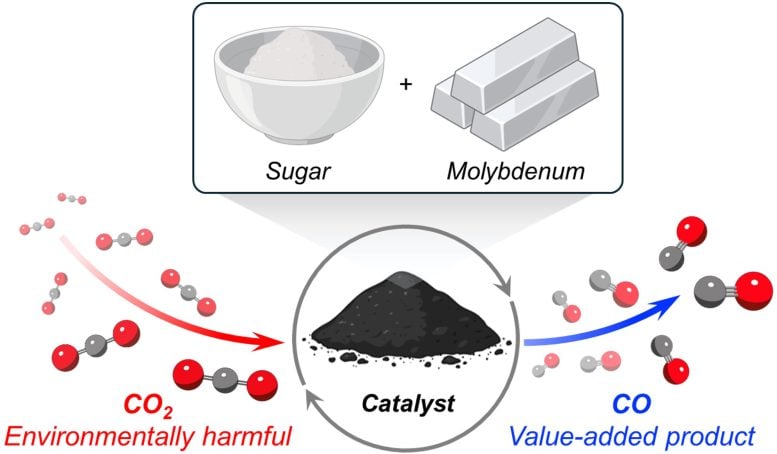
    A new catalyst made from an inexpensive, abundant metal and common table sugar has the power to destroy carbon dioxide (CO2) gas.

    In a new Northwestern University study, the catalyst successfully converted CO2 into carbon monoxide (CO), an important building block to produce a variety of useful chemicals. When the reaction occurs in the presence of hydrogen, for example, CO2 and hydrogen transform into synthesis gas (or syngas), a highly valuable precursor to producing fuels that can potentially replace gasoline.

    With recent advances in carbon capture technologies, post-combustion carbon capture is becoming a plausible option to help tackle the global climate change crisis. But how to handle the captured carbon remains an open-ended question. The new catalyst potentially could provide one solution for disposing of the potent greenhouse gas by converting it into a more valuable product.

    The study will be published in the May 3 issue of the journal Science.

    “Even if we stopped emitting CO2 now, our atmosphere would still have a surplus of CO2 as a result of industrial activities from the past centuries,” said Northwestern’s Milad Khoshooei, who co-led the study. “There is no single solution to this problem. We need to reduce CO2 emissions and find new ways to decrease the CO2 concentration that is already in the atmosphere. We should take advantage of all possible solutions.”

    Carbon Destroying Sugar Catalyst

    This schematic shows the full process of creating the catalyst and using it to convert carbon dioxide. Credit: Milad Khoshooei

    “We’re not the first research group to convert CO2 into another product,” said Northwestern’s Omar K. Farha, the study’s senior author. “However, for the process to be truly practical, it necessitates a catalyst that fulfills several crucial criteria: affordability, stability, ease of production, and scalability. Balancing these four elements is key. Fortunately, our material excels in meeting these requirements.”

    An expert in carbon capture technologies, Farha is the Charles E. and Emma H. Morrison Professor of Chemistry at Northwestern’s Weinberg College of Arts and Sciences. After starting this work as a Ph.D. candidate at the University of Calgary in Canada, Khoshooei now is a postdoctoral fellow in Farha’s laboratory.

    Solutions from the pantry

    The secret behind the new catalyst is molybdenum carbide, an extremely hard ceramic material. Unlike many other catalysts that require expensive metals, such as platinum or palladium, molybdenum is an inexpensive, non-precious, Earth-abundant metal.

    To transform molybdenum into molybdenum carbide, the scientists needed a source of carbon. They discovered a cheap option in an unexpected place: the pantry. Surprisingly, sugar — the white, granulated kind found in nearly every household — served as an inexpensive, convenient source of carbon atoms.

    “Every day that I tried to synthesize these materials, I would bring sugar to the lab from my home,” Khoshooei said. “When compared to other classes of materials commonly used for catalysts, ours is incredibly inexpensive.”

    Successfully selective and stable

    When testing the catalyst, Farha, Khoshooei, and their collaborators were impressed by its success. Operating at ambient pressures and high temperatures (300-600 degrees Celsius), the catalyst converted CO2 into CO with 100% selectivity.

    High selectivity means that the catalyst acted only on the CO2 without disrupting surrounding materials. In other words, industry could apply the catalyst to large volumes of captured gases and selectively target only the CO2. The catalyst also remained stable over time, meaning that it stayed active and did not degrade.

    “In chemistry, it’s not uncommon for a catalyst to lose its selectivity after a few hours,” Farha said. “But, after 500 hours in harsh conditions, its selectivity did not change.”

    This is particularly remarkable because CO2 is a stable — and stubborn — molecule.

    “Converting CO2 is not easy,” Khoshooei said. “CO2 is a chemically stable molecule, and we had to overcome that stability, which takes a lot of energy.”

    Tandem approach to carbon clean-up

    Developing materials for carbon capture is a major focus of Farha’s laboratory. His group develops metal-organic frameworks (MOFs), a class of highly porous, nano-sized materials that Farha likens to “sophisticated and programmable bath sponges.” Farha explores MOFs for diverse applications, including pulling CO2 directly from the air.

    Now, Farha says MOFs and the new catalyst could work together to play a role in carbon capture and sequestration.

    “At some point, we could employ a MOF to capture CO2, followed by a catalyst converting it into something more beneficial,” Farha suggested. “A tandem system utilizing two distinct materials for two sequential steps could be the way forward.”

    “This could help us answer the question: ‘What do we do with captured CO2?’” Khoshooei added. “Right now, the plan is to sequester it underground. But underground reservoirs must meet many requirements in order to safely and permanently store CO2. We wanted to design a more universal solution that can be used anywhere while adding economic value.”

    Reference: “An active, stable cubic molybdenum carbide catalyst for the high-temperature reverse water-gas shift reaction” by Milad Ahmadi Khoshooei, Xijun Wang, Gerardo Vitale, Filip Formalik, Kent O. Kirlikovali, Randall Q. Snurr, Pedro Pereira-Almao and Omar K. Farha, 2 May 2024, Science.
    DOI: 10.1126/science.adl1260

    The study was supported by the U.S. Department of Energy, the National Science Foundation and the Natural Sciences and Engineering Research Council of Canada.


    [ad_2]

    Source link

  • Driving carbon capture technology forward in the UK

    Driving carbon capture technology forward in the UK

    [ad_1]

    A call for evidence was launched today to explore new ways to transport captured CO2 that would enable more UK industries to adopt carbon capture technology.

    The government’s call for evidence for innovative new options for transporting captured CO2 builds on the existing network of pipelines, supporting industry on the path to net zero.

    Millions of tonnes of captured carbon dioxide (CO2) could be transported via road, rail, barge, or ship, revolutionising the way it reaches offshore storage sites and helping more businesses cut emissions.

    The move is key to paving the way for widespread deployment of carbon capture by 2035.

    The role of carbon capture technology in meeting net zero

    Carbon capture technology works by capturing CO2 before it reaches the atmosphere, storing it safely underground in offshore sites and reducing emissions.

    The Climate Change Committee has described the technology as a necessity for meeting net zero targets.

    With the ability to transport CO2 by modes such as rail or shipping, industries across the country will be better primed to adopt carbon capture technology.

    In addition to creating jobs and boosting the economy, it will help transport CO2 in a way that suits businesses’ needs as part of their green transition.

    Energy Efficiency and Green Finance Minister Lord Callanan said: “Businesses right across the country want to do their bit to reduce carbon emissions.

    “I want to hear from them how we can deliver greener solutions for industry by giving them ever-greater access to this game-changing technology.”

    The UK’s potential to build a world-leading industry

    The UK has a distinctive geology and the capacity to store up to 20-30 million tonnes of CO2 annually by 2030, equivalent to removing between four and six million cars from UK roads each year and supporting 50,000 jobs.

    The government is championing this industry with a significant investment of up to £20bn – one of the biggest in Europe.

    The Call for Evidence delivers on a commitment made in the landmark Carbon Capture, Usage and Storage (CCUS) Vision published last December.

    It is anticipated that projects using non-pipeline transport methods will be eligible for selection as carbon capture projects from 2025.

    [ad_2]

    Source link

  • Direct air capture accelerated through OpenDAC database

    Direct air capture accelerated through OpenDAC database

    [ad_1]

    Georgia Tech and Meta have collaborated on a massive database to make it easier and faster to implement direct air capture technologies.

    Direct air capture has great potential to reduce carbon emissions as it pulls carbon dioxide out of the ambient air.

    However, for direct air capture technology, every type of environment requires a specific design.

    For example, a direct air capture configuration in Texas would be different from one in Iceland.

    These systems must be designed with exact parameters for humidity, temperature, and air flows for each place.

    Andrew J Medford, associate professor in the School of Chemical and Biomolecular Engineering (ChBE) and a lead author of the paper, said: “A major problem with direct air capture is finding a material that can capture carbon efficiently under each environment’s specific conditions.”

    The new database allowed the team to train an AI model that is orders of magnitude faster than existing chemistry solutions.

    The OpenDAC database could accelerate climate solutions the planet needs.

    The dataset contains reaction data for 8,400 different materials and is powered by nearly 40 million quantum mechanics calculations. It is one of the largest and most robust datasets of its kind.

    The work is published in the journal ACS Central Science.

    Building the database through collaboration

    Meta’s FAIR team wanted to utilise machine learning to combat climate change, focusing on direct air capture technology.

    The team partnered with Georgia Tech to gain expertise in metal-organic frameworks and machine learning applications.

    They provided inputs for the database, requiring knowledge of MOF structures and their interactions with carbon dioxide and water molecules.

    The development of the inputs used existing MOF structures, including the imperfections found in practical materials.

    A Georgia Tech researcher examines a component of a direct air capture system that employs carbon fiber strands

    Quantum chemistry and machine learning

    The team then generated the database by running quantum chemistry computations on the inputs.

    The calculations used around 400 million CPU hours, equivalent to hundreds of times more computing than the average computing lab can do in a year.

    Machine learning models were also trained on the database. Once trained on the calculations, the models could predict how the MOFs would react with carbon dioxide.

    The team’s AI models were shown to be new tools for material discovery, offering accuracy to traditional calculations while being much faster.

    The databases were able to identify around 251 MOFs of exceptionally high potential for direct air capture.

    Accelerating direct air capture for the future

    Although direct air capture is still a nascent field, the team argues that groundbreaking tools like the OpenDAC database should be in development now.

    Anuroop Sriram, research engineering lead at FAIR and first author on the paper, said: “Direct air capture has great potential but needs to be scaled up significantly before we can make a real impact. I think the only way we can get there is by finding better materials.”

    Both teams hope that the scientific community will join the search for suitable materials.

    The OpenDAC dataset project is open source.

    [ad_2]

    Source link