Tag: Carbon Dioxide

  • A Sustainable Solution to Fighting Global Warming – New Catalyst Efficiently Converts CO2 to Natural Gas

    A Sustainable Solution to Fighting Global Warming – New Catalyst Efficiently Converts CO2 to Natural Gas

    [ad_1]

    Carbon Dioxide CO2 Cloud

    Researchers have developed a high-efficiency photocatalyst converting CO2 into methane using cadmium selenide and amorphous titanium dioxide, achieving 99.3% methane conversion with improved regeneration. Future work will focus on enhancing its energy efficiency and stability for commercial use.

    A research team at DGIST has developed an advanced photocatalyst that efficiently converts CO2 into methane, potentially offering a sustainable solution to combat global warming.

    Professor In Soo-il and his team from the Department of Energy Science & Engineering at DGIST have successfully developed a highly efficient photocatalyst. This innovation is capable of converting carbon dioxide (CO2), a significant factor in climate change, into methane (CH4), commonly known as natural gas.

    Global warming causes abnormal climates around the world, threatening the survival of the human race. Reducing greenhouse gases is crucial to solving the increasingly concerning problem of global warming, which requires converting atmospheric carbon dioxide into other substances. Photocatalytic technology is an environmentally friendly solution that converts carbon dioxide into useful substances such as natural gas using only solar energy and water. The natural gas produced can be used in our daily lives as a fuel for heating and cooling systems and vehicles.

    Enhancements in Photocatalytic Materials

    The research team combined cadmium selenide, which absorbs visible and infrared light, with titanium dioxide—a metal oxide and well-known photocatalytic material—to convert carbon dioxide into natural gas with high efficiency.

    Previously, crystalline titanium dioxide, which has a periodic lattice structure, was analyzed as a photocatalytic material. However, the formation of active sites for the trivalent cations of titanium (Ti3+) was limited owing to the regular arrangement of the particles. To overcome this problem, Professor In’s team improved the catalytic reaction using amorphous titanium dioxide, which can form more active sites for Ti3+ through irregular particle arrangements that lack the periodicity of the lattice structure.

    In addition to improved catalysis, the charge-transfer process is stable, ensuring a sufficient supply of electrons to participate in the reaction. This facilitates the conversion of carbon dioxide into carbon compounds, particularly methane fuel. Furthermore, unlike conventional photocatalysts that require high temperatures for regeneration, amorphous catalysts can be regenerated within one minute when oxygen is supplied to the reactor without heating.

    High Efficiency and Future Research Directions

    The research team’s newly developed amorphous titanium dioxide–cadmium selenide photocatalyst (TiO2-CdSe) maintained a methane-conversion performance of 99.3% for the first 6 hours after 18 hours of photoreaction, making it 4.22 times more regenerative than the crystalline photocatalyst (C-TiO2-CdSe) having the same composition.

    “This study is significant in that we have developed a catalyst with regenerative active sites and identified the mechanism by which carbon dioxide is converted into methane using an amorphous catalyst through computational chemistry research,” said DGIST Professor In. “We will conduct follow-up research to improve the energy loss of the amorphous photocatalyst and enhance its long-term stability for future commercialization of the technology,” he added.

    Reference: “Unravelling the effect of Ti3+/Ti4+ active sites dynamic on reaction pathways in direct gas-solid-phase CO2 photoreduction” by Niket S. Powar, Sanghoon Kim, Junho Lee, Eunhee Gong, Chaitanya B. Hiragond, Dongyun Kim, Tierui Zhang, Minho Kim and Su-Il In, 26 March 2024, Applied Catalysis B: Environment and Energy.
    DOI: 10.1016/j.apcatb.2024.124006

    This study was supported by the Medium-sized Research Program and the South Korea-China Cooperation Program of the Ministry of Science and ICT.


    [ad_2]

    Source link
  • Breakthrough in CO2 Conversion: Cost-Effective Methods Discovered

    Breakthrough in CO2 Conversion: Cost-Effective Methods Discovered

    [ad_1]

    Chemistry Catalyst Concept

    Doshisha University researchers developed a cost-effective electrochemical method to convert CO2 into hydrocarbons, achieving unprecedented efficiency by optimizing the electrolyte composition and revealing crucial molecular interaction mechanisms.

    Researchers found that using ionic liquids as electrolytes with metal hydroxides enhances the electrochemical transformation of CO2 into hydrocarbons.

    Electrochemical conversion of CO2 into fuel and chemicals, powered by electricity, offers a viable method for reducing emissions. This technique enables the transformation of carbon captured from industrial outputs and the atmosphere into valuable resources traditionally derived from fossil fuels.

    To advance ongoing research on efficient electrochemical conversion, scientists from Doshisha University have introduced a cost-effective method to produce valuable hydrocarbons from CO2. The study was made available online on 17 May 2024 and will be formally published in the journal Electrochimica Acta on 20 July 2024. The research team, led by Professor Takuya Goto and including Ms. Saya Nozaki from the Graduate School of Science and Engineering and Dr. Yuta Suzuki from the Harris Science Research Institute, produced ethylene and propane on a basic silver (Ag) electrode by utilizing an ionic liquid containing metal hydroxides as the electrolyte.

    “Most studies on CO2 electrolysis with room-temperature liquid electrolyte have focused on the electrode’s catalytic properties. In this groundbreaking study, we focused on the electrolyte and succeeded in producing valuable hydrocarbon gas even on a simple metal electrode,” says Prof. Goto.

    Ionic liquids offer unique advantages for the electrochemical reduction of CO2. They operate over a wide range of voltages without decomposing, are non-flammable, and have high boiling points. This stability enables the electrolyte to withstand the high temperatures generated during exothermic CO2 reduction.

    Advantages of DEME-BF4 Electrolyte

    In their study, researchers investigated the electrochemical conversion of CO2 and water with N, N-diethyl-N-methyl-N-(2-methoxyethyl) ammonium tetrafluoroborate (DEME-BF4) as the electrolyte. The DEME-BF4 electrolyte provides optimal conditions for maximizing CO2 reduction. DEME+ ions enhance the solubility of CO2, allowing a greater number of CO2 molecules to participate in the reaction. Moreover, due to its hydrophilic nature, the hydrogen ions required for reducing CO2 to hydrocarbons can be easily supplied by mixing the electrolyte with water.

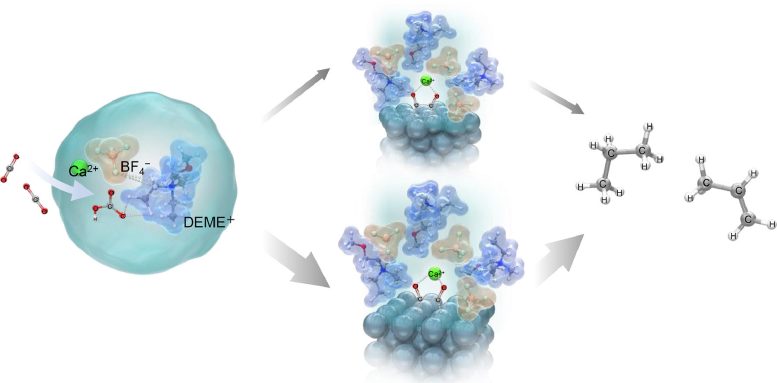
    CO2 Conversion Process at the Interface Between DEME BF4 Electrolytes Containing CaOH2 Aqueous Solution and Silver Electrodes

    The production of hydrocarbons occurs through two intermediates formed on the surface of the silver electrode to produce useful hydrocarbons like ethylene, ethane, propylene, and propane. Credit: Takuya Goto from Doshisha University

    The researchers determined that the electrochemical conversion of CO2 to hydrocarbons could be increased with the addition of aqueous solutions containing metal hydroxides like calcium hydroxide (Ca(OH)2), sodium hydroxide (NaOH), and cesium hydroxide (CsOH) to the electrolyte. The hydroxides in the ionic liquid can react with CO2 to form bicarbonates (HCO3) and carbonates (CO32−), further enhancing the availability of CO2 to participate in electrochemical reactions.

    Achieving High Conversion Efficiencies

    Under room temperature electrolysis (298 K or 25°C) in a CO2 atmosphere, the researchers successfully reduced CO2 to ethylene (C2H4), ethane (C2H6), propylene (C3H6), and propane (C3H8). They achieved the highest current efficiencies for each product using DEME-BF4 electrolyte mixed with water and containing Ca(OH)2, with efficiencies reaching up to 11.3% for propane and 6.49% for ethylene. This efficiency surpassed those obtained with other metal hydroxides by over 1000 times.

    The reason for this high efficiency was explained using Raman spectroscopy and density functional theory (DFT) calculations. These analyses revealed that bicarbonate ions, formed when CO2 interacts with OHions in the electrolyte, interact with DEME+ and BF4 ions of the electrolyte to form a stable structure [DEME+-BF4-HCO3-Ca2+].

    CO2 and HCO3 species then adsorb onto the electrode surface forming adsorbed species CO ads. The adsorbed CO ions then strongly interact with Ca2+ ions present in the electrolyte, forming two distinct intermediate structures: One structure A, consisting of a Ca2+ ion coordinated with two CO ions adsorbed on three Ag atoms, and the other Structure B, where the Ca2+ ion is coordinated with two CO ions adsorbed on two Ag atoms. This interaction with Ca2+ ions is crucial as it increases the stability of the adsorbed species, making the subsequent electrochemical reactions possible.

    Among these structures, researchers suggest that structure B is more stable and is the preferred pathway for ethylene, while structure A leads to the production of propane. “We showed that tailoring the electrolyte can lead to molecular-level changes in the phase transformation of CO2 in bulk solution and at the electrode/ionic liquid electrolyte interface and proposed a process that enables the synthesis of unique hydrocarbons such as C3,” says Prof. Goto.

    These findings shed light on the processes involved in the conversion of CO2 at the interface between ionic liquid-based electrolytes and metal electrodes, such as the role of calcium ions. Such insights can help in the development of electrolytes for the efficient production of useful hydrocarbons from CO2. “The physicochemical knowledge of this new route from CO2 decomposition to synthesizing useful hydrocarbons, as revealed in this study, will be instrumental in advancing CO2 utilization technology and contributing to academic progress in materials science.” concludes Prof. Goto.

    Reference: “Electrochemical synthesis of C2 and C3 hydrocarbons from CO2 on an Ag electrode in DEME-BF4 containing H2O and metal hydroxides” by Saya Nozaki, Yuta Suzuki and Takuya Goto, 17 May 2024, Electrochimica Acta.
    DOI: 10.1016/j.electacta.2024.144431

    The study was funded by the Japan Society for the Promotion of Science and the Iron and Steel Institute of Japan.


    [ad_2]

    Source link

  • Turning Carbon Dioxide Into Useful Chemicals

    Turning Carbon Dioxide Into Useful Chemicals

    [ad_1]

    Vacuum Chamber Catalyst Samples

    Lars Mohrhusen’s junior research group aims to develop new catalysts for the conversion of carbon dioxide. The catalyst samples (like the square grey plate in the middle of the holder) are examined in vacuum chambers using various analytical methods. Credit: University of Oldenburg / Marcus Windus

    A German junior research group is investigating how to convert carbon dioxide using sunlight.

    A new junior research group at the University of Oldenburg, led by chemist Dr. Lars Mohrhusen, is focused on transforming carbon dioxide into useful chemicals using solar energy. This international team is dedicated to a doubly sustainable strategy, aiming to create catalysts free of precious metals that harness sunlight to activate this otherwise inert greenhouse gas.

    The Federal Ministry of Education and Research (BMBF) has approved 2.6 million euros in funding for the project Su2nCat-CO2 over the next six years as part of its funding program SINATRA (for junior research groups focused on “Artificial Photosynthesis” and the “Use of Alternative Raw Materials for Hydrogen Production”).

    Commenting on the project, Prof. Dr Ralph Bruder, President of the University of Oldenburg, said: “The new junior research group’s work is aimed at finding inexpensive and durable materials to replace the precious metal catalysts currently in use. The BMBF’s funding commitment acknowledges the University of Oldenburg’s extensive interdisciplinary expertise in the fields of catalysis and nanomaterials and underlines the great importance of this research for society.”

    Catalysts without precious metals

    Mohrhusen and his team will focus on developing catalyst materials based on readily available and inexpensive components such as titanium dioxide. The aim is to find highly energy-efficient ways to convert the greenhouse gas carbon dioxide into compounds such as methanol, formaldehyde or ethylene which can be used by the chemical industry in the manufacture of plastics or synthetic fuels, for example. “The conversion of substances like carbon dioxide generally involves precious-metal-containing catalysts, which often require high pressure and high temperatures during operation,” Mohrhusen explains. In addition to the large amounts of energy required to create the right conditions to trigger a reaction, these materials often have the disadvantage of being expensive and not particularly durable. Impurities in the gas feed, for example, can easily “poison” the catalyst material so that it becomes less active over time, the chemist points out.

    Mohrhusen’s team plans to investigate two different types of hybrid catalyst materials in model systems. For this, they will create combinations of titanium dioxide and semi-metal nanoparticles as the first class of materials, and organic structures on oxide surfaces as the second. In the next step, the researchers will use various techniques to characterize the systems at the atomic level– a process which typically requires ultra-high vacuum conditions. Both material classes will be photocatalysts, meaning that they become catalytically active when exposed to light. Their exposure to sunlight generates charge carriers – negatively charged electrons and positively charged “vacancies,” so-called “holes” – which can then react chemically with carbon dioxide. “On the basis of these model catalysts we aim to gain a detailed, atomic-level understanding of which material properties enhance the reactivity as well as the stability of these systems,” says Mohrhusen. This can be very difficult under the technical conditions that prevail in large reactors, he explains.

    Tests in microreactors

    In a third sub-project, the team plans to design microreactors to test the model catalysts under more realistic conditions. This will involve bringing the catalyst materials into a gas atmosphere – a combination of carbon dioxide, hydrogen and water, for example – in a special chamber and simultaneously irradiating them with light. The researchers will analyze the formation of reaction products during the process and can also examine the catalyst materials for structural changes caused by the reaction once the tests have been completed.

    Mohrhusen studied chemistry at the University of Oldenburg, where he earned his bachelor’s degree in 2014 and his master’s in 2016. He also completed his PhD in Oldenburg in 2021, in the Nanophotonics and Surface Chemistry group led by Prof. Dr Katharina Al-Shamery. As a postdoc, he has spent around three years in total conducting research at Harvard University (USA) and Aarhus University (Denmark).

    The Friedrich-Alexander-Universität Erlangen-Nürnberg, Leiden University (the Netherlands), Aarhus University (Denmark), the University of Florida (USA), and the two companies Evonik and Leiden Probe Microscopy are supporting Mohrhusen’s project as associated partners. The BMBF’s funding line for junior research groups enables outstanding early-career researchers to set up their own research groups and work on innovative projects while advancing their careers on the path to a professorship or other leading academic positions.

    The research was funded by the Federal Ministry of Education and Research.


    [ad_2]

    Source link

  • “Unprecedented Discovery” – New Low-Cost Catalyst Converts Carbon Dioxide to Valuable Chemicals

    “Unprecedented Discovery” – New Low-Cost Catalyst Converts Carbon Dioxide to Valuable Chemicals

    [ad_1]

    Carbon Dioxide Smokestack Capture

    Researchers have developed a tin-based catalyst that efficiently converts CO2 into key chemicals like ethanol and acetic acid using electrocatalytic conversion, with potential applications in reducing greenhouse gas emissions by utilizing renewable energy sources.

    A low-cost, tin-based catalyst can selectively convert carbon dioxide to three widely produced chemicals — ethanol, acetic acid, and formic acid.

    Lurking within the emissions from many industrial operations is an untapped resource — carbon dioxide (CO2). A contributor of greenhouse gas and global warming, it could instead be captured and converted to value-added chemicals.

    In a collaborative project involving the U.S. Department of Energy’s (DOE) Argonne National Laboratory, Northern Illinois University, and Valparaiso University, scientists report a family of catalysts that efficiently converts CO2 into ethanol, acetic acid, or formic acid. These liquid hydrocarbons are among the most produced chemicals in the U.S. and are found in many commercial products. For example, ethanol is a key ingredient in numerous household products and an additive to nearly all U.S. gasoline.

    Electrocatalytic Conversion Method

    The method used by the team is called electrocatalytic conversion, meaning that CO2 conversion over a catalyst is driven by electricity. By varying the size of tin used from single atoms to ultrasmall clusters and also to larger nano-crystallites, the team could control the CO2 conversion to acetic acid, ethanol, and formic acid, respectively. Selectivity for each of these chemicals was 90% or higher. ​“Our finding of a changing reaction path by the catalyst size is unprecedented,” Liu said.

    Computational and experimental studies revealed several insights into the reaction mechanisms forming the three hydrocarbons. One important insight was that the reaction path completely changes when the ordinary water used in the conversion is switched to deuterated water (deuterium is an isotope of hydrogen). This phenomenon is known as the kinetic isotope effect. It has never been previously observed in CO2 conversion.

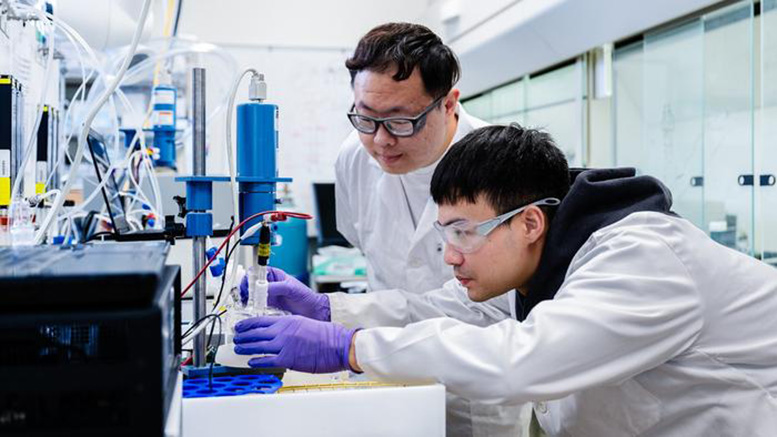
    Haozhe Zhang and Jianxin Wang

    Researchers experimenting with tin-based catalysts that efficiently convert CO2 into ethanol, acetic acid or formic acid. Shown in image are Argonne researchers Haozhe Zhang and Jianxin Wang. Credit: Argonne National Laboratory

    This research benefited from two DOE Office of Science user facilities at Argonne — the Advanced Photon Source (APS) and Center for Nanoscale Materials (CNM). ​“Using the hard X-ray beams available at the APS, we captured the chemical and electronic structures of the tin-based catalysts with different tin loadings,” said Chengjun Sun, an Argonne physicist. In addition, the high spatial resolution possible with a transmission electron microscope at CNM directly imaged the arrangement of tin atoms, from single atoms to small clusters, with the different catalyst loadings.

    According to Liu, ​“Our ultimate goal is to use locally generated electricity from wind and solar to produce desired chemicals for local consumption.”

    This would require integrating the newly discovered catalysts into a low-temperature electrolyzer to carry out the CO2 conversion with electricity supplied by renewable energy. Low-temperature electrolyzers can operate at near ambient temperature and pressure. This allows rapid start and stop to accommodate the intermittent supply of renewable energy. It is an ideal technology to serve this purpose.

    “If we can selectively produce only the chemicals in need near the site, we can help to cut down on CO2 transport and storage costs,” Liu noted. ​“It would truly be a win-win situation for local adopters of our technology.”

    Reference: “Modulating CO2 Electrocatalytic Conversion to the Organics Pathway by the Catalytic Site Dimension” by Haiping Xu, Jianxin Wang, Haiying He, Inhui Hwang, Yuzi Liu, Chengjun Sun, Haozhe Zhang, Tao Li, John V. Muntean, Tao Xu and Di-Jia Liu, 4 April 2024, Journal of the American Chemical Society.
    DOI: 10.1021/jacs.3c12722

    Support for the research came from DOE’s Office of Energy Efficiency and Renewable Energy under the Advanced Manufacturing Office, Industrial Efficiency & Decarbonization Office. Additional support was provided by Argonne’s Laboratory Directed Research and Development fund.


    [ad_2]

    Source link

  • Affordable Nanocatalysts Could Revolutionize Climate Action

    Affordable Nanocatalysts Could Revolutionize Climate Action

    [ad_1]

    Carbon Dioxide Atmosphere Concept

    A study by the University of Illinois at Urbana-Champaign developed β-Mo2C nanoparticle catalysts on a SiO2 support to enhance the conversion of CO2 to CO. This new catalyst, more cost-effective than traditional precious metal catalysts, demonstrated significantly increased catalytic activity and stability, marking a promising advance in CO2 reduction strategies.

    Carbon dioxide (CO2), a greenhouse gas, plays a significant role in climate change by building up in the atmosphere. To mitigate its impact, transforming CO2 into beneficial carbon products is a viable strategy. A recent study explored this approach by using nanoparticles of beta phase molybdenum carbide (β-Mo2C) as catalysts, anchored on silicon dioxide (SiO2) supports. This method accelerates the conversion of CO2 into carbon monoxide (CO), a valuable gas that can be used to produce other important compounds.

    CO2 is a very stable molecule, which makes conversion of the greenhouse gas into other molecules challenging. Catalysts can be used in chemical reactions to lower the amount of energy required to form or break chemical bonds and are used in the reverse water gas shift (RWGS) reaction to convert CO2 and hydrogen gas (H2) into CO and water (H2O). Importantly, the CO gas produced by the reaction is called syngas, or synthesis gas, when combined with H2 and can be used as a carbon source to create other important compounds.

    Advancements in Catalyst Technology

    Traditional catalysts in the RWGS reaction are made from precious metals, including platinum (Pt), palladium (Pd), and gold (Au), limiting the cost efficiency of the reaction. Because of this, new catalyst materials and formation methods are developed to increase the practicality of the RWGS reaction as a means of lowering atmospheric CO2 and generating syngas.

    In order to address the cost issues of traditional RWGS catalysts, a team of researchers from the University of Illinois in Urbana-Champaign studied the formation and catalytic activity of cheaper nanoparticle β-Mo2C catalysts on a SiO2 support to determine if the lower-cost catalyst could enhance activity levels of β-Mo2C with a silica oxide support in the RWGS reaction.

    Beta Phase Molybdenum Carbide Nanoparticles Graphic

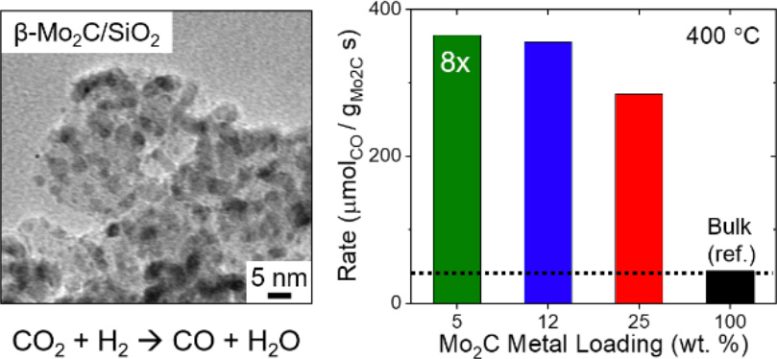
    The image to the left depicts β-Mo2C nanoparticles supported on SiO2 (β-Mo2C/SiO2). The graph on the right represents the increased catalytic activity of β-Mo2C/SiO2 in CO production rate in the RWGS reaction compared to bulk β-Mo2C, represented by the black bar. Each bar represents a different percentage of Mo2C loading weight based on the mass of the SiO2 support. Catalytic activity for this data was measured at 400°C. Credit: Carbon Future, Tsinghua University Press

    The team published their study in Carbon Future on April 30.

    “Society is moving towards a carbon-neutral economy. Carbon dioxide is a greenhouse gas, thus any technology that can break down the carbon-oxide bond in this molecule and turn carbon into a value-added chemical could be of great interest. One important C1 chemical is carbon monoxide, which is an essential feedstock to produce a range of products, such as synthetic fuels and vitamin A,” said Hong Yang, Alkire chair professor in the Department of Chemical and Biomolecular Engineering at the University of Illinois at Urbana-Champaign and senior author of the paper.

    Catalyst Structure and Effectiveness

    Specifically, the researchers synthesized β-Mo2C nanoparticle catalysts absorbed onto a SiO2 support (β-Mo2C/SiO2). The amorphous structure of the SiOsupport was critical for nanoparticle formation, activity, and stability of the β-Mo2C/SiOcatalyst. The team additionally tested cesium (Ce), magnesium (Mg), titanium (Ti), and aluminum (Al) oxides as potential supports, but the catalyst on SiOproduced the best catalyst formation at the temperature of 650°C.

    “It appears the disordered nature of amorphous silica, which behaves like glue to catalyst nanoparticles, is a key factor of our success in achieving high metal loading and the corresponding high activity,” said Siying Yu, a graduate student in the Department of Chemical and Biomolecular Engineering at the University of Illinois at Urbana-Champaign and co-author of the paper.

    Importantly, the SiOcatalyst support structure improves the catalytic activity of β-Mo2C 8-fold compared to bulk β-Mo2C. Even with improved catalytic activity, the β-Mo2C/SiO2 catalyst demonstrated high CO conversion and increased stability compared to bulk β-Mo2C in RWGS reactions.

    “A major discovery of our work is a new process for producing high metal-loading catalysts made of molybdenum carbide nanoparticles. Such metal carbide catalysts are developed for converting carbon dioxide into carbon oxide at high production rate and selectivity,” said Andrew Kuhn, former graduate student in the Department of Chemical and Biomolecular Engineering at the University of Illinois at Urbana-Champaign and first author of the paper.

    The researchers performed their study under reaction conditions that favored conversion to CO gas, with an H2:CO2 ratio equal to 1:1. This ratio differs from the more commonly tested ratio of less than 3:1. Reactions were also performed at temperatures between 300 to 600°C. Under these conditions, the team produced more concentrated CO, which is more efficient for downstream compound synthesis.

    The team sees this research as a launching point for other catalysts that leverage support structures to increase activity. “Our ability to synthesize phase-pure metal carbide nanomaterials at high loading opens the door for the development of new catalysts for the process of CO2 utilization,” said Yang. “I hope through an in-depth study of the synthesis-structure-property relationship of this catalyst we will soon be able to uncover new important applications for value-added conversion of CO2 and the sustainable development of our economy.”

    Reference: “Valorization of carbon dioxide into C1 product via reverse water gas shift reaction using oxide-supported molybdenum carbides” by Andrew N. Kuhn, Rachel C. Park, Siying Yu, Di Gao, Cheng Zhang, Yuanhui Zhang and Hong Yang, 30 April 2024, Carbon Future.
    DOI: 10.26599/CF.2024.9200011

    Other contributors include Rachel Park, Di Gao and Cheng Zhang from the Department of Chemical and Biomolecular Engineering at the University of Illinois at Urbana-Champaign in Urbana, Illinois; and Yuanhui Zhang from the Department of Agricultural and Biological Engineering at the University of Illinois at Urbana-Champaign.

    This research was supported by the University of Illinois, Urbana-Champaign start-up fund.


    [ad_2]

    Source link

  • Cheap Catalyst Made Out of Sugar Has the Power To Destroy CO2

    Cheap Catalyst Made Out of Sugar Has the Power To Destroy CO2

    [ad_1]

    Carbon Dioxide CO2 Cloud

    A Northwestern University study introduces a cost-effective catalyst made from molybdenum and table sugar that converts CO2 into carbon monoxide, presenting a viable method to transform captured carbon into useful products like fuel precursors.

    New catalyst may provide a potential solution for utilizing captured carbon.

    A new catalyst made from an inexpensive, abundant metal and common table sugar has the power to destroy carbon dioxide (CO2) gas.

    In a new Northwestern University study, the catalyst successfully converted CO2 into carbon monoxide (CO), an important building block to produce a variety of useful chemicals. When the reaction occurs in the presence of hydrogen, for example, CO2 and hydrogen transform into synthesis gas (or syngas), a highly valuable precursor to producing fuels that can potentially replace gasoline.

    With recent advances in carbon capture technologies, post-combustion carbon capture is becoming a plausible option to help tackle the global climate change crisis. But how to handle the captured carbon remains an open-ended question. The new catalyst potentially could provide one solution for disposing of the potent greenhouse gas by converting it into a more valuable product.

    The study will be published in the May 3 issue of the journal Science.

    “Even if we stopped emitting CO2 now, our atmosphere would still have a surplus of CO2 as a result of industrial activities from the past centuries,” said Northwestern’s Milad Khoshooei, who co-led the study. “There is no single solution to this problem. We need to reduce CO2 emissions and find new ways to decrease the CO2 concentration that is already in the atmosphere. We should take advantage of all possible solutions.”

    Carbon Destroying Sugar Catalyst

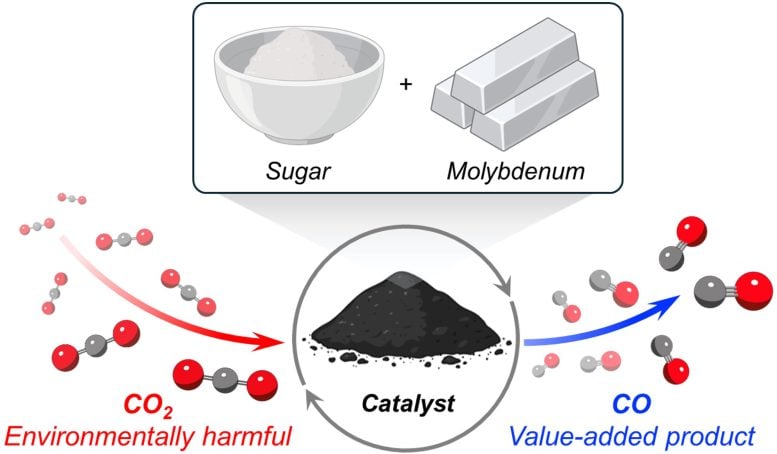
    This schematic shows the full process of creating the catalyst and using it to convert carbon dioxide. Credit: Milad Khoshooei

    “We’re not the first research group to convert CO2 into another product,” said Northwestern’s Omar K. Farha, the study’s senior author. “However, for the process to be truly practical, it necessitates a catalyst that fulfills several crucial criteria: affordability, stability, ease of production, and scalability. Balancing these four elements is key. Fortunately, our material excels in meeting these requirements.”

    An expert in carbon capture technologies, Farha is the Charles E. and Emma H. Morrison Professor of Chemistry at Northwestern’s Weinberg College of Arts and Sciences. After starting this work as a Ph.D. candidate at the University of Calgary in Canada, Khoshooei now is a postdoctoral fellow in Farha’s laboratory.

    Solutions from the pantry

    The secret behind the new catalyst is molybdenum carbide, an extremely hard ceramic material. Unlike many other catalysts that require expensive metals, such as platinum or palladium, molybdenum is an inexpensive, non-precious, Earth-abundant metal.

    To transform molybdenum into molybdenum carbide, the scientists needed a source of carbon. They discovered a cheap option in an unexpected place: the pantry. Surprisingly, sugar — the white, granulated kind found in nearly every household — served as an inexpensive, convenient source of carbon atoms.

    “Every day that I tried to synthesize these materials, I would bring sugar to the lab from my home,” Khoshooei said. “When compared to other classes of materials commonly used for catalysts, ours is incredibly inexpensive.”

    Successfully selective and stable

    When testing the catalyst, Farha, Khoshooei, and their collaborators were impressed by its success. Operating at ambient pressures and high temperatures (300-600 degrees Celsius), the catalyst converted CO2 into CO with 100% selectivity.

    High selectivity means that the catalyst acted only on the CO2 without disrupting surrounding materials. In other words, industry could apply the catalyst to large volumes of captured gases and selectively target only the CO2. The catalyst also remained stable over time, meaning that it stayed active and did not degrade.

    “In chemistry, it’s not uncommon for a catalyst to lose its selectivity after a few hours,” Farha said. “But, after 500 hours in harsh conditions, its selectivity did not change.”

    This is particularly remarkable because CO2 is a stable — and stubborn — molecule.

    “Converting CO2 is not easy,” Khoshooei said. “CO2 is a chemically stable molecule, and we had to overcome that stability, which takes a lot of energy.”

    Tandem approach to carbon clean-up

    Developing materials for carbon capture is a major focus of Farha’s laboratory. His group develops metal-organic frameworks (MOFs), a class of highly porous, nano-sized materials that Farha likens to “sophisticated and programmable bath sponges.” Farha explores MOFs for diverse applications, including pulling CO2 directly from the air.

    Now, Farha says MOFs and the new catalyst could work together to play a role in carbon capture and sequestration.

    “At some point, we could employ a MOF to capture CO2, followed by a catalyst converting it into something more beneficial,” Farha suggested. “A tandem system utilizing two distinct materials for two sequential steps could be the way forward.”

    “This could help us answer the question: ‘What do we do with captured CO2?’” Khoshooei added. “Right now, the plan is to sequester it underground. But underground reservoirs must meet many requirements in order to safely and permanently store CO2. We wanted to design a more universal solution that can be used anywhere while adding economic value.”

    Reference: “An active, stable cubic molybdenum carbide catalyst for the high-temperature reverse water-gas shift reaction” by Milad Ahmadi Khoshooei, Xijun Wang, Gerardo Vitale, Filip Formalik, Kent O. Kirlikovali, Randall Q. Snurr, Pedro Pereira-Almao and Omar K. Farha, 2 May 2024, Science.
    DOI: 10.1126/science.adl1260

    The study was supported by the U.S. Department of Energy, the National Science Foundation and the Natural Sciences and Engineering Research Council of Canada.


    [ad_2]

    Source link

  • MIT’s Revolutionary CO2 Conversion Technology

    MIT’s Revolutionary CO2 Conversion Technology

    [ad_1]

    Carbon Conversion Technology Art Concept

    MIT chemical engineers have created an efficient method to convert carbon dioxide into carbon monoxide, using a DNA-tethered catalytic process that could significantly reduce greenhouse gas emissions. This breakthrough offers a new pathway for producing valuable chemicals from CO2, with potential for large-scale industrial application. Credit: SciTechDaily.com

    A catalyst tethered by DNA boosts the efficiency of the electrochemical conversion of CO2 to CO, a building block for many chemical compounds.

    MIT chemical engineers have devised an efficient way to convert carbon dioxide to carbon monoxide, a chemical precursor that can be used to generate useful compounds such as ethanol and other fuels.

    If scaled up for industrial use, this process could help to remove carbon dioxide from power plants and other sources, reducing the amount of greenhouse gases that are released into the atmosphere.

    DNA Efficient Carbon Dioxide to Carbon Monoxide Conversion

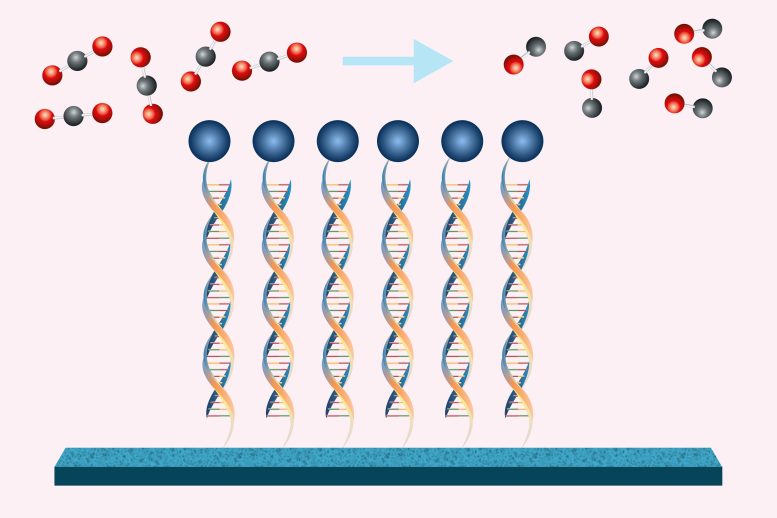
    MIT chemical engineers have shown that by using DNA to tether a catalyst (blue circles) to an electrode, they can make the conversion of carbon dioxide to carbon monoxide much more efficient. Credit: Christine Daniloff, MIT; iStock

    Revolutionary Decarbonization Technology

    “This would allow you to take carbon dioxide from emissions or dissolved in the ocean, and convert it into profitable chemicals. It’s really a path forward for decarbonization because we can take CO2, which is a greenhouse gas, and turn it into things that are useful for chemical manufacture,” says Ariel Furst, the Paul M. Cook Career Development Assistant Professor of Chemical Engineering and the senior author of the study.

    The new approach uses electricity to perform the chemical conversion, with help from a catalyst that is tethered to the electrode surface by strands of DNA. This DNA acts like Velcro to keep all the reaction components in close proximity, making the reaction much more efficient than if all the components were floating in solution.

    Furst has started a company called Helix Carbon to further develop the technology. Former MIT postdoc Gang Fan is the lead author of the paper, which appears in the Journal of the American Chemical Society Au. Other authors include Nathan Corbin PhD ’21, Minju Chung PhD ’23, former MIT postdocs Thomas Gill and Amruta Karbelkar, and Evan Moore ’23.

    Breaking Down CO2

    Converting carbon dioxide into useful products requires first turning it into carbon monoxide. One way to do this is with electricity, but the amount of energy required for that type of electrocatalysis is prohibitively expensive.

    To try to bring down those costs, researchers have tried using electrocatalysts, which can speed up the reaction and reduce the amount of energy that needs to be added to the system. One type of catalyst used for this reaction is a class of molecules known as porphyrins, which contain metals such as iron or cobalt and are similar in structure to the heme molecules that carry oxygen in blood.

    During this type of electrochemical reaction, carbon dioxide is dissolved in water within an electrochemical device, which contains an electrode that drives the reaction. The catalysts are also suspended in the solution. However, this setup isn’t very efficient because the carbon dioxide and the catalysts need to encounter each other at the electrode surface, which doesn’t happen very often.

    To make the reaction occur more frequently, which would boost the efficiency of the electrochemical conversion, Furst began working on ways to attach the catalysts to the surface of the electrode. DNA seemed to be the ideal choice for this application.

    “DNA is relatively inexpensive, you can modify it chemically, and you can control the interaction between two strands by changing the sequences,” she says. “It’s like a sequence-specific Velcro that has very strong but reversible interactions that you can control.”

    To attach single strands of DNA to a carbon electrode, the researchers used two “chemical handles,” one on the DNA and one on the electrode. These handles can be snapped together, forming a permanent bond. A complementary DNA sequence is then attached to the porphyrin catalyst, so that when the catalyst is added to the solution, it will bind reversibly to the DNA that’s already attached to the electrode — just like Velcro.

    Once this system is set up, the researchers apply a potential (or bias) to the electrode, and the catalyst uses this energy to convert carbon dioxide in the solution into carbon monoxide. The reaction also generates a small amount of hydrogen gas, from the water. After the catalysts wear out, they can be released from the surface by heating the system to break the reversible bonds between the two DNA strands, and replaced with new ones.

    Groundbreaking Electrochemical Conversion

    Using this approach, the researchers were able to boost the Faradaic efficiency of the reaction to 100 percent, meaning that all of the electrical energy that goes into the system goes directly into the chemical reactions, with no energy wasted. When the catalysts are not tethered by DNA, the Faradaic efficiency is only about 40 percent.

    This technology could be scaled up for industrial use fairly easily, Furst says, because the carbon electrodes the researchers used are much less expensive than conventional metal electrodes. The catalysts are also inexpensive, as they don’t contain any precious metals, and only a small concentration of the catalyst is needed on the electrode surface.

    By swapping in different catalysts, the researchers plan to try making other products such as methanol and ethanol using this approach. Helix Carbon, the company started by Furst, is also working on further developing the technology for potential commercial use.

    Reference: “Highly Efficient Carbon Dioxide Electroreduction via DNA-Directed Catalyst Immobilization” by Gang Fan, Nathan Corbin, Minju Chung, Thomas M. Gill, Evan B. Moore, Amruta A. Karbelkar and Ariel L. Furst, 25 March 2024, JACS Au.
    DOI: 10.1021/jacsau.3c00823

    The research was funded by the U.S. Army Research Office, the CIFAR Azrieli Global Scholars Program, the MIT Energy Initiative, and the MIT Deshpande Center.


    [ad_2]

    Source link

  • Revolutionary CO2 Conversion Achieved With Copper and Carbon Nitride

    Revolutionary CO2 Conversion Achieved With Copper and Carbon Nitride

    [ad_1]

    Reactor Where the Catalyst Is Tested for Turning CO2 to Methanol

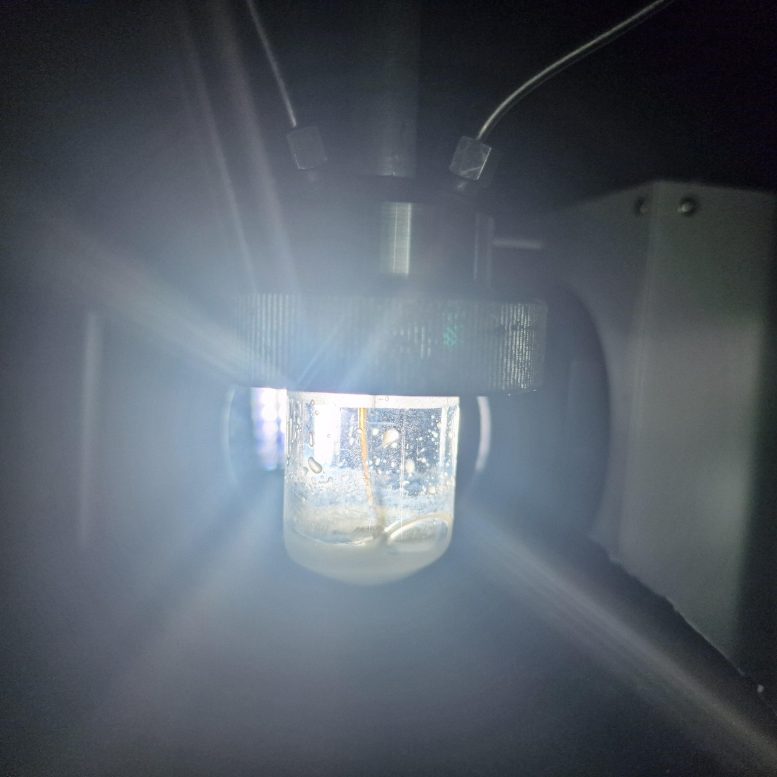
    Researchers have developed a sunlight-powered process using copper and nanocrystalline carbon nitride to efficiently convert CO2 into methanol, marking a significant step towards sustainable fuel production and CO2 reduction. The picture above depicts the reactor where the catalyst is tested for turning CO2 to methanol. Credit: University of Nottingham

    Researchers have successfully transformed CO2 into methanol by shining sunlight on single atoms of copper deposited on a light-activated material, a discovery that paves the way for creating new green fuels.

    An international team of researchers from the University of Nottingham’s School of Chemistry, University of Birmingham, University of Queensland, and University of Ulm have designed a material, made up of copper anchored on nanocrystalline carbon nitride. The copper atoms are nested within the nanocrystalline structure, which allows electrons to move from carbon nitride to CO2, an essential step in the production of methanol from CO2 under the influence of solar irradiation. The research has been published in the Sustainable Energy & Fuels journal of the Royal Society of Chemistry.

    The Challenge of Efficiency and Selectivity

    In photocatalysis, light is shone on a semiconductor material that excites electrons, enabling them to travel through the material to react with CO2 and water, leading to a variety of useful products, including methanol, which is a green fuel. Despite recent progress, this process suffers from a lack of efficiency and selectivity.

    Carbon dioxide is the greatest contributor to global warming. Although, it is possible to convert CO2 to useful products, traditional thermal methods rely on hydrogen sourced from fossil fuels. It is important to develop alternative methods based on photo- and electrocatalysis, taking advantage of the sustainable solar energy and abundance of omnipresent water.

    Nanoscale Control for Improved Catalysis

    Dr Madasamy Thangamuthu, a research fellow in the School of Chemistry, University of Nottingham, who co-led the research team, said: “There is a large variety of different materials used in photocatalysis. It is important that the photocatalyst absorbs light and separates charge carriers with high efficiency. In our approach, we control the material at the nanoscale. We developed a new form of carbon nitride with crystalline nanoscale domains that allow efficient interaction with light as well as sufficient charge separation.”


    The process of CO2 conversion to methanol (fuel) by light. Credit: University of Nottingham

    The researchers devised a process of heating carbon nitride to the required degree of crystallinity, maximizing the functional properties of this material for photocatalysis. Using magnetron sputtering, they deposited atomic copper in a solventless process, allowing intimate contact between the semiconductor and metal atoms.

    Surprising Efficiency Gains

    Tara LeMercier, a PhD student who carried out the experimental work at the University of Nottingham, School of Chemistry, said: “We measured the current generated by light and used it as a criterion to judge the quality of the catalyst. Even without copper, the new form of carbon nitride is 44 times more active than traditional carbon nitride. However, to our surprise, the addition of only 1 mg of copper per 1 g of carbon nitride quadrupled this efficiency. Most importantly the selectivity changed from methane, another greenhouse gas, to methanol, a valuable green fuel.”

    Professor Andrei Khlobystov, School of Chemistry, University of Nottingham, said: “Carbon dioxide valorization holds the key for achieving the net-zero ambition of the UK. It is vitally important to ensure the sustainability of our catalyst materials for this important reaction. A big advantage of the new catalyst is that it consists of sustainable elements – carbon, nitrogen, and copper – all highly abundant on our planet.”

    This invention represents a significant step towards a deep understanding of photocatalytic materials in CO2 conversion. It opens a pathway for creating highly selective and tuneable catalysts where the desired product could be dialed up by controlling the catalyst at the nanoscale.

    Reference: “Synergy of nanocrystalline carbon nitride with Cu single atom catalyst leads to selective photocatalytic reduction of CO2 to methanol” by Tara M. LeMercier, Madasamy Thangamuthu, Emerson C. Kohlrausch, Yifan Chen, Craig T. Stoppiello, Michael W. Fay, Graham A. Rance, Gazi N. Aliev, Wolfgang Theis, Johannes Biskupek, Ute Kaiser, Anabel E. Lanterna, Jesum Alves Fernandes and Andrei N. Khlobystov, 6 March 2024, Sustainable Energy & Fuels.
    DOI: 10.1039/D4SE00028E

    This work is funded by the EPSRC Programme Grant ‘Metal atoms on surfaces and interfaces (MASI) for sustainable future’ www.masi.ac.uk which is set to develop catalyst materials for the conversion of three key molecules – carbon dioxide, hydrogen, and ammonia – crucially important for economy and environment. MASI catalysts are made in an atom-efficient way to ensure sustainable use of chemical elements without depleting supplies of rare elements and making most of the earth’s abundant elements, such as carbon and base metals.


    [ad_2]

    Source link

  • “Goldilocks” Element – Scientists Make Key Advance for Capturing Carbon From the Air

    “Goldilocks” Element – Scientists Make Key Advance for Capturing Carbon From the Air

    [ad_1]

    Chemistry Isotope Art

    New research identifies vanadium as a promising element for carbon capture, thanks to its balanced reactivity and the ability of vanadium peroxide molecules to bind carbon dioxide efficiently. This work contributes to the global effort to develop direct air capture technologies, offering a new avenue for reducing atmospheric carbon dioxide and mitigating climate change.

    A chemical element so visually striking that it was named for a goddess shows a “Goldilocks” level of reactivity – neither too much nor too little – that makes it a strong candidate as a carbon scrubbing tool.

    The element is vanadium, and research by Oregon State University scientists has demonstrated the ability of vanadium peroxide molecules to react with and bind carbon dioxide – an important step toward improved technologies for removing carbon dioxide from the atmosphere.

    Federal Efforts and Direct Air Capture Developments

    The study is part of a $24 million federal effort to develop new methods for direct air capture, or DAC, of carbon dioxide, a greenhouse gas that’s produced by the burning of fossil fuels and is associated with climate change.

    Facilities that filter carbon from the air have begun to spring up around the globe but they’re still in their infancy. Technologies for mitigating carbon dioxide at the point of entry into the atmosphere, such as at power plants, are more well-developed. Both types of carbon capture will likely be needed if the Earth is to avoid the worst outcomes of climate change, scientists say.

    Oregon State’s Role and the Significance of Transition Metals

    In 2021 Oregon State’s May Nyman, the Terence Bradshaw Chemistry Professor in the College of Science, was chosen as the leader of one of nine direct air capture projects funded by the Department of Energy. Her team is exploring how some transition metal complexes can react with air to remove carbon dioxide and convert it to a metal carbonate, similar to what is found in many naturally occurring minerals.

    Transition metals are located near the center of the periodic table and their name arises from the transition of electrons from low energy to high energy states and back again, giving rise to distinctive colors. For this study, the scientists landed on vanadium, named after Vanadis, the old Norse name for the Scandinavian goddess of love said to be so beautiful her tears turned to gold.

    The Chemical Process and Challenges in Direct Air Capture

    Nyman explains that carbon dioxide exists in the atmosphere at a density of 400 parts per million. That means for every 1 million air molecules, 400 of them are carbon dioxide, or 0.04%.

    “A challenge with direct air capture is finding molecules or materials that are selective enough, or other reactions with more abundant air molecules, such as reactions with water, will outcompete the reaction with CO2,” Nyman said. “Our team synthesized a series of molecules that contain three parts that are important in removing carbon dioxide from the atmosphere, and they work together.”

    One part was vanadium, so named because of the range of beautiful colors it can exhibit, and another part was peroxide, which bonded to the vanadium. Because a vanadium peroxide molecule is negatively charged, it needed alkali cations for charge balance, Nyman said, and the researchers used potassium, rubidium, and cesium alkali cations for this study.

    She added that the collaborators also tried substituting other metals from the same neighborhood on the periodic table for vanadium.

    “Tungsten, niobium, and tantalum were not as effective in this chemical form,” Nyman said. “On the other hand, molybdenum was so reactive it exploded sometimes.”

    In addition, the scientists substituted ammonium and tetramethyl ammonium, the former of which is mildly acidic, for the alkalis. Those compounds didn’t react at all, a puzzler the researchers are still trying to understand.

    Vanadium Peroxide’s Unique Properties and Research Contributions

    “And when we removed the peroxide, again, not so much reactivity,” Nyman said. “In this sense, vanadium peroxide is a beautiful, purple Goldilocks that becomes golden when exposed to air and binds a carbon dioxide molecule.”

    She notes that another valuable characteristic of vanadium is that it allows for the comparatively low release temperature of about 200 degrees Celsius for the captured carbon dioxide.

    “That’s compared to almost 700 degrees Celsius when it is bonded to potassium, lithium or sodium, other metals used for carbon capture,” she said. “Being able to rerelease the captured CO2 enables reuse of the carbon capture materials, and the lower the temperature required for doing that, the less energy that’s needed and the smaller the cost. There are some very clever ideas about the reuse of captured carbon already being implemented – for example, piping the captured CO2 into a greenhouse to grow plants.”

    Other Oregon State authors on the paper included Tim Zuehlsdorff, assistant professor of theoretical/physical chemistry, and postdoctoral researcher Eduard Garrido.

    “I’m also really proud of the hard work of the graduate students in my lab, Zhiwei Mao and Karlie Bach, and undergraduate Taylor Linsday,” Nyman said. “This is a brand new area for my lab, as well as for Tim Zuehlsdorff, who supervised Ph.D. student Jacob Hirschi on the computational studies to explain the reaction mechanisms. Starting a new area of study involves many unknowns.”

    Reference: “Implementing vanadium peroxides as direct air carbon capture materials” by Eduard Garrido Ribó, Zhiwei Mao, Jacob S. Hirschi, Taylor Linsday, Karlie Bach, Eric D. Walter, Casey R. Simons, Tim J. Zuehlsdorffa and May Nyman, 21 December 2023, Chemical Science.
    DOI: 10.1039/D3SC05381D

    The study was funded by the US Department of Energy.


    [ad_2]

    Source link