Nature, Published online: 01 May 2024; doi:10.1038/d41586-024-01233-y
Organelles called mitochondria are transferred to blood-vessel-forming cells by support cells. Unexpectedly, these mitochondria are degraded, kick-starting the production of new ones and boosting vessel formation.
Genetic variants contribute to the risk of developing certain diseases, but identifying the genes and molecular pathways under their control has been difficult. Now, a systematic approach to pinpointing these factors yields insights into how a specific pathway in endothelial cells influences the risk of coronary artery disease.
Scientists have pinpointed human gut bacteria that have a useful tool: an enzyme that can convert artery-clogging cholesterol into a more harmless form that is not absorbed by the body. The finding points towards possible treatments for high cholesterol levels.
Although the newly described bacterial species can metabolize cholesterol in the laboratory, whether they can cause changes in their hosts’ blood cholesterol levels has yet to be confirmed in animal models or clinical trials.
“It’s very exciting to further explore,” says bioinformatician Daoming Wang at the University of Groningen in the Netherlands, who was not involved in the research.
Wang adds that the methods in the study, published on 2 April in Cell1, address thorny challenges in human microbiome research. The research is “really outstanding”, agrees bioinformatician Alexander Kurilshikov at the University of Groningen, who also was not involved in the work.
Missing link
It has been established that the human gut microbiome affects cholesterol levels, and previous research has pointed to microbial enzymes that might be involved. A 2020 study2 identified a bacterial enzyme called ismA that can convert cholesterol into coprostanol, a lipid that is excreted instead of absorbed by the body. People whose gut bacteria made this enzyme had lower cholesterol levels in their blood than did those who did not. This study was published by the same research group — led by gastroenterologist and microbiologist Ramnik Xavier at the Massachusetts General Hospital in Boston — that is responsible for the new finding. Until now, it was not clear which bacteria produced enzymes that metabolize cholesterol.
How our microbiome is shaped by family, friends and even neighbours
For the current study, the researchers analysed microbial genomes in stool samples from 1,429 participants in a long-term study of risk factors for cardiovascular disease. The team found many gut-bacteria species, including those in the genus Oscillibacter, that were correlated with lower cholesterol levels. The researchers confirmed their results in participants in two independent studies.
Dark matter of the gut
Next, the team searched two Oscillibacter species and one other bacterial species for genes similar to those known to affect cholesterol metabolism. To do so, the scientists used a deep-learning algorithm that they call a ‘protein language model’. The model assesses not only the features of a gene itself, but also predictions of how the protein encoded by the gene will fold into a 3D structure. The extra information makes the algorithm more sensitive than those that rely on only information about the gene.
They found that the three species have genes encoding proteins that are structurally similar to ismA and other enzymes involved in cholesterol metabolism.
This technique is “innovative and significant”, says Wang, because it provides a method for getting at the ‘dark matter’ of the microbiome: the large number of bacterial genes that aren’t similar enough to any known genes to give clues about their function.
The authors also showed in lab experiments that these three species can metabolize cholesterol. Xavier suspects, on the basis of their data, that there are “many more” Oscillibacter species to be discovered than the 25 identified in the study.
Treatment barriers
If the bacterial species or enzymes could be delivered to the right place in the gut, it might be possible to lower the necessary dose of drugs such as statins to reduce or manage cholesterol levels.
But there are hurdles facing development of such a treatment. Delivering beneficial bacteria has worked very well in treating infections with the common pathogen Clostridium difficile, says Xavier, but C. difficile’s toxin kills off a lot of bacteria, creating space for helpful bacteria. Individuals receiving treatment for high cholesterol would still have their usual gut microbiome community, he says, which could squeeze out the beneficial bacteria.
“It’s a long way off,” says Xavier. But “maybe in patients at risk, we could lower that risk at a much earlier stage”, he says.
The human heart consists of multiple, specialized structures that all work together to enable the organ to beat for a lifetime. But exactly which cells are present in each part of the heart has been difficult to ascertain. Now, a team has combined molecular techniques to create an atlas of the developing human heart at an individual cell level. Their atlas provides insights into how cell communities communicate and form different structures. They hope that this knowledge will ultimately help in the treatment of congenital heart conditions, often caused by irregular development of the heart.
Residue in ceramic vases suggests that ancient Mesoamerican peoples consumed tobacco as a liquid, and a wireless way to charge quantum batteries.
Research Highlight: Buried vases hint that ancient Americans might have drunk tobacco
Research Highlight: A better way to charge a quantum battery
11:11 The evolution of menopause in toothed whales
Menopause is a rare phenomenon, only known to occur in a few mammalian species. Several of these species are toothed whales, such as killer whales, beluga whales and narwhals. But why menopause evolved multiple times in toothed whales has been a long-standing research question. To answer it, a team examined the life history of whales with and without menopause and how this affected the number of offspring and ‘grandoffpsring’. Their results suggest that menopause allows older females to help younger generations in their families and improve their chances of survival.
Research Article: Ellis et al.
News and Views: Whales make waves in the quest to discover why menopause evolved
18:03 Briefing Chat
How the new generation of anti-obesity drugs could help people with HIV, and the study linking microplastics lodged in a key blood vessel with serious health issues.
Nature News: Blockbuster obesity drug leads to better health in people with HIV
Nature News: Landmark study links microplastics to serious health problems
Subscribe to Nature Briefing, an unmissable daily round-up of science news, opinion and analysis free in your inbox every weekday.
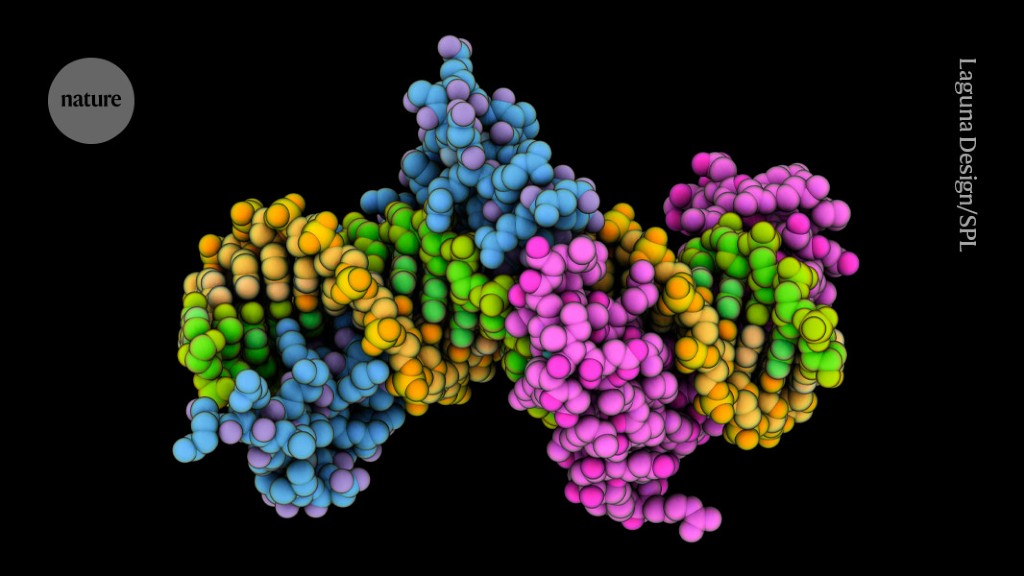
A zinc finger protein (blue and magenta; artificially coloured) in complex with DNA (yellow and green).
Credit: Laguna Design/SPL
An alternative to
genome editing
can reduce the activity of a gene that affects cholesterol levels without changing the DNA sequence — and does so for an extended period, according to a study
1
in mice.
Scientists achieved this effect by changing each animal’s ‘
epigenome
’, one feature of which is a collection of chemical tags that are bound to DNA and affect gene activity. After the treatment, activity of the targeted gene dropped and remained low for the 11 months over which the mice were studied.
The 2023
approvals of the first genome-editing therapy, which relies on
the CRISPR-Cas9 editing system ushered in a new form of medicine that relies on making targeted changes to DNA sequences. But the new findings, published on 28 February in
Nature
, bolster the case for instead
editing the epigenome
to treat certain diseases, thereby sidestepping some of the
risks that come with breaking and irreversibly altering strands of DNA
.
“This is just the beginning of an era of getting away from cutting DNA,” says Henriette O’Geen, an epigeneticist at the University of California, Davis. “This can alter the expression of genes that are involved in disease — and potentially provide a cure — without changing DNA.”
Mark this gene
As cells take on new identities during development, the pattern of chemical tags on their DNA often changes. These epigenetic alterations can tell a cell to behave as a liver cell, for example, rather than a brain cell.
Could this one-time ‘epigenetic’ treatment control cholesterol?
After more than a decade of effort, scientists worked out how to modify genome-editing tools to tweak some epigenetic marks. This makes it possible to add a type of chemical tag called a methyl group to DNA at precise locations, for example, to switch a gene off, or to remove methyl groups from a spot in the genome to turn a gene on
2
.
Epigenetic editing’s applications in the clinic were initially unclear, says epigeneticist Marianne Rots at the University Medical Center Groningen in the Netherlands. Researchers were concerned about how specific or effective the approach would be, she says, and how long its effects would last.
A finger on the genome
To address these questions, Angelo Lombardo, a gene-therapy researcher at the San Raffaele Scientific Institute in Milan, Italy, and his colleagues used molecules called zinc finger proteins that, much like the CRISPR–Cas9 system, can be designed to bind to specific sequences in the genome. The team designed a zinc finger protein that could bind to the
PCSK9 gene, which is the target of several existing therapies for high cholesterol. The authors then fused their zinc finger proteins with pieces of three proteins involved in attaching methyl groups to DNA.
UK first to approve CRISPR treatment for diseases: what you need to know
That cocktail of fragments was drawn from a suite of proteins that act during embryonic development, adding methyl groups to ensure that viral sequences lurking in the genome — relics of past infections — are silenced and stay that way for a lifetime. The hope, says Lombardo, was that the long-lasting effects of that natural epigenetic editing would carry over to the gene bound by the zinc finger protein that the authors designed.
Working with mice, the team used this system to edit the
Pcsk9 gene. The animals’ cholesterol levels fell within a month of the treatment. Their levels of the PCSK9 protein also dropped — and stayed low for the 330 days that the researchers tracked them. The effects could last longer than a year, says O’Geen, given that the rodents’ PSCK9 levels showed no signs of rebounding at the end of the experiment.
A rush to epigenetics
The results will add to already burgeoning excitement about epigenetic editing. More than ten companies are focused on developing epigenetic editing therapies, says Rots. A few have reported long-lasting effects in monkeys but have not yet published their findings in peer-reviewed journals.
And Omega Therapeutics, a company in Cambridge, Massachusetts, is conducting a clinical trial of an epigenetic editor that silences
MYC , a gene that is overactive in many cancers and has been difficult to target using conventional drugs. “It’s exciting to see how things have exploded,” Rots says.
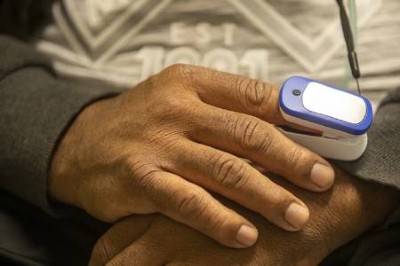
Pulse oximeter can give inaccurate oxygen readings for people with dark skin.Credit: Afolabi Sotunde/Reuters
Growing evidence1 shows that critical devices for measuring blood-oxygen levels can be inaccurate in people of colour. Now the US Food and Drug Administration (FDA) plans to propose that companies conduct more stringent evaluation of the devices, called pulse oximeters, before applying for agency approval.
The proposal, which the agency has not yet formally announced, calls on manufacturers to increase the devices’ accuracy and to boost the number of people on which the devices are tested. The agency also wants companies to test the devices on people whose skin colours span the entire range of a specific colour scale. FDA scientists presented the proposal at a meeting of an independent advisory committee on 2 February.
Researchers who have been studying the performance of the devices and resulting health disparities for years applaud the FDA’s efforts. “The bar was set so low with the regulatory guidance up until now that there’s low-hanging fruit that can be addressed,” says Michael Lipnick, a global health specialist at the University of California, San Francisco.
Vital device
After being clipped onto a fingertip, a pulse oximeter shines light through the digit and measures how much light is absorbed by the oxygen-carrying molecule haemoglobin, giving a reading of blood-oxygen saturation. The measurement, considered one of a person’s ‘vital signs’ alongside heart rate, can give physicians quick insight into a person’s health.
But melanin pigments in dark skin can interfere with the devices. As a result, the oximeters can indicate oxygen saturation values higher than the those derived using the gold-standard method of measuring oxygen levels in blood taken from an artery, especially in people with low blood-oxygen levels.
During the COVID-19 pandemic, studies2,3 found that the devices’ overestimation of oxygen levels can lead to less treatment for people of colour, especially in hospitals that use strict blood-oxygen cut-offs to determine who is eligible for care. “Nobody appreciated that even these small biases could lead to enormous healthcare disparities,” Lipnick says.
These disparities have led researchers and advocacy groups to demand that the FDA ensure that the devices, which historically been calibrated on people with light skin, are accurate in people with dark skin. They have called on the agency to revise its current guidelines — which were published in 2013 — for manufacturers seeking approval for their devices. Those guidelines stipulate that the devices should be tested on at least 10 people, at least 15% of whom must be “darkly pigmented”.
Fingertip oxygen sensors can fail on dark skin — now a physician is suing
At the advisory committee meeting, FDA scientists instead proposed that companies test the devices on at least 24 people whose skin colours span the entirety of the Monk Skin Tone (MST) scale, a 10-shade scale that describes human skin colour. This is an upgrade, says Kimani Toussaint, an optics specialist at Brown University in Providence, Rhode Island, because “darkly pigmented” is subjective. An increase in the number of people tested will also help the FDA to evaluate whether a device’s performance differs with skin colours, he says.
Real-world testing
But some advisory-committee members, such as Rachel Brummert, a medical device safety advocate based in Charlotte, North Carolina, questioned whether 24 people would be sufficient. And other scientists say they wish the proposed guidelines recommended that manufacturers test their devices in real-world conditions. “Ideally, the FDA would take a more aggressive step to make sure these devices are evaluated in clinical settings,” says Ashraf Fawzy, a pulmonologist and critical care physician at Johns Hopkins University in Baltimore, Maryland.
The FDA did not immediately respond to a request for comment about these criticisms.
But more research is still needed to understand how skin colour interacts with other variables, such as how much blood flows to the fingers, Lipnick says. And most studies on the topic are based on self-reported ethnicity or skin-colour data; he and his colleagues are now evaluating the performance of the devices using the MST scale, and investigating whether the MST scale is the best measure to use for this purpose.
Costs and benefits
The debate highlights the tension the agency faces: it seeks to improve the accuracy of the devices while taking care that the additional testing it recommends isn’t overly cumbersome. Nor can the agency suddenly pull the devices from the market when there are no replacements and “such a large volume of patients benefitting from the devices”, says Yadin David, a biomedical engineering consultant in Houston, Texas, who chairs a separate FDA advisory committee on medical devices.
Confronting racism in Black maternal health care in the United States
There are other solutions beyond taking the devices off the shelves, says Michael Sjoding, a pulmonologist at the University of Michigan in Ann Arbor. He hopes that data about the devices’ performance are made more readily available to potential purchasers, such as hospital systems, so that they can “weigh the data when they’re making purchasing decisions”.
Lipnick says this debate’s implications will reverberate around the world, especially in low- and middle-income countries that still face challenges accessing these devices. If companies find it difficult to comply with new standards, “it could result in products going off the market or prices going up”, he says.
The FDA has not indicated if and when it would move forward with the proposed changes, nor when the changes would go into effect. The agency typically publishes draft proposals and solicits feedback from the public before finalizing guidance. Sjoding hopes changes are implemented soon: “The longer these changes aren’t made, the longer that patients are put at risk,” he says.