Tag: crispr

  • CRISPR-Cas9 gene-editing tool repairs defective T cells to treat rare hereditary disease

    CRISPR-Cas9 gene-editing tool repairs defective T cells to treat rare hereditary disease

    [ad_1]

    Some hereditary genetic defects cause an exaggerated immune response that can be fatal. Using the CRISPR-Cas9 gene-editing tool, such defects can be corrected, thus normalizing the immune response, as researchers led by Klaus Rajewsky from the Max Delbrück Center now report in “Science Immunology.”

    Familial hemophagocytic lymphohistiocytosis (FHL) is a rare disease of the immune system that usually occurs in infants and young children under the age of 18 months. The condition is severe and has a high mortality rate. It is caused by various gene mutations that prevent cytotoxic T cells from functioning normally. These are a group of immune cells that kill virus-infected cells or otherwise altered cells. If a child with FHL contracts a virus – such as the Epstein-Barr virus (EBV), but also other viruses – the cytotoxic T cells cannot eliminate the infected cells. Instead, the immune response gets out of control. This leads to a cytokine storm and an excessive inflammatory reaction that affects the entire organism.

    “Doctors treat FHL with a combination of chemotherapy, immunosuppression and bone marrow transplantation, but many children still die of the disease,” says Professor Klaus Rajewsky, who heads the Immune Regulation and Cancer Lab at the Max Delbrück Center. He and his team have therefore developed a new therapeutic strategy. Using the CRISPR-Cas9 gene-editing tool, the researchers succeeded in repairing defective T cells from mice and from two critically ill infants. The repaired cytotoxic T cells then functioned normally, with the mice recovering from hemophagocytic lymphohistiocytosis. Rajewsky and his team have now published their findings in the journal “Science Immunology.”

    Gene repair strategy works in mice

    The starting point for the study were mice in which the team could mimic EBV infections. In these animals, the researchers altered a gene called perforin so that its function was completely lost or severely compromised – a common genetic defect in patients with FHL. When they then elicited a condition resembling an EBV infection, the affected B cells multiplied uncontrollably because the defective cytotoxic T cells were unable to eliminate them. As a result, the immune response went into overdrive and the mice developed hemophagocytic lymphohistiocytosis.

    The team next collected T memory stem cells – that is, long-lived T cells from which active cytotoxic T cells can mature – from the blood of the mice. The researchers used the CRISPR-Cas9 gene-editing tool to repair the defective perforin gene in the memory T cells and then injected the corrected cells back into the mice. The immune response in the animals quieted down and their symptoms disappeared.

    How long protection lasts is uncertain

    The first author of the paper, Dr Xun Li, used blood samples from two sick infants to test whether the strategy also works in humans. One had a defective perforin gene, the other a different defective gene.

    Our gene repair technique is more precise than previous methods, and the T cells are virtually unchanged after undergoing gene editing. It was also fascinating to see how effectively the memory T cells could be multiplied and repaired from even a small amount of blood.”


    Dr Xun Li, First Author

    Cell culture experiments showed that the infants’ repaired T memory cells were capable of a normal cytotoxic T cell response.

    This means the therapeutic mechanism works in principle. But before patients can benefit from this discovery, the team needs to first resolve open questions and test the treatment concept in clinical trials. “It is still uncertain how long the protective effect lasts,” says Dr Christine Kocks, a scientist in Rajewsky’s team. “Since the T memory stem cells remain in the body for a long time, we hope the therapy provides long-term or even permanent protection. It is also conceivable that patients could be treated with their repaired T cells over and over again.”

    The procedure is minimally invasive since only a small amount of blood is needed, and the mice did not require any preparatory treatment – unlike, for example, with a bone marrow transplant. “We very much hope that our mechanism of action is a breakthrough in treating FHL,” says Rajewsky, “either to gain more time for a successful bone marrow transplant or even as a treatment itself.”

    Source:

    Journal reference:

    Li, X., et al. (2024) Precise CRISPR-Cas9 gene repair in autologous memory T cells to treat familial hemophagocytic lymphohistiocytosis. Science Immunology. doi.org/10.1126/sciimmunol.adi0042.

    [ad_2]

    Source link
  • CRISPR gene therapy seems to cure dangerous inflammatory condition

    CRISPR gene therapy seems to cure dangerous inflammatory condition

    [ad_1]

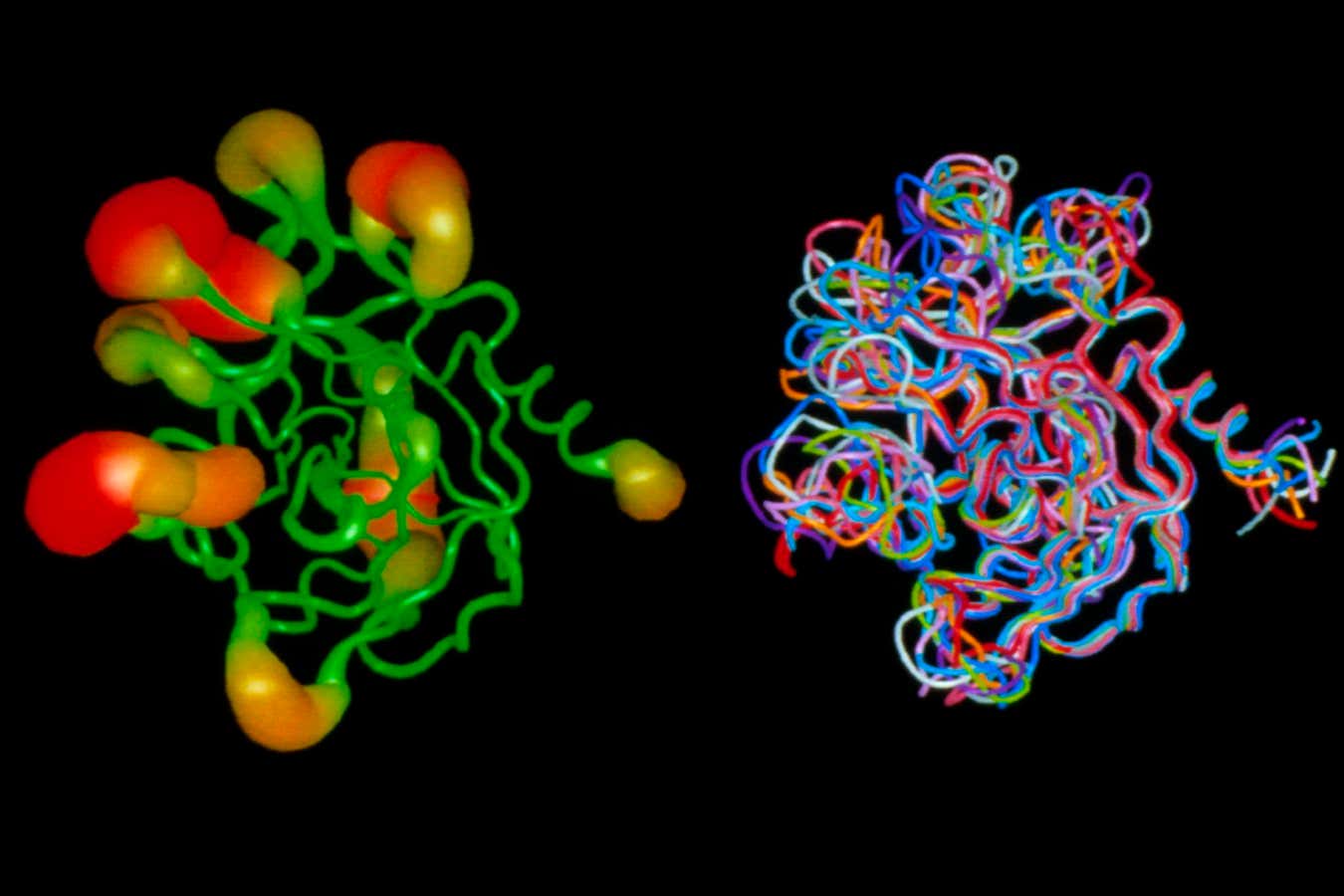
    The therapy makes cuts in the gene for kallikrein (shown as graphics), a protein involved in inflammation

    A new therapy makes cuts in the gene for kallikrein (shown as graphics), a protein involved in inflammation

    BIOSYM TECHNOLOGIES, INC./SCIENCE PHOTO LIBRARY

    Nine people with a rare genetic condition that causes life-threatening inflammatory reactions appear to have been cured, after taking part in the first trial of a new version of a CRISPR-based gene therapy.

    The condition, called hereditary angioedema, causes people to have sudden episodes of tissue swelling that affects body parts such as the face or throat, similar to aspects of an allergic reaction, although they can’t be treated with anti-allergy medicines.

    Ten people who had the one-off gene treatment that is given directly into the body saw their number of “swelling attacks” fall by 95 per cent in the first six months as the therapy took effect. Since then, all but one have had no further episodes for at least a further year, while one person who had the lowest dose of the treatment had one mild attack. “This is potentially a cure,” says Padmalal Gurugama at Cambridge University Hospitals in the UK, who worked on the new approach.

    Hereditary angioedema is caused by mutations in a gene that encodes a protein called C1-inhibitor, which is normally involved in damping down inflammation, part of the immune response.

    People with the condition may have sudden episodes of fluid accumulation under their skin several times a month, which are painful and can suffocate them if their throat becomes blocked. The attacks can be triggered by viruses, changing hormone levels or stress.

    Existing medications that can reverse the attacks work by blocking a different molecule involved in inflammation, called kallikrein, made by the liver. People can be born without any ability to make kallikrein with no ill effects, which suggested that permanently blocking it via gene therapy would be safe, says Gurugama.

    The new therapy, made by a firm called Intellia Therapeutics in Cambridge, Massachusetts, consists of genetic material designed to make cuts in the kallikrein gene. It is encapsulated in lipid nanoparticles, which liver cells take up. The treatment was given to one person in the UK and nine others in New Zealand and the Netherlands.

    The unusual feature of this treatment is that it was administered directly into people, a method sometimes called “in vivo” delivery. “They go in for one infusion and it’s job done,” says Julian Gillmore at University College London, who wasn’t involved in the study. “It’s hugely attractive.”

    Most other CRISPR-based gene therapies so far have been administered “ex vivo”, which means taking some of the person’s cells out of their body, changing them in the lab and then reinfusing them, a more complicated and lengthy procedure.

    CRISPR gene therapies are being developed for multiple genetic conditions, with the first such treatment recently being approved in the UK and US to help people with sickle cell disease and beta-thalassaemia, two forms of inherited anaemia.

    The success of the latest trial is “pretty exciting”, says Gillmore, who is developing a CRISPR-based therapy for people with a different condition involving the liver, called transthyretin amyloidosis. “Any disease that’s caused by a mutated protein that’s exclusively produced in the liver, where knocking down that protein is a good thing to do, would potentially be amenable to this technique,” he says.

    Topics:

    [ad_2]

    Source link

  • CRISPR engineered viruses could render other viruses harmless

    CRISPR engineered viruses could render other viruses harmless

    [ad_1]

    So-called gene drives could work for DNA viruses, such as herpes

    fotograzia/Getty Images

    A virus genetically engineered to spread its DNA to other viruses via CRISPR gene editing has done exactly that in tests in mice. The hope is that these viruses could alter others, such as herpes, in a way that prevents them from causing symptoms.

    “It’s a new technology,” says team member Marius Walter at the Fred Hutch Cancer Center in Seattle, Washington. “Can we bring it to people? That’s a long way ahead, we have a lot of work…

    [ad_2]

    Source link

  • How CRISPR therapy could cure everything from cancer to infertility

    How CRISPR therapy could cure everything from cancer to infertility

    [ad_1]

    New Scientist Default Image

    THE bouts of terrible pain began further back than Victoria Gray can remember. Her grandmother would try to ease the discomfort with hot towels and medication, but it was fruitless. “I was born having to endure pain,” she says. “It was a life that I felt wasn’t worth living.”

    Gray has an inherited condition known as sickle cell disease, which causes red blood cells to form an abnormal “sickle” shape that can block capillaries, causing pain and sometimes organ damage. As Gray aged, her pain got worse. On one occasion, she temporarily lost the use of her arms and legs. By her 30s, Gray required in-home care. So, when she was offered the chance to become the first person to receive an experimental CRISPR gene-editing treatment, she took it.

    Today, four years after this took place, she no longer has episodes of pain and works full time. “Now my life is full of optimism,” she says.

    The treatment involved will probably be given the green light by regulators in the US, UK and Europe soon, which will make it the first CRISPR therapy to be approved. It won’t be the last.

    There is now no doubt that this technology – used to edit genes – can treat and potentially even cure a huge range of conditions. The only question is, just how far can it go? Will it be an expensive therapy used only occasionally? Or will it become so widely used that many of us will be getting a CRISPR jab to, say, lower our cholesterol levels and enable us to live longer, healthier lives?

    CRISPR gene editing exploded onto the…

    [ad_2]

    Source link