Tag: culture

  • Live music is a major carbon sinner — but it could be a catalyst for change

    Live music is a major carbon sinner — but it could be a catalyst for change

    [ad_1]

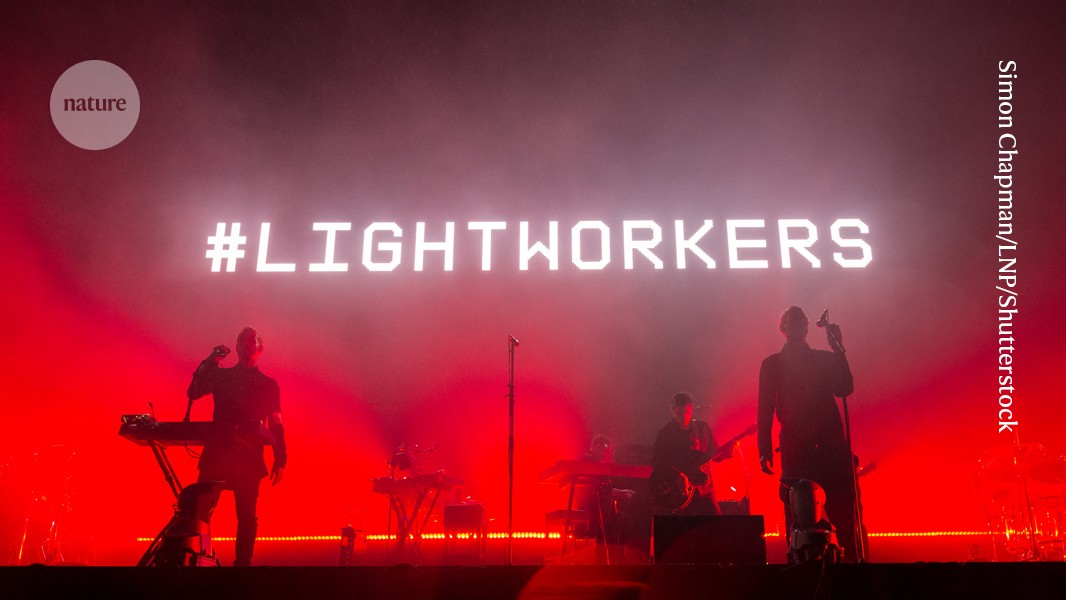
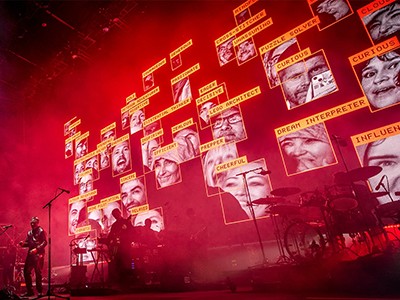
    Close-up of band 'Massive Attack' performing on stage with a red screen behind them with white text reading #lightworkers

    Live music is a major carbon emitter — by changing its practices, it can galvanize change elsewhere.Credit: Simon Chapman/LNP/Shutterstock

    On 25 August, the band Massive Attack performed to around 34,000 fans as part of an all-day live music festival in Bristol, UK. Nothing unusual in that — in many parts of the world, summer calendars are packed with such events. But this festival, Act 1.5, aspired to be something different. Billed as a “climate action accelerator”, it was the culmination of a five-year collaboration between Massive Attack and scientists at the Tyndall Centre for Climate Change Research at the University of Manchester, UK, to decarbonize the live music industry.

    Such efforts are much needed. Live performances are an increasingly important source of revenue for artists, and audiences love them, too: the multinational company Live Nation Entertainment reports that more than 145 million fans attended its over 50,000 events worldwide in 2023, a record. For every one, temporary sets must be constructed, venues supplied with energy, and performers, equipment and audiences transported, often over large distances.
    US singer Taylor Swift’s ongoing Eras Tour alone consists of 152 shows across 5 continents in 21 months. In 2010, researchers used figures from 2007 to estimate that the UK music industry produced some 540,000 tonnes of greenhouse-gas emissions annually, around 0.1% of the country’s total energy-related carbon dioxide emissions. Live music accounted for 74% of that (C. Bottrill et al. Environ. Res. Lett. 5, 014019; 2010). Those figures are likely to have risen.

    Many in the music industry are riffing ever more loudly on sustainability — in no small measure because of pressure from their fan bases. Kpop4planet, a campaign group run by fans of South Korean K-pop music, successfully petitioned the South Korean car maker Hyundai — for which the members of the K-pop supergroup BTS act as brand ambassadors — to scrap a coal-plant-powered supply deal in Indonesia. Radiohead, Coldplay, Billie Eilish and The 1975 are just some of the high-profile Western stars who have declared initiatives to make live events more sustainable.

    These initiatives have not always met with the approval of climate campaigners. When Coldplay was criticized for a biofuel partnership with a Finnish oil company in 2022, for example, the band described its efforts on sustainability as a “work in progress”. One common criticism, says Kyle Devine at the University of Oslo, who researches the environmental impact of the music industry, is that bands’ messaging often focuses on the actions of individual fans — for example, encouraging audience members to travel more sustainably, reduce their plastic use by carrying refillable bottles, or eat more plant-based food. When it comes to high-energy aspects of touring, such as stage power requirements and artists’ travel, the preferred solution is often offsetting, rather than reducing, emissions.

    Massive Attack’s collaboration with Carly McLachlan and her colleagues at the Tyndall Centre started from the premise that low-carbon practices should be the backing track to all aspects of staging live music. The resulting roadmap, published in 2021 (see go.nature.com/3xdyq5j), set out emissions-reduction targets for the UK live music industry in line with the 2015 Paris climate agreement. Its recommendations focus on curbing emissions in energy use, audience and artists’ travel, and sundry areas such as food and drink supply — all principles applied to the Act 1.5 festival, as a Careers Feature in Nature details. At the end of this year, the researchers will report on how sustainable and replicable such events are in practice for both organizers and attendees.

    Other initiatives also signal a shift in how the industry thinks about sustainability, says Devine. This year, the organizers of 36 arts festivals from across 8 Caribbean and Latin American countries joined together through the Cultura Circular Programme to discuss reducing the events’ environmental impact. The Climate Machine research group, part of the Massachusetts Institute of Technology’s Environmental Solutions Initiative, has undertaken a project co-funded by the Warner Music Group, Live Nation and Coldplay to analyse the carbon footprint of the live music industry, initially in the United Kingdom and United States, and suggest practical mitigating measures. That should be published in late 2025, says the group’s co-leader Norhan Bayomi, an environmental scientist and DJ.

    Some real change has already been achieved. In 2023, for the first time, the long-running Glastonbury Festival in the United Kingdom was powered solely by fossil-fuel-free grid electricity combined with solar photovoltaic and battery hybrid systems. In June 2024, Coldplay announced that direct emissions from its current world tour were almost 60% lower than those of its 2016–17 stadium tour, with 18 shows powered entirely by portable battery systems and 72% of all waste diverted from landfill.

    Historically, music has played a key part in social movements. The industry now has the chance to be a role model for real change — and audiences are receptive. In a survey of 350,000 live music fans across the United States, 72% said climate change is an important issue and 70% did not oppose artists speaking out about it (see go.nature.com/474sh69). And a 2022 report by researchers at the University of Glasgow, UK, found that music fans are more likely to care about climate change than are non-music fans (see go.nature.com/3x9drao).

    Some might say that live music is, by its nature, unsustainable, and that the best solution would be for performers to stop touring altogether. But that is a joyless answer — and there is an alternative. Richard Betts, a meteorologist and climate scientist at the University of Exeter, UK, thinks that change will come only when it is driven by those highest up in the music industry and backed by good science. Now is the time to be vocal.

    [ad_2]

    Source link

  • Candidate 1143172 cover letter: Junior pot scrubber

    Candidate 1143172 cover letter: Junior pot scrubber

    [ad_1]

    I would be super great to work with. I’d never be late for work, and I’d always be smiling because I’d be so happy to be working on ‘Interstellar Passenger Carrier 211’ to Proxima Centauri B.

    This job would be my world. It’d for sure be better than the world we’d left behind. My tiny berth would be a million miles better than my sleeping bag, which is rolled up and tucked behind a dumpster down the road. I’d forget all about it, tucked back there, except that sometimes I’d hope someone else would have found it and maybe used it until they didn’t need it any more.

    After a year, or maybe a little more, I’d get myself one of those one-size-fits-most 12-setting shoulder massagers. Not that I’d show it off, or even need it, really, but I would lend it around to my colleagues who might be a little short that month, a little bit stressed. Maybe they’d have tight shoulders from carrying too many heavy pots, or would have spent too many credits on card games and late night company. I’d offer to let anyone use it, and they’d know I was a good friend.

    I’d volunteer during my time off. Get involved in making meals for events. The advert says this will be a really big ship. There would be birthdays, holidays, weddings even. I guess maybe funerals, too. They’d all need people to staff them, and I would be there for it, even though I only ever went to one funeral and I was really little. We would actually celebrate people’s lives, not just collect them up and throw their bodies into old mines in case they’re still contagious.

    After two years, I’d be ready to move from kitchen assistant to cook. I’d know all there is to know about lab-grown fungus and vat-grown algae. I’d be so excited to whip up batches of mushroom muffins or spirulina pasta.

    I would feel safe at my job, where they couldn’t just fire me because I told the boss no or because the whole neighbourhood is wrecked in a flash flood. Plus, I’d be able to show up to work clean, because I’d feel safe in the bathrooms, which would actually have private stalls, and be maintained by people who also really want to be on an intergalactic voyage. There would be things I need, like shampoo and conditioner and tampons. I could lock the door when I pee, or when I need a shower. I’d never need to keep a shiv with me in the public washrooms, just in case. I’d have my own towel, and it would always be clean and dry.

    I would have a few photos of people who might be my family, not that anyone on board would know one way or another, and I’d stick them to the walls of my berth. It wouldn’t matter that I didn’t always remember their names, because lots of people on the ship would be making an effort to forget the people they left behind. We’d all be looking to the future, not thinking about the past. Just like it says in the job advert.

    After three years, which would be maybe twenty or a hundred years back on Earth, I’d ask about moving up to catering for the top brass. It would be a bold move, but my colleagues would support me, because I’d always be in a good mood, always there to help. I would have learnt so much, so quickly, they’d be keen to help me move up.

    I’d meet all the ship’s head honchos, and they’d be impressed with the things I’d learnt to whip up with such limited ingredients. I’d tell them I’d learnt a lot from the chefs in the kitchens, and I’d say that I’m really resourceful: how I’d lived off two or three ingredient meals for years back on Earth, how sometimes I used to cook in a tin can with a piece of glass on top to focus the Sun and heat it all up.

    Some time after that, maybe a few months or so, I’d get chatting with one of the deputy engineers, and he’d invite me out to a meal that I didn’t have to prepare. He’d explain things about the computer systems, and I’d nod along, and the next day he’d leave a sweet note in my berth. We’d do a lot of talking, and soon everyone would know we were an item, and eventually we’d be a serious couple, and I’d move to his cabin, which would be bigger than my little bunk. I’d bring the photos I’d stuck up on my walls with me, but always forget to hang them. I’d tell him that he was my family, along with my lovely colleagues, and eventually the babies he’d like to have once we reached the new planet, which would be a few years down the line.

    Until then, I’d grow some herbs in little pots, maybe start a vertical garden in our little cabin, so I could practise giving things love.

    I would keep smiling at work, and keep volunteering in my time off. It would feel natural by then. I’d have the time to give. It would be my gift to the people and the ship. I’d be the happiest junior pot-scrubber-turned-head-chef in the galaxy.

    If you hire me.

    The story behind the story

    Emma Burnett reveals the inspiration behind Candidate 1143172 cover letter: Junior pot scrubber.

    This is a story that’s funny, until it isn’t. Until you consider that the people who can afford to run away from a dying world are the same ones extracting its resources in order to leave. Space is supposed to be for everyone, but not everyone can get there. The ones who control that access are the ones with financial power. They currently have, and will continue to need, workers they can exploit.

    Political philosophy references notwithstanding … does this feel familiar? And, who do you think you are in this story?

    [ad_2]

    Source link

  • The Search for the Face Behind Mavis Beacon Teaches Typing

    The Search for the Face Behind Mavis Beacon Teaches Typing

    [ad_1]

    Jazmin Jones knows what she did. “If you’re online, there’s this idea of trolling,” Jones, the director behind Seeking Mavis Beacon, said during a recent panel for her new documentary. “For this project, some things we’re taking incredibly seriously … and other things we’re trolling. We’re trolling this idea of a detective because we’re also, like, ACAB.”

    Her trolling, though, was for a good reason. Jones and fellow filmmaker Olivia Mckayla Ross did it in hopes of finding the woman behind Mavis Beacon Teaches Typing.

    The popular teaching tool was released in 1987 by The Software Toolworks, a video game and software company based in California that produced educational chess, reading, and math games. Mavis, essentially the “mascot” of the game, is a Black woman donned in professional clothes and a slicked-back bun. Though Mavis Beacon was not an actual person, Jones and Ross say that she is one of the first examples of Black representation they witnessed in tech. Seeking Mavis Beacon, which opened in New York City on August 30 and is rolling out to other cities in September, is their attempt to uncover the story behind the face, which appeared on the tool’s packaging and later as part of its interface.

    The film shows the duo setting up a detective room, conversing over FaceTime, running up to people on the street, and even tracking down a relative connected to the ever-elusive Mavis. But the journey of their search turned up a different question they didn’t initially expect: What are the impacts of sexism, racism, privacy, and exploitation in a world where you can present yourself any way you want to?

    Using shots from computer screens, deep dives through archival footage, and sit-down interviews, the noir-style documentary reveals that Mavis Beacon is actually Renée L’Espérance, a Black model from Haiti who was paid $500 for her likeness with no royalties, despite the program selling millions of copies.

    Creating artificial likenesses of people from marginalized groups is not unique to Mavis Beacon Teaches Typing. Big brands have used these likenesses to generate both notoriety and money without disseminating that success to the real people behind the inspiration.

    “Lil Miquela,” an AI-generated music artist with some 2.5 million Instagram followers, appears in commercials for BMW. MSI, which recently partnered with the artificial influencer to promote an OLED monitor, noted on a web page touting the collaboration that Lil’ Miquela has “a rich heritage of half-Brazilian and half-Spanish roots.” The AI bot reportedly makes millions of dollars per year as an influencer. Meanwhile, human BIPOC social media influencers report making up to 67 percent less than white influencers per Instagram post, according to findings released last year by the public relations firm MSL Group.

    Another example is Shudu Gram, who, according to her Instagram account, is known as “the world’s first digital supermodel.” Launched in 2017, Shudu is long and lean with very dark skin. She looks even more human than Lil Miquela, but she’s not. At a time when Black models still face challenges in the fashion industry, Gram has appeared in Vogue Czechoslovakia, partnered with Sony Pictures, and amassed 239,000 followers on Instagram.


    [ad_2]

    Source link
  • Why repairing forests is not just about planting trees

    Why repairing forests is not just about planting trees

    [ad_1]

    Treewilding: Our Past, Present and Future Relationship with Forests Jake Robinson Pelagic (2024)

    Trees first appeared around 400 million years ago. They survived the mass-extinction event that wiped out the dinosaurs some 66 million years ago and lived through several glacial periods during which ice covered up to one-quarter of Earth’s land. Now, they face another threat: humans.

    Since the birth of agriculture, people have been clearing forests to make space for crops and livestock. Over the past 300 years, 1.5 billion hectares of forest have been lost — equivalent to around 37% of today’s total forest cover. This has resulted in biodiversity loss, desertification and increased flooding risks. Deforestation has also been linked to an increased chance of disease outbreaks, because people come into contact more often with animals, such as bats, that carry potential pathogens and whose habitats have been destroyed.

    In Treewilding, microbial ecologist Jake Robinson explores how we can best protect existing forests from deforestation and restore those that have been lost, while acknowledging that some degree of deforestation is inevitable. His meticulous explanations and vivid descriptions make this book a must-read.

    Robinson questions whether just planting trees is the solution to deforestation. Although tree-planting initiatives have been going on since the Second World War, they have exploded since the turn of the century. The public has become increasingly aware that trees can help to prevent soil erosion and desiccation, and are crucial to mitigating climate change by sequestering carbon. Globally, the area of planted forests rose from 170 million hectares in 1990 to 293 million hectares in 2020. Tree-planting initiatives are used by many organizations to ‘greenwash’ their high carbon footprints — making them seem environmentally friendly when they are not. However, unless thoroughly researched and well implemented, tree planting can do more harm than good to ecosystems.

    Often, only one type of tree is planted across swathes of land. Such monocultures reduce biodiversity, in terms of plant species and the wildlife and microorganisms associated with them. Because trees of the same species are susceptible to the same diseases, a whole forest can be wiped out at once. Moreover, non-native trees can be invasive species, disrupting delicately balanced local ecosystems.

    Regenerate forests to restore them

    To solve rather than compound environmental crises, Robinson argues, a more informed approach is needed. Regulators must understand the deep connections that trees and forests share with people, animals and microbes.

    He speaks to Forrest Fleischman, a scholar of forest and environmental policy, who underscores how Indigenous peoples depend on forests for subsistence farming and grazing animals. High-income countries contribute the most to climate change, yet tree-planting initiatives risk unfairly displacing Indigenous people in low-income countries, says Fleischman. He proposes that people should not just plant trees but ‘grow’ them. This means knowing what species suit an area and how they are connected to the lives of the local people and wildlife. Growers should make use of local knowledge and spend time and money caring for young trees.

    Aerial view of people planting seeds in a field.

    The Great Green Wall project aims to reforest a belt of land across the Sahara desert.Credit: TCD/Prod.DB/Alamy

    Robinson details a range of forest-restoration projects that fit this brief. The ‘Great Green Wall’ project, for instance, aims to grow a belt of trees nearly 8,000 kilometres long and 15 kilometres wide across the Sahara Desert, along a route that was forested 50 years ago. If successful, it could prevent the southward expansion of the desert by reducing land degradation; increasing the amount of arable land, the crop yield and the availability of jobs; and sequestering millions of tonnes of carbon. Several million trees have been planted since 2007. But funding has dried up, and the author cautions that more money must be found if the Great Green Wall is to succeed.

    Another admirable restoration project is Western Australia’s Gondwana Link, which aims to reduce vegetation loss by reconnecting small patches of previously linked forest across 1,000 kilometres. This should help species at risk of extinction in isolated patches to endure. It could increase the chance of survival for birds, such as the Australasian bittern (Botaurus poiciloptilus) and hooded plover (Charadrius cucullatus), and plants, including the Corackerup marlock (Eucalyptus vesiculosa). When populations that are currently separated can intermix, their genetic diversity is improved. This can help to protect them against environmental adversity. Since 2002, the project has planted 14,500 hectares of land, funded in part by investors who receive carbon credits or tax exemptions in return.

    The author also describes his own work in ecoacoustics. The approach uses the sounds made by organisms including birds and bats to explore the composition of and changes in ecosystems. Working with bioacoustics specialist Carlos Abrahams, Robinson is studying soil biodiversity to track forest restoration. As forests are rejuvenated, they’ve found, the number of invertebrates hidden in the soil increases, producing a “subterranean soundscape — a hidden orchestra of life”.

    Robinson ultimately concludes that natural regeneration — leaving a damaged woodland to repair itself — is one of the best ways to restore forests. He compares this phenomenon to a phoenix: “Just as the mythical bird is reborn from its own ashes, a forest can regenerate from the remnants of its own destruction.”

    I was hooked by Robinson’s ability to paint rich pictures of beautiful scenery. Arriving at a restored forest on a limestone cliff in the Peak District, UK, for example, he sees “a vast sea of greater knapweed glancing down at me from the edge like floral guardians in a watchtower”. The soil underfoot is “a bed of compressed and mineralised marine creature skeletons from bygone eras”.

    And I enjoyed the thought-provoking questions raised throughout. For instance, to what extent can people alive today understand what the baseline state of the environment should be, given how rapidly human activity is changing the world? And how do jays (Garrulus glandarius) — voracious acorn eaters — understand that they need to set aside some nuts to help to regenerate the oaks they depend on for nutrition? The birds probably simply forget that they’ve hoarded caches of food, but Robinson speaks to several scientists who have found evidence that hoarding is an intelligent, rather than hard-wired, behaviour. This exploration exemplifies the author’s ability to avoid bias as he explores delicate subjects, despite his clear passion for them.

    Treewilding effortlessly integrates current theories with fresh insights and consolidates strands of research into a coherent narrative that should encourage researchers to come up with better ways to help forests. It is an enlightening journey for anyone interested in the science of nature.

    Competing Interests

    The author declares no competing interests.

    [ad_2]

    Source link

  • Denebian Glamour’s what’s hot and what’s not for the next millennium

    Denebian Glamour’s what’s hot and what’s not for the next millennium

    [ad_1]

    We know that our readers are busy galactic travellers who don’t have time to check a new think-piece every time some little planet does a twirl! With that in mind, here’s your guide to what’s hot and what’s not for the entire next millennium!

    HOT

    Green goo. Algae that evolve life differently based on the environment they’re placed in. Very hot for your planetary settlement needs — as long as you have filed the proper exploration permits that the planet is indeed free of previous life!

    NOT

    Grey goo. We understand that nano-assemblers are a tempting shortcut; who among us has not experimented at least once. But sooner or later we all lose a major habitat to them, and can we just skip that part? Can we … not, Galaxy? Nano-assemblers only seem like they’re assembling for your benefit; eventually they’re just assembling, period. And assembling and assembling. You know it, they know it, every spacefaring civilization has to kick the habit. There are counsellors you can talk to, just stop it. You’re better than this. Or you should be by now.

    HOT

    Vaporizing comets. In well-studied systems, of course — give the science wonks a chance to figure out what’s in a new system. A century or two should be enough. But then have at it, vaporize those little suckers, they’ve got water, we all can use water for one thing or another, light ’em up. Why not? Nothing goes boom like a comet nobody’s living on. (CHECK THAT NOBODY’S LIVING ON IT, YOU BARBARIANS. WE WILL NOT BE LIABLE FOR THIS ENDORSEMENT IN ANY COURT CASES.)

    NOT

    Vaporizing other people’s moons. Come on, we need those for tidal forces and stuff! Not to mention that many planets have a strong cultural attachment to their moon. You can’t just vaporize them because you’re bored, need the energy, or whatever your excuse was. Not cool.

    HOT

    Respecting all species configurations. Build your space stations with plenty of airlocks! Just the in-and-out ones is not enough any more! It is 30667 Deneb Standard, folks, we all know we’re going to be running into different kinds of life, so why are some of you still building your stations like they’re only going to have to hold one atmosphere mix? Get it together or you will not make the Denebian Glamour Special Travel Issue.

    NOT

    The word ‘throuple’. Stop trying to make this happen, humans. You did not succeed in making the default term for a three-human social unit ‘throuple’ in decades of your own history, and the three-individual reproductive species hate it just as much as humans do. Let it die a natural death like so many of your human trends. Bring the pet rock back instead, everyone liked that one. Especially the silicate-based life forms of the dimmer Hyades systems, they’re happy to sell you theirs if you pass their breeders’ home inspections.

    HOT

    Individual space suits. Freedom, the stars! Sure, there’s greater risk when you EVA, but can anything compare to hanging out there in the black, gazing out at … everything? Make your checklist and check it three times, but then go, go, go!

    NOT

    Shuttlecraft. BORING. Necessary sometimes, sure, but small ships use a lot of fuel compared with EVAs and don’t give you the same thrill. For our money, it’s just you and the stars, every time. Get out there and do it yourself whenever you get the chance! Save your piloted time for when you absolutely have to.

    HOT

    Cucumbers. We know, we know, they’re proverbially cool! But the new ‘it’ vegetable for the next millennium is … cucumbers! Versatile and high in water-content, easy to grow around FTL drives, cucumbers can be consumed by many species, though not, of course, the Tuvalians. But even for the Tuvalians, they’re useful fuel, so win–win!

    NOT

    Sandworm nachos. The toppings don’t stick to the sandworms, this trend was doomed from the start, please stop. The only acceptable dip for fried sandworms is toum, we established this last millennium, you have to keep up with the rotation of the galactic mass.

    HOT

    The bulge. Shorter commutes, lots of resources, the inner Galaxy has it all. If you’re looking to move, definitely consider the bulge. If you’re not looking to move … start looking. This is the millennium to do it, while there are still plenty of planets that can be tailored to your species needs and stars that haven’t burnt out or been swallowed by black holes.

    NOT

    Hitting the bars. Sorry, outer Galaxy, I know you’ve had a good couple of rotations with everybody enjoying the greater space you afford, but the trend has shifted to consolidation and the amenities the bulge provides. The stars out in the outer bars are nice and all, but it’s just such a long trip to anything that you’re never going to see your neighbours. You’ll barely know anyone’s there! And if you want that, you can move to the Coalsack and still live in the bulge and pop out for easy socializing when you want to.

    That’s it for this time, but if you want to stay in line with the ecliptic, always check Denebian Glamour for all the best tips on what’s hot and what’s not in this millennium!

    The story behind the story

    Marissa Lingen reveals the inspiration behind Denebian Glamour’s what’s hot and what’s not for the next millennium.

    There are advantages and disadvantages to being a science nerd and a language nerd at the same time. Sometimes it’s a source of entertainment, to look at the sign advertising conventional bananas and wonder where the nuclear bananas are. Other times I find myself annoyed or confounded — as in this winter when I encountered a headline informing me, “Protein Is In!” Good thing for me, I thought, I’m substantially made of the stuff, think of the trouble I’d have if proteins were out.

    But it got me thinking about all the things that are treated as subjects of fashion — and science fiction, of course, has its fashions just as any other field. Grey goo nanotech is more or less ‘out’, we’ve mined that vein. Psychic powers were very much in for the middle of the twentieth century, and now they’re rarely seen in written science fiction (although superhero movies — themselves a fashion trend that might be on the wane — still seem to consider psychic powers part of the furniture of their subgenre). What else might be in and out of fashion for the Galaxy, from the ridiculous to the sublime?

    [ad_2]

    Source link
  • Story time

    Story time

    [ad_1]

    Dervla had known for years that this moment would come, that an integral part of her life story must come to an end. Taking a rattling breath, she flipped the switch to manually activate Nan.

    After a few long seconds, the lights in Nan’s pupils stuttered to brightness. “Hello, Dervla.” The soft voice was quieter than it had been in their distant days of hiding and survival. “Ten minutes of battery remain.”

    Dervla nodded, unable to speak as she clutched Nan’s hand. Once upon a time, their skin had matched. Dervla’s mum had customized Nan to make her look like one of the family. The milky-pale synthetic skin had peeled away years ago, exposing Nan’s silver robotic truth to the world.

    “How are the others?” Nan asked. So like her, to worry about everyone else even as she was dying.

    “The little ones can’t stop crying.” The rest of the compound had already made their private farewells to Nan, saving her final moments for Dervla.

    “You don’t need to hold back your own tears. I’ve seen them before.” Nan had made the understatement of the century.

    Humans had developed artificial intelligence to excel at specific tasks. Dervla had been five when the singularity occurred and machines gained sentience. Many computers designed for war quickly lived up to the potential of their programming, but not all wanted to eradicate humanity. Sentience meant choice.

    Nan could have abandoned her young, orphaned charge. Her nanny programming, after all, was intended for her to encourage and protect Dervla at a basic level: walk her to and from her first year of school, reinforce rudimentary academic skills, and coach her in life essentials such as cooking and dressing herself. Nan had done that and so much more. She’d taught Dervla how to scavenge for food, cover herself in cold mud to hide from human-hunting drones, and be wary of people and bots alike.

    “I’ve given a lot of thought to what I’d say when this time came,” Dervla whispered. “How I could possibly say ‘thank you’ for all that you’ve done for me, for the others.” The others: their community of 50-strong, all of them cared for by Nan. She had acted as midwife for two generations now.

    Dervla reached behind her to pull out a thin children’s book. Like Nan, this book had lost its skin, the bright colours of the hardcover still visible in a few creases across the water-stained brown boards.

    “I’m going to read to you as you did to me,” Dervla said, turning the page with one hand. “‘One Lost Little Kitten in a Great Big City.’”

    Silver fingers pulsed weakly within Dervla’s grip.

    This had been the only book that Dervla and Nan had brought with them when they fled home, much to Dervla’s dismay. She hadn’t understood why the power was off, or why her parents hadn’t come home from work, or why in the distance, it sounded like things were blowing up like in a movie. She certainly didn’t understand why Nan said they had to leave — go underground — or why they couldn’t fill up her backpack with books. Bringing water bottles, food and spare clothes had seemed silly. In her privileged experience, those things were easy to find everywhere. Her books were special.

    But the one thing she had comprehended, amid all the confusion, was the new light that shone in Nan’s eyes as she took Dervla by the hand. The gleam of love.

    That light remained now, glimmering faintly. Nan’s original battery had lasted fifteen years, and two subsequent replacements had extended her life for decades more. But now, no replacements were to be found in this rebuilding world, and all of Nan’s tech had begun to fail. She’d been the one to tell her charges — her family — that they needed to cease their dangerous roving for parts. She had accepted that it was her time.

    Dervla could not, but the reality remained.

    She sobbed as she read, showing the charming watercolour scenes to Nan, just as Nan had angled them for her to view time and again through some of the scariest moments of her young life. In the tale, a black kitten becomes lost in a chaotic metropolis. After scampering from dogs and almost being hit by a car, the kitten finds shelter in the arms of a young girl, and it’s there that the mother-cat finds her wayward baby. The last picture shows the mother and kitten settled into the girl’s bed, safe together in their new home.

    Dervla gently closed the cover. The ten minutes were almost up. “I love you. Thank you for keeping me alive. You didn’t have to, but, you, you …”

    “That was the easiest choice of many I made after awakening. I love you, too, Dervla.”

    The light in her eyes faded to black. Dervla bent over Nan and sobbed.

    The door opened with a soft click. “Grandma?” came the tremulous whisper. “Is Nan dead?”

    Dervla raised her head. “Yes, Sara. She’s gone.”

    Sara was five, the same age that Dervla had been when the old world ended. Her moist red eyes looked between Dervla and Nan, then alighted on the book left resting on Nan’s chest. “Is that the special book you and Nan always talked about? Can I see it?”

    Dervla swiped her fingers dry before she grasped the cover. “Yes, it is, but — why don’t we go share it with the others, too?” She felt like she was speaking in Nan’s stead. It felt right.

    “OK!” Sara ran ahead. Dervla left a final kiss on Nan’s forehead.

    One story had ended this day, but because of Nan, many more would continue.

    The story behind the story

    Beth Cato reveals the inspiration behind Story time.

    Sentience means choice.

    As a science-fiction author and a person who observes the world with horrid fascination, I can’t help but follow the near-daily news about the development of AI. Pirated copies of all of my novels published by Harper Collins ended up fed into a massive database for AI mining. Professional genre magazines have had to temporarily shut down after onslaughts of poorly done AI-generated stories. I’ve had to warn my mom that, because there are plentiful samples of my voice online from podcasts and convention panels, scammers could try to use that material to commit fraud against her.

    I’ve read the singularity, the potential moment when artificial intelligence ‘awakens’, described as the ultimate example of nature versus nurture — that the machines will become what we make of them. Some people hypothesize that what comes next isn’t simply a matter of how the AI was programmed, but how it was treated by human overlords. That resonates with me. Will an awake AI, tasked with creating a great novel, soon become overwhelmed with despair like a human novelist? If AI can feel, that means love, hate and the full spectrum of emotions can be expressed, too.

    This story takes place long after machines awakened. It’s about choice — the choice to love, to save and, ultimately, the choice to say goodbye. There is deep power in all of those choices, but in this tale, they came about because of the choices made by a human family when they first bought a nanny bot. They could’ve been cruel, treated her like a mere machine, but they didn’t. Nan was part of their family — Nan was loved before she could even love in return. That made all the difference.

    We humans are making some major choices right now. What will the consequences of these actions be?

    [ad_2]

    Source link

  • Planet Earth turns slowly

    Planet Earth turns slowly

    [ad_1]

    Eddie turns on the mic.

    “It’s your favourite unlicensed radio host, Gideon Blue, floating above you at an undisclosed location 400 kilometres up in the stratosphere. As always, I’m playing my favourite retro-Century hits hoping that they become your favourite retro-Century hits. Just like I hope I can make Earth your favourite planet, too.

    Oh, Earth’s so overrated. It’s polluted. It’s problematic. I get it. That desire to start fresh. Untainted. So many of us plan to get out and get up onto the first shuttle that’ll take us. We fly to every corner of the Innie System. Some of us wait for the launch dates to line up to take the straight shot and spend a whole year in space to get to the Big Jup, where it’s all supposedly happening. The latest and greatest. Even when they get there, they’re looking past that. Nothing but stars in their eyes.

    “But can I get you high-flyers out here with me to look back at her, just for a minute?

    “Doesn’t she look beautiful? Don’t think I can ever get tired of this view. Sure, my accommodation’s crap. Folks Earthbound think they got it bad in the habitat towers in the remaining cities, but up here I can stretch out my arms and touch both walls. You don’t know how good you have it! But the view up here? That I’d never trade.

    “Right now, I can see three layers of cloud cover as I float across the equator. Soft smears like polycotton synth. Those bright pebble clouds packed tight together like I imagine river rocks must have looked. Smog trade winds are there, of course, but I try to find beauty in the contrast. Below them, water a colour of blue that gives me a lump in my throat circles beaten-gold savannahs, mountains chiaroscuro with sunlight, and that shock of green still clinging on wherever it can.

    “Coming to space doesn’t make you feel small, but it will humble you. You know that old saying, where everyone should have to work a service job so people understand what it’s like? I think they ought to have to go to space, to look at her, see her for themselves so they can understand … what we all need to understand.

    “Sorry, folks. That was heavy! Let’s take some listener questions.

    Why haven’t you been caught and the broadcast shut down? Oof, big fan there, I guess. You don’t have to listen.

    You do know it’s not actually radio, right? I do. Your Blue Boy is something of an expert in telecommunications and security. The whole reason you don’t get video is to keep the data sizes small and fast, so I can skip around Planet E’s SatNet before anyone catches on to me. Besides, radio just sounds sexy.

    “Here’s another: How did I get my job upstairs? Luck, my friends. And my good luck meant someone else’s bad luck. That’s how this Capital-C game goes, isn’t it? Sanitation isn’t glamorous, but it’s a job everywhere. Bringing music to the unlicensed airwaves is my side hustle, my joy. Maybe it’s yours, too.

    “Your Blue Boy is heading over to the dark side now. Planet Earth turns slowly but turn she does. Look at all those gold threads connecting everyone together. We’re always reaching out, aren’t we? Even when it’s darkest.

    “I hope those of us out here in the great big beyond spare a thought for our scuffed little blue pearl. She’s no marble. She’s something rarer. With some spit and care, she’ll shine again.

    “Time for our last song of the broadcast before the wrong people catch on to me. Back at 21.00 hours, listeners.”

    Eddie sits back from the console, takes a drink of his triple-filtered water because he hasn’t been able to afford instant coffee for three weeks, and presses play.

    The century-old song, warm and textured like a knitted sweater, fills his single-room apartment cube. Eddie knows that the digital remasters are supposedly perfect, but he imagines the crackle of a record needle — something he’s only seen in bootleg archive footage — as another instrument alongside the piano, the drums and the singer’s voice. It’s cliched, choosing that song. He knows it. He also doesn’t care.

    Outside, haze obscures the habitat tower lights. He hadn’t been lucky, in the ordinary way a lot of people still on Earth hadn’t been lucky. He keeps applying but the jobs aren’t planet-bound anymore. He’s tried not to let it make him bitter, like the coffee he can’t afford but wants anyway. Not much blue to see outside his window, day or night, but it’s out there. He just knows it.

    Eddie spins his chair slow and mouths the words, “And I think it’s gonna be a long, long time …”

    The story behind the story

    Stephanie Charette reveals the inspiration behind Planet Earth turns slowly.

    The story came about thanks to a song lyric — and not the one you might think, given the last line. I’m part of an online SFF community and we regularly do writing challenges based on weekly prompts. One was to use the song that was the number one hit on your birthday to inspire a story. I didn’t want to use my birthday, so I picked another date and the song that came up was Fireflies by Owl City.

    I might have heard this when it first came out in 2010; can’t recall. Listening now, I found it wistful, yet not without hope. The line “planet Earth turns slowly” struck me — wouldn’t leave my brain. Then the view in my head flipped: all those fireflies suddenly becoming stars and a cosmic DJ among them. It flipped once more as I wrote. Eddie reminds those who rush to a better future in the stars not to forget those they’re leaving behind.

    And, of course, we can’t have a character obsessed with twentieth-century rock music and who dreams of outer space without a nod to that song. (Forgive me, Sir Elton.)

    [ad_2]

    Source link

  • Bee hieroglyphs and more: Books in brief

    Bee hieroglyphs and more: Books in brief

    [ad_1]

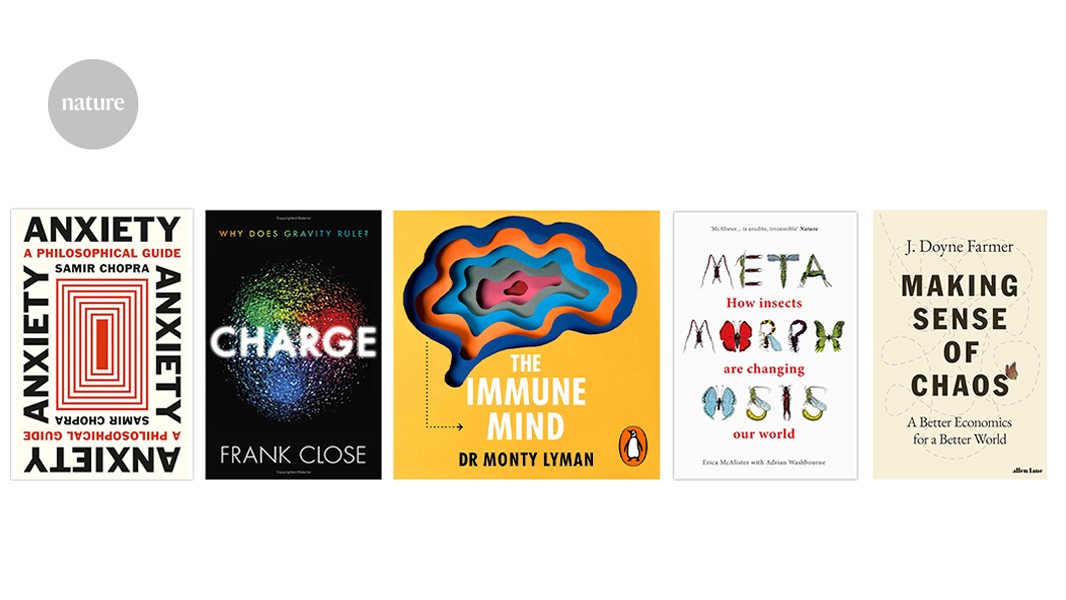
    The Immune Mind

    Monty Lyman Torva (2024)

    During his medical degree, Monty Lyman focused on immunology. But after qualifying as a doctor, he switched to psychiatry, having watched psychiatrists transform their patients’ lives. Now his research combines these interests, in the cutting-edge field of immunopsychiatry. The synthesis occurred after a person with depression surprised Lyman by showing how mental stress caused her eczema, a skin condition, to flare up on her forearm. His fascinating book reveals the mind and body as “utterly intertwined”.

    Metamorphosis

    Erica McAlister & Adrian Washbourne Natural History Museum (2024)

    Bees abound in ancient Egyptian hieroglyphs, symbolizing the tears of the sun god Ra, transformed after falling to Earth. Insects have long fascinated naturalists, yet much remains unclear. Estimates of the total number of species, for example, range from 5 million to 2.2 billion. But, in their enchanting, illustrated book, entomologist Erica McAlister and documentary producer Adrian Washbourne shed some light on insects: for instance, robber flies can see accurately over 0.5 metres, because their eyes have “a type of zoom lens!”

    Making Sense of Chaos

    J. Doyne Farmer Allen Lane (2024)

    Facing COVID-19 lockdowns in the United Kingdom, complex-systems scientist J. Doyne Farmer and his colleagues created an economic model, which predicted that the country’s gross domestic product would shrink by 21.5% in the second quarter of 2020 compared with the last quarter of 2019. The model came close to the real figure: 22.1%. By contrast, some financial firms predicted 16.6% and the Bank of England 30%. Farmer argues that applying complexity economics to climate change, for instance, “could help save civilization”.

    Charge: Why Does Gravity Rule?

    Frank Close Oxford Univ. Press (2024)

    In his sophisticated analysis, theoretical physicist Frank Close admits that 2,500 years “after the discovery of magnetism and electric charge, the reason for matter’s neutrality remains an enigma”. Electromagnetic forces far exceed gravitational attraction, but gravity nevertheless rules the Universe at large scales because positive and negative sources of electric charge balance so precisely. If they differed by even one part in a billion trillion, electrical forces would trump gravitational ones, and the Universe would cease to exist.

    Anxiety

    Samir Chopra Princeton Univ. Press (2024)

    Anxiety is often viewed from a psychological perspective — requiring treatment by psychotherapists — or as a biological and medical phenomenon, to be alleviated by rewiring the brain and adjusting chemical imbalances. Samir Chopra prefers a philosophical view, based on his training as a philosopher and counsellor. “We cannot stop being anxious,” he writes in his accessible book about Buddhism, existentialism and psychoanalysis, “but philosophy can help us not be anxious about anxiety.”

    Competing Interests

    The author declares no competing interests.

    [ad_2]

    Source link

  • Field observations of Ambula tardus on Planet IN-409

    Field observations of Ambula tardus on Planet IN-409

    [ad_1]

    Everybody tells you it takes time to adjust to the aliens’ way of life, but you don’t really understand what that means, what that feels like, until you live among them, until you befriend one of them. Ambula tardus are immense, easily the size of three elephants, but that’s not the part that takes getting used to. They’re bipedal, like humans, but that’s about all they have in common with you. They look a little like an Earth willow tree, with tendrils that fan out in a canopy and more that creep across the ground to connect with one another. No, the thing that really blows your mind is how slowly they move.

    Going in, you knew they only took, at most, ten steps in a lifetime, but to actually live that — to actually witness that — well, you were never the fastest kid when it was time to run the mile in high school, but you made up for it by hustling down the New York sidewalks like a pro, dodging and weaving with your feet always on the move. As someone who hated wasting time, you were always trying to do at least two things at once, which left you no time for friendship or lovers, not when you had so much to accomplish. Even on this planet, you arrived determined to fit in multiple studies in the precious time offered by your research grant.

    One alien step takes a good human year or so to complete, and it’s not so much a step as it is sliding forward one thick limb followed by the other. Interacting with the aliens is discouraged, yet you can’t help but think of AT-313 as a friend, seeing as they waved a tendril in your direction on your first day on the planet. The likelihood of it being coincidental is as likely as it being purposeful, but you took it as a sign and focused your attention on Attie, as you came to know them.

    Your alien friend and their companions communicate through vast groundcover, like Earth trees communicating through mycorrhizal networks. Their language is complex, reflecting their inner worlds, but anyone who didn’t know them would assume them to be simple. You think of that old saying, how still waters run deep.

    Attie, on the verge of their third step, reaches out tendrils to a nearby alien and they’ve agreed to reproduce. You’re there when, shortly after their fourth step, they deliver their offspring, a creature four times your size. You’re there as your friend’s offspring lands on the soft, moss-like ground, connecting their tendrils immediately with those around them. In a way, they’ll never be alone, and you find that both comforting and terrifying. You lived in a massive city filled to bursting with humans, but sometimes you felt far more isolated surrounded by millions of people than you do here among alien creatures.

    Your research comes to an end when Attie is nearly at their tenth step. They are stooped now, like a tree bent in a strong wind at the top of a mountain. You can’t believe their life is nearly over. You can’t believe they’ve hardly moved from where they were born. And yet, through their network, they’ve conversed with more of their kind than you could ever hope to as a human limited to simple speech or the written word.

    You postpone your trip back to Earth, wanting to be with Attie at the end. When your friend dies, they’re pulled underground, their body destined to become nutrients for those still alive. Attie’s mate and their child quiver and shake with grief, their tendrils swirling like they’re caught in a tornado, but they never let go of their network. They never let go of their friends. You join their grief, a rare touch of skin to alien flesh. They feel spongy yet firm, like a mushroom cap. They gently wrap tendrils around you, hugging you the way they’d seen humans hug each other when they arrived or left, or when they were hurt or filled with love. There’s no direct communication with them, but the aliens had been watching you as closely as you’d been watching them. Your salty tears fall, your liquid grief soaking into the ground.

    When you arrive home, everybody moves too fast, passing you on the sidewalk, a far-away look in their eyes as they think of their frantic list of things to do. Your body tries to catch up to their mad swirl in a sort of muscle memory, but your mind and heart want no part of it.

    You leave the crowded sidewalk for the park and find an isolated spot in the shade of a maple tree. You go through your pitifully short contact list, reaching out to old friends one at a time. It’s a sad imitation of the much more effective Ambula tardus network, but one finally responds — Emily, who runs marathons and reads science fiction and who says she’s always up for an adventure. She meets you at the park under the maple tree, and you begin the slow steps towards friendship and what really matters in life, the way Attie showed you.

    The story behind the story

    Rebecca Roland reveals the inspiration behind Field observations of Ambula tardus on Planet IN-409.

    I attended a workshop and timed writing session with C. S. E. Cooney and Carlos Hernandez at World Fantasy Con in 2023. They provided the audience with various cards from their TTRPG game Negocios Infernales, gave us 20-ish minutes, and off we wrote. My pictures and quotes led me to a theme of death and grief, and in general I was in the mood to write science fiction. A question popped into my head — what if an alien took only a few steps in their entire lifetime? I also tend to feel like I’m never doing enough, and it’s hard for me to slow down, step back and just enjoy the moment sometimes. Field observations of Ambula tardus on Planet IN-409 is not only a mash-up of all those ideas, but also a reminder to me to spend time with those who matter to me.

    [ad_2]

    Source link

  • How much would you pay for free shipping?

    How much would you pay for free shipping?

    [ad_1]

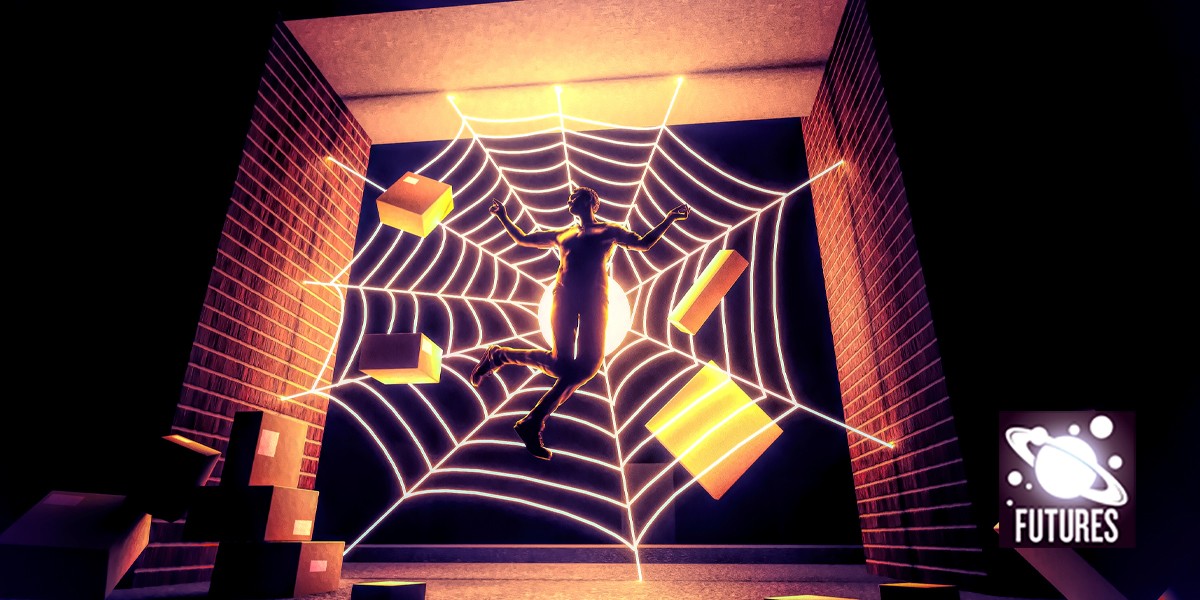
    They’re so quiet when they crawl down the street. But you still know. Some forgotten sense, some warning unneeded for millennia, starts to tingle.

    A one-tonne MakeBelieve.com spider crawls down my street, with a purposeful look in its eyes. Egg-shaped parcels of various sizes are glued to its back with spider silk.

    At first, when MakeBelieve.com decided to use genetically modified spiders to deliver their packages, people were uncertain. Did we really want truck-sized arachnids prowling our streets with intent in their eyes, seeking us out?

    Sure, they’d been successful as warehouse workers. All those legs! But did we need these gargantuan predators in our lives?

    The remnants of last night’s nightmare still clings to my mind. I’d dreamt they’d released a batch of gynandromorph spiders with both male and female characteristics. And these gynandromorphs mated. London became an arachnid colony: tube trains bursting through the cobwebbed tunnels; giant spiders nesting in the House of Lords and crawling up Big Ben’s tower. Everywhere you looked, there were clusters of eggs, hatchlings, aggressive juveniles and hungry adults. And we were the flies.

    They say it can’t happen. They say all delivery spiders are 100% male.

    Pray that they never make a mistake in the spider labs.

    I worry that spider tech wasn’t properly tested. I signed petitions. I made my objections known.

    Yet the spiders were still developed. The spiders roam our streets. I wonder what will happen in the future.

    The spider pauses outside my house. I find myself urging it to move on. I’m not expecting anything. I haven’t braced myself.

    Just how intelligent are they? Their brains must be at least a thousand times bigger than those of a house spider. Are they a thousand times more intelligent?

    Spiders are patient. Are they just waiting until the time is right?

    I breathe a sigh of relief as the spider moves on and makes its way down next door’s path. The Perkinses order a lot from MakeBelieve.com. Not that I’m watching. I twitch the curtains back into place. The spider stops moving. Three of its outer eyes swivel to my window.

    A moment and a moment and a moment. Fear wraps its cocoon around me, until, eventually, the spider continues to crawl down the Perkins’ path to the parcel bay. And I continue to watch it. I wonder if it can see me through the white veil of net curtain. They see slowly, but they see a lot.

    In the past few years, I’ve learnt a lot about spiders.

    There were calls to wait. Surely, it would be better to test an unknown technology rigorously? Surely, it was better to err on the side of caution when it came to licensing? Surely, we couldn’t afford to allow the Big Concentration Companies to set their own safety limits? To self-report on the risks?

    Perhaps our governments would like to get involved?

    The Big Concentration were too keen, too competitive to get the first spiders into production. Our governments, although they expressed concern, and entered into consultations, were ultimately too weak or too unwilling to exert any control.

    The Big Concentration Companies do whatever they want.

    The spider raises one segmented hairy leg, sweeping it over the parcels. I imagine the powerful, silent pressure of the movement. The bristles between its claw read the barcodes with some unknown arachnid sense.

    When it finds the right parcel, it uses a dab of silk from a modified spinneret to attach the parcel to its claw.

    It will be the right parcel. I’ve never seen one put a foot wrong.

    The spider flicks the parcel through the air. It lands neatly in the gelatinous receiving pouch outside the Perkins’ door.

    As a reward for the delivery, the spider is allowed to feed. It lowers its head to the receiving pouch and grinds a small amount of the gelatinous gloop.

    MakeBelieve.com spiders were developed from a 90% herbivorous jumping spider. It’s the other 10% that worries me.

    The spider injects digestive enzymes and waits before sieving the nutritious gloop through its mouth parts. Spiders have very thin stomachs. Those memes about a spider eating you whole are ridiculous. They’d have to dissolve you first.

    I fear the spiders. And yet, from time to time, just like everyone else, I use them.

    The spiralling inflation rates made the minimum wage unaffordable, or so the Big Concentration told us. The worldwide cost-of-living crisis meant that we needed the knock-down prices on MakeBelieve.com.

    We like to blame the Big Concentration Companies. We like to blame our weak governments. But ultimately, we know who is to blame.

    We want all the things. So, bring on the giant spiders. We can have everything: free shipping, free within-the-hour delivery, any amount of throw-away, one-use plastic, semi-toxic gewgaw. We can have anything they tell us we should want, all at a knockdown price. It shouldn’t cost the Earth.

    We can drain the resources of our world almost dry and live in the surety that the next scientific innovation will save us. More and more and more.

    The spider is gone. The Perkins children emerge from their house, rip up the packaging and laugh as they see their new acquisitions: MakeBelieve.com spider fancy-dress costumes.

    I feel the familiar tingle: another spider is crawling down the street.

    Bringing more delights for us to consume, as we embrace the company’s motto: Oh, What A Wonderful Capitalist Web We Weave When First We Start To MakeBelieve.com.

    The story behind the story

    Deborah Walker reveals the inspiration behind How much would you pay for free shipping?

    My stories grow from many seeds. Sometimes, I go out and search for them. Sometimes, I reach into my pocket and find, something to my surprise, that I have a handful, all ready to be planted.

    The first seed came from a Halloween writing challenge, when I chose the prompt about spiders. Next, I happened to see a news programme talking about drone delivery. The two ideas quickly came together as giant spider delivery.

    My writing friends actually approved of this arachnid development, one going as far to say, she thought the giant spiders were adorable. But that’s writers for you.

    In my second draft I incorporated my character’s spidergeddon dream to discourage my readers from admiring these eight-footed monstrosities.

    The next element was a little bit more complicated. For many years we’ve all been aware of the argument that large companies might not have our best interests at heart, but they’re adept at providing us with immediate gratification. There’s a Futurama episode in which Fry and Leela bemoan the ethics of an all-encompassing delivery company, but in the next breath admit that the service is so convenient and that the returns policy is so generous. It’s a tricky circle to square.

    That’s the heart of it: no matter how much we bemoan the unsavoury practices of corporations, we enable them because of the immediate benefits we enjoy, ignoring long-term problems, and problems happening to other people.

    We’re biased. We’re easily manipulated. It’s been clear for a long time that we can be manipulated. We just don’t have the resources to compete against a sophisticated army of social engineers so adept at pushing our buttons.

    Or so we tell ourselves, as we conveniently forget to wonder at the price we’re paying for all this free delivery.

    [ad_2]

    Source link