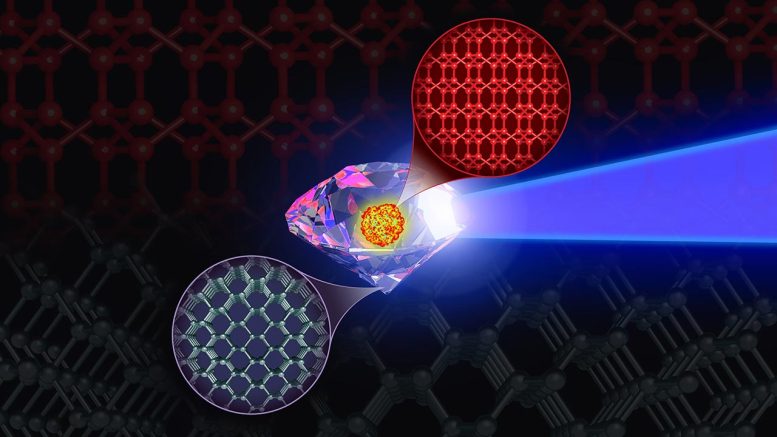
Supercomputer simulations predicting the synthesis pathways for the elusive BC8 “super-diamond”, involving shock compressions of diamond precursor, inspire ongoing Discovery Science experiments at NIF. Credit: Mark Meamber/LLNL
Researchers are on a quest to synthesize BC8, a carbon structure predicted to be tougher than diamond, using insights from advanced simulations and experimental efforts. This material, theoretically prevalent in the extreme pressures of exoplanets, remains a scientific mystery with promising applications in materials science.
Diamond is the strongest material known. However, another form of carbon has been predicted to be even tougher than diamond. The challenge is how to create it on Earth.
The eight-atom body-centered cubic (BC8) crystal is a distinct carbon phase: not diamond, but very similar. BC8 is predicted to be a stronger material, exhibiting a 30% greater resistance to compression than diamond. It is believed to be found in the center of carbon-rich exoplanets. If BC8 could be recovered under ambient conditions, it could be classified as a super-diamond.
Theoretical Insights and Experimental Challenges
This crystalline high-pressure phase of carbon is theoretically predicted to be the most stable phase of carbon under pressures surpassing 10 million atmospheres.
“The BC8 phase of carbon at ambient conditions would be a new super-hard material that would likely be tougher than diamond,” said Ivan Oleynik, a physics professor at the University of South Florida (USF) and senior author of a paper recently published in The Journal of Physical Chemistry Letters.
The Extraterrestrial Connection
“Despite numerous efforts to synthesize this elusive carbon crystalline phase, including previous National Ignition Facility (NIF) campaigns, it has yet to be observed,” said Lawrence Livermore National Laboratory (LLNL) scientist Marius Millot, who also was involved in the research. “But we believe it may exist in carbon-rich exoplanets.”
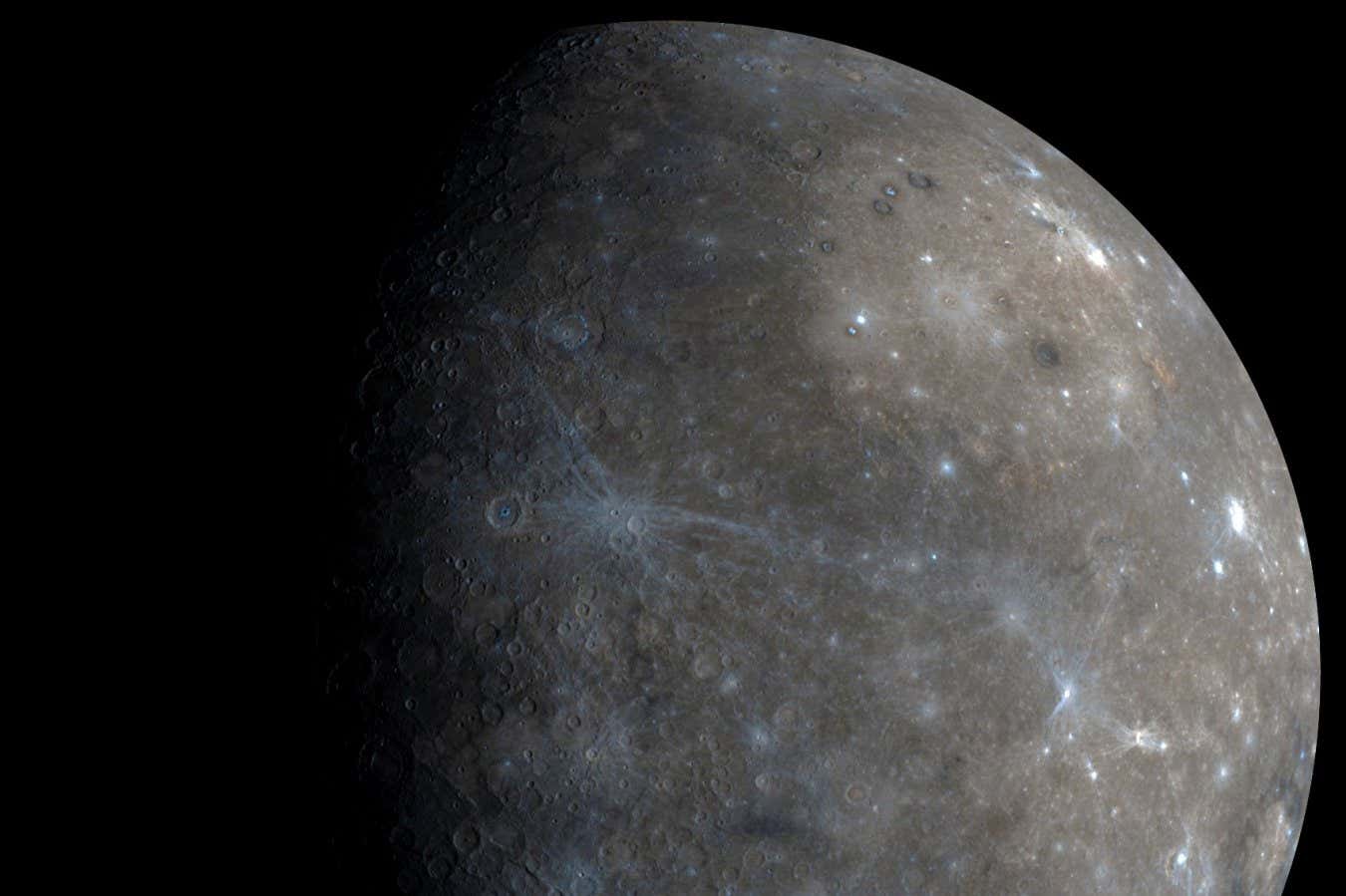
Recent astrophysical observations suggest the plausible presence of carbon-rich exoplanets. These celestial bodies, characterized by considerable mass, experience gigantic pressures reaching millions of atmospheres in their deep interiors.
Understanding BC8’s Unique Properties
“Consequently, the extreme conditions prevailing within these carbon-rich exoplanets may give rise to structural forms of carbon such as diamond and BC8,” Oleynik said. “Therefore, an in-depth understanding of the properties of the BC8 carbon phase becomes critical for the development of accurate interior models of these exoplanets.”
BC8 is a high-pressure phase of both silicon and germanium that is recoverable to ambient conditions, and theory suggests that BC8 carbon also should be stable at ambient conditions. LLNL scientist and co-author Jon Eggert said the most important reason that diamond is so hard is that the tetrahedral shape of the four-nearest-neighbor atoms in the diamond structure perfectly matches the optimal configuration of the four valence electrons in column-14 elements in the periodic table (beginning with carbon, followed by silicon and germanium).
The Path to Synthesizing BC8
“The BC8 structure maintains this perfect tetrahedral nearest-neighbor shape, but without the cleavage planes found in the diamond structure,” Eggert said, agreeing with Oleynik that “the BC8 phase of carbon at ambient conditions would likely be much tougher than diamond.”
Through multi-million atomic molecular-dynamics simulations on Frontier, the fastest exascale supercomputer in the world, the team uncovered the extreme metastability of diamond at very high pressures, significantly exceeding its range of thermodynamic stability. The key for the success was the development of very accurate machine-learning interatomic potential that describes interactions between individual atoms with unprecedented quantum accuracy in at a wide range of high-pressure and temperature conditions.
“By efficiently implementing this potential on GPU-based (graphics processing unit) Frontier, we can now accurately simulate the time evolution of billions of carbon atoms under extreme conditions at experimental time and length scales,” Oleynik said. “We predicted that the post-diamond BC8 phase would be experimentally accessible only within a narrow high-pressure, high-temperature region of the carbon phase diagram.”
Future Horizons in BC8 Research
The significance is twofold. First, it elucidates the reasons behind the inability of previous experiments to synthesize and observe the elusive BC8 phase of carbon. This limitation arises from the fact that BC8 can only be synthesized within a very narrow range of pressures and temperatures. Additionally, the study predicts viable compression pathways to access this highly restricted domain where BC8 synthesis becomes achievable. Oleynik, Eggert, Millot and others are currently collaborating to explore these theoretical pathways using Discovery Science shot allocations on NIF.
The team dreams of one day growing BC8 super-diamond in the laboratory, if only they can synthesize the phase and then recover a BC8 seed crystal back to ambient conditions.
Reference: “Extreme Metastability of Diamond and its Transformation to the BC8 Post-Diamond Phase of Carbon” by Kien Nguyen-Cong, Jonathan T. Willman, Joseph M. Gonzalez, Ashley S. Williams, Anatoly B. Belonoshko, Stan G. Moore, Aidan P. Thompson, Mitchell A. Wood, Jon H. Eggert, Marius Millot, Luis A. Zepeda-Ruiz and Ivan I. Oleynik, 25 January 2024, The Journal of Physical Chemistry Letters.
DOI: 10.1021/acs.jpclett.3c03044
The first author of the paper, Kien Nguyen Cong, a former Ph.D. student with Oleynik, is now a postdoctoral researcher at LLNL. Coauthors are Jonathan Willman, Joseph Gonzalez and Ashley Williams at USF; Anatoly Belonoshko of the Swedish Royal Institute of Technology; Stan Moore, Aidan Thompson and Mitchell Wood at Sandia National Laboratories; and Luis Zepeda-Ruiz at LLNL. The work at USF, LLNL and Sandia is funded by the National Nuclear Security Administration.