I have never been a supporter of Brexit, except for one thing: it has allowed the UK to break free from the damaging straitjacket of European Union agricultural policy, including its prohibition on genetically modified crops. I have always believed this was based more on sentiment than science. In post-Brexit Britain, science has won.
Last year, the Genetic Technology (Precision Breeding) Act came into force, allowing the development of gene-edited crops and animals in England. This isn’t quite GM, which allows for the insertion of genes from other species, rather than gene editing’s approach…
Great British Bake Off finalist Josh Smalley’s swiss roll, topped with caramel sauce
David Stock
Salty, nutty and irresistibly sweet, caramel can be made in minutes from just a small mound of plain old sugar. The perfect accompaniment to cakes and desserts, caramel is a gourmand’s go-to, and we have a jar of it in my house at all times. Working with sugar can be off-putting, however, because it is so easy to burn it (or yourself) and it can also form grainy crystals rather than smooth, glossy sauce.
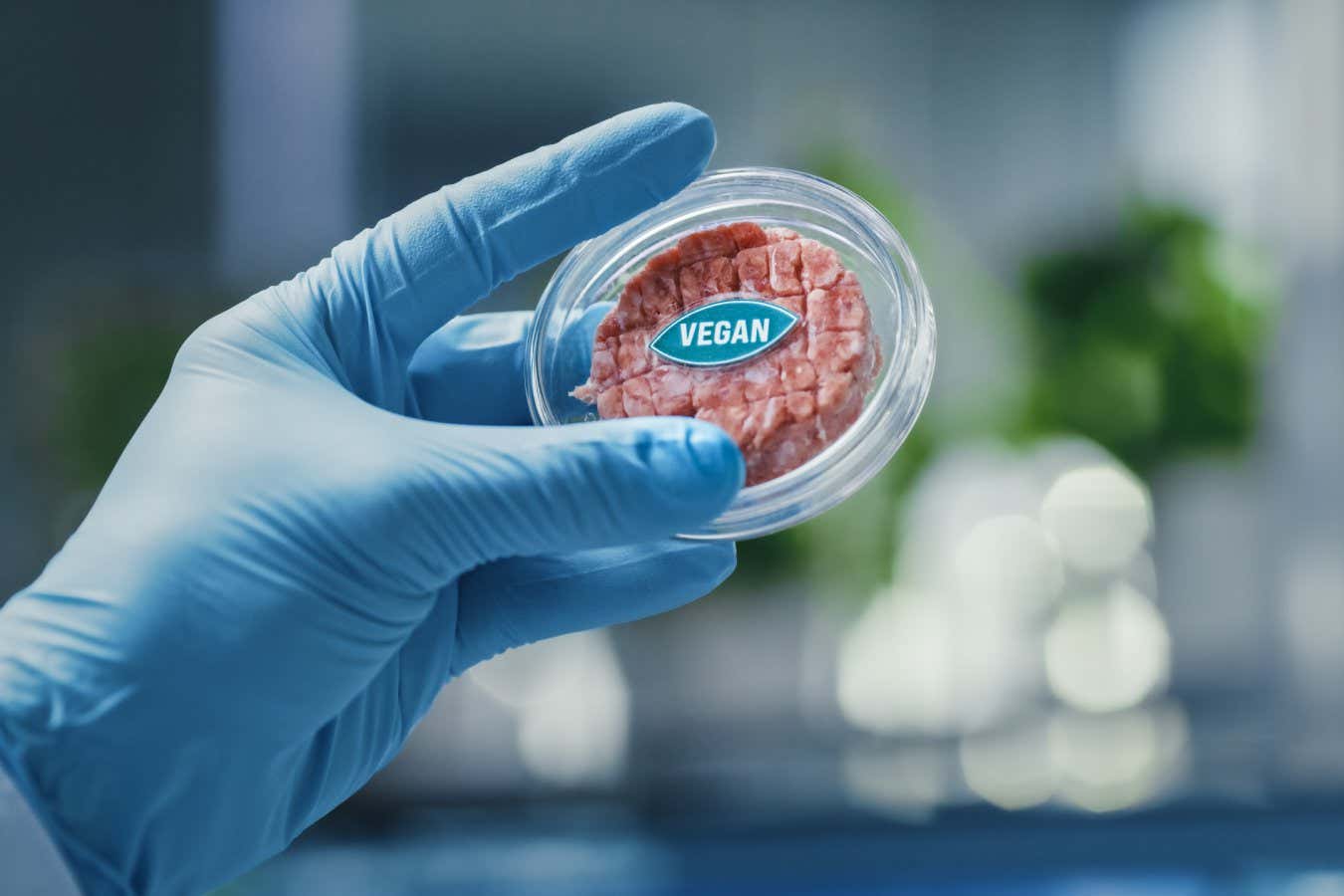
“Microbially derived food products let consumers eat meat, fish, cheese, eggs and milk that tasted just like the real thing”
Shutterstock/Gorodenkoff
The food revolution burst into the open in the early 2030s. Microbial processes were developed that allowed us to brew all the proteins we needed for our food without using animals, on a tiny fraction of the land, for less money. Such a disruptive technology hadn’t been seen since the industrial revolution.
The dairy industry was the first to collapse. Milk is mostly water, sugar and a bit of fat. Two kinds of proteins, casein and whey, make up…
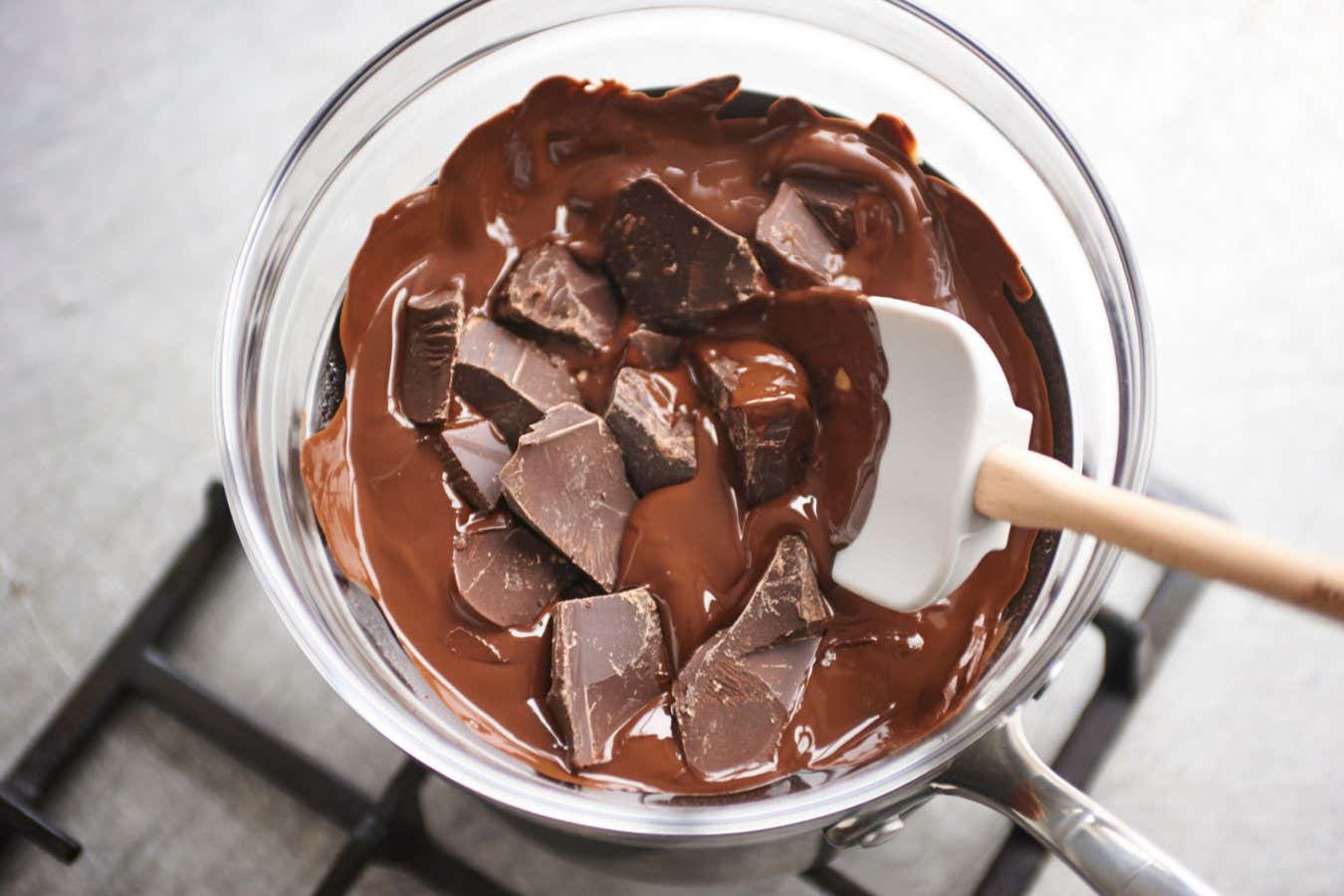
When it comes to birthday cakes, I am used to creating sweet, icing-loaded creations in the shape of Disney characters. These requests leave me unfazed, but my father, who is a dark chocolate aficionado, asked me to bake the cake for a big birthday lunch, which will require a different level of sophistication.
I have a wicked recipe for a flourless dark chocolate cake. But without flour, a cake has little structure, so this won’t do for a celebration cake that needs enough layers to look grand and feed a crowd. Instead, I am going to make a standard chocolate…
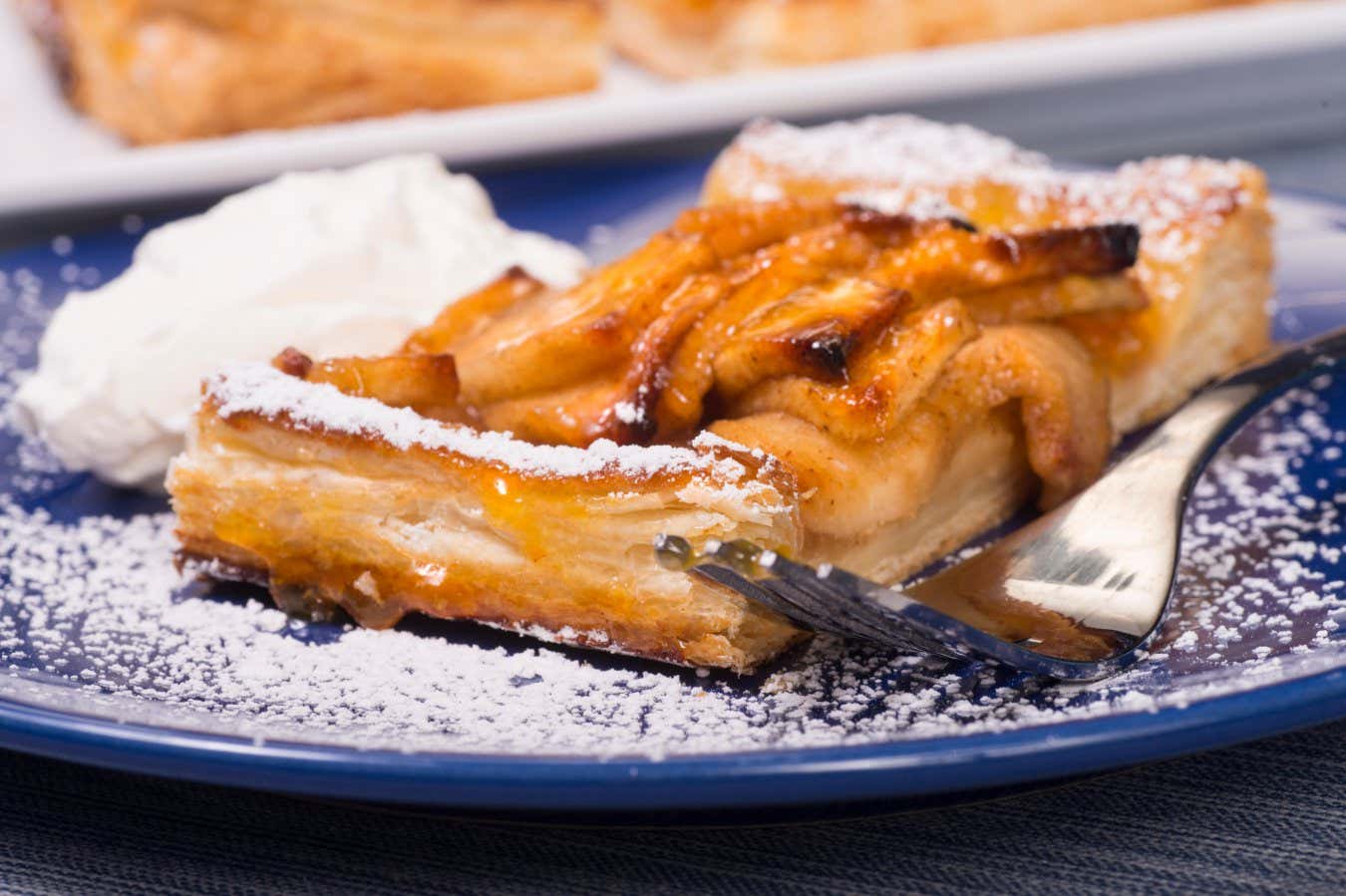
When it comes to baking, I firmly believe it pays to make things from scratch. But there are a few exceptions, one being puff pastry. I have seen enough baking shows where contestants lament the perils of making pastry on a warm day to know that puff pastry is hard, and the stuff from the packet does the job perfectly well. Life is too short for all that stress, right?
Well, I was wrong. Last week, I was in France, home of the perfect pastry, and on a rainy weekend I decided it was finally time to give it…
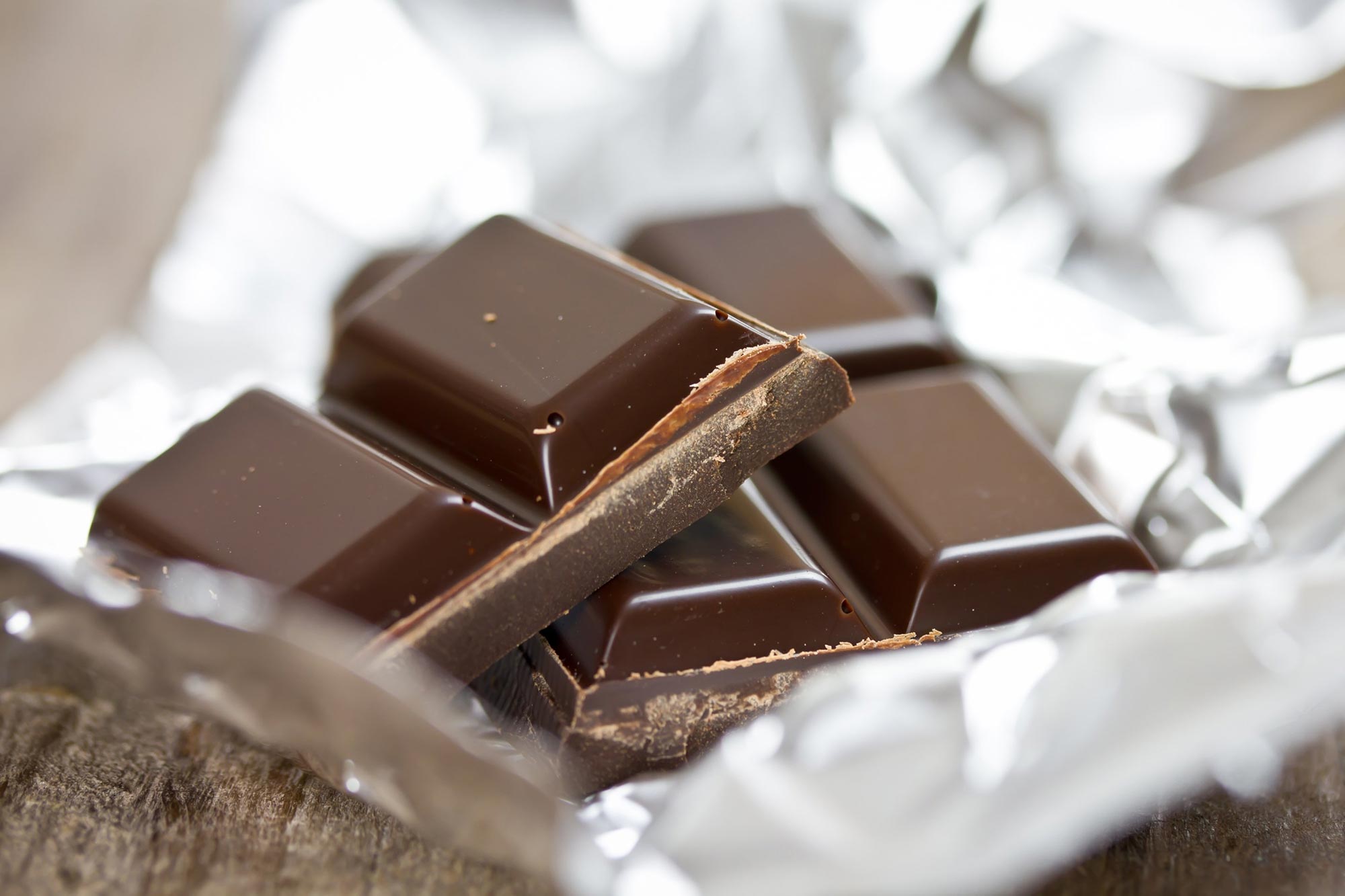
Chemistry is key to chocolate’s flavor, but some molecules, like genotoxic furan-2(5H)-one, can pose health risks if present in high concentrations. A study found safe levels of these molecules in chocolates, but higher levels in some baked desserts, underscoring the need for careful monitoring of food flavorings.
A study reveals that while chocolate contains potentially harmful chemicals at safe levels, these compounds appear in much higher, possibly unsafe concentrations in some baked desserts.
What makes chocolate taste and smell so delicious? Chemistry, of course! A variety of molecules work together to create that unmistakable aroma, but those same molecules might carry some unwanted health effects if there are too many around.
According to research published in ACS’ Journal of Agricultural and Food Chemistry, while many of the compounds appeared in chocolate in low enough concentrations to be safe, higher amounts were found in some baked sweet treats.
When making chocolate, cocoa beans are roasted to help their chocolatey flavors shine. During this process, new molecules like α,β-unsaturated carbonyls are formed when they react with other ingredients under high temperatures. This class of carbonyls is highly reactive and potentially genotoxic, or able to cause damage to DNA when consumed. Though naturally found in many foods, these carbonyls are also used as flavoring additives, and some have been banned in the European Union, including the buttery-tasting furan-2(5H)-one.
Research on Carbonyls in Chocolates and Desserts
To better understand how these molecules form naturally in foods, and whether or not they are present in levels that could pose a health concern, Alexandre Dusart and colleagues tested chocolates and other sweet treats for 10 different α,β-unsaturated carbonyls — some of which have been confirmed as safe by the European Food Safety Authority, while others are still under evaluation.
The team created its own chocolates and found that α,β-unsaturated carbonyls formed during roasting and after the addition of cocoa butter; however, their concentrations remained too low to pose any health concerns from consuming the chocolates. Next, researchers screened 22 commercially available desserts, including crepes, waffles, cakes, and biscuits, either with or without chocolate. In these packaged treats, they found even lower concentrations of nine of the 10 carbonyls compared to the chocolates.
Potential Health Risks in Packaged Desserts
The remaining carbonyl — genotoxic furan-2(5H)-one — appeared in much higher concentrations in the crepe and cake samples, reaching up to 4.3 milligrams per kilogram. Considering that the recommended threshold for genotoxic substances is only 0.15 micrograms per person per day, consuming these desserts could exceed that limit, though additional studies are needed to accurately assess the potential health risk.
Researchers concluded that the furan-2(5H)-one molecule likely formed during the baking process and did not seem to correlate with the amount of chocolate present in the packaged desserts. The team says that this work helps to better understand where these carbonyls come from in chocolate and highlights the importance of monitoring flavorings in food to keep consumers informed and safe.
Reference: “Occurrence and Synthesis Pathways of (Suspected) Genotoxic α,β-Unsaturated Carbonyls in Chocolate and Other Commercial Sweet Snacks” by Alexandre Dusart, Julie Grosjean, Manon Autuori, Séverine Goscinny and Sonia Collin, 29 May 2024, Journal of Agricultural and Food Chemistry. DOI: 10.1021/acs.jafc.4c01043
The authors acknowledge funding from the Belgian Federal Public Service of Health, Food Chain Safety and Environment.
Last week was the Jewish festival of Passover, when it is forbidden to eat any leavened products. That means all raising agents, as well as flour, are off-limits. Even so, there are dozens of traditional Passover cakes and biscuits, and mastering the techniques behind them can help you with all sorts of other bakes too. My go-to is the humble cinnamon ball, a sweet, soft biscuit with a crisp outer shell.
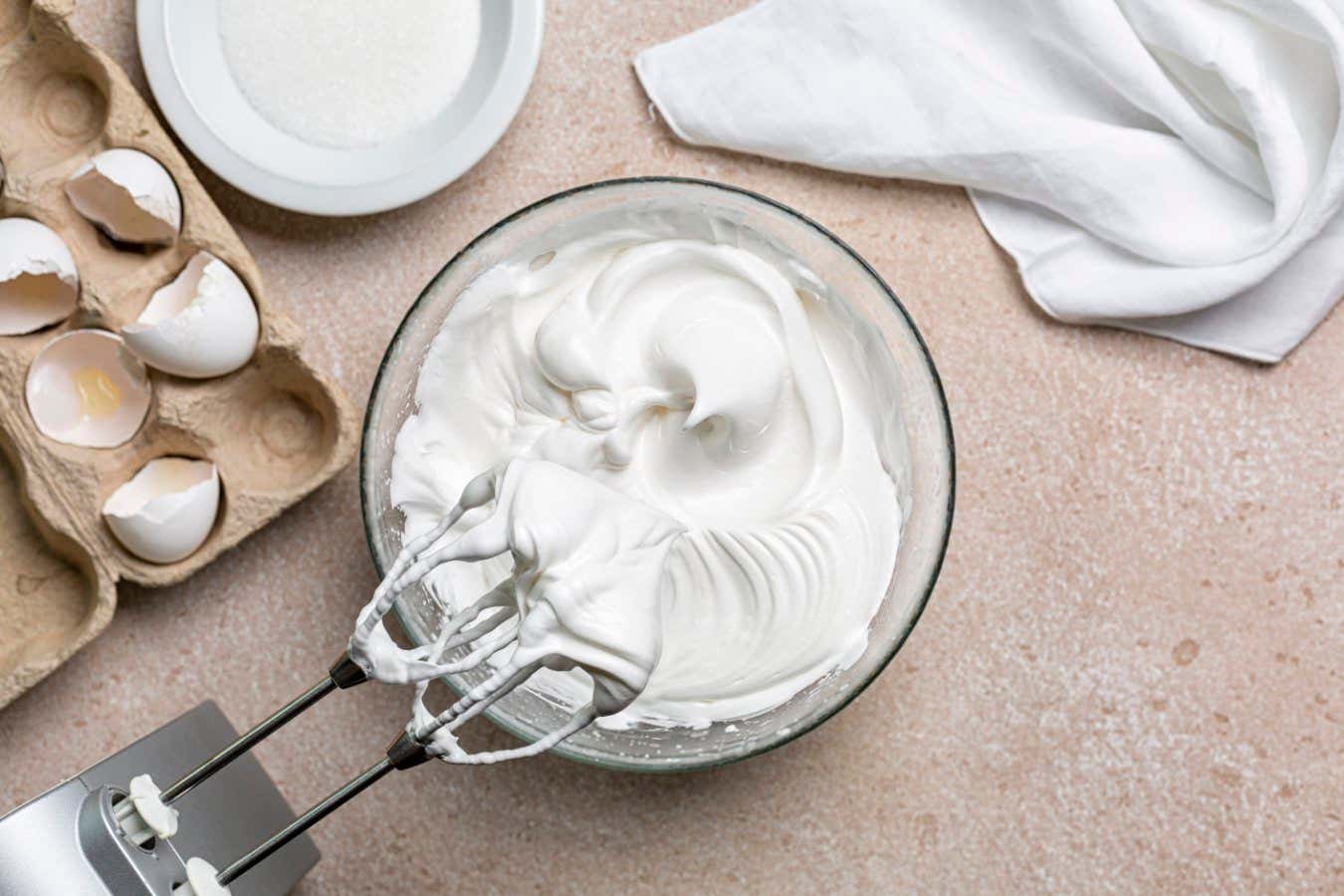
In general, the key to achieving airiness in your bake without raising agents will come down to using egg whites. These essentially consist of proteins and water, and…
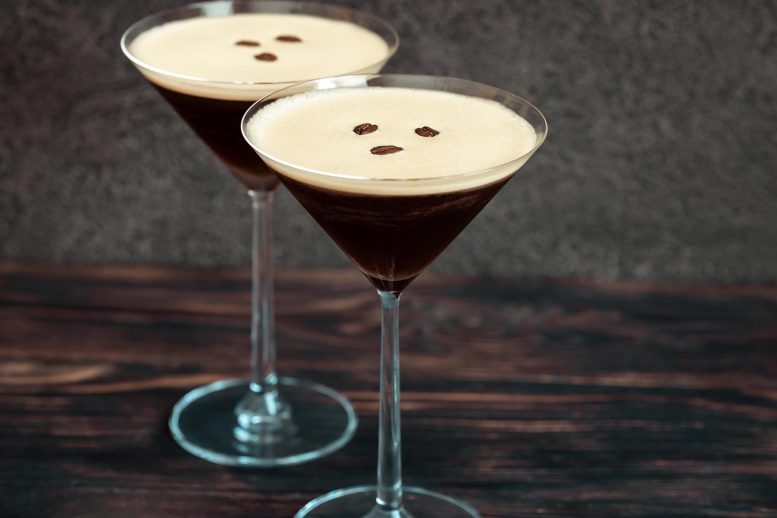
Milk washing, an old preservation method, enhances cocktails by reducing bitterness and adding smoothness, as George illustrates in the video with experiments and a unique espresso martini recipe.
Milk washing, a centuries-old technique, improves the flavor and texture of drinks.
Adding milk to an alcoholic drink and then curdling that milk is a 300-year-old preservation technique that was used by none other than Ben Franklin. Join George as he discovers the chemistry that makes this technique so useful, and learn how to make the best espresso martini you’ll ever taste.
Video Transcript
Here I have two versions of the same cocktail. It’s called Tea Time and it’s made using tea-infused vodka, honey simple syrup, lemon, and a pinch of salt.
Now these cocktails look very similar, but let’s taste them.
Oh my God, that is so astringent. It’s like drinking a cup of tea that’s been brewed for like 6,000 years.
Okay, now let’s taste this version. Oh my God, that’s so good.
This is delicious. It still tastes like tea, but there’s so much less of that bitter astringent, mouth-puckering quality.
So what’s the difference between these two?
The better version of this drink has been milk-washed.
And today, I’m not gonna tell you anything more about that. I’m just gonna go drink this. And you’re on your own. Video over.
What’s milk washed, frick! So long it gets in the way. That’s what she said.
Milk washing is when you take a cocktail or a spirit and you mix it with milk, and then you curdle that milk on purpose, which I’m doing here using citric acid. And then you let the curdled milk and the cocktail or spirit kind of meld for a few minutes or hours, and then you separate out the curds using a filter. Or if you are impatient like me, this centrifuge.
This whole process leaves you with a clearer, less bitter, rounder-tasting drink.
Oh yes, look. Down here is the curd. This is the clarified drink. Look at the before and after. Okay, this is before and this is after milk washing.
Now I can tell you that this is the first time I’ve ever milk-washed anything, and I’m so shocked that it worked. I’m always surprised when things work on this channel ’cause it’s invariably the first time that I ever do it and it worked.
There are lots of articles and videos out there already about milk washing, but this video is gonna be completely different because not only am I gonna tell you the science behind milk washing, don’t worry, I will. But I’m also going to attempt to innovate the technique. That’s right, I am gonna contribute something new to the sum total of human knowledge. Something new on the inter…
Today we’re gonna talk about milk washing, a technique that is older than Benjamin Franklin. – Hello. – And back in the 1700s, it was used both to round out and remove harsh flavors from poorly distilled spirits, and to prevent drinks from spoiling.
Now, for a technique this old, there is not much science out there on this. In fact, I couldn’t find a single peer-reviewed journal article that covers milk washing in the cocktail context. So since I can’t show you any research, we’re just gonna have to do some.
In this video, I will do four experiments. The first three will each cover an important aspect of milk washing. And in the last experiment, I will attempt to achieve durable and lasting internet fame by reinventing the technique altogether.
Experiment number one, milk washing Coke. And yes, there is a point to this.
So first I’ve got some milk here. Let’s pour some Coke into it.
Coke is very acidic, which means it has lots of hydrogen ions, which are also called protons. And those protons are what curdle the milk, specifically, they curdle one part of the milk.
Milk is a mixture of water, protein, fats, sugars, and a whole bunch of other molecules. Now, there are two types of milk proteins, caseins and whey.
Caseins exist in milk as glob-type aggregates with about 5,000 individual protein molecules per glob.
Caseins have sort of an unusual property. After they are produced in the body of the cow, the cow’s body tacks on a whole bunch of phosphate groups to the protein. Now milk has a pH of roughly 6.7, just below neutral. And at that pH, phosphate groups can look like this or this.
The important thing to take away though is that overall the casein blobs will have a negative charge because look at all these negatively charged oxygens, right? And that matters because negative charges repel each other. So what that means is that the blobs, they don’t touch. But as you add protons by adding acid, those positively charged protons park themselves on these negatively charged phosphate groups. And so what happens is the protein as a whole gets less and less negatively charged.
And then eventually at pH 4.6, it hits what’s called its isoelectric point, the point at which the protein is overall electrically neutral. Because these blobs are no longer negatively charged, they don’t repel each other anymore. So when they collide, they just stick together.
So now you’ve got casein blobs just sticking together all over the place, and aggregating into larger and larger particles. And eventually, you get curds. These gigantic globs of casein protein that we have precipitated out with an acid. In our case, Coca-Cola.
By the way, these curds also contain a lot of the milk fat that was in the milk. So here we’ve got a two-phase system. We’ve got our solid proteinaceous fatty curd phase, and that is surrounded by a watery liquid phase. Now when you have these two phase systems, small molecules partition themselves between phases.
Some molecules dissolve better in oils, so they partition themselves into the oily phase. And other molecules dissolve better in water, so they partition themselves into the waterier phase.
Like for example, this food coloring that I’ve mixed with oil and water. If we throw this in the centrifuge, we’ll see that the food coloring partitions itself into the water phase and not the oil.
The same principle applies to this much more complicated two-phase curdled Coke thing. But to see it more clearly, let’s centrifuge this.
So this is amazing. You can immediately see that the liquid phase is way lighter in color than normal Coke. And the solid phase is about as brown as Coke. So what this tells you is that the molecules that make Coke brown partition themselves almost entirely into the solid phase.
And to be honest, I knew this would work, but I didn’t know that it was gonna work this well. But this is actually why I chose Coke because you can really see what’s happening with those. In this case, color molecules. The curds are sucking the color molecules out of the Coke.
And in fact, they suck all kinds of other molecules out of liquids too. They’re particularly good at pulling tannins, which are those astringent bitter mouth-puckering molecules out of stuff. When I milk-washed this tea vodka, the curds down here pulled a lot of the tannins out of the tea.
That’s why this cocktail was so much less astringent, so much less bitter, so much less mouth puckery than this one.
Now, since I’ve gone to all the trouble to centrifuge curdled Coke, I do need to taste it.
First, the liquid phase. It still smells like Coke, honestly. I’m getting Coke, I’m getting like cream. It’s still lightly carbonated, so it still tastes like soda. But it also has a really familiar taste, like it almost tastes like Sprite.
Clearly curds are pulling some flavor molecules out of the Coke because this does not taste like regular Coke, but there are still a lot of molecules that are left. This is still very sweet. It’s just as sweet as regular Coke. So the curds are not pulling much sugar out.
Well, let’s test that hypothesis. Let’s taste the curds. That is even more surprising. That tastes like nothing. I mean, I’m getting a tiny bit of like astringency, but this tastes nothing like Coke. I was really expecting more flavor to this.
So what did this experiment tell us? It told us that when you milk wash a beverage, you’re pulling both color and flavor out of the liquid phase and into the solid curds. Now remember, the solid curds do not end up in your cocktail. So only this is going into your cocktail.
Because of this, milk washing has a reputation of pulling stuff out of a cocktail, but there are some molecules that might prefer to move in the other direction, out of the curds and into your cocktail. And I’m thinking specifically here of milk fats, molecules that might have a buttery taste or texture.
So to test this, I’m gonna run a quick experiment. And by quick, I mean 24 hours.
Experiment number two, fat washing. What I wanna see is to what extent the vodka is able to pull out rich, buttery, fatty flavors from the ghee and the butter. And by the way, this technique is called fat washing and you can do it with any fat you can think of. Butter, bacon, peanut butter, the list goes on.
Okay, so we’re gonna let these sit for 24 hours.
Welcome to tomorrow. Let’s taste these. This is our fat-washed butter. That is very good. I could drink that straight. And by the way, it is 9:28 in the morning.
The flavor comes in waves. So the first hit you get is vodka, and then it’s butter. And then it’s vodka again, and then it’s butter again. And it is really good. It’s quite subtle, but it’s really good.
Okay, let’s try the ghee. It’s very similar, but they’re not the same. Ghee is clarified butter. It’s butter that is mostly fat. Let’s say 99% fat. Butter has mostly fat, but it also has some water soluble compounds too, and a tiny little bit of water in there. So there must be some flavor compounds in the butter that are not necessarily present in the ghee.
But regardless, I think if you were to mix this into a cocktail, you wouldn’t be able to tell the difference. They would both taste buttery, but both are delicious.
So what does this experiment tell me? Well, it suggests that not only does milk washing pull flavor and color out of a cocktail, it also adds buttery flavor and texture into a cocktail because some of the flavor molecules in butter partition themselves into your drink. And to see that more clearly, we’re gonna curdle some milk.
This has curdled, but it’s hard to see. So let’s centrifuge.
Okay, so we’ve separated out the curdled milk, we’ve got our curds and this stuff right here. This is called whey, and it is a lot more complicated than just water. It has vitamins and minerals, lactose, milk sugar, and a group of proteins called whey proteins. And those proteins have a taste and a texture. Let’s find out what it is.
Fascinating. That tastes like really, really, really dilute yogurt. There’s a little bit of acidity, which undoubtedly is coming from the citric acid, but then also there is a distinct texture. It tastes richer, it tastes sort of silky. It coats your tongue.
The important thing to remember here is that because whey is a liquid, it gets added to your cocktail. You can think of it kind of like a secret ingredient. And to really bring that point home, I’m gonna get some vodka. And I’m using vodka because it is a rather neutral spirit. Okay, here we go. You can see it’s cloudy. That’s not right.
Wow, I really did not expect that at all. Whey alone tasted to me like dilute yogurt. This tastes nothing like that. This mostly just tastes like vodka. But what I’m getting from the whey here is mostly texture. This has more body, it has more, it coats your tongue. It’s richer, it’s smoother. It’s really good.
We have arrived at the part of the video where I’m gonna do something completely new that the internet has never seen, thus securing myself lasting fame and glory.
What I’m gonna do here is essentially to reinvent milk washing.
To understand how my reinvention is gonna work, I want you to see milk washing as I have come to see it, which is not as one thing, but as three separate things.
Thing one is curd flavor and color extraction, meaning the curds pull stuff out of your cocktail or a spirit or a beverage.
Thing two is fat washing. It’s the same chemistry, but it happens in the opposite direction. A cocktail or a spirit pulls flavors out of a fat.
And thing three is the addition of the secret ingredient way.
So essentially what I’m doing is I have deconstructed milk washing into its constituent parts. And I’m doing this not to be gratuitously over-complicated, but because it allows you to fine tune each part individually. And to demonstrate this, I’m gonna attempt to make a peanut butter washed vodka, coffee, milk curd incubated espresso martini. So just a very fancy espresso martini that’s gonna take me overly long to make. Let’s go, let’s do it.
First thing I’m gonna do is take a healthy chunk of peanut butter and pour some vodka on top. This is fat washing. What I’m hoping to do is extract some of the peanut butter flavor into my vodka. And by the way, the chemical basis of roasted peanut butter flavor is still being debated, but whatever it is, I want as much of it as possible in my vodka.
And here I’m curdling some milk to generate curds and whey. The curds I will add to espresso to hopefully dial down some of the coffee’s bitter and harsher notes. And the whey I will add near the end to give the cocktail an additional layer of silkiness and body.
Here, I’m just pouring off the way to save it for later. And now I am adding the espresso to the curds.
Now, I should point out here that I’m assuming that adding pre-made curds to coffee will do the same thing chemically speaking as curdling milk with the coffee already present. But we’re gonna find out very soon if this actually worked. Let’s centrifuge these.
I am so curious to see whether the curds will be darker, whether they will have pulled out some of the color and maybe flavor compounds from the coffee. The moment of tru– oh, don’t stick your hand in into the centrifuge.
Yeah, look, there’s definitely curds. These are the curds. And as you can see, they have definitely pulled some stuff out of the coffee. I’m gonna pour off the tops of these.
So we have our coffee. This is the curd incubated coffee. We have our whey, we have our peanut butter-washed vodka, and we have the rest of the standard ingredients for an espresso martini. Let’s build this thing.
Before I build this, I do want to taste this peanut butter-washed vodka. Oh my God, that’s so good. That tastes like peanut butter. It’s vodka that tastes like peanut butter. Chemistry works, man. Okay, so two ounces of the peanut butter-washed vodka, half an ounce of Kahlua, one ounce of espresso. And I’m gonna do half an ounce of whey for body, and a quarter ounce of simple syrup.
Here we go. Moment of truth. That is outrageously good.
Imagine an espresso martini. But if you dial down the bitterness and up the body, and that’s this. Oh, and then there’s a subtle, like very, very subtle peanut butter flavor, which just adds depth. But this is delicious.
I honestly expected this to be basically indistinguishable from a regular espresso martini. Like I thought there would be no difference in taste. That is substantially better.
In fact, that is so much better that I wanna make a regular espresso martini and compare them. This is after all a science channel, and I have all the ingredients. So let’s quickly do that, hang on.
This is a regular espresso martini. Yeah. Oh my God, this is so much better. So this is a good drink. This is not a bad drink at all. I mean, it tastes like what it is, which is vodka mixed with espresso. This tastes like a whole new flavor that has parts of each, which is I think what a cocktail is supposed to taste like.
I don’t know what to say, my work here is done. This is, this has been great. Thank you for going with me on this odyssey. I did not expect to make a cocktail that was better than the existing thing. I thought that the end of this video would just be like, I taste it and I go, “Wow, that’s awful.” And then we all move on with our lives. But no, this is good.
I am gonna be making this again off camera, not even for the internet, just for my own personal consumption. That’s how good this is.
THIS winter, my local farm has been supplying me with carrots in all the colours of the rainbow. After a few chilly months of chopping them up for savoury dishes, I was delighted when the sun returned to New York and basically beckoned me to make a carrot cake (pictured above) instead.
I didn’t grow up eating carrot cake, but thick slices with cream cheese frosting are among the standouts in my early memories of American baking. As a vegan baker, I now make a carrot cake that is a different proposition: it brings out the natural sweetness and…
If you ever watch a duck float across a pond, gobbling up the vegetation coating the surface, that bird is way ahead of its time. The buoyant greenery is azolla, a tiny fern that grows like crazy, doubling its biomass as quickly as every two days to conquer small bodies of water. The duck doesn’t know it—and who could blame it, really—but azolla may soon spread across human civilization, becoming food for people and livestock, fertilizer for crops, and even biofuel.
“I’m not out here saying everybody should go eat this stuff right away,” says research technologist Daniel Winstead, who’s studying azolla at Penn State. “There’s a lot of work that needs to be done. But boy, it’s got so much potential.”
The main reason you wouldn’t want to go scoop some azolla out of a pond and eat it duck-style is, first of all, yuck. But also, previously studied species of azolla are typically high in polyphenols, a family of compounds found in many types of plant. In small quantities, polyphenols act as antioxidants, meaning they help remove certain harmful substances from the body. But in azolla quantities, polyphenols may interfere with the body’s ability to absorb nutrients. At such levels, not only are they not nutritious, they’re anti-nutritious.
But there’s a species—Carolina azolla, native to the southeastern United States—that doesn’t have this drawback. Testing for polyphenolic content, Winstead found this azolla to have much, much lower levels than other species, actually more in line with the mainstay fruits and vegetables Americans eat. And when Winstead prepared Carolina azolla in three different ways—fermentation, boiling, and pressure cooking—he found this reduced the polyphenolic content still further, by 62, 88, and 92 percent, respectively. (According to chefs, azolla is “crisp and juicy,” tasting “somewhat of earth, metal, minerals, mushrooms, moss, and grass.”)
This, Winstead believes, could be the key to making azolla a common food worldwide. “You could use those cooking methods on these other species of azolla from Asia,” says Winstead, who described the findings in a recent paper. “That would reduce polyphenol content to a level that was not limiting.”
Compared to other vegetables, Carolina azolla is high in zinc, manganese, iron, calcium, and potassium, and is relatively high in protein (though has less than a grain like barley). And that’s from wild azolla. “Wheat, rice, barley, soybeans—all these things have been domesticated and cultivated, choosing for attributes like nutrition,” says Winstead. “So just imagine if people did that for azolla, if you could create an azolla strain that creates a whole bunch of precursors for biodiesel. You could create another one that creates tons of protein.”
Again, Winstead isn’t suggesting that anyone go out and harvest their local pond for azolla. But with further research, azolla has the potential to become a more extensively cultivated crop, especially if scientists can breed it to express even more nutrients. They’ll also need to further vet the plant to make sure it isn’t toxic in other ways. “I think there is a real possibility for its use as a foodstuff in the future, provided there is extensive research on possible toxin content due to their symbiotic cyanobacteria,” says Winstead. “Corn is currently used as biofuel, livestock feed, and a foodstuff, and I think azolla holds a similar potential.”






![Using Chemistry and a 300-Year-Old Technique To Reinvent a Drink [Video]](https://carbonchemist.com/wp-content/uploads/2024/04/Milk-Washing.jpg)