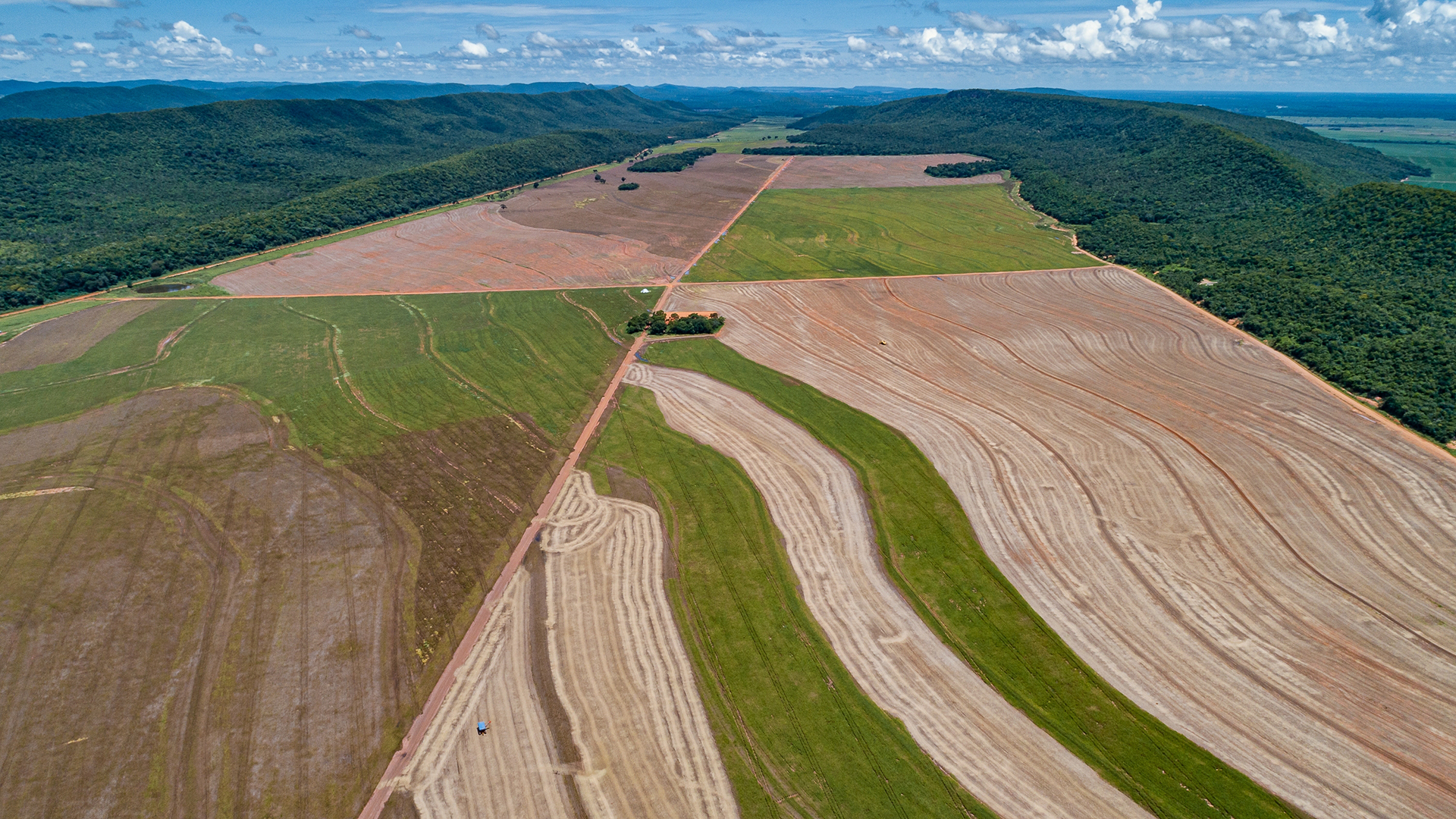
A University of Southampton study has found that despite extreme weather conditions, food security has remained robust in the US.
In collaboration with UCL, economists at the University of Southampton have found that market forces have provided food price security over the past century despite increasingly extreme weather conditions caused by climate change.
Research into US wheat commodities also suggests high uncertainty about the state of future harvests has not destabilised the market.
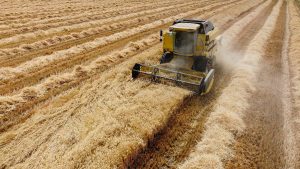
Wheat is an important crop for the US’s food security.
A small fraction of wheat production becomes animal feed, and the crop is not used to generate biofuel.
The main buyers of wheat are flour mills, food processors, and direct consumers.
Increase in weather and harvest variability from 1974
The researchers analysed data on American wheat production, inventories, prices, and wider market conditions from 1950 to 2018. They also explored the records of annual fluctuations in the weather for the same period.
The analysis revealed strong evidence of an increase in weather and harvest variability from 1974 onwards.
“Before the mid-70s, oil was the dominant driver of wheat price fluctuations in the US, but after this point we see a much stronger influence coming from a wider set of factors that includes weather and food consumption,” explained lead author Dr Vincenzo De Lipsis of the University of Southampton.
“Due to climate change, extreme weather events, such as droughts and floods, are becoming more frequent and intense worldwide. Understanding the impact of this variability on food commodity prices is crucial, as it could have serious implications for food security.”
US market found to adapt to uncertain climate conditions
The team found that wheat remained competitive in the US market system.
The potential for weather uncertainties to adversely affect wheat prices has increased, but this hasn’t been passed onto the market.
Wheat prices were found to remain relatively stable, along with the price of associated goods.
Why has food security in the US remained robust?
The researchers found that food security in the US has remained strong due to farmers and agricultural industries providing a buffer. This has smoothed out bumps in the supply of grain to retailers and consumers, reducing shocks to the market that poor harvests could cause.
This has been achieved by investment in substantial storage facilities, infrastructure, and good transport links.
No indication that the wheat market is vulnerable to excessive volatility
The study has shown that the US wheat sector has demonstrated remarkable resilience and flexibility in adapting to the unpredictability of the climate by modifying its inventory management.
There is also no indication that the wheat market is vulnerable to excessive volatility from the related financial futures market, which can emerge in commodity markets in response to increased uncertainty regarding future production capacity.
Dr De Lipsis said: “The market mechanism is one of the most effective instruments that governments have available for climate change adaptation and food security.
“But for this to work effectively, we need a combination of factors in place: a well-functioning competitive commodity market, a modern infrastructure with extensive transport networks, sufficient food storage capacity and a liquid futures market.”
The need to prioritise investment in storage mechanisms
The authors acknowledge that stability is easier to achieve in developed and more affluent countries like the US.
Despite this, the results highlight the importance of prioritising investment in these areas in developing regions to ensure food security for the future.
Researchers from the University of California, San Diego School of Global Policy and Strategy have developed a new method for predicting the financial impacts climate change will have on food production.
The team used climate and agricultural data from Brazil to discover that climate change influences food production, leading to increased loan defaults for one of the nation’s largest public sector banks.
According to the study, climate-driven loan defaults could increase by up to 7% over the next three decades.
The paper revealed that parts of Brazil are predicted to have more dramatic seasonal swings around 2050, with heavier rainfall in winter and drier summers.
Because of this, policymakers should consider the need for water storage by building dams and reservoirs and increasing groundwater storage capacity.
On the other hand, Brazil might have steady weather but will have higher overall temperatures. Therefore, heat-resistant crops will be needed.
The researchers used a statistical method that correlated historical climate data from Brazil with metrics such as crop productivity, farm revenue, and agricultural loan performance.
By integrating this information with climate simulations, they forecasted future weather patterns and assessed their implications on agriculture and financial institutions.
“A difficulty in studying climate impacts on agriculture is that there are all sorts of adaptations happening all the time that aren’t easily observed, but are really important for understanding vulnerability and how risk is changing,” said co-author Jennifer Burney, professor of environmental science at UC San Diego’s School of Global Policy and Strategy and Scripps Institution of Oceanography.
“We were able to distinguish signals from different types of climate impacts and which ones led to this larger financial risk.”
Building global resilience against climate change
A key aim of the team is to support food production under climate change. This requires an understanding of when small climate shifts might have outsized impacts, affecting other sectors through trade and banking.
Understanding the risk posed by climate change is helpful for policymakers as climate change has increasingly become a national security threat.
To that end, the statistical approach developed in the study could be applied worldwide.
“The technique we developed will help populations identify where they are most vulnerable, how climate change will hurt them the most economically and what institutions they should focus on to build resilience,” said study co-author Craig McIntosh, professor of economics at the School of Global Policy and Strategy.
Development of the loss and damage fund established by the UN
The work could help with the development of the loss and damage fund established in 2022. The fund is designed to help compensate developing nations that have contributed the least to the climate crisis but have faced the brunt of the effects of climate change.
“Our technique could help countries think about where the resilience returns would be highest for the money spent,” concluded Krislert Samphantharak, professor of economics at the School of Global Policy and Strategy.
“This technique also helps to identify where international reinsurance might be needed.”
Cóilín Nunan, Policy and Science Manager at the Alliance to Save Our Antibiotics, discusses antibiotic overuse in farming, and advocates for stricter regulations and fundamental changes in farming practices to mitigate antibiotic resistance.
Since their introduction to human medicine in the 1940s, antibiotics have become a cornerstone of modern medicine and helped save enormous numbers of lives. Antibiotics are not only used to treat patients that have a bacterial infection, they are essential for preventing infections in those undergoing life-saving procedures like cancer chemotherapy, organ transplants or caesareans, or other types of major surgery.
Unfortunately, according to the World Health Organization, the rise of antibiotic resistance, which occurs when bacteria evolve to resist the action of antibiotics, threatens many of the gains of modern medicine. The WHO says it is one of the top global public health and development threats.
Impacts of antibiotic resistance
Antibiotic resistance is not merely a threat for the future, it is already here today and having a major impact. According to the first comprehensive assessment of the global impact of antibiotic resistance, published in 2019 in the journal The Lancet, the deaths of 1.27 million people a year are directly attributable to antibiotic resistance, and 4.95 million deaths a year are associated with antibiotic resistance.
Increasing levels of resistance are due to the use and overuse of antibiotics. Excessive antibiotic use increases the selective pressure on bacteria to evolve resistance, as sensitive bacteria are killed off, and resistant ones survive, multiply and spread.
The main cause of resistance in most human infections is the use of antibiotics in human medicine, but we know that the overuse of antibiotics in intensive livestock farming is also contributing.
When antibiotics are overused in farm animals, bacteria in their guts, or on their skin, develop resistance, and these can spread to humans through the food chain, the environment, or by direct contact. This occurs for a wide variety of infections, including typical food-poisoning bacteria, like Salmonella or Campylobacter, the increasingly resistant E. coli, which is responsible for thousands of deaths in the UK each year, or for well-known superbugs like MRSA or Clostrdium difficile.
In many countries, data on antibiotic use is poor, but it is estimated that globally, about two-thirds of all antibiotics are used in farm animals, with the percentage in the UK being lower at about 30%. Much of this farm antibiotic use is inappropriate and avoidable. Far too often antibiotics are given to groups of animals, in feed or drinking water, to control the spread of diseases which occur in the stressful and unhygienic conditions in which many intensively farmed animals are kept. This occurs particularly for pigs and poultry, but also in some countries in cattle.
Stop the overuse of antibiotics in livestock farming
The Alliance to Save Our Antibiotics is an alliance of health, medical, civil-society and animal-welfare groups that was founded by Compassion in World Farming, the Soil Association and Sustain, to campaign to stop the overuse of antibiotics in livestock farming.
Our latest report, published in February, shows that some significant progress towards reducing farm antibiotic use is being made in the UK, and in many other European countries, but that far more needs to be done to achieve truly responsible use.
UK farm antibiotic use has fallen by 59% since 2014, which is good news, but unfortunately 75% of that use is for group treatments. This means that antibiotic use is still not sufficiently targeted and that these hugely important medicines are still being used to prop up farming systems which are causing too many animals to fall sick.
In Norway, Iceland, Sweden and Finland, the European countries with the lowest farm antibiotic use, group treatments only account for between 10% and 27% of total use. One reason for this is that these Nordic countries have some higher animal-welfare standards, particularly in the pig industry, and this means that illness is not as widespread and treatments can be more frequently aimed at individual animals.
Improvements to the UK’s regulation of farm antibiotic use
Fortunately, some improvements to the regulation of farm antibiotic use are expected. The UK Government recently announced it is introducing new legislation, which will probably come into force later this year. This legislation will be largely based on rules the European Union adopted in 2022.
Routine farm antibiotic use will be prohibited, and preventative use will be restricted to exceptional cases, which are welcome actions.
Unfortunately, the UK rules will still be significantly weaker than the EU’s. In particular, the UK government is refusing to ban purely preventative group treatments, as the EU did in 2022. This is a major loophole which will allow some farms to keep on misusing antibiotics.
The new UK legislation will also ban using antibiotics to compensate for poor hygiene, inadequate animal husbandry, or poor farm management practices, as the EU has already done. On paper, this sounds like excellent news, and it would be if implemented in practice.
Problems with current farming practices
However, as our report shows, many current farming practices are actually causing animals to fall sick and are linked with antibiotic overuse. High levels of stress, poor hygiene, inappropriate diets, and high numbers of farm animals kept indoors in close confinement, all contribute to the emergence and easier spread of intestinal and respiratory disease and to the need for antibiotic use. The early weaning of piglets, which can be legally weaned as early as 21 days, can cause post-weaning diarrhoea and is a major reason for high antibiotic use in the pig industry.
Modern breeds are often selected to increase productivity, but this can lead to numerous health and welfare problems and higher antibiotic use. The growth rate of modern broiler chickens has quadrupled since the 1950s, and intensively farmed chickens are now slaughtered when they are just 28 to 42 days old. Data from the Netherlands shows that fast-growing chickens receive 6 to 9 times more antibiotics than slower-growing birds because of their health problems.
Sows are being bred to produce ever-increasing numbers of piglets. The most productive UK sows now produce an average of 17.16 piglets a litter and 37.56 live piglets a year. Such hyper-prolific sows may not have enough teats and can struggle to produce enough milk for all their piglets, making early weaning necessary.
British dairy cows produced an average of 8,163 litres per cow in 2022, up from 5,151 litres in 1990, and compared with a global average of about 2,500 litres. Genetic selection for high milk yield is positively correlated with the incidence of lameness, mastitis, reproductive disorders, and metabolic disorders, conditions frequently requiring antibiotic treatment.
Unfortunately, despite the overwhelming evidence showing that modern farming practices, and poor hygiene and high levels of stress are associated with more disease and greater need for antibiotics, the government is yet not planning any improvements to minimum husbandry standards. This raises serious questions about whether we can really expect the use of antibiotics to compensate for poor hygiene and inadequate animal husbandry to end when the new legislation comes into force.
Our approach to farming needs to change
Stricter rules on farm antibiotic use, at least as stringent as the EU’s, are needed, but ultimately, to address the many causes of farm-animal ill health, we need to fundamentally change our approach to farming.
Farm animals deserve to be kept in far less stressful conditions, where their health and happiness are given real priority. And consumers will also need to accept that protecting our antibiotics, and farming animals more humanely, will mean less, but higher-quality and healthier animal foods.
Ilario Ingravallo, Mission Lead for Reducing Risk for a Fair & Resilient Food System at EIT Food, explains how supply chains can be strengthened to bolster food system resilience.
One in ten of us went hungry in 2023, some 780 million people worldwide. As it stands, this is already a sobering figure; yet is made even more foreboding given that by 2050, the world will need to feed almost 10 billion people.
It’s clear that decisive action is urgently needed to ensure that we can provide safe and nutritious food for generations to come.
But the global food system is vulnerable to multiple interconnected threats, which must be tackled to both meet the demands of a growing population whilst ensuring the health of our planet.
Climate change is already having a significant impact on global food production, as rising temperatures, extreme weather events, and changes in water availability reduce crop yields and threaten the livelihoods of farmers and food producers.
The rising demand to feed the world has led to an increase in more intensive farming practices, which in turn have led to natural resources becoming scarcer, including freshwater, fertile and healthy soils and biodiversity.
Finally, food systems have suffered from external disruptions affecting production and supply chains: conflict, pandemics and economic shocks.
These factors have left the global food system increasingly vulnerable to shock, weakening food security for many. Indeed, 2.3 billion people were categorised as moderately or severely food insecure in 2021.
Creating a more resilient food system
To ensure the food security of our current and future populations, the food system must become fairer and more resilient.
But how can we achieve this?
Firstly, by strengthening the resilience of the food system at every stage of the value chain. We need to consider how to help supply chain actors manage unprecedented challenges by providing specific new solutions, technology and approaches.
However, as well as addressing short-term crises, we must also address the food system more holistically, driving systemic change to support long-term food security. Crucially, the transformation to a better food system must be a collaborative, system-wide effort that is underpinned by innovation, equitable business models and the adoption of sustainable and resilient food production.
From producers and retailers to policy and legislation, we need collaboration across the food value chain, with all actors working together to create a more secure and sustainable food future. Equitability must be at the heart of this transformation to move towards a future where food systems are both fair and resilient.
Dealing with unpredicted challenges: Five key solutions to strengthening supply chains
1. Supply chain mapping and risk management
One of the pillars of risk management is prediction. Being able to predict when disruptions and crises will occur and their severity, allows for more time to make proactive, informed decisions. For example, more accurate predictions of climate patterns can allow producers to plan harvest times, water use and fertiliser use, reducing their vulnerability to the foreseen changes ahead.
Through innovation and technology, predictions such as these have become increasingly advanced. As we expect climactic disruption to continue with the rise of global temperatures, further investment in the research and development of these prediction methods is now crucial for the future of farming and food security.
2. Diversification
Just six crops account for 75% of global plant-derived energy intake: rice, wheat, corn, potato, soybeans and sugarcane. This overreliance on a handful of major crops increases the vulnerability of the food value chain to shocks such as disease, drought, and conflict.
For example, the war in Ukraine has triggered significant disruption to Europe’s grain supply, a staple of the European diet.
However, by diversifying our crops, the resilience of primary producers can be enhanced, and the intensity of shocks can be minimised as we have alternative options to hand when one is compromised.
3. Advanced technology
In times of crisis, we must use all available tools at our disposal, and in the case of food security, technological advancements across the board can be applied to promote resilience.
Educating and empowering farmers is essential to increasing the adoption of innovative technologies, and EIT Food’s GROW is one example of a capacity-building project which equips farmers with the necessary knowledge and skills to become entrepreneurs in the agricultural landscape.
Adaptable and agile operations are also achieved through building a resilient infrastructure into our systems.
Firstly, through improvements to the physical infrastructure of the food supply chain such as transport, but also through enhanced digital infrastructure to allow traceability, transparency, and amplified communication.
4. Data availability
Harnessing big data to enhance efficiencies across the food value chain can help producers to maximise the use of natural resources and minimise the environmental impact of food production.
For example, precision agriculture optimises farm management, allowing producers to use data to determine exact quantities of crop needs, such as irrigation and the nutritional content of soil. The EIT Food co-funded LINKDAPA project allows farmers to utilise big data in a low-cost and simple way by reducing the impact of fertilisers whilst still maintaining profitability.
5. Adaptable and agile operations
Today, the global food system is long and complex, with many actors across the food value chain. With this increased complexity has come greater vulnerability. Developing new innovations and products alone is not enough: businesses must be sufficiently agile to take up new technology, approaches, and innovations to navigate disruptions and ensure seamless operations.
An example of this is the EIT Food programme WE Lead Food, which opens again for applications on 8 March 2024. The programme enables women in the food sector to gain valuable leadership competencies, whilst also fostering collaboration across networks, thereby strengthening resilience amongst individual businesses. When leaders collaborate and learn from other leaders with shared or similar experiences, businesses can become more resilient to change and shocks.
Transforming food systems for a sustainable future
These interventions have the potential to be incredibly impactful, but alone, they are not enough to build the resilience we need. As well as addressing specific challenges, we also need a systemic vision of food system transformation that fosters resilience at every level, from farm to fork.
Firstly, we need to promote innovation that strengthens the roots of our food chain and improves the sustainability of primary production. One issue is that intensive farming methods strain natural resources and environmental health. Consequently, degraded soils, low biodiversity and over-extracted water levels result in the loss of natural capacity to absorb environmental shocks. Regenerative agriculture methods, on the other hand, enhance ecosystem services, increasing resilience to shocks and promoting overall environmental health.
We also need to support a shift to healthier and more sustainable diets. Consumption levels and our global overreliance on animal protein place a large strain on land and natural resources. Encouraging consumers to eat seasonally and adopt plant-forward diets can ease pressure on land and water use. The urban integration of shorter supply chains can also enable consumers to access local food more easily. EIT Food hosts a free online course which aims to empower consumers by providing them with a broader context on the food supply chain in times of crisis and why shorter ones, where possible, are needed.
Finally, we need to develop solutions and practices that foster a circular and resource-efficient food system, aiming to reduce food loss and waste. With a third of all food going to waste, reducing this loss will have a profound impact on the environmental strain created by food production and the pressures of feeding a growing population.
Additionally, through innovation, there are new opportunities in the valorisation of food waste. EIT Food RisingFoodStar Kern Tech is an Austrian startup which repurposes food waste by creating novel products from surplus fruit pits, while EIT Food’s Phenoliva initiative valorises surplus olive oil by extracting a food antioxidant, and has even led to the creation of dedicated startup Gaia Tech.
To feed growing populations and achieve a more resilient food system, a system-wide transformation is needed alongside solutions to specific challenges. By transforming our food system, not only can we strengthen our ability to navigate challenges ahead, but create a more equitable future that provides healthy, nutritious food for all, while protecting the planet we all call home.
The Prime Minister has announced a major new package of support for rural communities to protect British farming for the next generation.
Speaking at the National Farmers Union annual conference in Birmingham, he announced a £220m package of funding for technology and innovation to protect British farming for centuries to come.
The speech also outlined government plans to boost the UK’s food security.
Sunak made a bid to win farmers’ trust, telling them that he believed food security “was a vital part of our national security.”
The NFU broadly welcomed the plans but said they included no actual new money.
Farming protest groups say more needs to be done to protect British farming from competition posed by cheaper imports.
Farmers are facing more and more issues
This comes as British farmers are struggling with rising costs, low supermarket prices, and a new post-Brexit farm payments scheme that many say has focused on environmental policy over food productivity.
Farmers also believe they have to go through too much bureaucracy to access government grants while being undercut by cheaper food imports from countries with lower welfare standards than the UK.
New technology to protect British farming
Funding will be injected into future-focused technology and productivity schemes to ensure farmers can access new equipment, including kits which increase automation to reduce reliance on overseas workers.
It will also fund cost-saving energy measures, such as rooftop solar, to safeguard land for food production.
The multi-million-pound funding pot will also increase support for processing, packing and retailing in British farming.
The funding doubles investment in productivity schemes, growing the grant offer from £91m last year to £220m next year to keep up with demand for the scheme from farmers.
Ensuring a fair and secure supply chain
The PM has also announced plans to ensure all British farmers and producers are treated fairly, with new regulations set to be laid in Parliament for the dairy sector, ensuring they have reasonable and transparent contracts.
Similar regulations for the pig sector will come later this year, with the egg sector expected to follow.
A new supply chain fairness review of the poultry sector is also set to be launched, and DEFRA is expected to consult stakeholders on whether the sheep and beef sectors should follow.
Underlining the importance of British Farming, the Prime Minister will tell the audience that the Government will publish an annual Food Security Index at the next Farm to Fork Summit this spring.
The Farm to Fork food-security summit will also become an annual event.
Sunak concluded: “We don’t celebrate British farmers enough, and so on behalf of the nation, I just wanted to say thank you, and I’ve got your back.”