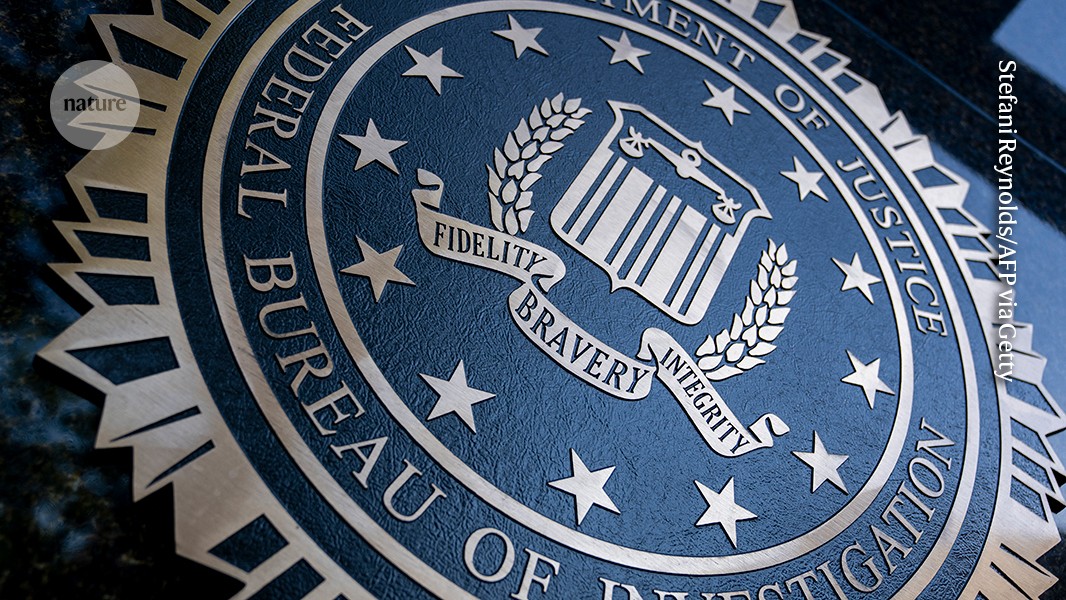
The FBI arrested a number of scholars of Asian descent under a national security programme called the China Initiative, which ran from 2018 to 2022.Credit: Stefani Reynolds/AFP via Getty
In a rare meeting between the US Federal Bureau of Investigation (FBI) and the academic community on Thursday, members of the FBI sought to reassure researchers of Asian descent that their concerns over discrimination are being heard. The 6 June public forum, held at Rice University in Houston, Texas, was lauded by participants as an important step in building trust, though several said much more work remains to be done.
China Initiative’s shadow looms large for US scientists
“We want you to feel comfortable. That’s why we’re here,” said Douglas Williams, special agent in charge of the FBI’s Houston field office, which, among other things, investigates hate crimes based on ethnicity. “More importantly, we want you to trust us, so that when something does happen in this community, which I believe it does, that you feel comfortable calling us and that we can investigate it.”
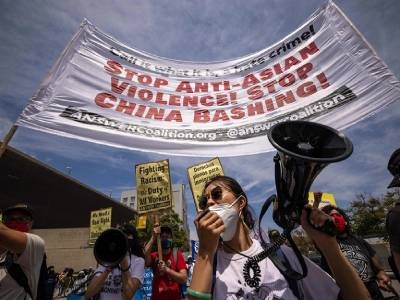
The two-hour session, sponsored by the Asian Pacific American Justice Task Force and others, was organized in response to fears among students and professors of Asian descent, which have flared in the United States in recent years. One reason for the concerns is the China Initiative, a programme launched in 2018 by the US Department of Justice (DoJ) under Donald Trump’s administration. The initiative aimed to curb the theft of US scientific research by the Chinese government, and saw a number of scientists of Chinese descent arrested by the FBI and swept into criminal court. Most were eventually acquitted or had their cases dropped. The DoJ discontinued the initiative in 2022, acknowledging that cases against the researchers triggered a perception of racial bias.
But scrutiny of Chinese-born scholars by the US government seems to have continued. In April, the Chinese embassy of the United States said that since July 2021, at least 70 foreign students with valid documents have been turned away at US airports and forced to fly to China. David Donatti, a senior staff attorney at the American Civil Liberties Union (ACLU) of Texas, a non-profit organization, said at the forum that those students, including fifth-year PhD students working in the United States and ready to defend their dissertations, were interrogated and deported without explanation. Many face five-year bans on entry to the country.
Feeling unwelcome
Gisella Perez Kusakawa, executive director of the Asian American Scholar Forum, a non-profit organization based in New York City, said that ending the China Initiative was a crucial step towards de-escalating tensions and decriminalizing Asian scholars, but only a single step. “There is still significant progress that needs to be made to ensure that the US is a welcoming environment that can attract and retain the best and brightest talents,” she said.
US universities call for clearer rules on science espionage amid China crackdown
According to a survey of more than 1,300 US faculty members of Chinese descent that her group conducted between December 2021 and March 2022, 89% said they wanted to contribute to US leadership in science, but 42% felt fearful of conducting their research, with around half saying their fear led them to avoid applying for federal grants. About 61%, particularly younger researchers, said they felt pressure to leave the country.
FBI representatives said that while their charge includes protecting the United States from foreign threats, including technological espionage, it also includes protecting the civil rights of all individuals in the country. That includes protecting Chinese citizens working in the United States, said Kelly Choi, supervisory special agent at the FBI’s Houston Field Office — although she made a point that the protection offered would be against any attempt by the Chinese government to harass or silence those individuals.
Although the FBI investigates crime, it is not in charge of screening people coming into the United States. That responsibility falls under the purview of US Customs and Border Protection (CBP), an arm of the Department of Homeland Security (the FBI is part of the DoJ). Steven Pei, an electrical engineer at the University of Houston, in Texas, who moderated the forum, told Nature that although the CBP had been invited to the panel, it had declined. The CBP did not respond to Nature’s request for comment before this story published.
The Department of Homeland Security created an Academic Partnership Council last year, with members including the presidents of US universities and higher education groups, to make recommendations to the department about issues that involve it and academia. Earlier this week, the council released a report from its Foreign Malign Influence in Higher Education subcommittee that, among other things, recommended more training for border officials about the role of travel in academic research.
Border protection
Donatti of the Texas ACLU said that people have little recourse at the US border. Technically, a person who has landed at the airport but hasn’t made it through the immigration process is still outside the country, and therefore rules about probable cause and access to an attorney aren’t in effect. He advised travelling scholars of Asian descent to carry a letter from a lawyer saying that they have legal representation and one from their university saying they have a position at that institution. It could help, he said, but it still provides no guarantees of protection. “It used to be that coming to the United States was a gold standard,” he said. “Now it is terrifying because you truly do not know if you begin your studies, if you will be able to re-enter the United States.”
When contacted by Nature, Qin Yan, president of the Asian Faculty Association at Yale University in New Haven, Connecticut, who helped to organize the forum, called for direct dialogue with CBP representatives to address border issues. He also expressed worries about other efforts to tamp down foreign influence, such as a Florida law that limits universities’ ability to recruit students and faculty members from China and other countries of concern. “We are still a long way from repairing the damage caused by the China Initiative. The chilling effects will last a very long time,” he added.
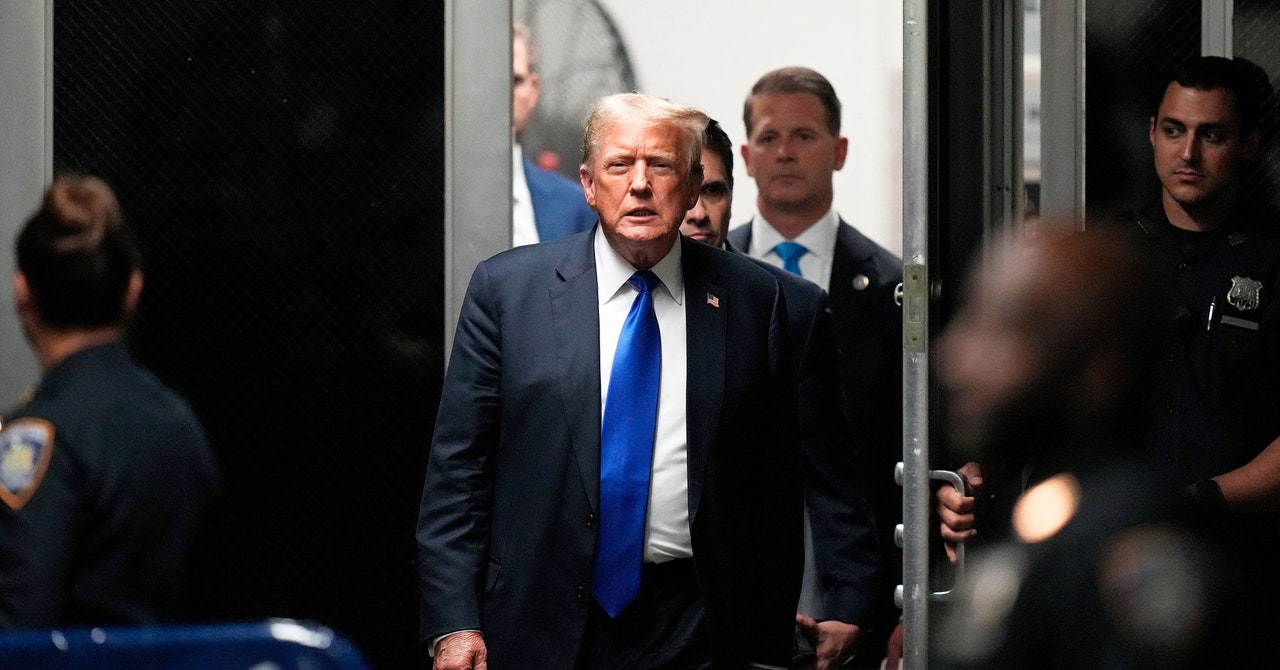
The words “RIP America” trended on X minutes after a jury in Manhattan found former president Donald Trump guilty on all 34 felony counts for falsifying business records in connection to a hush money payment to adult film star Stormy Daniels.
Images of an upside-down American flag—a symbol of distress that became co-opted by the 2020 Stop the Steal movement—flooded social media, as Trump supporters, fringe extremists, right-wing pundits, and politicians voiced their anger.
Ever since the trial began, pro-Trump commentators —and Trump himself—have been priming MAGA online ecosystems to claim foul play if the jury found him guilty. The response to his felony conviction was predictably swift, with many characterizing it as a declaration of “war” from the “deep state.” Incendiary rhetoric about how the guilty verdict was a sign of America’s collapse reverberated from the mainstream right all the way to the fringes.
“As of today, with this fake guilty verdict against Trump, America is no longer the United States,” wrote Joey Marianno, a pro-Trump political commentator, to his 466,000 followers on X. “We are a third-world shithole heading for a Civil War. I have no desire to see this country to unify. There’s no country to unite. We are long past that.”
Many of the biggest proponents of “Stop the Steal,” which culminated in the Jan. 6 Capitol riot, did not hesitate to claim that the verdict was the result of a “rigged” justice system.
In a video posted to his 2.3 million followers on X, Infowars’ Alex Jones said that the “deep state and globalists” put Trump through a “kangaroo” court in the hope that a guilty verdict would harm his campaign. “Ladies and gentlemen, we see our republic on its deathbed right now,” said Jones, adding that he believed that “false flag terror attacks blamed on Trump supporters angry about the verdict” were imminent. “We do not want any violence, we do not want any attacks,” he said.
Ali Alexander, a far-right conspiracy theorist, did not mince words either. “Today is Jan. 6th for the entire nation,” he wrote on Telegram to his 12,000 subscribers. “This is worse than the Civil War. Respectfully.”
That kind of rhetoric even made it to the airwaves. “We have been calling it lawfare,” said Fox News’ Jeanine Pirro.“I think lawfare is far too soft, it’s far too benign. This is warfare.”
Trump sounded off on Truth Social and in a fundraising email shortly after the verdict came in, doubling down on his false claim that he’s a victim of political persecution, perpetrated by a corrupt system that’s hellbent on “stealing” the 2024 election from him again.
“THIS WAS A DISGRACE—A RIGGED TRIAL BY A CONFLICTED JUDGE WHO IS CORRUPT. WE WILL FIGHT FOR OUR CONSTITUTION—THIS IS LONG FROM OVER!” he wrote on Truth Social.
Trump’s claims of “rigging” were repeated by supporters. Turning Point USA founder Charlie Kirk also perpetuated conspiracy theories about the verdict. “This case was engineered for years, from the very top of the Democrat apparatus, to bring down Trump, using a rigged law in a rigged courtroom with a rigged jury,” Kirk wrote on X. “We must win. We must defeat these savages. Stand with Trump.”
A kerfuffle erupted last week after actor Scarlett Johansson complained that one of OpenAI’s chatbot voices sounded a lot like her. It isn’t hers — the company created it using recordings from someone else. Nevertheless, the firm has suspended the voice out of respect for Johansson’s concerns. But the media flurry has cracked open a broader discussion about peoples’ rights to their own personas. In the age of generative artificial intelligence (genAI), are existing laws sufficient to protect the use of a person’s appearance and voice?
The answer isn’t always clear, says Carys Craig, an intellectual-property scholar at York University in Toronto, Canada, who will be speaking on this topic next month during a Canadian Bar Association webcast.
Several members of the US Congress have, in the past year, called for a federal law to enshrine such protections at the national level. And some legal scholars say that action is needed to improve privacy rights in the United States. But they also caution that hastily written laws might infringe on freedom of speech or create other problems. “It’s complicated,” says Meredith Rose, a legal analyst at the non-profit consumer-advocacy group Public Knowledge in Washington DC. “There’s a lot that can go wrong.”
“Rushing to regulate this might be a mistake,” Craig says.
Fake me
GenAI can be used to easily clone voices or faces to create deepfakes, in which a person’s likeness is imitated digitally. People have made deepfakes for fun and to promote education or research. However, they’ve also been used to sow disinformation, attempt to sway elections, create non-consensual sexual imagery or scam people out of money.
Many countries have laws that prevent these kinds of harmful and nefarious activities, regardless of whether they involve AI, Craig says. But when it comes to specifically protecting a persona, existing laws might or might not be sufficient.
Copyright does not apply, says Craig, because it was designed to protect specific works. “From an intellectual-property perspective, the answer to whether we have rights over our voice, for example, is no,” she says. Most discussions about copyright and AI focus instead on whether and how copyrighted material can be used to train the technology, and whether new material that it produces can be copyrighted.
Aside from copyright laws, some regions, including some US states, have ‘publicity rights’ that allow an individual to control the commercial use of their image, to protect celebrities against financial loss. For example, in 1988, long before AI entered the scene, singer and actor Bette Midler won a ‘voice appropriation’ case against the Ford Motor Company, which had used a sound-alike singer to cover one of her songs in a commercial. And in 1992, game-show host Vanna White won a case against the US division of Samsung when it put a robot dressed as her in a commercial.
“We have a case about a person who won against a literal robot already,” says Rose. With AI entering the arena, she says, cases will become “increasingly bananas”.
How to stop AI deepfakes from sinking society — and science
Much remains to be tested in court. The rapper Drake, for example, last month released a song featuring AI-generated voice clips of the late rapper Tupac Shakur. Drake removed the song from streaming services after receiving a cease-and-desist letter from Shakur’s estate. But it’s unclear, says Craig, whether the song’s AI component was unlawful. In Tennessee, a law passed this year, called the Ensuring Likeness Voice and Image Security (ELVIS) Act, seeks to protect voice actors at all levels of fame from “the unfair exploitation of their voices”, including the use of AI clones.
In the United States, actors have some contractual protection against AI — the agreement that in December ended the Hollywood strike of the Screen Actors Guild-American Federation of Television and Radio Artists included provisions to stop filmmakers from using a digital replica of an actor without explicit consent from the individual in each case.
Meanwhile, individual tech companies have their own policies to help prevent genAI misuse. For example, OpenAI, based in San Francisco, California, has not released to the general public the voice-cloning software that was used to make its chatbot voices, acknowledging that “generating speech that resembles people’s voices has serious risks”. Usage policies for partners testing the technology “prohibit the impersonation of another individual or organization without consent or legal right”.
Others are pursuing technological approaches to stemming misuse: last month, the US Federal Trade Commission announced the winners of its challenge to “protect consumers from the misuse of artificial intelligence-enabled voice cloning for fraud and other harms”. These include ways to watermark real audio at the time of recording and tools for detecting genAI-produced audio.
Broad scope
More worrying than loss of income for actors, say Rose and Craig, is the use of AI to clone people’s likenesses for uses including non-consensual pornography. “We have very spare, inadequate laws about non-consensual imagery in the first place, let alone with AI,” says Rose. The fact that deepfake porn is now easy to generate, including with minors’ likenesses, should be serious cause for alarm, she adds. Some legal scholars, including Danielle Citron at the University of Virginia in Charlottesville, are advocating for legal reforms that would recognize ‘intimate privacy’ as a US civil right — comparable to the right to vote or the right to a fair trial.
Current publicity-rights laws aren’t well suited to covering non-famous people, Rose says. “Right to publicity is built around recognizable, distinctive people in commercial applications,” she says. “That makes sense for Scarlett Johansson, but not for a 16-year-old girl being used in non-consensual imagery.”
However, proposals to extend publicity rights to private individuals in the United States might have unintended consequences, says Rose. She has written to the US Congress expressing concern that some of the proposed legislation could allow misuse by powerful companies. A smartphone app for creating novelty photos, for example, could insert a provision into its terms of service that “grants the app an unrestricted, irrevocable license to make use of the user’s likeness”.
There’s also a doppelganger problem, says Rose: an image or voice of a person randomly generated by AI is bound to look and sound like at least one real person, who might then seek compensation.
Laws designed to protect people can run the risk of going too far and threatening free speech. “When you have rights that are too expansive, you limit free expression,” Craig says. “The limits on what we allow copyright owners to control are there for a reason; to allow people to be inspired and create new things and contribute to the cultural conversation,” she says. Parody and other works that build on and transform an original often fall into the sphere of lawful fair use, as they should, she says. “An overly tight version [of these laws] would annihilate parody,” says Rose.
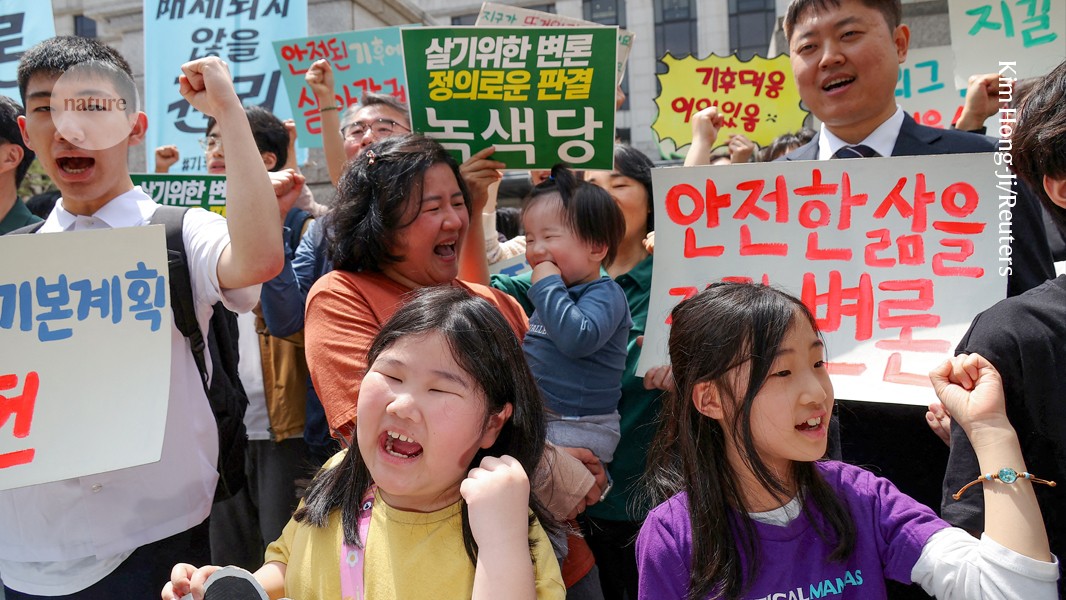
Adults, children and babies — including Woodpecker who is being carried — are among the plaintiffs claiming that the South Korean government is threatening their rights through inaction on climate change.Credit: Kim Hong-Ji/Reuters
The first lawsuit to challenge national climate policies in East Asia could lead to more cases of its kind in the region, say researchers. On 21 May, the South Korean constitutional court will hold its second and final hearing of the case. In the landmark challenge, babies, children, adults and even an unborn child filed petitions to sue the South Korean government for not doing enough to tackle climate change. The plaintiffs claim that the government’s climate goals are too weak, threatening their right to live in a healthy environment.
Such a case is unheard of in East Asia, but similar cases have been filed in places including the United States, Europe, Canada, Australia, India and Brazil. Sejong Youn, who is a legal counsel for the case in Seoul says, “If we have a favourable precedent in South Korea, I think that will really be a trigger in spreading this trend.”
“It will send a message: all countries need to take action in order to tackle this global crisis, and there are no exceptions,” he says.
The case before the court is the result of merging four similar cases that were filed between 2020 and 2023. The first hearing occurred last month.
One of the four cases was filed by parents on behalf of their children, including one unborn child, nicknamed Woodpecker, who is now one year old. “Usually, we first obtain human rights when we are born,” says climate-litigation researcher Masako Ichihara at the Kyoto Climate Adaptation Center in Japan. In this case, Woodpecker acts as a powerful symbol for how society should protect unborn future generations from the impacts of climate change, she says.
Youn hopes a decision on the case will be made later this year, before the country is set to revise the climate plans it takes to the United Nations, known as its nationally determined contribution (NDC). Currently, the South Korean government aims to reduce greenhouse-gas emissions to 40% below 2018 levels by 2030. If all countries held this level of ambition, it would cause up to 3 °C of warming by the end of the century, compared to pre-industrial levels, according to the Climate Action Tracker, which monitors global climate commitments. This overshoots the goal of the 2015 Paris climate agreement to limit warming to well below 2 ºC .
The timing of the ruling matters because the NDC revisions scheduled for next year will lay out South Korea’s climate plans until 2035. “If we have a constitutional ruling on the insufficiency of the current NDC [this year], we will be able to enhance the government’s climate ambitions while they’re working on the 2035 target,” Youn says.
Ripple effect
A ruling in favour of the South Korean plaintiffs would inspire climate activists across Asia and beyond, says Ichihara. “It’s a very big and significant case in Asia.”
People in East Asian countries are generally less likely than those in Western countries to use litigation as a tool to challenge the government’s policies, says Ichihara. “Litigation is a last resort,” she says.
Do climate lawsuits lead to action? Researchers assess their impact
But there is a growing awareness of climate change and litigation as a tool in the region, says Mingzhe Zhu, who studies the links between politics, science and nature at the University of Glasgow, UK. “In China, especially in mainland China in the last decades, climate awareness is definitely growing,” says Zhu.
From a legal standpoint, if the plaintiffs lose their case, it will become less likely that the constitutional court will agree to hear climate cases again, says Zhu. But this should not be seen as a failure, he says. “Even if you lose this time, you can lose beautifully in the sense that you provoked social awareness,” says Zhu. “The very fact that this case went to the constitutional court — that is already a certain sense of success,” he says.
“I believe in people’s creativity. Even if you fail this time, you can learn from this experience and just try another pass,” he adds.
US President Joe Biden signed legislation last month that could trigger a nationwide ban of the popular social-media app TikTok within a year. Researchers who use the app to communicate science to curious followers, study social trends and earn money to support themselves are dismayed and frustrated.
Creating YouTube and TikTok videos is improving my lab leadership
TikTok is owned by ByteDance, a firm based in Beijing, China — which, amid growing US–China tensions, has raised national-security concerns among US officials, related to the Chinese government’s access to user data. On 7 May, TikTok filed a lawsuit calling the legislation, which gives ByteDance nine months to a year to find a US-based buyer for the app, an “extraordinary intrusion on free speech rights”. If the ban goes into effect, users in the United States will no longer be able to add the app to their devices or install updated versions.
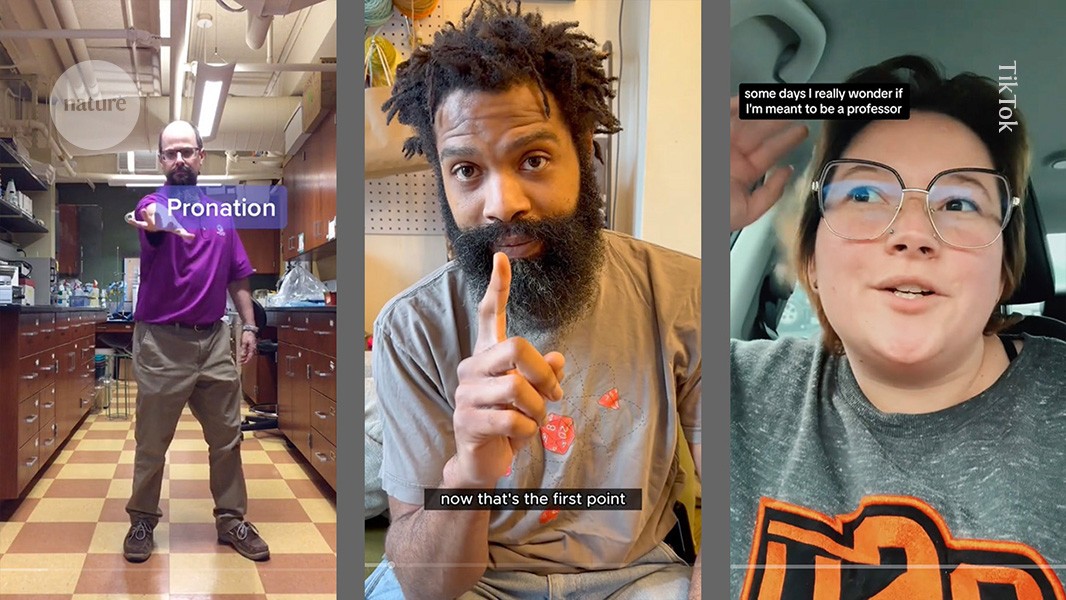
Morgan Johnston, a neuroscientist at the University of Texas at San Antonio, worries that young people who use TikTok will lose an outlet to learn about science and find community. Sixty-three per cent of US teenagers aged 13 to 17 and 33% of US adults use the app, according to several surveys conducted last year by the Pew Research Center in Washington DC and market-research firm Ipsos in New York City. Although dance routines and pop-culture discussions are often trending on the app, many people use it to learn about science, says Johnston, who runs the account @askaneuroscientist. She posts videos about her research on the impact of stress on learning and answers questions from her 37,600 followers. “I love the interaction part of it,” she says.
Nature spoke to five scientists and communicators in the United States about what they will do if the ban goes into effect. Most of them acknowledge the data-security concerns, but say that the legislation would cut off a thriving platform for science education and outreach, especially among young people who are seeking information from trusted sources.
“We need stricter laws on what data can be collected and sold, but this legislation doesn’t do that,” says Johnston, who uses her channel to talk about her mental-health journey as she navigates graduate school as a first-generation PhD student from a rural area. “My following is young adults who are in the process of making their career decisions — and they’re really curious.”
Engaged audiences
The seismic growth of the app during lockdowns initiated because of the COVID-19 pandemic helped to make TikTok a “massive platform for outreach”, says Jamie Zaccaria, a media and outreach specialist at the Ocean Exploration Trust, a research-focused non-profit organization in New London, Connecticut. In 2022, the trust launched its TikTok account, @nautiluslive, which streams footage of deep-sea expeditions narrated in real time by excited researchers discovering striking marine creatures. The account has more than half a million followers, and some ask for educational resources or advice on how to pursue a career in ocean science.
Researchers with the Ocean Exploration Trust marvel at a mysterious deep-sea jellyfish in this video (shown here on YouTube, but also available on TikTok).
The Ocean Exploration Trust declined to comment on the legislation, but it has several successful social-media accounts, including on YouTube, Facebook and Instagram, to which it could shift its focus if the ban goes into effect.
Some content creators with smaller online followings might not have that option. Michael Rhodes, a neuroscientist at Saint Vincent College in Latrobe, Pennsylvania, started posting on his TikTok account, @rhodeslovesneuroscience, in 2020 to boost morale among undergraduate students in his classes. With their help and with help from researchers in his lab, Rhodes posts educational videos about anatomy, physiology and pharmacology, including dance routines that demonstrate the actions performed by specific muscle groups and skits that explain how drugs work. “I’ve become a better professor because it makes me take a step back and look at information differently,” he says.
Rhodes says that most of his roughly 189,000 followers are students or early-career health-care professionals. But with all his academic responsibilities, he isn’t sure that he will be able to pivot to a new platform if TikTok disappears in the United States. “If a third of the country is using TikTok, that should tell you something about its popularity,” he adds.
Secret sauce
One thing that makes TikTok different from other social-networking apps is how its algorithm curates content from across the platform — not just the accounts a user follows — to appeal to the specific interests of each user, says Matt Motta, a health-communications researcher at Boston University’s School of Public Health. “That becomes a way for scientists to have their messages transmitted to audiences that may not self-select into them,” he says.
TikTok’s critics say that this proprietary algorithm imbues the app with addictive properties that can drive the spread of misinformation and contribute to the US mental-health crisis. But, recognizing its reach, Motta and his colleagues are studying how TikTok could be harnessed for good by training mental-health content creators on the app to disseminate evidence-based information among their followers1.
“It’s important to remember that some scientists are working with TikTok to study social phenomena. And if TikTok were to go away, our ability to do that would be significantly hindered,” Motta says. At the same time, Motta and others acknowledge concerns about data security related to the use of social-media apps such as TikTok.
The TikTok creator and organic chemist known as Chem Thug explains why batteries bounce when they run out of juice (shown here on YouTube, also available on TikTok).
Digital privacy is part of the reason that the organic-chemistry PhD student behind the viral @chem.thug TikTok account does not share his real identity or the university that he attends. His conversational explainer videos put scientific concepts in a real-world context for more than 284,300 followers on TikTok and around 10,000 on YouTube. For example, in one of his popular clips about household chemicals, Chem Thug explains why zinc-based batteries become “bouncy” as they lose charge. “I think everybody’s life is enriched by a better, deeper understanding of chemistry,” he says. Like Johnston, Chem Thug has monetized his account as a supplemental line of income to support himself during graduate school.
Chem Thug is cautious about putting his personal information on the Internet, but says that he doesn’t “see Bytedance as being any more nefarious than any other large corporation with interest in making as much money as possible”.
Few sources who spoke to Nature anticipate that a ban will go into effect on the proposed timeline, especially considering that the lawsuit filed by TikTok will undoubtedly tie up the legislation in courts. But the spectre of the ban is sparking serious conversations among TikTok scientists, especially those who sought refuge on the app after billionaire Elon Musk bought the social-media platform Twitter (now X) and made many unpopular changes. “Where are we going to recreate this community?” Johnston asks. “There’s not really a consensus.”
A judge has dismissed a lawsuit brought by superconductivity physicist Ranga Dias against his employer, the University of Rochester in New York. In February, a university investigation found that he had committed scientific misconduct by, among other things, fabricating data to claim the discovery of superconductors — materials with zero electrical resistance — at room temperature. Dias filed the lawsuit against the university for allegedly violating his academic freedom and conducting a biased investigation into his work.
Exclusive: official investigation reveals how superconductivity physicist faked blockbuster results
On 19 April, Monroe County Supreme Court justice Joseph Waldorf denied Dias’s petitions and dismissed the lawsuit as premature. The matter “is not ripe for judicial review”, Waldorf wrote (see Supplementary information), because, although Rochester commissioned an independent review that found Dias had committed misconduct, it has not yet finished taking administrative action. The university provost has recommended that Dias be fired, but a final decision is still forthcoming.
A spokesperson for the university said Rochester was “pleased” with the justice’s ruling, and reiterated that its investigation was “carried out in a fair manner” and reached a conclusion that it thinks is correct.
Dias did not respond to requests for comment. His lawyer, Morgan Levy, referred Nature’s news team to documents filed with the lawsuit in which Dias responded to the university’s investigation.
Nature’s news team reported on Rochester’s investigation previously: three scientists external to the university conducted a 10-month probe into 16 allegations against Dias and determined that the physicist had committed plagiarism, and data fabrication and falsification related to four scientific papers, including two published in Nature1,2. (Nature’s news team is editorially independent of its journals team.) Normally, the details of the investigation would probably have remained confidential. But in response to Dias’s lawsuit, the university submitted the entire report as a court exhibit, making it public.
Other documents and e-mails from Dias made public owing to the lawsuit reveal more details about the physicist’s attempts to halt the investigation and to cast doubt on former graduate students from his laboratory who had shared concerns with investigators about data in one of the blockbuster Nature papers2, and who later requested its retraction. Nature’s news team spoke about the lawsuit to four of Dias’s former students, who requested anonymity because they were concerned about the negative impact on their careers. They disagree with Dias’s characterization of events in the e-mails submitted to the court. One student described Dias’s attitude as “it’s not me that’s wrong, it’s everyone around me”.
Toxic environment
In March 2023, the National Science Foundation (NSF), which funds US academic research — including much of Dias’s — ordered Rochester to investigate allegations that Dias committed scientific misconduct when he claimed to have discovered room-temperature superconductivity in a material made of carbon, sulfur and hydrogen at room temperature1. This order followed three internal ‘inquiries’ into Dias’s work by the university, which did not evidence of misconduct. Prompted by the NSF, Stephen Dewhurst, the then-interim vice-president for research at Rochester, organized a committee of three external experts to undertake the investigation.
Superconductivity scandal: the inside story of deception in a rising star’s physics lab
Dias initially appeared pleased with the investigators. After his first interview with them, he sent Dewhurst an e-mail on 16 June 2023, writing that he welcomed the university’s “comprehensive neutral unbiased independent investigation into all the allegations”. Later, his opinion of the investigation would change.
When the investigators interviewed Dias’s graduate students the next month, serious issues came to light, according to court documents: the students said that Dias dismissed their concerns about the veracity of certain data and that he had created a culture of fear in the lab. Speaking to Nature‘s news team, one student says that Dias apparently retaliated against them for reporting concerns to another faculty member at Rochester. The news team reviewed a memo written by the student immediately after the incident. The student recorded Dias as saying that “an adviser is like your parents — you can’t remove them, you’re stuck with them”.
In a 3 August 2023 e-mail to Dias, Wendi Heinzelman, dean of Rochester’s engineering school, told the physicist that his students would be moved to new advisers. Dias objected and expressed concern that the decision would affect the ongoing investigation. “Reassignment of my students has inadvertently conveyed a perception of wrongdoing on my part,” he responded. In that e-mail, Dias blamed the decision on two students he said were biased against him, alleging that one created a toxic environment in the lab and that the other was “a distraction to other students”.
Nature retracts controversial superconductivity paper by embattled physicist
Nature’s news team showed the e-mail to other former graduate students, who said that the toxic environment was caused by Dias. The students he accused of being biased against him “were not the issue in the group, and they tried their hardest to make it work”, says one of the former students.
In September 2023, five of Dias’s former students decided to ask for a retraction of a Nature paper that claimed that the team had observed room-temperature superconductivity in a lutetium-based material at relatively low pressures2. Dias found out and sent them each a cease-and-desist letter, as previously reported by Nature’s news team. At the same time, the physicist sent his first formal concerns about the investigation committee to the NSF, court documents show.
He alleged bias, conflicts of interest and a lack of expertise on the part of the investigators. Rochester administrators reviewed the claims and, in a letter to the NSF, concluded that the investigation was fair.
Legal trouble
Dias sued the university in December last year, alleging that his academic freedom was violated when he was stripped of his students. He filed another lawsuit in February, first attempting to stop the investigation, then to prevent it from becoming public. A judge denied both requests.
The case was eventually moved to a new justice, Waldorf, who heard arguments from lawyers representing Dias and Rochester in early April. In his decision to dismiss Dias’s lawsuit, Waldorf cited a previous ruling that “absent extraordinary circumstances, courts are constrained not to interject themselves into ongoing administrative proceedings”. These proceedings will determine whether Dias, who does not yet have tenure, will be fired. The final decision rests with Rochester’s board of trustees.
Nature’s news team spoke with scholars about Waldorf’s ruling, which was based on a cut-and-dry precedent. “The decision is unassailable,” says Matthew Finkin, a labour law and academic-freedom scholar at the University of Illinois at Urbana-Champaign. Scott Gelber, a historian of education at Wheaton College in Norton, Massachusetts, summed up his thoughts: “Academic freedom doesn’t protect academic misconduct.”
On 9 April, the European Court of Human Rights delivered a groundbreaking ruling: states are obliged to protect their citizens from the threats and harms of climate change. And in that regard, judges said, Switzerland’s climate action has been inadequate (see go.nature.com/4azjhvd).
This marks the first time that an international human-rights court has linked protection of human rights with duties to mitigate global warming, clarifying once and for all that climate law and policy do not operate in a human-rights vacuum. The ruling is bound to alter the course of climate protection around the world.
The case was brought by Swiss Senior Women for Climate Protection (Verein KlimaSeniorinnen Schweiz), a group of more than 2,500 Swiss women aged 64 or over. They argued that they are at greater risk of heat-related illness or death than most people — and that, given that temperatures are rising, Switzerland was doing too little to reduce its greenhouse-gas emissions and contribute to meeting the 2015 Paris Agreement targets. In doing so, Switzerland was violating its duty to protect them. The court agreed.
How science bolstered a key European climate-change case
As a lawyer who helped to collate scientific and legal evidence to advise the court, I consider this judgment crucial in putting climate law and policy on a human-rights track. It sets a precedent for the 46 member states of the Council of Europe and will act as a benchmark for climate-change litigation worldwide. The ruling makes judicial history, in terms of the legal remedies and the judges’ reasoning.
Here’s what the ruling contains, why it must be seen as a success, and what nations must do to comply.
At its heart is Article 8 of the European Convention on Human Rights (ECHR): the right to private and family life. Unlike most laws, human rights are formulated to be open-ended so authorities can secure the protection of these rights in the face of new threats. Climate change is such a threat — and one that, unlike conventional environmental hazards, “should carry considerable weight in the weighing-up of any competing considerations”, according to the judges.
The court held that countries need to “adopt, and to effectively apply in practice, regulations and measures capable of mitigating the existing and potentially irreversible future effects of climate change”. It differentiated between climate ambition — the level of protection from adverse effects of climate change to which people are entitled — and the means of providing protection. Ambition can be reviewed by the court; the choice of means, less so.
Without prescribing specific years or percentage reductions, the ruling set out how a nation can show it is compliant. It must set out a timetable and targets for achieving carbon neutrality, and pathways and interim targets for reducing greenhouse-gas emissions. Measures must be implemented in a timely, appropriate and consistent manner. Governments must also provide evidence that they have complied with targets, and update targets regularly.
Do climate lawsuits lead to action? Researchers assess their impact
Two more requirements follow from Article 8 of the ECHR. States must provide information about climate regulations and measures (or their absence) to the public. And they must take citizens’ views into account in decisions.
Switzerland has not met these requirements, the judges found by 16 votes to one. Its regulatory framework is not sufficient to provide and apply “effective protection of individuals within its jurisdiction from the adverse effects of climate change on their life and health”.
What must Switzerland do now? Both the executive and the legislature must act, from the Federal Council to parliaments and governments at the federal, cantonal and municipal levels. They must set a greenhouse-gas budget and emissions pathways with timetables that are scientifically sound, legally binding and capable of bringing about the necessary reductions. Authorities must become more responsive to the needs of people most affected by climate change and find ways of acting on their views.
Reactions to the ruling are not promising. Several Swiss newspapers, politicians and commentators have claimed that ‘foreign’ judges are ‘making domestic climate policy’, calling it ‘dangerous’, and warning of a ‘demise of democracy’. This is disconcerting for several reasons.
Fifty years ago, Switzerland voluntarily committed itself to the ECHR, and abiding by the rule of law is an essential part of being a democratic state. As the court emphasized, “democracy cannot be reduced to the will of the majority of the electorate and elected representatives, in disregard of the requirements of the rule of law. The remit of domestic courts and the Court is therefore complementary to those democratic processes”. Swiss domestic courts had a chance to adjudicate on the matter, but failed. The Swiss government also knew that it was doing too little, having for decades avoided introducing meaningful emissions reductions for fear of holding back the economy.
Switzerland should welcome the judgement as a nudge to overcome inertia, just as the Netherlands and Germany have done over similar rulings by their domestic courts. Thanks to the KlimaSeniorinnen, policymakers now know what level of protection they must guarantee, and they have access to cutting-edge studies on emissions budgets.
Countries are legally bound to protect their citizens from climate change. Until they do so, those who suffer the most will have to insist on their basic rights being respected.
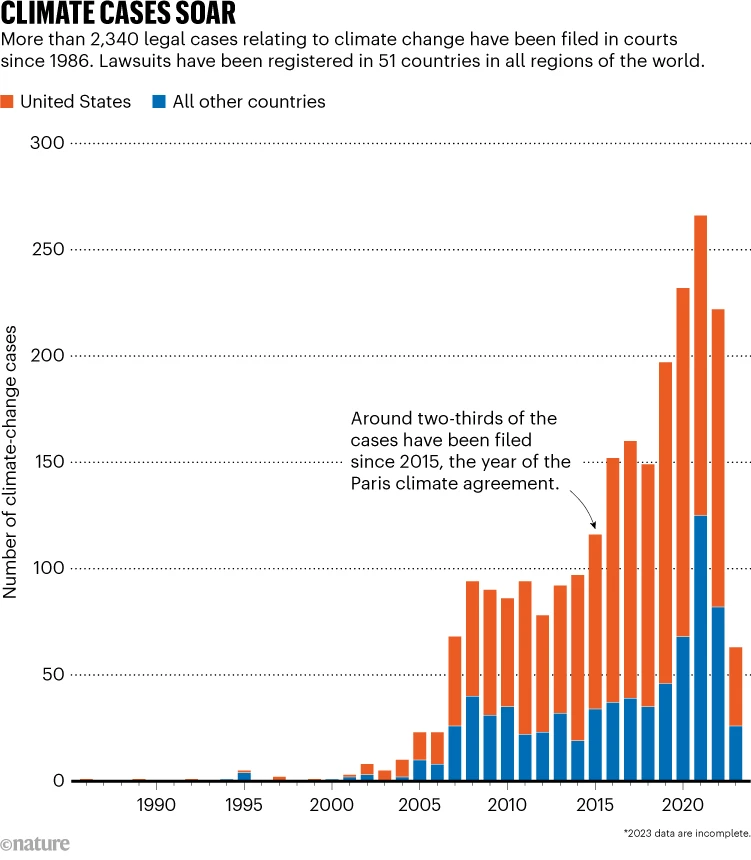
Climate litigation is in the spotlight again after a landmark decision last week. The top European human-rights court deemed that the Swiss government was violating its citizens’ human rights through its lack of climate action. The case, brought by more than 2,000 older women, is one of more than 2,300 climate lawsuits that have been filed against companies and governments around the world (see ‘Climate cases soar’).
But does legal action relating to climate change make a difference to nations’ and corporations’ actions? Litigation is spurring on governments and companies to ramp up climate measures, say researchers.
‘Truly historic’: How science helped kids win a landmark climate trial
“There are a number of notable climate wins in court that have led to action by governments,” says Lucy Maxwell, a human-rights lawyer and co-director of the Climate Litigation Network, a non-profit organization in London.
Nature explores whether lawsuits are making a difference in the fight against global warming.
What have climate court cases achieved?
One pivotal case that spurred on change was brought against the Dutch government in 2013, by the Urgenda Foundation, an environmental group based in Zaandam, the Netherlands, along with some 900 Dutch citizens. The court ordered the government to reduce the country’s greenhouse-gas emissions by at least 25% by 2020, compared with 1990 levels, a target that the government met. As a result, in 2021, the government announced an investment of €6.8 billion (US$7.2 billion) toward climate measures. It also passed a law to phase out the use of coal-fired power by 2030 and, as pledged, closed a coal-production plant by 2020, says Maxwell.
Source: Grantham Research Institute/Sabin Center for Climate Change Law
In 2020, young environmental activists in Germany, backed by organizations such as Greenpeace, won a case arguing that the German government’s target of reducing greenhouse-gas emissions by 55% by 2030 compared with 1990 levels was insufficient to limit global temperature rise to “well below 2 ºC”, the goal of the 2015 Paris climate agreement. As a result, the government strengthened its emissions-reduction target to a 65% cut by 2030, and set a goal to reduce emissions by 88% by 2040. It also brought forwards a target to reach ‘climate neutrality’ — ensuring that greenhouse-gas emissions are equal to or less than the emissions absorbed from the atmosphere by natural processes — by 2045 instead of 2050. “In the Netherlands and Germany, action was taken immediately after court orders,” says Maxwell.
In its 2022 report, the Intergovernmental Panel on Climate Change acknowledged for the first time that climate litigation can cause an “increase in a country’s overall ambition to tackle climate change”.
“That was a big moment for climate litigation, because it did really show how it can impact states’ ambition,” says Maria Antonia Tigre, director of the Sabin Center for Climate Change Law at Columbia University in New York City.
What about cases that fail?
Cases that fail in court can be beneficial, says Joana Setzer at the Grantham Research Institute on Climate Change and the Environment at the London School of Economics and Political Science.
In a 2015 case called Juliana v. United States, a group of young people sued the US government for not doing enough to slow down climate change, which they said violated their constitutional right to life and liberty. “This is a case that has faced many legal hurdles, that didn’t result in the court mandating policy change. But it has raised public awareness of climate issues and helped other cases,” says Setzer.
One lawsuit that benefited from the Juliana case was won last year by young people in Montana, says Setzer. The court ruled that the state was violating the plaintiffs’ right to a “clean and healthful environment”, by permitting fossil-fuel development without considering its effects on the climate. The ruling means that the state must consider climate change when approving or renewing fossil-fuel projects.
What happens when people sue corporations?
In a working paper, Setzer and her colleagues found that climate litigation against corporations can dent the firms’ share prices. The researchers analysed 108 climate lawsuits filed between 2005 to 2021 against public US and European corporations. They found case filings and court judgments against big fossil-fuel firms, such as Shell and BP, saw immediate drops in the companies’ overall valuations and share prices. “We find that, especially after 2019, there is a more significant drop in share prices,” says Setzer. “This sends a strong message to investors, and to the companies themselves, that there is a reputational damage that can result from this litigation,” she says.
In an analysis of 120 climate cases, to be published on 17 April by the Grantham Research Institute, Setzer’s team found that climate litigation can curb greenwashing in companies’ advertisements — this includes making misleading statements about how climate-friendly certain products are, or disinformation about the effects of climate change. “With litigation being brought, companies are definitely communicating differently and being more cautious,” she says.
What’s coming next in climate litigation?
Maxwell thinks that people will bring more lawsuits that demand compensation from governments and companies for loss and damage caused by climate change. And more cases will be focused on climate adaptation — suing governments for not doing enough to prepare for and adjust to the effects of climate change, she says. In an ongoing case from 2015, Peruvian farmer Saúl Luciano Lliuya argued that RWE, Germany’s largest electricity producer, should contribute to the cost of protecting his hometown from floods caused by a melting glacier. He argued that planet-heating greenhouse gases emitted by RWE increase the risk of flooding.
More cases will be challenging an over-reliance by governments on carbon capture and storage (CCS) technologies — which remove carbon dioxide from the atmosphere and store it underground — in reaching emissions targets, says Maxwell. But CCS technologies have not yet proved to work at a large scale. For instance, in February, researchers criticized the European Union for relying too much on CCS in its plans to cut greenhouse-gas emissions by 90% by 2040 compared with 1990 levels.
“There is a tendency now for companies and governments to say, we’ll use carbon capture, we’ll find some technology,” says Setzer. “In the courts, we’ll start seeing to what extent you can count on the future technologies, to what extent you really have to start acting now.”
What about lower-income countries?
There will also be more climate cases filed in the global south, which generally receive less attention than those in the global north, says Antonia Tigre. “There is more funding now being channelled to the global south for bringing these types of cases,” she says. This month, India’s supreme court ruled that people have a fundamental right to be free from the negative effects of climate change.
Last week’s Swiss success demonstrates that people can hold polluters to account through lawsuits, say researchers. “Litigation allows stakeholders who often don’t get a seat at the table to be involved in pushing for further action,” says Antonia Tigre.
Maxwell thinks that the judgment will influence lawsuits worldwide. “It sends a very clear message to governments,” she says. “To comply with their human rights obligations, countries need to have science-based, rapid, ambitious climate action.”
Take Alibaba and Tencent as examples. Since the 2000s, the two tech giants have made hundreds of mergers and investments, as a result of which their business empires expanded to include almost every aspect of digital life in China. This insatiable expansion came at the expense of users, who faced higher prices and less choice, but Chinese regulators let it slide. Then, suddenly, the government started a tech crackdown in 2020. All of a sudden, past mergers and acquisitions were under investigation, and hefty fines were meted out to punish the companies for antitrust violations, including a $2.8 billion fine for Alibaba.
MIT Technology Review recently spoke with Zhang about her new book and how to apply her insights to China’s tech industry, including significant new sectors like artificial intelligence.
The pendulum swing
“There’s this saying I also cited in my book: 一放就乱, 一抓就死 (loosening causes chaos; tightening up causes death),” Zhang says. The Chinese expression perfectly captures how the regulators dramatically yet predictably oscillate between doing too little to police the tech sector and doing too much.
In the book, Zhang argues that Chinese tech platforms have long been accused of obstructing competition, infringing on privacy, and violating the labor rights of gig workers—but regulators accommodated them in all three areas until suddenly putting the companies under scrutiny in late 2020. And after the peak of enforcement in 2022, the regulators slowed down on all three fronts and reached a compromise with Chinese companies.
Outside the examples in the book, “I think [the pattern] fits almost every sector,” Zhang says. From financial innovations like peer-to-peer loans in the mid-2010s to online tutoring, which exploded in popularity during the pandemic, they all went through similar shifts in experience with the regulators.
The government can be a helping hand
Western observers of Chinese policies often focus on the crackdown phase. Historically, it’s involved some dramatic moments—for example, the government forcing the ride-hail giant Didi to delist from the New York Stock Exchange or slapping antitrust fines on Alibaba after its former head, Jack Ma, made a public speech against regulation.
But Zhang warns that these high-profile crackdowns mask the symbiotic relationship between tech companies and the government. “We tend to see [Chinese tech regulations] as very predatory,” she says, but “regulations actually give a helping hand to these firms.”
COURTESY OF ANGELA HUYUE ZHANG
For many government officials, especially at the provincial and local levels, tech companies are the most important contributors to tax revenues and employment. They are often referred to as “local champions” or “little giants,” and their business interests are directly tied to the interests of local governments. In turn, the governments often go to great lengths to protect these companies.
Ranga Dias, the physicist at the centre of the room-temperature superconductivity scandal, committed data fabrication, falsification and plagiarism, according to a investigation commissioned by his university. Nature’s news team discovered the bombshell investigation report in court documents.
The 10-month investigation, which concluded on 8 February, was carried out by an independent group of scientists recruited by the University of Rochester in New York. They examined 16 allegations against Dias and concluded that it was more likely than not that in each case, the physicist had committed scientific misconduct. The university is now attempting to fire Dias, who is a tenure-track faculty member at Rochester, before his contract expires at the end of the 2024–25 academic year.
Superconductivity scandal: the inside story of deception in a rising star’s physics lab
The investigation report (see Supplementary information) and numerous other documents came to light as the result of a lawsuit that Dias filed against the university in December last year. Dias submitted a grievance to Rochester over its decision to remove his students last August, but the university refused to hear the grievance on the grounds that it did “not relate to academic freedom”. The physicist’s lawsuit claims that this response was unreasonable. A university spokesperson declined to comment on the specifics of ongoing litigation and personnel matters, but emphasized that Rochester is “vigorously defending its course of action”.
In March, Nature’s news team uncovered details about how Dias distorted data to make claims about room-temperature superconductivity in two now-retracted papers published in Nature1,2, and how he manipulated his students to keep them in the dark about those data. (Nature’s news and journal teams are editorially independent.) Soon after, the Wall Street Journal reported that Rochester’s investigation found evidence of misconduct.
Now, Nature’s news team can reveal the details of that investigation. Documents filed by Rochester with the Monroe County Supreme Court show that the investigation was ordered by the National Science Foundation (NSF), a major funder of US academic research that in 2021 awarded Dias a prestigious US$790,000 CAREER grant. The NSF Office of Inspector General declined to comment to Nature’s news team on the investigation’s findings or the agency’s future actions.
The 124-page investigation report is a stunning account of Dias’s deceit across the two Nature papers, as well as two other now-retracted papers — one in Chemical Communications3 and one in Physical Review Letters (PRL)4. In the two Nature papers, Dias claimed to have discovered room-temperature superconductivity — zero electrical resistance at ambient temperatures — first in a compound made of carbon, sulfur and hydrogen (CSH)1 and then in a compound eventually found to be made of lutetium and hydrogen (LuH)2.
Capping years of allegations and analyses, the report methodically documents how Dias deliberately misled his co-authors, journal editors and the scientific community. A university spokesperson described the investigation as “a fair and thorough process,” which reached the correct conclusion.
Dias did not respond to requests for comment. His lawyer referred Nature’s news team to documents filed with the lawsuit. In one of those, Dias said: “It is imperative to reassert the foundational integrity and scientific validity of our work amidst the criticisms and accusations.”
A trio of inquiries
The NSF-ordered investigation wasn’t the first time Rochester examined possible problems in Dias’s laboratory. Between 2021 and 2022, the university conducted three preliminary ‘inquiries’ into the CSH Nature paper1 — some details of which are now revealed by the investigation report. Any of the inquiries could have decided that a full misconduct investigation was warranted, but none of them did.
The first inquiry was initiated after Jorge Hirsch, a condensed-matter theorist at the University of California, San Diego, sent complaints to Rochester. The university asked three unnamed internal reviewers, and Dias contacted one external reviewer to examine Hirsch’s claims. Information in the report suggests that the external reviewer is Maddury Somayazulu, a physicist at Argonne National Laboratory in Lemont, Illinois.
Hirsch alleged that there were problems with the paper’s magnetic susceptibility data — evidence crucial to Dias’s claim that CSH is a room-temperature superconductor. The inquiry came to the conclusion on 19 January 2022 that there was “no credible evidence to warrant further investigation”.
Students on campus at the University of Rochester in New York.Credit: Libby March/Bloomberg via Getty
The second inquiry was prompted by Dirk van der Marel, editor-in-chief of Physica C, a journal for superconductivity research. Van der Marel sent Rochester his own concerns about the same CSH data on 20 January 2022 — just a day after the first inquiry ended. Another reviewer took up the case and judged no formal investigation was warranted on 6 April of that year. Their work was checked by a second reviewer, who appears to be Russell Hemley, a physicist at the University of Illinois Chicago, based on identifying information in the report. Although the reviewers did not support an investigation, they said that the paper was “verging on misleading due to omission of details”. They recommended that an erratum be applied (none was).
Rochester’s investigation notes that two reviewers — apparently Somayazulu and Hemley — have collaborated with Dias on several papers, including a study5 in 2021 about the properties of CSH. Rochester’s academic misconduct policy states that “no individual who has an unresolved personal, professional or financial conflict of interest … should participate in the proceedings” of an inquiry.
A spokesperson for Argonne denied that Somayazulu was an inquiry reviewer, but did not respond when asked why a footnote in the investigation refers to “Report of Somayazulu_Review of NSF 2020 (CSH) Paper”. Hemley did not clarify whether he was an inquiry reviewer.
Nature‘s journals team conducted its own investigation into the CSH paper using independent reviewers, two of whom found evidence that the magnetic susceptibility data were probably fabricated. When the journal indicated that it would retract the CSH paper, and in response to another complaint from Hirsch, the university conducted a third inquiry. Despite having access to Nature’s findings, the single reviewer assigned to this inquiry — the same anonymous reviewer from the second inquiry — concluded on 19 October 2022 that any oddities in the data could be attributed to how they were processed, and that no investigation was needed.
Rochester’s inquiries “should be ‘Exhibit A’ about how not to run one of these things,” says Peter Armitage, a condensed-matter experimentalist at Johns Hopkins University in Baltimore, Maryland.
Under investigation
Rochester was finally forced to launch a full investigation to determine misconduct by the NSF. In October 2022, James Hamlin, a physicist at the University of Florida in Gainesville, submitted concerns about Dias’s work to the NSF. These included “data discrepancies that cannot be attributed to data processing”, according to a 16 March 2023 letter from the NSF to Stephen Dewhurst, the then-interim vice-president for research at Rochester.
Within weeks, Dewhurst assembled a committee of three physicists external to Rochester “to ensure that this investigation would be credible”: Marius Millot and Peter Celliers, both at Lawrence Livermore National Laboratory in California; and Marcus Knudson, at Sandia National Laboratories in Albuquerque, New Mexico.
Nature retracts controversial superconductivity paper by embattled physicist
Nature’s news team asked several superconductivity researchers to review the investigation report. At first, they were concerned by the university’s choice of committee members. The three physicists are specialists in shock-wave physics, not in superconductivity. Millot and Celliers were also co-authors with Dias on a 27-author review paper published earlier this year6.
However, those doubts evaporated when the researchers read the report. “I couldn’t help but be incredibly impressed,” Armitage says. Paul Canfield, a physicist at Iowa State University in Ames, says: “There should be a good German word that’s 50 letters long and is simultaneously ‘impressive’ and ‘depressing’” to describe the report. Brad Ramshaw, a physicist at Cornell University in Ithaca, New York, concurs. “This is a great sacrifice of their time,” he says. “The whole community should be grateful that we have colleagues who are willing to go to these lengths.”
The three investigators did not respond to requests for comment.
The investigation committee secured records, including data on computer hard drives, e-mails and physical notebooks, in the course of their work. They also conducted interviews with 10 individuals connected with the case, including Dias and some of his former students, and met at least 50 times to deliberate.
‘A very disturbing picture’: another retraction imminent for controversial physicist
Notably, the investigators confirmed previous analyses by van der Marel, Hirsch, Hamlin and Ramshaw — all of whom found apparent evidence that Dias fabricated magnetic susceptibility data in the CSH paper.
The report clarifies the extent of this misconduct: first Dias fabricated CSH data and published it. Then, when its origins came under scrutiny, Dias and his collaborator and co-author Ashkan Salamat, a physicist at the University of Nevada, Las Vegas (UNLV), released a set of fabricated raw data.
Questions about discrepancies between the raw and the published data continued to mount, so Dias crafted an explanation — he claimed to have used an elaborate data-processing method for the published data. This provided “a veneer of plausibility, by focusing critics’ attention on background subtraction methods” instead of on the raw data, the investigation committee wrote.
Salamat did not respond to a request for comment.
Fact finding
At any time throughout the investigation, Dias could have dispelled many allegations if he had provided genuine raw data — data taken directly from a measuring instrument and containing details such as timestamps. “The absence of certain raw data files does not inherently indicate their non-existence or suggest any misconduct on my part,” Dias wrote in response to the investigation findings. Yet he promised to deliver raw data multiple times and never did, according to the report.
In several instances, the investigation found, Dias intentionally misled his team members and collaborators about the origins of data. Through interviews, the investigators worked out that Dias had told his partners at UNLV that measurements were taken at Rochester, but had told researchers at Rochester that they were taken at UNLV.
Dias also lied to journals. In the case of the retracted PRL paper4 — which was about the electrical properties of manganese disulfide (MnS2) — the journal conducted its own investigation and concluded that there was apparent fabrication and “a deliberate attempt to obstruct the investigation” by providing reviewers with manipulated data rather than raw data. The investigators commissioned by Rochester confirmed the journal’s findings that Dias had taken electrical resistance data on germanium tetraselenide from his own PhD thesis and passed these data off as coming from MnS2 — a completely different material with different properties (see ‘Odd similarity’). When questioned about this by the investigators, Dias sent them the same manipulated data that was sent to PRL.
Source: James Hamlin
How exactly Dias distorted data was clearest in the report’s findings about the LuH paper2. With the aid of Dias’s former students, the investigation committee pinpointed raw data on the lab’s hard drives. These data showed that Dias frequently made selective omissions to conceal “erratic drops and jumps in the resistance data, the presence of which would undermine the claim of superconducting behavior in LuH”, the investigation committee wrote.
Dias, the investigation committee found, “repeatedly lied” about data during Nature’s review of the paper after concerns came to light. But perhaps the most egregious instance of misconduct, which the report refers to as involving “profuse manipulations” of data, occurred when Dias inverted a set of LuH data so that it demonstrated the Meissner effect — a sharp change in the magnetic properties of a material that is a hallmark of superconductivity. On 27 August 2022, Sachith Dissanayake, a co-author who was then a faculty member working with Dias at Rochester, explained to Dias that the data had been improperly manipulated, but Dias ignored the warning, according to the report. In his response to the report, Dias claimed Dissanayake misunderstood the data. Dissanayake did not respond to a request for comment.
These manipulated data were key to the LuH paper’s acceptance. And the investigation committee concluded that Dias fabricated data “to convince Nature editors and pre-publication referees that LuH exhibits superconductivity at room temperature”.
Previous stories in Physics Magazine and Science reported allegations of serial plagiarism by Dias, including that he copied more than 20% of his 2013 thesis from other sources. The Rochester investigators uncovered another, more recent instance: on 30 July 2020, researchers, including Dias’s colleagues at Rochester, submitted a scientific manuscript7 to the preprint server arXiv. Twelve days later, Dias submitted an NSF grant proposal that included paragraphs copied from that manuscript, as well as two identical figures. That proposal later won Dias the CAREER grant from the agency. In his response to the investigation, Dias admits to “instances where references are inadvertently missed”.
Closing arguments
The investigation committee sent Dias a draft copy of its report on 22 December last year. In a two-part response totalling hundreds of pages, which was revealed in the lawsuit, Dias attacks the expertise and integrity of the investigators. The physicist asserts that the investigators’ approach displays “traits that could sometimes be seen in the realm of conspiracy theories” and that it is “lacking a robust logical foundation”. Dias also claims that Salamat convinced Dias’s former students to oppose him when they sent a letter to Nature asking to retract the LuH paper. The opposite is true: Nature’s news team previously reported that it was the students who initiated the letter.
Why superconductor research is in a ‘golden age’ — despite controversy
Nowhere in the response does Dias provide the raw data requested by the committee. In their final report, the investigators respond to Dias’s accusations, saying that the “invocation of baroque explanations to interpret, and therefore justify, the omission of these data does not alter the Investigation Committee’s reasoning or findings”.
Ultimately, the committee found that the Rochester students and Dissanayake were not culpable, but victims. The committee did not have access to resources at UNLV to clear those researchers, including Salamat, from blame, but it concluded that those parties too were deceived, and did not find “substantial evidence of wrongdoing”.
As a result, the investigators recommended that Dias should not be permitted to teach or to carry out public or privately funded research. They added: “Evidence uncovered in this investigation shows that [Dias] cannot be trusted”.