Tag: Lipids

  • Eating live microbe-rich foods linked to better heart health

    Eating live microbe-rich foods linked to better heart health

    [ad_1]

    In a recent study published in Frontiers in Nutrition, researchers explore the relationship between dietary intake of live microorganisms and cardiovascular health (CVH) outcomes among adults in the United States.

    Study: Association between dietary live microbe intake and Life’s Essential 8 in US adults: a cross-sectional study of NHANES 2005-2018. Image Credit: FOTOGRIN / Shutterstock.comStudy: Association between dietary live microbe intake and Life’s Essential 8 in US adults: a cross-sectional study of NHANES 2005-2018. Image Credit: FOTOGRIN / Shutterstock.com

    How diet affects CVH

    Despite advancements in the development of lipid-lowering drugs, cardiovascular disease (CVD) remains a significant cause of death throughout the world, thus impacting economic and social development.

    Dietary patterns are implicated in poor CVH, as gut microbiota convert many nutrients into metabolites. This relationship led to the introduction of Life’s Essential 8 (LE8) by the American Heart Association to improve CVH and reduce CVD. 

    The LE8 covers four health factors, including blood pressure (BP), body mass index (BMI), blood glucose, and blood lipids, as well as four health behaviors of sleep health, nicotine exposure, physical activity (PA), and diet. However, the relationship between live microorganisms in the diet and LE8 is poorly understood.

    About the study

    Data for the current study were obtained from the National Health and Nutrition Examination Survey (NHANES) and included seven survey rounds from 2005 to 2018. All study participants were over 20 years of age and provided information on their dietary live microbial intake, LE8, sample weights, and other relevant covariates.

    Live microbial quantity per gram was quantified from 9,388 food items, and study participants provided detailed dietary intake information during in-person interviews and telephonic follow-up calls. This information was subsequently used to classify study participants with low, medium, and high levels of live microbe content.

    LE8 scores were calculated as an unweighted average of the eight indicators and ranged from zero to 100. Based on this score, individuals in the range of 80-100 points were classified as having high CVH, 50-79 points were considered medium CVH, and zero to 49 points were classified as having low medium.

    Race and ethnicity, gender, age, education, marital status, socioeconomic status, health insurance, alcohol consumption, obesity status, daily nutrient intake, and medical history were included as additional covariates. Chi-square tests, one-way analysis of variance (ANOVA), and linear regression models were used to analyze the dataset.

    Study findings

    After applying exclusion criteria, 10,531 people were included in the final analysis. Females accounted for slightly more than half of the study cohort, with an average age of about 48 years.

    Non-Hispanic White was the predominant ethnicity. Most study participants had at least a college education and health insurance, drank alcohol, and reported being married or in cohabiting relationships.

    Most study participants were obese; nearly 9% had CVD, 14% had diabetes mellitus, about 37% had hypertension, and over 70% had hyperlipidemia. About 66% of the study cohort reported a moderate level of CVH. Across CVH levels, participants were similar in terms of daily intake of carbohydrates, hypertension, and hyperlipidemia but significantly different in other aspects.

    Significant associations were observed between groups of dietary live microbes and LE8 scores, both in crude models and after adjusting for multiple covariates. For all components of LE8, a higher intake of live microorganisms was associated with better health behaviors and health factor scores.

    Those in the high and moderate microorganism groups had lower CVD risk with odds ratios of 0.65 and 0.73, respectively. Notably, in the low-intake group, LE8 score and food intake had a linear negative association, whereas this association was positive in the high-intake group. The moderate microorganism intake group exhibited an inverted ‘U’ shape regarding the relationship between LE8 and food intake.

    Conclusions

    Probiotic supplements can reduce oxidative stress, improve immunity, and reduce blood glucose and blood pressure levels, which could maintain CVH. The current study expanded on previous studies that used self-reported medical history to characterize CVD. Taken together, these findings provide strong evidence supporting the consumption of more foods rich in live microorganisms to improve CVH outcomes.

    Future studies are needed to identify individuals who may respond differently to microbial consumption based on gender and ethnicity. For example, non-Hispanic black individuals did not exhibit a significant association with live microbe consumption and CVH.

    Additional research is also needed to elucidate these associations’ mechanisms and include more diverse cohorts. These types of studies have the potential to overcome the limitations of a cross-sectional study based on dietary recall data to establish causality.

    Journal reference:

    • Wang, L., Wang, S., Wang. Y., et al. (2024). Association between dietary live microbe intake and Life’s Essential 8 in US adults: a cross-sectional study of NHANES 2005-2018. Frontiers in Nutrition (2024). doi:10.3389/fnut.2024.1340028

    [ad_2]

    Source link

  • Penn engineers develop targeted lung delivery system using lipid nanoparticles

    Penn engineers develop targeted lung delivery system using lipid nanoparticles

    [ad_1]

    Penn Engineers have developed a new means of targeting the lungs with lipid nanoparticles (LNPs), the miniscule capsules used by the Moderna and Pfizer-BioNTech COVID-19 vaccines to deliver mRNA, opening the door to novel treatments for pulmonary diseases like cystic fibrosis. 

    In a paper in Nature Communications, Michael J. Mitchell, Associate Professor in the Department of Bioengineering, demonstrates a new method for efficiently determining which LNPs are likely to bind to the lungs, rather than the liver.

    The way the liver is designed. LNPs tend to filter into hepatic cells, and struggle to arrive anywhere else. Being able to target the lungs is potentially life-changing for someone with lung cancer or cystic fibrosis.”


    Michael J. Mitchell, Associate Professor, Department of Bioengineering, Penn

    Previous studies have shown that cationic lipids -; lipids that are positively charged -; are more likely to successfully deliver their contents to lung tissue. “However, the commercial cationic lipids are usually highly positively charged and toxic,” says Lulu Xue, a postdoctoral fellow in the Mitchell Lab and the paper’s first author. Since cell membranes are negatively charged, lipids with too strong a positive charge can literally rip apart target cells. 

    Typically, it would require hundreds of mice to individually test the members of a “library” of LNPs -; chemical variants with different structures and properties -; to find one with a low charge that has a higher likelihood of delivering a medicinal payload to the lungs.

    Instead, Xue, Mitchell and their collaborators used what is known as “barcoded DNA” (b-DNA) to tag each LNP with a unique strand of genetic material, so that they could inject a pool of LNPs into just a handful of animal models. Then, once the LNPs had propagated to different organs, the b-DNA could be scanned, like an item at the supermarket, to determine which LNPs wound up in the lungs. 

    After identifying an LNP that successfully penetrated lung cells, Xue, Mitchell and their collaborators administered the molecule to mice suffering from lung cancer: the treatment had a pronounced and positive effect, drastically reducing tumor size by delivering a strand of mRNA and gRNA that suppresses the growth of lung tumors.

    “This technology will help to accelerate the development of mRNA therapeutics beyond the liver,” says Xue, pointing to the speed, low cost and efficacy of the technique. 

    This study was conducted at the University of Pennsylvania School of Engineering and Applied science and supported by a US National Institutes of Health (NIH) Director’s New Innovator Award (DP2 TR002776), a Burroughs Wellcome Fund Career Award at the Scientific Interface (CASI), a US National Science Foundation CAREER Award (CBET-2145491) and an American Cancer Society Research Scholar Grant (RSG-22-122-01-ET).

    Other co-authors include Alex G. Hamilton, Rakan El-Mayta, Xuexiang Han, Ningqiang Gong, Junchao Xu, Christian G. Figueroa-Espada, Sarah J. Shepherd and Alvin J. Mukalel of Penn Engineering; Gan Zhao, Zebin Xiao and Andrew E. Vaughan of Penn Vet; Xinhong Xiong and Jiaxi Cui of Yangtze Delta Region Institute (Huzhou); Karin Wang of Temple University; and Mohamed-Gabriel Alameh and Drew Weissman of the Perelman School of Medicine at Penn.

    Source:

    Journal reference:

    Xue, L., et al. (2024). High-throughput barcoding of nanoparticles identifies cationic, degradable lipid-like materials for mRNA delivery to the lungs in female preclinical models. Nature Communications. doi.org/10.1038/s41467-024-45422-9.

    [ad_2]

    Source link

  • Healthy lifestyles linked to specific metabolic markers, large study finds

    Healthy lifestyles linked to specific metabolic markers, large study finds

    [ad_1]

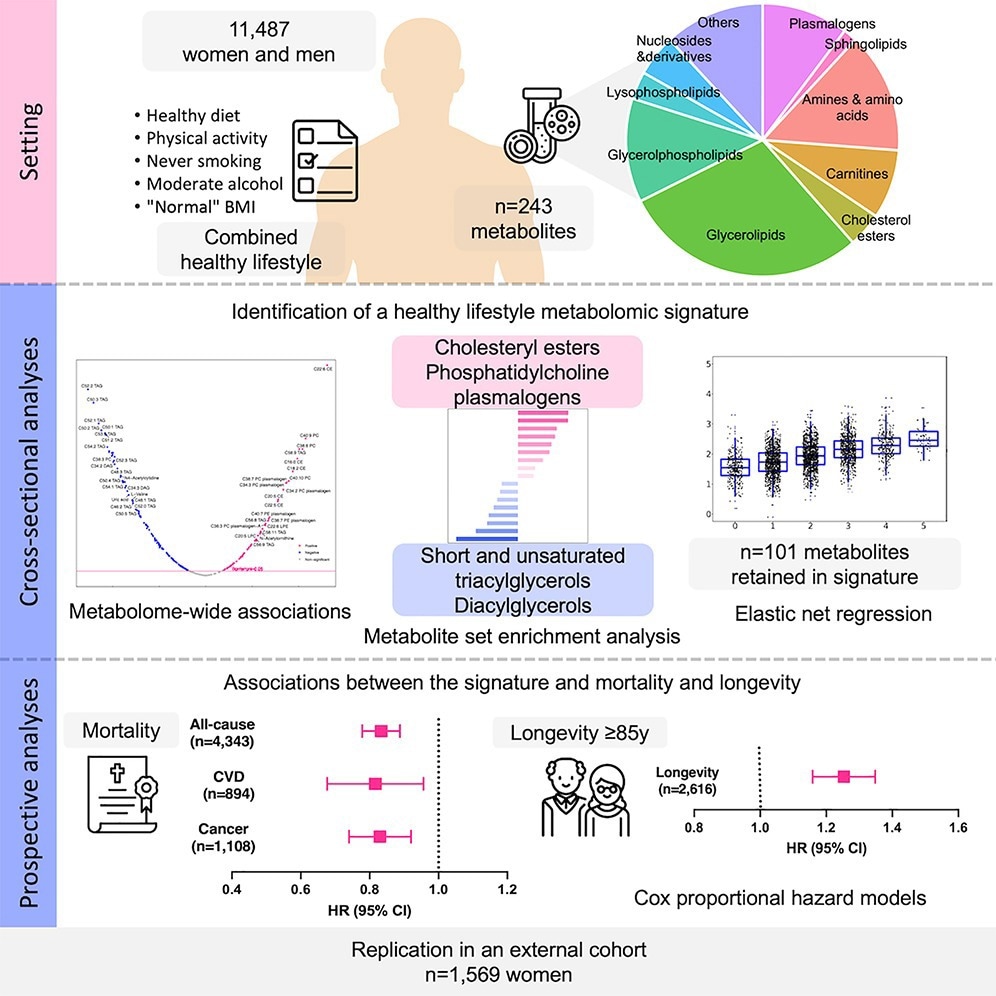
    In a recent study published in the journal Med, researchers used a collated dataset comprising four American sample cohorts to identify the metabolomic markers of a healthy lifestyle and, potentially, the mechanisms underlying their production. They used a combination of analytical techniques, particularly liquid chromatography-mass spectrometry, on the 13,056 datasets and observed that the healthy lifestyle metabolomic signature was largely reflective of lipid metabolism pathways.

    Shorter and more saturated di—and triacylglycerol metabolite sets were found to be inversely associated with healthy lifestyles, while phosphatidylcholine plasmalogens and cholesteryl esters were directly associated with the condition. Encouragingly, the relative concentrations of these biomarkers accounted for a 17% lower risk of all-cause mortality, a 19% reduced risk of cardiovascular disease-related mortality, a 17% lower risk of cancer-related mortality, and a 25% improved probability of attaining longevity.

    Study: Plasma metabolites of a healthy lifestyle in relation to mortality and longevity: Four prospective US cohort studies

    The relationship between lifestyle choices and metabolic health

    Chronic, non-transmissible disease prevalence is currently higher than it has ever been and has primarily been attributed to the increased adoption of sub-optimal health behavioral choices, including diets (e.g., the Western-style diet) and physical activity levels (e.g., the sedentary lifestyle). Previous research has highlighted the profound benefits of adopting a healthy lifestyle, with research on American cohorts revealing 55-71% reduced all-cause mortality risk in individuals who maintained their body mass index (BMI) between 18.5-24.9 kg/m2, consumed alcohol in moderation, partook in physical activity, and abstained from smoking.

    Unfortunately, the mechanisms underpinning these interactions remain largely unknown. Some studies have suggested that individuals’ health behavior components such as body weight, diet, alcohol consumption, physical activity, and smoking may have associated metabolomic signatures indicative of their current and historical health. Still, these hypotheses have rarely been tested within a scientific framework. The limited information in the field, despite being at times confounding, suggests that polyunsaturated fatty acids (PUFAs), phosphatidylcholines (PCs), and glutamate and similar amino acids (AAs) are associated with improved health outcomes, while triacylglycerols (TAG), sphingomyelins (SMs), and carnitines are associated with suboptimal ones.

    “However, most studies only examined diet and physical activity factors, with small sample sizes and limited sets of metabolites profiled. Thus, a comprehensive understanding of the metabolic pathways underlying healthy lifestyle behaviors remains to be discovered. By studying several modifiable lifestyle factors simultaneously, a better understanding of the common biological mechanisms as well as the key differences may be acquired.”

    About the study

    In the present study, researchers used lifestyle, metabolomic, and clinical information from four American cohorts comprising more than 13,000 individuals to compute a metabolomic-based combined healthy lifestyle score during mid-life and further examine the relationship between this score and mortality and longevity outcomes. Outcome follow-up was extensive and had a mean duration of 28 years. The cohorts included the Nurses’ Health Study (NHS; 1976), the second iteration of the same prospective cohort (NHSII; 1989), the Women’s Health Initiative (WHI; 1993), and the Health Professionals Follow-up Study (HPFS; 1986). They comprised primarily middle-aged (mean 54.3 years) women (85.8%) belonging to the White ethnicity (96.7%).

    Lifestyle information was participant-reported, clinical information was obtained from the prospective cohort database, and metabolomic information was derived from (fasting) blood plasma samples obtained at the time of study initiation and subsequent follow-up. Individuals lacking data on measured outcomes (BMI, alcohol consumption, metabolomic profiling, diets, physical activity levels, smoking status) were excluded. The WHI cohort was used as an external validation cohort for results obtained from the three remaining cohorts.

    Plasma metabolomic profiling was carried out using acetonitrile/methanol/formic acid extraction followed by hydrophilic interaction liquid chromatography (HILIC) and positive ionization mass spectrometry (MS) for polar compounds (e.g., amino acids) and isopropanol extraction followed by octyl high-performance liquid chromatography (HPLC) and positive ionization MS for lipids. The Metabolite Standard Initiative (MSI) database was used to identify obtained metabolites.

    Lifestyle factors (treatments) were of five main categories – diet, alcohol consumption, physical activity, smoking, and BMI, and were assessed using questionnaires and the Alternative Healthy Eating Index (AHEI). Mortality and longevity (outcomes) were obtained from family-member reports (for death), State statistics records, and the National Death Index database. Multivariable linear regressions, logistic regression, and elastic linear regressions were used for statistical data analyses. Cox proportional hazard ratios were computed to translate these results into relative disease risk.

    Study findings

    Results reveal that the metabolomic signature most reflective of healthy lifestyles is the lipid metabolism pathway comprising PC, TAG, CE, and DAG metabolite families. Diet composition and BMI were found to be the best predictors of positive metabolite signatures. Metabolite characterization identified more than 400 metabolites associated with lifestyle choices. Elastic regression analyses identified 187 of these metabolites as descriptive of healthy lifestyle behaviors – 58 were positively associated, while 129 were inversely associated with beneficial mortality and longevity outcomes.

    “…the MSEA revealed CEs, mainly of PUFAs, and PCs as the most enriched metabolite sets positively associated with a healthy lifestyle. CEs serve as a mean for the storage and transportation of cholesterol and other lipids in the blood and were shown to be reflective of dietary fat intake. PCs are naturally found in the body but also in foods such as eggs, fatty fish, and soybeans. They are well known for their essential role in cell membranes and membrane signaling.”

    Animo acids and metabolites involved in purine metabolism were also highlighted as signatures of healthy lifestyles. Vegetarian diets that are rich in circulating glycine, trigonelline, asparagine, hippurate, and glutamine and poor in valine, isoleucine, and leucine were found beneficial over dietary intakes of red meats, chicken, and energy drinks.

    Outcome analyses revealed a surprising fact – the metabolomic signatures identified herein were more accurate predictors of mortality and longevity than patient-reported fitness and health levels.  

    “Indeed, the metabolomic signature explained 38.0% of the association between the self-reported healthy lifestyle score and mortality, pointing to unique biological pathways captured by metabolomics. Consistent with the literature and with our mortality results, we found an association of the healthy lifestyle metabolomic signature with longevity, and the signature explained 48.6% of the association between self-reported healthy lifestyle score and longevity.”

    Conclusion

    The present study uses a large combined American cohort comprising more than 13,000 participants to identify metabolomic signatures associated with positive mortality and longevity outcomes as a consequence of healthy lifestyle and dietary choices. Study findings reveal that more than 100 metabolites are associated with (positive or negative) health lifestyle outcomes, most of which are involved in the lipid metabolism pathways.

    “…our findings suggest that greater adherence to a healthy lifestyle may lead to alterations in the metabolome that are associated with lower premature mortality risk and higher likelihood of longevity. We identified a metabolomic signature associated with a combined healthy lifestyle in US adults that is strongly reflective of lipid metabolism pathways. We found that those with a higher multimetabolite score had a lower risk of total and cause-specific mortality and a greater likelihood of living longer.”

    Journal reference:

    • Tessier, A.-J., Wang, F., Liang, L., Wittenbecher, C., Haslam, D. E., Eliassen, A. H., Tobias, D. K., Li, J., Zeleznik, O. A., Ascherio, A., Sun, Q., Stampfer, M. J., Grodstein, F., Rexrode, K. M., Manson, J. E., Balasubramanian, R., Clish, C. B., Martínez-González, M. A., Chavarro, J. E., … Guasch-Ferré, M. (2024). Plasma metabolites of a healthy lifestyle in relation to mortality and longevity: Four prospective US cohort studies. In Med. Elsevier BV, DOI – 10.1016/j.medj.2024.01.010,  https://www.cell.com/med/fulltext/S2666-6340(24)00040-0

    [ad_2]

    Source link

  • A plant-based diet and its relationship with oxidative biomarkers in footballers

    A plant-based diet and its relationship with oxidative biomarkers in footballers

    [ad_1]

    In a recent study published in Scientific Reports, researchers investigated the association between plant-based diets and oxidative biomarkers by calculating the plant-based diet index score and determining the levels of urinary biomarkers for oxidative stress in professional footballers.

    Study: Effect of a plant-based diet on oxidative stress biomarkers in male footballers. Image Credit: zi3000/Shutterstock.com
    Study: Effect of a plant-based diet on oxidative stress biomarkers in male footballers. Image Credit: zi3000/Shutterstock.com

    Background

    The accumulation of reactive oxygen species in the body leads to the damage of protein, lipids, and deoxyribonucleic acid (DNA), which is known as oxidative stress. The concentrations of 8-hydroxy-2′-deoxyguanosine (8-OHdG) and F2alpha-isoprostane (F2a-IP) in urine have often been used as markers of oxidative stress. Diets that are largely plant-based have been thought to reduce oxidative stress and protect against reactive oxygen species.

    Plant-based diets are also becoming increasingly popular, especially among athletes who have high energy and endurance requirements. These diets are categorized based on the proportion of plant to animal-based components in the diet. They range from completely plant-based, such as vegan diets, to semi-vegetarian diets that include some animal-based components.

    Given that football is a sport that consists of activities such as intense bursts of running, jumps, and sprints that require high energy levels, adherence to nutritional diets is vital to the performance of footballers. They provide an ideal group to investigate how plant-based diets are associated with oxidative stress.

    About the study

    In the present study, the researchers compared the levels of urinary biomarkers F2a-IP and 8-OHdG and the plant-based diet index scores between professional male footballers and matched non-athlete controls to examine whether plant-based diets were associated with decreased oxidative stress.

    Footballers who had at least two years of professional experience and had strict training schedules were included in the study if their metabolic equivalent of the task was greater than 3000 minutes per week. They were also required to be non-smokers and not consume alcohol or take any antioxidant supplements. Healthy males with matched ages and body mass index (BMI) measures who had a metabolic equivalent of task between 600 and 3000 minutes per week were included as controls.

    Interviews were conducted to determine the medical history, food intake data, physical activity levels, and general information on nutrition from all the participants. Anthropometric measurements such as height and weight were measured to calculate the BMI, and urine samples were obtained to measure the oxidative stress biomarker levels. A questionnaire was also used to determine physical activity levels.

    A semi-quantitative food-frequency questionnaire was used to determine the food intake of all the participants over the previous year, including the consumption of specific items being determined in terms of grams per day. The plant-based diet index score was calculated using this information, and the results were used to classify the diets into three major groups — healthy plant foods, less healthy plant foods, and animal foods.

    The healthy plant foods diets consisted of vegetables, fruits, nuts, whole grains, legumes, coffee, tea, and vegetable oils, while the less healthy plant food diets consisted more of refined grains and sugar-sweetened beverages and desserts. The diets that were predominantly animal food-based consisted mainly of meat, eggs, seafood, fish, dairy, and animal fat.

    Results

    The results showed that the plant-based diet index score of the footballers was significantly higher than that of the matched non-athlete controls, but the healthy and unhealthy plant-based diet index scores that were separately calculated based on the diet groups were not significantly different for the footballers and non-athletes.

    Furthermore, plant-based diets were found to be linked to lower levels of the oxidative stress biomarker F2a-IP in the urine samples of all participants, indicating improved antioxidant status due to plant-based diets. Compared to non-athletes, footballers were also found to be more adherent to plant-based diets, as hypothesized by the researchers.

    Footballers were found to consume more vegetables, fruits, legumes, and nuts than non-athletes, while the consumption of total and animal fats was lower among footballers than non-athletes.

    The researchers also discussed the potential role of antioxidants and polyphenols present in plant-based diets in lowering oxidative stress. They also discussed findings from other studies that found inverse associations between F2a-IP concentrations and vegetable components such as lycopene, beta-carotene, and lutein, suggesting that diets rich in vegetables lower oxidative stress.

    Furthermore, dietary fats are known to increase the production of F2a-IP and influence the concentrations of F2a-IP transporters in plasma, which could potentially explain why diets low in dietary fats were associated with lower F2a-IP levels in the urine.

    Conclusions

    Overall, the results suggested that adherence to plant-based diets among footballers was linked to lower levels of the oxidative stress biomarker F2a-IP in urine. Additionally, the plant-based diet scores also showed that footballers were more likely to adhere to nutritional plant-based diets than non-athletes.

    [ad_2]

    Source link

  • Flexitarian diet linked to lower cardiovascular risk, study finds

    Flexitarian diet linked to lower cardiovascular risk, study finds

    [ad_1]

    A new study published in BMC Nutrition examines the cardiovascular risk associated with different dietary patterns.

    Study: Plant-based diets and cardiovascular risk factors: a comparison of flexitarians, vegans and omnivores in a cross-sectional study. Image Credit: Antonina Vlasova / Shutterstock.com Study: Plant-based diets and cardiovascular risk factors: a comparison of flexitarians, vegans and omnivores in a cross-sectional study. Image Credit: Antonina Vlasova / Shutterstock.com

    How different diets impact cardiovascular health

    Omnivorous diets are often rich in meat and meat products, with the average intake in Germany being above the recommended limit of 600 grams each week. High meat intake has been associated with an increased risk of obesity, high blood pressure, insulin resistance, abnormally high blood lipids, and arterial stiffening, all of which are risk factors for cardiovascular disease (CVD).

    In contrast, less than 40% of people in Germany are physically active, most of whom spend less than 2.5 hours every week in physical activity. However, moderate activity could reduce the risk of atherosclerosis, a prime risk factor for CVD.

    CVD is the leading cause of death around the world, as it accounts for over half of all deaths. Both modifiable and non-modifiable risk factors contribute to the development of CVD, the latter of which include a poor diet and unhealthy lifestyle.

    Ecologists claim that a plant-based diet is ideal for the earth’s human population in terms of health, sustainability, animal welfare, and cost-effectiveness. However, rather than an all-or-nothing approach, there could be a happy medium with people mainly eating plant-based food coupled with occasional meat and processed meat intake. In contrast to vegetarians, this type of individual is referred to as a flexitarian.

    While the typical omnivore diet has been associated with an increased CVD risk, a plant-based diet appears to reduce the risk of CVDs. However, little research to date has evaluated the impact of a flexitarian diet on CVD risk.

    About the study

    Study participants between 25 and 45 years old were divided into three groups. The first group comprised long-term flexitarians (FXs) who ingested 50 grams of meat or meat products each day, whereas the second group consisted of vegans who did not eat any foods of animal origin, and the third group included omnivores, whose diet included 170 grams of meat and meat products every day.

    The researchers examined blood samples for various markers of CVD, blood pressure, arterial wall compliance, and whether the individual had metabolic syndrome (MetS), characterized by insulin resistance, high blood glucose levels, and an increased weight circumference. These measurements were compared with dietary patterns using multiple tools to characterize diet quality, food intake, and physical activity levels.

    What did the study show?

    Body mass index (BMI) values were similar for all three groups; however, FX women had lower body fat than omnivore women, with this difference not observed in men. Vegan women had the lowest body fat percentage of all study participants.

    Vegetable intake increased from omnivores to vegans, with FXs and vegans consuming twice and three times as much vegetables as omnivores, respectively. Both vegans and FXs consumed twice as many fruits as omnivores.

    FXs consumed significantly fewer plant-based milk or dairy alternatives, with neither favored among omnivores. Similar patterns were observed for nuts and legumes.

    Meat intake was lowest among vegans and significantly less among FXs as compared to omnivores. Plant-based meat alternatives were primarily consumed among vegans, with some intake reported among FXs. Egg intake was double among omnivores as compared to FXs.

    The best diet quality was observed among vegans, followed by FXs, which correlates with previous reports.

    All CVD markers were at similar levels in all groups, whereas the lowest fasting glucose levels were observed in vegans. MetS marker scores were significantly better in vegans and FXs than omnivores; however, all groups were associated with low-risk score levels.

    Meat and dairy intake were closely associated with total cholesterol levels; however, dairy intake was negatively correlated with fruit and vegetable intake, including legumes and meat substitutes. Soft drinks, sweets, and meat consumption were correlated with increasing low-density lipoprotein (LDL) cholesterol.

    MetS scores were related to processed meat and meat consumption and sweets intake but negatively associated with fruit intake. Total inflammation was not correlated with any group.

    What are the implications?

    Dietary choices are crucial to reducing CVD risk, as confirmed by this pilot study on the flexitarian diet in relation to CVD risk factors. Although not an intervention study, the current study allowed for direct observation of several parameters in three distinctive groups, especially MetS scores and arterial stiffness.

    A vegan diet appears to be associated with the best cardiovascular health; however, MetS and arterial stiffness were more favorable in flexitarians than in the other groups. Thus, flexitarian diets also confer significant benefits compared to omnivorous eating patterns.

    Reducing meat and processed meat products intake, as in flexitarianism, may contribute to CVD risk factor advantages.”

    Journal reference:

    • Bruns, A., Greupner, T., Nebl, J., & Hahn, A. (2024). Plant-based diets and cardiovascular risk factors: a comparison of flexitarians, vegans and omnivores in a cross-sectional study. BMC Nutrition. doi:10.1186/s40795-024-00839-9.

    [ad_2]

    Source link

  • Mediterranean and vegetarian diets boost heart health by improving novel CVD markers

    Mediterranean and vegetarian diets boost heart health by improving novel CVD markers

    [ad_1]

    In a recent study published in the journal Nutrition & Metabolism, researchers evaluated the impact of the lacto-ovo vegetarian diet (VD) and Mediterranean diet (MD) on apolipoprotein levels and cardiovascular disease (CVD) risk factors among low-moderate-risk individuals.

    CVD is the leading cause of global mortality, necessitating the development of novel biomarkers for prevention, early diagnosis, and treatment. Apoproteins, which regulate lipoprotein metabolism, are considered a risk marker for CVD. The European Society of Cardiology (ESC) recommends ApoB as a CVD risk marker. ApoA-I, mainly found in high-density lipoprotein (HDL) lipids, play protective roles in reverse cholesterol transport. However, data on diet’s influence on apolipoproteins is limited.

    Study: Effects of a dietary intervention with lacto-ovo-vegetarian and Mediterranean diets on apolipoproteins and inflammatory cytokines: results from the CARDIVEG study. Image Credit: Brian A Jackson / ShutterstockStudy: Effects of a dietary intervention with lacto-ovo-vegetarian and Mediterranean diets on apolipoproteins and inflammatory cytokines: results from the CARDIVEG study. Image Credit: Brian A Jackson / Shutterstock

    About the study

    In the present study, researchers assessed the influences of MD and VD diets on circulating apolipoproteins and their association with cardiovascular disease risk estimators, such as inflammatory cytokine levels and lipid profiles.

    The study included 52 participants (39 women; mean age of 49 years) in the Cardiovascular Prevention with Vegetarian (CARDIVEG) diet randomized, crossover clinical trial. All individuals were at low-moderate CVD risk (<5.0% at ten years, using the ESC guidelines) and selected from the Clinical Nutrition Department of Careggi Hospital, Italy.

    Eligibility individuals were overweight or obese with body mass index (BMI) ≥25 kg/m2 and ≥1.0 cardiovascular disease risk factors: low-density lipoprotein (LDL) beyond 115 mg dL-1; triglyceride levels above 150 mg dL-1; total cholesterol above 190 g/dL; and fasting blood glucose ranging from 110 to 125.0 mg dL-1. The researchers excluded individuals with unstable medical conditions, medication prescriptions, expecting or breastfeeding women, and those who consumed poultry, fish, meat, or meat products or participated in weight loss programs in the previous six months.

    The participants followed the MD (27 individuals) and VD (25 individuals) diets for three months. Both diets comprised 50% to 55% carbohydrates, 15% to 20% proteins, and 25% to 30% total fats (≤7.0% of saturated fat, less than 300 milligrams of cholesterol). The team provided the participants with one-week menu plans, different recipes, and precise data on foods to consume and avoid.

    The primary outcomes were changes in body weight, fat mass, and BMI, and the secondary outcomes included changes in circulating CVD risk markers and apolipoprotein levels. The team obtained medical history, demographics, comorbidities, risk factors, lifestyle, and dietary data at study initiation. They collected blood samples with body composition and BMI data before and after the interventions.

    The team used the Medi-Lite and National Health and Nutrition Examination Survey (NHANES) questionnaires to assess adherence to MD and VD diets, respectively. They conducted a primary analysis using general linear modeling, evaluating differences in apolipoprotein levels by sex, age, and CVD risk factors. They used linear regressions to examine the association between these changes and lipid profiles, inflammatory profiles, and dietary components.

    Results

    MD and VD improved lipid profiles and anthropometric variables, reducing total energy, fats, and cholesterol and increasing total carbohydrates. VD lowered protein and increased dietary fiber, while MD decreased body weight, fat mass, and BMI. VD also reduces fat-free body mass. VD reduced LDL by 5.0%, while MD reduced serum triglycerides by 9.0%. Both diets lowered inflammatory parameters, with MD significantly decreasing interleukin-10 by 37% and interleukin-17 by 49%.

    Both diets reduced inflammatory parameters, with significantly higher (24%) ApoC-I levels after VD. Both diets increased ApoA-I (2.7% by VD and 6.1% by MD), ApoC-I (24% by VD and 11% by MD), and ApoD (6.5% by VD and 6.2% by MD) levels. However, ApoB/ApoA-I ratios reduced by 1.9% and 7.4% after VD and MD, respectively. Conversely, the team observed opposite trends for ApoB (+0.7% by VD and −1.6% by MD), ApoC-III (−5.6% by VD and +1.8% by MD), and ApoE (+14% by VD and −1.6% by MD).

    The team found negative correlations between apolipoprotein C-III and carbohydrates after MD and between ApoD levels and saturated fats after VD. In contrast, they found positive correlations between HDL and ApoD after VD and between serum triglycerides, ApoCI, and ApoD after MD. IL-17 positively correlated with ApoB and ApoC-III after VD. However, they found significant negative correlations between ApoC-III and carbohydrate percentage after MD and between ApoD and saturated fat percentage after VD. Serum triglycerides showed positive correlations with ApoC-I and ApoD levels after MD.

    HDL changes positively correlated with ApoD levels after VD. Linear regressions confirmed the results, adjusted for potential confounders such as weight change and the treatment order. The subgroup analyses showed that both diets positively influenced circulating apolipoproteins, especially in women aged ≥50 years with less than three cardiovascular disease risk factors.

    The study findings showed that VD and MD improve cardiovascular disease risk in low-moderate CVD-risk individuals by regulating lipid and inflammatory profiles. MD more positively affects apolipoprotein levels, especially in women, individuals aged >50 years, and those with one or two CVD risk factors. The study also found differences in associations between apolipoprotein levels and specific nutrients, with an unexpected inverse association between carbohydrate intake and ApoC-III after MD.

    [ad_2]

    Source link

  • Study pinpoints APOE4’s harmful effect on lipids

    Study pinpoints APOE4’s harmful effect on lipids

    [ad_1]

    UNC School of Medicine researcher Sarah Cohen, PhD, and Ian Windham, a former PhD student from the Cohen lab, have made a new discovery about apolipoprotein E (APOE) – the biggest genetic risk factor for late-onset Alzheimer’s disease.

    Older people who inherited a genetic variant called APOE4 from their parents have a two- or three-times greater risk of developing the late-onset neurodegenerative disease. If researchers can better understand how APOE4 is affecting brain cells, it may help them design effective therapeutics and target the mechanisms causing the enhanced disease risk.

    Cohen and Windham performed an exceptionally thorough, five-year long study to better understand and visualize the relationship between APOE4, Alzheimer’s Disease, and fat molecules called lipids in the brain.

    “We discovered that brain cells known as astrocytes are more vulnerable to damage and may even go dysfunctional when APOE4 surrounds their lipid storage centers,” said Cohen, assistant professor of cell biology and physiology and senior author on the paper published in the Journal of Cell Biology. “This mechanism could explain why exactly APOE4 increases one’s risk of Alzheimer’s on the cellular level.”

    The role of lipids in the brain

    Sixty percent of the brain’s dry mass is composed of lipids, which play important roles in the brain, such as storing cellular energy and forming myelin, the substance that surrounds and insulates neurons. Lipids can be found in specialized fat storage compartments known as lipid droplets within astrocytes.

    As helpful as they may be, lipids can also become toxic if the conditions are right. When excited or stressed, neurons release toxic lipids into the environment. Astrocytes are tasked with cleaning up the free-floating toxic lipids and preventing them from accumulating in the brain.

    If astrocytes were to become damaged or dysfunctional in any way, they cannot perform their cleaning duties. As a result, other brain cells, called microglia, cannot clean up amyloid beta plaques in the brain either, another driving factor for Alzheimer’s disease.

    Seeing APOE in real-time

    APOE is produced by astrocytes. Much like a taxi or Uber, the protein oversees the releasing and transporting lipids between cell types in the brain. Windham and Cohen wanted to see what exactly happens with the lipids in the astrocytes. Windham led the charge, creating a labelling and tagging system that would allow them to see the innards of astrocytes in action under the microscope.

    Tagging APOE with green fluorescent protein allowed us to see the different places APOE goes while inside living cells.”


    Ian indham, now postdoctoral fellow at The Rockefeller University and first author on the paper

    The team first fed astrocytes oleic acid, an omega-9 fatty acid naturally produced in the body. Using a microscope, the team observed the usual formation of lipid droplets. APOE4, surprisingly, zipped over to the lipid droplets like a magnet and changed the shape and size of the droplets.

    It became abundantly clear to the researchers that APOE4 can escape secretion, lock itself inside astrocytes, and migrate to lipid droplets within astrocytes. Windham and Cohen hypothesize that the altered composition of the lipid droplets could be causing astrocyte dysfunction and affecting the microglia’s ability to clear amyloid beta.

    Lipids: The next frontier

    However, more research needs to be done to know the specifics. Cohen hopes their findings will further emphasize the role of lipid droplets in Alzheimer’s disease and other neurodegenerative diseases.

    “In Alois Alzheimer’s first paper, he described three characteristics of neurodegenerative disease: amyloid beta plaques, tau tangles, and accumulations of lipids,” said Cohen. “The first two have gotten a lot of attention. The next frontier is lipids. With APOE being the biggest genetic risk factor, we think it holds the clues for how lipids fit into the story.”

    Source:

    Journal reference:

    Windham, I. A., et al. (2024) APOE traffics to astrocyte lipid droplets and modulates triglyceride saturation and droplet size. Journal of Cell Biology. doi.org/10.1083/jcb.202305003.

    [ad_2]

    Source link