Tag: los angeles

  • Will the ‘Car-Free’ Los Angeles Olympics Work?

    Will the ‘Car-Free’ Los Angeles Olympics Work?

    [ad_1]

    What’s undisputed is that, starting in the mid-1940s, powerful social forces transformed Los Angeles so that commuters had only two choices: drive or take a public bus. As a result, LA became so choked with traffic that it often took hours to cross the city.

    In 1990, the Los Angeles Times reported that people were putting refrigerators, desks, and televisions in their cars to cope with getting stuck in horrendous traffic. A swath of movies, from Falling Down to Clueless to La La Land, have featured the next-level challenge of driving in LA.

    Traffic was also a concern when LA hosted the 1984 Summer Games, but the Games went off smoothly. Organizers convinced over 1 million people to ride buses, and they got many trucks to drive during off-peak hours. The 2028 games, however, will have roughly 50 percent more athletes competing, which means thousands more coaches, family, friends, and spectators. So simply dusting off plans from 40 years ago won’t work.

    Olympic Transportation Plans

    Today, Los Angeles is slowly rebuilding a more robust public transportation system. In addition to buses, it now has four light-rail lines—the new name for electric streetcars—and two subways. Many follow the same routes that electric trolleys once traveled. Rebuilding this network is costing the public billions, since the old system was completely dismantled.

    Three key improvements are planned for the Olympics. First, LA’s airport terminals will be connected to the rail system. Second, the Los Angeles organizing committee is planning heavily on using buses to move people. It will do this by reassigning some lanes away from cars and making them available for 3,000 more buses, which will be borrowed from other locales.

    Finally, there are plans to permanently increase bicycle lanes around the city. However, one major initiative, a bike path along the Los Angeles River, is still under an environmental review that may not be completed by 2028.

    Car-Free for 17 Days

    I expect that organizers will pull off a car-free Olympics, simply by making driving and parking conditions so awful during the Games that people are forced to take public transportation to sports venues around the city. After the Games end, however, most of LA is likely to quickly revert to its car-centric ways.

    As Casey Wasserman, chair of the LA 2028 organizing committee, recently put it: “The unique thing about Olympic Games is for 17 days you can fix a lot of problems when you can set the rules—for traffic, for fans, for commerce—than you do on a normal day in Los Angeles.”

    [ad_2]

    Source link
  • Waymo Will Bring Autonomous Taxis to Los Angeles—Its Biggest Challenge Yet

    Waymo Will Bring Autonomous Taxis to Los Angeles—Its Biggest Challenge Yet

    [ad_1]

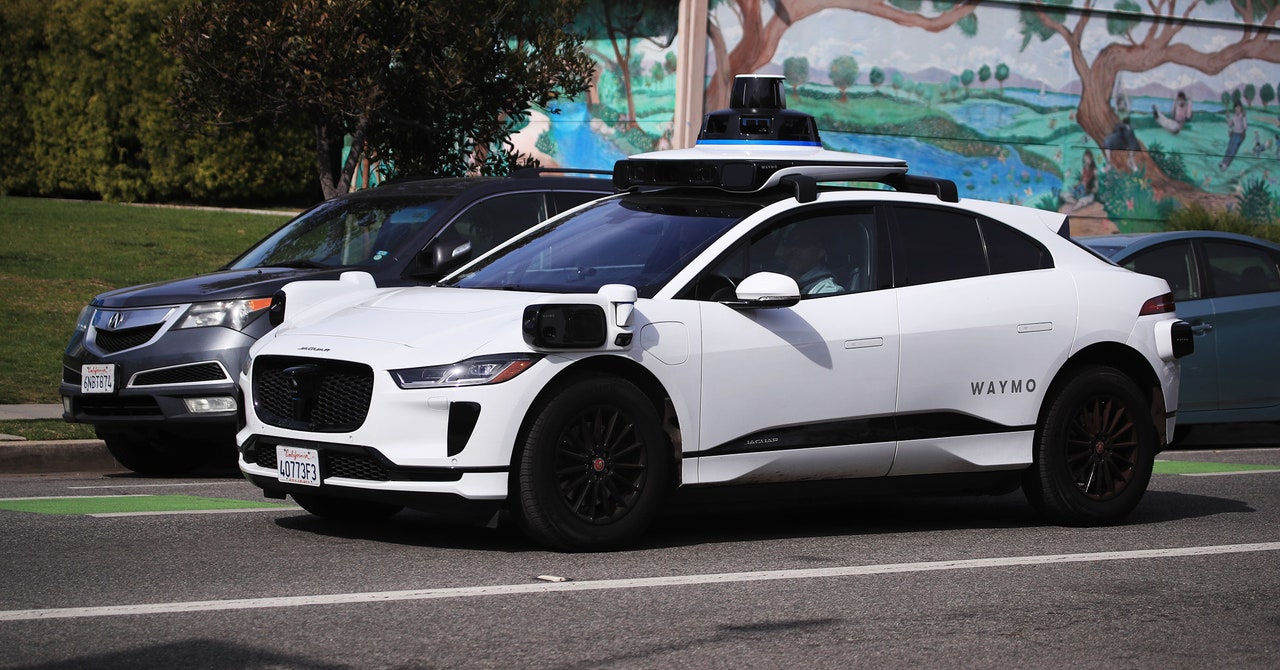
    Paid autonomous vehicle service is coming to Los Angeles, thanks to a decision by California regulators today to allow Alphabet subsidiary Waymo to operate in the city. Under the new ruling, Waymo is also permitted to launch service in a large section of the San Francisco Peninsula.

    The decision by the California Public Utilities Commission will likely prove controversial. It comes over the protest of local governments and agencies, including the Los Angeles Department of Transportation, the San Francisco County Transportation Authority, the city of South San Francisco, and the County of San Mateo. All argued that local government and citizens should have more input and oversight over the expanded autonomous taxi service.

    But California laws allow state regulators, not local ones, to make decisions about where and how self-driving vehicles can operate in the state—a fact that the CPUC cited in today’s decision.

    In a written statement, Waymo spokesperson Julia Ilina said that the company will “take a careful and incremental approach to expansion by continuing to work closely with city officials, local communities, and our partners.”

    The decision presents Waymo with what could be its biggest challenge yet: service in the second-largest American city by population, closely observed by government officials who have been skeptical of its technology from the start. Last fall, LA mayor Karen Bass wrote to California regulators to argue that her city has the technical know-how and capacity to determine how and where self-driving cars should operate within its limits. She cited robotaxi companies’ initial troubles operating on streets in San Francisco and argued that city officials were best positioned to “maximize the benefits of new transportation technologies and mitigate harm across our diverse communities.”

    The California legislature is considering several bills that would give local lawmakers more oversight over autonomous-vehicle technology.

    Waymo currently operates a paid taxi service in the city of San Francisco and in metro Phoenix, Arizona. The company has operated a pilot service in sections of Los Angeles since the fall. Waymo has also announced its intention to launch service in Austin, Texas.

    The company’s initial LA service area encompasses a hearty chunk of the city, from the Pacific Palisades to the west, Hollywood to the north, East Los Angeles to the east, and Gardena and Compton to the south. In the San Francisco Bay Area, riders will now be able to catch robotaxi rides between San Francisco and Sunnyvale, bounded by Interstate 280 to the west.

    Autonomous vehicle developers have had a tough couple of months. After Waymo and General Motors subsidiary Cruise received permission to start collecting passenger fares in San Francisco last summer, both companies were involved in high-profile crashes. In one incident, a Cruise vehicle collided with a fire truck after it failed to yield to the vehicle in an intersection. Two months later, Cruise had its permit to operate in California yanked after public officials alleged that the company hadn’t been forthcoming about the details of a collision that seriously injured a pedestrian. Cruise has since halted testing across the nation, laid off nearly a quarter of its employees, and replaced almost all of its leading executives. Another company, Motional, said it would lay off 5 percent of its staff this week after a major supporter said it would reduce its funding.

    But in Los Angeles and the Bay Area, at least, driverless technology’s future is looking up: Waymo may begin its fared driverless passenger service in the expanded area “effective today,” the CPUC wrote.

    [ad_2]

    Source link