Other restrictions such as the lack of VODs (videos-on-demand/replays) or other promotional tools like clips are factors DJs need to consider. Many performers already don’t use the VOD service, to avoid potential strikes, but for some it’s another way to engage fans who can’t watch live. Twitch has confirmed that VODs are not covered by the existing licensing agreement, but the company claims it’s exploring other promotional tools. DJs who also host nonmusic streams are simply being told to run dual accounts with only one enrolled in the program.
Despite these drawbacks, every DJ whom WIRED spoke with agreed that operating in a copyright gray area wasn’t good for anyone. Most also understood that Twitch, which is owned by Amazon, has obligations to rights holders. Clancy suggested as much in a blog post announcing the program. “It’s crucial that DJs understand the status quo on Twitch was not sustainable,” he wrote, “and any viable future for the community required we find a solution.”
Solutions are what Twitch seems to be needing most these days. The company, you may have heard, is not making money. User growth seems to have stagnated, while revenue growth has slowed, according to documents recently reviewed by the Wall Street Journal. In January, it announced it was laying off 500 employees (approximately a third of total staff), a move that followed a purge of more than 400 people in March last year.
According to Twitch, there are currently “tens of thousands” of DJs on the platform. This means, at best, DJs currently account for approximately 1 percent of active streamers—so attracting more to the platform is unlikely to be a panacea. But it is a growth area, fueled in large part by a wave of performers who joined during the pandemic, that the company clearly deems worth investing in.
In terms of competition, Twitch doesn’t face much. Harris says he tried Mixcloud, but felt there was a lot of “bot” activity in the streams and the revenue split wasn’t favorable. TikTok and most other mainstream social media platforms suffer at least some combination of takedowns and demonetization for playing unlicensed songs. Kick, a direct Twitch rival, offers a far more favorable earnings split—95 percent going to the performer—but if Twitch can’t make money with its bigger cut, it raises questions over whether that ratio is sustainable.
DJs, for their part, appear to welcome Twitch’s commitment to them, with most concerns directly proportional to their investment in the platform so far.
“I haven’t got a lot to lose, to be honest, so I’m just seeing where it takes me,” Harris says.
“Twitch is my main source of income,” says Colaway, a DJ who streams about 35 hours per week. “The supply of DJs on Twitch has grown extremely, so the likelihood of new DJs streaming full-time is very unlikely.” She added that she believed the program was still a step in the right direction and that she would be signing up.
As for East, he says: “I plan on hopping onboard as soon as it goes live, just so that I’m in the game, and getting the feel of what’s happening.”
“If I’m the guinea pig at that point, I’m the guinea pig,” East adds. “And I’ll take my lumps and bumps and hopefully keep on moving. The journey for me on Twitch has been amazing. It’s really the community that cements that.”
Ultimately, Twitch has the best shot at making this work, if DJs can tolerate the inconveniences that going legitimate requires. As the embattled music industry pats down the pockets of the people who promote its artists, Twitch seems as well positioned as any platform to offer a resolution.
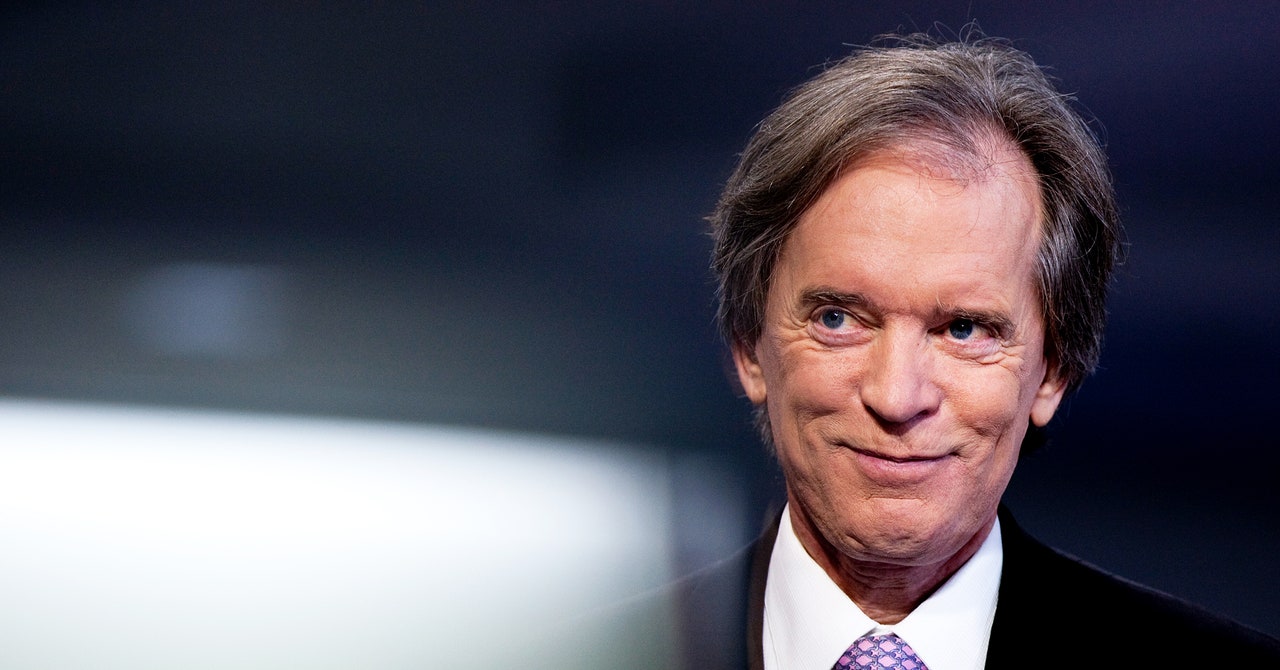
Bill Gross made his name in the tech world in the 1990s, when he came up with a novel way for search engines to make money on advertising. Under his pricing scheme, advertisers would pay when people clicked on their ads. Now, the “pay-per-click” guy has founded a startup called ProRata, which has an audacious, possibly pie-in-the-sky business model: “AI pay-per-use.”
Gross, who is CEO of the Pasadena, California, company, doesn’t mince words about the generative AI industry. “It’s stealing,” he says. “They’re shoplifting and laundering the world’s knowledge to their benefit.”
AI companies often argue that they need vast troves of data to create cutting-edge generative tools and that scraping data from the internet, whether it’s text from websites, video or captions from YouTube, or books pilfered from pirate libraries, is legally allowed. Gross doesn’t buy that argument. “I think it’s bullshit,” he says.
So do plenty of media executives, artists, writers, musicians, and other rights-holders who are pushing back—it’s hard to keep up with the constant flurry of copyright lawsuits filed against AI companies, alleging that the way they operate amounts to theft.
But Gross thinks ProRata offers a solution that beats legal battles. “To make it fair—that’s what I’m trying to do,” he says. “I don’t think this should be solved by lawsuits.”
His company aims to arrange revenue-sharing deals so publishers and individuals get paid when AI companies use their work. Gross explains it like this: “We can take the output of generative AI, whether it’s text or an image or music or a movie, and break it down into the components, to figure out where they came from, and then give a percentage attribution to each copyright holder, and then pay them accordingly.” ProRata has filed patent applications for the algorithms it created to assign attribution and make the appropriate payments.
This week, the company, which has raised $25 million, launched with a number of big-name partners, including Universal Music Group, the Financial Times, The Atlantic, and media company Axel Springer. In addition, it has made deals with authors with large followings, including Tony Robbins, Neal Postman, and Scott Galloway. (It has also partnered with former White House communications director Anthony Scaramucci.)
Even journalism professor Jeff Jarvis, who believes scraping the web for AI training is fair use, has signed on. He tells WIRED that it’s smart for people in the news industry to band together to get AI companies access to “credible and current information” to include in their output. “I hope that ProRata might open discussion for what could turn into APIs [application programming interfaces] for various content,” he says.
Following the company’s initial announcement, Gross says he had a deluge of messages from other companies asking to sign up, including a text from Time CEO Jessica Sibley. ProRata secured a deal with Time, the publisher confirmed to WIRED. He plans to pursue agreements with high-profile YouTubers and other individual online stars.
The key word here is “plans.” The company is still in its very early days, and Gross is talking a big game. As a proof of concept, ProRata is launching its own subscription chatbot-style search engine in October. Unlike other AI search products, ProRata’s search tool will exclusively use licensed data. There’s nothing scraped using a web crawler. “Nothing from Reddit,” he says.
Imagine Kgomotso Mathabe’s surprise when, in January, a colleague alerted her that a video of her promoting a fake drug to treat erectile dysfunction was doing the rounds on social media. She’d done no such thing.
“It was a video of me saying there’s this new drug based on research that I’ve been involved in,” says the South African urologist, who splits her time between the Steve Biko Academic Hospital in Pretoria and the University of Pretoria. It was realistic enough for family friends to begin asking why they saw her face every time they went on Facebook.
The video of Mathabe was a deepfake, generated using artificial intelligence (AI) technology trained on real video and audio material. Such videos have become difficult to distinguish from the real thing, as well as easier and cheaper to make, so their harmful use is a growing concern.
Mathabe, a self-professed social-media recluse, did not know what to do. At first, she assumed the main purpose of the video was to sell fake drugs, a common scourge in South Africa, where handwritten notices advertising healing are a familiar sight in public spaces.
But it was worse than that. The video directed users to a website where they were asked to enter their banking details to receive the drug. Those who did so had money siphoned out of their account, often several times, and received no medicine in return.
Urologist Kgomotso Mathabe was a target of a deepfake video and other faked advertisements, such as this one (left) for an erectile dysfunction treatment, which took an original photo of her (right) and edited it to make it look like she was wearing a white coat and stethoscope.Credit: Courtesy of Kgomotso Mathabe
Soon, the phones at Mathabe’s practice were swamped by irate callers accusing her of stealing from them. “That’s when I realized, this is serious,” she says.
A proliferating problem
Mathabe is not alone. In India, diabetes specialist Viswanathan Mohan has been featured in several deepfake videos, including one in which he seems to be talking in Hindi, a language that he doesn’t speak.
“My name is synonymous with diabetes in India. So, whatever I say about diabetes is taken as the gospel truth,” says Mohan, who chairs an International Diabetes Foundation centre of excellence in Chennai. That means that the use of his name or profile by scammers, to sell fake drugs, is nothing new.
But lately the attacks have become more sophisticated, and harder to debunk. “With AI, they can make an image look and speak exactly like me, with my mannerisms,” he says. In one video, he is depicted as saying that people could live to 100 years if they take a certain herbal product.
Diabetes researcher Viswanathan Mohan has been the target of several deepfake videos and says they present both a reputational and a professional risk to researchers, who should work to get them taken down or labelled as fake.Credit: Dr V Mohan
Such videos pose a reputational risk, as well as a professional one because, Mohan says, he could face legal action from bodies such as India’s medical association. In 2022, the association sued the Indian herbal-products company Patanjali Ayurved, based in Haridwar, for alleged false advertising over claims that its products could cure a range of ailments.
Attack on scientists’ credibility
Discussions about the dangers of deepfakes have so far focused on politicians and celebrities. A video of the rapper Snoop Dogg reading tarot cards might seem harmless, but the same technology has been used to generate pornographic images of singer-songwriter Taylor Swift. Deepfaked voice recordings have been used to sow disinformation in elections from Slovenia to Nigeria, and most people in the United States expect AI abuses to affect this year’s US presidential election. But AI researchers say that scientists — particularly those in the public eye — are also at risk.
“When you think of ways to spread misinformation, you want to manipulate what people think are the trusted sources of information,” says Christopher Doss, a quantitative researcher who works in Washington DC for the RAND Corporation, a non-profit policy-research think tank. So, deepfakes involving scientists “are probably going to be something that we see more of”, he says.
Last year, Doss published a study with colleagues at RAND, Carnegie Mellon University in Pittsburgh, Pennsylvania, and the Challenger Center in Washington DC to test the ability of US schoolchildren, university students and adults to distinguish fake science-information videos from real ones; between 27% and 50% of the respondents could not identify the fakes. The videos featured well-known climate commentators, including activist Greta Thunberg and retired atmospheric physicist and climate doubter Richard Lindzen, in Cambridge, Massachusetts; all of the clips were generated from publicly available material.
“Deepfakes definitely aren’t perfect, but we’re at the point now where they’re probably good enough to fool at least a substantial percentage of people,” says Doss. And generating one doesn’t require the technical expertise that it used to, he adds.
Despite current efforts, few technological means are available to stop legitimate videos being used to generate deepfakes, says Siwei Lyu, a specialist in machine learning and digital media at the University at Buffalo in New York.
I’m worried I’ve been contacted by a predatory publisher — how do I find out?
He says that scientists should be cautious when sharing media on social platforms, but adds that this can be difficult for those who often participate in media interviews or give presentations. At the very least, he says, scientists should make a habit of saving clips that feature them.
“Having the original version of the video helps to debunk the fake,” he says, because many deepfake videos are made from authentic ones by lip-syncing them to different messages. Posting the original version of a clip is one way of combating such misinformation.
Damage control
But what if the worst were to happen? Once a deepfake is out in the world, there are things that scientists can do to minimize the negative impacts, both professionally and personally, says Jeannie Paterson, a law researcher at the University of Melbourne in Australia who specializes in consumer safety and reliable AI.
“Let’s say, you wake up and all of a sudden your face is being used to promote something that you would never have promoted. First of all, if this happens to you, breathe,” she says.
The next step is to contact the social-media platform on which the material is being shared and ask that it be taken down. Platforms such as Facebook, YouTube and Instagram allow users to report ads that are misleading or scams, and if there’s a high risk of harm from the misinformation — such as fake drugs being sold — they are more likely to act, Paterson says.
Meta, which owns Facebook and Instagram, says it removes misinformation “where it is likely to directly contribute to the risk of imminent physical harm”, if it’s likely to influence political processes or if it’s “highly deceptive”. The company says it partners with independent experts to assess the truth of the content and decide whether it constitutes grounds for takedown. Meta has also introduced ‘AI info’ labels for video, audio and images that have been modified with AI technology; it says these labels are assigned either on the grounds of telltale AI signs in the content or when users disclose that the content is AI-generated.
AI-fuelled election campaigns are here — where are the rules?
Scientists featured in deepfakes should also contact their employers, Paterson says — perhaps both their immediate supervisors and their department heads, who might in turn reach out to the human-resources department. If applicable, they should also notify the body that regulates their profession, such as a medical board or other professional society, she says; that’s because being featured in a deepfake video endorsing fake drugs, say, could jeopardize their accreditation. These organizations can also help to disseminate a correction. And the faster this can come out, the better, she says, because the more a video spreads, the greater the potential harm.
Scrutinizing the video itself is another important step, even though it might be emotionally taxing. Asking a trusted colleague or friend to help is a good idea, says Paterson. “I’d sit down with somebody who’s a bit techie, and watch the video, maybe at a slower speed, so you can spot the inconsistencies or failings that suggest it’s a deepfake,” she says. Telltale signs include shadows not looking quite right, or a lack of coordination between the mouth and the rest of the face.
It might also be a good idea to go to the police or look into legal action, says Paterson — especially if the video poses a serious threat to a scientist’s reputation, or if it is used to commit a crime. Typically, it’s criminal fraud to use a fake image to sell a fake product, says Paterson, and police might choose to pursue and prosecute those responsible for such conduct. Such deepfakes also involve misrepresentation, which is a civil wrong and can be reported to consumer-protection regulators, she notes. And victims of deepfake videos can seek damages for defamation in court. However, it is often not possible to identify a perpetrator, she adds. “They are, after all, a fraudster.”
Not a victimless crime
In South Africa, Mathabe went to the police after colleagues began to fear for her safety, owing to the number of complaints coming in from people targeted by the financial scam that her face had been used to promote. She says that having a case number helped her to field complaints from people who had been cheated out of their money. But going to the police didn’t result in prosecution. It was a challenge to explain the nature of the incident to the officers on duty, she says. They suggested she take the legal route and open a case for defamation of character. When she asked about adding cybercrime as an aspect of her complaint, the officers said they did not have the funds to pursue large overseas companies such as Meta.
Kgomotso Mathabe, a urologist in South Africa, says that filing a police report, and realizing that fraudsters targeting her was not personal, helped her to move on from the deepfake video scam.Credit: Discovery Foundation
Taking the legal route can also be costly, and it’s not clear where scientists featured in deepfakes can go for help. The British Medical Association, a doctors’ union, offers members legal support for employment-law disputes only. Some countries have online safety laws that assist victims in removing nonconsensual images of an intimate nature, but these laws rarely cover misinformation or hijacking somebody’s public profile to sell fake products. For example, the United Kingdom’s online-safety law, enacted last year, has been criticized for being too soft on mis- and disinformation campaigns, even though it creates a new offence for false communications.
Mohan says he reports the videos in which he appears to India’s cybersecurity police, but that there isn’t much they can do. “They tell you they get thousands of complaints every day.”
He thinks these deepfake scams could be more common in low-income countries than in wealthy ones, because higher levels of poverty could be driving more people to cybercrime. Weaker control of the sale of counterfeit or fake drugs, and lower health literacy, could also play a part, he adds.
But with the quality of the technology improving, he thinks nowhere will be safe. “There must be crooks everywhere,” he says.
In Pretoria, Mathabe says that things have quietened down since the flurry at the start of the year. There have been no phone calls to her clinic for a while. She says she doesn’t know what happened to the people who were scammed out of their savings, and no progress has been made in her police case.
She can now look back on the ordeal and realize how traumatic it was. Especially at the beginning, when she was trying to work out why she had been targeted. “I wondered, who doesn’t like me this much?”
But then, as she learnt more about deepfakes and scamming, she realized that the criminals did not care about her at all. Hearing that others have been targeted in a similar way also helped, she says. “Then it felt less personal.”
Like many in the United States, Kate Starbird saw a surge in misinformation in the build-up to the 2016 US presidential election between Donald Trump and Hillary Clinton. Everyone was talking about ‘fake news’ — fabricated stories that were widely shared on social media and designed to sway the election.
But unlike most people, Starbird was equipped to investigate the problem. As a computer scientist at the University of Washington in Seattle, Starbird had studied the spread of misinformation during crises such as hurricanes and civil wars.
What she saw was not just rumours taking root, but deliberate lies; disinformation that was, she says, “sinking into the structure of the Internet”. When the 2020 race rolled around — this time pitting Trump against Joe Biden — Starbird was poised to track the viral spread of hundreds of fake stories on social-media platform Twitter (now X) in the lead-up to election day. More than 300 fabricated narratives, she found1, were designed to sow doubt about the legitimacy of the election.
Misinformation might sway elections — but not in the way that you think
Not long after publicizing the work, she and her colleagues became the target of what she calls a “multi-pronged” strategy to discredit it. She has since been a defendant in several high-profile lawsuits, was subpoenaed to appear at congressional hearings and has defended accusations that she colluded with the government to censor free speech in the United States. She has also been deluged with public-information requests, sued for not responding to those requests promptly enough, and bombarded with disingenuous questions from hostile media outlets.
Researchers such as Starbird, who study how elections are run and what factors influence their outcomes, are often lightning rods for an increasingly divided and dissatisfied public. Political polarization has intensified in recent years in countries including the United States, Turkey, India, Poland and Brazil.
Close to half of the world’s population lives in countries holding elections in 2024. Two of the biggest contests are in India, where results were declared earlier this month, and in the United States, which is due to vote in November. In both countries there are suggestions that democratic processes — including free and fair elections — are eroding. Nature spoke to scientists from around the world whose work has flung them into both the public and political limelight, sometimes with drastic consequences for their personal and professional lives. Many have found that the situation can quickly become untenable, particularly in places where support for researchers is lacking. “Institutional support is paramount,” says Starbird.
Kate Starbird was subject to targeted attacks.Credit: Jovelle Tamayo/The Washington Post/Getty
Drawing maps, drawing heat
In the United States, one lightning-rod electoral issue is redistricting, the once-in-a-decade process in which electoral maps are redrawn after the national census to ensure that each district has a similar number of people. Redistricting determines the boundaries of a community that will vote for a legislator, and it has a long history of political manipulation. “Redistricting in the United States is odd,” says Sam Wang, a neuroscientist who also runs a research group that studies elections and electoral maps at Princeton University in New Jersey. One of the system’s oddities, says Wang, is that elected officials control how electoral maps are drawn, often giving one party the power to build bias into the maps through a process known as gerrymandering.
When he first came to understand this quirk of the US system in 2012, Wang says, “my mind was kind of blown”. Legislators are rewarded for drawing maps that benefit their own party, and US federal law allows it, for the most part, although some states now have processes and independent redistricting bodies to mitigate gerrymandering. Wang founded the Princeton Gerrymandering Project to develop simple mathematical tests that courts could use to determine whether redistricting maps were fair or not. He outlined three tests in an influential paper2 in 2016, and wrote several briefs for the US Supreme Court, which was hearing cases challenging electoral maps around the same time.
In 2022, Wang served as a technical expert during redistricting in New Jersey. When the commission he was advising selected a map favoured by the Democratic party, Wang was publicly accused of bias and of manipulating data to influence the decision.
Sam Wang was accused of bias and bullying.Credit: Princeton University, Sameer A. Khan/Fotobuddy
He was also accused of mistreating his co-workers and of being under investigation by his university for sexual harassment, a claim that Princeton quickly refuted. Wang says that the attention didn’t surprise him — he’d previously ruffled feathers with articles he’d written on topics such as brain training and autism. But the attacks on his character for the professional work he was doing was new. “Politics gets personal,” says Wang. “It’s not a domain where the evidence takes centre stage, and I found that to be a novel experience,” he says.
Princeton University investigated the data manipulation and bullying claims, and concluded, in August 2022, that the allegations were without merit. A further investigation by the New Jersey State Commission of Investigation (SCI), which took another year to complete, also concluded that Wang had not manipulated data. But during those investigations, Wang was unable to defend himself publicly. Princeton put out statements “setting the record straight” as the SCI investigation proceeded, says Wang, for which he is grateful. Despite the challenges, Wang wouldn’t dream of abandoning his work on elections to focus solely on neuroscience. “I love all my children equally,” he says.
Unsafe harbour
Other countries are also seeing increased political interference in academia — and political bite back for academics working on politics. Hungary is one example. Its government has been headed since 2010 by Viktor Orbán, a self-proclaimed proponent of ‘illiberal democracy’, which eschews Western liberal values in favour of policies that promote national interests. In 2019, his government took control of the country’s research institutes, and concerns about loss of academic freedom led to an international outcry.
Misinformation poses a bigger threat to democracy than you might think
Zsolt Enyedi, a political scientist at the Central European University (CEU) in Budapest, is one person who has started feeling the heat. He is a principal investigator in a major, multinational consortium of academics, funded by the European Union, called Neo-authoritarianism in Europe and the liberal democratic response (AUTHLIB). The consortium launched in October 2022 to investigate how and why illiberalism emerges. Enyedi says that he had never been threatened or attacked for his research — until this year. In January, a series of articles across multiple media outlets called out Enyedi and attacked the EU for using public money to support research which, the articles said, was “biased against illiberal democracies and in favour of the agenda of George Soros”. Soros, the Hungary-born multibillionaire who founded the CEU, is known for his support of progressive and liberal political causes. One article suggests that the EU was helping the ‘Soros network’ to interfere with European elections using EU taxpayers’ money. “The claims were ridiculous, but the media attack had no practical consequences for me,” says Enyedi.
Turkey is another country that has been on an increasingly authoritarian path, and has taken a number of measures to curtail academic freedom over the past 15 years. The situation peaked after the country declared a state of emergency in July 2016 in the wake of an attempted coup. Thousands of academics who were suspected — often without grounds — of being complicit in the coup or in open disagreement with the government were arrested and lost their jobs.
But here, political scientists say that the problem is not that they feel pressure from the state or pro-government organizations while researching the political and electoral landscapes. “Our greatest problem is that we are ignored by both the media and the larger community,” says Ali Çarkoğlu at Koç University in Istanbul, who studies voting behaviour.
How five crucial elections in 2024 could shape climate action for decades
Political scientist Berk Esen at Sabanci University in Istanbul says that he also has not faced serious retribution or censorship attempts — even when he has been openly critical of the government’s democratic credentials. But he adds that he, like Çarkoğlu, works at a privately run university. Academics in state universities that are close to the government are under more pressure, Esen says. “There is a lot of self-censorship because of the culture of fear after the coup attempt,” he says.
Some researchers elsewhere have not had the opportunity to continue their work. “My job in India no longer exists,” says Gilles Verniers, a political scientist who was forced to leave his position as head of an election research centre at the private Ashoka University in Sonipat, just north of New Delhi, in September 2023. Verniers had founded the Trivedi Centre for Political Data (TCPD) as a source of open-access data on Indian elections, including candidate demographics and real-time election results, in 2016.
“Initially, there was a lot of enthusiasm for the centre,” says Verniers, who now works at Amherst College in Massachusetts. This is because the centre also reported data on health, crime and poverty that he argues had become harder to obtain through government agencies in the past decade. For example, in 2021, the Indian national census, which takes place every ten years, was postponed for the first time since 1881. Annual reports on household expenditure — important for measuring poverty — have also been delayed. Verniers’ work3 became the centre of a political storm in 2020 when he revealed that the representation of minority ethnic and religious groups in government leadership roles was not as high as the government suggested. He says that the furore, which included public allegations that he misrepresented the data, led donors to get nervous, and eventually caused Ashoka University to absorb his centre into a new one, making him redundant in the process.
Gilles Verniers says that some private universities are succumbing to political pressure in India.
In a statement to Nature, Ashoka University said that Verniers did not pass the stringent tenure process at the university, and that the TCPD’s integration into the new centre — which provides “a repository of open access public data across interdisciplinary fields, which include social, climate, computer, biosciences, among other fields” — “has no connection with any funding or other external factors”.
Verniers says that the closure of the TCPD is just one example of a worrying trend in India to curtail academic freedom. In January, the Centre for Policy Research (CPR) in New Delhi, a not-for-profit think tank at which Verniers also holds an appointment, lost its licence to obtain funding from abroad. The decision — widely viewed as political — has blocked funding to the CPR, endangering its future.
Nitasha Kaul, a political scientist at the University of Westminster in London, says that voices that are critical of the government have been silenced. Initially, she says, the main target was the media. But the government is now homing in on academics.
Trump versus Biden: what the rematch could mean for three key science issues
Kaul has written about the rise of authoritarianism in India and human-rights issues in the Kashmir region. She says that she was barred from entering the country — with no official explanation — when invited to speak at a conference, despite having the necessary paperwork. When she wrote about the situation on X, what followed was a “very coordinated and horrible, violent and misogynist, trolling” campaign against her, she says.
Elsewhere, the threat of political pressure has changed the nature of research, says James Gomez, who in 2015 founded the Asia Centre, an independent research institute in Bangkok. He says that working outside a university can be advantageous. “You can’t do free, unfettered research about these matters — not just elections, but democracy and human rights — without having challenges from within the structure of a university,” he says. The result, says Gomez, is that a lot of election scientists throughout Asia “practise a lot of self-censorship”. They either stop writing about contentious topics, or they write in a “euphemistic way”, he says. For example, Malaysian political scientists might write about Korea or Japan, rather than writing about situations in their own country.
Thicker skin
Starbird says that being the subject of a targeted campaign is like being caught in a spiderweb. “It can feel like there’s no way out of it,” she says. “The more you move, the more it wraps around you.” Support from her institution, the University of Washington, has been crucial to weathering the storm, she says. Now, instead of sifting through thousands of e-mails and documents to fulfil freedom of information requests, she hands her computer over to someone else to complete the request. “That’s taken a lot of the stress off,” she says.
Starbird is using her personal experience in her research to understand why it’s so hard for the targets of online trolling campaigns to fend off attacks. Initially, Starbird followed advice to not respond to online attacks or articles containing falsehoods. But she says that approach didn’t work. “This idea that you can just let it fester, because it hasn’t hit one of these mainstream media outlets yet — it’s just not how things work any more,” she says. That doesn’t mean responding to all media requests, especially the ill-intentioned ones, she says, but it does mean triaging requests and negative coverage of her group’s work and taking the time to craft detailed rebuttals so that other journalists can be armed with the truth.
“At a certain point, you accept that you’re not going to have full control of how you’re portrayed,” says Starbird. “It feels a little uncomfortable, but it’s just how the world works,” she says. “My skin’s a lot thicker than it used to be.”
In the latest battle between AI and the media, major Danish newspapers and TV stations are threatening to sue OpenAI unless the company compensates the country’s press for allegedly using their content to train its models.
“We want remuneration for our work [which] they have used to train their model,” says Karen Rønde, CEO of the Danish Press Publications’ Collective Management Organization (DPCMO), which represents 99 percent of Danish media outlets, including state broadcaster DR and TV 2. Rønde says the DPCMO plans to sue if a deal is not reached in the next year.
AI has created a new front in copyright law after a series of lawsuits claimed that OpenAI, which is backed by Microsoft, scraped news companies’ websites without permission in order to train its AI models. Soon after those lawsuits, OpenAI struck a series of licensing deals with major publishers, enabling the company to train its future iterations of ChatGPT on their content. Financial terms for the deals have not been disclosed.
Now, Danish media is attempting to force OpenAI to negotiate with them as a collective, an unusual tactic that could provide a model for other small countries if successful. So far, OpenAI has been striking deals with publishers individually and has announced content partnerships with the Financial Times and the Atlantic, as well as German media conglomerate Axel Springer, French newspaper Le Monde, and Spanish group Prisa.
After meeting with OpenAI online and in-person earlier this year, Rønde says she was left with the impression that Denmark was not a top priority. “It was made clear that the focus was the deal in Germany and the deal in France and the deal in Spain and of course, the American ones,” she says. “There are so many content creators in all the other territories and they are now left with nothing.”
Rønde has sent a letter to OpenAI’s lawyer at Dutch firm Brinkhof informing them of Danish copyright law, and says she is waiting for a response. She presumes OpenAI has already used content from Danish press websites because the company has not told her otherwise, she says. Neither OpenAI nor Brinkhof replied to WIRED’s request for comment.
For Rønde, time is of the essence. She wants to strike a deal with OpenAI and also Google’s Gemini in the next year, before the use of AI chatbots and search engine overviews further marginalizes publishers’ websites. “Maybe then it [will be] too late, and the value of the press publishers’ content will be—in one or two or three years—too low,” she says. “If we cannot enter into a partnership agreement within a reasonably short time frame, then we need to enforce our rights.”
DPCMO was set up in 2021 to help Danish media negotiate with Big Tech. “We needed to stand united, otherwise we feared that Denmark would be too small a country to be prioritized in the discussion with Big Tech,” says Rønde.
Last year, the group secured preliminary license agreements with Microsoft’s Bing and Google to feature Danish publishers’ content in the company’s search engines. Although the agreements outlined that publishers should be compensated by the two companies, the deals did not agree on how much.
X owner Elon Musk (left) and artificial-intelligence pioneer Yann LeCun sparred on the social-media platform about scientific publications.Credit: Slaven Vlasic/Getty for The New York Times, Benjamin Girette/Bloomberg via Getty
If you do research and don’t publish it, is it science? That’s the question at the heart of an ongoing debate on X between Elon Musk and pioneering computer scientist Yann LeCun. Over the past few days, the conversation sprawled into a brawl about the definition of science, attracting thousands of commentators including researchers of all stripes who offered their opinions.
The discussion started on 27 May after Musk posted on X, formerly Twitter: “Join xAI if you believe in our mission of understanding the universe, which requires maximally rigorous pursuit of the truth, without regard to popularity or political correctness.” (Musk founded the company xAI to build to build artificial intelligence (AI) capable of enhanced reason technologies. Its first product is called Grok.)
Thousands of scientists are cutting back on Twitter, seeding angst and uncertainty
LeCun, chief scientist at at tech giant Meta who is known for his foundational work in deep learning and neural networks called out Musk’s post, saying that he “claims to want a “maximally rigorous pursuit of the truth” but spews crazy-ass conspiracy theories on his own social platform”. It escalated quickly, with Musk questioning what science LeCun had done in the past 5 years. LeCun, who also holds an academic post in AI at New York University in New York City, replied: “Over 80 technical papers published since January 2022. What about you?”
LeCun then posted saying “if you do research and don’t publish, it’s not Science”. He argued that research is only ‘science’ when it is collected as a body of knowledge, tested for correctness and reproducibility, and then published. “Technological marvels don’t just pop out of the vacuum. They are built on years (sometimes decades) of scientific research,” he said. Without sharing that scientific information, “technological progress would slow to a crawl”.
LeCun’s definition of science sparked a backlash. Some people criticized him for not mentioning that science is often considered a method. Another, tech entrepreneur Palmer Luckey who developed the virtual-reality headset Oculus,condemned the idea that “people who don’t publish their research for peer review will die bitter and forgotten”. Others still argued that scientific experiments done in companies are often kept private, and even outside of the private sector 40% of data from academic and government scientists goes unpublished, according to some estimates.
“LeCun still misses the very essence of how science works. Saying ‘science is only science if it is published’ gatekeeps the idea that science is a method of understanding that people can use in their daily lives,” says Peter Coveney, a computer scientist at University College London.
The importance of feedback
LeCun later clarified his definition, posting: “science progresses through the collision of ideas, verification, analysis, reproduction, and improvements. If you don’t publish your research *in some way* your research will likely have no impact.”
He also hinted in his posts that there is need for more openness in research about AI, in particular the source code underlying networks. Coveney and philosopher of science Janet Stemwedel agree with LeCun on this point, especially amid criticisms that AI algorithms such as ChatGPT, Sora and AlphaFold3 are being developed and launched without the publication of their code.
“The big issue is that you need to expose your knowledge claims to rigorous examination, and you need to be responsive to the feedback that emerges from that,” says Stemwedel, who is at San José State University in California. She added that philosophers of science now see responsivity to feedback as a cornerstone of modern definitions of science, alongside principles such as the utility of science to make predictions and provide explanations.
Coveney pointed to the development of generalist AI tools, which aim to interpret data and produce advanced reasoning abilities. “At the heart of it is a large language model like ChatGPT, but they implement what’s called foundation models to solve problems.” He says that it’s questionable how scientific their methods are, even when their processes can be scrutinized by scientists.
Twitter changed science — what happens now it’s in turmoil?
xAI, for instance, is making its AI development open source. “Musk argues that we can provide scientific explanations by using explainable AI like xAI, thereby replacing conventional ways of doing science,” says Coveney. The problem is that a machine ingesting scientific literature and then creating statistical inferences does not confer understanding to the machine. It’s not an objective and rational way of creating scientific theories.”
Debated definition
The definition of science will always be contentious, says Stemwedel, who has studied how scientists use Twitter and X. Pre-Musk Twitter has had a beneficial role in overall discussions about science, where people showed that science could be responsive to feedback. “Early discussions showed objectivity is not a property of individual scientists, but rather of the collective efforts of a knowledge-building community. In the Musk era, I’m afraid things have gotten less responsive to reason.”
Amid the debates, Coveney says that it’s crucial to maintain the fundamental ideas of science that stem from the Enlightenment.
“The central element is if you can’t have an objective discussion then you’re not doing science, because you’re just articulating your opinions,” he says. The irony, adds Coveney, is that this is exactly what was happening on X.
As a vocal advocate of vaccinations for public health, Peter Hotez was no stranger to online harassment and threats. But then the abuse showed up on his doorstep.
It was a Sunday during a brutal Texas heatwave in June 2023 when a man turned up at Hotez’s home, filming himself as he shouted questions at the scientist, who is a paediatrician and virologist at Baylor College of Medicine in Houston, Texas.
Because of the long-running online and real-life abuse he has faced, Hotez now has the Texas Medical Center Police, Houston Police Department and Harris County Sheriff’s Office on speed dial, an agent tasked to him from the FBI and extra security whenever he speaks publicly.
“This is a very powerful adversarial force that is seeking to undermine science, and now it’s not only going after the science. It’s going after the scientists,” he says.
Hotez is an especially well-known scientist, but his experience is far from unique. Every day around the world, scientists are being abused and harassed online. They are being attacked on social media and by e-mail, telephone, letter and in person. And their reputations are being smeared with baseless accusations of misconduct. Sometimes, this escalates to real-world confrontations and attacks.
‘I hope you die’: how the COVID pandemic unleashed attacks on scientists
Such threats to scientists aren’t new; those researching climate change and gun control, for example, have endured abuse for decades. However, since the start of the COVID-19 pandemic, there has been an unprecedented escalation in the intensity and frequency of attacks, and the range of targets, say researchers. Anthony Fauci, the former director of the US National Institute of Allergy and Infectious Diseases and one of the most high-profile infectious-diseases specialists during the pandemic, was subject not just to online trolling, but to two credible attempts on his life that prompted the arrests of two people. Virologist Marc Van Ranst at the Catholic University of Leuven in Belgium and his family were moved to a safe house after a far-right soldier hunted them.
It’s not just scientists with a public profile in the crosshairs; those targeted include mathematical disease modellers, pharmacologists, physicists and fluid-dynamics researchers, who have never previously had any media attention.
“You don’t even necessarily have to be someone who’s active on social media,” says Sarah Sobieraj, a sociologist researching digital abuse and harassment at Tufts University in Medford, Massachusetts. “The visibility that brings attention to you could come from any number of sources that are not of your own doing.” Scientists have been attacked for private lectures and conference presentations that are shared online, studies published in journals, research work done for government agencies and even private Facebook posts shared publicly without their consent.
Researchers say that the surge in abuse is showing no signs of slowing down, even as the pandemic itself slips from the headlines. “All the data that we do have points to it increasing rather than decreasing; it’s certainly getting quite prolific,” says Lyndal Byford, director of news and partnerships at the Australian Science Media Centre in Adelaide. “I’m hearing a lot from universities and research organizations that they’re seeing it as an increasing problem.”
However, universities and research institutions are often slow to respond to this fast-moving threat, and the support they offer can frequently fall short, say many researchers who have experienced harassment. “Too often, we’re off on our own, not getting the backing of the institutions,” says Hotez.
Microbiologist who was harassed during COVID pandemic sues university
This issue has led to a court case in New Zealand, in which microbiologist Siouxsie Wiles is suing her employer, the University of Auckland, over the way it has responded to the ongoing harassment she has experienced since early 2020, which included online attacks and people confronting her in public. Wiles’s lawsuit alleges that the university “failed in their duty to keep her safe in her employment”. (The university says that it took numerous steps to ensure Wiles’s safety.)
The lawsuit and other high-profile cases have prompted a broader discussion among researchers, universities and other organizations about how best to respond to this kind of harassment. There is a growing recognition that online abuse and other types of attack can cause serious harm to individual scholars and to universities and research institutions. If researchers can’t communicate openly without facing abuse, “then really one of our core missions is being quite substantially damaged”, says Emma Johnston, a marine ecologist and deputy vice-chancellor of research at the University of Sydney, Australia.
Supporting scientists
Public-health researcher Tara Kirk Sell at the Johns Hopkins Bloomberg School of Public Health in Baltimore, Maryland, became a target for online harassment and abuse after she started appearing on conservative television networks at the start of the pandemic in 2020 to talk about COVID-19. She and her colleague Beth Resnick, also a public-health researcher, decided to look into how many other people at Bloomberg were experiencing harassment; Sell was far from alone.
“We’re lucky,” says Sell, about the supportive leadership at their institution. The researchers were asked if they had any ideas about how to tackle the issue. So they put together a working group of people from across the university, and interviewed people who had experienced abuse to find out what could help.
“The most important thing really is that people feel like their institution supports them,” Sell says. The challenge is getting that support to them quickly and easily, with as few barriers to access as possible.
The approach they chose was to set up a dedicated e-mail address that staff can forward messages to if they receive abusive communications or posts on social media. That triggers an automatic alert to the campus security team as well as to Sell and Resnick. The staff member gets an immediate automated response with information about institutional support they can access, including counselling, the communications team and emergency-contact details for the security team.
Security will automatically get in touch with the affected person in two business days. Sell and Resnick also personally contact the staff member to make sure they’re all right.
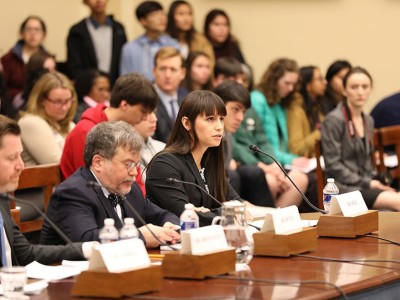
Researchers Peter Hotez (centre) and Tara Kirk Sell (right) at a congressional hearing in 2020.Credit: Sarah Silbiger/Bloomberg/Getty
That ‘one-stop shop’ approach is crucial for dealing with online abuse and harassment, says Byford, because otherwise people facing these problems are at risk of falling between the cracks of organizational structures. “Everybody sees that it’s a big issue, but it’s not always clear who within that university structure is the right person to take control,” she says.
A multi-disciplinary team approach is key for handling harassment, says Bram van der Meer, a threat-assessment specialist at Dantes Psychology Services in Voorburg, the Netherlands, which works with organizations to manage problematic workplace situations. Van der Meer calls these groups ‘social-safety expert teams’ and says they should include people from various departments such as security, human resources, legal and university leadership. Such teams would have expertise and training in swiftly triaging threats and deciding on the best course of action, while also supporting an individual who is on the receiving end of the abuse.
But social-safety expert teams are no use if people don’t know about them or are hesitant to report to them. “There has to be a lot of advertisement about the existence of this group,” van der Meer says. He suggests that the university have an ambassador for the programme, who can help to raise the profile of the support service and encourage staff to make use of it.
Often people delay reporting harassment — or don’t report at all — until a situation escalates. Van der Meer says one of the most common reasons for this is that individuals are worried about the professional consequences of raising an issue, such as what their colleagues will think. They also worry that they are overstating or exaggerating the problem.
Sobieraj says women are often wary of reporting abuse and harassment, because they don’t want to be perceived as being ‘whiny’. The material itself can also be embarrassing to talk about. “If somebody has sent you a doctored image of yourself that’s pornographic or the commentary is talking about your presumed sexual behaviour, this is kind of embarrassing to talk about, or humiliating,” she says.
But under-reporting can hamper an institution’s ability to build a true picture of the problem and understand how serious or widespread it is. “I only see when one person e-mails me,” says Sell about receiving a harassing message. ”But I don’t know if that person’s e-mailing 50 other people in the department.”
Knowing about shared experiences also has its benefits. Johnston says the University of Sydney has found that being able to speak to others who have gone through the same thing can help those who are experiencing abuse. “They know that they’re not alone, and they form their own support network, they can share best responses and resilience tricks,” she says.
Online abuse and harassment is isolating, and can lead to serious psychological and professional harm, particularly for individuals who are already vulnerable or at a systemic disadvantage, says Alice Marwick, a communications researcher at the University of North Carolina at Chapel Hill. “People who are first-generation academics, or people of colour, or queer folks or women, these are already people who are bearing enormous burdens.”
Marwick thinks that abuse is discouraging researchers from working on certain subjects that might attract unwanted attention. “I think that there’s a lot of people who are interested in studying controversial topics who don’t want to study them because they’re worried about this kind of backlash,” she says. She and her colleagues have published a guide to help researchers and academic institutions deal with harassment (see go.nature.com/4dhsxv4).
Tailored strategies
The stereotype of an Internet troll has long been of a lone individual hiding behind anonymity. But as Hotez’s experience has shown, the harassment can come from all levels of society. Sometimes it comes from other academics, even at the same institution. Sometimes it can come in the form of spurious complaints of research misconduct made through official channels.
Such attacks warrant different strategies that might include a public statement of support from the scientist’s institution. “We put out statements in support about academics’ right to present their work, free from harassment, and the right to present their expertise,” says Johnston, although she adds that the university doesn’t take a political stance or position on the topic at issue.
And releasing a statement of support can be complicated if the attacks come from the political sphere, because universities, funding bodies and other scientific institutions are expected to remain politically neutral. During the pandemic, scientists in the United States often came under criticism from right-leaning politicians, which led to cases of harassment.
COVID scientists in the public eye need protection from threats
In the United States, says Hotez, “the aggression against science and scientists is coming from one political party, and the extreme element of one political party”. So when scientific institutions remain neutral, that policy “favours the tormentors”, says Hotez. “More often than not, the scientists are kind of hung out to dry.”
Politically motivated harassment has happened in other countries, too. For example, supporters of Brazil’s former president Jair Bolsonaro tried to sue microbiologist and science communicator Natalia Pasternak for her criticisms of the Bolsonaro government’s response to COVID-19. In New Zealand, far-right activists opposed the government’s actions during the pandemic, and scientists involved in COVID-19 research. “We saw coordinated, targeted, networked abuse,” says Natalia D’Souza, a consultant on cyberbullying and cyberabuse, and board member of Netsafe, a non-profit organization focused on online safety in Auckland, New Zealand. “What comes to mind is particularly alt-right groups, who co-opt research either to serve their own agenda or to attack and discredit research and academics themselves.”
Spurious complaints of misconduct are another challenge for scientific institutions to manage. Johnston says the University of Sydney takes all complaints seriously and will follow standard policies and procedures in the first instance. But if there are repeated complaints by or against the same individual, and no new material is provided, the university will ask the complainant to cease and desist. “We can also send messages to key people who have received this information, that we’ve done a full investigation and we have found no substance to their complaints,” she says. “That’s a proactive measure to help protect their reputation.”
It can be particularly difficult to deal with harassment that comes from, or is prompted by the comments of, another academic. “Some of the most impactful abuse and harassment comes from peers and colleagues,” Byford says. It’s also been a source of frustration for Hotez, seeing his equally respected peers spreading what he sees as disinformation.
Geneticist Jack Heinemann at the University of Canterbury in Christchurch, New Zealand, who was an expert witness for Wiles’s case, says that academic freedom does allow people to be wrong, as long as they don’t use defamatory language or promote violence when criticizing others’ work. “The most appropriate way to deal with somebody who is squarely within their academic freedom is to use your academic freedom to confront them.”
But Heinemann argues that university researchers who are communicating about their field of expertise should be supported and protected while doing so, rather than being cloistered or advised to limit their communications. “Otherwise, what you do is, you pit a harm against an activity,” he says. “You put yourself into the position where you’re constantly trading off academic freedom for safety.”
This week, former contributors to the sports blog Deadspin noticed something alarming: Their work had vanished from the site’s archives. There was no obvious pattern to why posts on topics such as ESPN’s attempt to create a “Black Grantland” and George R.R. Martin’s work ethic had disappeared, but it struck many alumni as likely intentional. Deadspin had recently been purchased by a new owner, Lineup Publishing, with ties to the online betting industry. Was this an attempt to sanitize a once-beloved blog’s history?
Lineup tells WIRED the story disappearances were in fact a simple error. “We’re really sorry to anyone that was worried we were going to delete their work,” Tim Booker, one of the company’s cofounders wrote via email. “Not our intention at all. Ever.” Many deleted posts have now been restored, and he says the temporary deletions were a “hiccup” as Lineup migrated Deadspin’s archives onto a new platform. But not all posts are now good as new—late on Tuesday former contributor Josh Gross noted that one he wrote in 2015 now has a different, incorrect, byline.
Over a series of emails with WIRED, Booker went on to lay out what appears to be the first public statement of his plans for Deadspin. They include steering into gambling content—but absolutely no AI-generated blog posts.
Lineup’s takeover of Deadspin has put some former contributors and readers on edge, because even by the chaotic standards of digital media the blog has had a tumultuous history. Founded in 2005, Deadspin spent over two decades building a loyal readership with an irreverent, wide-ranging editorial purview. Staff rebelled and quit en masse in protest after private equity firm Great Hill Partners bought Deadspin’s parent company in 2019 and tried to restrict their editorial freedom. Many went on to found a new media cooperative called Defector.
Deadspin hired replacement bloggers, but the site’s reputation never recovered. Some critics gave it the nickname “Vichy Deadspin.” The blog faced new controversy when it was sued for defamation by the family of a child it erroneously accused of wearing blackface. (The case is still ongoing.)
When Great Hill sold Deadspin in March 2024, it wasn’t immediately clear why Lineup Publishing, a brand-new entity, had bought the blog. Writers Michael Gresko and Ernie Smith dug around for more information and discovered that one of the new owners appeared to be a man named Max Noremo, with ties to online gambling. (Noremo is, indeed, Booker’s cofounder.) 404 Media’s Jason Koebler unearthed interviews in which Noremo discussed how to make money with SEO and affiliate marketing by obtaining domain names with a strong reputation, and suggested that the new Deadspin would function as a gambling referral site.
In his emails to WIRED, Noremo’s cofounder Booker confirmed that their version of Deadspin will include “betting content.” But he is insistent that it won’t be just another SEO clickfarm. “We’ve seen that some people are worried we’re gonna turn it into a spam blog, but it’s just not the case,” he says. “We don’t want to ruin it.”
Deadspin’s new ownership comes at a time when sports media is increasingly entwined with sports betting. Most major outlets, including ESPN, NBC, CBS, The Ringer, The Athletic, and Bleacher Report, have partnered with betting companies. What once might have been eyebrow-raising is increasingly accepted as standard practice, although some outliers, like Defector, still raise alarms about how ethically muddled mixing gambling and journalism—which can often move betting lines—can be.
Booker says that he and Noremo genuinely want to get into the media business. The pair “met recently through friends,” he says, and decided to look for a website to acquire and revamp. Booker says they plan to add more lifestyle and pop culture stories.
There was nothing funny about the way Jeff Lawson left Twilio, the startup he cofounded in 2008 and built into a multibillion-dollar public company enabling businesses to communicate with customers via text messages and phone calls. Activist investors had been pushing for management changes and even a sell-off, and Lawson resigned from his CEO post in January. He now describes his role at Twilio as “shareholder.” No wonder he needs a good laugh.
Since he’s a rich person, Lawson has the means to acquire all the chuckles he could ever need, with some belly laughs thrown in. Last week he bought the legendary, though somewhat faded, satire factory The Onion. To do so, he set up a company called Global Tetrahedron, inspired by the name of an evil fictional corporation used as a running gag by Onion writers.
Lawson won’t say what he paid. To operate the site, he hired former NBC reporter Ben Collins as CEO, former Bumble and TikTok executive Leila Brillson as chief marketing officer, and Tumblr’s former director of product Danielle Strle as chief product officer. He promised to retain the entire editorial staff. Then he immediately did something that was never part of the Twilio business model. He asked The Onion’s customers to give their money to him—in return for “absolutely nothing,” says Lawson. Suggested donation: one dollar.
Remember when The Onion was a huge cultural force? It was founded in 1988 in Madison, Wisconsin—even now it’s in Chicago, cleverly avoiding both smug coasts—and rose to a beloved status, first in newsprint and then online. Everybody seemed to read it, and quote it. Some of its memes still resonate—the headline “‘No Way to Prevent This,’ Says Only Nation Where This Regularly Happens” gets republished after mass shootings, over 20 times so far, and never fails to draw attention. But it’s been a long time since its 1999 book Our Dumb Century was a runaway bestseller. There was even an Onion movie, though it was no Animal House; five years after it was shot, it was released direct to video. In recent years, Lawson says, even though The Onion’s loyal writing crew remained mordant and witty, visiting the site was not much fun. As Lawson wrote in a tweet, under the traffic-obsessed regime of its owner G/O enterprises “The Onion has been stifled, along with most of the internet, by byzantine cookie dialogs, paywalls, bizarro belly fat ads, and clickbait content.”
How will Global Tetrahedron fix that? “The vision is to basically unshackle The Onion from this very traffic-driven strategy of pageviews and programmatic ad impressions,” says Brillson. “We want to get out of their way and make them a truly independent space, as opposed to being a part of a private equity venture.”
That’s where the dollar donation idea comes in. When I told Lawson it reminded me of the original dollar-per-year fee charged by WhatsApp in the years before Facebook purchased the service for $22 billion, he confirmed that was indeed the inspiration. WhatsApp had been a Twilio customer, and Lawson at first didn’t understand the point of the fee. One day he asked WhatsApp cofounder Jan Koum about it. It was sometime around 2010, and there were new chat apps popping up every day. “I asked Jan, ‘Why are you charging $1—with all those competitors, why would you put this friction in your signup process?’” Lawson recalls
Koum replied that the fee was critical because chat apps were a dime a dozen. “Usually, you just download a chat app, use it for five minutes, and you delete it,” Lawson recalls Koum explaining. “But if you ask someone to put up $1, and they do, they have a financial investment in it. It’s a symbolic thing. Once you put something in, you care about it more.” Not to mention when hundreds of millions of people signed onto the service, those dollars turned into real money.
Music consumption and discussion in 2024 bears little resemblance to fandom from one decade ago, let alone three or four. Old songs gain new life on TikTok; AI creates original music trained on data from the world’s most popular artists; drill rappers post a song on YouTube on Tuesday, and by Friday it’s thumping in the dormitories of elite colleges.
Many have considered how this digital ecosystem influences the buying and selling of music. But a related question has mostly escaped inquiry: How does it impact the way music is honored and remembered? Few albums demonstrate the stark contrasts in music appreciation as well as Nas’ 1994 genre-defining Illmatic, widely recognized as one of the most important albums ever made.
Today, the 30th anniversary of its release, offers an opportunity to reflect not only on the album, but on how the modern music industry and the technology that drives it (streaming, social media, artificial intelligence) has changed the landscape in a manner that may help to preserve its legacy.
Illmatic’s release initially flew under the mainstream radar. There were no major release parties covered by MTV or VH1, no cover articles in Rolling Stone or splashy features in The New York Times, Nas’ hometown paper. It sold just a few thousand copies in its first week, and didn’t achieve platinum status until 2001, years after his sophomore effort (1996’s It Was Written) had done so.
In music circles, though, praise for Illmatic arrived almost instantly. For example, it secured one of Source’s elusive “5-mic” ratings, designated for instant “hip-hop classics.” In the decades since, it has steadily accumulated accolades. Illmatic is high on many all-time greatest albums lists (in any genre), and in 2021, was the first hip-hop album inducted into the Library of Congress.
These acknowledgements tell only part of the story, as its informal influence is far greater. So highly regarded is Illmatic that the album’s title is now used to describe a musician’s defining opus (One might ask: “Is Mama’s Gun Erykah Badu’s Illmatic?”). Its importance even transcends music: The album’s famed cover—featuring Nasir Jones as a child, with a photo of the Queensbridge Houses as the backdrop—has inspired visual artists.
TikTok content
This content can also be viewed on the site it originates from.
For years, scholars and fans have examined Illmatic in search of an explanation for what made it work. The answers are multiple, but converge on a few factors. For one, there is timing. Illmatic is one of the defining albums of hip-hop’s unofficial golden age (somewhere between 1988 and 1996), when the art form achieved enormous commercial success, geographical (and sonic) diversity, a global footprint, and an large influx of talented lyricists, producers, and tastemakers, almost all raised during hip-hop’s earliest days.
This played out in Illmatic’s production style, featuring an ensemble cast of producers that created an expansive yet cohesive soundscape. Then, of course, there are the lyrics. Nas’ words were a magic elixir, a blend of Kool G Rap, Rakim, the Last Poets, and William Shakespeare. It was a mix listeners had never heard before (and arguably, haven’t since).