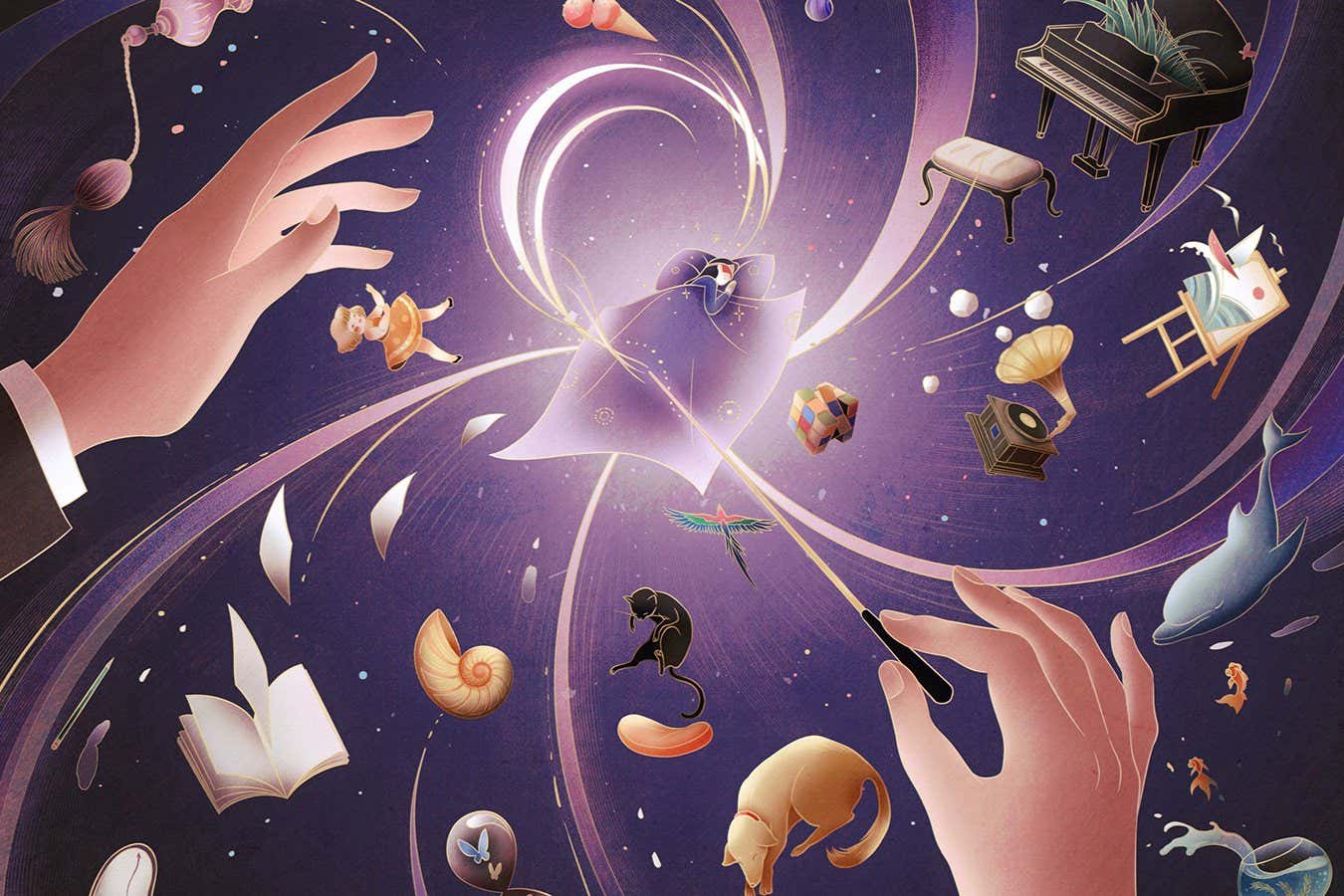
Our memory for places appears to differ from our other forms of memory
REDPIXEL.PL/Shutterstock
Our memory for the who, what and why of a situation appears to fade over time, but we may be better at remembering where it took place. Understanding how memories can change could have implications for how we judge eyewitness testimonies in criminal cases.
To better understand how memories change, Wilma Bainbridge and her colleagues at the University of Chicago carried out two experiments. In the first, 1609 people were shown images of six scenes – a…
THOMAS EDISON is said to have held a steel ball in each hand as he prepared for a nap. When he nodded off, they would drop, waking him and allowing him to capture the ideas he had in the moment just before sleep – a period he believed to be one of the most creative. But are there really certain times when our brains perform better? And, more broadly, do we excel at different sorts of thinking at different stages in our lives? If so, it is worth asking how we can make the most of these mental peaks and push our brains’ abilities to the max.
While Edison’s method may have been unorthodox, it turns out he was onto something, as Delphine Oudinette at the Paris Brain Institute and her colleagues discovered in 2021. They gave 103 slightly sleep-deprived people a seemingly complex maths problem that could be solved with a simple creative insight. Participants who had been woken just after falling asleep were almost three times as likely to make the creative leap and solve the problem than those who remained awake throughout the experiment.
This knowledge may help if you are looking for inspiration. But if it is memory you are trying to optimise, then deep sleep is when your brain does its heavy lifting – laying down new long-term memories from your day’s experiences. To make the most of this, you need enough sleep, which for adults varies between 7 and 9 hours each night. If you are among the many people who…
WHEN an ancient Egyptian sought an encounter with Bes, the god of fertility and childbirth, they would draw an image of the deity on their hand, wrap that hand and their neck with black cloth, and then settle down to sleep. This practice, described in a papyrus that dates to around 1350 BC, is the earliest documented example of the use of sensory stimulation to try to influence the content of a dream.
Three thousand years on, neuroscientists and psychologists are turning this ancient idea into something more scientific. Overturning long-held preconceptions about the disconnect between our brains and bodies during sleep, these “dream engineers” are using sounds, smells, touch and even bodily movements to influence the content of people’s dreams. In doing so, they have achieved striking benefits, from improving sleep quality and mood to boosting learning and creativity.
Better yet, the dream engineers are now developing dream-induction devices that can be used by anyone in their own home. This raises the prospect that we could all soon be harnessing our sleeping hours to our advantage. However, the power of these techniques on a resting mind is leading some, not least the researchers themselves, to worry about the potential for misuse. “I have no doubt that dream engineering could open many minds, heal others and help us to understand one another more clearly,” says Adam Haar Horowitz at Massachusetts Institute of Technology. “It could also become an advertising gimmick. We have to proceed with caring and watchful eyes.”
Dream engineering isn’t the same as lucid dreaming,…
Chimpanzees in zoos were shown photos of old group members to test their memory
Johns Hopkins University
Bonobos and chimpanzees seem to recognise photos of former group members – even animals they haven’t seen for over 20 years. This means that these apes have the longest social memory ever recorded in any animal besides humans.
Great apes, such as gorillas, chimpanzees and bonobos, are known to have impressive memories – for example, some chimps can remember the exact location of specific fruit trees in a forest, and anticipate what happens next in a film they have viewed before. Researchers have also seen hints that great apes remember individuals for a long time.
“When we go back to ape populations that we’ve worked with in the past, we noticed that they seem to recognise and remember us,” says Laura Lewis at the University of California, Berkeley.
To investigate how long this social memory lasts in apes, Lewis and her colleagues put 12 bonobos and 15 chimps, living in zoos in the UK, Japan and Belgium, to the test.
For each animal, the team flashed side-by-side photos of two different apes on a screen for 3 seconds. One of the photos was of an ape that they had lived with at least one year ago and the other was a stranger.
Using eye-tracking technology, the team found that all the participants would look at the images of former group members around a quarter of second longer on average than they did for the ones of strangers. For former colleagues that they had positive relationships with, as described by zookeepers, they would linger on their photos even longer.
The finding indicates that these apes remember acquaintances even after a lengthy time apart. “It’s not so different from walking down the streets in a major city, unexpectedly encountering someone you went to school with, and you do that double take,” says team member Christopher Krupenye at Johns Hopkins University in Maryland.
In the most extreme case, a bonobo called Louise seemed to recognise her sister Loretta and nephew Erin after more than 26 years of separation.
“That’s the longest long-term social memory ever recorded in a non-human animal,” says Lewis.
AS YOUR eyes scan these words and absorb this sentence, do you feel you are resting? There is good reason to think you might. In 2016, more than 18,000 people responded to a survey called The Rest Test, which asked them how they unwind, and the top answer was by reading.
This comes with caveats. Sat in your sunny garden fondly perusing a copy of New Scientist, you may respond in the affirmative. But if you are a student researching an essay due tomorrow, the answer is probably a definite no. Whether an activity is restful is clearly contextual. It is also hugely subjective: in The Rest Test, many people reported that their favoured forms of rest were either exercise or becoming absorbed in work.
Such challenges are one reason why this topic has been rather neglected scientifically. In the past, researchers had preferred to study the body or brain engaging in active tasks rather than in difficult-to-define downtime. “In psychology and cognitive neuroscience, scientists can be blind to the importance of something like rest,” says Erin Wamsley, a psychologist at Furman University in South Carolina.
Sleep studies have been a bona fide branch of neuroscience for decades, but only now are a host of new studies from multiple disciplines beginning to explain why waking rest is also important. When we choose the right activities in the right doses, rest can be a vital process for the optimal functioning of our bodies and minds. This includes our capacity to recover from illnesses such as covid-19, whether we can maintain self-control and our ability to form stronger memories of…
Article amended on 31 August 2023
This article has been amended to reflect Claudia Hammond’s role in The Rest Test.