Tag: Mining (copper)

  • Enabling the green shift with marine minerals

    Enabling the green shift with marine minerals

    [ad_1]

    Copper is vital for the green energy transition, and as demand rises, companies are exploring the potential of marine minerals.

    The world is going through a major transition towards digitisation, electrification, and green energy.

    The major component going into all these subjects is copper: the metal that has the best electric conductivity, is easy to form, and is resilient for long-lasting applications.

    Copper has a high recycling rate, but copper’s demand will increase, and new reserves need to be added to the current reserves to ensure the future required stock.

    The last major copper discovery was made in 2018, and there will be a future squeeze on demand if the mining industry doesn’t manage to add to the reserve bank. The preliminary signs of the squeeze can be seen by looking at trading prices and the sudden plummeting of the treatment charge – not enough copper is being mined for it to be transformed into the final product.

    Green Minerals

    As the Norwegian Government opened for mineral activity in January 2024, Green Minerals (ENX: GEM) has positioned itself as a frontrunner and a pioneer before the launch of the first licensing round in 2024.

    The Norwegian Government started the process of opening the Norwegian and Greenland Seas to mineral activity with the Seabed Minerals Act in 2019. The schedule proposed when the act was approved has been strictly followed to this day. The process now moves into a new stage, and industrial actors are invited to take part.

    Green Minerals’ vision is to create a full marine minerals value chain where we operate and co-ordinate the license through partners and affiliation, a model that has shown great value for the state and companies within the offshore oil and gas industry that Norway has developed with great success over the last six decades.

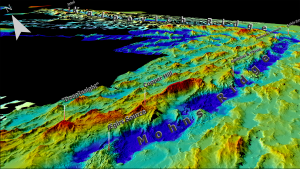
    The Mohns and Knipovich ridges are located within the area the government has opened. They are ultra-slow spreading ridges with a high potential for hosting large Seafloor Massive Sulphide deposits, in-situ analogues of terrestrial Volcanogenic Massive Sulphides. These types of deposits have been mined by humans with high tonnages and high grades since copper was discovered as a metal. The potential of making large discoveries with high ore grades is significant for the first movers in the upcoming licensing round.

    Green Minerals is a first mover and has built strategic alliances to become a successful operator. Our portfolio includes several very interesting prospects that we are now investigating upon the first licensing round and are eager to be allowed to explore further. The authorities, together with academic institutions, have achieved the initial mapping of several interesting deposits and locations, and the related data (valued at more than $50m USD) have been released to the industry.

    Why go to the deep sea for copper?

    Copper has been mined by men since the stone age; it is the most important raw material in the industrial age. Marine minerals have been the source of copper from ophiolite complexes during the entire time; it has just been mined on land after continental drift has placed them above sea level and shuffled them around a bit, and temperature and pressure have metamorphosed the rocks. We now have the knowledge and technology to go where they form. Some have expressed concerns about deep-sea mining, but mining raw materials in locations where we will get the most metal-per-kg of rock with the least environmental impact must be considered. Extinct seafloor massive sulphide deposits along mid-ocean ridges show the potential of discoveries in the magnitude of 10s Mt of ore with Cu grades of 4-6% and potential of byproducts such as cobalt.

    A world-class consortium

    Since the late 1970s, we have known that lifting marine minerals is technically feasible (SEDCO in the Area). We also know that SMS can be extracted subsea and separated at the surface (JOGMEC, 2017). Nevertheless, these projects were test pilots, never designed to achieve commercial-scale production.

    Validating the technical and economic feasibility of the offshore mineral production system is necessary for us and consistent with our holistic approach to the value chain. Green Minerals have thus entered into an agreement with a consortium of internationally recognised actors.

    The consortium is led by the Oil States Industry (OSI), which delivered several riser systems to the marine mineral industry. Their riser equips The Metals Company (TMC) Hidden Gem and the Japanese research vessel, which recently completed a REE mud lifting trial.

    Soil Machine Dynamics (SMD) is responsible for the design of seafloor mining machines. SMD has a solid backtrack of designing and delivering subsea intervention equipment and is also known for having delivered the subsea production tools of the former Nautilus Minerals, who endeavoured to mine SMS in the Bismark Sea.
    marine minerals

    The last piece of the puzzle is the participation of a pumping solutions provider that has supplied miners all over the world. After working for more than a year, we are concluding our concept study, which addresses the singularities of the Norwegian environment: harsh weather and long distance between the future work sites and the shore.

    Our Chief Engineer’s PhD research has already highlighted the necessity of addressing ship-to-ship operations, which significantly contribute to the efficiency of a DSM system. Such operations include ore-offloading from the mining vessel to the bulk carrier, the transfer of personnel at sea, and other logistics issues.

    Our concept is disruptive as many of the existing concepts assumed that ore would have to be stored on the mining vessel.

    However, after investigating other solutions, we concluded that ore did not need to be stored on the mining vessel. We decided to transfer the dewatering and storing function to the ore carrier.

    Enabling this functionality, we selected a technical solution using an O&G technology known as a disconnectable turret, a technology originally designed to enable the seasonal removal of FPSO in the Arctic. This technology allows us to positively decouple relative vessel motion challenges and act as a plug-and-play for the ore carrier: when an ore carrier is at full capacity, production halts, the disconnectable turret is lowered at a predefined storage depth and is ready for pick-up by the stand-by empty ore-carrier.

    As a bonus, helicopter transfer of personnel is enabled as both the ore carrier and the semi-submersible are positively separated over a short distance and extremely stable, the two vessels being moored and not relying on dynamic positioning. The financials obtained during the concept study validate our preliminary assumptions, and we have not identified any showstoppers.

    Can we process marine minerals?

    The first study Green Minerals initiated was to understand the geometallurgy and processability of marine ore. Very little has been done on this subject over the years. As a junior mining company, it is vital to get control of the economics further into the value chain: no possible beneficiation equals no revenue and thus no rationale for exploration.

    The Finnish Geological Survey (GTK), a globally recognised institution in the mining industry, thoroughly studied and characterised grab samples representative of ore from the Mid-Atlantic ridge to understand the ore mineralogy and texture and decide on the best processing methodology.

    The specimens showed a very high abundance of coarse-grained pyrite, with relatively fine-grained chalcopyrite and chalcocite as other dominant minerals. Given the results of the geometallurgical characterisation, a standard flotation test was concluded to determine the concentrate grade and recovery factor of this type of deposit.

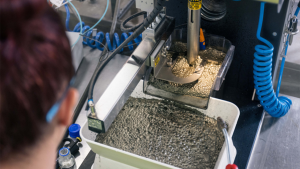
    Another important axis of the testing programme was to blend subsea ore with existing ore from an operating low-grade Copper terrestrial mine to validate their genetic compatibility. The results of the test processing were above all expectations. Copper recovery results showed performance similar to land-based standards without additional treatments of the concentrate.
    Further investigation is under consideration for recovering cobalt.

    Why blend land and ocean ore?

    Several copper mines in the Nordic countries have decreasing grades as they have been mined for several years. As the mine empties for good ore, the profitability of the marginal ore decreases. If we were able to blend with higher-grade ore from offshore mines, we could valorise marginal ore and subsequently extend the Life-Of-Mine. Within this scenario we do not need to build a concentrate facility for marine mines, and you can rationalise further existing facilities without using more ‘virgin’ soils.

    What’s next for Green Minerals?

    Norwegian authorities have recently started the award process for commercial licenses in the Norwegian-Greenland Sea; GEM has been working towards the opening for several years and has put a major effort into being in the best position possible for the first round.

    Looking at Norwegian resource management history with the offshore oil and gas adventure starting in the ‘60s, all major oil and gas fields were discovered in licenses awarded in the early rounds, and the chance for history to repeat itself for deep-sea mining in Norwegian waters is high.

    Please note, this article will also appear in the 18th edition of our quarterly publication.

    [ad_2]

    Source link

  • Mink Ventures unveils promising assay results from Warren Project

    Mink Ventures unveils promising assay results from Warren Project

    [ad_1]

    Mink Ventures Corporation has made a significant announcement regarding its latest developments at the Warren Nickel Copper Cobalt Project, situated approximately 35km west of Timmins, Ontario.

    The company revealed that it has successfully received all assay results from its recently concluded six-hole, 507-metre drill programme, shedding light on the incredible critical minerals potential of the Warren Project.

    Warren Project overview

    Mink’s Warren Project consists of 14 patented claims covering 251 hectares of land located in Whitesides Township.

    The Project resides within the Kamiskotia Gabbro Complex (KGC), believed to share similarities with the Montcalm Gabbro Complex (MGC), albeit separated by a granitic arch.

    The MGC is renowned for hosting the former Montcalm Mine, which yielded around 3.93 million tonnes at 1.25% Ni, 0.67% Cu, and 0.05% Co (OGS, Atkinson, B., 2010).

    Gabbro complexes like the MGC and KGC are recognised as promising sites for magmatic nickel-copper sulphide deposition, which is evident from the Montcalm Mine’s presence in the MGC.

    The Warren property is a valuable complement to Mink’s Montcalm property, given their similar geological environments in the MGC and KGC, along with significant Cu-Ni zones on the Warren Property.

    The Warren patents have a sporadic exploration history dating back to the late 1920s. Several promising historical mineralised Cu-Ni zones have been identified.

    However, most exploration efforts to date have concentrated on a small fraction of the property, primarily over 60 years ago. Recent geophysical surveys from the early 1990s and 2008-2009 have identified a series of untested targets adjacent to known mineralisation or along the strike from it.

    Confirmation of geophysical data

    The drilling initiative conducted by Mink Ventures has not only validated the geophysical data but has also unearthed substantial zones of sulphide mineralisation across all six drill holes. These zones exhibit anomalous nickel, copper, and cobalt values, primarily associated with disseminated and net-textured sulphides.

    One of the noteworthy findings of the programme is drill hole W-24-01, which penetrated to a depth of 60 metres, revealing a promising composition of 0.48% Nickel (Ni), 0.12% Copper (Cu), and 0.07% Cobalt (Co) over 0.9 metres. These semi-massive sulphides resemble those encountered in the “A” Zone surface trenches.

    Exploring the “A” Zone and prospects for further discoveries

    Surface sampling conducted in the “A” Zone, coupled with the recent drill programme, has demonstrated that the most lucrative values thus far are linked with massive to semi-massive sulphides.

    Initial interpretations suggest that the “A” Zone’s massive sulphide formation might have undergone fragmentation due to a subsequent gabbro pulse. Further exploration through drilling is deemed necessary to delineate the potential of massive sulphide zones along plunge and strike directions.

    The geophysical data pertaining to the “A” Zone indicates a potential strike length of approximately 700 metres, hinting at substantial prospects for future exploration and resource expansion.

    The Warren Project encompasses several historical surface zones with significant copper and nickel values. These zones correlate with coincidental geophysical anomalies, including magnetics, electromagnetic (EM), and induced polarisation (IP) responses, over extensive strike lengths.

    Most of these occurrences have undergone minimal drilling, leaving ample room for exploration and resource delineation. Notably, the “Shaft Area,” along with the “D” and “SW” Zones, are believed to be extensions of the “C” Zone, warranting further investigation.

    Natasha Dixon, President and CEO of Mink Ventures, commented on the results: “This initial drill programme enabled us to confirm our understanding of the geometry and geology of the “A” Zone, and fortuitously we clipped the edge of the “B” Zone in several holes, which enhanced our understanding of how the zones sit relative to one another.

    “Given the extent of surface nickel, copper, and cobalt mineralisation on the property, over seven historical mineralised zones, with significant untested strike lengths, the data is compelling and more drilling is warranted.

    “We look forward to continuing the exploration work at Warren and remain grateful that half of the cost of this initial drill programme was offset with the non-dilutive capital provided through the OJEP grant.”

    Future plans and prospecting

    Mink Ventures intends to assess several high-priority zones to develop a comprehensive follow-up drill programme. Initial prospecting efforts are slated to commence in early spring/summer, aiming to prioritise targets for subsequent drill testing in 2024.

    With promising assay results and a strategic exploration plan in place, Mink Ventures remains poised for further advancements at the Warren Project, underlining its commitment to unlocking the site’s full potential.

    Click here to view the full assay results.

    [ad_2]

    Source link

  • A deep dive into Rincon Resources’ West Arunta project

    A deep dive into Rincon Resources’ West Arunta project

    [ad_1]

    Rincon Resources’ exploration of Australia’s newest critical mineral province, the West Arunta Region, has yielded highly promising results thus far.

    Rincon Resources is an Australian minerals exploration company with a keen eye on Western Australia’s mineral-rich landscapes, where it has set its sights on unlocking the untapped potential for big copper and rare earth element (REE) deposits.

    Boasting a portfolio of highly prospective projects, Rincon is making notable progress, particularly within the dynamic West Arunta region, which is fast earning acclaim as one of Australia’s most exciting critical mineral provinces.

    This article offers detailed insight into Rincon’s West Arunta Project, shedding light on its promising copper and REE prospects while highlighting recent developments that underscore its trajectory towards success.

    Discovering West Arunta’s mineral wealth

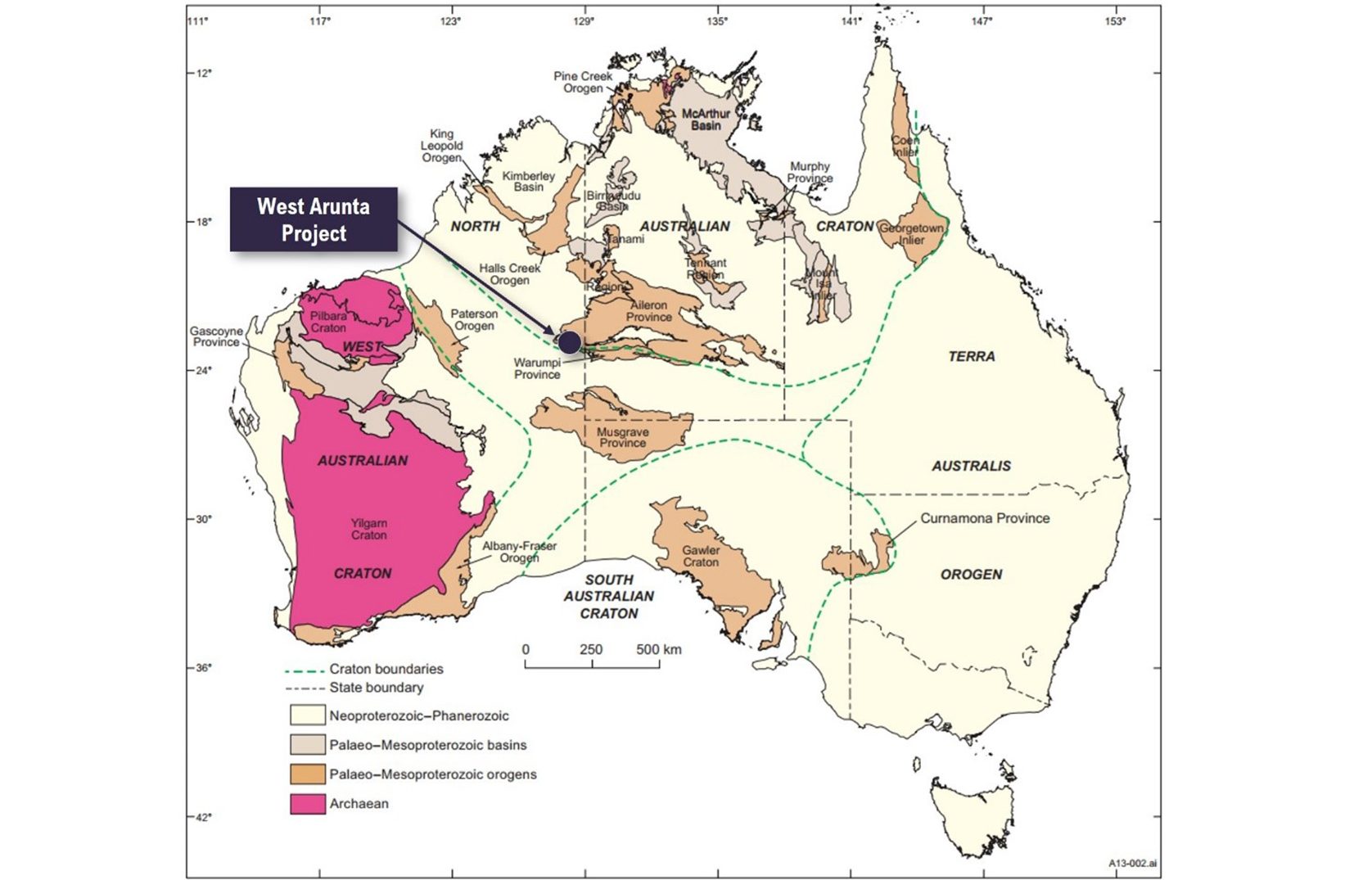
    Rincon’s West Arunta Project, spanning over 260km², is located along the Central Australian Suture, a major zone of structural complexity that separates the Aileron and Warumpi Provinces and marks the southern margin of the North Australian Craton (Fig. 1).

    west arunta
    Fig. 1: Simplified tectonic map of Australia showing craton boundaries and significant regions of Archean and Paleo-Mesoproterozoic rocks. Geological regions after Hutchison (2012); craton boundaries after Cawood and Korsch (2008)

    Renowned for its geological significance, this region has witnessed a recent surge in exploration activity, highlighted by WA1 Resources’ 2022 discovery of the massive high-grade ‘Luni’ niobium/REE deposit, which, alongside its well-documented copper, gold, and uranium prospects, has catapulted the area into the spotlight.

    Historic exploration and potential at West Arunta

    The West Arunta Project brags a rich history of exploration, supported by Ashburton Minerals’ pivotal and recent advancements of widespread significant copper mineralisation at Pokali, validating it as an Iron Oxide Copper-Gold (IOCG) system during the mid-2000s.

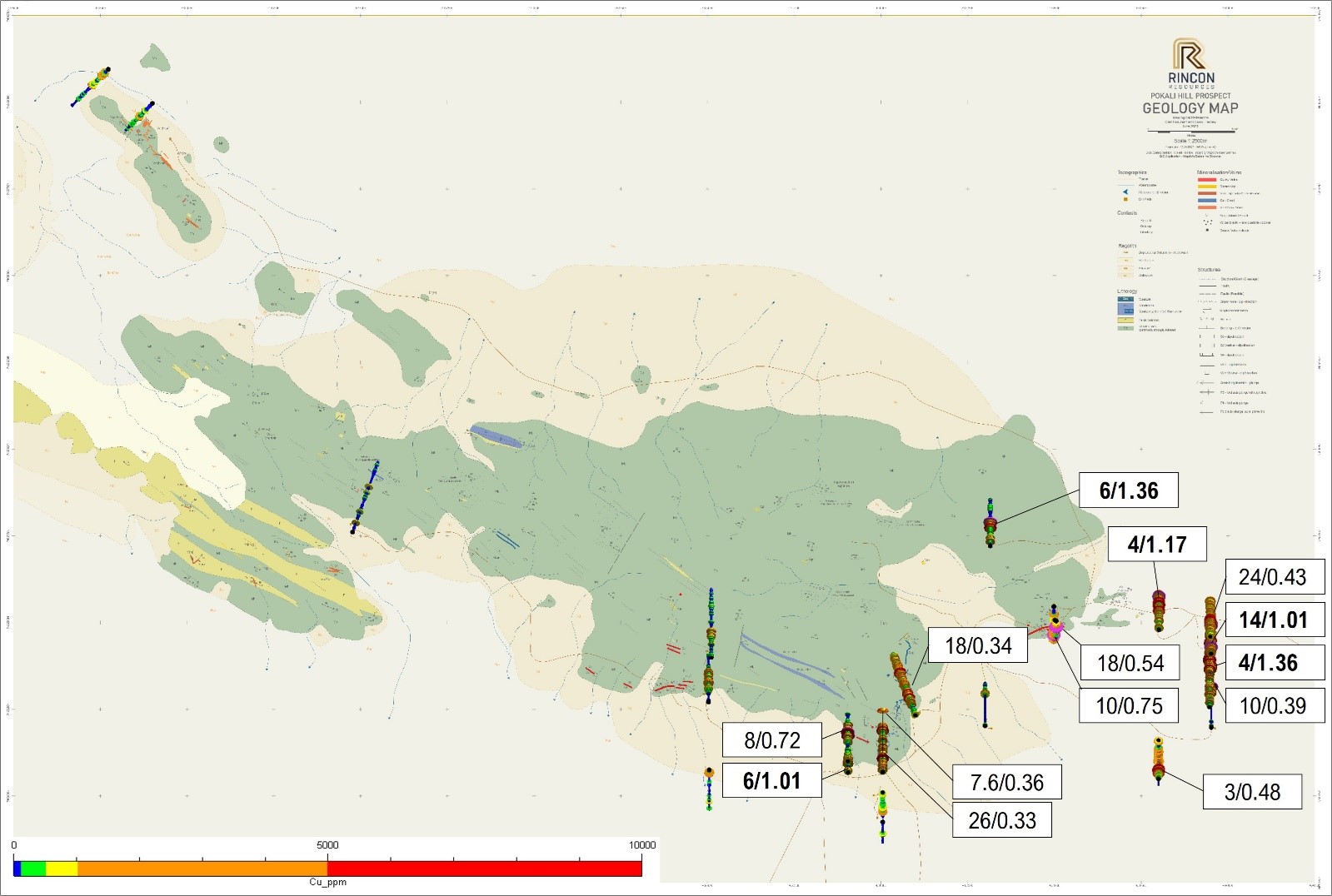
    Notable historical drilling results include: 14m @ 1.01% Cu from 168m (PKC024), contained within a mineralised zone of 62m @ 0.39% Cu, and 6m @ 1.36% Cu from 100m within a mineralised zone of 32m @ 0.46% Cu (PKC023).

    Unearthing potential in 2021

    In 2021, amidst negotiations with the Kiwirrkurra People for land access, Rincon focused on establishing the groundwork for a robust exploration campaign. This involved conducting photo-geological mapping, site reconnaissance, rock-chip sampling, and target generation, as well as acquiring, re-processing, and interpreting historical geophysical datasets.

    The photo-geological mapping exercise unveiled more than twenty initial target areas warranting further investigation, whilst geophysical data re-processing and interpretation offered new and valuable insights into the project’s structural framework, guiding Rincon’s early exploration approach.

    Paving the way for 2022

    Building upon its 2021 technical successes, Rincon expanded its project landholding by acquiring additional exploration licenses and secured its first co-funding grant of $150,000 through the Western Australian Government’s Exploration Incentive Scheme (EIS) for a maiden diamond drilling programme, demonstrating its dedicated pursuit of regional exploration advancement.

    west arunta
    Fig. 2: Drilling by Ashburton Minerals identified widespread copper mineralisation (>= 0.3% Cu) at Pokali East/South (6/1.36 = 6 @ 1.36% Cu)

    Following the eventual execution of a Land Access Agreement with the Kiwirrkurra People, the company promptly commenced a heritage clearance survey, a vital precursor to the planned EIS co-funded diamond drilling programme. The West Arunta Project was gearing up for a significant exploration phase in late 2022.

    Progressing through 2022

    Rincon intensified its focus on IOCG-style copper mineralisation, elevating thirteen of its initial twenty targets for further investigation. Central to this effort was the Pokali Prospect, where plans were now well underway for an inaugural RC and diamond drilling campaign to test two high-priority gravity targets at the earliest opportunity.

    The final step before turning the drill bit was obtaining a Ministerial Entry Permit and a Consent to Mine endorsement from relevant Government departments. These were received in October 2022, ultimately too late to commence drilling that year, but permitted the company to conduct its first site reconnaissance visit and an airborne geophysics survey.

    Advancements in 2023: The hunt for REEs commences

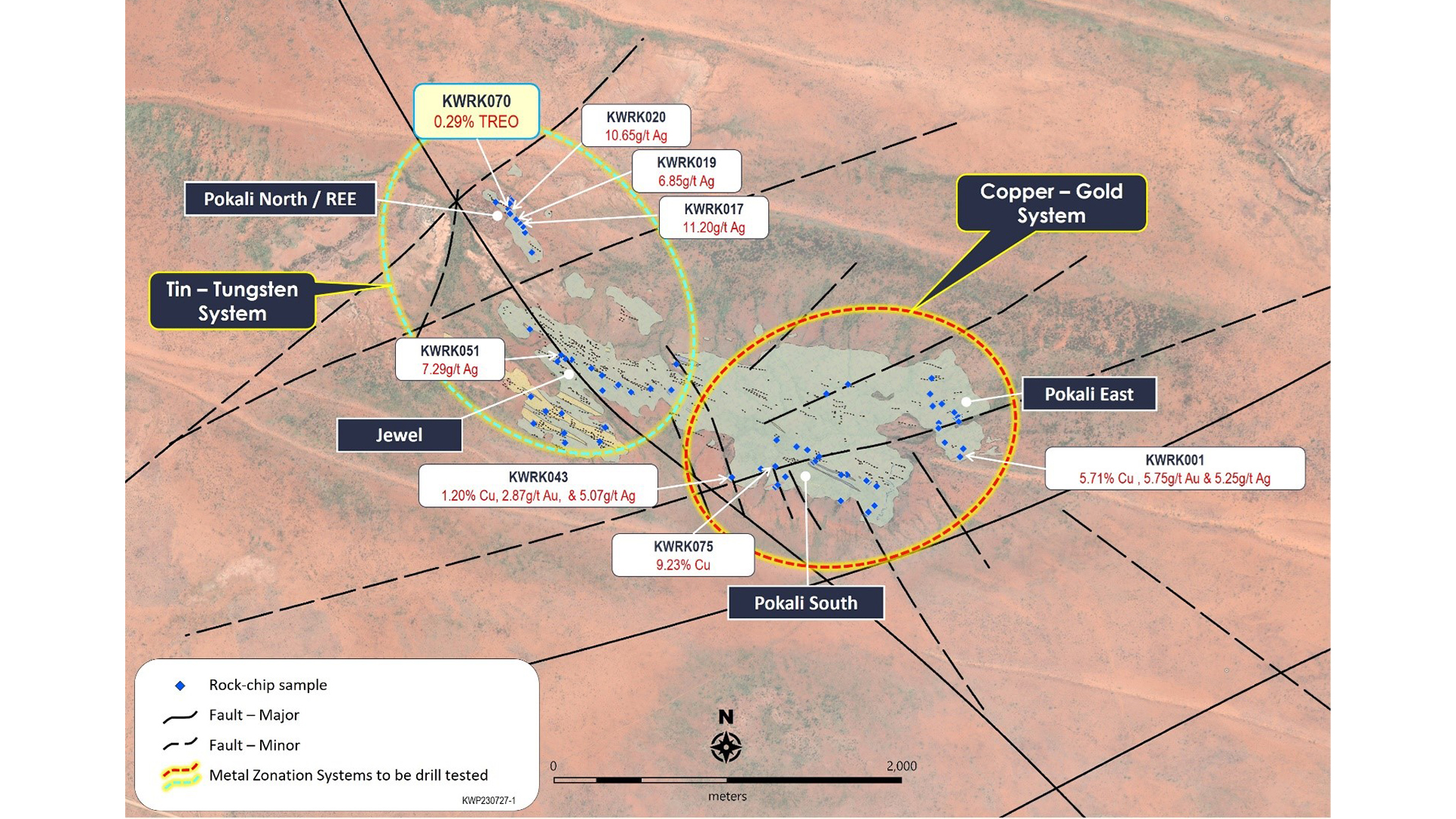
    Entering 2023, Rincon’s operations regained momentum as results from an airborne geophysics survey identified several new anomaly areas east of Pokali. Mapping and rock-chip sampling efforts also unveiled significant gold, copper, and silver findings at Pokali East, alongside a promising new REE zone of interest at Pokali North. Notable rock-chip results reported by the company include:

    Pokali East

    KWRK075 – 9.23% Cu
    KRWK001 – 5.71% Cu, 5.75g/t Au & 5.25g/t Ag
    KWRK043 – 1.20% Cu, 2.87g/t Au & 5.07g/t Ag

    Pokali North

    KWRK094 – 0.48% TREO
    KWRK104 – 0.43% TREO
    KWRK070 – 0.29% TREO
    KWRK107 – 0.26% TREO
    KWRK017 – 11.2g/t Ag
    KWRK020 – 10.7g/t Ag

    The initial REE result of 0.29% (2,900 ppm) TREO at Pokali North spurred the company to adopt a dual exploration strategy focusing on both copper and REEs. Remarkably, the REE anomalism is also proximally adjacent to the high-grade copper mineralisation at Pokali East, together forming a combined copper/REE system spanning over five kilometres in strike length, emphasising the significant scale of the system.

    In light of the new findings showcasing the extensive and diverse mineralisation throughout the entire outcropping area of Pokali, the company enlisted an independent expert geochemist to review and interpret both its new and existing geochemical datasets.

    Unsurpisingly, the review confirmed there was a massive hydrothermally driven mineralisation system at Pokali, characterised by two distinct and discrete metal zonations derived from separate fluid source types, oxidising (Pokali East) or reducing (Pokali North).

    A copper-gold-silver dominant system exists at Pokali East, as expected. This is contrasted by a tin-tungsten dominant system at Pokali North.

    west arunta
    Fig. 3: Pokali Prospect showing target areas, metal systems, significant rockchip results and REE trends

    Put simply, there was at least two separate magmatic intrusion events that pumped in mineralising fluids dominantly enriched with copper-gold-silver or tin-tungsten respectively.

    Notwithstanding this, Rincon also thinks there’s a seperate carbonatite intrusion not far away from Pokali North that delivered the REE enrichment, thought to be overprinting the tin-tungsten system.

    The excitement on the Rincon team is now growing exponentially with the potential of discovering a major deposit!

    Unforeseen challenges and silver linings

    Following the completion of a second heritage clearance survey in September 2023, the company swiftly mobilised to the site in late November to begin its highly anticipated diamond drilling programme to test two deep high-priority gravity targets beneath the metal zonation areas with the aim of discovering rich lodes of copper, gold, or REE’s.

    Unfortunately, despite careful planning, Rincon encountered unforeseen challenges during on-site preparations for drilling. The onset of Australia’s northern wet season forced the deferral of the programme into 2024.

    Despite the setback, Rincon remained steadfast in its commitment to delivering value. Positive results from additional rock-chip sampling completed just ahead of the planned drilling programme reinforced the project’s potential, with additional positive REE results confirming new subtle REE trends that appear to coincide with key structural corridors (Fig. 3).

    Pioneering ahead

    Entering 2024, Rincon Resources sets the stage for significant developments at the West Arunta Project, with the eagerly anticipated diamond drilling programme scheduled to commence in late February. Moreover, Rincon has plans to conduct high-resolution ground gravity, induced polarisation, and passive seismic surveys, along with regional site reconnaissance mapping and sampling over several other priority targets within its project area throughout 2024.

    Rincon remains resolutely committed to unlocking the abundant potential of copper and REEs in Western Australia’s mineral-rich landscapes, with its West Arunta Project emerging as a standout early exploration play. The journey thus far, characterised by successes, hurdles, and resilience, paves the way for an opportune new phase in the exploration of copper and REEs within one of Australia’s most auspicious mineral provinces.

    Please note, this article will also appear in the seventeenth edition of our quarterly publication.

    [ad_2]

    Source link
  • The right time, place and way to boost copper supply

    The right time, place and way to boost copper supply

    [ad_1]

    Highland Copper is uniquely positioned to take advantage of the widely expected copper cycle. The company has structured its business to proactively advance its two scalable, US-based copper projects to boost supply.

    Quite simply, demand for copper is far outstripping projected supply.

    Traditional sources of demand, like construction and transportation, remain strong, while new sources of demand, like electric vehicle batteries, wind, and solar, have emerged, further driving demand.

    The right time for copper production

    Copper is at the forefront of metals needed for use in green technologies. As the most efficient and affordable electrical conductor, it is the perfect material for electric car infrastructure and charging stations. While conventional vehicles contain some copper, hybrid electric and battery-powered cars require three times more than internal combustion engine vehicles.

    Key economies worldwide are adopting clean energy initiatives, continuing to drive demand. Increased environmental legislation worldwide, combined with ambitious targets set by car producers and consumers alike, is seeing demand for copper soar. The ongoing focus on Environmental, Social and Governance (ESG) and zero emissions should see the demand continue.

    At the same time, copper supply is reducing. Existing deposits are being depleted faster than new mines can come onstream. Lower grades are being mined at increasingly expensive costs. Over the last decade, the industry has suffered from a lack of exploration investment.

    A fundamental imbalance between supply and demand leads to a squeeze on global copper inventories. Only by developing the next generation of copper mines can the industry meet today’s demand, let alone the demand in the future.

    Copper supply in the US: The right place for production

    The US, and particularly Michigan, are critical to Highland’s success. The copper supply deficit is even more pronounced in the US. This triggered the US Department of Energy to designate copper as a Critical Material in 2023. Domestic copper supply in the US will reduce reliance on imports, which have become more challenging as geopolitics change.

    Michigan specifically focuses on electrification and mobilisation to support the electric vehicle industry in-state. With its strong industrial history, Michigan is focused on retaining and attracting new businesses, particularly ones that will bring jobs to local economies. Highland Copper recently announced that it is in consideration for a $50m grant from the State of Michigan. This highlights the priority that Michigan is placing on electrification.

    Regionally, Highland Copper is welcome in the Western Upper Peninsula with formal support letters received from all key municipalities, townships, and counties. The Upper Peninsula has a rich history of mining, and the Copperwood project has the capacity to revitalise the area significantly.

    copper supply
    © shutterstock/Alexander Lukatskiy

    Michigan also has a stringent, but fair process for permitting mines. Highland copper has already received its permits for the first of its two projects, Copperwood. Along with their joint venture partner, the permitting process is underway for its second project, the past-producing White Pine project.

    Producing copper in the right way

    Highland Copper is permitted and welcome in Michigan because it has designed its project in an environmentally friendly manner.

    Copperwood is designed as an underground mine, meaning it is expected to have a modest surface footprint compared to open pit mines. The process plant will be an enclosed building, further considering light and noise emissions.

    Highland Copper has elected not to draw water from Lake Superior. The process water solution was redesigned as part of the 2023 Feasibility Study to accumulate precipitation and spring run-off for the process plant. As a result, Copperwood will not need to draw water from Lake Superior.

    Highland is setting up a wetland preservation area of 717 acres, which will be protected in perpetuity. This preserved area outweighs the wetland impacted during construction many times over, and is larger than the total surface footprint of the project.

    Water that comes into contact with the mine will be treated by reverse osmosis through a water treatment plant, ensuring it is clean when returned to the freshwater supply. Monitoring by both Highland and the State will continue throughout operations and for a significant period after closure.

    The company has placed financial assurance with the State of Michigan to assist with any needed remediation. Critically, all site work completed in 2023 was done with no environmental incidents or safety accidents.

    Importantly, the construction of Highland’s projects will support the green energy transition and US resource independence while also generating a significant economic boost for the local Michigan economy. It is estimated that there will be 300 jobs created during construction and 380 while in operation, in addition to the indirect benefits of having a mine in the region.

    Highland Copper takes its environmental and local community commitments seriously.

    Structured to succeed

    Mining is a capital-intensive business and requires investment from multiple sources. Highland Copper’s key shareholders include major mining investment funds and private equities, who have supported the company through the exploration, resource definition, and technical studies phases of both Copperwood and White Pine projects.

    The 100% owned and fully permitted Copperwood project is Highland’s priority. Copperwood has completed a 2023 Feasibility Study reflecting an initial 11-year mine life projected to produce 67 million pounds of copper annually. There is considerable opportunity to increase the mine life by converting the significant inferred resource base.

    The project can potentially be a near-term producer and aid in the growing US copper supply deficit. Along with the potential state funding, Highland is well capitalised to progress Copperwood and advance to a construction decision. It has started early-site preparation work and is undergoing trade-off studies to improve the economics further.

    copper supply
    © shutterstock/Negro Elkha

    During 2023, Highland put a joint venture in place for its second asset, the White Pine project. White Pine also has a current 2023 Preliminary Economic Assessment reflecting a 22-year mine life projected to produce 90 million pounds of copper annually.

    A large battery metal private equity firm, Kinterra Copper acquired 66% of the project in July 2023. Given the scale and longer-dated nature of the project, Kinterra is well-placed to advance White Pine. With their considerable technical and financial capacity, they have put a strong team in place and are currently drilling White Pine in anticipation of preparing a Feasibility Study. Simultaneously, they are initiating environmental baselining as they prepare to enter the permitting process.

    Highland’s potential to be a key supply source of copper in the US

    If built in sequence, Copperwood and White Pine can potentially be a key supply source to the US and Michigan. In a perfect scenario, the copper produced in Michigan would feed directly into the electric vehicles produced by GM and Ford.

    Resource independence is critical to the US, and there is a strong case to be made that projects like Copperwood and White Pine simply need to be built.

    Please note, this article will also appear in the seventeenth edition of our quarterly publication.

    [ad_2]

    Source link
  • Discovering high-grade copper and gold in North America

    Discovering high-grade copper and gold in North America

    [ad_1]

    Aston Bay is advancing high-grade copper in Nunavut and gold in Virginia.

    Aston Bay (TSX.V: BAY, OTCQB: ATBHF) is an exploration company focused on discovering high-grade copper, zinc, cobalt, and gold in North America. Aston Bay makes the energy metal discoveries that the mining industry then takes to the next stage.

    Aston Bay is exploring two very different geographical regions, Nunavut in Canada and the state of Virginia in the US. Both are Tier 1 jurisdictions, and Aston Bay has made exciting discoveries in both areas.

    Storm Copper: High-grade copper advancing toward production

    At the Storm Copper project in Nunavut, Aston Bay has partnered with ASX-listed American West Metals (ASX: AW1) and has undertaken an aggressive reverse circulation (RC) drilling to delineate high-grade near-surface copper resources to support the potential development of a low-impact, small-footprint ore-sorting type of mining operation.

    A significant exploration programme, incorporating 10,000m of RC drilling, has been completed this past spring/summer. Several intersections demonstrate the extensive and high-grade nature of the mineralisation, such as 41m length of core running 4.18% copper from 38m depth.

    A maiden ore resource report is anticipated for Q1 2024, as well as beneficiation studies on the mineralisation and a scoping study for the development plans. Mineralisation commences at, or very close to, surface level and can potentially be accessed with open-pit mining. This near-surface mineralisation is open in all directions; a significant drilling programme is planned for 2024 to significantly expand the maiden resource and drill for new near-surface discoveries in this belt-scale opportunity. Planning for a potential open-pit operation is underway.

    Storm Copper: Deeper potential for ‘Congo-style’ copper in Canada

    In addition to this ongoing development work at Storm, Aston Bay geologists have predicted that the near-surface mineralisation delineated in the copper resource may indicate a potentially significant amount of copper hidden in the rocks at depth. This geologic model is the same as that of the very large and high-grade copper deposits of Central Africa, such as Kamoa-Kakula.

    Gravity and electromagnetic geophysics have yielded several compelling drilling targets that corresponded well to the geological model, a very prospective combination. Deep diamond drilling this past summer confirmed the presence of the predicted copper mineralisation at depth in widely spaced drill holes, amplifying the prospects of discovering a significant, deeper, regional-scale copper system.

    Thomas Ullrich, CEO of Aston Bay, says the discovery has been some time in the making: “We’ve known about copper at the surface at Storm since the work conducted by Cominco and Teck in the late nineties, and we are rapidly advancing plans to extract that copper with a low-cost mine. That alone will add significant value to Aston Bay. Even more exciting, however, is that our geological model has predicted the presence of copper hidden deeper in the subsurface – the discovery of this past summer proves it. The copper is there.”

    These are exciting days for the Storm project, with additional geophysics and deep drilling planned for this coming season.

    Virginia: High-grade gold and copper-cobalt potential

    The company has made two recent discoveries in Virginia: a high-grade gold vein and SEDEX-style zinc-copper-cobalt mineralisation. The high-grade gold (e.g., 24.73 g/t gold over 3.57m core length) vein is unusual for Virginia, more typical of a ‘Kirkland Lake’ style quartz vein, with mineralisation remaining open at depth and along over 1.6km strike length.

    The discovery of cobalt mineralisation is also new and unusual for Virginia, providing the potential for a significant discovery of energy metals in the US. Drill programmes for both the gold and base metals projects are planned for 2024.

    For more information, please visit the Aston Bay website: www.astonbayholdings.com

    Please note, this article will also appear in the seventeenth edition of our quarterly publication.

    [ad_2]

    Source link
  • ELEMISSION’s core scanner for accurate real-time detection and analysis of critical minerals

    ELEMISSION’s core scanner for accurate real-time detection and analysis of critical minerals

    [ad_1]

    ELEMISSION’s ECORE core scanner offers new opportunities by delivering real-time quantitative automated mineralogy using LA-AES (LIBS).

    Critical minerals are essential for the global transition towards a greener future. They are required to develop many new technologies, including low-greenhouse gas energy sources, and are the backbone of the current electric vehicle revolution. The Government of Canada has identified 31 critical minerals and metals that are instrumental for sustainable economic prosperity and growth within Canada and its trading partners.

    Many of these minerals, including lithium (Li), aluminium (Al), cobalt (Co), copper (Cu), nickel (Ni), zinc (Zn), and rare earth elements (REEs), are currently mined and actively being explored nationwide. Demand for critical minerals is rapidly increasing around the world. Therefore, the optimisation of their exploration and processing is crucial for propelling society toward a more sustainable and environmentally conscious future.

    core scanner
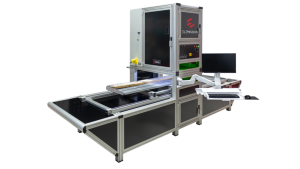
    Fig. 1: ECORE LIBS core scanner manufactured by ELEMISSION Inc.

    Conventional core scanning technologies

    In an attempt to optimise the exploration and production of critical minerals, many exploration and mining companies have turned to the digitisation of drill cores. This generally permits faster logging and interpretation when compared to traditional methods, while facilitating geological modelling and the archival of information.

    This has resulted in a rise in the popularity of core scanners. In general, they are meant to streamline and maximise efficiency when core logging while providing textural and mineralogical data that a core logging geologist could otherwise miss. The most commonly used core scanners rely on infrared hyperspectral imaging (IR-HSI) and X-ray fluorescence (XRF).

    IR-HSI drill core scanners are able to provide large amounts of textural and mineralogical information rapidly and at a relatively affordable price, while XRF scanners are able to provide chemical composition and elemental information.

    In the case of HSI, metal oxides and sulphide minerals are not spectrally active and therefore cannot be identified. This is troublesome for the analysis of critical metals, as they are often hosted in sulphide or oxide minerals. XRF technology cannot detect light elements (Z<13). Mg (Z = 12) and Na (Z = 11) can be detected but require longer dwell times that are not conducive to rapid core scanning.

    Furthermore, XRF is not capable of identifying mineralogy, only elemental information. Because of this, it is impossible to distinguish between minerals that have similar compositions, and it is difficult to extract important elemental deportment information crucial for fully understanding a deposit.

    critical minerals
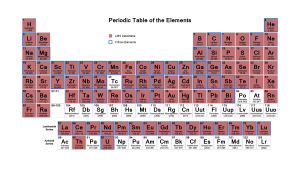
    Fig. 2: Periodic table of elements demonstrating which elements can be detected using LIBS technology (red) and critical elements (blue outline)

    The limitations of these methods can result in the loss of critical information that can greatly impact decision-making and thus require additional techniques to complement and enhance their information, which adds more time to the overall analysis. The shortfalls of these methods, combined with the growing demand for critical minerals, create room for an emerging technology that can provide rapid and accurate results without these same restrictions.

    ECORE scanner

    ECORE, manufactured by ELEMISSION Inc. (Fig. 1), is a fully automated, high-speed laser-induced breakdown spectroscopy (LIBS) commercial drill core scanner that is capable of detecting almost every element on the periodic table (Fig. 2), which includes every element involved in Canada’s list of critical minerals.

    ECORE is able to provide rapid (less than five minutes per core box, more than 300m per day) chemical and mineralogical information, along with invaluable textural information at high resolution. The following case studies demonstrate the application of ECORE to the analysis of critical minerals while simultaneously highlighting the importance of having access to mineralogical and full chemical information.

    Case study one: Lithium pegmatite

    Over 120 mineral species contain lithium as an essential constituent, and 44% of them can be found within lithium-caesium-tantalum pegmatites, the most important economic source of lithium globally. Lithium reserves in pegmatites mostly occur in the form of lithium-silicate minerals. These most commonly include spodumene (LiAlSi2O6), petalite (LiAlSi4O10), and lepidolite (KLi2Al(Al,Si)3O10(F,OH)2.

    Differentiating between different lithium-bearing minerals is extremely important in the context of understanding the economic potential of a deposit, especially given the great diversity of possible lithium species.

    The extraction and processing methods can vary depending on the main host mineral since mining and processing procedures need to be adjusted based on the physical properties of the specific mineral. As a result, understanding the contribution of lithium from each mineral present in the deposit is crucial for an accurate estimation of mining and processing costs.

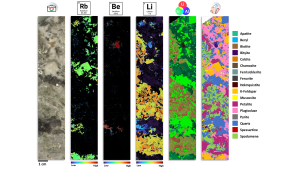
    ECORE is able to easily differentiate between lithium-bearing minerals, even those that vary only slightly in composition, such as spodumene and petalite.

    core scanner, critical minerals
    Fig. 3: A photo, an RGB (Li, Al, Si) map, mono-elemental maps for Rb, Be, and Li, and a mineralogical map generated by ELEMISSION’s Smart Automated Mineralogy (SAM) software of a section of drill core from a lithium pegmatite deposit

    This is demonstrated in Fig. 3, where, using RGB mapping, spodumene and petalite are easily distinguished from one another within the same core sample. Feature mapping like this has proven to be very useful not only for discriminating between mineral phases but also for highlighting compositional variations within the same mineral.

    Mono-elemental mapping provides the advantage of being able to understand the context in which mineralisation is hosted, along with providing important elemental deportment information. This information can then be represented in the form of a mineralogical map using ELEMISSION’s proprietary Smart Automated Mineralogy (SAM) learning algorithm.

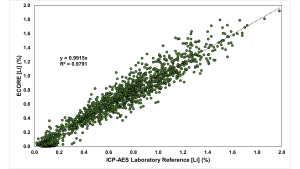
    Using ECORE technology, predicted and true chemical assays are able to be provided in real-time. Fig. 4 shows ECORE chemical assays taken at one-metre intervals over 1500m of drill core from a lithium pegmatite deposit compared to assays obtained by a standard laboratory method (ICP-AES, four acids). The R² value (0.98) and the slope of the curve (0.99) reveal a very strong correlation between these two methods and demonstrate that the ECORE core scanner is equally effective and reliable when compared to traditional laboratory methods.

    core scanner
    Fig. 4: Lithium concentration detected by ECORE compared to laboratory (ICP-AES) analysis for 1500 m of lithium pegmatite drill core at one-metre intervals

    Access to instantaneous quantitative chemical data that can easily be generated as a function of depth at intervals of the user’s choice is invaluable, as it facilitates rapid decision-making and eliminates the week- or month-long delay that is typically associated with waiting for traditional lab assay results.

    Case study two: Porphyry copper

    Understanding the mineralogy of a deposit is not only important for optimising production and planning for future extraction but also for understanding controls on mineralisation to facilitate exploration. In porphyry copper deposits, hydrothermal fluids concentrate metallic elements and produce extensive alteration haloes around an intrusion.

    This results in mineral zonations that form approximately concentric patterns whose changes in mineralogy can serve as a vector towards mineralised centres.

    In practice, these patterns are often difficult to recognise by eye due to commonly occurring later-stage overprinting and alteration events and therefore require the expertise of a skilled geologist aided by petrographic thin section analysis and the use of more complex, expensive, and time-consuming instruments such as electron probe micro-analysers (EPMA) or X-ray diffractometers (XRD) to comprehend.

    With ELEMISSION’s core scanner, automated and precise mineralogical maps can be created to consistently recognise lithological units and their distinctive mineralogy. Sulphide and oxide mineral species can easily be identified and differentiated, which allows for simple visualisation of mineralisation behaviour within the core.

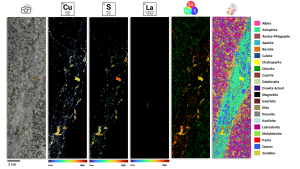
    Fig. 5 shows a high-resolution SAM image of a section of core from the ore zone of a porphyry copper deposit. The image clearly shows two different copper-bearing sulphide minerals (bornite and chalcopyrite) hosted within an anhydrite-quartz vein. Within both the vein and the host rock, metal oxide (magnetite, delafossite, ilmenite, and cuprite) and oxyhydroxide (goethite) species can be distinguished from each other.

    core scanner, critical minerals
    Fig. 5: A photograph, mono-elemental maps for Cu, S, and La, an RGB (Cu, Fe, S) image, and a SAM image of a section of drill core from the ore zone of a porphyry copper deposit

    Additionally, elements that occur in trace amounts throughout the core (e.g., lanthanum) can also be identified while preserving spatial information, so associations between minerals and these elements can be made.

    Conclusion

    ECORE revolutionises the extraction and discovery of critical minerals by providing large amounts of information rapidly, thereby allowing for faster and more precise interpretations to be made during the exploration, extraction, and production stages. Within minutes, users can access mono-elemental and RGB maps, automated mineralogical images, and full chemical assays.

    The capability of ECORE to detect almost any element on the periodic table means that there are no limitations in the types of core that can be analysed and also minimises the amount of additional analytical methods required for geologists to make their interpretations.

    [ad_2]

    Source link