The European Bank for Reconstruction and Development (EBRD) has recently launched a joint facility with the EU for critical and strategic raw materials. The Innovation Platform spoke to EBRD’s Tetiana Dzhumurat to find out more.
Critical and strategic raw materials are key components needed for the European Union’s (EU) digital and green transition. In a bid to minimise supply chain disruptions and increase Europe’s supply of these materials, the EU has introduced a series of strategies and policies in recent years. These include the Critical Raw Materials Act, which aims to strengthen the EU’s critical raw materials capacities along all stages of the value chain and to increase Europe’s resilience by reducing dependencies. In addition, following Russia’s invasion of Ukraine, the EU launched the REPowerEU Plan to phase out Russian fossil fuel imports.
Supporting the objectives of both the Critical Raw Materials Act and the REPowerEU plan, the EU and the European Bank for Reconstruction and Development (EBRD) have partnered to launch a joint facility for critical raw materials (CRMs) as part of the InvestEU programme. The facility will provide equity investments for the exploration of critical and strategic raw materials, aiming to mobilise up to €100m in investments. The new joint facility will support the objectives of the EU’s Critical Raw Materials Act and the REPowerEU Plan.
The EBRD is investing €25m in the facility and this will be matched by the EU’s contribution from the Horizon Europe Programme. The facility aims to mobilise a further €50m.
The facility will build on the EBRD’s extensive experience in financing mining projects, facilitating early-stage equity investments in operations in EU Member States where the Bank operates, as well as EBRD economies outside the EU that are covered by the Horizon Europe programme. Through this facility, the EBRD expects to invest in 5-10 junior mining companies (small and medium-sized enterprises, medium-sized enterprises or small mid-caps) that undertake critical raw material exploration in eligible countries.
The exploration activities funded under the facility will have to adhere to strict climate, governance, environmental and social standards. The EBRD’s rigorous Paris Agreement Alignment and Environmental and Social Policy screening will be applied to all projects.
To find out more about the facility and how it fits with the EBRD’s own values and mission, The Innovation Platform spoke to Tetiana Dzhumurat, Principal Banker, Natural Resources, at EBRD.
Can you elaborate on what the facility will do?
The €50m facility will provide equity and quasi-equity financing to early-stage mining companies pursuing exploration (post-resource discovery) of critical and strategic raw materials to enable them to progress various studies and works required to reach feasibility and construction stage. This facility is part of a broader Junior Mining Programme recently approved by EBRD’s Board.
Why is it important for the EBRD to support early-stage mining companies and projects?
These companies are under-serviced by the limited depth of equity capital markets and private equity. This is particularly true in the region where this facility will be deployed.
How does this investment fit with the EBRD’s mining sector strategy?
This facility is fully aligned with the EBRD’s mining sector strategy. In particular, one of the four key priorities of the strategy is “to selectively support the exploration and production of metals and minerals required for the green energy transition and digitalisation.”
How will you ensure that the exploration activities supported by the facility meet high climate, governance, environmental and social impact standards?
In line with EBRD’s commitments, all projects it supports will be aligned with the objectives of the Paris Agreement and the Green Economy Transition Approach. Compliance with the Bank’s Environmental and Social Policy (ESP) and Performance Requirements will be contractually agreed with the companies implementing the projects and subject to monitoring by the Bank’s Environmental & Social specialists and consultants where necessary.
About the EBRD
The EBRD is a multilateral bank that promotes the development of the private sector and entrepreneurial initiative in 36 economies, including some EU countries. The Bank is owned by 73 countries as well as the EU and the EIB. The EBRD’s mandate focuses on fostering the transition towards open market-oriented economies, and its investments are aimed at making the economies in its countries of operation competitive, inclusive, well-governed, green, resilient, and integrated.
Please note, this article will also appear in the 19th edition of our quarterly publication.
MICA is addressing the critical need to secure global resources for the future by enabling the implementation of advanced mining technologies to drive progress.
The Centre for Excellence in Mining Innovation (CEMI) has developed a programme and a network aimed at tackling the existential opportunity of securing global resources for the future. The Mining Innovation Commercialisation Accelerator (MICA), funded by industry and the Government of Canada from 2021-2026, brings together stakeholders from across the mining industry, academia, and government to foster the development and adoption of cutting-edge mining technologies that will advance progress in sustainability and efficiency.
The Innovation Platform spoke with CEMI Vice President of Business Development and MICA Network Director Chamirai Charles Nyabeze to learn more about MICA and the platform’s comprehensive approach to creating global opportunities for Canadian-made technologies.
What are the challenges for promoting Canadian technologies to the global mining marketplace?
One of the challenges of promoting Canadian technologies is accessing global mining markets. It is difficult to identify opportunities and gain visibility because mines are often located in remote areas, requiring venturing off the beaten path to reach them.
The lack of technology support infrastructure in host countries can hinder the success and continuity of Canadian technologies. Winning a project at a global destination is one thing, but ensuring ongoing support for technology is equally important. Some Canadian companies lack experience in economic development and expertise in operating in global locations, which makes these projects even more daunting.
Additionally, Canadians tend to be more cautious about taking risks. Political risk in certain areas can make it challenging to do business, and we are cautious about investing in high-risk countries, even though they may offer significant opportunities.
What are the opportunities for Canadian technologies in international markets?
The global community is increasingly moving towards greener practices. The Canadian brand is recognised globally, in part due to our strong sense of social responsibility. Canada has a strong reputation for producing high-quality, sustainable goods, and we anticipate a rise in demand for our solutions as a result.
Furthermore, Canada boasts comprehensive expertise in various forms of mining, including open-pit and underground mining, as well as a diverse range of minerals and metals – from coal, uranium, and oil sands to cobalt, nickel, copper, and precious metals like gold and diamonds.
Canada has a diverse mining sector, which means that the technologies developed here can be applied to various types of mining operations. Given Canada’s active mining sector, these technologies have undergone rigorous testing and proven success, establishing a solid track record.
As the global demand for cleaner and greener mining practices grows, Canada stands at the forefront with a wealth of technologies, particularly through our Mining Innovation Commercialisation Accelerator (MICA). These technologies are designed to enhance mining efficiency, environmental conscientiousness, productivity, and safety.
Moreover, mining technology plays a pivotal role in securing the social licence to operate by instilling confidence in the communities that mining activities will be conducted responsibly to avoid any potential disasters.
How is MICA different from other organisations promoting Canadian mining technologies?
The MICA is a national network based in Canada with a global reach that aims to support innovation in the mining industry and expedite the commercialisation of mining technologies. Our ultimate objective is to make a significant impact by addressing the essential needs of a resource-driven world.
MICA’s approach is comprehensive, encompassing all mineral and metal types. It involves addressing various stages of mining, from prospecting to rehabilitation, making it distinct as a membership-based organisation that encompasses the full spectrum of mining technologies.
MICA is tailored to be a meeting place for innovators and consumers of innovation. On the innovator side, MICA mostly engages small and medium-sized enterprises (SMEs) in the supply service sector. On the consumers of innovation, MICA engages mine operators and technology integrators. Our membership structure fosters more of a discussion-based approach, with our members seeking our support in regard to funding and commercial services. Connecting innovators to opportunities to commercialise their solutions is a community sport that engages various stakeholders across the entire mining value and supply chain.
Our global outreach approach sets us apart. We have invested in 50 innovative technology projects spanning the entire mining process, from prospecting to mine closure and asset rehabilitation.
Currently, we are in the process of establishing an international network of organisations dedicated to advancing the mining industry. This network includes creating pathways to leverage globally relevant funding programmes like New Horizon and Eureka. As part of this, MICA has enlisted the expertise of a global outreach team that includes boots-on-the-ground business development resources in South Africa to support outreach in emerging markets.
The Canadian government has endorsed MICA to support transformative technologies for the mining industry. The aim is to serve Canadian mining needs and create global opportunities for Canadian-made technologies. MICA is, therefore, positioned to directly impact Canada’s GDP.
In addition to funding, we are deeply committed to nurturing and guiding projects. We accompany and support projects throughout their journey to becoming commercially viable. Our focus lies in pioneering cutting-edge mining technologies that have not yet gained traction rather than only endorsing existing proven solutions. MICA aims to champion demonstration projects and establish proof of concepts in environments mirroring real-world conditions. This, we believe, is the catalyst for technology adoption and integration into business systems.
MICA stands to be the definitive globally relevant one-stop-shop for accessing emerging technologies spanning the entire mining cycle.
What specific initiatives or programmes can MICA implement to effectively connect Canadian technology companies with potential international partners?
MICA has appointed a dedicated full-time global outreach director to facilitate the expansion of international markets for various Canadian technologies. Our strategy involves identifying ecosystem-level organisations in foreign jurisdictions and establishing connections with them. This approach is mutually beneficial for both Canadian cities and the countries hosting mines with natural resources. It is crucial for us to honour the national interests of the countries to which we introduce our mining technologies and ensure that resources are extracted sustainably and respectfully.
Fundamentally, our approach aims to integrate Canadian technologies with the local ecosystem and contribute to the creation of new jobs and skillsets in those countries.
As part of our global outreach, we conduct missions to introduce Canadian technologies to specific locations and engage with local stakeholders. In Europe, there are funding programmes such as Horizon Europe that we can use to develop and customise technologies further. Thanks to MICA’s global outreach strategy, we are able to leverage these programmes to create solutions tailored to the specific needs of different areas.
Through this work, MICA will foster international collaboration, build strong partnerships, conduct business ethically and respectfully, and empower local communities and businesses in host nations.
Another significant focus area is mobilising private capital. We are introducing the first-of-its-kind Canadian Mining Innovation Venture Fund. This will attract funding from family investment groups, private equity firms, and individual investors. It will also appeal to mining operators who are looking to invest their capital. Through this fund, MICA hopes to reduce our reliance on government funding and become a more self-sustaining platform.
How can MICA showcase successful case studies of Canadian technology adoption in international markets?
Ultimately, people cannot buy what they don’t know exists. The mining industry values practical demonstrations. While others may label us as risk-averse, the reality is that we are simply cautious and methodical. The process of introducing new ideas can be lengthy, sometimes taking decades to adequately showcase new technologies and test performance.
It is crucial to consider market input in technology development to maximise adoption, and MICA is committed to ensuring that Canadian technologies are driven by international market demands.
MICA encourages collaboration and welcomes input. Recently, we welcomed suggestions to advance mining in specific areas identified for improvement. These include: energy, the environment, productivity, and digital smart autonomous mining systems.
Part of our funding is specifically designated to encourage technologies housed within MICA to showcase their products abroad and gain valuable feedback for further development. We participate in conferences, events, and workshops to showcase these technologies, providing accompanying fact sheets and videos to communicate their stories effectively. For example, in October, we will host a Canada-Chile Innovation Summit to display ten Canadian technologies and engage in discussions with partners in Chile.
Additionally, we are focusing on organising micro-events, having so far hosted over 100 events in Canada and around 150 events worldwide. Our objective is to encourage technological advancements and cultivate a culture of progress within the mining industry using advertising and platforms like LinkedIn. Establishing strong relationships is crucial. Successful business operations depend on partnerships and meaningful conversations, which in turn facilitate the access of Canadian technologies to international markets.
What metrics or benchmarks can MICA use to measure its success in promoting Canadian technology and establishing itself as the industry leader?
MICA’s success can be measured in numbers. We have supported 50 projects, identified 296 potential technology projects, and secured $640m that can be mobilised to support innovation in these projects.
Presently, we have over 100 members, encompassing innovators, mining operators, junior mining companies, and associates – organisations providing complementary innovation support services. Among them, MICA boasts seven mining company members, including Glencore, Vale, Teck Resources, BHP, Nutrien, IAMGOLD, and New Gold, each representing distinct aspects of the mining industry.
Nothing happens without a team. Dedicated, excited individuals are necessary to encourage real impact and wave the flag of mining innovation. Retaining this team is equally important for MICA in measuring its success. The team at MICA is passionate about its work and aspires to lead the global industry with exceptional standards. Our work intends to simplify and demystify the process of finding innovations that elevate the mining sector, striving to reshape the perception of mining into a positive one that attracts young talent to the industry.
MICA’s vision for a sustainable mining future
Through the utilisation of various technologies and a shared passion for accelerating innovation in mining, we are witnessing a remarkably promising future for the industry. Leading this initiative, MICA aims to serve as a pivotal global hub, fostering and supporting mining innovation.
As we move forward, MICA is committed to advancing environmental stewardship and providing exceptional service by bridging the gap between the global community and cutting-edge technology initiatives. Our objective is to boost funding from $40m to over $100m to enhance mining practices and contribute to the realisation of a low-carbon economy. Emphasising the circularity of resources, particularly critical minerals, is integral to MICA’s vision for a sustainable, eco-friendly future.
Over the remaining project timeline, MICA aims to develop technologies that support circularity across the upstream, midstream, and downstream segments of critical minerals exploration. Technological progress is vital in adapting to climate change and fostering a better world for all.
Consider the profound impact of enhancing the global mining industry. As mining progresses, all related aspects, including its values and supply chains, also advance. The effect of this seemingly minor change on the world cannot be overstated.
Please note, this article will also appear in the 19th edition of our quarterly publication.
ELEMISSION’s ECORE LIBS drill core scanner provides detailed mineralogy and textural information rapidly.
Exploration, mining, and mineral processing account for a significant proportion of global GDP. Comprehensive and robust ore body analysis is information that is necessary for determining the viability and profitability of an ore deposit.
Characterisation of the mineralogy of a deposit is a reliable way to improve ore body knowledge through the validation and refinement of genetic models, which can then support exploration efforts and lead to new discoveries.
Traditional ore body analysis methods
Traditionally, a combination of techniques is used to understand the mineralogy of an ore deposit better. Thin sections for representative lithologies throughout a deposit are prepared and characterised by a geologist using a petrographic microscope. These interpretations generally need to be verified and further extended with secondary and even tertiary methods, such as scanning electron microscopy (SEM) or electron probe microanalysis (EPMA).
For more in-depth studies, trace element and isotopic analyses can be conducted using methods such as laser ablation inductively coupled plasma mass spectrometry (LA-ICP-MS) or secondary ion mass spectrometry (SIMS) to understand compositional zoning or timing of mineralisation better.
In more recent years, automated mineralogy solutions have been developed that utilise technologies such as SEM-EDS and X-ray Fluorescence (XRF) to generate mineralogical maps of thin sections or epoxy resin blocks.
While these techniques are useful for better understanding the mineralogy of an ore deposit, the scale of these analyses is quite small and limited by sampling. With a standard thin section size of 27 x 46 mm, a large quantity is required to produce a dataset that is representative of an entire deposit.
Additionally, smaller sample sizes increase the likelihood of biased sampling, which may induce sampling error, according to sampling theory. These traditional analyses are often quite costly and time-consuming (both in terms of analysis time and required sample preparation), further limiting how much of a deposit can be truly characterised. In an attempt to overcome some of these challenges, commercial drill core scanners using infrared hyperspectral imaging (IR-HSI) have become increasingly popular over the last decade to provide mineralogy on a larger scale.
These machines are capable of providing large amounts of textural and mineralogical information quickly and at a relatively low cost. While this significantly reduces scalability issues that are associated with traditional methods, there are many limitations to this technology that result in reduced data quality. Metal oxides, quartz, and sulphide minerals are not spectrally active with IR-HSI and, therefore, cannot be distinguished from each other.
In addition, the spot size of each analysis is ~1mm, resulting in mixed results in fine-grained lithologies. Infrared hyperspectral imaging (IR-HSI) is a molecular spectroscopy technique characterised by the presence of multiple spectral interferences, resulting in many minerals being indistinguishable from each other.
ECORE – An appropriate solution for large-scale mineralogy
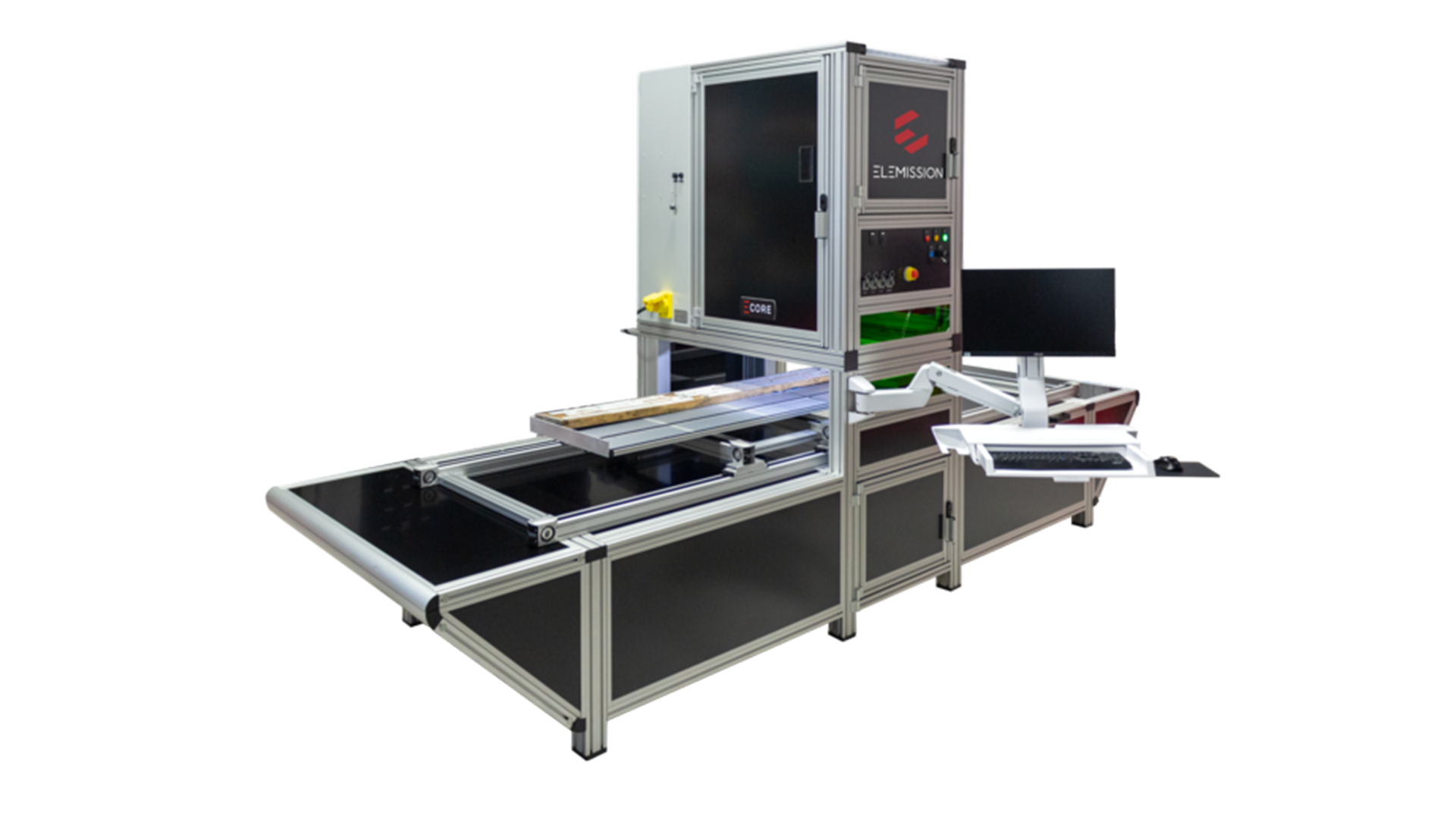
ECORE (Fig. 1), manufactured by ELEMISSION Inc. (Montréal, QC, Canada), is a fully automated, high-speed, commercial laser-induced breakdown spectroscopy (LIBS) commercial drill core scanner that rapidly provides automated mineralogical and chemical assays while providing high-quality and accurate information.
Fig. 1: ECORE LIBS drill core scanner manufactured by ELEMISSION Inc.
ECORE is capable of providing SEM-EDS-level quality mineralogy directly on the drill core, with a spot size of 30 µm and a resolution (spacing between analysis points) that is fully adjustable by the user. Equipped with ELEMISSION’s proprietary and user-friendly LIBS CONTROL software and Smart Automated Mineralogy (SAM) algorithm, users have access to fast and accurate quantitative mineralogy within minutes (about five minutes per core box at standard resolution).
The unique use of LIBS technology allows for the detection of every naturally occurring element on the periodic table (from hydrogen to uranium). LIBS is an atomic emission spectroscopic technique characterised by ultra-thin emission lines (less than 100 picometers) that minimise spectral interferences, enabling precise and accurate characterisation of minerals and elemental composition in rock samples. The high selectivity of LIBS elemental spectra means that users can see individual elements within minerals and understand elemental associations.
The unique combination of microscale probing spots and high selectivity of the atomic emission spectra brings the data required for high-fidelity quantitative automated mineralogy. It also allows users to distinguish between minerals containing the same elements in varying amounts and to see compositional variations within the same mineral.
ECORE is able to provide rapid access to chemical and mineralogical information, along with high-resolution and detailed textural imagery. The following case studies demonstrate how ECORE’s unique features are used to provide information that would be otherwise inaccessible at a large scale for unlocking deposit potential and enhancing ore body analysis.
Case study one: Differentiating arsenic-bearing pyrite and arsenopyrite
For many gold deposit types, the presence of arsenic-bearing minerals is known to be associated with gold mineralisation. Properly constraining the deportment of arsenic within a deposit can, therefore, provide invaluable insight into understanding controls on gold mineralisation to facilitate decision-making and generate future drilling targets.
The orogenic gold deposit that is the focus of this case study has gold mineralisation that is almost exclusively refractory and is associated with disseminated sulphide mineralisation and related hydrothermal alteration. In general, gold particles are primarily trapped within fine-grained arsenopyrite or arsenic-rich pyrite crystals. Higher concentrations of arsenic are typically associated with higher gold concentrations.
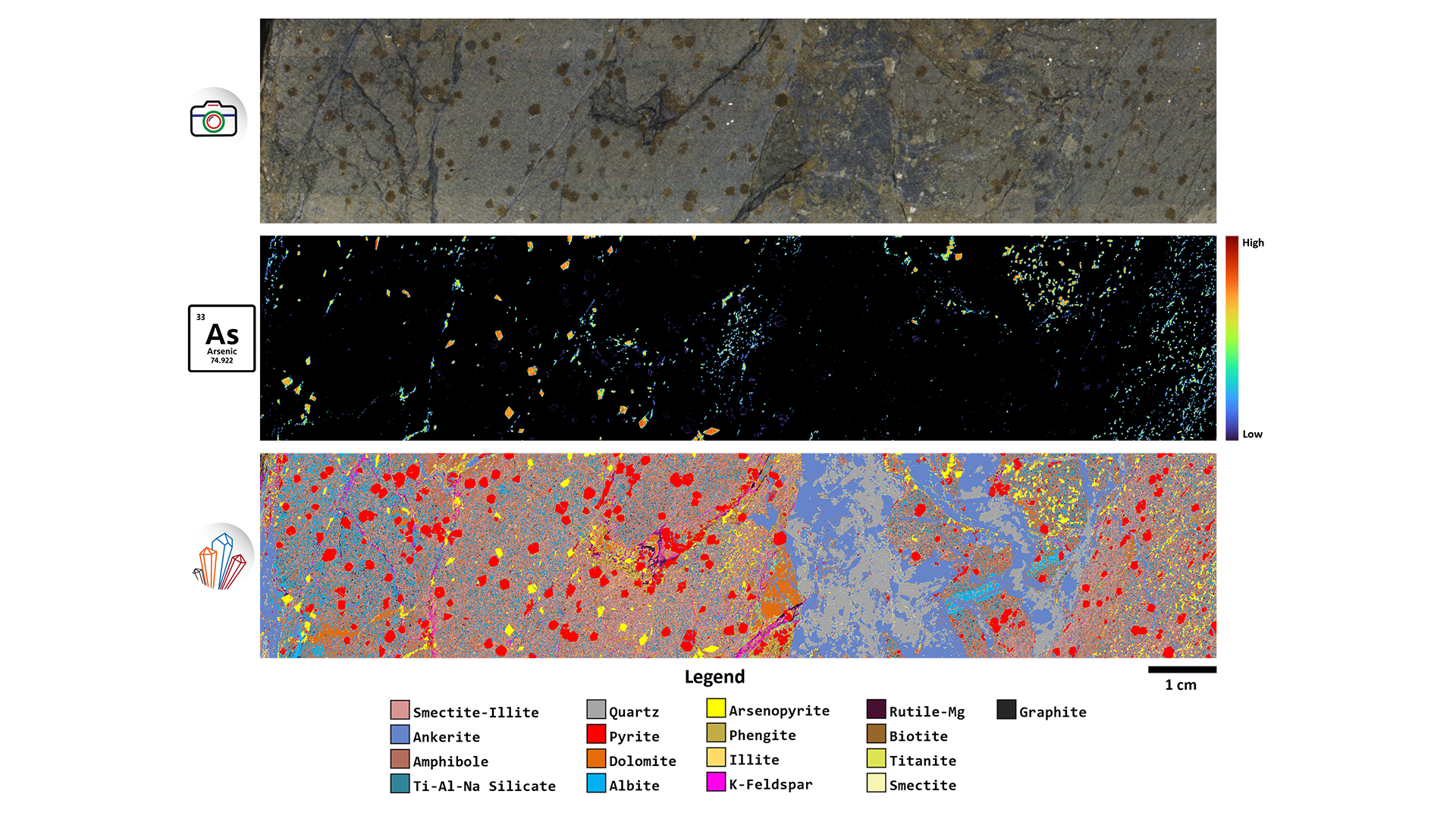
The selectivity and sensitivity of ECORE technology allow users to distinguish between arsenopyrite, As-bearing pyrite, and non-As-bearing pyrite. Using a combination of mineralogical and elemental mapping (Fig. 2), the distribution of As throughout the core can be observed, and subsequently, mineralogical, textural, and chemical affinities between As-bearing pyrite and non-As-bearing pyrite can be established.
Fig. 2: A photograph, a mono-elemental arsenic (As) map, and a mineralogical map generated by ELEMISSION’s Smart Automated Mineralogy (SAM) software of a section of drill core from an orogenic gold deposit. Arsenopyrite can be differentiated from As-bearing pyrite and non-As-bearing pyrite
The textural and chemical characteristics of these minerals can be used to better understand the implications concerning the mechanisms and timing of gold deposition. Access to detailed mineralogy promotes easy and accurate deposit characterisation and identification of alteration assemblages, allowing for informed decisions to be made for future exploration.
Case study two: Detailed mineralogical mapping used to reconstruct events associated with VMS mineralisation
Understanding the paragenesis (order in which minerals comprising a rock are formed) of a deposit is critical for establishing the context of different phases within a deposit. This comprehension allows mineralisation to be correlated with distinct fluid episodes and associated characteristic phase assemblages, which can then be used to develop strategies for geochemical exploration.
Paragenesis is usually determined by examination of polished thin sections or resin blocks using various techniques (e.g., SEM, EPMA, LA-ICP-MS). However, the representativeness of a single thin section/block decreases significantly with increasing deposit scale, where vein and dyke systems can be hundreds of meters or even kilometres long.
This, combined with the heterogenous phase distribution that is often observed to have happened during different fluid injections, adds to the challenge of sample representativeness.
ECORE has the ability to provide mineralogy results comparable to SEM-EDS across an entire core box within minutes, creating the opportunity to maximise sample representativeness. ECORE provides rapid access to automated mineralogical and textural information at the macroscale and can be applied to entire drill programmes.
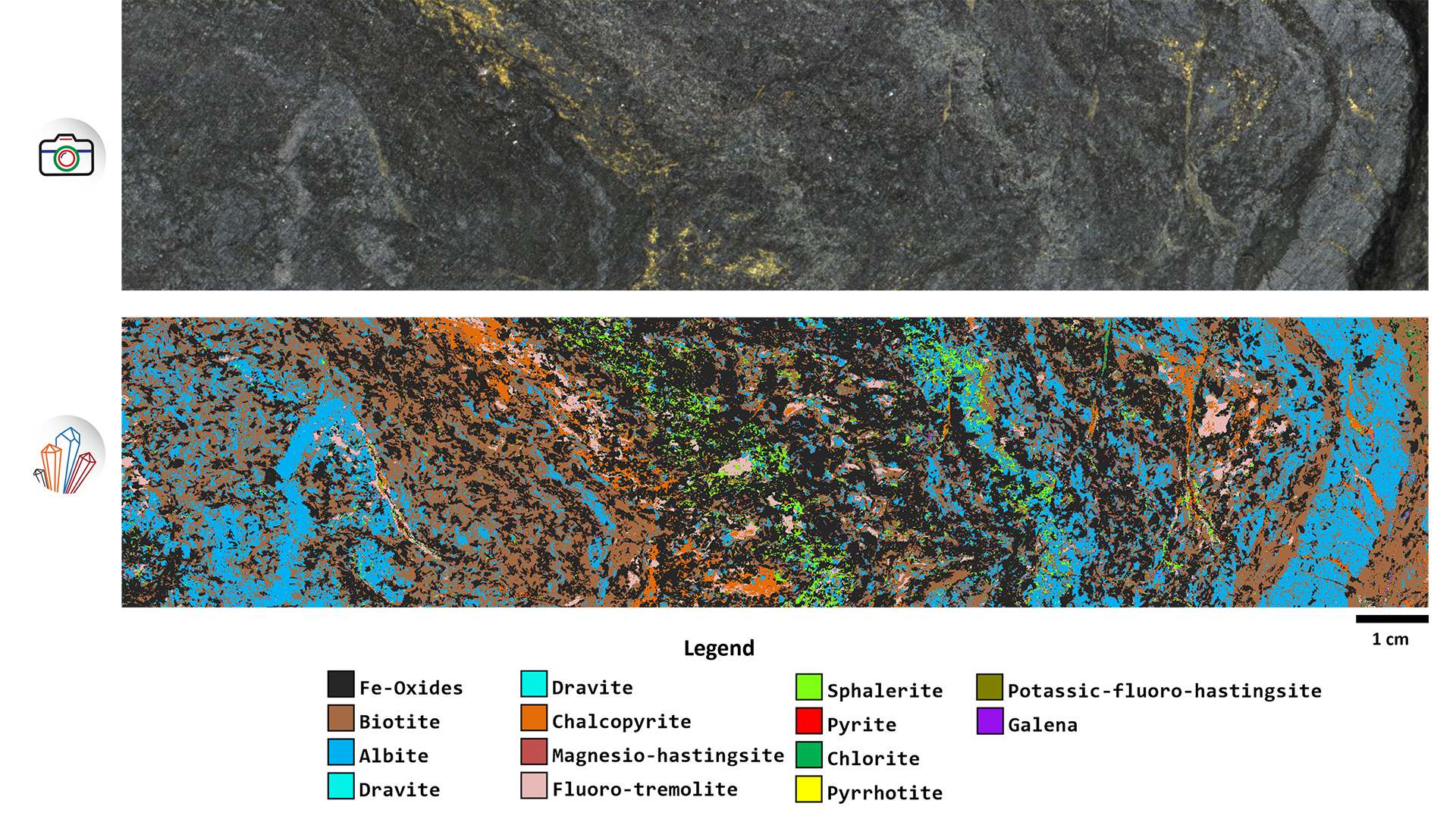
ECORE technology was used to characterise drill core (Fig. 3) and thin section off-cuts (Fig. 4) from a VMS deposit that has undergone strong deformation and metamorphism. The deposit contains two styles of mineralisation, mineralogically and texturally distinct, which are characteristic of VMS deposits. High-resolution automated mineralogical mapping performed by ECORE allowed for accurate visualisation and correlation of texture and phaser relationships, contributing to the overall paragenetic knowledge.
Fig. 3: A photograph and a SAM image of a section of drill core from a VMS deposit
LIBS technology is able to detect and differentiate between different sulphide and metal oxide phases, eliminating the ambiguity that is common when using hyperspectral imaging. With ECORE, resolution can be adjusted down to 30µm at the touch of a button. This means that any area of interest can be re-scanned at an ultra-high resolution to highlight ultra-fine features that might otherwise be missed at a lower resolution.
Fig. 4: A photograph and a SAM image of a thin section off-cut from a VMS deposit
Revolutionising ore body analysis
ECORE is a unique tool that greatly enhances ore body analysis by empowering geologists through detailed mineralogical and textural mapping. Users can gain a superior understanding of elemental distribution within a deposit, which has implications for pathfinder and indicator mineralogy while also maximising sample representativeness with the ability to scan entire core boxes in minutes.
Please note, this article will also appear in the 19th edition of our quarterly publication.
Todd Axford, Managing Director and CEO of Fuse Minerals, details the company’s plans to focus on underexplored areas of Australia to discover minerals needed to meet the world’s decarbonisation goals.
Fuse Minerals is an Australian exploration company focused on discovering mineral resources to support our future economy. The company currently has several prospective projects in copper, gold, silver, lead, and zinc—Mt Sydney and Mt Sandiman in Western Australia and three copper/gold projects located in the Isaac region of Central Queensland.
To learn more about Fuse Minerals’ values as a company, as well as its progress so far and future plans, The Innovation Platform spoke to Managing Director and CEO Todd Axford.
Can you outline the key objectives of your company strategy and how they set Fuse Minerals apart from other exploration companies?
Our strategy was born out of observing the industry in Australia and acknowledging the world’s decarbonisation goals, creating a need for mineral deposit discoveries across a range of traditional and newer commodities. We are looking to implement a sustainable approach centred around being a supplier of mineral discoveries to established miners. Copper and associated metals are our initial focus.
The key objectives of Fuse Minerals’ strategy are: • To be a discoverer of the mineral deposits that the world’s established mining companies will need to supply humanity’s needs in the 21st century. • To minimise shareholder dilution. • To provide returns to our shareholders via both capital growth and monetisation of our exploration successes.
To achieve these objectives, we need the right project areas, the right people and an ability to do deals and partner with established miners.
When it comes to project area selection, we look at mineral system fundamentals. Does the area have a source for metals? What are the pathways to get those near surface? Is the geology capable of trapping mineralisation and are those settings preserved? We combine this with Jon Hronsky’s Exploration Search Space Concept, which recognises deposits are finite – once discovered, they are not replaced and can’t be discovered again.
In any given search space, the first explorer has all deposits available to be found which affords them a higher likelihood of success. In mature search spaces, there are less deposits left to discover. We are targeting project areas showing potential to have all mineral system fundamentals that are immature, leading to higher discovery potential.
Through past experience working in the mineral exploration sector in Australia, we recognised four key things: • When all explorers are pooled together, their rate of discovery is low, in fact many never make any sort of discovery. • Those who are more successful typically have robust in-house technical skills. • If listed on a stock exchange, decisions are often swayed toward what’s popular for investors and there is a general spiralling down of value through consecutive capital raises (dilution and brokers raising money at discounts to trading price). • Miners are less successful at new discovery but great at expanding existing discoveries and taking discoveries through study and approval phases.
We also note that most explorers who do achieve a discovery try unsuccessfully to pivot to become a mining company. Completing feasibility studies, announcing attractive net present values (NPVs) and internal rates of return (IRRs) paired with a huge capital requirement and lack of balance sheet strength to achieve funding. Chalice Mining Limited in Australia demonstrates the challenge. They had great success with the discovery of the Gonneville deposit in Western Australia, and hopefully they can find a way to access the circa A$2bn of capital needed to build the mine.
We are not one of hundreds of juniors trying to ride the hot commodity waves to deliver share price growth or falling over after completing feasibility studies. We want to break new ground, prove potential for large-scale discovery in underexplored areas, and feed the need of the established miners to secure the resources they will be mining into the future.
Who leads the Fuse Minerals team? How does the team’s combined experience contribute to your strategic goals?
Our strategy focuses on leveraging a highly-skilled technical team with strong connections to established mining companies. This team needs to identify and establish new projects with the potential to host large deposits of commodities essential in the 21st century. We can then conduct quality technical work aimed at proving the significant resource potential of these projects. If we can achieve that and technical results support the presence of large new mineral resources, these projects will be attractive to those bigger established miners, allowing us to seek farm-in funding to advance discoveries or sell the projects while retaining a royalty on future production.
Our team boasts extensive experience in mineral exploration, led by myself, a geologist with nearly 30 years of experience as MD/CEO. I am supported by two seasoned geologists – Stephen Pearson, who serves on our board of directors, and Thomas Bartschi, our Exploration Manager.
Achieving success on the ground is just one part of our strategy. Engaging with established miners is key to our monetisation plans. To facilitate this, our board is led by Warren Mundine AO, a former president of the Australian Labor Party with extensive experience working with major Australian resource companies. Joining him is Vern Tidy, a former partner at EY in Perth, who also chaired Avanco Resources before its acquisition by Oz Minerals in a A$418m deal in 2018. Together, Warren and Vern bring valuable experience and connections, positioning us to engage with some of the largest players in the mining industry.
Fuse Minerals is set to explore its Mt Sydney Project. What are the key exploration targets and potential mineral discoveries that Fuse Minerals aims to achieve through its drilling programme at Mt Sydney?
Previously, a number of established miners reviewed our Mt Sydney Project. They noted promising geological fundamentals and discovery potential but require positive drill results to meet their internal investment criteria. With our recent private fundraising complete, we are ready to drill.
Our Mt Sydney Project, located on the eastern margin of the Pilbara Craton and adjacent Paterson Province in Western Australia, aligns with our strategy. The region hosts world-class deposits including Woodie Woodie (Mn), Nifty (Cu), Telfer (Au/Cu) and Havieron (Au/Cu), and our project combines essential mineral systems fundamentals with a lack of exploration. Covering 1,119km², the project had seen minimal exploration before we began our work in 2021, with only 1,106m drilled by previous explorers. Over the past two years, our work has identified six promising prospects for drill testing.
We are preparing to undertake the third drilling programme ever conducted, targeting areas with demonstrated potential for copper, nickel, silver, lead, and zinc. We plan reverse circulation (RC) drilling of four prospects, two of which—Harrison and Bull—show particularly exciting surface mineralisation.
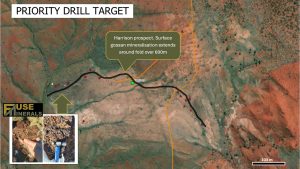
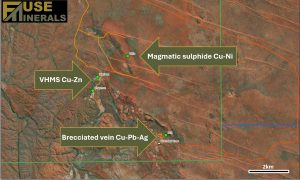
Harrison is a Volcanic Hosted Massive Sulphide (VHMS) prospect with potential extending over 1.5km. VHMS deposits are typically high-grade in copper and zinc and may also contain significant amounts of silver, lead, and gold.
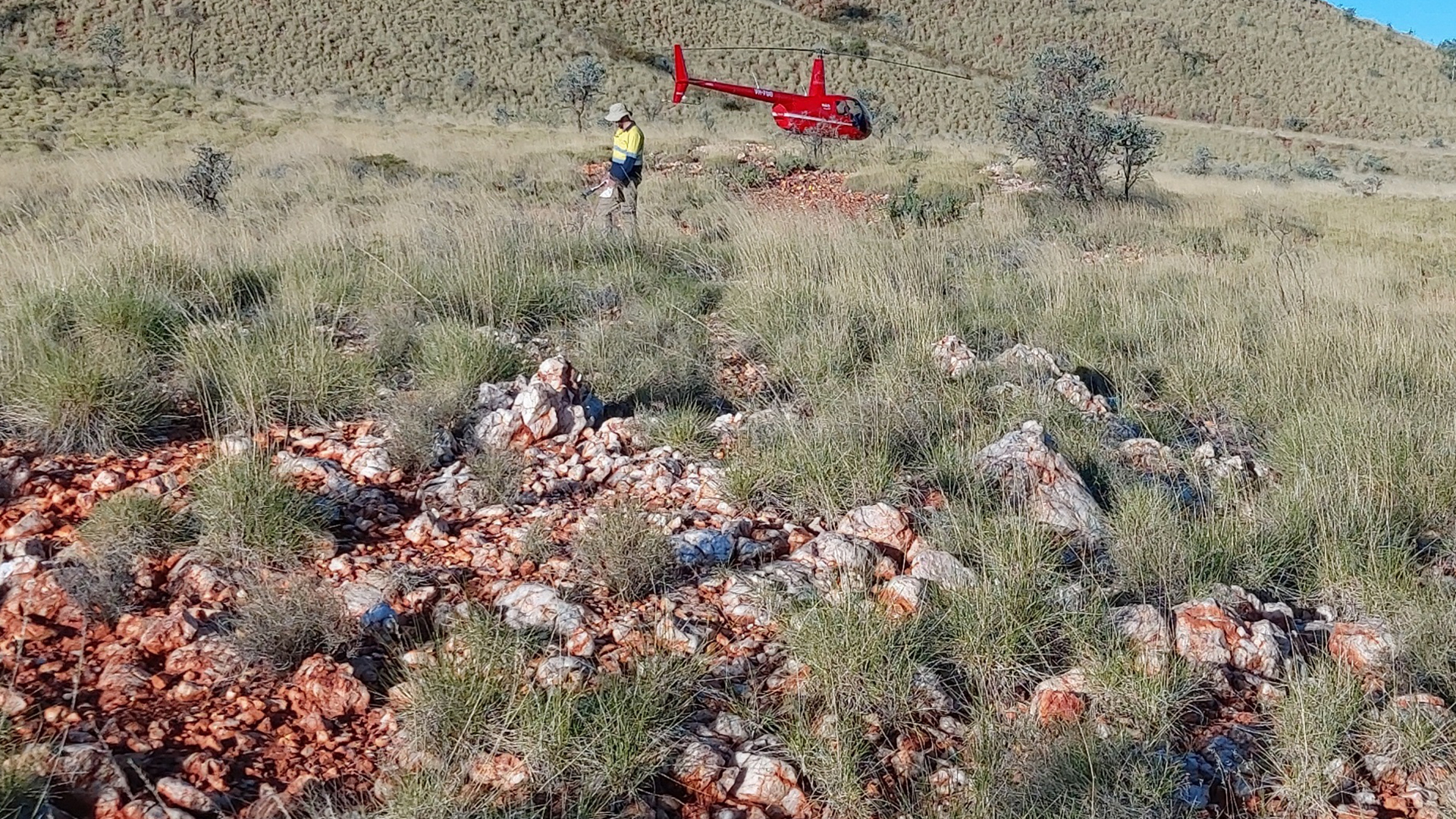
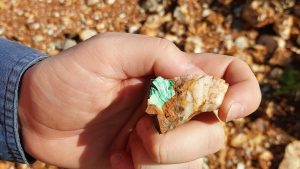
Bull features brecciated and mineralised quartz with high-grade polymetallic assays from rock chip samples, including up to 21.10% copper, 27.20% lead, 0.43% zinc, and 640 g/t silver. The surface expression of Bull spans over 200m and is up to 20m wide in places. As our independent geologist noted on-site: “If the surface indications at Bull are mirrored in the drilling, this could be our first deposit.”
The remaining prospects to be drilled, Smith and Osborne, are subsurface targets supported by geophysical data and anomalous surface geochemistry.
We also have an exciting Magmatic Cu-Ni Sulphide target in the Wills Prospect. The geophysical modelling indicates the target is 300-400m below surface and out of reach of RC drilling.
Our ultimate goal is a new deposit discovery, which propels the company forward. Through drilling, we aim to gain a clearer understanding of the subsurface geology and intersect significant mineralisation. If our ideas are correct, the drill results could attract both investors and those established miners, signalling successful progress in implementing our strategy.
Why does mineral exploration present such a promising opportunity? Can you explain the implications of successful mineral exploration in addressing global challenges?
Many years ago, in Australia there was a bumper sticker that read: ‘What’s mined is yours and what’s yours is mined.’ The message being: Almost everything we rely on as modern humans would not exist without the mining of natural resources. Whether you live in the first, second, or third world, access to mineral resources to mine is essential to our quality of lives.
Mineral resources need to be discovered via exploration – they are finite things and, once mined, they do not regenerate. As we move into the future, our known mineral resources will be depleted. The world’s decarbonisation initiative is triggering increased demand outlooks for a whole spectrum of minerals and metals. When combined with natural depletion and increased demand, it will be critical for the world to have new mineral resources discovered.
In part, the exploration opportunity was created when in the late 1990s the big mining companies in Australia started to move away from exploration. Instead, they focused on acquisition as a means to cost-effectively replenish and grow their resource bases. Discovery via exploration was too expensive. Their business structures and processes are not optimised to facilitate efficient mineral discoveries, but they are running out of new deposits to buy.
Successful exploration requires free thinking, and nimbleness combined with access to funding. So, with miners being good at mining and capable of funding new mine development, there is a great opportunity for well-functioning explorers to deliver new discoveries to these companies at a time when they are wondering where they will be mining in decades to come.
As the world moves into a period of significant demand growth for minerals and metals, new discoveries will be critical to not just the growth plans of established mining companies but to humanity as a whole. Successful exploration is needed not just to facilitate decarbonisation but simply to maintain, and hopefully improve, our standards of living as we live through the 21st century.
What’s next for Fuse Minerals?
While we have a longer-term strategy, at this point our focus is very much on the short-term delivery of a successful drilling programme at Mt Sydney as the foundation to move forward.
We expect to have a reasonable indication of the success at the time of drilling our holes, as a lot of the mineralisation we are targeting can be identified visually. Samples will also be dispatched to the laboratory for quantitative analysis, which is usually a four-week turnaround.
Following the drilling, we plan to advance our strategy and reconnect with the established mining companies who evaluated Mt Sydney last year.
The private funding we have raised is enough to deliver the drill programme and cover near-term overheads and operating costs. So, upon completion of the drilling, we will be looking at another capital raise.
When it comes to raising further capital, the board has a decision to make regarding pursuing a listing on the ASX (for which a lot of the groundwork has already been completed) or remaining as an unlisted entity. There are positives and negatives of both approaches. The decision will be guided by the quality of the drill results, the desire of our existing shareholders, any interest from strategic investors, and the state of the IPO and micro-cap market.
We are hopeful that, leading in to 2025, we will remain well funded, complete a deal to advance Mt Sydney, get on the ground at the Eastern Isaac Project in Central Queensland where there is great potential for new copper-silver-gold discoveries, and remain supported by an educated and committed investor base.
Ultimately, mineral discovery success will drive significant growth for Fuse Minerals, opening up options for the company while contributing to the world’s need to discover the deposits that will become the mines of the future.
Please note, this article will also appear in the 19th edition of our quarterly publication.
In the village of Tshabula, villagers search for cobalt and copper
Pascal Maitre/Panos Pictures
These stark images tell a dark tale about the mining of cobalt, one of the most prized minerals of the modern technological age.
Taken near Kolwezi in the Democratic Republic of the Congo, a major cobalt reserve, Pascal Maitre’s photos draw attention to the huge appetite for this metal. This is driven by its high stability and energy density, which make it suited for use in everything from lithium-ion batteries for electric vehicles to superalloys. The demand has led to corporations setting up vast extraction operations in the region, displacing villages.
The main image shows villagers in Tshabula, about 10 kilometres from Kolwezi’s centre, searching for cobalt among the waste dumped on the embankments of one of the largest open-cast mines in the area. It is run by the state and the company COMMUS (a wider view of the mine can be seen in the below image). The complex is set for an expansion that will destroy much of the housing nearby.
Pascal Maitre/Panos Pictures
But not all the mines in the region are official. Some have taken this lucrative practice into their own hands, digging deep tunnels. There are government schemes to regulate this trade and improve working conditions, but the 150,000-odd “artisanal” miners around Kolwezi receive little pay for their efforts.
Mining for minerals needed for wind turbines and other clean energy technologies has a high environmental cost, but some kinds of seaweed could offer an alternative source
“Just like we do research with corn, wheat, soybean, getting these plants to be more efficient in taking up nutrients—nitrogen, phosphorus, potassium—well, there needs to be this research that goes into understanding the mechanisms of metal hyperaccumulation,” says McNear. “And then enhancing that, whether it be through gene editing or whatever.”
ARPA-E is eying a specific kind of dirt to try these plants in, known as ultramafic soil, which is high in iron, cobalt, chromium, and nickel. It’s common where there’s been volcanic activity, for instance in northern California and southern Oregon, but is present across the US, from Wyoming to Pennsylvania, on down into the South. The concentration of nickel in ultramafic soil is probably too low to open a proper mine, but too high to grow crops and other vegetation.
With this new funding, scientists might accentuate or breed existing plant species, tweaking the way they hyperaccumulate nickel. Ideally, they’d land on a plant that grows quickly, so you’d end up with a lot of nickel-rich biomass to reduce to metal-laden ash. “The problem has historically been that they’re not often very productive plants,” says Brown. “And the challenge is you have to have high concentrations of nickel and high biomass to achieve a meaningful, economically viable outcome.”
Provided scientists can land on the right hyperaccumulating plant for the US, theoretically it could provide more nickel for more batteries. It’s not just the growing fleets of electric vehicles that are demanding more batteries: The grid, too, will need big ones to store energy generated by renewables like wind and solar power. When the sun isn’t shining and wind isn’t blowing, grid operators will need to tap into batteries to meet demand. Utilities are also experimenting with ways to tap into EVs sitting in garages as a distributed network of battery backup power.
Of course, ARPA-E’s hyperaccumulating plants would have to play nicely with ecosystems—you certainly wouldn’t want them to go invasive and outcompete native species. But the idea is that over time, phytomining would actually improve soils, extracting enough nickel for other non-hyperaccumulating plants to eventually grow. Hyperaccumulators can even clean up soils contaminated through traditional nickel mining, like around smelting facilities, as McNear has experimented with. “What goes out the smokestack gets deposited around that facility,” he says. “Farmers couldn’t use that land anymore, because it was too heavily enriched in nickel, but they could grow a crop of nickel and sell it back to the smelter—a win-win really.”
At the moment, ARPA-E is focusing on phytomining nickel, but it says it could in theory also explore ways for plants to extract cobalt, copper, or lithium. That’s green technology, in the truest sense of the word.
Two of Blue Origin’s earliest employees, former president Rob Meyerson and chief architect Gary Lai, have started a company that seeks to extract helium-3 from the lunar surface, return it to Earth, and sell it for applications here.
The company has been operating in stealth since its founding in 2022, but it emerged on Wednesday by announcing it has raised $15 million, adding to previous rounds of angel investments.
This is a notable announcement because, while the funding is small, the implications are potentially large. Lately, there has been a lot of discussion of a “lunar economy” in spaceflight but precious little clarity on what that means. Most firms that have announced business plans to launch rockets to the moon, land on the moon, or perform other activities there have been doing so with the intent of selling services or lunar water to NASA or other parties fulfilling government contracts. Put another way, there has been no wealth creation, and ultimately, NASA is the customer.
The present lunar rush is rather like a California gold rush without the gold.
By harvesting helium-3, which is rare and limited in supply on Earth, Interlune could help change that calculus by deriving value from resources on the moon. But many questions about the approach remain. First of all, the company must devise a means of extracting the gas from the lunar regolith, the abrasive, rocky, and dirt-like material on the surface of the moon. Then it must return the helium-3 to Earth. There is currently no means of doing so. Finally, it must prove that there will be a large and sustained market for the stable isotope on Earth to support its business.
However, with NASA investing tens of billions of dollars in the Artemis Program to return humans to the moon, Meyerson is convinced that now is the time to piggyback on those transportation, power, and other resources to start a lunar mining company. It would not have been possible at any time before now. It may be barely possible today.
“Helium-3 is the only resource out there that is priced high enough to support going to the moon and bringing it back to Earth,” Meyerson said in an interview. “There are customers that want to buy it today.”
A Useful Helium Isotope
Helium-3 is a stable isotope of helium with two protons and one neutron. It is produced by fusion in the sun and transported by the solar wind. However, Earth’s magnetosphere deflects this stream of particles away from the planet.
The material does not occur naturally on Earth, and it exists in only very limited quantities from nuclear weapons tests, nuclear reactors, and radioactive decay. A single liter costs a few thousand dollars, and there are efforts to recycle it by the US Department of Energy. Because there is no magnetosphere around the moon, it’s believed there are large quantities of helium-3 gas trapped in pockets of the lunar regolith.
Meyerson said that in the near term, there is considerable demand for helium-3 in the superconducting quantum computing industry and for medical imaging. Longer term, there is potential for operating a fusion reactor with helium-3 as a fuel. This is something that has long been advocated by people like Harrison “Jack” Schmitt, a geologist who flew on Apollo 17 to the moon. However, there are serious questions in the scientific community about the viability of this approach.
An Albanian mine where hydrogen naturally seeps up through the rock
F-V. Donzé
The largest flow of natural hydrogen gas ever recorded has been measured deep in an Albanian mine. The find could help us work out where to locate underground deposits of this clean fuel.
“The bubbling is really, really intense,” says Laurent Truche at the University of Grenoble Alpes in France, who measured the gas in a pool of water nearly a kilometre underground. “It’s like a Jacuzzi.”
Companies are now searching for deposits of natural hydrogen all over the world as a source of clean fuel, but evidence for large accumulations of this “gold hydrogen” is sparse. Most claims about vast hydrogen deposits beneath the surface rely on extrapolation, rather than direct measurements.
In search of more substantial proof, Truche and his colleagues descended into the Bulqizë chromite mine in Albania, where hydrogen gas seeping out of the rocks has caused several explosions. The mine is also located within an exposure of iron-rich rock, known as an ophiolite. Water is known to react with such rock to generate hydrogen in other places, such as Oman.
The researchers found that the gas bubbling from the pool was more than 80 per cent hydrogen, with methane and a small amount of nitrogen mixed in. It was flowing at a rate of 11 tonnes per year, almost an order of magnitude greater than any other flows of hydrogen gas measured from single-point sources elsewhere on Earth’s surface.
To determine the source of the gas, the researchers also modelled different geological scenarios that could produce such a flow. They found the most likely scenario was that the gas was coming from a deeper reservoir of hydrogen accumulated in a fault beneath the mine. Based on the geometry of the fault, they estimate this reservoir contains at least 5000 to 50,000 tonnes of hydrogen.
“It’s one of the largest volumes of natural hydrogen that has ever been measured,” says Eric Gaucher, an independent geochemist focused on natural hydrogen.
But it still isn’t a huge amount, says Geoffrey Ellis at the US Geological Survey. However, evidence for a stable accumulation of hydrogen supports the notion that much more is stored underground, he says. “We really should be looking deeper.”