Just because you see something done in a movie, that doesn’t mean you should try it yourself. Take, for example, a human running on top of a moving train. For starters, you can’t be sure it’s real. In early Westerns, they used moving backdrops to make fake trains look like they were in motion. Now there’s CGI. Or they might speed the film up to make a real train look faster than it really is.
So here’s a question for you: Is it possible to run on a train roof and leap from one car to the next? Or will the train zoom ahead of you while you’re in the air, so that you land behind where you took off? Or worse, would you end up falling between the cars because the gap is moving forward, lengthening the distance you have to traverse? This, my friend, is why stunt actors study physics.
Framing the Action
What is physics anyway? Basically it’s a set of models of the real world, which we can use to calculate forces and predict how the position and velocity of things will change. However, we can’t find the position or velocity of anything without a reference frame.
Suppose I’m standing in a room, holding a ball, and I want to describe its location. I can use Cartesian coordinates for a 3D space to give the ball an (x, y, z) value. But these numbers depend on the origin and orientation of my axes. It seems natural to use a corner of the room as the origin, with x and y axes running along the base of two adjacent walls and the z axis running vertically upward. Using this system (with units in meters), I find that the ball is at the point (1, 1, 1).
What if my pal Bob is there, and he measures the ball’s location in a different way? Maybe he puts the origin where the ball starts, in my hand, giving it an initial position of (0, 0, 0). That seems logical too. We could argue about who’s right, but that would be silly. We just have different frames of reference, and they’re both arbitrary. (Don’t worry, we’ll get back to trains.)
Now I toss that ball straight up in the air. After a short time interval of 0.1 second, my coordinate system has the ball at the location (1, 1, 2), meaning it’s 1 meter higher. Bob also has a new location, (0, 0, 1). But notice that in both systems, the ball rose by 1 meter in the z direction. So we would agree that the ball has an upward velocity of 10 meters per second.
A Moving Reference Frame
Now suppose I take that ball on a train traveling at 10 meters per second (22.4 miles per hour). I again toss the ball straight up—what will happen? I’m inside the railcar, so I use a coordinate system that moves along with the train. In this moving reference frame, I am stationary. Bob is standing on the side of the tracks (he can see the ball through the windows), so he uses a stationary coordinate system, in which I am moving.
Of all the utterly depressing things printed in the Hollywood trades on any given day, this has got to be among the worst: “It’s so not good, and it was so sad watching it … This is not how Coppola should end his directing career.”
This was in response to an early screening of Francis Ford Coppola’s Megalopolis, a $120 million sci-fi epic that the legendary Godfather director has been trying to make for roughly four decades. The quote, from an unnamed “studio head,” was published in a piece in The Hollywood Reporter positioning the film as the kind of movie no one in the business wants to funnel money into because it (allegedly) doesn’t have box office potential. While that quote was, in journalism parlance, the kicker, the real zinger came in the addendum at the end: “This story has been updated to include that Megalopolis will premiere in Cannes.”
Shot. Chaser.
THR’s piece doesn’t provide the gender of the studio exec quoted, but I’m going to go out on a limb: Sir, what the fuck are you talking about? Even if Megalopolis is two hours and 15 minutes of Adam Driver (yes, he stars) doing paper doll plays, Coppola has survived so much worse. This will not end his career. If anything, quotes like this signal an end of—or at least the massive need for a reboot of—Hollywood.
Earlier this week, Bilge Ebiri wrote a full-throated plea in Vulture, declaring “Hollywood Is Doomed If There’s No Room for Megalopolises.” Matt Zoller Seitz took a slightly different tack, addressing France directly from his desk at RogerEbert.com and begging Cannes Film Festival participants to cheer the film and save the US from itself. Both pointed out that many of Coppola’s films—Bram Stoker’s Dracula, One from the Heart—didn’t fully connect with audiences or critics when they were first released. The latter nearly bankrupted him—right after he mortgaged everything he owned to finance Apocalypse Now, which currently sits, alongside other Coppola films, on the American Film Institute’s top 100 movies of all time.
I’d like to make an entreaty of a different kind: Nerds, assemble. We have a long history of crowdfunding and letter-writing to manifest the projects on which Hollywood has wobbled. Bjo Trimble saved Star Trek. Queer sci-fi, Veronica Mars, The People’s Joker—we’ve raised cash for all of it. Studios don’t think Megalopolis is bankable; it may not appease any streaming service’s algorithm. Who cares. An online petition with enough backing can provide a marketing campaign to rival the multimillion-dollar one Coppola has envisioned. It’s worth a shot,
The Monitor is aweekly columndevoted to everything happening in the WIRED world of culture, from movies to memes, TV to Twitter.
Garland and A24, one of the film’s distributors, declined to give WIRED an interview to discuss these topics and didn’t respond to emailed questions, so it’s hard to say how influenced Garland was by the Boogaloo movement when writing the screenplay. But given that an NBC report in February 2020, around the time when Garland was sitting down to write the script, was among the first major reports in the mainstream media about the group, it seems certain they influenced the narrative that plays out on screen.
Whether or not the inclusion of this real-world reference was intentional, the impact is likely going to be the same.
“A lot of these people, particularly right-wing, radicalized, young white men, they are absolutely steeped in media, and if you spend any time in these circles online, all of their references are either misunderstood art, such as the Matrix or Fight Club, or it’s ambiguous art that they are able to co-opt for their own purposes,” says political analyst Jared Yates Sexton.
Sexton’s book, The Midnight Kingdom: A History of Power, Paranoia, and the Coming Crisis, details how modern America is built on white supremacist rhetoric, Christian nationalism, and conspiracy theories that are now threatening to plunge the country into an authoritarian nightmare like the one playing out in Civil War. “I see this as absolutely being very ripe for the right to embrace it and celebrate it and turn it into their own sort of vision board for lack of a better term,” he says.
He hasn’t seen the film yet, but has reviewed Garland’s comments about making Civil War and believes that the disconnect between reality and the director’s vision may come from how Garland views the rift dividing the US right now.
When it premiered at SXSW earlier this year, Garland was quoted saying that “left and right, just to be clear about it, are ideological arguments about how to run a state. That’s all they are. They are not a right or wrong, in terms of good and bad.” This led to a lot of criticism, but in an interview published this week in Dazed, Garland attempted to clarify what he meant.
“I would just say to people: Before you start getting angry, let’s figure out if our definitions of left and right are the same thing,” Garland said. “Low taxation to stimulate economic growth, or high taxation to help disadvantaged people via educational welfare. That’s what I mean by left-wing and right-wing.”
To Sexton, this narrowly defined view of the battle between the left and right may be technically accurate but is not based in reality.
“American and global understanding of right-versus-left has just become a Rorschach test,” Sexton says, adding that Garland’s definition is not the widely held understanding of those terms. “Right,” he says, involves “rampant white supremacist, patriarchal fascistic power,” while “left” is defined as “diversity and inclusion and actual history and science.” Garland, he believes, “has a libertarian viewpoint that is likely to be co-opted by the right wing in times of political crisis.”
Garland has repeatedlysaid that the thing he wants audiences to take away from this film is “aversion,” but he has not defined exactly what audiences should feel an aversion to.
For many, the visceral action with brutal but realistic violence and scenes of tanks rolling into Washington, DC, will inspire an aversion to war, as it should. But to a small band of extremists who have been fantasizing about another civil war for years, the film’s garbled politics and confused narrative may create not aversion but inspiration.
Saying the quiet part out loud. Somehow, this has always felt like the bleeding heart of The Matrix movies. Under the simulation theory, cool bullet-dodging, and even cooler soundtracks, the movies are about pointing out the facades and fakery that surround us. Evil forces are trying to placate everyone and it’ll only stop if you talk about it. That is perhaps why so many people expressed relief when Lilly Wachowski, who wrote and directed the original Matrix trilogy with her sister Lana, seemingly confirmed that the series was, in some ways, a transgender narrative.
Fans had been speculating about it for years, particularly after the Wachowskis came out as trans, but then one of them finally said it.
Typically, saying the quiet part out loud means accidentally revealing a secret motive. In the case of The Matrix, the (not) hidden agenda is just about the importance of individualism. The red-pill-or-blue-pill of it all is whether you choose to accept reality. This is why, as my colleague Jason Kehe pointed out a few years ago, Matrix Resurrections put a mirror up to the self-hatred and nostalgia baked into its own audience. To love The Matrix is to love something perfectly comfortable with screaming its own intentions—and imperfections.
Which is why, on this weird April day, I find myself asking: Why is Drew Goddard making the next Matrix movie? No offense to Goddard, but the man is nothing if not earnest. Painfully so. He made The Martian better, though far less wry, than the book. Alias, Cloverfield, Lost, Cabin in the Woods. He’s got the mystery box thing down. His projects, though, are rarely what one would call edgy. They’re crowd-pleasers. Matrix movies never felt crafted to please anyone. That’s what made them so much fun.
According to Jesse Ehrman, president of Warner Bros. Motion Pictures, Goddard got the gig because he came to the studio with “a new idea that we all believe would be an incredible way to continue the Matrix world.” I’m also compelled to note that Lana is executive producing, so it’s not that there is no Wachowski involvement here, but it’s unclear what anyone’s motive is for continuing a franchise that could’ve been left alone.
The Monitor is aweekly columndevoted to everything happening in the WIRED world of culture, from movies to memes, TV to Twitter.
Normally the answer to this question would be “money,” but the last Matrix—2021’s Resurrections—didn’t, relatively speaking, make a ton of it. Perhaps that’s what Goddard’s emplacement is an attempt to fix. Ever since the Warner Bros.–Discovery merger, the company has been focusing on surefire winners and sending movies like Batgirl to the dustbin. Maybe handing Goddard the keys to the Nebuchadnezzar provides an opportunity to make a Matrix with a little more mass appeal. Saying the quiet part out loud, maybe it’s a chance to make a less weird, bankable hit.
Sigh.
Admittedly, I’m wont to bristle at the idea of a Matrix reboot, even when the result turns out surprisingly well. There’s a chance The Matrix 5 (or The Matrix Rebrand, etc.) will be fantastic, even if it doesn’t come directly from the minds of the Wachowskis. But after watching The People’s Joker this week, it’s been hard not to ponder what happens when someone completely reimagines worlds everyone thought they knew. Director-star Vera Drew’s parody is unlike any Batman movie before it. The Joker serves as hero and Bruce Wayne is a media mogul. There’s no quiet part; it’s just loud. A template for the Matrices to come.
I used to host a web series called Hot Topics With Vera Drew, which is the only web series with the express purpose of getting Vera Drew sponsored by Hot Topic.
Did it fulfill that purpose?
Hot Topic never sponsored me, even though the show had like a little niche following. They did follow me on Twitter eventually. Now I just wanna go on the record and say my door’s closed. They are no longer welcome to sponsor me.
So you found money some other way.
It was on that show that I announced that Bri and I were making The People’s Joker. It didn’t go viral. It didn’t even go soft viral. It just got a lot of attention from various artist circles, which was so cool. It was just like, oh my god, OK, this is what the movie is.
It’s a mixed-media movie. It’s Natural Born Killers or Pink Floyd—The Wall. It’s a coming-of-age Batman parody, but it’s also a big colorful collage of an impressionist media hellscape.
But also one that has a through line in your story.
My face is on camera for most of this movie. It’s my story, it is my life, but mythologized in this way.
I really wanted everybody involved to feel like they were bringing their like personal artistic vision to the table just because everybody was just so into the idea. I think it already felt like everybody’s movie. The People’s Joker—it invites you to be like, OK, I wanna be a part of this magic and what about my identity can I shove in here?
Did people end up volunteering?
It started all on a volunteer basis. As the scope of the project grew, it was like, I can’t justify all these people working for free. So I did end up doing a money crowdfund. I raised like $25,000, which was great, but all of that ended up going into our shoot. Our shoot was only five days, which is crazy.
So that money burnt up real quick, and I was like, “Well, now I have this movie with, uh, 1,600 VFX shots in it and an army of people that wanna help me finish it. How am I gonna do this?” So I did what they tell you to never do—they told me this like my first day in film school: I took out a huge loan to finish this movie.
I would imagine this went to paying you and everyone else.
I will totally go on the record and say every single person that worked on this was phenomenally underpaid, myself included. A lot of people didn’t end up taking money if it was offered. Then there were the people that were like, “You know what? I’ll definitely take this amount of money.”
“I have to make rent.”
Yes, exactly. I never wanted this movie that is anti-capitalist, very pro-labor, very pro-queer, very pro-sex worker to ever exploit anybody involved in it. We all walked away with everybody feeling, more than anything, blown away at the attention the movie’s gotten. I think everybody involved is just like, “Geez, I just thought this was like a weird thing I was doing with my friend.” [Laughs] I don’t know. It’s really magical, I think.
Are you one of those people who arranges your apps by color? Do you keep folders? Or are you, like me, a moron who just keeps a loose memory of what color any particular app is and swipes and scrolls until their eyes catch a familiar glimpse? If you are the latter, finding Disney+—and Hulu—might be getting a little harder.
This week, Disney rolled out Hulu on Disney+ in the US. Ostensibly part of company CEO Bob Iger’s promise of a “one-app experience,” the launch basically just means that if you have one of the Disney “bundles” you can now watch Hulu stuff while you’re in Disney+. OK, cool. Along with the change, though, Disney+ got a new logo, one awash in what it is calling “aurora,” a swampy blue-green hue that looks like what would happen if the eyes of Tammy Faye were imprinted on your device’s screen like it was the Shroud of Turin.
As with any minor change to their digital experience, internet people have noticed this shift. And commented. Some called it “bland,” while others called it “lifeless.” More nuanced and jugular-aiming takes went like this: “I mean, it’s Disney. Making new versions of stuff that’s worse than the original is what they do.” A hot take for a cool color.
Courtesy of Disney+
Disney’s shift here isn’t entirely insignificant. It involved modifying everything, from re-encoding Hulu’s video files to work on Disney+ to updating the metadata attached to shows and movies. The idea is that one day Disney will have “one master media library for the entire company,” Aaron LaBerge, president and CTO of Disney Entertainment and ESPN, told the Verge. It is, in other words, about making Disney+ a bigger trove of content than it already is.
This is where, metaphorically, the Disney+ color change takes on a different tone. It serves as a reminder of the flattening of the streaming experience. In the app libraries of our minds, Netflix is red, Apple TV+ is black, Hulu is green, Paramount+ and Amazon Prime Video have a very similar blue hue, Peacock and Discovery+ have a rainbow-and-black thing going on. These visual signifiers indicate what kind of experience will emerge when clicked. (I don’t know about you, but I now associate perfectly zestless television with RGB 229 9 20, aka Netflix Red.)
As the streamers have consolidated or changed their identities, they’ve muddied the nonverbal cues that have set our expectations around what they offer. Had HBO kept that old black-silver-blue look from the Go days, maybe, coupled with Apple TV+, black would be the official color of prestige television. But it’s not.
The Monitor is aweekly columndevoted to everything happening in the WIRED world of culture, from movies to memes, TV to Twitter.
Before he used AI tools to make his movies, Willonius Hatcher couldn’t get noticed. Now his AI-generated shorts are going viral and Hollywood is calling.
Several people are typing, and they’re all saying Netflix’s Leave the World Behind is wildly prescient. The movie, directed by Sam Esmail, opens on a world where communication has been knocked out following a cyberattack. And earlier this week, when nearly all of Meta’s platforms—Facebook, Instagram, Threads—went down, people took to (other) social media platforms to post and hand-wring about the apocalypse.
Most of the posts, per usual, were jokes: wry observations to help soothe the agita that comes with being alive when everything feels unstable. “Another dry run for Leave the World Behind,” wrote one X user. “I fear we are moving close to a Leave the World Behind scenario,” wrote another. “These tech glitches are increasingly [sic] with regularity.”
But there was also a more conspiratorial undercurrent. For those who don’t know, Leave the World Behind was produced by Barack and Michelle Obama through their company Higher Ground Productions. Ever since the movie’s release, a conspiracy theory has persisted online that the film is somehow a warning about the widespread disorder to come.
This same thread emerged late last month when an AT&T network outage wreaked havoc on US cellular networks. “The predictive programming of the Obama’s [sic] movie, Leave the World Behind, is becoming a little too real right now,” one user wrote on X. “I wouldn’t put it past our own federal government to institute a terrorist or cyber attack, just to blame it on foreign countries like China and Russia.”
Odds are that nothing of the sort happened. Leave the World Behind is based on a 2020 book by Rumaan Alam and, according to the film’s director Sam Esmail, the former US president came on as a production partner only after the script was pretty much done. “I would just say [the conspiracy theorists] are pretty wrong in terms of his signaling,” he told Collider. “It had nothing to do with that.”
Not that facts have ever gotten in the way of an online conspiracy before. Case in point, this week’s big trailer drop: Civil War. When the first trailer for Alex Garland’s next film dropped in December, online right-wing pundits speculated that it was also predictive programming, something meant to prepare the populace for events already planned by those in power. When the new trailer dropped this week, people on Reddit and elsewhere seemed to be fretting that the film will become, as The Hollywood Reporter put it, “MAGA fantasy fuel.”
Ultimately, reactions like these to Leave the World Behind and Civil War merely serve as proof that they’re effective as works of fiction. They’re not part of some psyop to placate the public—they’re reactions to a political era that is fraught at best. Comfort is not a prerequisite for good filmmaking; movies are supposed to be unsettling sometimes. Concerns about a movie being too real are just signs that the filmmakers have tapped in to the collective psyche. Rather than think that Esmail or Garland—or Obama, for that matter—are trying to send some warning, perhaps consider the circumstances for why you’re worried that they might.
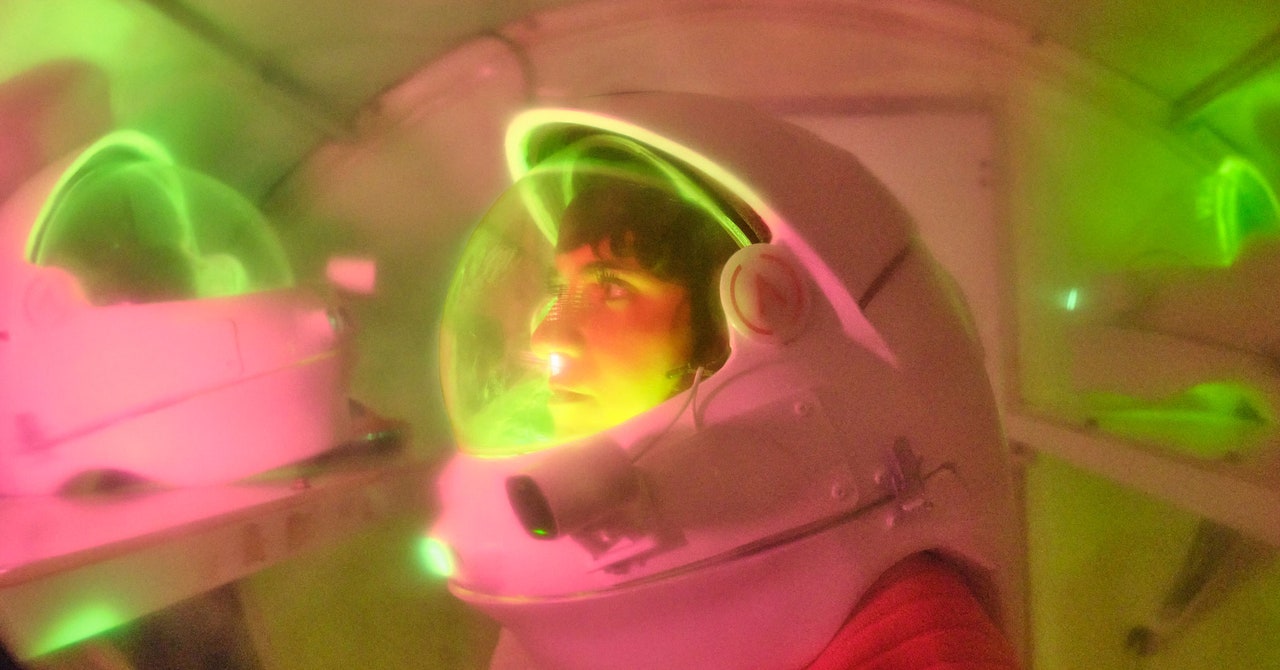
The experiment was failing. Nelly Ben Hayoun-Stépanian was in a cave in Spain, one outfitted to resemble the surface of a foreign planet, and she knew it was time to pull out. The goal had been to test how three people— Ben Hayoun-Stépanian and two of her doppelgängers—would form a new society in space using their perspectives as people whose lives have been touched by colonization here on Earth.
“My doppelgängers only stayed with me two nights, then they left because we had to abort the mission,” says Ben Hayoun-Stépanian. “There was a whole drama situation happening.”
If you want to know exactly what the drama was, you’ll have to watch Ben Hayoun-Stépanian’s new documentary, Doppelgängers³, which premieres this weekend at South by Southwest in Austin, Texas. Suffice to say, even if the experiment didn’t go as planned, it still proved her point: Humanity’s quest to explore space needs input from people who aren’t millionaires or leaders of government space agencies.
When she’s not making films, Ben Hayoun-Stépanian is an artist and the SETI Institute’s “designer of experiences.” One of her goals is to bring “queer ecofeminist perspectives” to space travel, and with Doppelgängers³ she wanted to show folks like Elon Musk and Jeff Bezos—the ones seeking to commercialize space travel—what it means to colonize the cosmos.
“It’s a call for action, a call for members of the public to take ownership of these futures,” Ben Hayoun-Stépanian says of the film, “because if you’re not, other people are going to do it for you.”
Ben Hayoun-Stépanian’s method for bringing in these voices is twofold. For one, she spends a good chunk of the documentary talking to experts—planetary scientist Christopher McKay, physicist Michio Kaku, among others—about trauma, space exploration, and parallel selves. For the other, she relies on her doppelgängers: Lucia Kagramanyan and Myriam Amroun, two people who share Ben Hayoun-Stépanian’s background but not her lived experiences.
Chest-bursting aliens. Time-traveling DeLoreans. Dystopian futures. Galaxies far, far away. Science fiction is full of characters, set pieces, and scenarios that few other genres could ever get away with. Due to its often speculative nature, the most accomplished sci-fi movies can sometimes require a bit of work on the part of the viewer. Yet as fans of the genre understand, when it’s done right, a great sci-fi film is well worth the mental gymnastics that watching it might demand.
Speaking of sci-fi done right: Whether you’re a lifelong genre devotee or have never even sat through a Star Wars movie to the end, a little guidance can go a long way—and that’s exactly what we’ve got for you. When you’re ready to take your mind on a cinematic journey, check out any one (or all) of our picks for the very best science fiction movies you can watch right now.
If you buy something using links in our stories, we may earn a commission. This helps support our journalism.Learn more.
Dune and Dune: Part Two
“Tell them a messiah will come. They’ll wait. For centuries.” Chani (Zendaya) speaks those words early on in Dune: Part Two. She’s speaking about the prophecy that a savior will arrive to help her and her fellow Fremen, and whether or not Paul Atreides (Timothée Chalamet) will be that messiah. She could also be talking about the wait for a truly epic adaptation of Frank Herbert’s award-winning sci-fi novel. Yes, David Lynch made one in the 1980s, and it’s a camp classic, but it is director Denis Villeneuve’s pair of films that truly bring Herbert’s story to life. Lushly designed, action-packed, and understandable even to people who’ve never touched the book, these Dunes are the real deal. If you know anything about the lore, you know there’s far too much to really get into it here, but let it be known: Villeneueve’s adaptations aren’t just mind-blowing sci-fi—they’re monumental works of art.
Arrival
While Denis Villeneuve has dabbled in a variety of genres since beginning his filmmaking career in the mid-1990s, a sci-fi milieu seems to suit him best. As if Enemy (2014) or his pair of Dune movies didn’t make that obvious, consider this: The man dared to make a sequel worthy of Ridley Scott’s genre-defining Blade Runner—and succeeded! Then there’s Arrival, which is basically a linguistics lesson wrapped in a sci-fi feature and all the more engrossing because of it. After the unexpected arrival of an alien species on Earth, linguist Louise Banks (Amy Adams) is tasked with creating a universal language that will allow humans to speak with them, and vice versa. But she quickly comes to realize that effectively communicating with her human colleagues—who want results now—might be the bigger challenge. It’s a stark, and all too timely, reminder that progress takes time, and as such requires patience.
RoboCop
Any cursory attempt to recreate the ’80s usually goes straight for the popped collars and neon-colored everything. But a quick review of some of the decade’s most popular movies reveals a deep sense of disillusionment. Case in point: In the same year that Gordon Gekko (Michael Douglas) was declaring “greed is good” in Oliver Stone’s Wall Street, Paul Verhoeven was unleashing one of cinema’s most subversive sci-fi flicks, which sees the mayor of Detroit hand over control of the city to the evil Omni Consumer Products (OCP), which promptly turns Motor City into a testing ground for its latest technologies. One of those creations is RoboCop (Peter Weller), a law-enforcing cyborg who is programmed with the sole intent of eradicating the city’s crime problem—until memories of his human existence find their way back into his head. Hey, it happens. Especially when you recycle the corpse of a police officer murdered in the line of duty in order to make your robot cop thing work. The film’s extreme violence initially earned it the dreaded X rating, which Verhoeven skirted with some clever editing. But the real scares are in its statement on capitalism and the power that corporations wield, which is as true today as it was nearly 40 years ago.
Inception
Anyone who has ever seen Inception knows that you probably need at least a second go-around—or 20—to fully understand its many complexities. If that is even possible. The less you know about the details of the story going into it the better, but the basics are this: Dom Cobb (Leonardo DiCaprio) is an “extractor”—a talented thief who steals his targets’ secrets by infiltrating their dreams with his trusty team of colleagues, which includes Joseph Gordon-Levitt, Elliot Page, and Tom Hardy. People still debate what happened in the film’s ending, which is just the kind of mindfuckery Christopher Nolan seems to revel in.
Star Wars V: Episode V—The Empire Strikes Back
There are only a handful of movie sequels that have somehow managed to be better than the film that spawned then, and The Empire Strikes Back is near the top of the list. The film reunites Princess Leia (Carrie Fisher), Luke Skywalker (Mark Hamill), and Han Solo (Harrison Ford)—the fearless threesome who made A New Hope an instant smash hit—as they yet again do their best to keep their world safe from the dastardly Darth Vader. While A New Hope dazzled with its ahead-of-its-time visual effects, The Empire Strikes Back was just as impressive—but took the Star Wars universe in a decidedly darker, and more adult, direction.
The Matrix
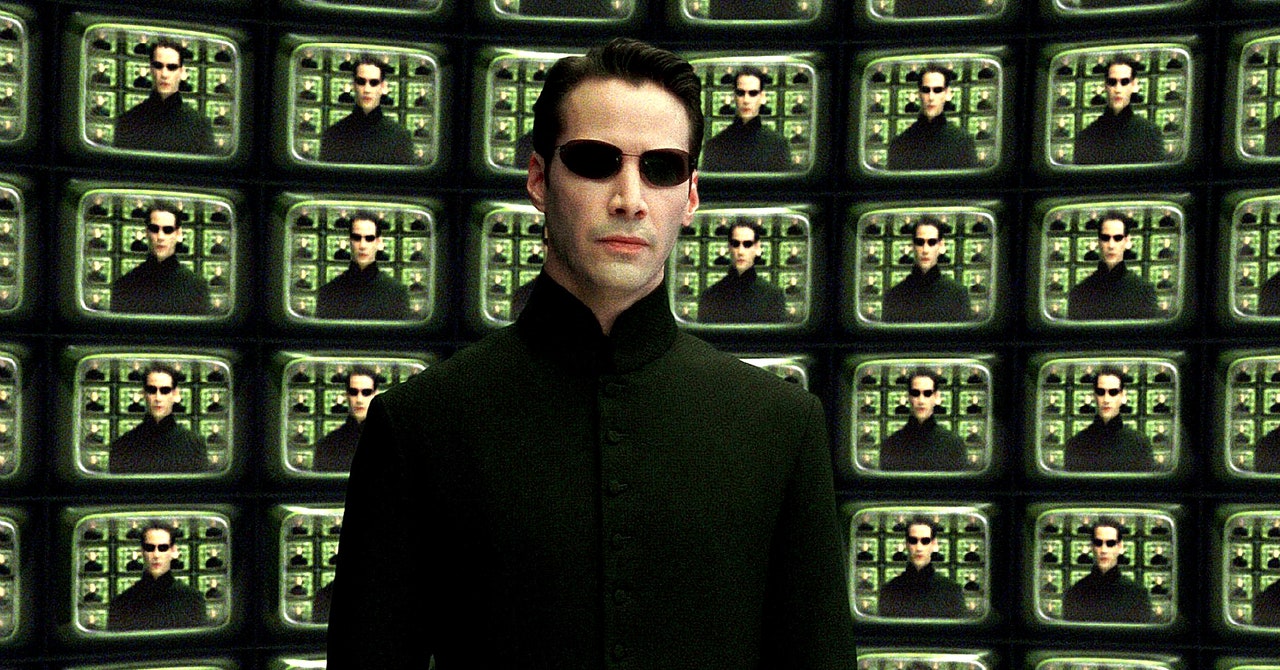
Today, The Matrix is part of an enormously popular franchise that includes movies, video games, and even an animated feature (The Animatrix). While all those additional pieces of the puzzle may have diluted the impact of the original film, its one-of-a-kindness still stands. In a dystopian future (really, is there any other kind?), the world is living in a simulated reality without even realizing it—until a top-notch hacker named Neo (Keanu Reeves) sees what’s happening and works to separate fact from AI-created fiction. The Wachowskis’ visionary directing, thought-provoking script, and mind-bending action sequences still have the ability to make viewers’ jaws drop. Audiences haven’t looked at spoons—or Keanu Reeves—the same way since.
The Terminator
In a different world, the studio could have won a casting argument with James Cameron, and The Terminator would star O.J. Simpson instead of Arnold Schwarzenegger. Through a fortuitous and circuitous turn of events, Cameron met with Schwarzenegger to pretend to consider him for the role of Kyle Reese in The Terminator and walked away knowing he had just found their eponymous cyborg, who time-travels from 2029 to 1984 in order to murder Sarah Connor (Linda Hamilton), a waitress and future mom to the kid who will save the world. Fortunately, she’s got Reese (Michael Biehn)—another time traveler—on her side. On paper, it may sound preposterous, but 40 years later The Terminator still manages to impress—and is still spawning new content.
Terminator 2: Judgment Day
If The Terminator raised the bar for sci-fi films, Terminator 2: Judgment Day smashed it to pieces. Like so many cyborg movies that preceded it—including its 1984 parent film—T2 is as much a commentary on what it means to be human as it is a declaration of just how far is “too far” in the development of intelligent technology. If only early ’90s James Cameron knew what would lie ahead. The plot of this sequel essentially follows the same pattern as the original film: a Terminator (Robert Patrick) is sent to Los Angeles to kill John Connor (Edward Furlong), son of Sarah Connor (Linda Hamilton), before he can lead the human resistance. Once again, the Connors have a guardian angel—only this time it’s a kinder, gentler, familiar old Terminator (Arnold Schwarzenegger) who is sent to protect John. Where T2 managed to supplant its predecessor is in its VFX. As he has done so many times throughout his career, Cameron essentially had to create new technology in order to see his vision to fruition and, in doing so, led the transition from practical effects to CGI (for better or worse). Even by today’s standards, T2’s liquid metal shots are incredible to witness.
Escape From New York
John Carpenter may be better known as a master of horror, but he’s no slouch in the sci-fi department. Set in the then future year of 1997, Escape From New York offers a version of America where the country is one big war zone and the island of Manhattan is one giant maximum security prison. That’s unfortunate for the president (Donald Pleasence), as New York City is exactly where Air Force One crash-lands after an attempted hijacking, and POTUS is taken hostage by one of the country’s most dangerous crime bosses. In order to ensure the president’s safe return, the government has no choice but to enlist the help of Snake Plissken (Kurt Russell), a soldier-turned-criminal who might just be the only person who can save the country from total anarchy. Are there synth scores? You betcha. Carpenter would double down on his sci-fi prowess and reteam with Russell again, just one year later, with his equally awesome The Thing (1982).
Ex Machina
While the 1980s were undoubtedly a very good time for sci-fi, the new millennium has proven that there are still plenty of wholly unique stories to be told—and Ex Machina is one of them. Caleb Smith (Domhnall Gleeson) is a programmer who is invited to the remote home of an eccentric tech billionaire (Oscar Isaac) for what he thinks is a gig helping to develop a truly groundbreaking humanoid robot. But when Caleb meets Ava (Alicia Vikander), the robot in question, it becomes clear that it is she, not the humans, who is in control. With its A-list cast, stellar directing, all-too-relevant storyline, and synchronized dance scene, Ex Machina just might be this millennium’s Blade Runner.
Back to the Future
Yes, Back to the Future is a comedy. And a family film too. Not to mention an ’80s classic. But at its heart, the time-traveling adventure of Marty McFly is sci-fi through and through. Marty (Michael J. Fox) is a cool ’80s teen who has a hot girlfriend yet somehow manages to spend most of his time hanging out with a middle-aged mad scientist (Christopher Lloyd), who turns a sweet DeLorean into a time machine. Hijinks ensue, as does a bizarre plotline involving Libyan terrorists, all of which land Marty back in 1955, where he meets the teen versions of his parents and desperately thwarts his mom’s attempts to seduce him. (That storyline could be its own movie, really.) But by interfering with the past, Marty is putting his own future at risk. Forcing him to find a way to get back to 1985—but not before inventing rock ’n’ roll as we know it.
Alien
Ridley Scott has dabbled in virtually every genre, but the bars he has set in the sci-fi world are undeniable. Two years after making his feature directorial debut with the period film The Duellists, Scott changed the science fiction game with Alien. The film follows the crew of the spacecraft Nostromo, including warrant officer Ellen Ripley (Sigourney Weaver), who respond to a distress call as they’re making their way home to Earth. This turns out to be their first mistake—especially when they realize that they’re being stalked by an unknown alien species that seems determined to make sure none of the crewmembers ever leave the planetoid. Alien introduced audiences to an array of terrifying creatures—Xenomorphs and face-huggers and chestbursters, oh my—and kicked off a notable movie franchise that will continue later this year with Alien: Romulus.
Close Encounters of the Third Kind
Two years after inventing the “summer blockbuster” with Jaws, Steven Spielberg made a quick pivot from vengeful sharks to mysterious extraterrestrials—a theme he would revisit again a few years later—with Close Encounters of the Third Kind. The film reunited the director with Richard Dreyfuss, who here plays a loving husband and father whose unexpected run-in with a UFO turns into an obsession that threatens to ruin the life he has built for himself. Nearly a half-century later, it remains one of the most smartly made alien movies Hollywood has ever seen by doing away with the “extra-terrestrial invasion” trope and instead focusing on the challenges that would come with the discovery of an alien life-form.
2001: A Space Odyssey
Stanley Kubrick’s 2001: A Space Odyssey is the sci-fi movie to end all sci-fi movies, with every genre flick that has followed owing the auteur a debt of gratitude. With its epic scope, gorgeous cinematography, and its somewhat prophetic—and deeply dystopian—narrative about the potential dangers of relying too much on technology, the film is as relevant today as it was upon its initial release nearly 60 years ago. Particularly with its main storyline, which focuses on a group of men taking part in a space mission with the help of HAL 9000, a piece of AI technology that decides to go rogue. It’s not a short film, and every one of its 189 minutes is packed with prescient storytelling and ahead-of-its-time technology, making it stand out as one of the most accomplished films in cinema history.
Blade Runner
Between The Last Duel (2021) and Napoleon (2023), Ridley Scott has been on more of a historical epic kick lately. But no amount of time away from the sci-fi world could ever threaten his place as a preeminent master of the genre. While he made his name with Alien, he achieved icon status with Blade Runner. The setting: Los Angeles, 2019. (Stick with us here.) Flying cars are a thing, as are bioengineered humanoids known as replicants, and that’s a bad thing. Which is why there are so-called “blade runners” like Rick Deckard (Harrison Ford), whose job is to find and kill these nonhuman threats to society. But when everyone looks and often acts human, where do you draw the line? Blade Runner’s complex storyline led to Scott and Ford being forced to record and attach a voice-over, which they both hated, to the film’s original release. The film has subsequently been rereleased, both theatrically and in home versions, a number of times and in different iterations. In 1992, Scott finally got to release a director’s cut of the film, which did away with the voiceover (and other elements he didn’t love), but even he didn’t have final say over that cut. Finally, in 2007, he got the chance to be the last word on every element with Blade Runner: The Final Cut. Watch ’em all and see where you land.