Robert Sapolsky is one of the most revered scientists alive today. He made his name from his work studying wild baboons in Kenya, unpicking how their complex social lives lead to stress and how that affects their health.
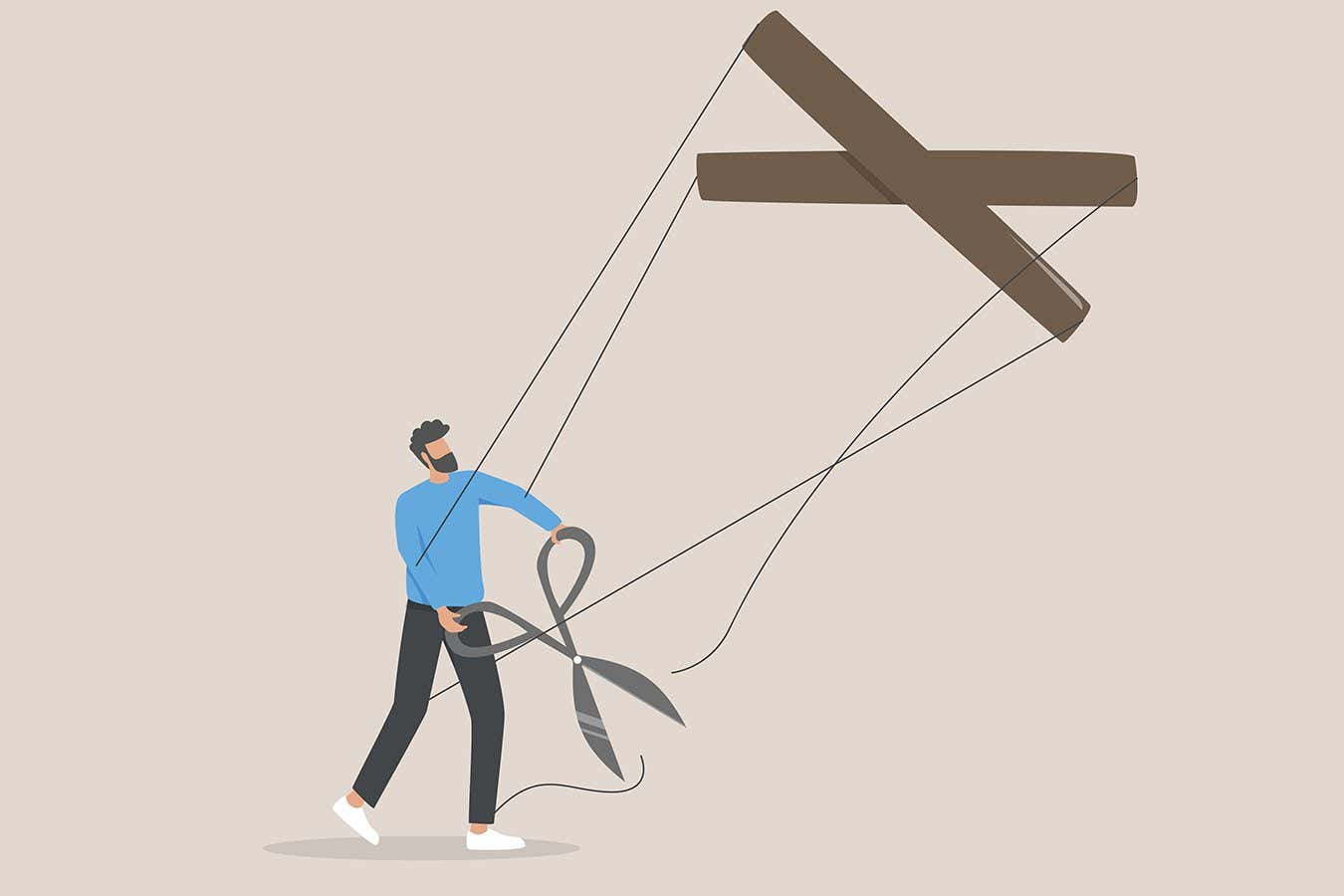
His most recent focus, however, has been on something rather different – a book that comprehensively argues that free will doesn’t exist in any shape or form.
As he writes: “We are nothing more or less than the sum of that which we could not control – our biology, our environments, their interactions”.
In this episode of CultureLab, Sapolsky outlines his case against free will and what a society without free will should look like.
You can find New Scientist Podcasts on your favourite podcast platform or by clicking here.
Determined: A Science of Life Without Free Will is out now.
Transcript
Timothy Revell: Many of our listeners, they will know you as someone who spent years studying wild baboons, and then, also, as an eminent neuroscientist, so what made you decide to then suddenly look at free will so closely, which is, I guess, more often associated with philosophy? Was there, like, an enticing incident? Did something get you onto it first?
Robert Sapolsky: Yes. I turned fourteen years old, at one point, and had a somewhat existentially unnerving experience and, that night, woke up at around two in the morning and say, “Aha, I get it. There’s no God, there’s no purpose, and there’s no free will,” and it’s been, kind of, like that every since.
More approximately, about five years ago, I published a book called, Behave, The Biology of Humans at our Best and Worst, and I did a lot of public lecturing about, sort of, the general subject in the years since. And you’d go through, sort of, an hour’s talk of telling people about, the events one second before behaviour and one minute, and one hour, and one thousand years and all these different influences. With some regularity, somebody in the audience, afterwards, with Q&A, would say something like, “Wow. All this stuff, kind of, makes one wonder about free will,” which I, in effect, would say, “You think?” and it just struck me that I needed to write something that, very expectantly, tackled how completely silly and bankrupt the notion of free will is, when you put all the relevant science together.
Then dealing with the bigger issue, I know it seems very straightforward and simplistic by now to me that there’s no free will, but the massive issue of, “Ph my God, what are we supposed to do if people actually started believing this? How are we supposed to function?’
Timothy Revell: It’s funny that you say it’s now so easy to say that free will doesn’t exist, but I think for many people it’s one of those things that, subjectively, it feels very real, but then, you know, a good argument against that is a tale feels solid, but it’s mostly empty space, so we can’t really trust what we think about the world, certainly not our own experience of it. For those that haven’t spent as much time thinking about free will and reached the conclusion that you have, that it doesn’t exist, what is the argument? What does science say about free will?
Robert Sapolsky: Well, my essential song and dance, and I should add about 90-95 per cent of philosophers agree, that there’s free will, and steadfastly hold onto it, and these are folks, who classify themselves as compatibilists, which is to say they’re willing to admit there are things like atoms and molecules and cells out there, but somehow, despite that, can still pull free will out of the hat in their thinking.
In terms of my orientation, my basic approach is you look at a behaviour and someone has just done something that’s wonderful or awful or ambiguously in-between or in the eyes of the beholder, but some behaviour has happened, and you ask, “Why did that occur?” and you’re asking a whole hierarchy of questions. You’re, of course, asking, “Which neurons did what, ten milliseconds before?” but you’re also asking, “What sensory stimuli in the previous minutes triggered that?” but you’re also asking, “What did this morning’s hormone levels have to do with how sensitive your brain would be to those stimuli?”
You’re also asking, “What have the previous months been, trauma, stimulation, whatever, in terms of neuroplasticity?” and before you know it, you’re back to adolescents and your last gasp of constructing your frontal cortex, and childhood and foetal environment and it’s epigenetic consequences, and of course, genes. Amazingly, at that point, you have to push further back. What sort of culture were your ancestors inventing and what sort of ecosystems prompted those inventions, because that was influencing how your mother was mothering you within minutes of birth, and then, you know, some evolution thrown in for good measure.
What you see at that point is, not just saying, “Wow, when you look at all these different disciplines, collectively, they’re showing we’re just biological machines,” but they’re not all these different disciplines. They’re all one continuous one. If you’re talking about genes, by definition, genes and behaviour, by definition, you’re talking about evolution and you’re talking about neurobiology and genetic variance and neuronal function. If you’re talking about, you know, early trauma in life, you’re talking about epigenetics and you’re talking about adult propensity. So, they’re all one continuous seam of influences, and when you look at it that way, there’s not a damn crack anywhere in there to shoehorn in a notion of free will.
Timothy Revell: You talk about this in your book, but I think, for many people, they still feel like maybe there’s room. You know, with each individual step, it feels like those are influences rather than the 100 per cent determining factor. Is there, when people come to you and say, “Oh, but there’s still a little bit of room,” you know, “These are all things that influence me on a given day. of course, if it’s hot, I’m more likely to go outside and enjoy the sun, but it’s still my decision,” how do you go from that, from influences, to, “It’s not just influences, everything we do is dictated in one way or another, by this whole combination of factors’?
Robert Sapolsky: Well, the jerky, sort of, challenge that I lay down at that point is, “Okay, so you’re still holding out for free will somewhere in there, just because it seems so counter-intuitive if that is all we are,” but look at some behaviour, you just pulled the trigger on a gun, like something very consequential, and you could probably even identify the three-and-a-half neurons in the motor cortex that sent that command to your muscles.
Show me, let’s examine those three-and-a-half neurons that just did that. Show me that what they did was completely impervious to what was going on in any other neuron surrounding them, but at the same time, show me that it was impervious to whether you were tired, stressed, sleepy, happy, well-fed, at that moment. Show me that it’s impervious and would’ve done the exact same thing no matter what your hormone levels were this morning, no matter what your childhood was, no matter what your genome is, the epigenetics. Show me that it would’ve done the exact same thing after changing any of those or all of those variables, and as far as I’m concerned, you’ve just proven free will, and they can’t, because there’s absolutely nothing any of your, like, molecules making you up just did to generate a behaviour that’s independent of every second before.
It is impossible to show that we can act freely of everything that came before.
Timothy Revell: Do you think there’s a reason why we seem so wired to think that free will does exist? Is there some evolutionary benefit to us believing that? If we just accepted it from the beginning, that it doesn’t exist, would that maybe actually be better for us, overall?
Robert Sapolsky: Oh, well, at first pass, it’s depressing as hell and alarming and unsettling and all of that, and all sorts of wise evolutionary biologists have thought about the evolution of self-deception, and by the time you’re as smart of a primate as we are, we had to have developed a robust capacity for not believing in what might be the case, because otherwise, it would be all too overwhelming and despairing and just existential void and all that stuff.
You know, there’s a very, very strong emotional incentive to feel agency, and endless aspects of experimental psychology has shown that you stress people or frazzle them or give them an unsolvable problem, and they get a way distorted sense of agency, at that point, as a defence. The really critical issue there though is the assumption that believing there’s no free will, okay, there’s no free will and you better believe it, and that’s about as appealing as, like, swallowing cod liver oil or something but, you know, suck it up, that’s the way the world works.
My overwhelmingly emphasis is, if you suddenly are convinced there’s no free will, and that’s a total bummer for you, because that makes your, like, egregiously privileged salary seem like something you did not necessarily earn and your prestigious degrees and your circle of loving friends and all the other things that you feel like you, in some manner, earn, deserve, you’re entitled to, oh, bummer, if that’s not the case. If that’s your response to the idea of there being no free will, by definition, you were one of the lucky ones.
For most people on earth, who were dealing with far less privilege, the notion that we are not the captains of our fate is, like, wildly liberating and humane. I mean, just ask someone who’s genetic profile and metabolism dooms them to obesity and being subject to a lifelong of unhappiness and societal stigma over that, and that’s just one of the billion ways in which the discovery that we’re nothing more or less than the biology over which we had no control and the environment over-, is great news, and is the most humane thing on Earth. All we spent is the last 500 years of scientific insights into seeing that people are not responsible for all sorts of things for which they used to be blamed or made to feel like they are inadequate or burnt at the stake for, and this is wonderfully liberating.
Timothy Revell: Yes, so I want to get into some of those implications, because, as you say, it’s, sort of, liberating to think, “Well, we’re just the products of our biology,” but at the same time, we’ve built a whole society around responsibility. That you have responsibilities to do certain things, but also, we have responsibility as society to hold people accountable for the decisions that they make, and these words are all, sort of, loaded with an intrinsic understanding of free will being baked into it.
Robert Sapolsky: Yes.
Timothy Revell: If everyone read your book overnight and agreed with you 100 per cent, what does a society look like where we accept this principle that free will does not exist?
Robert Sapolsky: Well, I think the first thing to emphasise is the roof isn’t going to cave in, because over and over and over, we have subtracted responsibility out of our views of human behaviour in the natural world, and it’s been okay. People haven’t run amok, society hasn’t, you know, gone to hell, at that point, because 400 years ago, we figured out hailstorms are not caused by witches and, like, old crones would not be held responsible for hailstorms and burnt at the stake. About 200 years ago, people figured out, definitely, that an epileptic seizure is not a sign of demonic possession. Responsibility is subtracted out.
About 50 years ago, the damn physiatrics, sort of, old boy oligarchy figured out that schizophrenia is not caused by mothers with psychodynamic hatred of their child, and instead, it’s a neurogenetic disorder. 30 years ago, we figured out that kids at school that simply are not learning to read, it’s not because they’re lazy and unmotivated, it’s because their cortical abnormalities are making them reverse letters that have, like, closed loops in them or whatever. We’ve done it over and over and over, and things have been just fine, and in fact, things have gotten much better and much more humane.
So, the challenge is to just imagine what things people a century from now will be saying about our time period and things we still thought were volitional and things that we punished people for and things that we rewarded people for, where there was absolutely no basis for it. More practically, like, how are we supposed to function? It seems like the first, sort of, thing to get off the table is, “Oh my God, we’re all going to run amok, because people will be unconstrained by, you know, “I can’t be held responsible.”
Really careful studies suggest that people won’t run amok. Some pretty superficial ones say that, as soon as you prime people physiologically to believe less in free will, they start cheating like mad on their economic games, two minutes later, but, sort if, deeper studies show that that’s really not the case, and there’s a great parallel example. Instead of thinking, “Wow, I can do whatever I want, because I’m not responsible for my actions,” thinking, “Wow, I can do whatever I want because I won’t be held responsible in an ultimate sense.” Atheists are, if anything, more ethical in their behaviour than the highly religious. The running amok thing is not a worry.
The next one that’s got to be disposed of is, like nonetheless, dangerous people need to be contained and, yes, absolutely. Just because someone is not responsible for them being a damaging person, because they’ve been damaged as hell, like all of the rotten luck they’ve gotten, adversity in life, that doesn’t mean, you know, you shouldn’t constrain them from damaging. What people emphasise more and more is a quarantine model. Like, if somebody is infectious, through no fault of their own, they’re quarantined.
If a car’s breaks don’t work and it will run you over, keep it in a garage. If a person’s frontal cortex has been so done in by childhood trauma that they can’t regulate their emotional behaviours, make sure they can’t damage people. Make sure if all of that can strain them with the absolute minimum needed to prevent that and not an inch more in the name of retribution or rotten souls or anything that they deserve. And, as the flip side of it, like recognise that some people are better brain surgeons are better basketball players or something than others and that’s great. We really do want to have competent brain surgeons and I presume basketball players out there and they should be doing that stuff but don’t tell that they’re entitled to a greater salary than anyone else and don’t give them a greater salary. The meritocracy makes as little sense as does the criminal justice system when you really think about this.
Timothy Revell: Yes, it’s very interesting that as you present the things from history and you reel through them. Things like the not believing that people are influencing hail storms or that you’re-, in some way it’s a sign of the devil if you have epilepsy or the same with dyslexia. Those things feel so obvious to us now sitting here and I think that the vast majority of people will go of course it’s ridiculous we ever thought anything else but yet when you say for the criminal justice system it needs to be reframed so that it is no longer about responsibility but instead about quarantine I think there are lots of people who maybe have a harder time reaching that same conclusion. Is that what you find? That when you talk to people-, so historical examples that all makes sense but maybe the next step just seems almost unfathomable.
Robert Sapolsky: Exactly, and the real challenge is to think back that somewhere, I don’t know, 400 years ago there was some very learned, reflective, compassionate, empathic, introspective smart guy who is some sort of judge or something, and he believed in helping the underdog. And if there had been national public radio then to contribute money to, he would’ve done that and gotten a little button saying, “I support, like, everything they believe in.” He would’ve been like a total bleeding heart liberal of the time, and he’d come home at the end of the day and say, “Wow, tough day. We had this guy. Had to burn him at the stake. Had seizures. He obviously welcomed in Satan, I mean, kids. He had a wife, kids who were really upset. It was, like, hard to do but what can you do?” Nobody told him to welcome in Satan, so of course, we had to burn him at the stake, but tough day. And that would’ve been a compassionate liberal at the time and it would’ve been inconceivable then in the same way that it’s inconceivable now that somebody’s IQ or somebody’s capacity to master tough difficult things or somebody’s inability to regulate their emotions and thus be really damaging makes just as little sense.
Timothy Revell: Can you talk us through a little bit about that because quite a lot of those historical examples there about-, sort of, parts of the human condition becoming medicalized, us appreciating that their diseases or conditions that are really affecting things that happened to people. For example them having seizures but when it comes to crime I think some people will not see the immediate link there. So if you have someone who has committed a crime, how does the medical side of this, the neuroscience, all of that, fit into the point where they commit a crime?
Robert Sapolsky: Well, the examples you bring up first are the easy ones or the edge cases. Society is pretty good at recognising, at least in the American legal system, that if somebody has a sufficiently low IQ they shouldn’t be held legally responsible for a violent act or whatever. There’s, like, a cut off and people fight over what the cut off should be and all of that. If someone has had massive damage to their frontal cortex or a tumour there, I don’t know, about half the states in the United States are willing to say, in this edge case, there was not actually responsibility.
But yes, then we get to the normative range of like people doing awful stuff or people doing commendable stuff, where there isn’t an obvious whatever that presents, you know, this is a special mitigating case. There’s no special mitigating cases because it’s a continuum of the exact same biology. The second you can show stuff like what a paper a couple of years ago showed which is brain imaging on fetuses that by the time you’re a third trimester fetus the social economic status of your parents are already influencing the rate in which your brain is growing. By the time you can take kids and adolescence and show like a formal checklist of childhood adversaries and traumas, what somebody’s score is on this scale.
The ace score, adverse child experience score. Like, we had a score from zero to ten depending on just how unlucky and awful your childhood was and for every additional point you get on the scale there’s about a 35 per cent increase chance that a guy by age 20 will have done something antisocial and violent. There’s about 35 per cent increase change that a female will have had a teen pregnancy of either unsafe sex, of by adulthood, a major mood disorder like anxiety or depression. If you can show that one extra step, whoa. Not only were they sexually abused as a kid but somebody in the family was incarcerated. That one extra point makes him 35 per cent more likely to be that way as an adult. You’re looking at what has to come into any of these factors which is we’ve just scratched the service on the things that move you from a 35 per cent chance of a particular outcome to a 100 per cent chance. And what I endlessly go on about is, like, ace scores adverse childhood experience scores.
You can have the exact same conclusion if there was such a thing as, like, RLCE ridiculously lucky child who experiences and you can get a whole scale on that. Did your parents read books to you? Did you, like, play and laugh a lot? Did you never wonder where your next meal was coming from? And no doubt for every one of those a 35 per cent increase chance that you’re going to have the corner office in some corporation some day. Like, you look at those and any of these myths of somebody being responsible ultimately for the bad or the good just isn’t supportable and eventually is morally repugnant as well.
Timothy Revell: I think for many-, like for me certainly when reading the book, I can accept all of that but part of me also wants to think but I’m different. There’s a certain sense of-, like, I totally understand that if you’ve gone through these horrible life experiences that is of course going to affect you later in life but it’s so hard to drop that idea that maybe I would make different choices but I think it is quite compelling that argument you put forward that I think would it be fair to say it boils down to if you had the same life experiences and you had the same biology you would do the same things.
Robert Sapolsky: Exactly. And feel the same sense of agency and captain of your fate, sort of, delusions. Something I try to emphasise though throughout the book is this is incredibly difficult to think this way. Like, I’ve believed this since I was, like, early adolescence and 99 per cent of the time I can’t manage to pull this off.
I think I recount in there a few years back there was some, like, appalling hate crime. Some guy showed up with an automatic weapon in a place of worship and killed a bunch of people and listening to the radio that next Monday morning saying whoever is being arraigned and is going to be charged with a federal hate crime as well which makes him eligible for the death penalty. I thought, “Yes. Fry the bastard.” Wait. I’m working on death penalty cases right now to convince juries that-, yet no one says this is going to be easy.
I’m terrible at it 99 per cent of the time. Not only am I violating my intellectual beliefs but my moral beliefs as well because these are really strong reflexes to both get pissed off at people who do awful things but in addition probably more fundamentally to feel, kind of, good about yourself if someone says well nice job on that. Yes. I did a nice job. I’m entitled to that praise. This is going to be incredibly hard but we’ve done it over and over and over again and it’s not that hard to identify the corners of society where it’s most important to make that emphasis first.
Timothy Revell: You hinted at it there but can you talk a little bit about your direct experience with the criminal justice system where you have appeared as a, sort of, expert on the brain. What has your role been there and how does it play into all of this?
Robert Sapolsky: Oh, this has been this little, minor hobby of working with what are called public defenders, who are the people who are assigned when some defendant can’t afford their own attorney, and this is a whole world of, like, liberal, do-gooder attorneys who lose 95 per cent of their cases. I’ve been working on a bunch of these, and what has always been the scenario is this is someone who has done something very, very bad. And where, initially, they were threatened and did something that could pass as self-defence, they stabbed the guy before the other guy could stab them who came at them first and they’re then lying there on the ground incapacitated and ten seconds later they come back and stab the guy an additional 72 times.
At which point the jury says well, you know, the first stab was self defence but 10 seconds that was enough time to premeditate and figure out that the threat was over with. But whoa, 72 additional times. That counts as premeditated murder and it’s always that, sort of, scenario and it is always somebody who was already virtually guaranteed to do this by the time they were 5 years old. Substance abuse at home, psychological abuse, physical abuse, sexual abuse, prenatal exposure drugs of abuse, shuttled through foster homes. Stabbed for the first time at age 10, you know, that repeated concussive head traumas from people abusing them, all of that and you look at someone like that and this is screamingly this is a broken machine.
The thing that I always do with these juries is take them through, like, what’s going on in the brain when you make a decision and how we’re much more likely neurobiologically to make an awful decision if we’re under a whole lot of stress. Like somebody coming at us with a knife and we’re a gazillion times more likely to make the wrong decision during that 10 seconds if we have a brain that’s been pickled in adversity from day one because your brain would’ve been constructed in a way where you’re going to make a terrible impulsive decision at that point and then I dramatically look at the jury and say the same thing you said before which is if they had gone through this fetal life childhood etc, etc, all the things that-, they would’ve done the exact same thing and the juries all nod and look like they’re following and then they go into the jury room and they look at the pictures of the corpse with the head almost decapitated from stabs number 36 through 43 or something out of the 72 and they vote to convict the guy. I’ve done 12 of these trials by now over the years and we’ve lost 11 of them and that’s even arguing, like, the edge cases. Wow, this is a guy whose frontal cortex was destroyed in a car accident when he was eight.
He spent two months in a coma, came out of it, no prior history whatever and did his first murder at age 12 and here you guys have just convicted him of his 8th and 9th murders and he’s a broken machine. And you know, they go and sit about it for a while and they come back with the death penalty so it’s a real uphill battle even with these edge cases of, whoa, traumatic examples of, like, terrible like or then look at like, Ivy League students or my undergrads at Stanford and look at their histories and you know by age 5 they already had their paths set to have a higher of an average income sometime later and would go to a prestigious college and the same exact thing. It’s very hard to just work with the gears that made them who they are.
Timothy Revell: Alright, one last question for you. What are you planning on tackling next? Is it the meaning of life?
Robert Sapolsky: Oh, I don’t know. I hope something interesting comes along, building on-, not to get all preachy and stuff, but at the end of the day this stops being an issue for neuroscientists or behaviour geneticists or early childhood develop-, and it becomes a social justice issue. It’s really great, philosophically, if people believe less in free will and all of that. The number of people on earth who are made to suffer because of the miserable luck in their life, starting with their ancestors picking the wrong, god-awful corner of the planet to live in, and centuries later, that has something to do with this person’s cerebral malaria when they were five.
The social justice aspects of this, at the end of the day, are really the things that matter most about this, because we have a constructed a world with an awful lot of myths of free will, and culpability and responsibility. And most people who don’t have the corner office in their, like, fancy corporation, most people have mostly suffered because of this so that’s, kind of, the end that is galvanising me the most at this point. At the end of the day, that’s what this stuff is really about.
Timothy Revell: So, what did you think? It’s a pretty compelling case that Sapolsky built I think that free will doesn’t exist and as he puts it in the book “We are not captains of our ships. Our ships never had captains.” And if we could really accept that the implications that would have for our society would be profound. If you have any thoughts on this do please get in touch at podcasts at new scientist.com. We would love to hear from you and if you enjoy our podcast do please leave a review on whatever platform you’re listening to us on. It does really help us out .That’s it for this episode of culture lab. We’ll be back in a couple of weeks time with some more. That’s bye for now.