
[ad_1]
With a commitment to collaboration and demonstrated leadership in energy, health and Artificial Intelligence, the University of Alberta is a critical partner in solving the world’s most pressing challenges.
In the heart of the province of Alberta, the University of Alberta (U of A) stands as a beacon of innovation, shaping a future that addresses the grand challenges of our time. With a commitment to collaborative excellence, the U of A seamlessly integrates its leadership in energy, health, and artificial intelligence (AI), enabling a multidisciplinary approach that propels groundbreaking research and innovation forward.
With the recent expansion of Horizon Europe, the world’s most extensive research and innovation funding programme, into Canada, the University of Alberta is poised to be a key partner of choice in developing solutions to the world’s most pressing challenges. Garnering more than $550m (€375.9m) annually in sponsored research revenue, the
U of A stands as an intellectual powerhouse. Collaborations with over 150 companies, contributing more than $36m (€24.6m) annually, underscore the tangible support from industry for the U of A’s numerous research initiatives.

Mobilization & Partnerships), University of Alberta.
Pioneering sustainable energy solutions
Alberta, a global energy hub, has a key contributor in the U of A. Recognised as Canada’s top university in energy research, the U of A boasts a strong network of industry, government, academic, and community partners. This collaborative ethos extends beyond the institution, fostering an ideal environment for testing and commercialising scalable solutions that drive the transition to more sustainable energy technologies.
World-renowned energy researchers – including 19 Canada Research Chairs, a federal programme that recognises research excellence in engineering and the natural sciences, health sciences, humanities, and social sciences – coupled with cutting-edge facilities, position the U of A as a global leader in developing and commercialising net-zero energy solutions.
As Alberta increasingly focuses on hydrogen as a sustainable energy source, the U of A’s research focuses on overcoming challenges associated with next-generation hydrogen technologies. From developing catalysts for turquoise, blue, and green hydrogen production to designing safe and effective transportation and storage systems, the U of A collaborates closely with the Alberta Hydrogen Centre of Excellence.
In Carbon Capture, Utilisation and Storage (CCUS), the University of Alberta leverages expertise in point-source and direct air capture, geological storage, and carbon dioxide utilisation. Aiming to reduce the cost of CCUS, the U of A explores synergies like co-locating direct air capture plants near CO2 hubs. This strategy not only lowers the cost of harmful emissions but also identifies valuable products manufactured, including carbon fibre from bitumen, using CO2 as a raw material.
Related research initiatives include developing new materials for CO2 capture, integrating them into processes, and offering a test bed in collaboration with the Alberta Carbon Conversion Technology Centre. The U of A leads in advanced modelling and experimental methods for identifying storage sites, monitoring and forecasting, and ensuring the safety and efficiency of CCUS technologies.
Meanwhile, in the waste streams of Alberta’s oil and gas industry, critical minerals lie in wait to be responsibly reclaimed and utilised. Collaborating with an extensive network of academic, industrial, and Indigenous groups, the U of A addresses key technical, economic, environmental, and social challenges, ensuring a robust national critical minerals value chain. As energy systems evolve, new tools will be required to measure and address the environmental impacts of both new and legacy technologies. At the University of Alberta, work in this area provides rapid, accurate, cost-effective monitoring, mitigation, remediation and reclamation technologies and processes.
In the area of critical minerals, research spans a range of areas, from exploring and identifying rare earth elements and uranium deposit potentials to developing technologies for extracting lithium from brines and collaborating with major mining companies to enhance production. This leading-edge work promises not only environmental sustainability but also economic and technological advancement.
Transformative health solutions
At the forefront of health innovation, the University of Alberta leads in biomanufacturing, leveraging its expertise to address critical health challenges. With a strategic focus on the Canadian Critical Drug Initiative (CCDI) and its role as the central institution in the PRAIRIE Hub for Pandemic Preparedness, the U of A is shaping a resilient future in healthcare.
A beacon of progress, the U of A collaborates with Applied Pharmaceutical Innovation (API) to spearhead the CCDI. This groundbreaking initiative is poised to revolutionise small-molecule drug production, representing the majority of drugs administered in Canada. With the potential to create up to 1,000 high-paying jobs, the CCDI addresses immediate healthcare needs and provides a stable revenue source for the region.
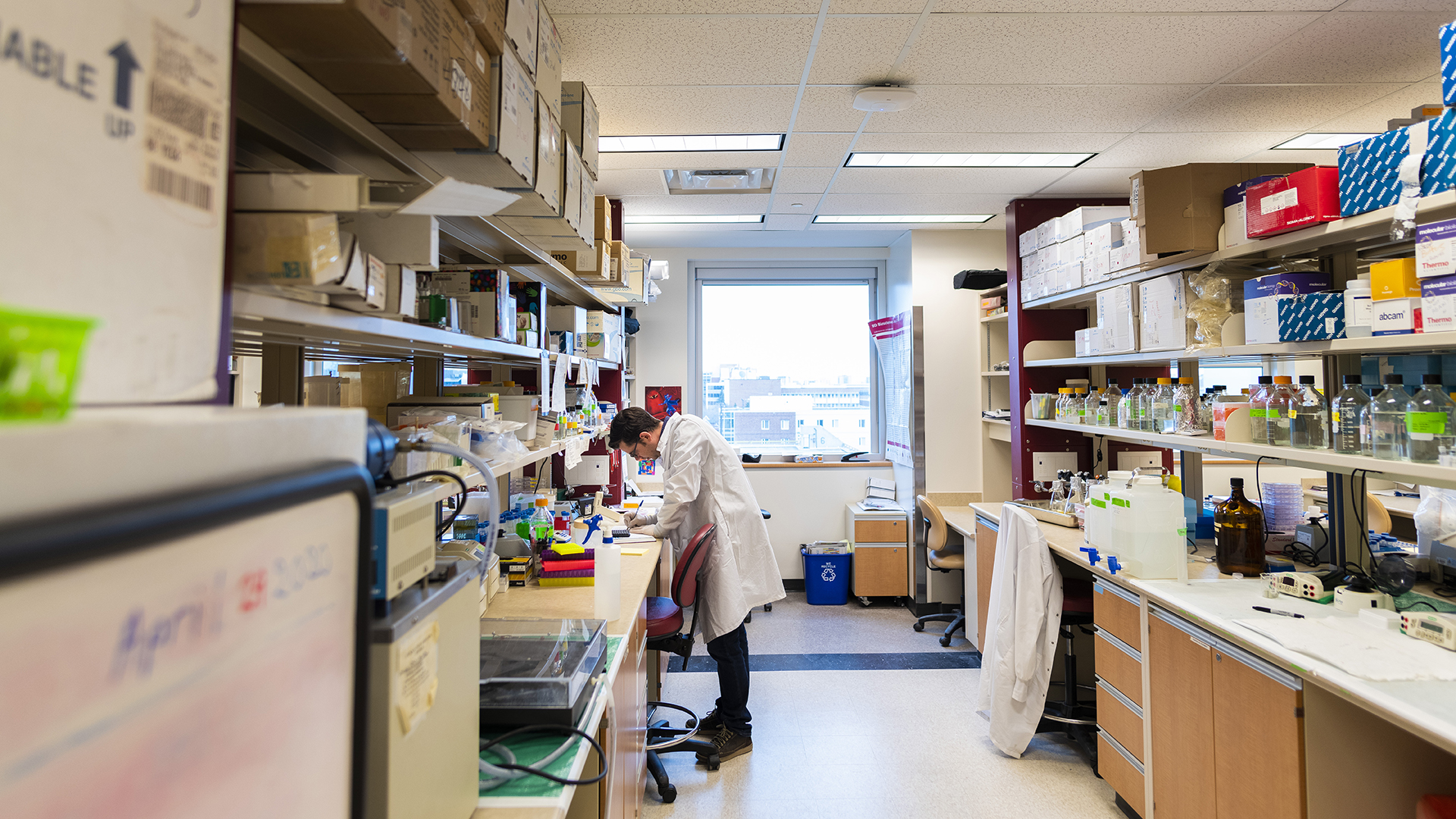
Recognising its cross-disciplinary strength in combating COVID-19 and potential pandemic diseases, the U of A has taken the lead in the PRAIRIE Hub for Pandemic Preparedness. Positioned as the central institution, the U of A collaborates with major partners across Canada, including the University of Calgary, the University of Saskatchewan, the University of Manitoba, and more. This collaborative effort accelerates developing and commercialising vaccines, antivirals, and diagnostics, ensuring a robust response to future health crises.
The U of A’s proactive stance in establishing the PRAIRIE Hub receives significant support, with a $2m (€1.4m) allocation over four years and access to a potential $570m (€323m) in federal funding. By safeguarding Canada and the world against potential pandemic pathogens, the U of A’s leadership in the PRAIRIE Hub exemplifies its commitment to advancing solutions for a resilient and prepared future in healthcare.
As the U of A pioneers innovative health solutions, the CCDI initiative and the PRAIRIE Hub reinforce the university’s pivotal role in shaping a robust and responsive healthcare ecosystem.
AI leadership
In the dynamic landscape of AI and machine learning, the University of Alberta stands as a global leader, home to some of the world’s top researchers in these transformative fields. Recognised for its exceptional contributions, the U of A has secured $100m (€68.7m) in funding for AI since 2017, reflecting its commitment to pushing the boundaries of AI research and application.
Boasting one of Canada’s oldest and largest computing science departments, the U of A has earned an international reputation for advancing both the foundations and applications of computing. Meanwhile, a commitment to AI education has led to the creation of Everywhere, a new course at the U of A to equip students across disciplines with crucial AI understanding in collaboration with the Alberta Machine Intelligence Institute (Amii).
The course marks just one example of the U of A’s collaboration with Amii, a globally recognised hub for AI excellence and one of Canada’s three named institutes in the Pan-Canadian AI Strategy. The two organisations work closely to advance leading-edge AI and machine learning research, support talent recruitment and development, and provide pathways for emerging researchers and academics to collaborate directly with industry partners.

In AI in health, the Medical Informatics Group collaborates extensively with medical researchers and clinicians to develop meticulous diagnostics. Their focus spans various medical domains, including cancers (breast, brain, and leukaemia, among others), transplant, diabetes, stroke, and depression, showcasing the broad societal impact of AI in healthcare.
This unified vision integrates AI with the U of A’s groundbreaking work in energy and health, positioning the university at the forefront of innovation. A multidisciplinary approach emphasises the interconnectedness of energy and environment, health, and artificial intelligence, exemplifying the U of A’s commitment to shaping a sustainable and technologically advanced future.
Forging a path to tomorrow
The University of Alberta’s journey through energy, health, and artificial intelligence is not merely a collection of disparate achievements; it is a tapestry woven with threads of innovation, collaboration, and commitment. The seamless integration of these pillars reflects the U of A’s dedication to addressing the grand challenges of our time.
As a global leader, the U of A’s cutting-edge research and collaborative ethos propel us toward a future where sustainability, health, and technology converge. The intertwining narratives of net-zero energy solutions, transformative healthcare, and AI leadership demonstrate the university’s capabilities and role as a positive change catalyst.
The recent agreement between Canada and the European Union to allow Canadian institutions to pursue research as part of the Horizon Europe programme provides new opportunities for the U of A to collaborate. The Horizon Europe research objectives for climate, energy and health are areas where the University of Alberta has demonstrated world-leading expertise. Pursuing those opportunities will further the U of A’s place as an essential partner of choice for like-minded organisations working to address today’s global challenges.
Please note, this article will also appear in the seventeenth edition of our quarterly publication.
[ad_2]
Source link
