Tag: Optics and photonics

  • Atomic clock keeps ultra-precise time aboard a rocking naval ship

    Atomic clock keeps ultra-precise time aboard a rocking naval ship

    [ad_1]

    Demonstration of the at-sea optical clock server rack.

    An atomic clock that keeps time with the help of iodine molecules is sturdy enough to withstand a sea voyage.Credit: Will Lunden

    Atomic clocks are usually either ultra-precise or sturdy, but not both. Now, scientists have created a precise clock that, when put through its paces aboard a naval ship, wavered by only 300-trillionths of a second per day.

    Such a precise but portable clock could be used to improve research that requires precise timing in the field, including mapping Earth’s gravitational field and using multiple telescopes to image black holes.

    The clock, which was detailed in a paper in Nature on 24 April1, could also provide a “vital fallback solution” if signals from global navigation systems are spoofed or jammed in conflict zones, says Tetsuya Ido, director of the Space-Time Standards Laboratory at the Radio Research Institute in Tokyo.

    “I’m impressed,” says Elizabeth Donley, who heads the time and frequency division at the US National Institute of Standards and Technology in Boulder, Colorado. “We’re excited to get our hands on it.”

    Atomic tick-tock

    The ‘tick’ of the world’s best clocks is pegged to the frequency of the radiation that atoms absorb and emit as they oscillate between energy states. Clocks based on atoms of caesium and other elements that emit radiation at a microwave frequency have been used for decades. Some are portable and are sold commercially.

    Scientists have also developed clocks that use other elements, such as strontium, that emit at higher frequencies — visible light — to slice time even more finely. But these ‘optical’ clocks are usually the size of dining tables and operate well only under laboratory-controlled conditions.

    Vector Atomic, an engineering firm based in Pleasanton, California, has created an optical clock that weighs only 26 kilograms and, including all its housing, takes up about the size of three shoe boxes. Although the firm’s clock is inferior to the best lab-based optical timekeepers, its precision is 1,000 times better than that of the similar sized clocks that ships currently use, says company co-founder Jamil Abo-Shaeer, a co-author of the study.

    The team tested its system by placing three of the clocks aboard the Royal New Zealand Navy ship HMNZS Aotearoa during a three-week trip around the Hawaiian Islands. Despite the ship’s vibrations and rolling, the clocks performed almost as well as they had in the laboratory. They were notably stable, keeping time to within 300-trillionths of a second over a day.

    Donley says this stability is similar to that of a hydrogen maser clock — a reliable kind of microwave atomic clock that is the workhorse for international timekeeping. But the clock is much more robust and around one tenth of the volume.

    Fly me to the Moon

    The clock’s robustness comes in part from its use of iodine molecules, which can be made to oscillate using compact and durable lasers of the type commonly used in labs. The molecules are also less sensitive than some atoms to temperature fluctuations, magnetic fields and pressure, says physicist Martin Boyd, a co-founder of Vector Atomic and co-author of the paper.

    If the team can shrink the clock further, future models could fly aboard global navigation satellites, improving positioning resolution from metres to centimetres, adds Abo-Shaeer. They could even be the clocks that end up defining lunar time, he says.

    [ad_2]

    Source link

  • Controlling single polyatomic molecules in an optical array for quantum applications

    Controlling single polyatomic molecules in an optical array for quantum applications

    [ad_1]

    • RESEARCH BRIEFINGS

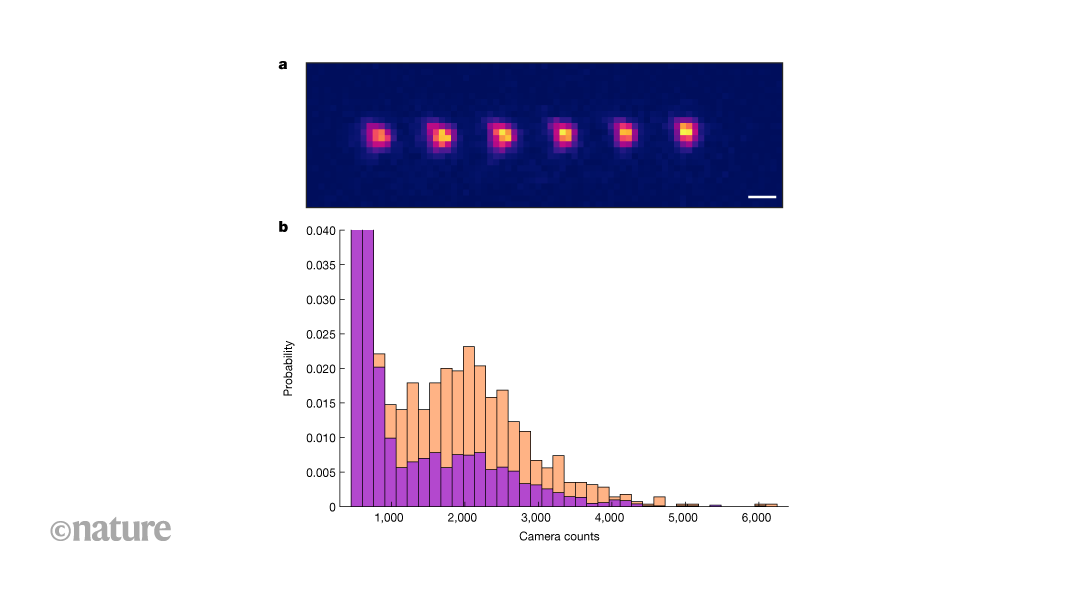
    Applications from quantum computing to searches for physics beyond the standard model could benefit from precision control of polyatomic molecules. A method of confining and manipulating single polyatomic molecules held in tightly focused ‘optical tweezer’ laser arrays at ultracold temperatures could boost progress on all those fronts.

    [ad_2]

    Source link

  • Electrons flip a switch on optical communications

    Electrons flip a switch on optical communications

    [ad_1]

    Nature, Published online: 27 March 2024; doi:10.1038/d41586-024-00663-y

    Clever manipulation of electrons has enabled scientists to change a key property of light emitted by a device using electrically controlled magnetization. The method could lead to stable and energy-efficient information transfer.

    [ad_2]

    Source link

  • Fortier, T. M. et al. Generation of ultrastable microwaves via optical frequency division. Nat. Photon. 5, 425–429 (2011).

    Article 
    ADS 
    CAS 

    Google Scholar
     

  • Nakamura, T. et al. Coherent optical clock down-conversion for microwave frequencies with 10−18 instability. Science 368, 889–892 (2020).

    Article 
    ADS 
    CAS 
    PubMed 

    Google Scholar
     

  • Xie, X. et al. Photonic microwave signals with zeptosecond-level absolute timing noise. Nat. Photon. 11, 44–47 (2017).

    Article 
    ADS 
    CAS 

    Google Scholar
     

  • Swann, W. C., Baumann, E., Giorgetta, F. R. & Newbury, N. R. Microwave generation with low residual phase noise from a femtosecond fiber laser with an intracavity electro-optic modulator. Opt. Express 19, 24387–24395 (2011).

    Article 
    ADS 
    CAS 
    PubMed 

    Google Scholar
     

  • Li, J., Yi, X., Lee, H., Diddams, S. A. & Vahala, K. J. Electro-optical frequency division and stable microwave synthesis. Science 345, 309–313 (2014).

    Article 
    ADS 
    CAS 
    PubMed 

    Google Scholar
     

  • Guo, J. et al. Chip-based laser with 1-hertz integrated linewidth. Sci. Adv. 8, eabp9006 (2022).

    Article 
    CAS 
    PubMed 
    PubMed Central 

    Google Scholar
     

  • Li, B. et al. Reaching fiber-laser coherence in integrated photonics. Opt. Lett. 46, 5201–5204 (2021).

    Article 
    ADS 
    CAS 
    PubMed 

    Google Scholar
     

  • Kelleher, M. L. et al. Compact, portable, thermal-noise-limited optical cavity with low acceleration sensitivity. Opt. Express 31, 11954–11965 (2023).

    Article 
    ADS 
    PubMed 

    Google Scholar
     

  • Ji, Q.-X. et al. Engineered zero-dispersion microcombs using CMOS-ready photonics. Optica 10, 279–285 (2023).

    Article 
    ADS 
    CAS 

    Google Scholar
     

  • Matei, D. et al. 1.5 μm lasers with sub-10 mHz linewidth. Phys. Rev. Lett. 118, 263202 (2017).

    Article 
    ADS 
    CAS 
    PubMed 

    Google Scholar
     

  • Diddams, S. A., Vahala, K. & Udem, T. Optical frequency combs: coherently uniting the electromagnetic spectrum. Science 369, eaay3676 (2020).

    Article 
    CAS 
    PubMed 

    Google Scholar
     

  • Kalubovilage, M., Endo, M. & Schibli, T. R. X-band photonic microwaves with phase noise below −180 dBc/Hz using a free-running monolithic comb. Opt. Express 30, 11266–11274 (2022).

    Article 
    ADS 
    CAS 
    PubMed 

    Google Scholar
     

  • Martin, M. J. and Ye, J. in Optical Coatings and Thermal Noise in Precision Measurement (eds Harry, G. M. et al.) 237–258 (Cambridge Univ. Press, 2012).

  • Jin, W. et al. Hertz-linewidth semiconductor lasers using CMOS-ready ultra-high-Q microresonators. Nat. Photon. 15, 346–353 (2021).

    Article 
    ADS 
    CAS 

    Google Scholar
     

  • Xiang, C. et al. High-performance lasers for fully integrated silicon nitride photonics. Nat. Commun. 12, 6650 (2021).

    Article 
    ADS 
    CAS 
    PubMed 
    PubMed Central 

    Google Scholar
     

  • Jin, N. et al. Micro-fabricated mirrors with finesse exceeding one million. Optica 9, 965–970 (2022).

    Article 
    ADS 
    CAS 

    Google Scholar
     

  • McLemore, C. A. et al. Miniaturizing ultrastable electromagnetic oscillators: sub-1014 frequency instability from a centimeter-scale Fabry-Perot cavity. Phys. Rev. Appl. 18, 054054 (2022).

    Article 
    ADS 
    CAS 

    Google Scholar
     

  • Liu, Y. et al. Low noise microwave generation with an air-gap optical reference cavity. APL Photonics 9, 010806 (2024).

  • Drever, R. W. et al. Laser phase and frequency stabilization using an optical resonator. Appl. Phys. B 31, 97–105 (1983).

    Article 
    ADS 

    Google Scholar
     

  • Papp, S. B. et al. Microresonator frequency comb optical clock. Optica 1, 10–14 (2014).

    Article 
    ADS 
    CAS 

    Google Scholar
     

  • Kwon, D., Jeong, D., Jeon, I., Lee, H. & Kim, J. Ultrastable microwave and soliton-pulse generation from fibre-photonic-stabilized microcombs. Nat. Commun. 13, 381 (2022).

    Article 
    ADS 
    CAS 
    PubMed 
    PubMed Central 

    Google Scholar
     

  • Zang, J. et al. Reduction of amplitude-to-phase conversion in charge-compensated modified unitraveling carrier photodiodes. J. Lightwave Tech. 36, 5218–5223 (2018).

    Article 
    ADS 
    CAS 

    Google Scholar
     

  • Li, H. & Abraham, N. Analysis of the noise spectra of a laser diode with optical feedback from a high-finesse resonator. IEEE J. Quantum Electron. 25, 1782–1793 (1989).

    Article 
    ADS 

    Google Scholar
     

  • Endo, M. & Schibli, T. R. Residual phase noise suppression for Pound–Drever–Hall cavity stabilization with an electro-optic modulator. OSA Continuum 1, 116–123 (2018).

    Article 
    CAS 

    Google Scholar
     

  • Ji, Q. et al. Integrated microcomb with broadband tunable normal and anomalous dispersion. In Optica Nonlinear Optics Topical Meeting 2023, Technical Digest Series Tu1A-2 (Optica Publishing Group, 2023).

  • Pavlov, N. et al. Narrow-linewidth lasing and soliton kerr microcombs with ordinary laser diodes. Nat. Photon. 12, 694–698 (2018).

    Article 
    ADS 
    CAS 

    Google Scholar
     

  • Shen, B. et al. Integrated turnkey soliton microcombs. Nature 582, 365–369 (2020).

    Article 
    ADS 
    CAS 
    PubMed 

    Google Scholar
     

  • Peng, Y., Sun, K., Shen, Y., Beling, A. & Campbell, J. C. Photonic generation of pulsed microwave signals in the x-, ku-and k-band. Opt. Express 28, 28563–28572 (2020).

    Article 
    ADS 
    CAS 
    PubMed 

    Google Scholar
     

  • Xie, X. et al. Improved power conversion efficiency in high-performance photodiodes by flip-chip bonding on diamond. Optica 1, 429–435 (2014).

    Article 
    ADS 
    CAS 

    Google Scholar
     

  • Weng, W. et al. Spectral purification of microwave signals with disciplined dissipative Kerr solitons. Phys. Rev. Lett. 122, 013902 (2019).

    Article 
    ADS 
    CAS 
    PubMed 

    Google Scholar
     

  • Lucas, E. et al. Ultralow-noise photonic microwave synthesis using a soliton microcomb-based transfer oscillator. Nat. Commun. 11, 374 (2020).

    Article 
    ADS 
    CAS 
    PubMed 
    PubMed Central 

    Google Scholar
     

  • Liu, J. et al. Photonic microwave generation in the x-and k-band using integrated soliton microcombs. Nat. Photon. 14, 486–491 (2020).

    Article 
    ADS 
    CAS 

    Google Scholar
     

  • Sun, S. et al. Integrated optical frequency division for microwave and mmWave generation. Nature https://doi.org/10.1038/s41586-024-07057-0 (2024).

  • Yi, X. et al. Single-mode dispersive waves and soliton microcomb dynamics. Nat. Commun. 8, 14869 (2017).

    Article 
    ADS 
    CAS 
    PubMed 
    PubMed Central 

    Google Scholar
     

  • Yang, Q.-F. et al. Dispersive-wave induced noise limits in miniature soliton microwave sources. Nat. Commun. 12, 1442 (2021).

    Article 
    ADS 
    PubMed 
    PubMed Central 

    Google Scholar
     

  • Yao, L. et al. Soliton microwave oscillators using oversized billion Q optical microresonators. Optica 9, 561–564 (2022).

    Article 
    ADS 
    CAS 

    Google Scholar
     

  • Zhao, Y. et al. All-optical frequency division on-chip using a single laser. Nature https://doi.org/10.1038/s41586-024-07136-2 (2024).

  • OEWaves. OE3700 Hi-Q X-band OEO. OEWaves https://www.oewaves.com/oe3700 (2020).

  • Li, J. & Vahala, K. Small-sized, ultra-low phase noise photonic microwave oscillators at x-ka bands. Optica 10, 33–34 (2023).

    Article 
    ADS 

    Google Scholar
     

  • Quantx Labs. Ultra-low phase noise oscillators. The purest frequency source. X-LNO. Ultra-low-noise microwave oscillator. Quantx Labs https://www.quantxlabs.com/capabilities/product-development/ultra-low-phase-noise-oscillators/ (2022).

  • Xiang, C. et al. 3D integration enables ultralow-noise isolator-free lasers in silicon photonics. Nature 620, 78–85 (2023).

    Article 
    ADS 
    CAS 
    PubMed 
    PubMed Central 

    Google Scholar
     

  • Xiang, C. et al. Laser soliton microcombs heterogeneously integrated on silicon. Science 373, 99–103 (2021).

    Article 
    ADS 
    CAS 
    PubMed 

    Google Scholar
     

  • Xie, W. et al. Heterogeneous silicon photonics sensing for autonomous cars. Opt. Express 27, 3642–3663 (2019).

    Article 
    ADS 
    CAS 
    PubMed 

    Google Scholar
     

  • Idjadi, M. H. & Aflatouni, F. Integrated Pound–Drever–Hall laser stabilization system in silicon. Nat. Commun. 8, 1209 (2017).

    Article 
    ADS 
    PubMed 
    PubMed Central 

    Google Scholar
     

  • Cheng, H. et al. A novel approach to interface high-Q Fabry–Perot resonators with photonic circuits. APL Photon. 8, 116105 (2023).

    Article 
    ADS 
    CAS 

    Google Scholar
     

  • Liu, J. et al. Monolithic piezoelectric control of soliton microcombs. Nature 583, 385–390 (2020).

    Article 
    ADS 
    CAS 
    PubMed 

    Google Scholar
     

  • Joshi, C. et al. Thermally controlled comb generation and soliton modelocking in microresonators. Opt. Lett. 41, 2565–2568 (2016).

    Article 
    ADS 
    PubMed 

    Google Scholar
     

  • Diddams, S. A. et al. An optical clock based on a single trapped 199Hg+ ion. Science 293, 825–828 (2001).

    Article 
    ADS 
    CAS 
    PubMed 

    Google Scholar
     

  • Fortier, T. et al. Optically referenced broadband electronic synthesizer with 15 digits of resolution. Laser Photon. Rev. 10, 780–790 (2016).

    Article 
    ADS 

    Google Scholar
     

  • Yi, X., Yang, Q.-F., Yang, K. Y., Suh, M.-G. & Vahala, K. Soliton frequency comb at microwave rates in a high-Q silica microresonator. Optica 2, 1078–1085 (2015).

    Article 
    ADS 
    CAS 

    Google Scholar
     

  • Li, J., Lee, H., Chen, T. & Vahala, K. J. Low-pump-power, low-phase-noise, and microwave to millimeter-wave repetition rate operation in microcombs. Phys. Rev. Lett. 109, 233901 (2012).

    Article 
    ADS 
    PubMed 

    Google Scholar
     

  • Liang, W. et al. High spectral purity Kerr frequency comb radio frequency photonic oscillator. Nat. Commun. 6, 7957 (2015).

    Article 
    ADS 
    CAS 
    PubMed 
    PubMed Central 

    Google Scholar
     

  • Matsko, A. et al. Turn-key operation and stabilization of Kerr frequency combs. In 2016 IEEE International Frequency Control Symposium (IFCS) 1–5 (IEEE, 2016).

  • Schmid, F., Weitenberg, J., Hänsch, T. W., Udem, T. & Ozawa, A. Simple phase noise measurement scheme for cavity-stabilized laser systems. Opt. Lett. 44, 2709–2712 (2019).

    Article 
    ADS 

    Google Scholar
     

  • Hati, A. et al. Ultra-low-noise regenerative frequency divider. IEEE Trans. Ultrasonics Ferroelectrics Freq. Control 59, 2596–2598 (2012).

    Article 

    Google Scholar
     

  • Zaoui, W. S., Kunze, A., Vogel, W. & Berroth, M. CMOS-compatible polarization splitting grating couplers with a backside metal mirror. IEEE Photon. Tech. Lett. 25, 1395–1397 (2013).

    Article 
    ADS 
    CAS 

    Google Scholar
     

[ad_2]

Source link

  • Measuring the quantum vibrations of a small drum at room temperature

    Measuring the quantum vibrations of a small drum at room temperature

    [ad_1]

    Nature, Published online: 01 March 2024; doi:10.1038/d41586-024-00064-1

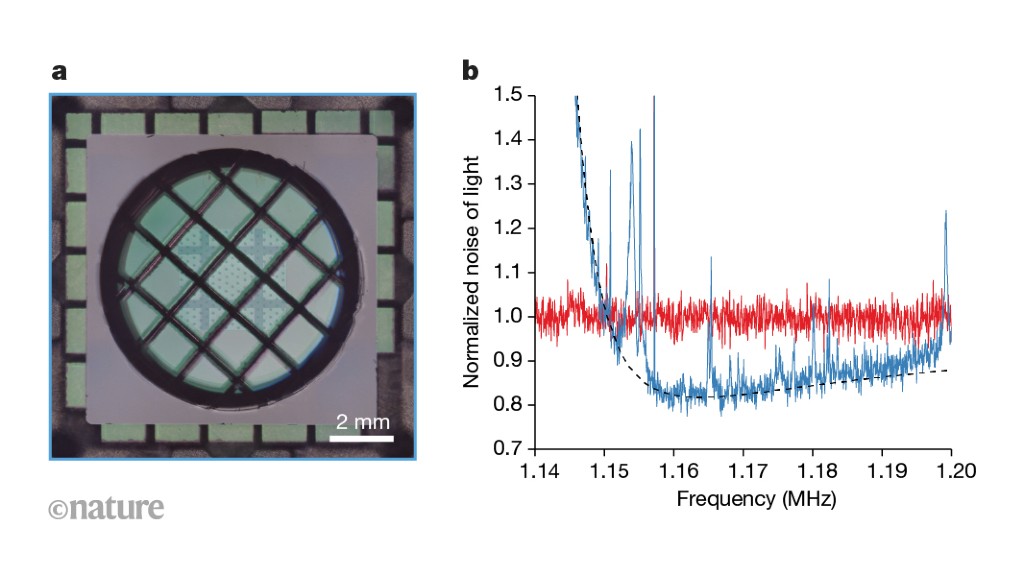
    A combination of technical improvements in noise mitigation enabled the observation of the quantum force of light on a millimetre-scale drum at room temperature. This experimental system permits the drum’s position to be measured with an accuracy close to the quantum limit.

    [ad_2]

    Source link

  • Why are we nice? Altruism’s origins are put to the test

    Why are we nice? Altruism’s origins are put to the test

    [ad_1]

    Download the Nature Podcast 21 February 2023

    In this episode:

    00:45 Why are humans so helpful?

    Humans are notable for their cooperation and display far more altruistic behaviour than other animals, but exactly why this behaviour evolved has been a puzzle. But in a new paper, the two leading theories have been put the test with a model and a real-life experiment. They find that actually neither theory on its own leads to cooperation but a combination is required for humans to help one another.

    Research article: Efferson et al.

    News and Views: Why reciprocity is common in humans but rare in other animals

    10:55 Research Highlights

    The discovery of an ancient stone wall hidden underwater, and the fun that apes have teasing one another.

    Research Highlight: Great ‘Stone Age’ wall discovered in Baltic Sea

    Research Highlight: What a tease! Great apes pull hair and poke each other for fun

    13:14 The DVD makes a comeback

    Optical discs, like CDs and DVDs, are an attractive option for long-term data storage, but these discs are limited by their small capacity. Now though, a team has overcome a limitation of conventional disc writing to produce optical discs capable of storing petabits of data, significantly more than the largest available hard disk. The researchers behind the work think their new discs could one day replace the energy-hungry hard disks used in giant data centres, making long-term storage more sustainable.

    Research Article: Zhao et al.

    20:10 Briefing Chat

    The famous fossil that turned out to be a fraud, and why researchers are making hybrid ‘meat-rice’.

    Ars Technica: It’s a fake: Mysterious 280 million-year-old fossil is mostly just black paint

    Nature News: Introducing meat–rice: grain with added muscles beefs up protein

    Subscribe to Nature Briefing, an unmissable daily round-up of science news, opinion and analysis free in your inbox every weekday.

    Never miss an episode. Subscribe to the Nature Podcast on Apple Podcasts, Google Podcasts, Spotify or your favourite podcast app. An RSS feed for the Nature Podcast is available too.

    [ad_2]

    Source link

  • Nanotraps boost light intensity for future optical devices

    Nanotraps boost light intensity for future optical devices

    [ad_1]

    Nature, Published online: 21 February 2024; doi:10.1038/d41586-024-00311-5

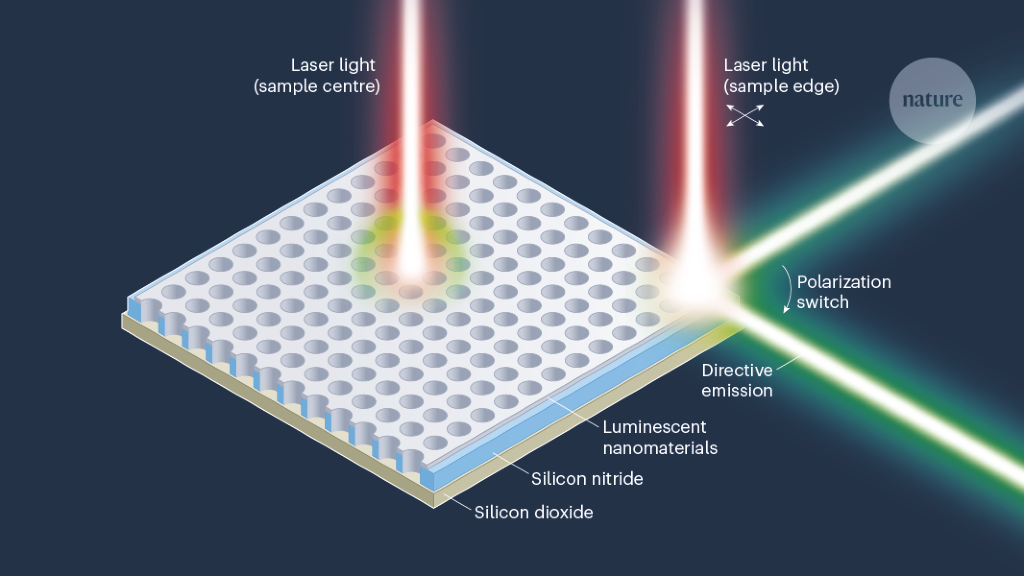
    A method for configuring light-trapping devices promises better optical nanodevices by amplifying light and enhancing the emission efficiency of luminescent nanomaterials — without the need for complex technology upgrades.

    [ad_2]

    Source link

  • Ultrafast, nanoscale control of electrical currents using light

    Ultrafast, nanoscale control of electrical currents using light

    [ad_1]

  • Schiffrin, A. et al. Nature 493, 70–74 (2013).

    Article 
    PubMed 

    Google Scholar
     

  • Higuchi, T., Heide, C., Ullmann, K., Weber, H. B. & Hommelhoff, P. Nature 550, 224–228 (2017).

    Article 
    PubMed 

    Google Scholar
     

  • Pettine, J. et al. Light Sci. Appl. 12, 133 (2023).

    Article 
    PubMed 

    Google Scholar
     

  • Dhillon, S. S. et al. J. Phys. D 50, 043001 (2017).

    Article 

    Google Scholar
     

  • Ma, Q., Krishna Kumar, R., Xu, S.-Y., Koppens, F. H. L. & Song, J. C. W. Nature Rev. Phys. 5, 170–184 (2023).

    Article 

    Google Scholar
     

  • [ad_2]

    Source link

  • Solitary light pulses on a chip-sized laser open up analytical applications

    Solitary light pulses on a chip-sized laser open up analytical applications

    [ad_1]

    • RESEARCH BRIEFINGS

    Self-reinforcing light pulses known as solitons are fundamental structures in wave dynamics. Previously, solitons could be produced only by bench-top lasers, but they can now also be generated using chip-sized mid-infrared lasers. This innovation enables the development of portable, efficient tools for use in spectroscopy, environmental sensing and medical diagnostics.

    [ad_2]

    Source link