Tag: palaeontology

  • Handrigan, G. R. & Wassersug, R. J. The anuran Bauplan: a review of the adaptive, developmental, and genetic underpinnings of frog and tadpole morphology. Biol. Rev. 82, 1–25 (2007).

    Article 
    PubMed 

    Google Scholar
     

  • McDiarmid, R. W. & Altig, R. Tadpoles: the Biology of Anuran Larvae (Univ. of Chicago Press, 1999).

  • Stocker, M. R. et al. The earliest equatorial record of frogs from the Late Triassic of Arizona. Biol. Lett. 15, 20180922 (2019).

    Article 
    PubMed 

    Google Scholar
     

  • Kenny, J. S. Feeding mechanisms in anuran larvae. J. Zool. (1987) 157, 225–246 (1969).

    Article 

    Google Scholar
     

  • Wassersug, R. J. & Hoff, K. A comparative study of the buccal pumping mechanism of tadpoles. Biol. J. Linn. Soc. 12, 225–259 (1979).

    Article 

    Google Scholar
     

  • Schoch, R. R. & Witzmann, F. The evolution of larvae in temnospondyls and the stepwise origin of amphibian metamorphosis. Biol. Rev. https://doi.org/10.1111/brv.13084 (2024).

  • Wassersug, R. J. The adaptive significance of the tadpole stage with comments on the maintenance of complex life cycles in anurans. Amer. Zool. 15, 405–417 (1975).

    Article 

    Google Scholar
     

  • Roelants, K., Haas, A. & Bossuyt, F. Anuran radiations and the evolution of tadpole morphospace. Proc. Natl Acad. Sci. USA 108, 8731–8736 (2011).

    Article 
    ADS 
    CAS 
    PubMed 

    Google Scholar
     

  • Gardner, J. D. The fossil record of tadpoles. Fossil Imprint 72, 17–44 (2016).

    Article 

    Google Scholar
     

  • Reig, O. A. Noticia sobre un nuevo anuro fósil del Jurásico de Santa Cruz (Patagonia). Ameghiniana 2, 73–78 (1961).


    Google Scholar
     

  • Shubin, N. H. & Jenkins, F. A. An Early Jurassic jumping frog. Nature 377, 49–52 (1995).

    Article 
    ADS 
    CAS 

    Google Scholar
     

  • Báez, A. M. & Basso, N. G. The earliest known frogs of the Jurassic of South America: review and cladistic appraisal of their relationship. Münchner Geowiss. Abh. (A) 30, 131–158 (1996).


    Google Scholar
     

  • Báez, A. M. & Nicoli, L. A new look at an old frog: the Jurassic Notobatrachus Reig from Patagonia. Ameghiniana 41, 257–270 (2004).


    Google Scholar
     

  • Gao, K. Q. & Chen, S. A new frog (Amphibia: Anura) from the Lower Cretaceous of western Liaoning, China. Cretac. Res. 25, 761–769 (2004).

    Article 

    Google Scholar
     

  • Stipanicic, P. N. & Reig, O. A. El “Complejo porfírico de la Patagonia extraandina” y su fauna de anuros. Acta Geol. Lilloana 1, 185–298 (1957).


    Google Scholar
     

  • De Barrio, R. E., Panza, J. L. & Nullo, F. E. in Geología Argentina (ed. Caminos, R.) 511–527 (Instituto de Geología y Recursos Minerales, 1999).

  • Rees, P. M. et al. in Warm Climates in Earth History (eds Huber, B. T. et al.) 297–318 (Cambridge Univ. Press, 2000).

  • Gallego, O. F. Conchóstracos (Cyzicidae) del Jurásico de Santa Cruz y Chubut, Argentina. Ameghiniana 30, 333–345 (1994).


    Google Scholar
     

  • Zamuner, A. B. & Falaschi, P. Agathoxylon matildense n. sp., leño araucariaceo del Bosque Petrificado del cerro Madre e Hija, Formación La Matilde (Jurásico medio), provincia de Santa Cruz, Argentina. Ameghiniana 42, 339–346 (2005).


    Google Scholar
     

  • Gnaedinger, S. Podocarpaceae woods (Coniferales) from Middle Jurassic La Matilde formation, Santa Cruz Province, Argentina. Rev. Palaeobot. Palyno. 147, 77–93 (2007).

    Article 

    Google Scholar
     

  • Trueb, L. in The Skull, Vol. 2. Patterns of Structural and Systematic Diversity (eds Hanken, J. & Hall, B. K.) 255–343 (Univ. of Chicago Press, 1993).

  • Ročková, H. & Roček, Z. Development of the pelvis and posterior part of the vertebral column in the Anura. J. Anat. 206, 17–35 (2005).

    Article 
    PubMed 

    Google Scholar
     

  • Havelková, P. & Roček, Z. Transformation of the pectoral girdle in the evolutionary origin of frogs: insights from the primitive anuran Discoglossus. J. Anat. 209, 1–11 (2006).

    Article 
    PubMed 
    PubMed Central 

    Google Scholar
     

  • Gosner, K. L. A simplified table for staging anuran embryos and larvae with notes on identification. Herpetologica 16, 183–190 (1960).


    Google Scholar
     

  • Gao, K.-Q. & Wang, Y. Mesozoic anurans from Liaoning Province, China, and phylogenetic relationships of archaeobatrachian anuran clades. J. Vertebr. Paleontol. 21, 460–476 (2001).

    Article 

    Google Scholar
     

  • Marjanović, D. & Laurin, M. An updated paleontological timetree of lissamphibians, with comments on the anatomy of Jurassic crown-group salamanders (Urodela). Hist. Biol. 26, 535–550 (2014).

    Article 

    Google Scholar
     

  • Sherratt, E., Vidal-García, M., Anstis, M. & Keogh, J. S. Adult frogs and tadpoles have different macroevolutionary patterns across the Australian continent. Nat. Ecol. Evol. 1, 1385–1391 (2017).

    Article 
    PubMed 

    Google Scholar
     

  • Wollenberg Valero, K. et al. Transcriptomic and macroevolutionary evidence for phenotypic uncoupling between frog life history phases. Nat. Commun. 8, 15213 (2017).

    Article 
    ADS 
    CAS 
    PubMed 

    Google Scholar
     

  • Wassersug, R. J. The mechanism of ultraplanktonic entrapment in anuran larvae. J. Morphol. 137, 279–288 (1972).

    Article 
    PubMed 

    Google Scholar
     

  • Haas, A. The larval hyobranchial apparatus of discoglossoid frogs: its structure and bearing on the systematics of the Anura (Amphibia: Anura). J. Zool. Syst. Evol. Res. 35, 179–197 (1997).

    Article 

    Google Scholar
     

  • Cannatella, D. in Tadpoles: the Biology of Anuran Larvae (eds McDiarmid, R. W. & Altig, R.) 52–91 (Univ. of Chicago Press, 1999).

  • Emerson, S. The giant tadpole of Pseudis paradoxa. Biol. J. Linn. Soc. 34, 93–104 (1988).

    Article 

    Google Scholar
     

  • Fabrezi, M., Quinzio, S. I. & Goldberg, J. The giant tadpole and delayed metamorphosis of Pseudis platensis Gallardo, 1961 (Anura: Hylidae). J. Herpetol. 43, 228–243 (2009).

    Article 

    Google Scholar
     

  • Womack, M. C. & Bell, R. C. Two-hundred million years of anuran body-size evolution in relation to geography, ecology and life history. J. Evolution. Biol. 33, 1417–1432 (2020).

    Article 

    Google Scholar
     

  • Roček, Z., Böttcher, R. & Wassersug, R. J. Gigantism in the tadpoles of the Neogene frog Paleobatrachus. Paleobiology 32, 666–675 (2006).

    Article 

    Google Scholar
     

  • Fabrezi, M. Heterochrony in growth and development in anurans from the Chaco of South America. Evol. Biol. 38, 390–411 (2011).

    Article 

    Google Scholar
     

  • Skelly, D. K. Tadpole communities. Am. Sci. 85, 36–45 (1997).

    ADS 

    Google Scholar
     

  • Orton, G. L. The systematics of vertebrate larvae. Syst. Zool. 2, 63–75 (1953).

  • Duellman, W. E. & Trueb, L. Biology of Amphibians (McGraw-Hill, 1986).

  • Hanken, J. in The Origin and Evolution of Larval Forms (eds Hall, B. K. & Wake, M. H.) 61–108 (Academic, 1999).

  • Trueb, L. in Evolutionary Biology of the Anurans, Contemporary Research on Major Problems (ed. Vial, J. L.) 65–132 (Univ. of Missouri Press, 1973).

  • Pugener, L. A. & Maglia, A. M. Developmental evolution of the anuran sacro-urostylic complex. S. Am. J. Herpetol. 4, 193–209 (2009).

    Article 

    Google Scholar
     

  • Wassersug, R. J. Oral morphology of anuran larvae: terminology and general description. Occas. Pap. Mus. Nat. Hist. Univ. Kansas 48, 1–23 (1976).


    Google Scholar
     

  • Schlosser, G. & Roth, G. Distribution of cranial and rostral spinal nerves in tadpoles of the frog Discoglossus pictus (Discoglossidae). J. Morphol. 226, 189–212 (1995).

    Article 
    CAS 
    PubMed 

    Google Scholar
     

  • Haas, A. Phylogeny of frogs as inferred from primarily larval characters (Amphibia: Anura). Cladistics 19, 23–89 (2003).

    PubMed 

    Google Scholar
     

  • Ronquist, F. et al. MrBayes 3.2: efficient Bayesian phylogenetic inference and model choice across a large model space. Syst. Biol. 61, 539–542 (2012).

    Article 
    PubMed 
    PubMed Central 

    Google Scholar
     

  • Báez, A. M. Anurans from the Early Cretaceous Lagerstätte of Las Hoyas, Spain: new evidence on the Mesozoic diversification of crown-clade Anura. Cretac. Res. 41, 90–106 (2013).

    Article 
    ADS 

    Google Scholar
     

  • Carvalho, I. S. et al. A new genus of pipimorph frog (Anura) from the early Cretaceous Crato formation (Aptian) and the evolution of South American tongueless frogs. J. S. Am. Earth Sci. 92, 222–233 (2019).

  • Henrici, A. C., Báez, A. M. & Grande, L. Aerugoamnis paulus, new genus and new species (Anura: Anomocoela): first reported Anuran from the Early Eocene (Wasatchian) fossil Butte member of the Green River formation, Wyoming. Ann. Carnegie Mus. 81, 295–309 (2013).

    Article 

    Google Scholar
     

  • Lemierre, A., Folie, A., Bailon, S., Robin, N. & Laurin, M. From toad to frog, a CT-based reconsideration of Bufo servatus, an Eocene anuran mummy from Quercy (France). J. Vertebr. Paleontol. https://hal.science/hal-03501090 (2021).

  • Benton, M. J. et al. Constraints on the timescale of animal evolutionary history. Palaeontol. Electron. 18.1.1FC, 1–106 (2015).

    ADS 

    Google Scholar
     

  • Rambaut, A., Drummond, A. J., Xie, D., Baele, G. & Suchard, M. A. Posterior summarization in Bayesian phylogenetics using Tracer 1.7. Syst. Biol. 67, 901–904 (2018).

    Article 
    CAS 
    PubMed 
    PubMed Central 

    Google Scholar
     

  • Jetz, W. & Pyron, R. A. The interplay of past diversification and evolutionary isolation with present imperilment across the amphibian tree of life. Nat. Ecol. Evol. 21, 850–858 (2018).

    Article 

    Google Scholar
     

  • Ezcurra, M. D. Exploring the effects of weighting against homoplasy in genealogies of palaeontological phylogenetic matrices. Cladistics 40, 242–281 (2024).

  • Goloboff, P. & Morales, M. TNT version 1.6, with a graphical interface for MacOs and Linux, including new routines in parallel. Cladistics 39, 144–153 (2023).

    Article 
    PubMed 

    Google Scholar
     

  • Lloyd, G. T. Estimating morphological diversity and tempo with discrete character-taxon matrices: implementation, challenges, progress, and future directions. Biol. J. Linn. Soc. 118, 131–151 (2016).

    Article 

    Google Scholar
     

  • Ezcurra, M. D. & Butler, R. J. The rise of the ruling reptiles and ecosystem recovery from the Permo-Triassic mass extinction. Proc. R. Soc. B Biol. Sci. 285, 20180361 (2018).

    Article 

    Google Scholar
     

  • Flannery Sutherland, J. T., Moon, B. C., Stubbs, T. L. & Benton, M. J. Does exceptional preservation distort our view of disparity in the fossil record? Proc. Biol. Sci. 286, 20190091 (2019).

    PubMed 
    PubMed Central 

    Google Scholar
     

  • Lehmann, O. E., Ezcurra, M. D., Butler, R. J. & Lloyd, G. T. Biases with the Generalized Euclidean Distance measure in disparity analyses with high levels of missing data. Palaeontology 62, 837–849 (2019).

    Article 

    Google Scholar
     

  • Revell, L. J. Phytools: an R package for phylogenetic comparative biology (and other things). Methods Ecol. Evol. 3, 217–223 (2012).

    Article 

    Google Scholar
     

  • Akima, H., Gebhardt, A., Petzold, T. & Maechler, M. akima: Interpolation of irregularly and regularly spaced data. https://cran.r-project.org/web/packages/akima/index.html (2021).

  • R Core Team. R: A Language and Environment for Statistical Computing (R Foundation for Statistical Computing, 2023).

  • Chuliver, M. Datasets used for phylogenetic analyses of the manuscript entitled ‘The oldest tadpole reveals evolutionary stability of the anuran life cycle’. Figshare https://doi.org/10.6084/m9.figshare.25339195.v1 (2024).

  • Chuliver, M. Data matrix used for phylogenetic analyses of the manuscript entitled ‘The oldest tadpole reveals evolutionary stability of the anuran life cycle’. Figshare https://figshare.com/s/4fc207d07da2b8ff13cd (2024).

[ad_2]

Source link
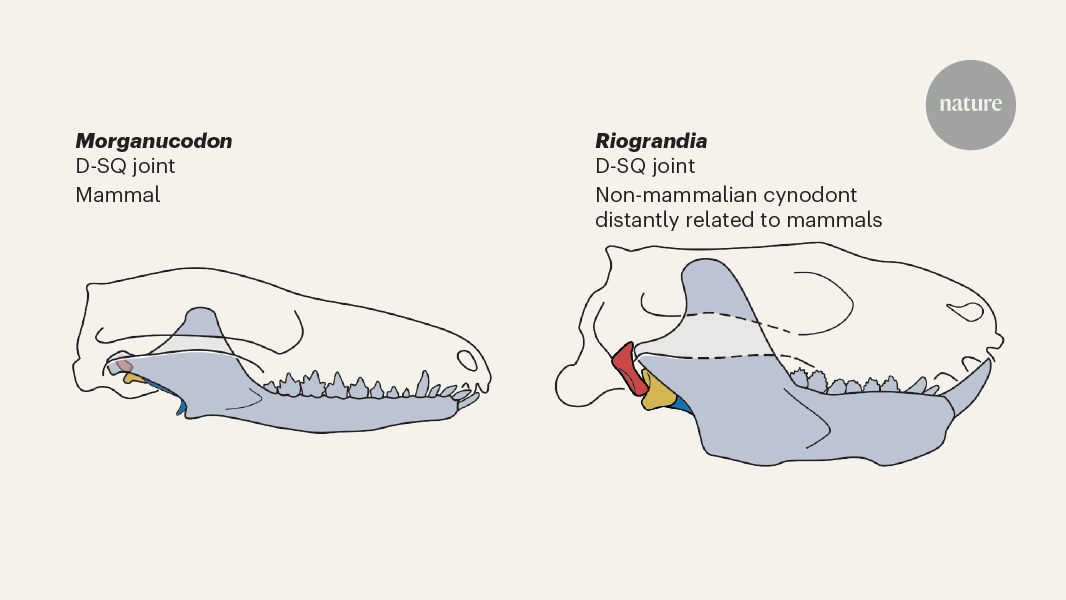
  • A jaw-dropping discovery about early mammals

    A jaw-dropping discovery about early mammals

    [ad_1]

  • Rawson, J. R. G. et al. Nature https://doi.org/10.1038/s41586-024-07971-3 (2024).

    Article 

    Google Scholar
     

  • Crompton, A. W. in Studies in Vertebrate Evolution (eds Joysey, K. A. & Kemp, T. S.) 231–251 (Oliver and Boyd, 1972).


    Google Scholar
     

  • Kemp, T. S. The Origin and Evolution of Mammals (Oxford Univ. Press, 2005).


    Google Scholar
     

  • Angielczyk, K. D. & Kammerer, C. F. in Handbook of Zoology: Mammalia: Mammalian Evolution, Diversity and Systematics (eds Zachos, F. E. & Asher, R.) 117–198 (De Gruyter, 2018).


    Google Scholar
     

  • Lautenschlager, S., Gill, P., Luo, Z.-X., Fagan, M. J. & Rayfield, E. J. Biol. Rev. 92, 1910–1940 (2017).

    Article 
    PubMed 

    Google Scholar
     

  • Bhullar, B.-A. S. et al. Nature 566, 528–532 (2019).

    Article 
    PubMed 

    Google Scholar
     

  • Stilson, K. T., Luo, Z.-X., Li, P., Olson, S. & Ross, C. F. Phil. Trans. R. Soc. B. 378, 20220548 (2023).

    Article 
    PubMed 

    Google Scholar
     

  • Kermack, K. A., Mussett, F. & Rigney, H. W. Zool. J. Linn. Soc. 53, 87–175 (1973).

    Article 

    Google Scholar
     

  • Luo, Z.-X. Nature 450, 1011–1019 (2007).

    Article 
    PubMed 

    Google Scholar
     

  • Luo, Z.-X. & Manley, G. A. in The Senses: A Comprehensive Reference Vol. 2 (eds Fritzsch, B. & Grothe, B.) 207–252 (Elsevier Academic Press, 2020).


    Google Scholar
     

  • Bonaparte, J. F., Martinelli, A. G. & Schultz, C. L. Rev. Bras. Paleontol. 8, 25–46 (2005).

    Article 

    Google Scholar
     

  • Soares, M. B., Schultz, C. L. & Horn, B. L. D. An. Acad. Bras. Ciênc. 83, 329–354 (2011).

    Article 
    PubMed 

    Google Scholar
     

  • Luo, Z.-X., Gatesy, S. M., Jenkins, F. A. Jr, Amaral, W. W. & Shubin, N. H. Proc. Natl Acad. Sci. USA 112, E7101–E7109 (2015).

    Article 
    PubMed 

    Google Scholar
     

  • Anthwal, N. & Tucker A. S. Evol. Dev. 25, 3–14 (2023).

    Article 
    PubMed 

    Google Scholar
     

  • Hinton, R. J. Dev. Dyn. 243, 864–874 (2014).

    Article 
    PubMed 

    Google Scholar
     

  • Wilken A. T., Schultz, J. A., Luo, Z.-X. & Ross, C. F. J. Exp. Biol. https://doi.org/10.1242/jeb.247030 (2024).

    Article 

    Google Scholar
     

  • [ad_2]

    Source link

  • Brazilian fossils reveal homoplasy in the oldest mammalian jaw joint

    [ad_1]

  • Luo, Z.-X. & Manley, G. A. in The Senses: A Comprehensive Reference Vol. 2 (eds Fritzsch, B. & Grothe, B.) 207–252 (Elsevier Academic, 2020).

  • Crompton, A. in Studies in Vertebrate Evolution (eds Joysey, K. A. & Kemp, T. S.) 231–251 (Oliver and Boyd, 1972).

  • Allin, E. F. Evolution of the mammalian middle ear. J. Morphol. 147, 403–437 (1975).

    Article 
    CAS 
    PubMed 

    Google Scholar
     

  • Allin, E. F. & Hopson, J. A. in The Evolutionary Biology of Hearing (eds Webster, D. B. et al.) 587–614 (Springer, 1992).

  • Luo, Z.-X. Developmental patterns in Mesozoic evolution of mammal ears. Ann. Rev. Ecol. Evol. Syst. 42, 355–380 (2011).

    Article 

    Google Scholar
     

  • Bonaparte, J. F., Martinelli, A. G., Schultz, C. L. & Rubert, R. The sister group of mammals: small cynodonts from the Late Triassic of southern Brazil. Rev. Bras. Paleontol. 8, 25–46 (2003).

  • Bonaparte, J. F., Martinelli, A. G. & Schultz, C. L. New information on Brasilodon and Brasilitherium (Cynodontia, Probainognathia) from the Late Triassic of southern Brazil. Rev. Bras. Paleontol. 8, 25–46 (2005).

    Article 

    Google Scholar
     

  • Bonaparte, J. F. Evolution of the Brasilodontidae (Cynodontia-Eucynodontia). Hist. Biol. 25, 643–653 (2013).

    Article 

    Google Scholar
     

  • Soares, M. B., Schultz, C. L. & Horn, B. L. New information on Riograndia guaibensis Bonaparte, Ferigolo & Ribeiro, 2001 (Eucynodontia, Tritheledontidae) from the Late Triassic of southern Brazil: anatomical and biostratigraphic implications. An. Acad. Bras. Ciênc. 83, 329–354 (2011).

    Article 
    PubMed 

    Google Scholar
     

  • Clemmensen, L. B. et al. The vertebrate-bearing Late Triassic Fleming Fjord Formation of central East Greenland revisited: stratigraphy, palaeoclimate and new palaeontological data. Geol. Soc. Lond. 434, 31–47 (2016).

  • Whiteside, D. I., Duffin, C. J., Gill, P. G., Marshall, J. E. & Benton, M. J. The Late Triassic and Early Jurassic fissure faunas from Bristol and South Wales: stratigraphy and setting. Palaeontol. Pol. 67, 257–287 (2016).


    Google Scholar
     

  • Schultz, C. L. et al. Triassic faunal successions of the Paraná Basin, southern Brazil. J. South Am. Earth Sci. 104, 102846 (2020).

    Article 

    Google Scholar
     

  • Rowe, T. in Mammal Phylogeny (eds Szalay, F. S. et al.) 129–145 (Springer, 1993).

  • Kemp, T. The origin of higher taxa: macroevolutionary processes, and the case of the mammals. Acta Zool. 88, 3–22 (2007).

    Article 

    Google Scholar
     

  • Kemp, T. The endocranial cavity of a nonmammalian eucynodont, Chiniquodon theotonicus, and its implications for the origin of the mammalian brain. J. Vertebr. Paleontol. 29, 1188–1198 (2009).

    Article 

    Google Scholar
     

  • Kielan-Jaworowska, Z., Cifelli, R. L. & Luo, Z.-X. Mammals From the Age of Dinosaurs: Origins, Evolution, and Structure (Columbia Univ. Press, 2005).

  • Newham, E., Gill, P. G. & Corfe, I. J. New tools suggest a middle Jurassic origin for mammalian endothermy: advances in state‐of‐the‐art techniques uncover new insights on the evolutionary patterns of mammalian endothermy through time. BioEssays 44, 2100060 (2022).

    Article 

    Google Scholar
     

  • Hellert, S. M., Grossnickle, D. M., Lloyd, G. T., Kammerer, C. F. & Angielczyk, K. D. Derived faunivores are the forerunners of major synapsid radiations. Nat. Ecol. Evol. 7, 1903–1913 (2023).

    Article 
    PubMed 

    Google Scholar
     

  • Rowe, T. Definition, diagnosis, and origin of Mammalia. J. Vertebr. Paleontol. 8, 241–264 (1988).

    Article 

    Google Scholar
     

  • Luo, Z.-X., Schultz, J. A. & Ekdale, E. G. in Evolution of the Vertebrate Ear (eds Clack, J. A. et al.) 139–174 (Springer, 2016).

  • Harper, T. & Rougier, G. W. Petrosal morphology and cochlear function in Mesozoic stem therians. PLoS ONE 14, e0209457 (2019).

    Article 
    CAS 
    PubMed 
    PubMed Central 

    Google Scholar
     

  • Wang, J. et al. A monotreme-like auditory apparatus in a Middle Jurassic haramiyidan. Nature 590, 279–283 (2021).

    Article 
    ADS 
    CAS 
    PubMed 

    Google Scholar
     

  • Ji, Q., Luo, Z.-X., Zhang, X., Yuan, C.-X. & Xu, L. Evolutionary development of the middle ear in Mesozoic therian mammals. Science 326, 278–281 (2009).

    Article 
    ADS 
    CAS 
    PubMed 

    Google Scholar
     

  • Anthwal, N., Urban, D. J., Luo, Z.-X., Sears, K. E. & Tucker, A. S. Meckel’s cartilage breakdown offers clues to mammalian middle ear evolution. Nat. Ecol. Evol. 1, 0093 (2017).

    Article 
    PubMed 
    PubMed Central 

    Google Scholar
     

  • Meng, J., Bi, S., Zheng, X. & Wang, X. Ear ossicle morphology of the Jurassic euharamiyidan Arboroharamiya and evolution of mammalian middle ear. J. Morphol. 279, 441–457 (2018).

    Article 
    PubMed 

    Google Scholar
     

  • Luo, Z.-X. Transformation and diversification in early mammal evolution. Nature 450, 1011–1019 (2007).

    Article 
    ADS 
    CAS 
    PubMed 

    Google Scholar
     

  • Crompton, A. W. & Luo, Z.-X. in Mammal Phylogeny (eds Szalay, F. S. et al.) 30–44 (Springer, 1993).

  • Kermack, K., Mussett, F. & Rigney, H. The lower jaw of Morganucodon. Zool. J. Linn. Soc. 53, 87–175 (1973).

    Article 

    Google Scholar
     

  • Luo, Z.-X., Bhullar, B.-A. S., Crompton, A. W., Neander, A. I. & Rowe, T. B. Reexamination of the mandibular and dental morphology of the Early Jurassic mammaliaform Hadrocodium wui. Acta Palaeontol. Pol. 67, 95–113 (2022).

    Article 

    Google Scholar
     

  • Bramble, D. M. Origin of the mammalian feeding complex: models and mechanisms. Paleobiology 4, 271–301 (1978).

    Article 

    Google Scholar
     

  • Lautenschlager, S., Gill, P., Luo, Z. X., Fagan, M. J. & Rayfield, E. J. Morphological evolution of the mammalian jaw adductor complex. Biol. Rev. 92, 1910–1940 (2016).

    Article 
    PubMed 

    Google Scholar
     

  • Lautenschlager, S., Gill, P. G., Luo, Z.-X., Fagan, M. J. & Rayfield, E. J. The role of miniaturization in the evolution of the mammalian jaw and middle ear. Nature 561, 533–537 (2018).

    Article 
    ADS 
    CAS 
    PubMed 

    Google Scholar
     

  • Soares, M. B., Martinelli, A. G. & Oliveira, T. V. A new prozostrodontian cynodont (Therapsida) from the Late Triassic Riograndia Assemblage Zone (Santa Maria Supersequence) of Southern Brazil. An. Acad. Bras. Ciênc. 86, 1673–1691 (2014).

    Article 
    PubMed 

    Google Scholar
     

  • Martinelli, A. G., Soares, M. B. & Schwanke, C. Two new cynodonts (Therapsida) from the Middle-Early Late Triassic of Brazil and comments on South American probainognathians. PLoS ONE 11, e0162945 (2016).

    Article 
    PubMed 
    PubMed Central 

    Google Scholar
     

  • Martinelli, A. G., Eltink, E., Da‐Rosa, Á. A. & Langer, M. C. A new cynodont from the Santa Maria Formation, south Brazil, improves Late Triassic probainognathian diversity. Pap. Palaeontol. 3, 401–423 (2017).

    Article 

    Google Scholar
     

  • Abdala, F. Redescription of Platycraniellus elegans (Therapsida, Cynodontia) from the Lower Triassic of South Africa, and the cladistic relationships of eutheriodonts. Palaeontology 50, 591–618 (2007).

    Article 

    Google Scholar
     

  • Martinelli, A. G. & Rougier, G. W. On Chaliminia musteloides (Eucynodontia: Tritheledontidae) from the Late Triassic of Argentina, and a phylogeny of Ictidosauria. J. Vertebr. Paleontol. 27, 442–460 (2007).

    Article 

    Google Scholar
     

  • Liu, J. & Olsen, P. The phylogenetic relationships of Eucynodontia (Amniota: Synapsida). J. Mamm. Evol. 17, 151–176 (2010).

    Article 
    ADS 

    Google Scholar
     

  • Rodrigues, P. G., Ruf, I. & Schultz, C. L. Digital reconstruction of the otic region and inner ear of the non-mammalian cynodont Brasilitherium riograndensis (Late Triassic, Brazil) and its relevance to the evolution of the mammalian ear. J. Mamm. Evol. 20, 291–307 (2013).

    Article 

    Google Scholar
     

  • Guignard, M. L., Martinelli, A. G. & Soares, M. B. Reassessment of the postcranial anatomy of Prozostrodon brasiliensis and implications for postural evolution of non-mammaliaform cynodonts. J. Vertebr. Paleontol. 38, e1511570 (2018).

    Article 

    Google Scholar
     

  • Pacheco, C. P., Martinelli, A. G., Pavanatto, A. E., Soares, M. B. & Dias-da-Silva, S. Prozostrodon brasiliensis, a probainognathian cynodont from the Late Triassic of Brazil: second record and improvements on its dental anatomy. Hist. Biol. 30, 475–485 (2018).

    Article 

    Google Scholar
     

  • Wallace, R. V., Martínez, R. & Rowe, T. First record of a basal mammaliamorph from the early Late Triassic Ischigualasto Formation of Argentina. PLoS ONE 14, e0218791 (2019).

    Article 
    CAS 
    PubMed 
    PubMed Central 

    Google Scholar
     

  • Benoit, J. et al. Synchrotron scanning sheds new light on Lumkuia fuzzi (Therapsida, Cynodontia) from the Middle Triassic of South Africa and its phylogenetic placement. J. Afr. Earth. Sci. 196, 104689 (2022).

    Article 

    Google Scholar
     

  • Langer, M. C., Ramezani, J. & Da Rosa, Á. A. U-Pb age constraints on dinosaur rise from south Brazil. Gondwana Res. 57, 133–140 (2018).

    Article 
    ADS 
    CAS 

    Google Scholar
     

  • Kerber, L., Martinelli, A. G., Müller, R. T. & Pretto, F. A. A new specimen provides insights into the anatomy of Irajatherium hernandezi, a poorly known probainognathian cynodont from the Late Triassic of southern Brazil. Anat. Rec. 305, 3113–3132 (2022).

    Article 

    Google Scholar
     

  • Crompton, A. & Parkyn, D. On the lower jaw of Diarthrognathus and the origin of the mammalian lower jaw. Proc. Zool. Soc. Lond. 140, 697–749 (1963).

    Article 

    Google Scholar
     

  • Luo, Z.-X. & Crompton, A. W. Transformation of the quadrate (incus) through the transition from non-mammalian cynodonts to mammals. J. Vertebr. Paleontol. 14, 341–374 (1994).

    Article 

    Google Scholar
     

  • Crompton, A. in Functional Morphology in Vertebrate Paleontology (ed. Thomason, J. J.) 55–75 (Cambridge Univ. Press, 1995).

  • Sues, H.-D. Skull and dentition of two tritylodontid synapsids from the Lower Jurassic of western North America. Bull. Mus. Compar. Zool. Harv. Coll. 151, 217–268 (1986).


    Google Scholar
     

  • Kühne, W. G. The Liassic Therapsid Oligokyphus (Trustees of the British Museum, 1956).

  • Jenkins, F. Jr et al. Late Triassic continental vertebrates and depositional environments of the Fleming Fjord Formation, Jameson Land, East Greenland: Meddelelser om Grønland. Geoscience 32, 1–25 (1994).


    Google Scholar
     

  • Luo, Z.-X., Gatesy, S. M., Jenkins, F. A. Jr, Amaral, W. W. & Shubin, N. H. Mandibular and dental characteristics of Late Triassic mammaliaform Haramiyavia and their ramifications for basal mammal evolution. Proc. Natl Acad. Sci. USA 112, E7101–E7109 (2015).

    Article 
    CAS 
    PubMed 
    PubMed Central 

    Google Scholar
     

  • Luo, Z.-X. & Wu, X. C. In In the Shadow of the Dinosaurs: Early Mesozoic Tetrapods (eds Fraser, N. & Sues, H.-D.) 251–270 (Cambridge Univ. Press, 1994).

  • Debuysschere, M., Gheerbrant, E. & Allain, R. Earliest known European mammals: a review of the Morganucodonta from Saint-Nicolas-de-Port (Upper Triassic, France). J. Syst. Paleontol. 13, 825–855 (2015).

    Article 

    Google Scholar
     

  • Gow, C. Pachygenelus, Diarthrognathus and the double jaw articulation. Palaeontol. Afr. 24, 15 (1981).

    MathSciNet 

    Google Scholar
     

  • Crompton, A. The evolution of the mammalian jaw. Evolution 17, 431–439 (1963).

  • Hopson, J. A. & Barghusen, H. R. in The Ecology and Biology of Mammal-like Reptiles (eds Hotton, N. et al.) 83–106 (Smithsonian Institution Press, 1986).

  • Shubin, N. H., Crompton, A., Sues, H.-D. & Olsen, P. E. New fossil evidence on the sister-group of mammals and early Mesozoic faunal distributions. Science 251, 1063–1065 (1991).

    Article 
    ADS 
    CAS 
    PubMed 

    Google Scholar
     

  • Luo, Z.-X. in In the Shadow of the Dinosaurs: Early Mesozoic Tetrapods (eds Fraser, N. & Sues, H.-D.) 98–128 (Cambridge Univ. Press, 1994).

  • Hopson, J. A. & Kitching, J. W. A probainognathian cynodont from South Africa and the phylogeny of nonmammalian cynodonts. Bull. Mus. Compar. Zool. 156, 5–35 (2001).


    Google Scholar
     

  • Ruta, M., Botha-Brink, J., Mitchell, S. A. & Benton, M. J. The radiation of cynodonts and the ground plan of mammalian morphological diversity. Proc. R. Soc. B 280, 20131865 (2013).

    Article 
    PubMed 
    PubMed Central 

    Google Scholar
     

  • Kemp, T. The relationships of mammals. Zool. J. Linn. Soc. 77, 353–384 (1983).

    Article 

    Google Scholar
     

  • Wible, J. R. Origin of Mammalia: the craniodental evidence reexamined. J. Vertebr. Paleontol. 11, 1–28 (1991).

    Article 

    Google Scholar
     

  • Wible, J. R. & Hopson, J. A. in Mammal Phylogeny (eds Szalay, F. S. et al.) 45–62 (Springer, 1993).

  • Martínez, R. N., May, C. L. & Forster, C. A. A new carnivorous cynodont from the Ischigualasto Formation (Late Triassic, Argentina), with comments on eucynodont phylogeny. J. Vertebr. Paleontol. 16, 271–284 (1996).

    Article 

    Google Scholar
     

  • Kemp, T. S. The Origin and Evolution of Mammals. (Oxford Univ. Press, 2005).

  • Martinelli, A. G., Bonaparte, J. F., Schultz, C. L. & Rubert, R. A new tritheledontid (Therapsida, Eucynodontia) from the Late Triassic of Rio Grande do Sul (Brazil) and its phylogenetic relationships among carnivorous non-mammalian eucynodonts. Ameghiniana 42, 191–208 (2005).


    Google Scholar
     

  • Sidor, C. & Hancox, P. Elliotherium kersteni, a new tritheledontid from the lower Elliot Formation (Upper Triassic) of South Africa. J. Paleontol. 80, 333–342 (2006).

    Article 
    ADS 

    Google Scholar
     

  • Oliveira, T. V., Martinelli, A. G. & Soares, M. B. New information about Irajatherium hernandezi Martinelli, Bonaparte, Schultz & Rubert 2005 (Eucynodontia, Tritheledontidae) from the Upper Triassic (Caturrita Formation, Paraná Basin) of Brazil. PalZ 1, 67–82 (2011).

    Article 

    Google Scholar
     

  • Luo, Z.-X., Kielan-Jaworowska, Z. & Cifelli, R. L. In quest for a phylogeny of Mesozoic mammals. Acta Palaeontol. Pol. 47, 1–78 (2002).


    Google Scholar
     

  • Melo, T. P., Ribeiro, A. M., Martinelli, A. G. & Soares, M. B. Early evidence of molariform hypsodonty in a Triassic stem-mammal. Nat. Commun. 10, 2841 (2019).

    Article 
    ADS 
    PubMed 
    PubMed Central 

    Google Scholar
     

  • Romer, A. S. A chiniquodontid cynodont with an incipient squamosal-dentary jaw articulation. Breviora 344, 1–18 (1970).


    Google Scholar
     

  • Barghusen, H. R. & Hopson, J. A. Dentary-squamosal joint and the origin of mammals. Science 168, 573–575 (1970).

    Article 
    ADS 
    CAS 
    PubMed 

    Google Scholar
     

  • Crompton, A. & Hylander, W. in The Ecology and Biology of Mammal-like Reptiles (eds. Hotton, N. et al.) 83–106 (Smithsonian Institution Press, 1986).

  • Watson, D. The evolution of the mammalian ear. Evolution 7, 159–177 (1953).

    Article 

    Google Scholar
     

  • Barghusen, H. R. The lower jaw of cynodonts (Reptilia, Therapsida) and the evolutionary origin of mammal-like adductor jaw musculature. Postilla 116, 1–56 (1968).


    Google Scholar
     

  • Abdala, F. & Damiani, R. Early development of the mammalian superficial masseter muscle in cynodonts. Palaeontol. Afr. 40, 23–29 (2004).


    Google Scholar
     

  • Reed, D., Iriarte‐Diaz, J. & Diekwisch, T. A three dimensional free body analysis describing variation in the musculoskeletal configuration of the cynodont lower jaw. Evol. Dev. 18, 41–53 (2016).

    Article 
    CAS 
    PubMed 

    Google Scholar
     

  • Rowe, T. B., Macrini, T. E. & Luo, Z.-X. Fossil evidence on origin of the mammalian brain. Science 332, 955–957 (2011).

    Article 
    ADS 
    CAS 
    PubMed 

    Google Scholar
     

  • Grossnickle, D. M., Smith, S. M. & Wilson, G. P. Untangling the multiple ecological radiations of early mammals. Trends Ecol. Evol. 34, 936–949 (2019).

    Article 
    PubMed 

    Google Scholar
     

  • Kaiuca, J. L. et al. Weighing in on miniaturization: new body mass estimates for Triassic eucynodonts and analyses of body size evolution during the cynodont-mammal transition. Anat. Rec. 307, 1594–1612 (2024).

    Article 

    Google Scholar
     

  • Grossnickle, D. M., Weaver, L. N., Jäger, K. R. & Schultz, J. A. The evolution of anteriorly directed molar occlusion in mammals. Zool. J. Linn. Soc. 194, 349–365 (2022).

    Article 

    Google Scholar
     

  • Brink, A. S. Two cynodonts from the Ntawere Formation in the Luangwa valley of Northern Rhodesia. Palaeontol. Afr. 8, 77–96 (1963).


    Google Scholar
     

  • Hoffman, E. A. & Rowe, T. B. Jurassic stem-mammal perinates and the origin of mammalian reproduction and growth. Nature 561, 104–108 (2018).

    Article 
    ADS 
    CAS 
    PubMed 

    Google Scholar
     

  • Gow, C. E. New find of Diarthrognathus (Therapsida: Cynodontia) after seventy years. Palaeontol. Afr. 31, 51–54 (1994).


    Google Scholar
     

  • Botha-Brink, J., Soares, M. B. & Martinelli, A. G. Osteohistology of Late Triassic prozostrodontian cynodonts from Brazil. PeerJ 6, e5029 (2018).

    Article 
    PubMed 
    PubMed Central 

    Google Scholar
     

  • Martinelli, A. G. & Bonaparte, J. F. in Paleontología y Dinosaurios desde América Latina (eds Porfiri, J. D. & González Riga, B.) 179–186 (Editora de la Univ. de Cuyo, 2011).

  • Lautenschlager, S. Reconstructing the past: methods and techniques for the digital restoration of fossils. R. Soc. Open Sci. 3, 160342 (2016).

    Article 
    ADS 
    MathSciNet 
    PubMed 
    PubMed Central 

    Google Scholar
     

  • Goloboff, P. A. & Catalano, S. A. TNT version 1.5, including a full implementation of phylogenetic morphometrics. Cladistics 32, 221–238 (2016).

    Article 
    PubMed 

    Google Scholar
     

  • Bapst, D. W. paleotree: an R package for paleontological and phylogenetic analyses of evolution. Methods Ecol. Evol. 3, 803–807 (2012).

    Article 

    Google Scholar
     

  • Abdala, F. et al. Non-mammaliaform cynodonts from western Gondwana and the significance of Argentinean forms in enhancing understanding of the group. J. South Am. Earth Sci. 104, 102884 (2020).

    Article 

    Google Scholar
     

  • Ronquist, F. et al. MrBayes 3.2: efficient Bayesian phylogenetic inference and model choice across a large model space. Syst. Biol. 61, 539–542 (2012).

    Article 
    PubMed 
    PubMed Central 

    Google Scholar
     

  • [ad_2]

    Source link

  • Mega El Niños may have played a part in the Permian mass extinction

    Mega El Niños may have played a part in the Permian mass extinction

    [ad_1]

    Illustration of the end-Permian extinction event, when extreme temperatures may have killed off forests

    RICHARD JONES/SCIENCE PHOTO LIBRARY

    The Great Dying at the end of the Permian Period 250 million years ago may have been amplified by El Niño events far stronger and longer lasting than any today.

    These mega El Niños caused wild swings in the climate that killed off forests and many land animals, says Alexander Farnsworth at the University of Bristol in the UK.

    They also triggered feedback processes that helped make this mass extinction as bad as it was, he says. “There are knock-on effects of this sort of El Niño event becoming stronger and lasting longer.”

    Around 90 per cent of all species alive at the time may have gone extinct during the end-Permian extinction, making it the worst ever mass extinction. It is widely thought that it was triggered by massive volcanic eruptions in what is now Siberia.

    These eruptions released huge quantities of carbon dioxide – possibly by heating rocks full of fossil carbon – that led to extreme global warming. The ocean became stagnant and low in oxygen, killing off marine creatures.

    But this doesn’t explain everything. In particular, land species started going extinct tens of thousands of years earlier than those in the sea.

    Many ideas have been put forward to explain this, from volcanic winters to the loss of the ozone layer. The idea that extreme El Niños might be involved emerged from studies of past ocean temperatures, based on oxygen isotypes in fossils, led by Yadong Sun at the China University of Geosciences in Wuhan.

    Now, Farnsworth and his colleagues have run computer models to explore what might have happened at end of the Permian that could explain Sun’s findings.

    Today, El Niño occurs when warm water in the western Pacific spreads eastwards across the surface of the ocean. This creates an area of abnormally warm water that heats the atmosphere and affects weather across the planet. 

    Before the Permian extinction began, the researchers found, El Niños were probably of a similar intensity and duration as today. That is, the anomalously warm water was about 0.5°C (0.9°F) hotter than average and the events lasted for a few months.

    These events, however, were happening in a massive ocean called Panthalassa, which was 30 per cent wider at the equator than the Pacific Ocean is today. This means the area of anomalously warm water during El Niños was much larger than today, and thus had a bigger planetary impact.

    As CO2 levels rose at the end of the Permian, these El Niño events got stronger and lasted longer, the team’s models suggest. They caused extreme swings in the weather on land that killed off forests, which stopped soaking up CO2 and started releasing it, leading to more warming and even more extreme El Niños.

    In the sea, the temperature variations would have been less severe, and marine animals can more easily migrate to avoid them. This explains why marine extinctions happened later, when global warming got more intense. “The killer extreme global warming that was the cause of marine extinction was worse because of these El Niños taking away the carbon sink,” says Farnsworth.

    By the peak of the extinction, the temperature anomaly during El Niños was up to 4°C (7.2°F), with each event lasting more than a decade, he says.

    It isn’t clear if something similar will happen in the future. Computer models vary in their forecasts of how El Niños will change as the planet warms, says Farnsworth. But they are already having a bigger impact because they are happening in a warmer world.

    “The El Niño we just had was helping set record temperatures everywhere and leading to a huge amount of forest fires,” he says. “And the thing that disturbs me most is tentative signs during this El Niño of dieback in the Amazon.”

    The study shows that under specific climate conditions, El Niño events can cause extinctions, says Pedro DiNezio at the University of Colorado, Boulder. But these mega El Niños couldn’t occur today because the Pacific is smaller than Panthalassa, they say.

    “These results are very exciting to understand the past, not so much the near future. To answer what El Niño will do, we need to look at intervals in the past with similar continental configurations as today,” says DiNezio.

    “I think it’s a compelling study,” says Phil Jardine at the University of Münster in Germany, who found the first direct evidence for the loss of the ozone layer during the Permian extinction.

    “I don’t think that this and other extinction drivers, including ozone degradation, are mutually exclusive,” he says. “The deadly thing about the end-Permian mass extinction seems to be that a lot of things were happening at once, and interacting with each other as they cascaded through the Earth system.”

    Topics:

    [ad_2]

    Source link

  • Ancient DNA debunks Rapa Nui ‘ecological suicide’ theory

    Ancient DNA debunks Rapa Nui ‘ecological suicide’ theory

    [ad_1]

    Download the Nature Podcast 11 September 2024

    In this episode:

    00:45 What ancient DNA has revealed about Rapa Nui’s past

    Ancient DNA analysis has further demonstrated that the people of Rapa Nui did not cause their own population collapse, further refuting a controversial but popular claim. Rapa Nui, also known as Easter island, is famous for its giant Moai statues and the contested idea that the people mismanaged their natural resources leading to ‘ecological suicide’. Genomes sequenced from the remains of 15 ancient islanders showed no evidence of a sudden population crash, substantiating other research challenging the collapse idea.

    Research Article: Moreno-Mayar et al.

    News and Views: Rapa Nui’s population history rewritten using ancient DNA

    News article: Famed Pacific island’s population ‘crash’ debunked by ancient DNA

    17:03 Research Highlights

    The extinct bat-eating fish that bit off more than they could chew, and how manatee dung shapes an Amazonian ecosystem.

    Research Highlight: Ancient fish dined on bats — or died trying

    Research Highlight: The Amazon’s gargantuan gardeners: manatees

    19:29 A macabre parasite of adult fruit flies

    Despite being a hugely studied model organism, it seems that there’s still more to find out about the fruit fly Drosophila melanogaster, as researchers have discovered a new species of parasitoid wasp that infects the species. Unlike other parasitic wasps, this one lays its eggs in adult flies, with the developing larva devouring its host from the inside. The minuscule wasp was discovered by chance in an infected fruit fly collected in a Mississippi backyard and analysis suggests that despite having never been previously identified, it is widespread across parts of North America.

    Research article: Moore et al.

    32:04 Briefing Chat

    How a dye that helps to give Doritos their orange hue can turn mouse tissues transparent, and an effective way to engage with climate-science sceptics.

    Nature News: Transparent mice made with light-absorbing dye reveal organs at work

    Nature News: How to change people’s minds about climate change: what the science says

    Subscribe to Nature Briefing, an unmissable daily round-up of science news, opinion and analysis free in your inbox every weekday.

    Never miss an episode. Subscribe to the Nature Podcast on Apple Podcasts, Spotify, YouTube Music or your favourite podcast app. An RSS feed for the Nature Podcast is available too.

    [ad_2]

    Source link

  • David Hone interview: How the hidden lives of dinosaurs are being revealed by new technology

    David Hone interview: How the hidden lives of dinosaurs are being revealed by new technology

    [ad_1]

    New Scientist. Science news and long reads from expert journalists, covering developments in science, technology, health and the environment on the website and the magazine.

    Paul Ryding/Joseph Woodhouse

    Dinosaurs dominated the land for around 180 million years. Yet we have little idea what life was like for these prehistoric icons as interpreting fossils that are at least 65 million years old is fiendishly difficult. Finding out more had long seemed impossible. No longer.

    In the past few decades, new technologies and new specimens have provided previously unimaginable windows into their behaviour and ecology. This, along with insights from living animals, is finally allowing palaeontologists to build a picture of dinosaur life ranging from parental care, migration and hunting styles to communication, sociality and combat.

    David Hone is one of those working to glean more about life in the age of dinosaurs. A palaeontologist at Queen Mary University of London, he has collated the latest findings into a forthcoming book, Uncovering Dinosaur Behavior: What they did and how we know. He gave New Scientist a taste of what has been discovered, from migrating herbivores and semi-aquatic predators to why ostriches are a problem for understanding which dinosaurs doted on their young.

    Colin Barras: Some of the largest dinosaurs – sauropods such as Diplodocus or Brachiosaurus, for example – were nothing like any living animal. How do you even begin to work out how they behaved?

    David Hone: One of the most important things we can do as palaeontologists is use our understanding of modern animal ecology and behaviour in a much better way. Mouth shape is a good example. If you’ve got a small mouth, you are usually targeting individual buds or leaves – high-nutrition foods. If you…

    [ad_2]

    Source link

  • Stunningly preserved pterosaur fossils reveal how they soared

    Stunningly preserved pterosaur fossils reveal how they soared

    [ad_1]

    Jordan Pterosaurs flight flat copy Terryl Whitlatch.jpg Credit: Terryl Whitlatch

    Smaller pterosaurs may have flapped their wings while larger ones soared

    Terryl Whitlatch

    Despite living hundreds of millions of years apart, pterosaurs may be more similar to modern-day birds than previously thought. Structures in the bones of these giant reptiles suggest the largest ones used their wings to soar while the smaller ones flapped through the skies.

    The finding comes from stunningly preserved pterosaur fossils unearthed in Jordan. “The mechanics of flight leaves an imprint on the skeleton,” says Jeffrey Wilson Mantilla at the University of Michigan.

    Pterosaurs took to the sky some 80 million years before birds and bats. During their 150-million-year reign from the Triassic to the end of the Cretaceous periods, they conquered all continents and evolved a range of sizes and shapes. Some pterosaurs were as small as a house sparrow, while others had wingspans as long as a city bus. An analysis of their bones suggests different pterosaurs used distinct flight tactics to stay aloft.

    Wilson Mantilla and his team compared the remains of two different pterosaur species, and were delighted to find the bones’ 3D structure was still intact. This was a surprise, as pterosaurs’ hollow and fragile bones tend to break down quickly. Computed tomography scans revealed that the two reptiles’ bones were markedly different.

    The larger pterosaur, Arambourgiania philadelphiae, had internal ridges that spiralled up and down inside its bones, similar to modern birds like eagles that fly with their wings in a fixed position. Bones of the smaller pterosaur, Inabtanin alarabia – a species new to science – had criss-crossed struts, mimicking those of flapping birds.

    The helical spirals help resist the twisting forces of soaring, while crossed scaffolding withstands the bending force of a flap, says Wilson Mantilla.

    Because the team found the fossils in a formerly coastal area, he thinks the soaring pterosaurs might have caught sea thermals – updrafts of warm air – to gain altitude. Mantilla suspects these pterosaurs could also flap, especially to get airborne, making soaring the rarer trait.

    Why one of these pterosaurs seemed to flap while the other may have soared raises new questions about how the more than 100 other known pterosaur species navigated the skies. Next, Mantilla wants to examine fossils from different parts of the world to see if the pattern holds – perhaps, like modern birds, soaring was reserved for only the largest of their kind.

    Topics:

    [ad_2]

    Source link

  • Ancient fish dined on bats — or died trying

    Ancient fish dined on bats — or died trying

    [ad_1]

    • RESEARCH HIGHLIGHT

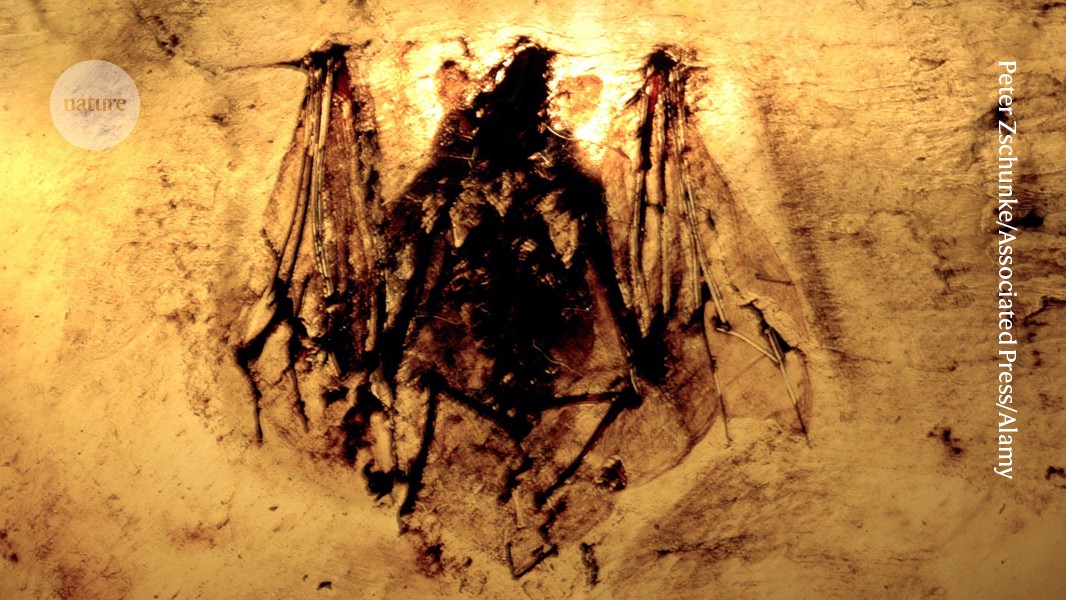
    Fossils hint that bats’ wings sometimes lodged in fish’s throats, leading the bat-eater to die of hunger.

    [ad_2]

    Source link

  • The race to save fossils exposed by Brazil’s record-setting floods

    The race to save fossils exposed by Brazil’s record-setting floods

    [ad_1]

    Researchers work on fossil collection

    A research team at the Quarta Colônia Palaeontological Research Support Centre in southern Brazil excavates a fossil site.Credit: Janaína Brand Dillmann

    Rain can be a friend or foe for palaeontologists. It can wash away soil or erode rocks, potentially revealing thrilling fossils, or it can cause already-exposed, delicate specimens to crumble.

    Nowhere is this truer right now than in southern Brazil. In May, devastating floods in the state of Rio Grande do Sul uncovered pieces of bone from at least 35 ancient animals, including a 233-million-year-old skeleton that is among the oldest dinosaur fossils in the world. But intermittent rain showers and wet conditions since then have researchers racing to recover other smaller, more-vulnerable specimens that are also precious.

    Adding to the urgency is the unprecedented nature of the floods. Between 27 April and 27 May, the state’s capital, Porto Alegre, saw about 66 centimetres of rain — almost half of what it normally gets in one year, and many other cities across the state have flooded, too. Some palaeontological sites are still under water.

    “If palaeontologists are not there to collect material when it starts showing, we risk losing some of it forever,” says Leonardo Kerber, coordinator of the Quarta Colônia Palaeontological Research Support Centre (CAPPA) at the Federal University of Santa Maria in São João do Polêsine.

    Exceeding expectations

    Since the downpours in May, palaeontologist Rodrigo Temp Müller and his colleagues at CAPPA have intensified their monitoring of excavation sites near São João do Polêsine, which is about 280 kilometres west of Porto Alegre.

    A close up of a dinosaur fossil

    Palaeontologists uncovered these bones, belonging to a 2.5-metre-long carnivorous dinosaur called a herrerasaurid, after floods ravaged southern Brazil.Credit: Rodrigo Temp Müller

    On 15 May, about two weeks after torrential rains caused the banks of Rio Grande do Sul’s river system to overflow, Müller and the team uncovered a 2.5-metre-long fossil of a carnivorous, bipedal dinosaur belonging to the Herrerasauridae family. “We were sure we’d find something after the heavy rains,” Müller says, but the specimen still exceeded expectations.

    Herrerasaurids emerged and vanished during the Triassic period (about 250 million to 200 million years ago) and were the “first top predators to appear among dinosaurs”, says Aline Ghilardi, a palaeontologist at the Federal University of Rio Grande do Norte in Natal, Brazil. They would eventually be replaced during the Jurassic period (200 million to 145 million years ago) by larger dinosaurs called theropods, which include bipedal, three-toed meat-eaters such as Tyrannosaurus rex.

    Some researchers argue that the herrerasaurids were the first theropods, but this designation is still controversial. “This is why the findings of CAPPA are so important — they can help us solve open questions like this,” Ghilardi says.

    Working against the weather

    But it has been difficult to celebrate the discovery, says Müller. The floods affected almost 2.4 million people in Rio Grande do Sul, including 183 individuals who died and 27 who are still missing, according to local authorities. “People near the excavation site lost their houses,” he adds.

    Since their fossil find, Müller and his colleagues have taken slabs of rock and soil containing the Herrerasauridae specimen back to their laboratory to carefully extract the bones. They have removed enough material so far to be cautiously excited: they think it might be the second-most-complete fossil of its kind ever found.

    An aerial shot of floodwater covering roads in Porto Alegre

    Record-breaking floods submerged parts of Rio Grande do Sul’s capital, Porto Alegre, in early May.Credit: Carlos Macedo/Bloomberg/Getty

    But the team can’t relax just yet. With rain continuing to fall intermittently, the researchers are still rushing to save fossils of many smaller animals — ones that don’t usually make headlines but that are still important. “Everybody likes big dinos,” Kerber says. But “the largest species diversity is always among the smaller animals”. Such fossils help palaeontologists to reconstruct how species evolved and uncover details about the environments in which they lived.

    The tiniest bones of animals both big and small are also a concern. They are the first to disappear when rain hits an excavation site, says Juan Cisneros, a palaeontologist at the Federal University of Piauí in Teresina, Brazil. “They’re rare and harder to find.” Ear bones in small reptiles, for example, can be just millimetres long, yet they reveal a lot about an animal’s brain and how intelligent it might have been.

    Treasure trove

    About a week ago, the CAPPA researchers uncovered the skull of a baby rhynchosaur — a parrot-beaked, herbivorous reptile that could grow on average to about 1 metre long and dominated Earth during the middle to late Triassic (247 million to 200 million years ago). Although these rhynchosaur fossils are abundant, Müller says, “they’re important exactly because they are abundant”. In particular, they play a stratigraphic part in research because they mark Triassic sites, he adds. “Where there’s a rhynchosaur, there probably will be a herrerasaurid.”

    Now, the team is excavating a cynodont fossil — the skeletal remains of a mammal-like reptile that lived from about 260 million to 100 million years ago and ranged from the size of a rabbit to a large dog. These reptiles are the ancient ancestors of mammals, which are the only cynodonts remaining, Kerber says.

    The fossil-rich region where the palaeontologists are working hosts 29 excavation sites, 21 of which the CAPPA team has been able to access since the floods, according to Müller and Kerber. Four are still almost completely under water.

    One thing working to their advantage is that CAPPA is so close by. “We don’t need to plan long excavation trips, but can be in the field every week,” Müller says. The next challenge the researchers will face is what to do with all the fossils they’re recovering — the centre does not have a museum. “It would be important to have one, not only to store the fossils we find,” Kerber says, “but also to educate the local population on how rich their region is.”

    [ad_2]

    Source link

  • why local researchers are excited

    why local researchers are excited

    [ad_1]

    Palaeontologists in Thailand have identified one of the first tyrannosauroid fossils in southeast Asia1. The discovery has excited researchers because so few specimens from the Late Jurassic epoch, around 150 million years ago, have been found in the region, in part owing to a lack of resources.

    Palaeontological research in many southeast Asian countries is often led and funded by foreign institutions, say scientists from the region. They hope the latest finding, by a team of Thai palaeontologists, will encourage more local researchers to investigate the region’s dinosaur history.

    “It’s a matter of finding one and the rest will follow,” says Daniel Lumbantobing, an evolutionary biologist with the Indonesian Society for Evolutionary Studies in Depok.

    T. rex’s distant relative

    The newly identified fossil belongs to the tyrannosauroid family, a group of bipedal predators that roamed Earth from the Middle Jurassic epoch to the late Cretaceous epoch, 174 million to 66 million years ago. The most famous member, Tyrannosaurus rex from North America, was the largest in size, measuring up to 12 metres in length and weighing 10,000 kilograms2. The new tyrannosauroid — identified using a set of teeth — was much smaller and nearly 100 million years older than T. rex, says study co-author Wongwech Chowchuvech, a palaeontologist at Kasetsart University, Bangkok. The discovery was published in the journal Tropical Natural History in June.

    The teeth were excavated from the Late Jurassic layer of the Phu Kradung site in northern Thailand. The tyrannosauroid is probably “related to Guanlong wucaii tyrannosauroid in China”, says Chowchuvech, referring to the oldest species in the family.

    Tyrannosauroid fossils have been found across the Northern Hemisphere, including in Russia, China and North America. The Thai tyrannosauroid suggests the group was widespread throughout the ancient supercontinent Laurasia, which consisted of what are now North America, Greenland, Europe and Asia, says Chowchuvech.

    Chowchuvech found the dental specimens at the Sirindhorn Museum in Non Buri, Thailand, among many unidentified fossils from all over the country, including the Phu Kradung site. Chowchuvech knew that the site was dated to the Late Jurassic of Laurasia. He wondered whether some of the teeth in the museum were from tyrannosauroids. He examined three specimens that he suspected belonged to theropods, a larger group which includes tyrannosauroids. He then did a morphometric analysis— a method used to assess the size and shape of the dental specimens — and compared them with an existing data set of theropod dental characteristics. His analysis confirmed that all three samples were from a tyrannosauroid.

    Palaontologist Xu Xing, from the Institute of Vertebrate Paleontology & Paleoanthropology in Beijing, said the study presented good evidence that the teeth belonged to a tyrannosauroid.

    Fossil gaps

    Scientists are curious about the lack of fossils from the Palaeozoic and Mesozoic eras, 541 million to 66 million years ago, from countries such as Thailand and Indonesia. Some wonder whether this absence has a scientific explanation, but Lumbantobing thinks it is related to the lack of resources for palaeontological research in the region.

    Nussaïbah Raja, a palaeontologist at the University of Erlangen-Nuremberg in Erlangen, Germany, agrees. A lot of palaeontological research in low- and middle-income countries is led by “the interest of foreign researchers and institutions”, she says. And this has created a “sampling bias that distorts our understanding of past biodiversity”. She and her colleagues have found that high-income countries produced more than 97% of fossil data over the past 30 years3, creating an imbalance in global palaeontological research.

    For instance, since Dutch palaeontologist Eugène Dubois unearthed a Homo erectus fossil in a riverbed in East Java, Indonesia, in 1891, palaeontological-research questions in the region have often focused on archaic humans, says Lumbantobing. Homo floresiensis was uncovered in eastern Indonesia4 and Homo luzonensis in the Philippines5, while the world’s oldest cave paintings have been found in Sulawesi, Indonesia. All these discoveries, which made headlines in international media, were connected to Australian institutions with more financial resources available than those in southeast Asia have.

    Local teams

    In the past five years, locally trained palaeontologists have started to investigate Thailand’s dinosaur history. Study co-author Sita Manitkoon, Chowchuvech’s supervisor at Mahasarakam University in Kham Riang, Thailand, has published about a dozen research papers on dinosaurs, inspiring Chowchuvech to formulate his own scientific questions. “In past decades, we did not have the knowledge and research techniques to conduct our own research properly,” Chowchuvech says. “We have gained invaluable knowledge and research techniques from many foreign palaeontologists, who have taught and supported us for decades, allowing us to run our own research in recent years.”

    Raja and Chowchuvech think locally led research would help to diversify and decolonize palaeontology. “When local researchers drive the research, their priorities and interests are placed first, as it should be,” Raja says.

    [ad_2]

    Source link