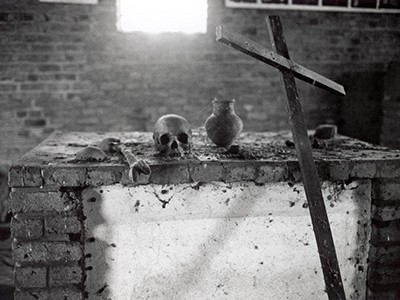
Much of the research on the genocide against Tutsi communities has neglected the testimonies of survivors.Credit: Chip Somodevilla/Getty
This month marks 30 years since the start of the 1994 genocide against Rwanda’s Tutsi communities. Around 800,000 Tutsi were killed by armed Hutu militia and citizens over 100 days. Members of the Hutu and Twa communities also died, in what some scholars call the worst atrocity of the late twentieth century.
This 30th anniversary is a poignant reminder of many things, but perhaps first and foremost of the international community’s failure to intervene and stop the killings. Massacres of Tutsi people had been happening for decades before 1994, but calls for help from inside Rwanda were ignored, with horrific consequences.
After the genocide: what scientists are learning from Rwanda
This week, in a News Feature commemorating the anniversary of the atrocity, Nature has spoken to researchers about what has been learnt about the genocide, the consequences for its survivors and its aftermath. Lessons from studying a specific genocide can be applicable to many events that involve conflict.
The 1948 Convention on the Prevention and Punishment of the Crime of Genocide, adopted after the Second World War, defines genocide as “an act committed with intent to destroy, in whole or in part, a national, ethnical, racial or religious group”. It is, the convention states, an “odious scourge” that “at all periods of history … has inflicted great losses on humanity”.
Genocide is incredibly difficult to study. The hardest question of all concerns a genocide’s origins: how wars and violence can escalate to genocidal acts. At the same time, genocide studies is not one discipline. It spans the political and social sciences, anthropology, biology, economics, history, law, medicine, sociology and more. Researchers bring individual disciplinary insights, but must also collaborate. Nature heard from researchers studying peace-building between communities affected by the genocide, and learnt about mental-health approaches that have helped survivors. We also spoke to scientists who have studied how the trauma from the event has marked the DNA of survivors and their children. Intergenerational trauma — trauma relating to the genocide that affects younger generations who did not directly experience it — remains a challenge for mental-health services in Rwanda. But this is a legacy of all atrocities, and one that societies should be prepared for.
North–south publishing data show stark inequities in global research
In Rwanda’s case, the genocide nearly wiped out the country’s academic community; until recently, the study of the atrocity had largely been done by researchers from other countries. Rwanda’s scholars have re-established themselves and must be supported so they can lead the study of genocide, political violence and beyond. The country already hosts some of Africa’s notable research institutions, including a chapter of the African Institute for Mathematical Sciences in Kigali and the African Medicines Agency, soon to be established in the capital.
Researchers in African countries face many barriers. They consistently report that international journals are too quick to reject their submissions. Some told Nature that this might be because of a perception that research from low-income nations or countries with limited academic autonomy is of low quality. One exceptional effort that is helping to overcome these barriers is the Research, Policy and Higher Education programme, focused on Rwanda. Now a decade old and launched by the UK-based charity Aegis Trust in Nottingham, this programme invites Rwandan scholars to submit research proposals; external researchers support them with advice and expertise to get the works published in international venues, such as peer-reviewed journals. The resulting works are collected in a resource called the Genocide Research Hub.
So far, more than 40 scholars have published dozens of journal articles, book chapters and working papers. Some studies have already influenced Rwandan policy relating to the genocide. For example, Rwandan scholar Munyurangabo Benda, a philosopher of religion at the Queen’s Foundation, an ecumenical college in Birmingham, UK, investigated feelings of guilt among children of Hutu perpetrators born after the genocide. A peace-building project that involved this generation of children grew into a nationwide programme on reconciliation. Benda’s academic research played a part in broadening the programme’s offerings.
Rwanda: From killing fields to technopolis
In the immediate aftermath of atrocities, focus is often put on perpetrators, as legal organizations seek to make convictions and secure justice. But, in the study of genocide, it is imperative to listen to survivors, to establish their needs and how they can be supported, and also to ensure that their testimonies and experiences are not lost.
Much of the research on the genocide against the Tutsi has neglected the testimonies of survivors, particularly women, says Noam Schimmel, a scholar of international studies and human rights at the University of California, Berkeley. Survivors need to be given opportunities to share and write about their own perspectives and experiences — whether in literature, as part of research or in journalism — which can help to overcome isolation and marginalization, and to improve their well-being and welfare.
As atrocities continue to unfold around the world, researchers can learn from Rwanda. Those in positions of responsibility must allow researchers from affected countries to lead where they can, and to elevate the voices of survivors. In doing so, they will bring a deeper level of experience that might allow us to better study and understand these heinous acts. We might still be far from answers — but greater knowledge can only help to shine more light on this darkest of places.
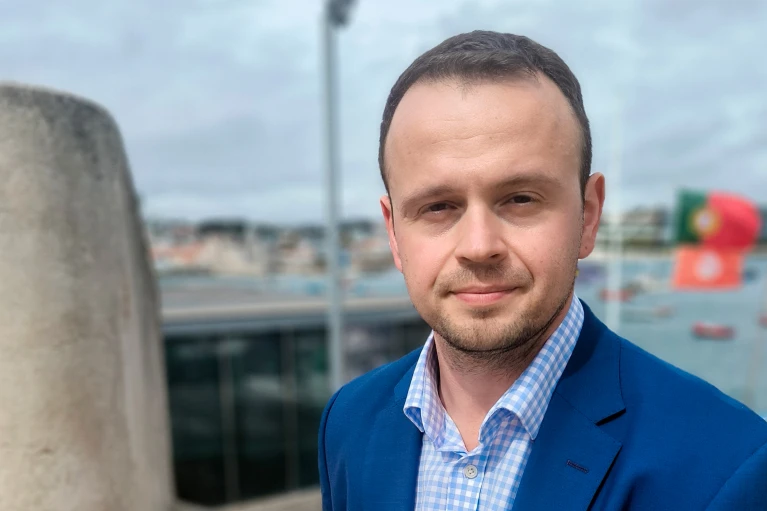
For Dritjon Gruda, artificial-intelligence chatbots have been a huge help in scientific writing and peer review.Credit: Vladimira Stavreva-Gruda
Confession time: I use generative artificial intelligence (AI). Despite the debate over whether chatbots are positive or negative forces in academia, I use these tools almost daily to refine the phrasing in papers that I’ve written, and to seek an alternative assessment of work I’ve been asked to evaluate, as either a reviewer or an editor. AI even helped me to refine this article.
I study personality and leadership at Católica Porto Business School in Portugal and am an associate editor at Personality and Individual Differences and Psychology of Leaders and Leadership. The value that I derive from generative AI is not from the technology itself blindly churning out text, but from engaging with the tool and using my own expertise to refine what it produces. The dialogue between me and the chatbot both enhances the coherence of my work and, over time, teaches me how to describe complex topics in a simpler way.
Whether you’re using AI in writing, editing or peer review, here’s how it can do the same for you.
Polishing academic writing
Ever heard the property mantra, ‘location, location, location’? In the world of generative AI, it’s ‘context, context, context’.
Context is king. You can’t expect generative AI — or anything or anyone, for that matter — to provide a meaningful response to a question without it. When you’re using a chatbot to refine a section of your paper for clarity, start by outlining the context. What is your paper about, and what is your main argument? Jot down your ideas in any format — even bullet points will work. Then, present this information to the generative AI of your choice. I typically use ChatGPT, made by OpenAI in San Francisco, California, but for tasks that demand a deep understanding of language nuances, such as analysing search queries or text, I find Gemini, developed by researchers at Google, to be particularly effective. The open-source large language models made by Mixtral, based in Paris, are ideal when you’re working offline but still need assistance from a chatbot.
Regardless of which generative-AI tool you choose, the key to success lies in providing precise instructions. The clearer you are, the better. For example, you might write: “I’m writing a paper on [topic] for a leading [discipline] academic journal. What I tried to say in the following section is [specific point]. Please rephrase it for clarity, coherence and conciseness, ensuring each paragraph flows into the next. Remove jargon. Use a professional tone.” You can use the same technique again later on, to clarify your responses to reviewer comments.
Remember, the chatbot’s first reply might not be perfect — it’s a collaborative and iterative process. You might need to refine your instructions or add more information, much as you would when discussing a concept with a colleague. It’s the interaction that improves the results. If something doesn’t quite hit the mark, don’t hesitate to say, “This isn’t quite what I meant. Let’s adjust this part.” Or you can commend its improvements: “This is much clearer, but let’s tweak the ending for a stronger transition to the next section.”
This approach can transform a challenging task into a manageable one, filling the page with insights you might not have fully gleaned on your own. It’s like having a conversation that opens new perspectives, making generative AI a collaborative partner in the creative process of developing and refining ideas. But importantly, you are using the AI as a sounding board: it is not writing your document for you; nor is it reviewing manuscripts.
Elevating peer review
Generative AI can be a valuable tool in the peer-review process. After thoroughly reading a manuscript, summarize key points and areas for review. Then, use the AI to help organize and articulate your feedback (without directly inputting or uploading the manuscript’s text, thus avoiding privacy concerns). For example, you might instruct the AI: “Assume you’re an expert and seasoned scholar with 20+ years of academic experience in [field]. On the basis of my summary of a paper in [field], where the main focus is on [general topic], provide a detailed review of this paper, in the following order: 1) briefly discuss its core content; 2) identify its limitations; and 3) explain the significance of each limitation in order of importance. Maintain a concise and professional tone throughout.”
I’ve found that AI partnerships can be incredibly enriching; the tools often offer perspectives I hadn’t considered. For instance, ChatGPT excels at explaining and justifying the reasons behind specific limitations that I had identified in my review, which helps me to grasp the broader implications of the study’s contribution. If I identify methodological limitations, ChatGPT can elaborate on these in detail and suggest ways to overcome them in a revision. This feedback often helps me to connect the dots between the limitations and their collective impact on the paper’s overall contribution. Occasionally, however, its suggestions are off-base, far-fetched, irrelevant or simply wrong. And that is why the final responsibility for the review always remains with you. A reviewer must be able to distinguish between what is factual and what is not, and no chatbot can reliably do that.
Optimizing editorial feedback
The final area in which I benefit from using chatbots is in my role as a journal editor. Providing constructive editorial feedback to authors can be challenging, especially when you oversee several manuscripts every week. Having personally received countless pieces of unhelpful, non-specific feedback — such as, “After careful consideration, we have decided not to proceed with your manuscript” — I recognize the importance of clear and constructive communication. ChatGPT has become indispensable in this process, helping me to craft precise, empathetic and actionable feedback without replacing human editorial decisions.
For instance, after evaluating a paper and noting its pros and cons, I might feed these into ChatGPT and get it to draft a suitable letter: “On the basis of these notes, draft a letter to the author. Highlight the manuscript’s key issues and clearly explain why the manuscript, despite its interesting topic, might not provide a substantial enough advancement to merit publication. Avoid jargon. Be direct. Maintain a professional and respectful tone throughout.” Again, it might take a few iterations to get the tone and content just right.
I’ve found that this approach both enhances the quality of my feedback and helps to guarantee that I convey my thoughts supportively. The result is a more positive and productive dialogue between editors and authors.
There is no doubt that generative AI presents challenges to the scientific community. But it can also enhance the quality of our work. These tools can bolster our capabilities in writing, reviewing and editing. They preserve the essence of scientific inquiry — curiosity, critical thinking and innovation — while improving how we communicate our research.
Considering the benefits, what are you waiting for?
The Bill & Melinda Gates Foundation, one of the world’s top biomedical research funders, will from next year require grant holders to make their research publicly available as preprints, articles that haven’t yet been accepted by a journal or gone through peer review. The foundation also said it would stop paying for article-processing charges (APCs) — fees imposed by some journal publishers to make scientific articles freely available online for all readers, a system known as open access (OA).
The Gates Foundation is the first major science funder to take such an approach with preprints, says Lisa Hinchliffe, a librarian and academic at the University of Illinois Urbana–Champaign. The policies — which take effect on 1 January 2025 — elevate the role of preprints and are aimed at reducing the money the Gates Foundation spends on APCs, while ensuring that the research is free to read.
Who should pay for open-access publishing? APC alternatives emerge
But the policy’s ramifications are unclear. “Whether this will help the open-access movement or not, it’s hard to know,” Hinchliffe says. On the one hand, more research will become freely available in preprint form, she notes. On the other, the final published versions of articles, known as the version of record, might become harder to access. Under the revised rules, after sharing their manuscript as a preprint, authors will be allowed to submit it to the journal of their choice and will no longer be required to select the OA option.
“Our decision is driven by our goals of immediate access to research, global reuse and equitable action,” says Ashley Farley, programme officer of knowledge and research services at the Gates Foundation in Seattle, Washington. Grant recipients will still be required to post their preprints under a licence that allows their contents to be reused, she says. The foundation plans to publish the full policy within the next couple of weeks.
OA efforts
The Gates Foundation announced in 2015 that it would require its grant recipients to make their research articles freely available at the time of publication by placing them in open repositories. It later joined cOAlition S — a group of mainly European research funders and organizations supporting OA academic publishing — and endorsed the group’s Plan S, by which funders mandate that grant holders publish their work through an OA route.
Butthe Gates Foundation’s latest policy puts it on course to diverge from the group. It is not “entirely in line with cOAlition S”, says Johan Rooryck, executive director of the coalition, who is based in Leiden, the Netherlands. Whereas cOAlition S requires either an accepted manuscript or the version of record to be available OA, he says, “the Gates Foundation is clearly of the opinion that the preprint is sufficient”. He notes that the group allows for “a lot of leeway in policies” between its members, adding that the Gates policy continues to uphold key aspects of Plan S, such as promoting authors’ retention of rights to their accepted manuscripts.
The coalition has been examining the role of preprints in OA, but it’s a long way from adopting any related policy changes, Rooryck says. A document released by the group last year discussed the issue, and the coalition is gathering feedback from the research community through a survey open until 22 April. No decisions will be made on adopting any proposal before the end of the year.
Open-access reformers launch next bold publishing plan
Another difference between Plan S and the Gates policy is their stance on APCs. “Ending support for APC payments is not the cOAlition S policy, I can be very clear about that,” Rooryck says. “That’s a decision that Gates has taken. It’s not a decision that we, as cOAlition S, are ready to make by 1 January 2025.”
Ending support for APCs is a “very sensible plan” given the unsustainable increase of such charges in recent years, says Lynn Kamerlin, a computational biophysicist at the Georgia Institute of Technology in Atlanta. “The Gates Foundation plan is the open-access plan I would have liked to see when Plan S was announced.”
Juan Pablo Alperin, a scholarly-communications researcher at Simon Fraser University in Vancouver, Canada, notes that APCs are “inherently an unjust way” of supporting OA. “Stopping support for APCs sends a signal to the larger community, including the community of funders, that this mechanism is not a way forward,” he says.
Effects on publishing
It’s hard to predict the effects of the Gates policy on scientific publishing, says Hinchliffe. Some grant holders might find it harder to publish in OA journals, and rely more on preprints to disseminate their work. But others might continue to publish through OA journal routes, especially if they have other funding sources to cover the APCs, or if their institutions’ libraries have agreements with publishers to reduce the costs of OA publishing.
Although the Gates Foundation is a big funder — with a budget of US$8.6 billion in 2024 — it still funds only a modest percentage of the world’s research, Hinchliffe notes, and it’s not clear whether other funders will follow suit. Some, even among those that require OA publishing, already refuse to cover APCs.
Another potential consequence of the policy is that there might be a difference in the quality of a manuscript freely available as a preprint and its final version behind a paywall. In certain cases, people with access to the final version are going to be in a better position to avoid particular kinds of mistake than are those who rely solely on the preprint, Hinchliffe says. Kamerlin notes that an increasing number of preprint publishers allow authors to update their preprints as many times as necessary, which could ease that concern.
Farley says that there is growing evidence that errors in early versions of preprints are addressed quickly, “as there is a much broader pool of researchers to read and evaluate the preprint”. The foundation will provide grant recipients with a list of recommended preprint servers “that have demonstrated a level of checks that ensure the scientific validity of research”, she adds. It has also invested in a new preprint service called VeriXiv, “which will set new standards for preprint checking”.
A guide to Plan S: the open-access initiative shaking up science publishing
Some authors might well choose not to publish formally in journals, deciding that the preprint is enough, says Alperin. “I don’t see that as being a problem in itself,” he says. “Sometimes, the goal of a journal publication has been a negative force in science, encouraging people to focus on publishing in a particular journal when the goal should really be to do high-quality research and to ensure that it is communicated and that it reaches the right audience.”
Publishers contacted by Nature’s news team said they are still assessing the Gates policy. (Nature’s news team is editorially independent of its publisher, Springer Nature.) “We are reviewing the implications of the Bill & Melinda Gates Foundation’s new open-access policy and what it means for how we support their researchers,” said a spokesperson for the publisher Elsevier in a statement.
Roheena Anand, executive director of global publishing development and sales at the publisher PLOS, which is based in San Francisco, California, said in a statement that PLOS has already recognized that the APC model of OA publishing creates inequities. “We are committed to finding sustainable and equitable alternatives. That’s why we have launched several non-APC models and are also working with a multi-stakeholder working group,” she says, “to identify more equitable routes to knowledge-sharing beyond article-based charges.” She added that there is a risk that, without established alternatives, researchers funded by the Gates Foundation will revert to publishing their work behind paywalls. “PLOS’s newer business models offer one possible alternative.”
In an article announcing the changes, Estee Torok, a senior programme officer at the Gates Foundation, wrote that the organization has paid around $6 million in APCs per year since 2015. “We’ve become convinced that this money could be better spent elsewhere to accelerate progress for people,” she wrote. Farley says that the foundation plans to invest in more equitable OA models, such as ‘diamond OA’, a system in which publishers don’t charge fees to authors or readers, as well as preprint servers and other platforms and technologies for research dissemination.
It was in just the second article of more than 1,000 that Otto Kalliokoski was screening that he spotted what he calls a “Photoshop masterpiece”.
The paper showed images from western blots — a technique used to analyse protein composition — for two samples. But Kalliokoski, an animal behaviourist at the University of Copenhagen, found that the images were identical down to the pixel, which he says is clearly not supposed to happen.
Image manipulation in scientific studies is a known and widespread problem. All the same, Kalliokoski and his colleagues were startled to come across more than 100 studies with questionable images while compiling a systematic review about a widely used test of laboratory rats’ moods. After publishing the review1 in January, the researchers released a preprint2 documenting the troubling studies that they uncovered and how these affected the results of their review. The preprint, posted on bioRxiv in February, has not yet been peer reviewed.
Their work “clearly highlights [that falsified images] are impacting our consolidated knowledge base”, says Alexandra Bannach-Brown, a systematic-review methodologist at the Berlin Institute of Health who was not involved with either the review or the preprint. Systematic reviews, which summarize and interpret the literature on a particular topic, are a key component of that base. With an explosion of scientific literature, “it’s impossible for a single person to keep up with reading every new paper that comes out in their field”, Bannach-Brown says. And that means that upholding the quality of systematic reviews is ever more important.
Pile-up of problems
Kalliokoski’s systematic review examined the reliability of a test designed to assess reward-seeking in rats under stress. A reduced interest in a reward is assumed to be a proxy symptom of depression, and the test is widely used during the development of antidepressant drugs. The team identified an initial pool of 1,035 eligible papers; 588 contained images.
By the time he’d skimmed five papers, Kalliokoski had already found a second one with troubling images. Not sure what to do, he bookmarked the suspicious studies and went ahead with collating papers for the review. As the questionable papers kept piling up, he and his colleagues decided to deploy Imagetwin, an AI-based software tool that flags problems such as duplicated images and ones that have been stretched or rotated. Either Imagetwin or the authors’ visual scrutiny flagged 112 — almost 20% — of the 588 image-containing papers.
“That is actually a lot,” says Elizabeth Bik, a microbiologist in San Francisco, California, who has investigated image-related misconduct and is now an independent scientific-integrity consultant. Whether image manipulation is the result of honest error or an intention to mislead, “it could undermine the findings of a study”, she says.
Small but detectable effect
For their final analysis, the authors examined all the papers that met their criteria for inclusion in their review. This batch, consisting of 132 studies, included 10 of the 112 that the team had flagged as having potentially doctored images.
Journals adopt AI to spot duplicated images in manuscripts
Analysis of these 10 studies alone assessed the test as 50% more effective at identifying depression-related symptoms than did a calculation based on the 122 studies without questionable images. These suspicious studies “do actually skew the results”, Kalliokoski says — although “not massively”, because overall variations in the data set mask the contribution from this small subset.
Examples from this study “cover pretty much all types of image problems”, Bik says, ranging from simple duplication to images that showed evidence of deliberate alteration. Using a scale that Bik developed to categorize the degree of image manipulation, the researchers found that most of the problematic images showed signs of tampering.
The researchers published their review in January in Translational Psychiatry without telling the journal that it was based in part on papers that included suspicious images. The journal’s publisher, Springer Nature, told Nature that it is investigating. (The Nature news team is editorially independent of its publisher, Springer Nature).
When they published their preprint the following month, the researchers included details of all the papers with suspicious images. They also flagged each study on Pubpeer, a website where scientists comment anonymously on papers. “My first allegiance is towards the [scientific] community,” Kalliokoski says, adding that putting the data out is the first step.
Bring reviews to life
The process of challenging a study’s integrity, giving its authors a chance to respond and seeking retraction for fraudulent studies can take years. One way to clear these muddied waters, says Bannach-Brown, is to publish ‘living’ systematic reviews, which are designed to be updated whenever papers get retracted or new research is added. She has helped to develop one such method of creating living reviews, called Systematic Online Living Evidence Summaries.
Systematic-review writers are also keen to see publishers integrate standardized ways to screen out dubious studies — rather than waiting until a study gets retracted.
Authors, publishers and editorial boards need to work together, Bannach-Brown says, to “catch some of these questionable research practices before they even make it to publication.”
Italian astronaut Samantha Cristoforetti was interviewed by Nature’s Careers team in 2023.Credit: Massimo Di Vita/Mondadori Portfolio/Getty
How can Nature’s journalists reach out to the broadest possible set of scientists and research-associated professionals in our journalism? That’s the question at the heart of our three-year effort to track the diversity of the sources interviewed in the journal’s News, Features and Careers articles, and in audio and video content.
Journalism is a mirror of the community in which it exists — as communities and societies change, journalistic practice and content have to keep up, both to stay relevant and to reflect the needs and priorities of audiences accurately. That’s why, in April 2021, Nature’s journalism teams began recording three characteristics of diversity for their written, audio and video content: the pronouns of the people interviewed, their geographical location and their career stage.
Men dominate the senior rungs of science and, historically, scientists and institutions in North America and Europe have dominated scientific publishing. Both trends are starting to change, albeit at different speeds.
We published an initial set of statistics last February, covering the period from 1 April 2021 to 31 January 2023. Here, we provide an update for 1 February 2023 to 31 January 2024 (see ‘Diversity in Nature’s journalism’).
Our previous analysis of 1,241 written articles, podcasts and video content revealed that 59.6% of sources quoted or paraphrased used he/him pronouns; 76.6% were from North America or Europe; and 67.9% were established in their careers.
For the 862 journalistic pieces in the current analysis, Nature’s staff journalists and freelance writers interviewed 3,679 sources. Of these, 3,569 (97%) provided their pronouns. These broke down into 2,147 sources (60.2%) who used he/him pronouns, 1,401 (39.3%) who used she/her and 21 (0.6%) who had they/them or other pronouns. These ratios are broadly unchanged from our earlier data.
In total, 3,635 sources gave their geographical location. Of those, 2,865 (78.8%) were based in either North America or Europe, and 770 (21.2%) in the rest of the world. That represents a decrease in regional diversity compared with our previous analysis, which showed that 23.4% of sources were outside North America and Europe.
Nature publishes too few papers from women researchers — that must change
Finally, when it comes to career stage, 3,478 sources provided data. Of these, 2,158 (62%) identified as established in their careers — including sources, such as professors and those who hold tenure, and non-academic ones with senior roles. Some 18.8% of sources fell in the ‘early career’ category, including graduate students, postdocs and non-tenured faculty members, compared with 19.6% previously. Around 19.1% fell into the ‘other’ category, which includes people in non-academic environments, such as industry, campaign organizations and policy. This group’s share in Nature’s journalistic content has increased from 12.5%.
There are some caveats to our analysis. These data were gathered by Nature’s journalism teams in North America, Europe and the Asia–Pacific region. They do not include journalistic content commissioned by our other offices. Nor do they include content written by external authors, such as World Views and Careers columns. Furthermore, the results have not been tested for statistical significance.
Still, the results provide a good overview for a large proportion of Nature’s journalism. We realize that reporting our findings is only the first step towards improving the diversity of our sources. Nature’s journalism teams are currently expanding their networks and are also looking at best practice in media and publishing industries.
Diverse sources produce stronger journalism — and better represent today’s global scientific community. The shape and priorities of world science are changing, and we must adapt to reflect those changing realities.
Earlier this month, the editors at the linguistics journal Syntax publicly announced their resignations in response to changes to the manuscript-handling process imposed by its publisher, Wiley-Blackwell.
“We have come to the conclusion that our position as editors of the journal is no longer tenable,” wrote editors Klaus Abels and Suzanne Flynn in an open letter to authors and reviewers of the journal on 9 March. They added that measures designed to cut costs and tackle a backlog of papers — namely assigning copyediting tasks that were previously handled by Syntax’s independent editorial office to a production team without specialist knowledge of linguistics — meant the journal could “no longer meet the needs of our community”. Wiley-Blackwell did not respond to a request for comment from Nature’snews team.
The move is latest such event in what seems to be an emerging form of protest: the public resignation of academic editors.
Editors quit top neuroscience journal to protest against open-access charges
So far this year, the editors of five journals have resigned together, according to an unofficial tally by the website Retraction Watch. This followed 12 such moves in 2023, a big increase over the preceding years (there were 2 such events in both 2021 and 2022). The tally starts in 2015, although earlier events have been recorded.
It isn’t clear whether mass resignations are set to become even more frequent, says Michael Clarke, a publishing consultant at management-consultant firm Clarke & Esposito in Washington DC. But he adds that they are getting a lot of attention. Many mass resignations, Clarke says, are in response to changes to business models in the publishing industry.
This was the case for editors and editorial board members of the journal Critical Public Health, published by Taylor & Francis, who resigned last July. The journal’s former co-editor-in-chief Judith Green, a sociologist at the University of Exeter, UK, says that the move was prompted partly by the publisher’s plans to make the journal open access. “It wasn’t that we were opposed to the principle of open access,” she says. Instead, the editors were deeply opposed to the article-processing-charge model, in which authors are charged fees to publish their papers open access. The team decided to resign only after a year of discussions with the publisher about alternative models failed to produce a compromise, Green says. A spokesperson for Taylor & Francis referred Nature to a statement issued at the time of the resignation, saying they publisher was disappointed by the resignations, but was looking forward to recruiting a new editorial team.
“The big theme [of mass resignations] is this tension of competing priorities,” says Ivan Oransky, co-founder of Retraction Watch. “You have publishers — most of them are for profit — that demand and require constant growth because that’s what the stock market requires. You have researchers — academics or editors, for the most part, who champion quality and maybe depth and time to review. Those are in opposition.”
More than a protest
Clarke says that he can see why editors who are dissatisfied might take matters into their own hands. “If an academic community wishes to control the business decisions of a journal, the best way to do that is to own the journal,” he says. “These mass resignations were all cases where the editors were working on journals owned by the publisher.”
“The resignation is not so much the point. The point is creating an alternative top-quality channel of scholarly communication,” says Abels, a linguistics researcher at University College London.
Open-access row prompts editorial board of Elsevier journal to resign
Groups of editors who resign sometimes go on to found new publications, over which they have more control. The former editors of Critical Public Health are in the process of setting up a new journal called The Journal of Critical Public Health, hosted by the international Critical Public Health Network in Edinburgh, UK. A similar outcome resulted from the mass resignation of editors at Elsevier journal NeuroImage last April, who have since set up another journal hosted by the non-profit publisher MIT press.
Stephen Smith, a biomedical engineer at the University of Oxford, UK, was editor-in-chief of NeuroImage, and now holds the same role at the new journal, Imaging Neuroscience, which launched in last July. He is pleased with what came out of the mass resignation. “Things are going extremely well,” he says. “As of March 2024, we have received 700 submissions and published 125 papers.”
Abels and his colleagues plan to form a new journal, under a diamond open-access model in which there are no fees for authors or readers, hosted by the Open Library of Humanities (OLH) at Birkbeck, University of London. He says that the editors were galvanized to resign by earlier resignations, but adds that those tempted to resign should look beyond using the move as a protest. They should focus instead on finding a home for a new journal and the academic community. Smith agrees: “I think of our move as being more than just ‘protest’, which implies that we academics lack the power to change the publication system directly.” Such change can be achieved, Smith says, by “starting new journals that are open, not-for-profit, and have high academic standards”.
Generative AI might be a powerful tool in making research more accessible for scientists and the broader public alike.Credit: Getty
Thinking back to the early days of her PhD programme, Esther Osarfo-Mensah recalls struggling to keep up with the literature. “Sometimes, the wording or the way the information is presented actually makes it quite a task to get through a paper,” says the biophysicist at University College London. Lay summaries could be a time-saving solution. Short synopses of research articles written in plain language could help readers to decide which papers to focus on -— but they aren’t common in scientific publishing. Now, the buzz around artificial intelligence (AI) has pushed software engineers to develop platforms that can mass produce these synopses.
Scientists are drawn to AI tools because they excel at crafting text in accessible language, and they might even produce clearer lay summaries than those written by people. A study1 released last year looked at lay summaries published in one journal and found that those created by people were less readable than were the original abstracts -— potentially because some researchers struggle to replace jargon with plain language or to decide which facts to include when condensing the information into a few lines.
AI lay-summary platforms come in a variety of forms (see ‘AI lay-summary tools’). Some allow researchers to import a paper and generate a summary; others are built into web servers, such as the bioRxiv preprint database.
AI lay-summary tools
Several AI resources have been developed to help readers glean information about research articles quickly. They offer different perks. Here are a few examples and how they work:
– SciSummary: This tool parses the sections of a paper to extract the key points and then runs those through the general-purpose large language model GPT-3.5 to transform them into a short summary written in plain language. Max Heckel, the tool’s founder, says it incorporates multimedia into the summary, too: “If it determines that a particular section of the summary is relevant to a figure or table, it will actually show that table or figure in line.”
– Scholarcy: This technology takes a different approach. Its founder, Phil Gooch, based in London, says the tool was trained on 25,000 papers to identify sentences containing verb phrases such as “has been shown to” that often carry key information about the study. It then uses a mixture of custom and open-source large language models to paraphrase those sentences in plain text. “You can actually create ten different types of summaries,” he adds, including one that lays out how the paper is related to previous publications.
– SciSpace: This tool was trained on a repository of more than 280 million data sets, including papers that people had manually annotated, to extract key information from articles. It uses a mixture of proprietary fine-tuned models and GPT-3.5 to craft the summary, says the company’s chief executive, Saikiran Chandha, based in San Francisco, California. “A user can ask questions on top of these summaries to further dig into the paper,” he notes, adding that the company plans to develop audio summaries that people can tune into on the go.
Benefits and drawbacks
Mass-produced lay summaries could yield a trove of benefits. Beyond helping scientists to speed-read the literature, the synopses can be disseminated to people with different levels of expertise, including members of the public. Osarfo-Mensah adds that AI summaries might also aid people who struggle with English. “Some people hide behind jargon because they don’t necessarily feel comfortable trying to explain it,” she says, but AI could help them to rework technical phrases. Max Heckel is the founder of SciSummary, a company in Columbus, Ohio, that offers a tool that allows users to import a paper to be summarized. The tool can also translate summaries into other languages, and is gaining popularity in Indonesia and Turkey, he says, arguing that it could topple language barriers and make science more accessible.
Despite these strides, some scientists feel that improvements are needed before we can rely on AI to describe studies accurately.
Will Ratcliff, an evolutionary biologist at the Georgia Institute of Technology in Atlanta, argues that no tool can produce better text than can professional writers. Although researchers have different writing abilities, he invariably prefers reading scientific material produced by study authors over those generated by AI. “I like to see what the authors wrote. They put craft into it, and I find their abstract to be more informative,” he says.
Is ChatGPT making scientists hyper-productive? The highs and lows of using AI
Nana Mensah, a PhD student in computational biology at the Francis Crick Institute in London, adds that, unlike AI, people tend to craft a narrative when writing lay summaries, helping readers to understand the motivations behind each step of the study. He says, however, that one advantage of AI platforms is that they can write summaries at different reading levels, potentially broadening the audience. In his experience, however, these synopses might still include jargon that can confuse readers without specialist knowledge.
AI tools might even struggle to turn technical language into lay versions at all. Osarfo-Mensah works in biophysics, a field with many intricate parameters and equations. She found that an AI summary of one of her research articles excluded information from a whole section. If researchers were looking for a paper with those details and consulted the AI summary, they might abandon her paper and look for other work.
Andy Shepherd, scientific director at global technology company Envision Pharma Group in Horsham, UK, has in his spare time compared the performances of several AI tools to see how often they introduce blunders. He used eight text generators, including general ones and some that had been optimized to produce lay summaries. He then asked people with different backgrounds, such as health-care professionals and the public, to assess how clear, readable and useful lay summaries were for two papers.
“All of the platforms produced something that was coherent and read like a reasonable study, but a few of them introduced errors, and two of them actively reversed the conclusion of the paper,” he says. It’s easy for AI tools to make this mistake by, for instance, omitting the word ‘not’ in a sentence, he explains. Ratcliff cautions that AI summaries should be viewed as a tool’s “best guess” of what a paper is about, stressing that it can’t check facts.
Broader readership
The risk of AI summaries introducing errors is one concern among many. Another is that one benefit of such summaries — that they can help to share research more widely among the public — could also have drawbacks. The AI summaries posted alongside bioRxiv preprints, research articles that have yet to undergo peer review, are tailored to different levels of reader expertise, including that of the public. Osarfo-Mensah supports the effort to widen the reach of these works. “The public should feel more involved in science and feel like they have a stake in it, because at the end of the day, science isn’t done in a vacuum,” she says.
But others point out that this comes with the risk of making unreviewed and inaccurate research more accessible. Mensah says that academics “will be able to treat the article with the sort of caution that’s required”, but he isn’t sure that members of the public will always understand when a summary refers to unreviewed work. Lay summaries of preprints should come with a “hazard warning” informing the reader upfront that the material has yet to be reviewed, says Shepherd.
Why scientists trust AI too much — and what to do about it
“We agree entirely that preprints must be understood as not peer-reviewed when posted,” says John Inglis, co-founder of bioRxiv, who is based at Cold Spring Harbor Laboratory in New York. He notes that such a disclaimer can be found on the homepage of each preprint, and if a member of the public navigates to a preprint through a web search, they are first directed to the homepage displaying this disclaimer before they can access the summary. But the warning labels are not integrated into the summaries, so there is a risk that these could be shared on social media without the disclaimer. Inglis says bioRxiv is working with its partner ScienceCast, whose technology produces the synopses, on adding a note to each summary to negate this risk.
As is the case for many other nascent generative-AI technologies, humans are still working out the messaging that might be needed to ensure users are given adequate context. But if AI lay-summary tools can successfully mitigate these and other challenges, they might become a staple of scientific publishing.
An independent team could replicate select experiments in a paper before publication, to help catch errors and poor methodology.Credit: SolStock/Getty
Could the replication crisis in scientific literature be addressed by having scientists independently attempt to reproduce their peers’ key experiments during the publication process? And would teams be incentivized to do so by having the opportunity to report their findings in a citable paper, to be published alongside the original study?
These are questions being asked by two researchers who say that a formal peer-replication model could greatly benefit the scientific community.
Anders Rehfeld, a researcher in human sperm physiology at Copenhagen University Hospital, began considering alternatives to standard peer review after encountering a published study that could not be replicated in his laboratory. Rehfeld’s experiments1 revealed that the original paper was flawed, but he found it very difficult to publish the findings and correct the scientific record.
“I sent my data to the original journal, and they didn’t care at all,” Rehfeld says. “It was very hard to get it published somewhere where you thought the reader of the original paper would find it.”
The issues that Rehfeld encountered could have been avoided if the original work had been replicated by others before publication, he argues. “If a reviewer had tried one simple experiment in their own lab, they could have seen that the core hypothesis of the paper was wrong.”
Rehfeld collaborated with Samuel Lord, a fluorescence-microscopy specialist at the University of California, San Francisco, to devise a new peer-replication model.
The replication crisis won’t be solved with broad brushstrokes
In a white paper detailing the process2, Rehfeld, Lord and their colleagues describe how journal editors could invite peers to attempt to replicate select experiments of submitted or accepted papers by authors who have opted in. In the field of cell biology, for example, that might involve replicating a western blot, a technique used to detect proteins, or an RNA-interference experiment that tests the function of a certain gene. “Things that would take days or weeks, but not months, to do” would be replicated, Lord says.
The model is designed to incentivize all parties to participate. Peer replicators — unlike peer reviewers — would gain a citable publication, and the authors of the original paper would benefit from having their findings confirmed. Early-career faculty members at mainly undergraduate universities could be a good source of replicators: in addition to gaining citable replication reports to list on their CVs, they would get experience in performing new techniques in consultation with the original research team.
Rehfeld and Lord are discussing their idea with potential funders and journal editors, with the goal of running a pilot programme this year.
“I think most scientists would agree that some sort of certification process to indicate that a paper’s results are reproducible would benefit the scientific literature,” says Eric Sawey, executive editor of the journal LifeScienceAlliance, who plans to bring the idea to the publisher of his journal. “I think it would be a good look for any journal that would participate.”
Who pays?
Sawey says there are two key questions about the peer-replication model: who will pay for it, and who will find the labs to do the reproducibility tests? “It’s hard enough to find referees for peer review, so I can’t imagine cold e-mailing people, asking them to repeat the paper,” he says. Independent peer-review organizations, such as ASAPbio and Review Commons, might curate a list of interested labs, and could even decide which experiments will be replicated.
Lord says that having a third party organize the replication efforts would be great, and adds that funding “is a huge challenge”. According to the model, funding agencies and research foundations would ideally establish a new category of small grants devoted to peer replication. “It could also be covered by scientific societies, or publication fees,” Rehfeld says.
A controlled trial for reproducibility
It’s also important for journals to consider what happens when findings can’t be replicated. “If authors opt in, you’d like to think they’re quite confident that the work is reproducible,” says Sawey. “Ideally, what would come out of the process is an improved methods or protocols section, which ultimately allows the replicating lab to reproduce the work.”
Most important, says Rehfeld, is ensuring that the peer-replication reports are published, irrespective of the outcome. If replication fails, then the journal and original authors would choose what to do with the paper. If an editor were to decide that the original manuscript was seriously undermined, for example, they could stop it from being published, or retract it. Alternatively, they could publish the two reports together, and leave the readers to judge. “I could imagine peer replication not necessarily as an additional ‘gatekeeper’ used to reject manuscripts, but as additional context for readers alongside the original paper,” says Lord.
A difficult but worthwhile pursuit
Attempting to replicate others’ work can be a challenging, contentious undertaking, says Rick Danheiser, editor-in-chief of OrganicSyntheses, an open-access chemistry journal in which all papers are checked for replicability by a member of the editorial board before publication. Even for research from a well-resourced, highly esteemed lab, serious problems can be uncovered during reproducibility checks, Danheiser says.
Replicability in a field such as synthetic organic chemistry — in which the identity and purity of every component in a reaction flask should already be known — is already challenging enough, so the variables at play in some areas of biology and other fields could pose a whole new level of difficulty, says Richard Sever, assistant director of Cold Spring Harbor Laboratory Press in New York, and co-founder of the bioRxiv and medRxiv preprint servers. “But just because it’s hard, doesn’t mean there might not be cases where peer replication would be helpful.”
How to make your research reproducible
The growing use of preprints, which decouple research dissemination from evaluation, allows some freedom to rethink peer evaluation, Sever adds. “I don’t think it could be universal, but the idea of replication being a formal part of evaluating at least some work seems like a good idea to me.”
An experiment to test a different peer-replication model in the social sciences is currently under way, says Anna Dreber Almenberg, who studies behavioural and experimental economics at the Stockholm School of Economics. Dreber is a board member of the Institute for Replication (I4R), an organization led by Abel Brodeur at University of Ottawa, which works to systematically reproduce and replicate research findings published in leading journals. In January, I4R entered an ongoing partnership with Nature Human Behaviour to attempt computational reproduction of data and findings of as many studies published from 2023 onwards as possible. Replication attempts from the first 18 months of the project will be gathered into a ‘meta-paper’ that will go through peer review and be considered for publication in the journal.
“It’s exciting to see how people from completely different research fields are working on related things, testing different policies to find out what works,” says Dreber. “That’s how I think we will solve this problem.”
As the leading country in health-sciences output in the Nature Index, the United States’ Share is almost 8,500, higher than the next 10 leading countries combined. As a result, US institutions feature prominently among the leading research organizations for the subject, with 30 of the top 50 being based there.
The country’s dominance means that it comes top for Share in all but seven of the journals tracked by the Nature Index in the subject. This includes large general journals such as Nature Communications and specialist medical publications such as The New England Journal of Medicine. PLOS Medicine and Gut are two examples where authors based elsewhere (the United Kingdom and China) made the largest contribution.
Source: Nature Index. Data analysis by Aayush Kagathra. Infographic by Simon Baker, Bec Crew and Tanner Maxwell.
The United States is the clear frontrunner among the leading five countries for health-sciences research, with a Share almost four times higher than China, in second place. The United Kingdom is third, with a Share of almost 1,500, a higher placing than its fourth position overall in the Nature Index.
Source: Nature Index. Data analysis by Aayush Kagathra. Infographic by Simon Baker, Bec Crew and Tanner Maxwell.
Out of the top 25 countries for health-sciences articles in the Nature Index, five nations have a Share that makes up at least 29% of their overall footprint in the database across all subjects. Denmark, whose research is boosted by the success of companies such as Novo Nordisk, has the highest ratio in this regard at almost 40%.
Source: Nature Index. Data analysis by Aayush Kagathra. Infographic by Simon Baker, Bec Crew and Tanner Maxwell.
As Harvard University, in Cambridge, Massachusetts, is the leading institution for high-quality health-sciences research, its involvement in the top institutional partnership in the field is no surprise. But its dominance does not extend to all the other leading collaborations, some of which involve institutions outside the United States.
Source: Nature Index. Data analysis by Aayush Kagathra. Infographic by Simon Baker, Bec Crew and Tanner Maxwell.
The difference in Nature Index health-sciences output between the leading academic institution, Harvard University in Cambridge, Massachusetts, and other top institutions is a Share of more than 600. Compared with Harvard, most of the leading institutions also have a lower proportion of their overall Nature Index output in health sciences.
The University of Toronto in Canada and Johns Hopkins University in Baltimore, Maryland, are the only other academic institutions with a health-sciences Share of over 200. They also have a relatively strong focus on health sciences, with over 35% of their overall Nature Index research output in the subject area.
Source: Nature Index. Data analysis by Aayush Kagathra. Infographic by Simon Baker, Bec Crew and Tanner Maxwell.
In 2020, Ranga Dias was an up-and-coming star of the physics world. A researcher at the University of Rochester in New York, Dias achieved widespread recognition for his claim to have discovered the first room-temperature superconductor, a material that conducts electricity without resistance at ambient temperatures. Dias published that finding in a landmark Nature paper1.
Nearly two years later, that paper was retracted. But not long after, Dias announced an even bigger result, also published in Nature: another room-temperature superconductor2. Unlike the previous material, the latest one supposedly worked at relatively modest pressures, raising the enticing possibility of applications such as superconducting magnets for medical imaging and powerful computer chips.
Most superconductors operate at extremely low temperatures, below 77 kelvin (−196 °C). So achieving superconductivity at room temperature (about 293 K, or 20 °C) would be a “remarkable phenomenon”, says Peter Armitage, a condensed-matter researcher at Johns Hopkins University in Baltimore, Maryland.
But Dias is now infamous for the scandal that surrounds his work. Nature has since retracted his second paper2 and many other research groups have tried and failed to replicate Dias’s superconductivity results. Some researchers say the debacle has caused serious harm. The scandal “has damaged careers of young scientists — either in the field, or thinking to go into the field”, says Paul Canfield, a physicist at Iowa State University in Ames.
Why a blockbuster superconductivity claim met a wall of scepticism
Previous reporting by The Wall Street Journal, Science and Nature’s news team has documented allegations that Dias manipulated data, plagiarized substantial portions of his thesis and attempted to obstruct the investigation of another paper by fabricating data.
Three previous investigations into Dias’s superconductivity work by the University of Rochester did not find evidence of misconduct. But last summer, the university launched a fourth investigation, led by experts external to the university. In August 2023, Dias was stripped of his students and laboratories. That fourth investigation is now complete and, according to a university spokesperson, the external experts confirmed that there were “data reliability concerns” in Dias’s papers.
Now, Nature’s news team reveals new details about how the scandal unfolded.
The news team interviewed several of Dias’s former graduate students, who were co-authors of his superconductivity research. The individuals requested anonymity because they were concerned about the negative impact on their careers. Nature’s news team verified student claims with corroborating documents; where it could not do so, the news team relied on the fact that multiple, independent student accounts were in agreement.
The news team also obtained documents relevant to the acceptance of the two Nature papers and their subsequent retractions. (Nature’s news and journal teams are editorially independent.)
The investigation unearths fresh details about how Dias distorted the evidence for room-temperature superconductivity — and indicates that he concealed information from his students, manipulated them and shut them out of key steps in the research process. The investigation also reveals, for the first time, what happened during the peer-review process for Dias’s second Nature paper on superconductivity. Dias did not respond to multiple requests for comment.
Together, the evidence raises questions about why the problems in Dias’s lab did not prompt stronger action, and sooner, by his collaborators, by Nature’s journal team and by his university.
Zero resistance
Dias came to the University of Rochester in 2017, fresh from a postdoctoral fellowship at Harvard University in Cambridge, Massachusetts, where he worked under physicist Isaac Silvera. “He’s not only a very talented scientist, but he’s an honest person,” Silver told Nature’s news team.
Once Dias settled at Rochester, he pursued high-temperature superconductivity. Three years earlier, the field had been electrified when researchers in Germany discovered superconductivity in a form of hydrogen sulfide with the formula H3S at 203 K (70 °C) and at extremely high pressures3. This was a much higher temperature than any superconductor had achieved before, which gave researchers hope that room-temperature superconductivity could be around the corner.
Dias proposed that adding carbon to H3S might lead to superconductivity at even higher temperatures.
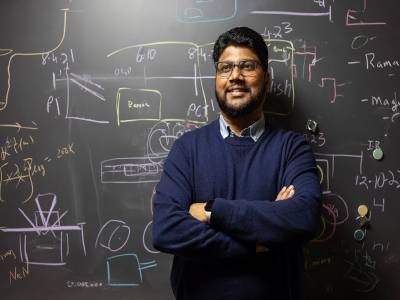
Ranga Dias at the University of Rochester, New York.Credit: Lauren Petracca/New York Times/Redux/eyevine
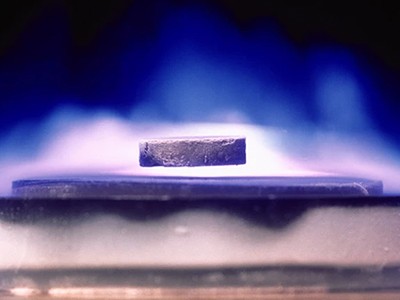
His former graduate students say they synthesized samples of carbon, sulfur and hydrogen (CSH), but did not take measurements of electrical resistance or magnetic susceptibility that showed superconductivity. When a superconducting material is cooled past a critical temperature, its electrical resistance drops sharply to zero, and the material displays a similarly sharp change in its magnetic properties, called the Meissner effect. Students say they did not observe these key signs of superconductivity in CSH.
Because of this, students say they were shocked when Dias sent them a manuscript on 21 July 2020 announcing the discovery of room-temperature superconductivity in CSH. E-mails seen by the news team show that the students had little time to review the manuscript: Dias sent out a draft at 5.13 p.m. and submitted the paper to Nature at 8.26 p.m. the same evening.
When the students asked Dias about the stunning new data, they say, he told them he had taken all the resistance and magnetic-susceptibility data before coming to Rochester. The news team obtained e-mails that show Dias had been making similar claims since 2014. In the e-mails, Dias says he has observed a sulfur-based superconductor with a temperature above 120 K — which is relatively high, but far from room temperature. The students recall that they felt odd about Dias’s explanation but did not suspect misconduct at the time. As relatively inexperienced graduate students, they say, they trusted their adviser.
During peer review, however, Dias’s claims about CSH met more resistance. Nature’s news team obtained the reports of all three referees who reviewed the manuscript. Two of the referees were concerned over a lack of information about the chemical structure of CSH. After three rounds of review, only one referee supported publication.
The news team showed five superconductivity specialists these reports. They shared some of the referees’ concerns but say it was not unreasonable for the Nature editors to have accepted the paper, given the strongly positive report from one referee and what was known at the time.
The paper was published on 14 October 2020 to fanfare. Dias and a co-author, Ashkan Salamat, a physicist at the University of Nevada, Las Vegas (UNLV), also announced their new venture: Unearthly Materials, a Rochester-based company established to develop superconductors that operate at ambient temperatures and pressures.
At the time, students say, they trusted Dias’s explanations of where the resistance and magnetic-susceptibility data came from. Now, however, they no longer believe the result, or Dias’s explanation for the data. “I don’t think any of the other data was collected,” one student says.
Matters arise
Soon after the CSH paper was published, Jorge Hirsch, a condensed-matter theorist at the University of California, San Diego, began pressing Dias to release the raw magnetic-susceptibility data, which were not included in the paper. More than a year later, Dias and Salamat finally made the raw data public.
In January 2022, Hirsch and Dirk van der Marel, a retired professor at the University of Geneva in Switzerland, posted an analysis of the raw data on the preprint server arXiv4. They reported that the data points were separated by suspiciously regular intervals — each exactly a multiple of 0.16555 nanovolts. Hirsch and van der Marel stated that this feature was evidence of data manipulation.
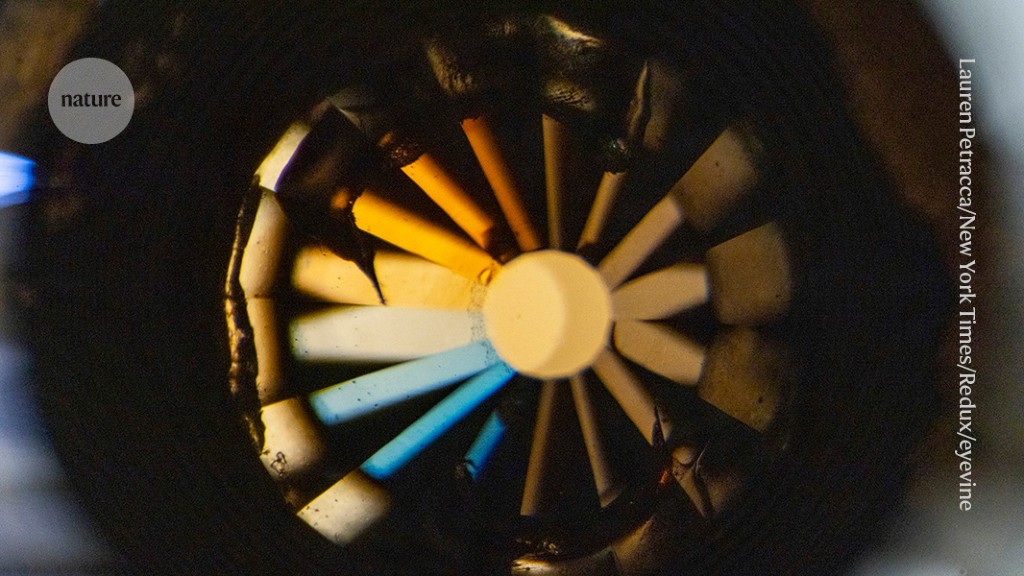
Dias’s team used laser spectroscopy to measure the pressure of samples in diamond anvil cells.Credit: Lauren Petracca/New York Times/Redux/eyevine
Dias and Salamat responded in an arXiv preprint, arguing that the voltage intervals were simply a result of a background subtraction5 (the preprint was subsequently withdrawn by arXiv administrators). In high-pressure experiments, the signal of a sample’s superconductivity — a drop in voltage — can be drowned out by background noise. Researchers sometimes subtract this background, but the CSH paper did not mention the technique.
Questions about the data prompted Nature’s journal team to look further. In response to the concerns from Hirsch and van der Marel, editors at Nature asked four new referees to participate in a post-publication review of the CSH paper, which, like most peer review, was confidential.
Now, Nature’s news team has obtained the reports, which show that two of the anonymous referees found no evidence of misconduct. But two other reviewers, whom the news team can identify as physicists Brad Ramshaw at Cornell University in Ithaca, New York, and James Hamlin at the University of Florida in Gainesville, found serious problems with the paper.
In particular, Hamlin found evidence that led him to conclude the raw data had been altered. Nature applied an editor’s note to the CSH paper on 15 February 2022, alerting readers to concerns about the data.
On 4 March 2022, Dias and Salamat sent a rebuttal to the referees, denying data manipulation. But the rebuttal, seen by the news team, does not provide an explanation for the issues that Hamlin and Ramshaw found in the raw magnetic-susceptibility data. “I don’t know of any reasonable way this could come about,” Ramshaw wrote in a 13 March e-mail to Nature’s manuscript team in response to the rebuttal. “The simplest conclusion would be that these data sets are all generated by hand and not actually measured.”
On 27 March 2022, Hamlin sent Nature’s journal team his response to the rebuttal, which proposed an explanation for the odd data: rather than deriving the published data from raw data, Dias had added noise to the published data to generate a set of ‘raw’ data.
To assess the evidence for data fabrication, Nature’s news team last month asked two superconductivity specialists to review the post-publication reports. They said that Hamlin’s analysis gives credence to claims of misconduct.
In July 2022, using a different analysis, van der Marel and Hirsch independently came to the same conclusion and posted their findings on arXiv as an update to their original preprint. In it, they state that the raw data must have been constructed from the published data6.
Why superconductor research is in a ‘golden age’ — despite controversy
In light of these concerns, Nature started the process of retracting the CSH paper. On 11 August, Nature editors sent an e-mail to all the co-authors asking them whether they agreed to the retraction. Students who spoke to the news team say that they were surprised by this, because Dias had kept them out of the loop about the post-publication review process. They remained unaware of any of the referees’ findings, including that there was evidence for data fabrication.
Nature retracted the CSH paper on 26 September 2022, with a notice that states “issues undermine confidence in the published magnetic susceptibility data as a whole, and we are accordingly retracting the paper”. Karl Ziemelis, Nature’s chief applied and physical sciences editor, says the journal’s investigation ceased as soon as the editors lost confidence in the paper, which “did leave other technical concerns unresolved”.
The retraction does not state what Hamlin and Ramshaw found in the post-publication review process instigated by Nature: that the raw data were probably fabricated. Felicitas Heβelmann, a specialist in retractions at the Humboldt University of Berlin, says misconduct is difficult to prove, so journals often avoid laying blame on authors in retractions. “A lot of retractions use very vague language,” she says.
Publicly, Dias continued to insist that CSH was legitimate and that the retraction was simply down to an obscure technical disagreement.
As Nature journal editors were investigating the CSH paper, the University of Rochester conducted two investigations into Dias’s work; a separate one followed the retraction. One of the university’s inquiries was in response to an anonymous report, which included some of the evidence indicating possible data fabrication that surfaced during Nature’s post-publication review.
The university told Nature’s news team that the three investigations regarding the CSH study did not find evidence of misconduct.
A spokesperson for Nature says that the journal took the university’s conclusions into account during its deliberations, but still decided to retract the paper.
The lack of industry-wide standards for investigating misconduct leaves it unclear whether the responsibility to investigate lands more on journals or on institutions. Ziemelis says: “Allegations of possible misconduct are outside the remit of peer review and more appropriately investigated by the host institution.”
Heβelmann says the responsibility to investigate can “vary from case to case”, but that there is a trend of more journals investigating misconduct, regardless of institutional action.
Funding agencies can also investigate alleged misconduct. In this case, Dias has received funding from both the US National Science Foundation (NSF) and the Department of Energy (DoE). The DoE did not respond to questions from Nature’s news team about Dias’s grant. The NSF declined to say whether it is investigating Dias, but it noted that awards can be terminated and suspended in response to an investigation.
The students who spoke to Nature’s news team say that none of them were interviewed in the three investigations of the CSH work by the university, which they were not aware of at the time. “We were hoping someone would come talk to us,” one student says. “It never happened.”
A new claim
By the time the CSH paper came under scrutiny by Nature journal editors in early 2022, Dias’s graduate students were starting to grow concerned. In summer 2021, Dias had tasked them with investigating a compound of lutetium and hydrogen (LuH), which he thought might be a high-temperature superconductor.
They began testing commercially purchased samples of LuH and, before long, a student measured the resistance dropping to zero at a temperature of around 300 K (27 °C). Dias concluded the material was a room-temperature superconductor, even though there was extremely little evidence, several students told Nature. “Ranga was convinced,” one student says.
Physicist James Hamlin raised concerns about data reported by the Rochester group.Credit: Zach Stovall for Nature
But the measurements were plagued by systematic errors, which students say they shared with Dias. “I was very, very concerned that one of the probes touching the sample was broken,” one student says. “We could be measuring something that looks like a superconducting drop, but be fooling ourselves.” Although students did see resistance drops in a few other samples, there was no consistency across samples, or even for repeated measurements of a single sample, they told Nature’s news team.
Students were also worried about the accuracy of other measurements. During elemental analysis of a sample, they detected trace amounts of nitrogen. Dias concluded that the samples included the element — and the resulting paper refers to nitrogen-doped lutetium hydride. But further analysis, performed after the paper was submitted, indicated that nitrogen was not incorporated into the LuH. “Ranga ignored what I was saying,” one student says.
Because they were not consulted on the CSH paper, the students say they wanted to make sure they were included in the process of writing the LuH paper. According to the students, Dias initially agreed to involve them. “Then, one day, he sends us an e-mail and says, ‘Here’s the paper. I’m gonna submit it,’” one student says.
E-mails seen by Nature’s news team corroborate the timeline. Dias sent out the first draft of the LuH paper in an e-mail at 2.09 a.m. on 25 April 2022. “Please send me your comments by 10.30 AM,” Dias wrote. “I am submitting it today.” The manuscript they received did not contain any figures, making it difficult to assess. The students convinced Dias to hold off on submitting until the next day, when they could discuss it in person.
One student was upset enough by the meeting that they wrote a memorandum of the events four days afterwards. The memo gives details of how students raised concerns and Dias dismissed them. Students worried that the draft was misleading, because it included a description of how to synthesize LuH; in reality, all the measurements were taken on commercially bought samples of LuH. “Ranga responded by pointing out that it was never explicitly mentioned that we synthesized the sample so technically he was not lying,” the student wrote.
The students say they also raised concerns about the pressure data reported in the draft. “None of those pressure points correspond to anything that we actually measured,” one student says. According to the memo, Dias dismissed their concerns by saying: “Pressure is a joke.”
Students say that Dias gave them an ultimatum: remove their names, or let him send the draft. Despite their worries, the students say they had no choice but to acquiesce. “I just remember being very intimidated,” one student says. The student says they regret not speaking up more to Dias. “But it’s scary at the time. What if I do and he makes the rest of my life miserable?”
Dias made some changes that the students requested, but ignored others; the submitted manuscript contained a description of a synthesis procedure that had not been used. He sent the LuH manuscript to Nature that evening.
Paper problems
After Nature published the LuH paper in March 2023, many scientists were critical of the journal’s decision, given the rumours of misconduct surrounding the retracted CSH paper. They wanted to know on what basis Nature had decided to accept it. (In the case of both papers, neither the peer-review reports nor the referees’ identities were revealed.) Nature’s news team obtained those reviews and can, for the first time, reveal what happened during the review process for the LuH paper. Nature editors received the manuscript in April 2022 (about a month after Nature received the CSH post-publication review reports) and sent it out to four referees.
Physicist Brad Ramshaw, together with James Hamlin, investigated data questions surrounding Dias’s superconductivity research.Credit: Kim Modic
All four referees agreed that the findings, if true, were highly significant. But they emphasized caution in accepting the manuscript, because of the extraordinary nature of the claims. Referee 4 wrote that the journal should be careful with such extraordinary claims to avoid another “Schön affair”, referring to the extensive data fabrication by German physicist Jan Hendrik Schön, which has become a cautionary tale in physics and led to dozens of papers being retracted, seven of them in Nature. Referees 2 and 3 also expressed concern about the results because of the CSH paper, which at the time bore an editor’s note of concern but had not yet been retracted. Referees raised a plethora of issues, from a lack of details about the synthesis procedure to unexplainable features in the data.
Although Dias and Salamat managed to assuage some of those concerns, referees said the authors’ responses were “not satisfactory” and the manuscript went through five stages of review. In the end, only one referee said there was solid proof of superconductivity, and another gave qualified support for publication. The other two referees did not voice support for publication, and one of them remained unsatisfied with the authors’ responses and wanted more measurements taken.
The news team asked five superconductivity specialists to review key information available to Nature journal editors when they were considering the LuH manuscript: the referee reports for the LuH paper and the reports indicating data fabrication in the CSH paper. All five said the documents raised serious questions about the validity of the LuH results and the integrity of the data.
“The second paper — from my understanding of timelines — was being considered after the Nature editors and a lot of the condensed-matter community were aware there were profound problems” with the CSH paper, Canfield says. The specialists also pointed to negative comments from some of the LuH referees, such as the observation by Referee 1 that “raw data does not look like a feature corresponding to superconducting transition”.
When asked why Nature considered Dias’s LuH paper after being warned of potential misconduct on the previous paper, Magdalena Skipper, Nature’s editor-in-chief, said: “Our editorial policy considers every submission in its own right.” The rationale, Skipper explains, is that decisions should be made on the basis of the scientific quality, not who the authors are.
Many other journals have similar policies, and guidelines from the Committee on Publication Ethics state that peer reviewers should “not allow their reviews to be influenced by the origins of a manuscript”. But not all journals say they treat submissions independently. Van der Marel, who is the editor-in-chief of Physica C, says that he would consider past allegations of misconduct if he were assessing a new paper by the same author. “If you have good reasons to doubt the credibility of authors, you are not obliged to publish,” he says.
Under review
Soon after the LuH paper was published in March 2023, it came under further scrutiny. Several teams of researchers independently attempted to replicate the results. One group, using samples from Dias’s lab, reported electrical resistance measurements that it said indicated high-temperature superconductivity7. But numerous other replication attempts found no evidence of room-temperature superconductivity in the compound.
As previously reported in Science, Hamlin and Ramshaw sent Nature a formal letter of concern in May. Dias and Salamat responded to the issues later that month, but the students say they were not included in the response, and learnt about the concerns much later.
A recording of a 6 July 2023 meeting between Dias and his students, obtained by Nature’s news team, shows that Dias continued to manipulate the students. Throughout the hour-long meeting, Dias said he wanted to involve the students in deciding how the team would respond to concerns about the LuH paper. But he didn’t tell them that he and Salamat had already responded to the technical issues raised by Hamlin and Ramshaw.
One of Dias’s students adjusts a diamond anvil cell, which the team used in its experiments.Credit: Lauren Petracca/New York Times/Redux/eyevine
The recording also reveals how Dias tried to manipulate the Nature review, because he believed the process would turn against him once more. “We can pretend we’re going to cooperate and buy time for a month or so, and then gather some senior scientists from the community,” Dias says in the recording. Dias explains how he wants to use the credibility of senior scientists — or the University of Rochester — to pressure Nature and avert a retraction.
But Dias’s plans were thwarted. Later that month, the students received an e-mail from Nature’s editors that showed Dias and Salamat had, in fact, already responded to the concerns. The students realized that Dias had sent them a document with the dates removed, apparently to perpetuate the falsehood.
On 25 July 2023, the journal initiated a post-publication review and asked four new referees to assess the dispute. All of the referees agreed that there were serious problems with the data, and that Dias and Salamat did not “convincingly address” the issues raised by Hamlin and Ramshaw. A spokesperson for Nature says the journal communicated with University of Rochester representatives during the post-publication review.
Separately, Dias’s students were beginning to mobilize, re-examining the LuH data they were able to access. The students hadn’t done this before, because, they say, Dias produced almost all of the figures and plots in both of the Nature papers.
Several other researchers told the news team that the principal investigator does not typically produce all the plots. “That’s weird,” Canfield says.
The students say they were especially concerned about the magnetic susceptibility measurements — again, the raw data seemed to have been altered. Looking at the real raw data, one student says, the material does not look like a superconductor. But when Dias subtracted the background, the student says, that “basically flips that curve upside down and makes it look superconducting instead”.
They continued finding problems. For the resistance measurements, too, the alleged raw data didn’t match data actually taken in the lab. Instead, it had been tweaked to look neater. “Science can be really messy … some of these plots just look too good,” a student says.
Back to school
By this point, some students were deeply concerned about their careers. “My thesis is going to be full of fabricated data. How am I supposed to graduate in this lab?” one student says. “At that point, I was thinking of either taking a leave of absence, or of dropping out.”
During the summer, Dias began facing other issues. One of his papers in Physical Review Letters8 — unrelated to room-temperature superconductivity — was being retracted after the journal found convincing evidence of data fabrication. Around the same time, Dias was stripped of his students and the University of Rochester launched a fourth investigation — this time, the students say they were interviewed.
‘A very disturbing picture’: another retraction imminent for controversial physicist
In late August, the students decided to request a retraction of the LuH paper and compiled their concerns about the data and Dias’s behaviour. Before they sent a letter to Nature, Dias apparently caught wind of it and sent the students a cease-and-desist notice, which the news team has seen. But, after consulting a university official who gave them the green light, the students sent their letter to Nature editors, precipitating the retraction process. Eight out of 11 authors, including Salamat, signed the letter and the LuH paper was retracted two months later, on 7 November.
According to multiple sources familiar with the company, Salamat left Unearthly Materials in 2023 and is under investigation at UNLV. He did not respond to multiple requests for comment, and a spokesperson for UNLV declined to comment publicly on personnel issues.
The scandal has also had an impact on Nature’s journal team. “This has been a deeply frustrating situation, and we understand the strength of feelings this has stirred within the community,” Ziemelis says. “We are looking at this case carefully to see what lessons can be learnt for the future.”
With the university’s investigation now complete, Dias remains at Rochester while a separate process for addressing “personnel actions” proceeds. He has no students, is not teaching any classes and has lost access to his lab, according to multiple sources. Dias’s prestigious NSF grant — which has US$333,283 left to pay out until 2026 — could also be in jeopardy if the NSF finds reason to terminate it.
Dias has not published any more papers about LuH, but on X (formerly Twitter), he occasionally posts updates about the material. In a 19 January tweet, Dias shared an image of data, which he said showed the Meissner effect — “definitive proof of superconductivity!”