Tag: Quantum Chemistry

  • Zero-Field NMR Measures Quadrupolar Nuclei for the First Time

    Zero-Field NMR Measures Quadrupolar Nuclei for the First Time

    [ad_1]

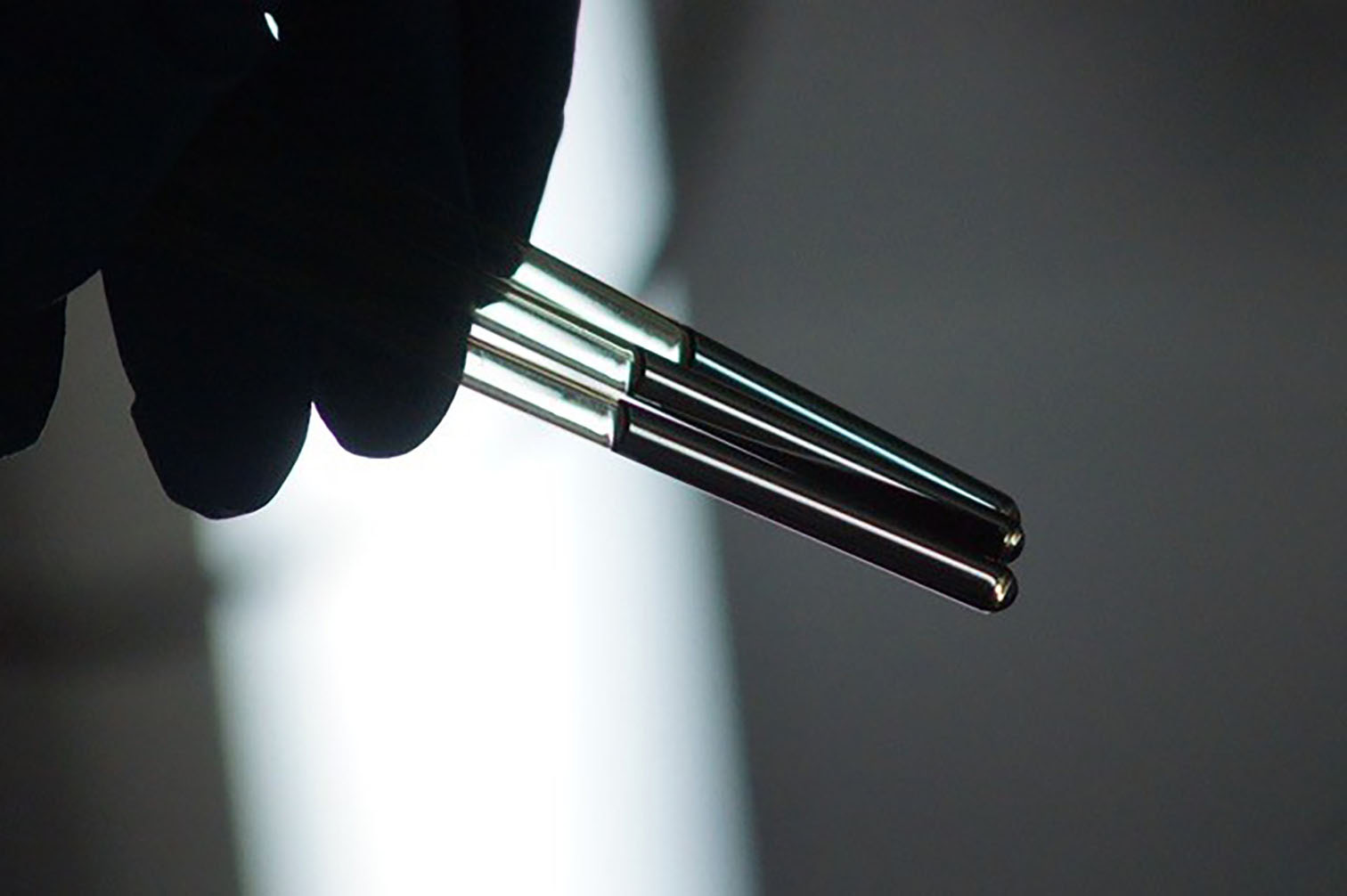
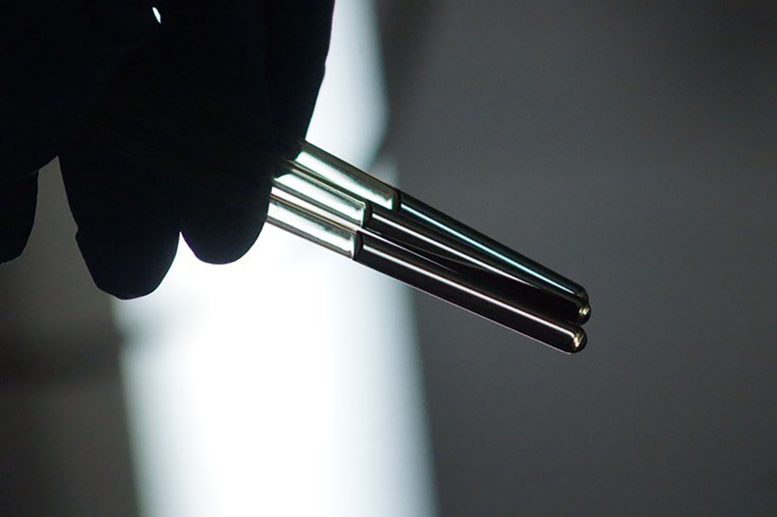
    NMR Tubes Containing Liquids

    Researchers utilize nuclear magnetic resonance (NMR) spectroscopy to determine molecular structures and nuclear interactions, employing both traditional high-field methods and innovative zero-field techniques, which simplify experimental setups and expand the types of nuclei that can be analyzed. Recent advances have enabled the precise measurement of quadrupolar nuclei using zero-field NMR, promising significant improvements in applications ranging from medical diagnostics to chemical analysis. Credit: Oleg Tretiak

    Researchers at Mainz University and the University of California, Berkeley, have made significant advancements in zero-field nuclear magnetic resonance spectroscopy, setting new standards for benchmarking quantum chemistry calculations.

    What is the structure of a specific molecule? And how do molecules interact with one another? Researchers often turn to nuclear magnetic resonance (NMR) spectroscopy to answer these questions. NMR utilizes a powerful external magnetic field to align the spins of atomic nuclei. These aligned spins are then induced to rotate by an oscillating weak magnetic field produced by coils.

    A change in voltage as a result can be converted to measurable frequencies. Based on this, researchers can identify the molecular structures while also revealing certain information about the nuclear spin interactions. However, this type of investigation requires very strong magnetic fields generated by massive devices, which are themselves difficult to install and to maintain. At the same time, even with such elaborate equipment, it is still difficult to analyze quadrupolar nuclei, which are the most abundant type of nuclei in nature.

    In the case of zero-field nuclear magnetic resonance (zero-field NMR), there is no need for a powerful external magnetic field. Here, the intramolecular couplings between the spins of magnetically active nuclei are the predominant quantum mechanical interaction.

    The spectral lines are thus narrower and sharper, and samples can even be investigated in containers made of metal or other materials. Zero-field NMR spectroscopy is now used to monitor reactions in metal containers or for the analysis of plants; it also has promising applications in medicine. However, to be able to measure the small interactions between the spins, it is necessary to provide shielding against the Earth’s magnetic field, which is a complex undertaking in itself.

    Simple yet more precise experimental setup

    Researchers at Johannes Gutenberg University Mainz (JGU) and the Helmholtz Institute Mainz (HIM), collaborating with colleagues at the University of California, Berkeley, have recently managed to measure quadrupolar nuclei using zero-field NMR. “We analyzed an ammonium molecule, NH4+, a cation that plays an important role in various applications,” said Dr. Danila Barskiy, head of the JGU team.

    “We hope that in future we will be able to detect these molecules even in complex environments, such as reactors and metal containers.”

    The researchers were able to devise a system which simply involves mixing ammonium salts with water and adding various amounts of deuterium. The individual spectra were then recorded and analyzed. For this analysis, the scientists used a commercially available magnetometer – not bigger than a fingernail – in a home-built compact analytical system with magnetic shielding.

    Precision measurements to test existing theories

    The researchers also examined another interesting question: To what extent does the number of deuterium atoms in an ammonium molecule influence the spectrum and the relaxation characteristics of spins?

    As Román Picazo-Frutos, a student at the JGU Institute of Physics and lead author of the corresponding publication, pointed out: “Using our method, it is possible to determine resonance frequencies with a very high level of precision. Because the results produced by this technique can be compared with other experimental data, it can be used for benchmarking quantum chemistry calculations. We hope that our system will become standard practice in the near future.”

    Although predictions based on current theories correlate closely with the results obtained by the team, there are small deviations. “The work undertaken by the team has considerably extended the range of molecules that can be analyzed by means of zero- to ultralow-field NMR techniques. It may even contribute to the development of innovative applications that could be used to investigate the nuclei of atoms with small atomic numbers by means of their radioactive gamma decay,” concluded Professor Dmitry Budker of JGU.

    Reference: “Zero-field J-spectroscopy of quadrupolar nuclei” by Román Picazo-Frutos, Kirill F. Sheberstov, John W. Blanchard, Erik Van Dyke, Moritz Reh, Tobias Sjoelander, Alexander Pines, Dmitry Budker and Danila A. Barskiy, 27 May 2024, Nature Communications.
    DOI: 10.1038/s41467-024-48390-2


    [ad_2]

    Source link

  • Scientists Unveil Groundbreaking Single-Molecule Detection Technique

    Scientists Unveil Groundbreaking Single-Molecule Detection Technique

    [ad_1]

    Microcavity With Two Concave Mirrors

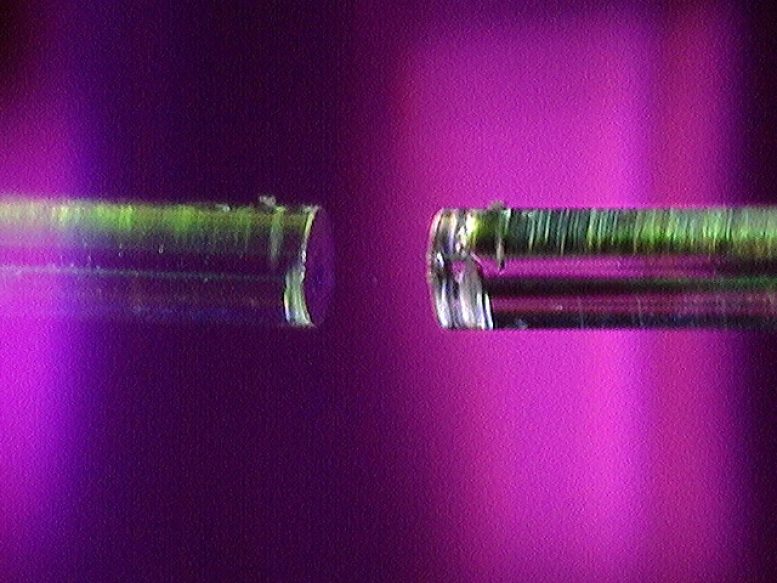
    The heart of this study is a fiber microcavity. Here, one can see a small concave depression in the surface of an optical fiber. The researchers used a microcavity with two concave mirrors, but this image of a single concave microcavity makes it easier to see the fiber mirror setup. Credit: Photo by Carlos Saavedra / UW–Madison

    University of Wisconsin–Madison scientists have developed a new, highly sensitive method to detect and analyze single molecules without using fluorescent labels, potentially transforming research in drug discovery and materials science.

    Researchers at the University of Wisconsin–Madison have developed the most sensitive method yet for detecting and profiling a single molecule — unlocking a new tool that holds potential for better understanding how the building blocks of matter interact with each other. The new method could have implications for pursuits as varied as drug discovery and the development of advanced materials.

    The technical achievement, detailed in a paper published in the journal Nature, marks a significant advance in the burgeoning field of observing individual molecules without the aid of fluorescent labels. While these labels are useful in many applications, they alter molecules in ways that can obscure how they naturally interact with one another. The new label-free method makes the molecules so easy to detect, it is almost as if they had labels.

    “We’re very excited about this,” says Randall Goldsmith, a UW–Madison professor of chemistry who led the work. “Capturing behaviors at the level of single molecules is an amazingly informative way of understanding complex systems, and if you can build new tools that grant better access to that perspective, those tools can be really powerful.”

    While researchers can glean useful information from studying materials and biological systems at larger scales, Goldsmith says that observing the behavior of and interactions between individual molecules is important for contextualizing that information, sometimes leading to new insights.

    “When you see how nations interact with each other, it all comes down to interactions between individuals,” says Goldsmith. “You wouldn’t even think of understanding how groups of people interact with each other while ignoring how individuals interact with each other.”

    The Importance of Single Molecule Observation

    Goldsmith has been chasing the allure of single molecules since he was a postdoctoral researcher at Stanford University more than a decade ago. There, he worked under the chemist W.E. Moerner, who received the Nobel Prize in chemistry in 2014 for developing the first method of using light to observe a single molecule.

    Since Moerner’s initial success, researchers around the world have devised and refined new ways to observe these tiny bits of matter.

    The method that the UW–Madison team developed relies on a device called an optical microresonator, or microcavity. As its name suggests, the microcavity is an extremely tiny space where light can be trapped in both space and time — at least for a few nanoseconds — where it can interact with a molecule. Microcavities are more commonly found in physics or electrical engineering laboratories, not chemistry labs. Goldsmith’s history of combining concepts from disparate scientific fields was recognized in 2022 with a Polymath award from Schmidt Futures.

    Microcavities are built from incredibly small mirrors fashioned right on top of a fiber optic cable. These fiber optic mirrors bounce the light back and forth many times very quickly within the microcavity.

    Potential Applications and Future Developments

    The researchers let molecules tumble into the cavity, let the light pass through it, and can not only detect the molecule’s presence, but also learn information about it, such as how fast it moves through water. This information can be used to determine the molecule’s shape, or conformation.

    “Conformation at the molecular level is incredibly important, particularly for thinking about how biomolecules interact with each other,” says Goldsmith. “Let’s say you have a protein and you have some small-molecule drug. You want to see if the protein’s druggable, which is to say, ‘Does the drug have some kind of major interaction with the protein?’ One way you might be able to see that is if it introduces a conformational change.”

    There are other ways to do that, but they require large amounts of sample material and time-consuming analyses. With the newly developed microcavity technique, Goldsmith says, “We can potentially build a black-box tool to give us the answer in tens of seconds.”

    The team, which included Lisa-Maria Needham, a former postdoctoral researcher who is now a laboratory director at the University of Cambridge, has filed a patent for the device. Goldsmith says the device and methods will now be refined over the next couple of years. In the meantime, he says he and his collaborators are already thinking about the many ways it could be useful.

    “We’re excited about many other applications in spectroscopy,” he says. “We hope we can use this as a stepping stone to other ways to learn about molecules.”

    Reference: “Label-free detection and profiling of individual solution-phase molecules” by Lisa-Maria Needham, Carlos Saavedra, Julia K. Rasch, Daniel Sole-Barber, Beau S. Schweitzer, Alex J. Fairhall, Cecilia H. Vollbrecht, Sushu Wan, Yulia Podorova, Anders J. Bergsten, Brandon Mehlenbacher, Zhao Zhang, Lukas Tenbrake, Jovanna Saimi, Lucy C. Kneely, Jackson S. Kirkwood, Hannes Pfeifer, Edwin R. Chapman and Randall H. Goldsmith, 8 May 2024, Nature.
    DOI: 10.1038/s41586-024-07370-8

    This research was primarily funded by the National Institutes of Health (R01GM136981), with resonator construction supported by the Q-NEXT Quantum Center, a U.S. Department of Energy, Office of Science, National Quantum Information Science Research Center, under award number DE-FOA-0002253.


    [ad_2]

    Source link

  • Harvard Scientists Discover Quantum Order in Chemical Chaos

    Harvard Scientists Discover Quantum Order in Chemical Chaos

    [ad_1]

    Chemical Reaction Close Up Art Illustration

    Harvard scientists proved quantum coherence can persist in chemical reactions at ultracold temperatures, revealing new insights into quantum dynamics and potential applications in quantum information science. Credit: SciTechDaily.com

    Harvard researchers have shown that quantum coherence can survive chemical reactions at ultracold temperatures. Using advanced techniques, they demonstrated this with 40K87Rb bialkali molecules, suggesting potential applications in quantum information science and broader implications for understanding chemical reactions.

    Zoom in on a chemical reaction to the quantum level and you’ll notice that particles behave like waves that can ripple and collide. Scientists have long sought to understand quantum coherence, the ability of particles to maintain phase relationships and exist in multiple states simultaneously; this is akin to all parts of a wave being synchronized. It has been an open question whether quantum coherence can persist through a chemical reaction where bonds dynamically break and form.

    Now, for the first time, a team of Harvard scientists has demonstrated the survival of quantum coherence in a chemical reaction involving ultracold molecules. These findings highlight the potential of harnessing chemical reactions for future applications in quantum information science.

    Experimental Breakthrough

    “I am extremely proud of our work investigating a very fundamental property of a chemical reaction where we really didn’t know what the result would be,” said senior co-author Kang-Kuen Ni, Theodore William Richards Professor of Chemistry and Professor of Physics. “It was really gratifying to do an experiment to find out what Mother Nature tells us.”

    In the paper, published in Science, the researchers detailed how they studied a specific atom-exchange chemical reaction in an ultra-cold environment involving 40K87Rb bialkali molecules, where two potassium-rubidium (KRb) molecules react to form potassium (K2) and rubidium (Rb2) products. The team prepared the initial nuclear spins in KRb molecules in an entangled state by manipulating magnetic fields and then examined the outcome with specialized tools. In the ultra-cold environment, the Ni Lab was able to track the nuclear spin degrees of freedom and to observe the intricate quantum dynamics underlying the reaction process and outcome.

    Research Team and Techniques

    The work was undertaken by several members of Ni’s Lab, including Yi-Xiang Liu, Lingbang Zhu, Jeshurun Luke, J.J. Arfor Houwman, Mark C. Babin, and Ming-Guang Hu.

    Utilizing laser cooling and magnetic trapping, the team was able to cool their molecules to just a fraction of a degree above Absolute Zero. In this ultracold environment, of just 500 nanoKelvin, molecules slow down, enabling scientists to isolate, manipulate, and detect individual quantum states with remarkable precision. This control facilitates the observation of quantum effects such as superposition, entanglement, and coherence, which play fundamental roles in the behavior of molecules and chemical reactions.

    Findings and Implications

    By employing sophisticated techniques, including coincidence detection where the researchers can pick out the exact pairs of reaction products from individual reaction events, the researchers were able to map and describe the reaction products with precision. Previously, they observed the partitioning of energy between the rotational and translational motion of the product molecules to be chaotic [Nature 593, 379-384 (2021)]. Therefore, it is surprising to find quantum order in the form of coherence in the same underlying reaction dynamics, this time in the nuclear spin degree of freedom.

    The results revealed that quantum coherence was preserved within the nuclear spin degree of freedom throughout the reaction. The survival of coherence implied that the product molecules, K2 and Rb2, were in an entangled state, inheriting the entanglement from the reactants. Furthermore, by deliberately inducing decoherence in the reactants, the researchers demonstrated control over the reaction product distribution.

    Future Prospects

    Going forward, Ni hopes to rigorously prove that the product molecules were entangled, and she is optimistic that quantum coherence can persist in non-ultracold environments.

    “We believe the result is general and not necessarily limited to low temperatures and could happen in more warm and wet conditions,” Ni said. “That means there is a mechanism for chemical reactions that we just didn’t know about before.”

    First co-author and graduate student Lingbang Zhu sees the experiment as an opportunity to expand people’s understanding of chemical reactions in general.

    “We are probing phenomena that are possibly occurring in nature,” Zhu said. “We can try to broaden our concept to other chemical reactions. Although the electronic structure of KRb might be different, the idea of interference in reactions could be generalized to other chemical systems as well.”

    Reference: “Quantum interference in atom-exchange reactions” by Yi-Xiang Liu, Lingbang Zhu, Jeshurun Luke, J. J. Arfor Houwman, Mark C. Babin, Ming-Guang Hu and Kang-Kuen Ni, 16 May 2024, Science.
    DOI: 10.1126/science.adl6570


    [ad_2]

    Source link

  • New MIT Model Predicts Transition States With Unprecedented Speed

    New MIT Model Predicts Transition States With Unprecedented Speed

    [ad_1]

    Computational Model MIT Chemistry

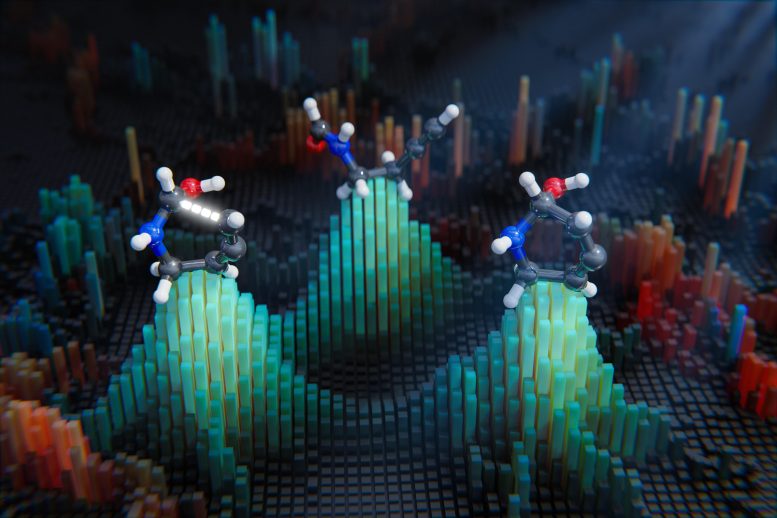
    MIT chemists have developed a computational model that can rapidly predict the structure of the transition state of a reaction (left structure), if it is given the structure of a reactant (middle) and product (right). Credit: David W. Kastner

    Utilizing generative artificial intelligence, chemists from MIT developed a model that can predict the structures formed when a chemical reaction reaches its point of no return

    During a chemical reaction, molecules gain energy until they reach what’s known as the transition state — a point of no return from which the reaction must proceed. This state is so fleeting that it’s nearly impossible to observe it experimentally.

    The structures of these transition states can be calculated using techniques based on quantum chemistry, but that process is extremely time-consuming. A team of MIT researchers has now developed an alternative approach, based on machine learning, that can calculate these structures much more quickly — within a few seconds.

    Their new model could be used to help chemists design new reactions and catalysts to generate useful products like fuels or drugs, or to model naturally occurring chemical reactions such as those that might have helped to drive the evolution of life on Earth.

    “Knowing that transition state structure is really important as a starting point for thinking about designing catalysts or understanding how natural systems enact certain transformations,” says Heather Kulik, an associate professor of chemistry and chemical engineering at MIT, and the senior author of the study.

    Chenru Duan PhD ’22 is the lead author of a paper describing the work, which appears today in Nature Computational Science. Cornell University graduate student Yuanqi Du and MIT graduate student Haojun Jia are also authors of the paper.

    Fleeting transitions

    For any given chemical reaction to occur, it must go through a transition state, which takes place when it reaches the energy threshold needed for the reaction to proceed. The probability of any chemical reaction occurring is partly determined by how likely it is that the transition state will form.

    “The transition state helps to determine the likelihood of a chemical transformation happening. If we have a lot of something that we don’t want, like carbon dioxide, and we’d like to convert it to a useful fuel like methanol, the transition state and how favorable that is determines how likely we are to get from the reactant to the product,” Kulik says.

    Chemists can calculate transition states using a quantum chemistry method known as density functional theory. However, this method requires a huge amount of computing power and can take many hours or even days to calculate just one transition state.

    Recently, some researchers have tried to use machine-learning models to discover transition state structures. However, models developed so far require considering two reactants as a single entity in which the reactants maintain the same orientation with respect to each other. Any other possible orientations must be modeled as separate reactions, which adds to the computation time.

    “If the reactant molecules are rotated, then in principle, before and after this rotation they can still undergo the same chemical reaction. But in the traditional machine-learning approach, the model will see these as two different reactions. That makes the machine-learning training much harder, as well as less accurate,” Duan says.

    The MIT team developed a new computational approach that allowed them to represent two reactants in any arbitrary orientation with respect to each other, using a type of model known as a diffusion model, which can learn which types of processes are most likely to generate a particular outcome. As training data for their model, the researchers used structures of reactants, products, and transition states that had been calculated using quantum computation methods, for 9,000 different chemical reactions.

    “Once the model learns the underlying distribution of how these three structures coexist, we can give it new reactants and products, and it will try to generate a transition state structure that pairs with those reactants and products,” Duan says.

    The researchers tested their model on about 1,000 reactions that it hadn’t seen before, asking it to generate 40 possible solutions for each transition state. They then used a “confidence model” to predict which states were the most likely to occur. These solutions were accurate to within 0.08 angstroms (one hundred-millionth of a centimeter) when compared to transition state structures generated using quantum techniques. The entire computational process takes just a few seconds for each reaction.

    “You can imagine that really scales to thinking about generating thousands of transition states in the time that it would normally take you to generate just a handful with the conventional method,” Kulik says.

    Modeling reactions

    Although the researchers trained their model primarily on reactions involving compounds with a relatively small number of atoms — up to 23 atoms for the entire system — they found that it could also make accurate predictions for reactions involving larger molecules.

    “Even if you look at bigger systems or systems catalyzed by enzymes, you’re getting pretty good coverage of the different types of ways that atoms are most likely to rearrange,” Kulik says.

    The researchers now plan to expand their model to incorporate other components such as catalysts, which could help them investigate how much a particular catalyst would speed up a reaction. This could be useful for developing new processes for generating pharmaceuticals, fuels, or other useful compounds, especially when the synthesis involves many chemical steps.

    “Traditionally all of these calculations are performed with quantum chemistry, and now we’re able to replace the quantum chemistry part with this fast generative model,” Duan says.

    Another potential application for this kind of model is exploring the interactions that might occur between gases found on other planets, or to model the simple reactions that may have occurred during the early evolution of life on Earth, the researchers say.

    Reference: “Accurate transition state generation with an object-aware equivariant elementary reaction diffusion model” by Chenru Duan, Yuanqi Du, Haojun Jia and Heather J. Kulik, 15 December 2023, Nature Computational Science.
    DOI: 10.1038/s43588-023-00563-7

    The research was funded by the U.S. Office of Naval Research and the National Science Foundation.


    [ad_2]

    Source link