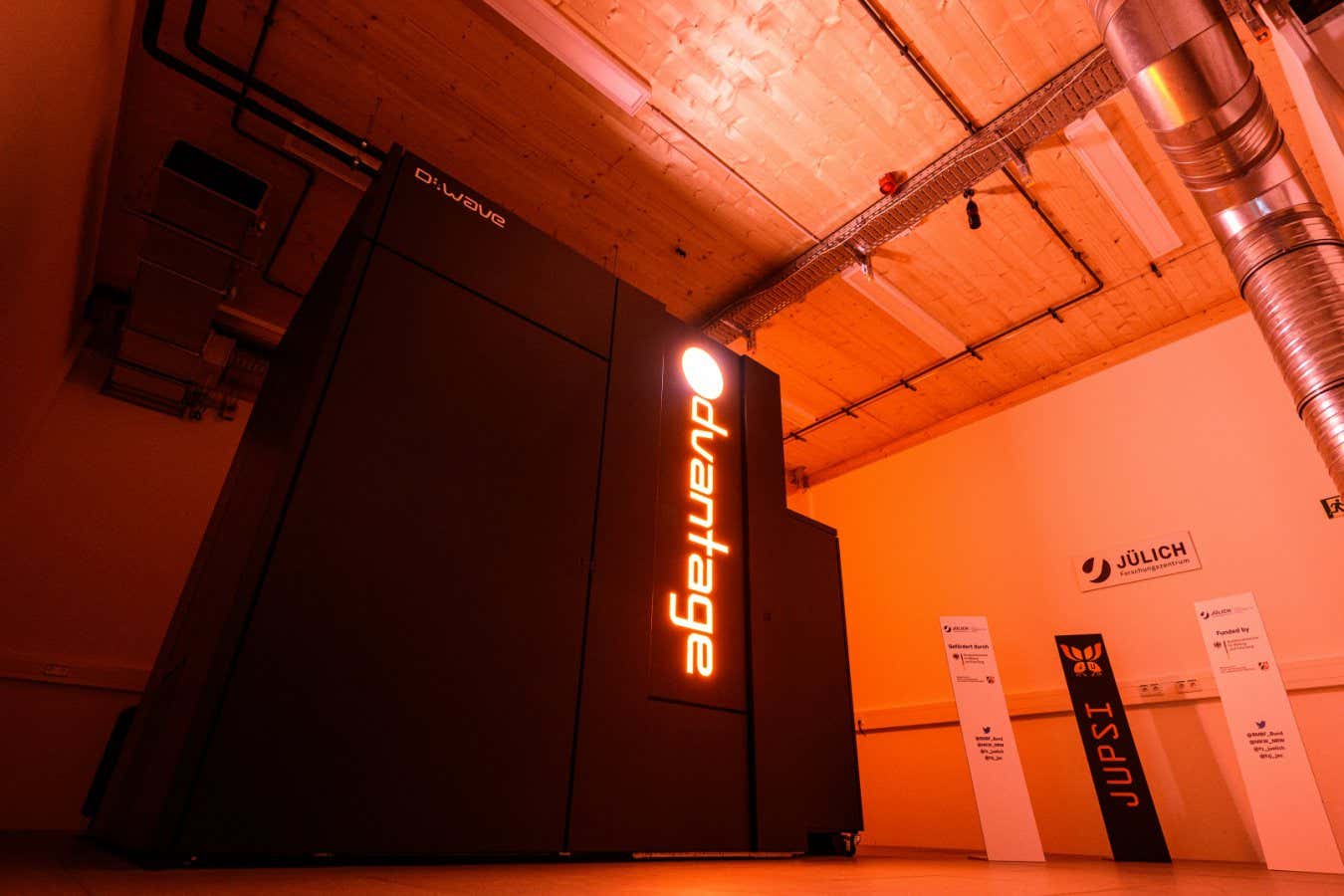
A D-Wave Advantage quantum computer in Julich, Germany
Lukas Schulze/Getty Images
Quantum computers can now solve problems with real-world applications faster than any ordinary computer, suggesting they could be commercially viable, say researchers at quantum computing firm D-Wave. However, outside observers are more cautious.
It had long been hoped that quantum computers will be able to perform some tasks that are impractical or impossible on even the best supercomputers. Google was the first to demonstrate this “quantum supremacy” in 2019, but only for a somewhat contrived benchmark test with no practical use. Earlier this month, Google …
Jonathan Legh-Smith, Executive Director of UKQuantum, considers the capabilities of quantum technology and how to establish the UK as a quantum superpower.
Providing a platform for its 50-strong network of members, UKQuantum supports the entire quantum ecosystem, spanning computing, sensing and communications. Members of the consortium range from early-stage startups to large end-users, with all benefiting from the national and global engagement that UKQuantum strives to offer.
The UK is ten years into its National Quantum Technology Programme, which has established the country as a pioneering force in the development of quantum technology. Entering the next decade of this strategy, attention must focus on maintaining this energy and preparing for the introduction of quantum into our daily lives.
To find out more, Maddie Hall, Editor of The Innovation Platform, spoke with Jonathan Legh-Smith to gain insights into the exciting potential for quantum in the UK.
Can you summarise UKQuantum, your role and the consortium’s objectives?
UKQuantum champions the UK’s quantum industry. Supporting over 50 members, the consortium is global, with our members including several international companies. UKQuantum is driven by the belief that quantum is ultimately a global market. End-users are global, meaning companies, products, and services must aim to fit within global supply chains. Equally, we strive to promote the UK’s national interests; therefore, membership requires a substantial commitment to the UK’s quantum ecosystem in some form – whether that be a UK office, collaboration, or academic contribution.
As Executive Director, I am responsible for overall strategy, engaging with the government, and any necessary outbound engagements associated with supporting members. UKQuantum’s mission is firstly to unite the UK quantum industry and give it a voice. The UK is well-regarded as having a tight, close-knit quantum technology ecosystem, incorporating industry, academia and government. We aim to ensure that the industry sector presents a unanimous and coherent stance to the government, enabling them to establish the appropriate policies and mechanisms to best support the industry.
UKQuantum is also dedicated to international engagement and is keen to work with the government to ensure it supports the UK system within the context of the global industry. Not only do we advocate for quantum, but we also advocate for the UK specifically, promoting the UK’s potential to be a global quantum technology leader, both regarding its development as well as its commercialisation.
Similarly, we promote the adoption of quantum within the UK. While it is significant to house world-leading companies, and we want UK companies to be successful, the UK benefits most when the economy as a whole is prospering. UKQuantum promotes widespread uptake of quantum technology and recognises the value of international collaboration in supplying the UK with a variety of technologies that will then boost the economy.
Why is quantum such a vital and exciting sector?
Words such as computing, sensing, and communications sound traditional, but harnessing quantum unlocks a new class of technologies in each sector. Computers perform their calculations in binary, and in a classical computer, it’s the on/off of voltage on a circuit that represents the binary digits of zero and one (shortened to ‘bit’ in computing). Quantum computers work differently. They exploit an atomic-level property called superposition, where a particle has a probability of being in one of two different states. This means each individual particle can be used to implement a two-dimensional vector (<the probability of being 1>, <the probability of being 0>) rather than a single binary digit. Called a qubit – a quantum binary digit – this representation of data could enable unprecedented computational power and efficiency.
The opportunities for quantum computing go far beyond computing. Quantum systems are so fragile that minor disturbances can upset them. While this is a drawback in the realm of quantum computing, it can be leveraged to enable new types of devices. For example, new sensing devices in healthcare can monitor brain activity or detect early signs of wound infection. The ability to detect cables and ducts, tunnels or faults underground would make a material difference to infrastructure companies, increasing efficiency by reducing the funding and workforce normally required. Detecting small gas leakages can help manage climate emissions. More accurate clocks and timing systems for navigation and positioning systems could offer an alternative to satellite-based GPS systems.
In cyber-security, new forms of cryptography (post-quantum cryptography) and new mechanisms for distributing cryptographic keys (quantum key distribution) are essential to protect us as and when full-scale, fully fault-tolerant quantum computers come to fruition.
How does UKQuantum foster an environment of innovation in the field of quantum technologies?
Our close relationships with regulatory and academic bodies are a significant factor in fostering innovation in the field. As a community, we are committed to a national quantum programme, with our role being to convene industry around the key questions asked by the government or provide them with consolidated evidence to confidently establish plans instead of relying on a vocal few. Our work aims to assume that the plans put in place are right in the long term.
UKQuantum also provides a platform for members to have input on industry regulation. For example, an independent expert committee, the Regulatory Horizons Council, was established to identify the possible consequences of technological innovation. The Department of Science, Innovation, and Technology (DSIT) has commissioned the RHC to provide a report on quantum. UKQuantum members were able to review and provide input on the report, which has just been published.
Investment is another critical branch of continued quantum innovation. Many in the industry are startups or startups looking to scale up. Quantum is a long-term, deep-tech area requiring significant extended investment. There is discussion around whether the UK has a suitable investment landscape to support long-term innovation and scale-up of UK companies. It is a discussion UKQuantum members are actively engaged in, and we have contributed directly to DSIT on this subject and offered their experiences and opinions.
Working Groups
UKQuantum’s Working Groups are geared towards advancing the policy and strategy of the quantum industry. These are dedicated to: Policy and national strategy, international collaborations, standards, skills, and supply chain analysis and roadmapping. Supply chain analysis aims to understand how the quantum supply chain intersects with others and how different end users might incorporate technology.
Standards are highly important to end-user industries and are a factor that quantum businesses must begin to consider. Although it is arguably early for businesses to consider standards, UKQuantum intends to create an environment immediately ready for use when they want to engage.
The UKQuantum Standards pilot is one way in which this environment will be created, convened by the National Physical Laboratory (NPL) with BSI and in partnership with UKQuantum. This intends to provide a forum for quantum businesses and a channel to communicate their views and contribute to developing standardisation and best practice policies.
Can you discuss any upcoming projects or initiatives at UKQuantum that you’re particularly excited about?
Responsible innovation in quantum is essential in ensuring trust in the technologies and support for the industry. UKQuantum is collaborating with the National Quantum Computing Centre (NQCC) and TechUK to establish guiding principles for responsible innovation in quantum, drawing upon the experiences of its members and recent lessons from Artificial Intelligence (AI).
Over the coming months, UKQuantum’s objective is to provide guidelines to quantum companies on how they can adopt and implement the principles of responsible innovation. There is also a focus on the practicalities specifically for small businesses, lowering the barriers for those keen to engage but lacking the knowledge or resources.
The new UK Quantum Missions are a critical component of the UK’s National Quantum Strategy. The industry was involved in shaping the five missions and is continuing to engage in the planning phase.
Can quantum innovation be used to help solve global challenges such as climate change or healthcare issues?
Quantum technology will be a vital weapon in our armoury when it comes to tackling these global problems, but it will be part of a broader solution.
The potential of quantum technology in the fight against climate change is huge but still to be realised. Quantum sensing offers unprecedented precision in detecting subtle changes in environmental parameters such as temperature, humidity, and pollutant levels. Additionally, it allows for the real-time monitoring of ecosystems and emissions, enabling timely intervention in the case of leakages. By harnessing the flipside of the properties of quantum systems, we unlock the power to identify underground spaces into which we can pump carbon dioxide as part of carbon capture and sequestration.
Quantum computers could also excel at simulations, enabling the understanding of complex molecular interactions and then employing this knowledge in the development of emissions-reducing technologies, for example, methane mitigation.
The addition of quantum technology to drug design and discovery could dramatically enhance efficiency. Traditional drug discovery involves screening potential molecules and predicting their biological activity. This is an incredibly time-consuming task with vast amounts of data since much of the work is in tackling a variety of possibilities that might work and sifting through to narrow them down.
Quantum computing algorithms can transform drug design into an optimisation problem, simulating molecular structures, properties, and reactivity more effectively than classical computers and handling interactions on an atomic level. Quantum algorithms identify molecules with desired properties incredibly quickly, which could exponentially enhance efficiency within the drug discovery sector, allowing scientists to invest time and effort into only the most promising potential drugs.
What are the infrastructure and legislation requirements for advancing quantum innovation, and how are these being met?
One of the key outcomes recommended by the aforementioned Regulatory Horizons Council report is that regulation should be approached from an end-user perspective. Rather than creating a new set of regulations, we should consider where quantum technology could be employed and tailor existing regulations. Telecoms, civil aviation, and transport have established regulatory environments with sections specifically relating to existing technology.
A sensible approach would be to consider these existing restrictions and use them to advise quantum regulations. For example, quantum computing may be used to process personal data, leading to concerns over privacy. Instead of starting with the raw technology, we examine existing privacy and personal data regulations to determine if there is any reason these should not apply to quantum. Consequently, we are able to identify gaps in existing legislation and tackle those specifically, avoiding an overhaul of existing legislation.
Additionally, a primary objective of advancing quantum innovation must be equitable access. Given the promise of quantum technology in areas such as healthcare and drug discovery, it is crucial that access is not restricted. To prevent this, we must ensure that the appropriate infrastructure to support quantum is in place nationwide and equally affordable.
What is the potential for quantum computing and technology in the next ten years and beyond? What is the role of UKQuantum in shaping this future?
Now, ten years into the National Quantum Technology Programme, the UK is firmly established on the quantum stage. The programme has been an extraordinary success, setting the science and the first steps of commercialisation in motion, producing new companies, supporting those companies, and engaging with end-users. This is a huge feat and is a testament to the strength of the UK’s research and innovation ecosystem.
Ten years from now, we hope to have unlocked the benefits of quantum computing and see them become fully fault-tolerant. This is primarily an engineering challenge, which, given the amount of intellectual power and financial resources, is likely achievable. In the intervening time, we would ideally see clear demonstrations of the intermediate value, recognising and promoting the value of those near-term quantum computers. Additionally, we can expect to see new classes of quantum sensing devices employed in positioning, navigation and timing.
We must also prepare for the dangers associated with quantum computers. Data is being harvested already, and quantum will provide the capabilities to decrypt this personal data completely, meaning it is essential we develop and deploy adequate legislation and technology in the coming years to defend against the threat.
To both combat this threat and establish the infrastructure capable of supporting quantum, clear roadmaps for the next ten years and beyond are required. Waiting until quantum technology is available will be too late to work out new processes or strategies and will set the UK back in its position.
To continue in its leadership position, the UK must maintain the energy of the last decade. The next phase of the UK’s quantum strategy has seen a commitment of £2.5bn, and the appropriate plans and objectives must accompany it. Businesses and governments must now set out clear roadmaps for when they intend to incorporate these technologies. UKQuantum will continue in its endeavour to support and promote quantum technologies. By communicating and collaborating with academia, industry, and policymakers, UKQuantum will remain a coherent voice for the quantum industry as it enters a new phase and help realise a quantum future with the UK at the helm.
Please note, this article will also appear in the seventeenth edition of our quarterly publication.
Ireland has long been a quantum research powerhouse, but now, with new legislation, they are setting the stage for a further revolution in the journey to Quantum 2.0.
Quantum has various potential applications in the medical, internet, security, finance, and other sectors. Because of this, many countries are throwing their hats into the ring to increase their quantum research, and both government and private investments fund the immense work that goes into this endeavour. Quantum 2030 is Ireland’s first official strategy to address quantum technologies.
This does not mean, however, that Ireland has had nothing to do with quantum until now. Indeed, Ireland has developed a multitude of quantum assets, talents, and support frameworks, including university courses and research centres such as C-QuEST at University College Dublin and Tyndall National Institute at University College Cork, as well as government funds such as the Disruptive Technology Innovation Fund, the National Advisory Forum for Quantum Technology, and the continued presence of large technology and quantum technology firms that are investing heavily in quantum.
Ireland is no stranger to quantum, and Quantum 2030 will only enhance that as it emphasises mechanisms for growing quantum talent. The quantum technology strategy can build on the expertise of two leading Science Foundation Ireland (SFI) Research Centres: IPIC Bringing Photonics to Life, led by Tyndall National Institute, and CONNECT for Future Networks and Communications, led by Trinity College Dublin. Combining photonics with optical communications and networking expertise, whilst challenging, will result in unique advantages for developing innovative quantum technologies and solutions in Ireland. All of this, combined with local and international industry collaboration, will ensure that Ireland has an ecosystem of quantum development that will drive innovation.
The five pillars of Quantum 2030
Quantum 2030 focuses on five pillars of quantum technology, with the first four being vital individual aspects of quantum development and the fifth enveloping the other four. These pillars are:
Excellent fundamental and applied quantum research;
Top science and engineering talent;
National and international collaboration;
Innovation, entrepreneurship, and economic competitiveness; and
Building awareness of quantum technologies and real-world benefits.
Pillar one: Excellent fundamental and applied quantum research
This pillar consists of heavily investing in new research in quantum computing technology. This will act as the core of the Quantum 2030 plan, as new and existing research projects receive funding to ensure that results are achieved, driving Ireland’s quantum value further.
Pillar two: Top science and engineering talent
Of course, to continue the development of quantum research, there needs to be the talent to fulfil those needs. While Ireland is already host to many excellent minds, both grassroots and from across the seas, Quantum 2030 will see further growth in these numbers and enhance inclusion, diversity, and equality in Ireland’s quantum field.
Pillar three: National and international collaboration
While Ireland’s strategy primarily concerns itself, there is much to be gained from looking globally. As such, Ireland will work more tightly knit as a country and work more closely with various other countries regarding investment and fostering talent.
Pillar four: Innovation, entrepreneurship, and economic competitiveness
This pillar seeks to bring together academics and enterprises to work more closely, to innovate and stimulate both research and economic opportunities from said opportunities. This will work across Ireland and in international collaborations.
Pillar five: Building awareness of quantum technologies and real-world benefits
Moreover, bringing quantum technology to more light within society. This will lead to further interest in quantum and ensure that the future of quantum research has the best possible chance of remaining healthy and increasing academic and economic strength.
There are many facets of quantum technology; in Ireland in particular, there is a great strength in quantum computing and communication. Quantum computing offers distinct advantages over traditional computing in certain aspects, as it can calculate many more outcomes much quicker than conventional computing. This is due to the quantum state of their codes. While traditional computing can only work through a calculation as a series of 1s and 0s, quantum can do this, as well as have each number be a 1 and a 0 simultaneously, known as a superposition. This will allow quantum computers to solve specific problems much faster and on a greater scale, offering obvious benefits in weather predictions, healthcare, AI, and finance.
Quantum communication concerns the security of the data being transferred and ultimately developing a quantum internet. This will bring quantum encryption, data assets, and enhanced defences against cyber-attacks. This has obvious advantages in data security, which itself affects many fields, from finance to research, security, and personal applications.
There is also quantum sensing, the current best possible method of sensing various things, such as time, gravity, position, or magnetic fields. This technology’s development will benefit medical technology, atmospheric monitoring, and GPS systems, among other aspects.
Due to Ireland’s already well-developed quantum industry and knowledge base, the tools to continue developing are already present. Ireland is set to become a cornerstone in the international quantum industry.
IrelandQCI
As a part of the European Commission’s EuroQCI programme, the IrelandQCI (Ireland Quantum Communication Infrastructure) project is underway to build a national quantum communication infrastructure for Ireland. Using both Irish governmental funding from the Department of the Environment, Climate and Communications and EU funding (under the Digital Europe Programme), the €10m project seeks to upgrade conventional communications by integrating innovative and secure quantum devices and systems into traditional communication infrastructures.
The project will demonstrate quantum communications over ESB Telecoms and HEAnet’s communication networks by integrating innovative quantum technologies with classical networks. The knowledge gained from these demonstrations will be shared and ultimately help advance the country’s overall telecommunications sector and information security. There are several partners that are making this project a reality, led by Walton Institute at South East Technological University (SETU) in Waterford, the consortium includes Trinity College Dublin, University College Cork’s Tyndall National Institute, University College Dublin, Maynooth University, and the Irish Centre for High End Computing at University of Galway, all of which are members of CONNECT. HEAnet and ESB Telecoms are also key partners in the project, as the quantum communications network is being built across the dark fibre optic network of ESB Telecoms parallel to the existing HEAnet backbone between Dublin, Waterford, and Cork.
IrelandQCI is establishing an infrastructure for Quantum Key Distribution (QKD), a method of communication based on sharing encryption keys using quantum physics to boost security. QKDs will be distributed over the existing classical network, creating a quantum communication network which will significantly increase information security in Ireland.
Of leading the IrelandQCI project, the Director of Research at Walton Institute, SETU, Dr Deirdre Kilbane, said: ‘’Using the laws of quantum physics, we are creating a secure communication infrastructure that will benefit not only industry, academia and government, but wider Irish society. There are huge benefits to quantum networking in Ireland, for sectors such as healthcare, finance, and energy, all of which rely on knowing their data is secure. We are very proud to lead this ground-breaking project at Walton Institute at SETU, where our researchers are making a significant contribution to the growth and awareness of quantum technologies, positioning Ireland for future investment opportunities and collaboration on an international scale.’’
Director of CONNECT, TCD, Professor Dan Kilper said: “By experimenting on the transmission of quantum signals on a public network between Dublin and Cork, IrelandQCI is laying the groundwork so that Ireland will be ready for the quantum Internet.”
Managing Director of ESB Telecoms, Mr John Regan, said: “In the ever-evolving telecommunication landscape, the emergence of quantum technology marks a pivotal evolutionary moment. As part of the IrelandQCI consortium, ESB Telecoms is proud to be at the forefront of this revolution. Our expertise in delivering high availability, low latency networks, positions us as a key player in building the quantum future. Leveraging our robust fibre infrastructure, we are poised to lead the charge in providing quantum-ready networks, ensuring resilient infrastructure for tomorrow’s demands. This collaboration reflects our unwavering commitment to innovation and our relentless pursuit of excellence in service delivery. It resonates with our vision of ‘The Future. Connected’, where connectivity is seamless, secure, and drives positive societal change through innovation and growth.”
Director of PIXAPP, IPIC, Tyndall National Institute, Professor Peter O’Brien, said: ‘’At Tyndall National Institute, we are currently installing a state-of-the-art micro-optical 3D printer capable of producing extremely complex optical structures with sub-micron precision. The new 3D printer is manufactured by Vanguard Automation in Germany and is being installed in Tyndall’s photonics packaging and system integration facility. The new equipment will reduce optical power coupling losses in quantum photonic devices and the 3D printed micro-structures are capable of withstanding cryogenic temperatures, delivering the extremely high operating efficiencies required for quantum applications.’’
Innovation and R&D Manager HEAnet, Mr Eoin Kenny, said: ‘’HEAnet takes pride in its role as the network’s operations centre for the IrelandQCI network. By constructing and operating a dedicated quantum communications research infrastructure, we are not only learning how to build and operate such a network but also providing the Irish research and education community with unprecedented access to cutting-edge quantum communications technologies. Our initial demonstrations focus on the exchange of security keys, employing the principles of quantum mechanics to guarantee interference-free communication. Securely transmitting keys across this quantum communications network marks the first stride towards our ultimate ambition – the establishment of a quantum Internet.’’
Many of these partners are a part of other quantum projects, such as Trinity College Dublin’s SFI CoQREATE (Convergent Quantum REsearch Alliance in Telecommunications) project, an international collaboration working towards developing a quantum internet. This sees an alliance between the Republic of Ireland, Northern Ireland, and the US. A quantum internet will provide enhanced interconnectivity between quantum computers, linking them for even greater computational power and laying the foundation for future quantum communications. There is also Tyndall National Institute’s participation in the Quantum Flagship Initiative, via the Quantum Secure Networks Partnership (QSNP), which is dedicated to bringing new quantum technologies to the market. This initiative was established by the European Commission in 2018 with a budget of €1bn and a decade’s duration. Tyndall National Institute’s participation sees work on advanced packaging solutions.
Collectively, these three projects intend to drive development in quantum technologies by combining the efforts of policy makers, academics, research institutes, and more. The goals are to create advanced quantum technology for quantum secure communication networks, to integrate quantum cryptography technology to telecommunication systems at all levels, and to take all the newly developed skills and technology and deliver them to European technology, such as government level systems, raising awareness and educating key stakeholders in the process.
The future is bright for Ireland’s quantum landscape.
A new report by the Regulatory Horizons Council has set out a pro-innovation approach to regulating quantum technologies, cementing the UK’s position as a global leader in the technology.
Commissioned as part of the UK’s National Quantum Strategy, the report provides the industry with guidance to advance innovative quantum technologies.
This report indicates the fulfilment of a crucial aspect of the strategy, which aims to establish regulatory guidelines in the UK supporting innovation and ethical use of quantum technologies, while ensuring the protection of national capabilities and security.
The RHC, an independent expert committee sponsored by the Department for Science, offers impartial, expert guidance to the government regarding necessary regulatory reforms to facilitate the swift and secure integration of new technologies.
Why are quantum technologies important?
Quantum technologies offer possible solutions to some of society’s greatest challenges. From sensing technologies to help screen for diseases to quantum computers, they could solve problems even the most powerful classical computers currently struggle with.
The potential of the technology is one of the reasons it has been prioritised as one of the government’s five critical technologies, as set out in the UK Science and Technology Framework.
Over the coming years, quantum technologies are expected to revolutionise many aspects of life in the UK and bring enormous benefits such as helping to grow our economy and create well-paid jobs across the country.
UKQuantum’s Executive Director, Jonathan Legh-Smith, said: “Quantum technologies will be transformative across many sectors critical to our economy and society, including health, energy, communications, finance and security.”
The importance of proactive discussions
The report highlights the importance of proactive discussions and planning for future regulation to provide certainty and encourage long-term investment.
It advocates for a pro-innovation approach that attracts expertise and fosters a competitive domestic landscape.
The DSIT will lead the development of the government’s response to the report over the next three months.
The report outlines 14 recommendations within three categories
The three categories are:
Regulatory frameworks and governance;
Standards and international collaboration; and
Innovation funding and market development.
Stakeholders within the quantum technology sector have expressed support for the RHC’s findings. The report emphasises the need for a regulatory approach that promotes innovation and ensures safety.
The National Quantum Strategy
Published in March 2023, the National Quantum Strategy commits £2.5bn to develop quantum technologies in the UK over the next ten years. This is set to more than double the current public investment, aiming to generate an additional £1bn of private investment into the programme.
The strategy provides a bold approach to supporting quantum technologies in the UK. It sets out how the UK will develop its strengths across different hardware platforms, software, and components, and reinforce our capabilities throughout the supply chains.
Fostering growth in the UK quantum industry
The RHC is now undertaking further work to identify priorities in regulating emerging technologies.
The report on quantum technologies marks a significant step in creating a regulatory environment that supports innovation in the UK quantum industry.
Apple is launching its first post-quantum protections, one of the biggest deployments of the future-resistant encryption technology to date.
Billions of medical records, financial transactions, and messages we send to each other are protected by encryption. It’s fundamental to keeping modern life and the global economy running relatively smoothly. However, the decades-long race to create vastly powerful quantum computers, which could easily crack current encryption, creates new risks.
While practical quantum computing technology may still be years or decades away, security officials, tech companies, and governments are ramping up their efforts to start using a new generation of post-quantum cryptography. These new encryption algorithms will, in short, protect our current systems against any potential quantum computing-based attacks.
Today Cupertino is announcing that PQ3—its post-quantum cryptographic protocol—will be included in iMessage. The update will launch in iOS and iPad OS 17.4 and macOS 14.4 after previously being deployed in the beta versions of the software. Apple, which published the news on its security research blog, says the change is the “most significant cryptographic security upgrade in iMessage history.”
“We rebuilt the iMessage cryptographic protocol from the ground up,” its blog post says, adding that the upgrade will fully replace its existing encryption protocols by the end of this year. You don’t need to do anything other than update your operating system for the new protections to be applied.
Quantum computing is serious business. Governments in the US, China, Russia, and tech companies such as Google, Amazon, and IBM are plowing billions into the (still) relatively nascent efforts to create quantum computers. If successful, the technologies could help unlock scientific breakthroughs in everything from drug design to creating longer-lasting batteries. Politicians are also vying to become quantum superpowers. The current quantum computing devices are still experimental and not practical for general use.
Unlike the computers we use today, quantum computers use qubits, which can exist in more than one state. (Current bits are either ones or zeroes). It means that quantum devices can store more information than traditional computers and perform more complex calculations, including potentially cracking encryption.
“Quantum computers, if deployed reliably and in a scalable manner, would have the potential to break most of today’s cryptography,” says Lukasz Olejnik, an independent cybersecurity and privacy researcher and consultant. This includes the encryption in the messaging apps billions of people use every day. Most encrypted messaging apps using public key cryptography have used RSA, Elliptic Curve, or Diffie-Hellman algorithms.
Responding to the potential threat—which has been known about since the 1990s—intelligence and security agencies have become increasingly vocal about developing and deploying quantum-resistant cryptography. The National Institute of Standards and Technology (NIST) in the US has been a driving force behind the creation of these new encryption types. Olejnik says tech companies are taking the quantum threat “very” seriously. “Much more serious than some older changes like switches between hash functions,” Olejnik says, adding things are moving relatively fast given that post-quantum cryptography is still “very young” and there’s “no functional quantum computer on the horizon.”
Dr Gregor Tkachov, Lecturer at the Faculty of Computer Science at Berlin School of Business & Innovation, discusses the importance of digital sovereignty for Europe and emphasises the efforts to develop European digital infrastructure.
A digital infrastructure is a socially integrated technology framework necessary to deliver digital goods, products, and services.
It enables the connected business to operate, grow, innovate, and respond to customer demand.
The spectacular rise of the platform economy would not have been possible without digital infrastructures.
This contribution highlights digital technology and innovation trends in Europe in the light of an ongoing discourse on European digital sovereignty.
Platform economy
In order to remain competitive, a growing number of businesses are shifting towards the platform business model and its digital strategies.
The goal is to facilitate digital interactions between customers and vendors.
Online networks created by such companies as Amazon, eBay, Google, Uber, Booking, Expedia, and Airbnb are just a few examples of the essential elements of modern digital infrastructures.
Technologies for collecting, processing, and exchanging user data have become of primary importance for such enterprises. But how autonomous are the market, economic, and, more generally, social actors in their decision-making in the digital world?
Digital sovereignty
The notion of digital sovereignty refers to the ability to act independently in all aspects of digital transformation.
In Europe, the issue of digital sovereignty has emerged as a result of the increasing dominance of non-European actors in the platform economy.
The controversy over the COVID-19 contact tracing apps has fuelled the quest for European digital sovereignty. The technological choices made by Apple and Google have undermined the ability of European countries to design their own contact-tracing solutions (such as ‘Stop Covid’ in France).
Another growing concern for European countries is their lack of control over data produced on their own territory, making it hard for them to compete in new and innovative markets.
Cloud technology
One of the first measures to strengthen their digital sovereignty, European governments have started to move away from cloud solutions for businesses offered by foreign companies and to instead deploy European-designed solutions.
The launch of Nextcloud is a case in point.1 The hub defines itself as ‘the industry-leading, fully open-source, on-premises content collaboration platform’ on which teams can access, share, and manage their data across mobile, desktop, and web interfaces.
In December 2023, Nextcloud Hub reached a total of 100 team members, spanning over 20 countries.
Microchip technology
Digital sovereignty also encompasses the ability to act strategically and autonomously in the materials technology sector. This pertains, in the first place, to the production of solid-state batteries for e-mobility and semiconductor chips.
Here, the focus will be on semiconductor materials, as this is the basis for hardware components of digital infrastructures.
Semiconductors are chemical elements with versatile electrical properties rooted in the laws of quantum mechanics. Due to this fact, semiconductor materials, such as silicon, germanium, gallium arsenide etc., are indispensable for industrial production of transistors – electronic devices that implement digital logic in microchips.
From smartphones and notebooks through critical infrastructures for telecommunications, healthcare, energy, and defence, to industrial automation, semiconductor materials are central to the modern digital economy.
Recognising the need for a common European strategy in the semiconductor technology sector, in February 2022, the European Commission released the European Chips Act.2
It stated: “Recent global semiconductors shortages forced factory closures in a wide range of sectors from cars to healthcare devices. In the car sector, for example, production in some Member States decreased by one-third in 2021. This made more evident the extreme global dependency of the semiconductor value chain on a very limited number of actors in a complex geopolitical context. But it also illustrated the importance of semiconductors for the entire European industry and society.”
Through its Chips Act, which entered into force in September 2023, the EU aims to double its current market share to secure 20% of the global market in 2030.3
In order to achieve this goal, the Member States are expected to invest €3.3bn of EU funds in a series of innovations such as the setting up of advanced pilot production lines, the development of a cloud-based design platform, the organisation of competence centres, the establishment of a Chips Fund, and the manufacturing of quantum chips.
The quantum trend
The planned investments in quantum chips acknowledge the state of the art of quantum computing: it is no longer a science project, but rather an industrial one.
From government-backed funding to advancements by major manufacturers (such as IBM), 2023 was the year in which the new computing paradigm entered the average person’s lexicon.
While the general-purpose quantum computer is still underway, some of its specific models have already proved efficient in solving complex problems with multiple interaction patterns.
As quantum computers are an exponential technology, they are bound to surpass their classical counterparts.
The trend toward the rise of quantum computers will continue in 2024.
In particular, we are likely to witness a surge of efforts focusing on quantum-resistant cryptography in the context of secure data transmission in digital infrastructures.
References
Nextcloud Hub (2024) Available at: https://nextcloud.com (Accessed: 1 February 2024).
Innovative programmes, partnerships, and scholarships are driving advances in research at the Université de Sherbrooke, a leading Canadian institution renowned for its commitment to excellence and discovery.
The Université de Sherbrooke (UdeS), located in the heart of Québec, is a research and innovation powerhouse. Its diverse range of research programmes are nationally recognised and have significant global impact. The university is dedicated to creating the next generation of researchers and has established itself as an international hub for academic excellence.
To discuss the university’s dynamic research environment, variety of expertise and commitment to scientific excellence, Dr Jean-Pierre Perreault, Vice-President, Research and Graduate Studies, at the Université de Sherbrooke spoke with The Innovation Platform.
Can you provide a brief overview of Université de Sherbrooke and the opportunities you have to offer?
A university community at the service of society, the Université de Sherbrooke (UdeS) is dedicated to learning, critical knowledge-seeking and the quest for new insights through teaching, research, creation and social engagement. UdeS is a French-language university located in Québec, Canada. It welcomes 31,170 students to its three campuses, including 3,000 international students from 104 countries.
UdeS is the only university in the province of Québec located outside a metropolitan area offering a complete range of training programmes, from medicine and engineering to law, science, humanities, arts, social sciences and management.
Because the next generation of researchers is at the heart of our research enterprise, UdeS has set up an ambitious institutional scholarship programme to support excellence in research, awarding Master’s scholarships worth up to $50,000 for two years and doctoral scholarships worth up to $105,000 for three years. One hundred new scholarships are awarded annually to students enrolled at UdeS, including international applicants.
Our recognised research expertise lies in a variety of disciplines including: Quantum sciences, sustainable health, outdoor education, green chemistry, and integrative ecology. At UdeS, research is structured around six multidisciplinary unifying themes. The university boasts 19 research centres, over one hundred research chairs, six interdisciplinary institutes and two CNRS International Research Laboratories: The Nanotechnologies and Nanosystems Laboratory (LN2) and the Quantum Frontiers Laboratory.
By combining our disciplinary strengths, we explore emerging scientific fields and enable promising innovations that shed new light on societal challenges. Across each theme, researchers develop new methodologies, multiply the angles from which they analyse complex issues, and find innovative ways to improve systems thinking in research.
Where does the Université de Sherbrooke research stand compared to other Canadian institutions, and what is its ranking in the international GreenMetric ranking system?
Across all disciplines, the UdeS is transforming society through discoveries and analyses, each more relevant than the last. As of 2023, this dynamism propelled UdeS to an unprecedented tenth place among Canada’s most research-intensive universities, as measured by research income, according to Research InfoSource. Over the past 20 years, Université de Sherbrooke has posted the highest growth in research revenues among Canadian universities.
Research revenues are a reliable indicator of quality university research, testifying to the confidence partners and funding agencies have in the university’s research teams and their readiness to train the next generation of highly specialised researchers in priority areas.
Sustainable development
For the past 11 years, UdeS has ranked first among Canadian universities and among the top 20 universities globally in sustainable development, according to the GreenMetric international ranking.
Achieving carbon neutrality in June 2022 – eight years earlier than planned – is one of the contributing factors to our continual improvement. This result is even more impressive considering that UdeS has more than doubled its campus infrastructure since the 1990s, and student enrolment has jumped by almost 60% since 2002.
These results are driven by a 64% reduction in greenhouse gas (GHG) emissions since 2002, propelled most notably by installing a geothermal system, transitioning to hydroelectricity from steam heating, and purchasing renewable natural gas.
Further, our solar park, the largest such park dedicated to applied research in Canada, also ensures savings of some 6850m³ of natural gas annually.
How does the Université de Sherbrooke utilise its partnerships to foster innovation within organisations, particularly regarding scientific excellence and knowledge transfer?
UdeS has developed an effective and innovative model for university-business partnerships. We focus on entrepreneurship, collaboration and knowledge sharing across all disciplines and various public and private partners.
We have also seen notable successes in technology transfer: From 2017-2022, the commercialisation rate for inventions resulting from UdeS research activities was 46%, among the highest in North America.
UdeS’s signature Integrated Innovation Chain is a driving force for innovation in Québec and Canada, supporting organisations in Artificial Intelligence, quantum technologies, digital technology, and innovative manufacturing. Since 2010, it has benefited from over a billion dollars in investments, of which 60% is from private sector partners.
Anchored at the junction between university research and the development of new industrial products, the Integrated Innovation Chain drives innovation from basic research at Institut Quantique through advanced development at the Interdisciplinary Institute for Technological Innovation (3IT) and through to pre-commercial testing at MiQro Innovation Collaborative Centre (C2MI).
The UdeS is a founding partner in the first two designated Québec Innovation Zones. DistriQ is a quantum innovation zone dedicated to quantum sciences and technological applications. Technum Québec specialises in digital technologies. These zones, supported by public, private, and international investments, are designed to increase the commercialisation of innovation, generate exports and stimulate local and foreign investment in all regions of Québec.
From the University’s perspective, they will significantly impact teaching and research while attracting and retaining talent, generating multiple, high-value-added spin-offs and creating hundreds of high-quality jobs.
UdeS is home to a wealth of knowledge; can you elaborate on some of your fields of expertise?
While UdeS has many fields of expertise, our research in the high Arctic illustrates our commitment to multi-disciplinarity, collaboration with communities and impacting the problems that matter to society.
At present, the Arctic is the fastest-warming region on the planet. Université de Sherbrooke professor, Dr Alexandre Langlois, a geographer by training and a specialist in Earth evolution, is the instigator, in partnership with colleagues from three other Canadian universities, of the Multidisciplinary Observatory for Monitoring Climate Change and Extreme Events in the Arctic (MOACC).
The main objective of this project is to develop a permanent multidisciplinary scientific infrastructure that will enable long-term observations of climate change in the Arctic by bringing together experts from a wide range of backgrounds and institutions. The innovative aspect of MOACC lies in its multidisciplinary approach, enabling long-term measurements of the Arctic in several disciplines: Atmosphere, permafrost, remote sensing, etc.
The observatory is located at the Canadian High Arctic Research Station (CHARS) in Cambridge Bay, Nunavut. The team aims to make the site one of the largest instrumented observatories in the High Arctic, dedicated to monitoring key indicators that determine climate change. The site has created and strengthened partnerships with Canadian research centres, organisations, the Inuit community, and international research partners and networks.
Please note, this article will also appear in the seventeenth edition of our quarterly publication.
New funding and support has been unveiled today to back British scientists working on world-leading semiconductor chip technology development, which could help power advancements in AI and underpin the technologies needed to reach net zero.
Two new ‘Innovation and Knowledge Centres’ will receive £11m each to help bring new semiconductor chip technologies to market.
To coincide with the Department for Science, Innovation and Technology’s one-year anniversary, two new research hubs in Southampton and Bristol have received a cash injection to boost silicon photonics and compound semiconductors research.
Semiconductors are a key component in nearly every electrical device in the world, from mobile phones to medical equipment.
They underpin future technologies in net zero, AI, and quantum technology, and are increasingly recognised as an area of global strategic significance.
Advancing chip technology at the new hubs
Each £11m site will help convert scientific findings into business realities. They will support promising research and projects, offering researchers access to state-of-the-art prototyping technology essential for testing their complex designs and nurturing early-stage companies.
This includes empowering spin-outs with training, workshops, and vital industry contacts, ensuring they are fully equipped for when their products are market-ready.
The REWIRE facility at the University of Bristol will support semiconductor chip technology companies across the South West and Wales, helping to accelerate the UK’s net zero ambition by advancing high-voltage electronic devices with cutting-edge compound semiconductors.
The Cornerstone Information and Knowledge Centre in Southampton will build on the University’s specialism in silicon photonics. This is an emerging area of research in semiconductors, where light is used to communicate information instead of electricity – meaning the chips made using this technology are much quicker than standard semiconductors.
World-leading silicon photonics researcher Professor Graham Reed, who will lead the Cornerstone facility, said: “The Cornerstone IKC will unite leading UK entrepreneurs and researchers, together with a network of support to improve the commercialisation of semiconductors and deliver a step-change in the chip technology industry.”
Delivering on the ambitions of the National Semiconductor Strategy
Further funding of £4.8m in 11 semiconductor skills projects nationwide aims to elevate talent across all educational tiers, from school through to university and beyond.
This funding will not only raise awareness of the chip technology industry but also help to address key gaps in the UK’s workforce talent and training framework.
The centres will help to deliver on the ambitions of the government’s £1bn National Semiconductor Strategy, a 20-year plan detailing how the government will drive forward the UK’s strengths and skills in design, R&D and compound semiconductors.
This investment is a clear example of the government’s commitment to working in partnership with industry to support chip technology and achieve the goals of the National Semiconductor Strategy, building on our strengths to grow the UK’s sector.
Saqib Bhatti, Minister for Tech and the Digital Economy, concluded: “This investment marks a crucial step in advancing our ambitions for the semiconductor industry, with these centres helping bring new technologies to market in areas like net zero and AI, rooting them right here in the UK.
“Just nine months into delivering on the National Semiconductor Strategy, we’re already making rapid progress towards our goals.
“This isn’t just about fostering growth and creating high-skilled jobs; it’s about positioning the UK as a hub of global innovation, setting the stage for breakthroughs that have a worldwide impact.”
Could quantum computers be made more stable using time crystals?
John D/Getty Images
Time crystals can be used to stabilise fragile states within quantum computers, which could one day give them an edge over traditional computers.
When Nobel laureate Frank Wilczek first theorised that time crystals exist in 2012, the idea was controversial because their defining characteristic is that they flip between two configurations forever without any energy input – a seeming violation of the laws of physics. Since then, however, several research groups have created time crystals in the lab, including inside a quantum…
The EPIQC project is helping to take the quantum world forwards, both in terms of academic research and in terms of awareness.
In the contemporary world of science and technology, quantum computing stands as a beacon of potential, promising to usher in a new era of computational power and problem-solving capabilities, far beyond the reach of traditional computing. At the forefront of this technological revolution is the Empowering Practical Interfacing of Quantum Computing (EPIQC) project, led by the University of Glasgow, with significant funding from the Engineering and Physical Sciences Research Council (EPSRC).
This project is not just another step in advancing quantum computing; it represents a pivotal shift towards integrating this nascent technology with the more established realm of Information and Communication Technologies (ICT).
Quantum computing and the future
Quantum computing, with its roots in the principles of quantum mechanics, operates fundamentally differently from traditional computing. While conventional computers use bits to encode information in binary forms of 0s and 1s, quantum computers employ quantum bits or qubits.
These qubits harness the phenomena of superposition and entanglement, allowing them to exist in multiple states simultaneously, thereby offering exponential growth in computing power. This leap in computational capabilities holds immense potential for various fields, including cryptography, material science, pharmaceuticals, and complex system modelling.
However, despite its promising future, quantum computing faces significant challenges, particularly in transitioning from theoretical models and lab-scale experiments to practical, real-world applications. One of the primary obstacles is the lack of a comprehensive infrastructure that facilitates interaction between quantum computers and existing ICT systems. This gap significantly limits the applicability of quantum computing technologies in everyday devices and networks that form the backbone of today’s digital world.
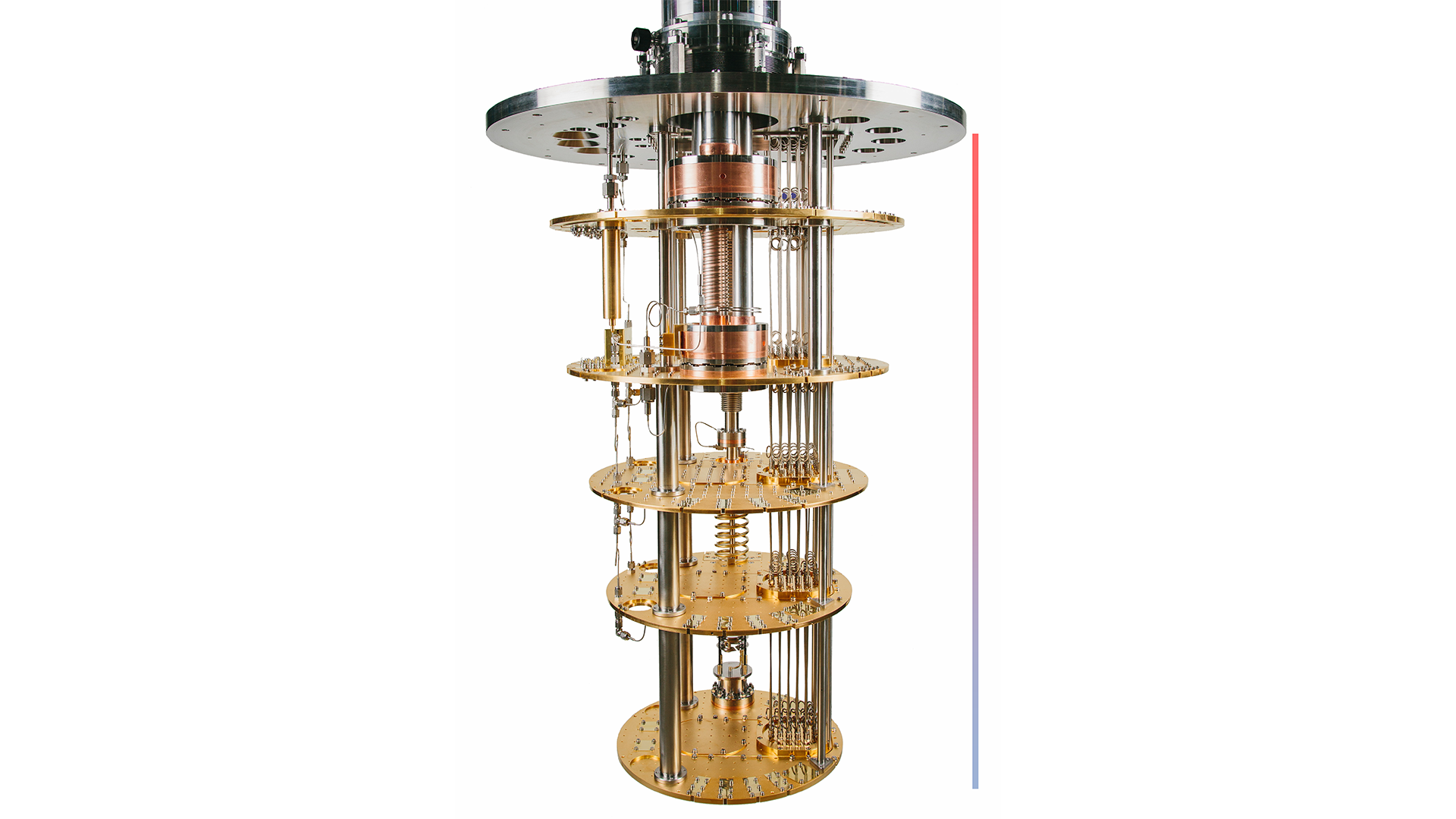
Fig. 1: A state-of-the-art quantum computing cryostat, key to the EPIQC project’s ambition to develop interfacing concepts between room temperature (that’s 20 °C, corresponding to 300 Kelvin) ICT and quantum hardware. Operating at 10 millikelvin (mK), this hardware reaches temperatures 100 times colder than outer space. The low temperatures are required to screen the quantum computer from (thermal) noises, requiring researchers to carefully engineer the extreme frontiers of quantum computation and connectivity to the outside world/users.
The EPIQC project’s work
Addressing these challenges, the EPIQC project aims to bridge the divide between quantum computing and ICT. Over a span of four years, researchers from academia across the UK are collaborating to co-create new methods and technologies that could integrate quantum computing into the broader ICT landscape.
The project is set to explore and develop solutions in three critical areas: optical interconnects, wireless control and readout, and cryoelectronics. Each of these areas is crucial for overcoming the barriers that currently hinder the scalability and practical application of quantum computing.
In pursuing quantum computing advancements, researchers grapple with the challenge of limited cooling capacity at temperatures approaching millikelvin. At these levels, essential for quantum processors to function, only a tiny amount of heat can be shed, making efficient thermal management crucial.
The quantum processors depend on high-precision signals that must be delivered with exacting accuracy and without delay. Even slight latencies can disrupt quantum states and degrade computational performance. The traditional method of scaling up – using more fixed wires to connect room-temperature machinery to ultra-cold quantum components – is proving unscalable.
The additional wires introduce extra heat, which the already strained cooling systems cannot handle, thus hindering the growth of quantum systems. Therefore, clear and efficient solutions are needed that strike a balance between maintaining near-zero temperatures and providing fast, accurate signal transmission for quantum computing to reach its potential.
Low temperature of 10 millikelvin. Qubit control and readout system alternatives are conventional control electronics, ultra-fast and low-power SFQ devices, cryoCMOS technology, wireless sources, or optical control systems. EPIQC focuses on the latter three interfacing concepts. Key requirements are maintaining the Quantum processing unit (QPU) at ultro-low temperatures, by carefully engineering the heat loads.
In the dynamic world of quantum computing, the EPIQC project emerges as a Centre of interfacing innovation, guided by the leadership of Professor Martin Weides and Professor Hadi Heidari from the University of Glasgow. Professor Weides articulating the project’s essence, said: “We are genuinely excited about the EPSRC’s support for the EPIQC project.”
“This project represents a significant step in bringing together leading researchers in quantum technology and ICT from across the UK. Our goal is to tackle some of the challenging issues at the interface of quantum computing and ICT. With our combined expertise and access to state-of-the-art facilities, we’re optimistic about developing a robust network for collaboration. This will not only produce exciting results but also help in shaping the future roadmap for quantum computing interfaces.”
Echoing this sentiment, Professor Hadi Heidari highlights the project’s pioneering approach, combining academic rigor with industry insights. Professor Heidari said: “The EPIQC project marks a first of its kind in the quantum computing field, focusing on the co-creation between quantum computing and ICT researchers, along with industry involvement.”
“It’s exhilarating to have some of the top experts from academia as part of our team from the onset. We’re venturing into a rapidly expanding field, and our work could lead to transformative changes. Being at the forefront of this venture, supporting the UK’s role in quantum computing excellence, is both a privilege and a responsibility.”
Project collaboration
The EPIQC project’s academic collaborators include the Universities of Strathclyde and College London, the National Physical Laboratory, the National Quantum Computing Centre and the Harwell Campus, along with the Universities of Birmingham, Lancaster, Southampton, and King’s College London.
These institutions bring a wealth of knowledge and expertise in quantum mechanics, photonics, and ICT. Complementing the academic expertise, industrial partners like Oxford Instruments, Leonardo, NuQuantum, and BT provide practical insights and technological advancements, fostering an environment where theoretical quantum computing concepts are translated into tangible, innovative applications.
Started in 2022, EPIQC has already begun building a community around quantum computing and ICT interface. The project has hosted several meetings, bringing together principal investigators, PhD students, postdoctoral research associates, and industry experts to discuss and define joint feasibility studies within each of the three key areas. These meetings have not only fostered collaboration and networking but have also laid the groundwork for the research directions that the project will take in the subsequent years.
The progression of the project is marked by a series of critical meetings, each highlighting the ongoing advancement and shifting research emphasis. At the inaugural gathering in Glasgow, establishing the foundation for the project, the principal investigators defined the strategic course, scope, and feasibility for each of the project’s three main pillars.
This meeting was essential in setting the stage for all future research and development activities. The subsequent meeting at the National Physical Laboratory broadened the project’s reach. It included valuable contributions from PhD students and Postdoctoral Research Associates, offering fresh perspectives on the project’s progress and the challenges encountered.
It also included the interaction with other QC-ICT consortia, exploring mutual interests, and potential partnerships. Assessing the progress of the project’s various undertakings, with a particular focus on the smaller explorative projects, helps strategise for forthcoming industrial collaborations. It also entailed critical future planning, ensuring that the project’s trajectory remains in line with its overarching goals.
The three pillars of EPIQC
The EPIQC project, underpinned by its three specialised pillars, is advancing the frontier of quantum computing. Each pillar, led by a dedicated team of experts, targets a unique aspect crucial for integrating quantum systems with contemporary technology.
The first pillar concentrates on optical interconnects, utilising photonic integrated circuits, fibre optics, and electro-optical devices. The aim is to develop technologies that enable efficient operation and control of large qubit arrays, surpassing the constraints of traditional electronics. This effort focuses on achieving greater bandwidth and scalability, leveraging the minimal heat contribution of optical fibres.
The second pillar explores the potential of wireless technology in quantum computing. It seeks to replace traditional coaxial cables with a versatile, cryogenic wireless control and readout system. This innovative approach aims to manage hundreds of qubits simultaneously with minimal interference, using advanced multiplexing techniques to prevent decoherence, a critical factor for scalable quantum systems.
Cryoelectronics forms the third pillar, focusing on developing cryogenic CMOS, FPGA, and low-noise amplifiers. These components are designed to function effectively in the extreme cold, essential for quantum processors, and are integral to the seamless operation of both optical and wireless systems in the quantum realm.
Particularly noteworthy is the role of CryoCMOS technology. It stands out for its minimal heat dissipation and ability to function in the deep-cold environments necessary for quantum computing. Its integration into quantum systems is vital for reducing latency and streamlining signal processing, making it a key enabler for scaling up quantum computing. Moreover, CryoCMOS technology facilitates complex, on-chip error correction and control, enhancing the precision and reliability of quantum operations.
Ensuring the success of these innovations is a rigorous verification process. It involves thorough testing of components to meet performance standards, particularly in terms of thermal management and scalability. Moreover, careful packaging and thermal management strategies are employed to safeguard the system from thermal and electromagnetic disruptions.
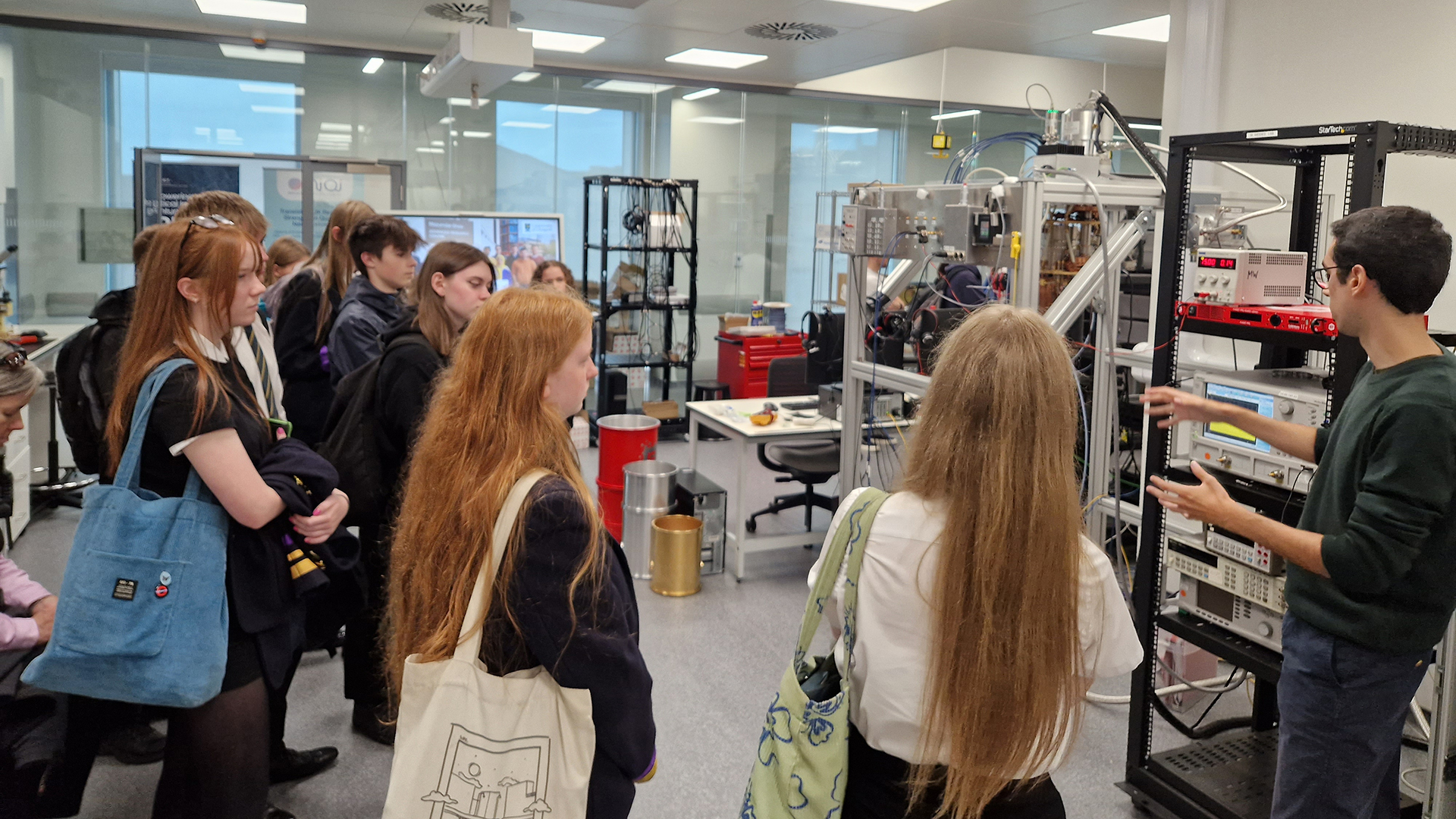
Fig. 3: Secondary school students engrossed in a live demonstration of cryogenic quantum computing hardware, as part of EPIQC’s outreach program aimed at inspiring the next generation of scientists with hands-on experience.
In addition to these collaborative efforts, the EPIQC project has been active in outreach activities. These include supporting an annual Quantum Technology School for secondary students, participating in industry forums, and presenting at various summits and industry showcases including the UK National Quantum Technologies Showcase 2022 and 2023.
This includes the assembly of a levitation train based on the principles of superconductivity and the mathematical concept of a Mobius strip to provide the public with an interactive understanding of the properties of superconductors, a key element in the advancement of quantum computing, along with online videos on quantum technologies on social media.
The EPIQC project’s approach extends beyond research, emphasising networking and education. Regular workshops and events foster a dynamic exchange of ideas among scientists, policymakers, and industry leaders. Additionally, educational outreach initiatives are designed to raise public awareness about the impact and significance of quantum computing.
Please note, this article will also appear in the seventeenth edition of our quarterly publication.





 This project has received funding from the European Union’s DIGITAL Europe Programme under grant agreement No 101091520