Polyethylene plastic bags are challenging to recycle
Robert Sanders/UC Berkeley
Plastic bottles and bags can be vaporised into chemical building blocks and turned into new plastics with all the properties of virgin material. There are hurdles still to overcome, but the new process is a big step towards a truly circular economy for plastic.
Around 5 billion tonnes of plastic has gone to landfill since the 1950s, and recycling efforts have only tackled 9 per cent of what we’ve produced. With current techniques, plastics degrade in each recycling round and end up in landfill after only a few cycles through this process.
John Hartwig at the University of California, Berkeley, and his colleagues had previously developed a process that breaks down waste plastic into its constituent parts, but it relied on expensive metal catalysts iridium, ruthenium and palladium, which were irrecoverably lost as part of the process. Hartwig says that the technique was “OK for an academic paper, for demonstration purposes, but nowhere near what you would need for something that could be conceived of ever becoming industrial.”
Now, his team has discovered an improved process that works on both polyethylene, from which most plastic bags are made, and polypropylene, which is used to make harder objects, and it relies only on catalysts considered so common that they are essentially “dirt”, says Hartwig.
Plastics consist of large molecules called polymers, which are made up of smaller units called monomers bonded together. The catalysts break the chemical bonds of polymers, turning them into gaseous monomers from which new plastics can be pieced together with all the properties of virgin material that has never been recycled.
In experiments, the team used two catalysts, sodium on aluminium oxide and tungsten oxide on silica, to turn a mixture of polyethylene and polypropylene into the monomers propylene and isobutylene with an efficiency of nearly 90 per cent.
Benjamin Ward at Cardiff University, UK, who wasn’t involved in the research, says recycling plastics is made harder by thousands of additives such as dyes, fire retardants and plasticisers, which can make up as much as a third of a finished product and contaminate the end product after recycling. “It defers the landfill. It defers the environmental problem. But it doesn’t prevent it altogether,” he says.
Ward believes this new process solves the additive problem, as stripping material down to its constituent gaseous monomers also removes the additives.
Hartwig warns that there are still many hurdles to overcome, and that the process has only been tested in the presence of a small number of common additives. “There will be additives that… will poison, will inhibit the catalyst,” he says. “We need to either find a way to separate those, which is maybe not optimal, or to find different catalyst structures or compositions that will be more resistant to some of those additives. That is absolutely a challenge.”
Cressida Bowyer at the University of Portsmouth, UK, says that even when we have a process that can split waste plastic into constituent parts and withstand additives, there are still additional concerns. “Toxicity and disposal of recycling end products [such as catalysts and additives] must be taken into account. These could outweigh any perceived benefits of recycling technologies,” she says. “Recycling should not be seen as any kind of solution or rationale to maintaining or increasing production of single-use and unnecessary plastics and continuing the current prevailing take-make-waste culture.”
As digital transformation continues to reshape business operations, the rise of artificial intelligence (AI) brings both new opportunities and challenges to waste management.
Sustainability experts from BusinessWaste.co.uk share insights into how the digital age is influencing waste reduction and management strategies.
From Paper to pixels: Reducing paper waste in the era of digital transformation
One of the most significant advantages of digital transformation is the dramatic reduction in paper usage.
Industries ranging from healthcare to legal services are increasingly adopting digital document storage solutions, eliminating the need for paper files.
Practices like online forms, digital menus, e-ticketing systems, online training, and digital advertising further contribute to this decline.
This shift not only conserves natural resources by saving trees and reducing the energy and water required for paper production, but it also results in substantial cost savings for businesses.
Financially, many companies experience a quick return on their digital transformation investments.
For instance, 59% of UK businesses that transitioned to paperless operations reported a full return on investment within 12 months and 84% within 18 months.
Slashing printer ink waste
With the reduction in paper usage comes a corresponding decrease in the demand for printing.
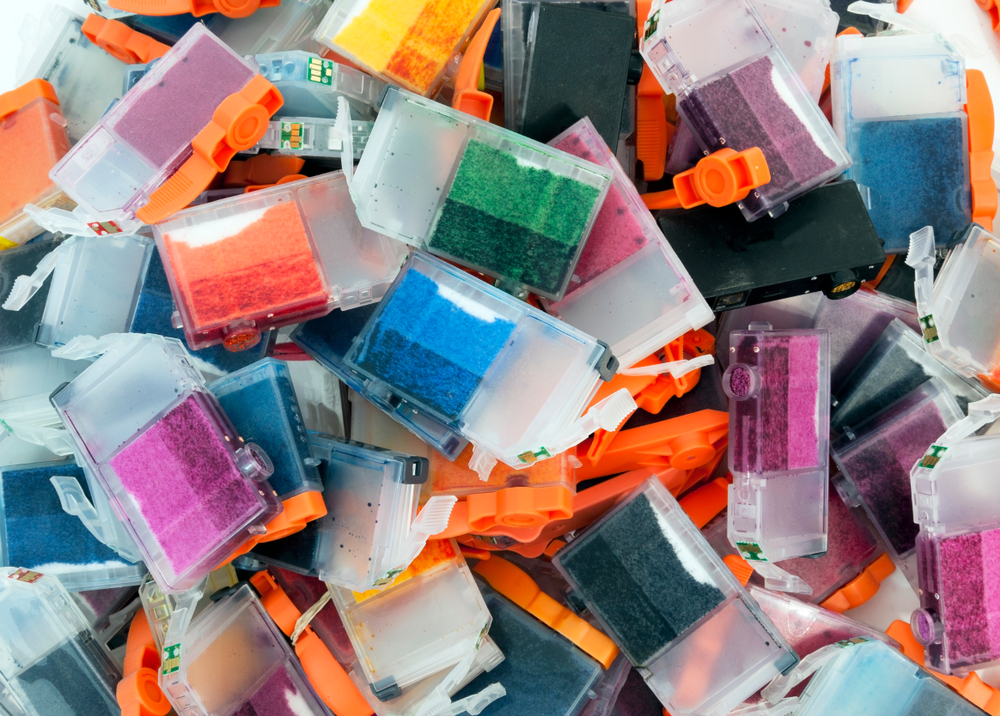
Digital transformation has led to increased digital document storage, which reduces the need for physical printers, thereby decreasing the use of ink and toner—materials that pose significant environmental challenges due to their hazardous disposal requirements.
By printing less, companies generate less waste from ink cartridges and toners, which are notoriously difficult to recycle.
This not only mitigates the environmental impact but also reduces the electronic waste associated with discarded printer hardware.
Reducing packaging waste through remote work and digital transformation
The rise of remote work, driven by digital transformation, has also led to a decline in packaging waste.
As more people work from home, whether on a hybrid model or fully remote, there is a noticeable reduction in the consumption of packaged goods.
This trend is most evident in the reduction of disposable items once common during commutes and lunch breaks—such as coffee cups and pre-packaged meals.
As a result, less packaging waste is generated, reducing the amount of waste sent to landfills and promoting more sustainable consumption patterns.
Lowering carbon emissions through virtual connectivity
Digital transformation has enabled a significant shift from physical to virtual meetings, a trend that gained momentum during the COVID-19 pandemic.
Businesses continue to rely on digital communication platforms like Zoom, Skype, and Microsoft Teams, reducing the need for business travel.
This shift not only cuts travel-related expenses but also lowers carbon emissions associated with flights, train journeys, and car travel.
The reduction in travel directly decreases fuel consumption and contributes to broader environmental benefits by reducing the carbon footprint of companies, a key advantage of digital transformation.
The growing challenge of e-waste in the age of digital transformation
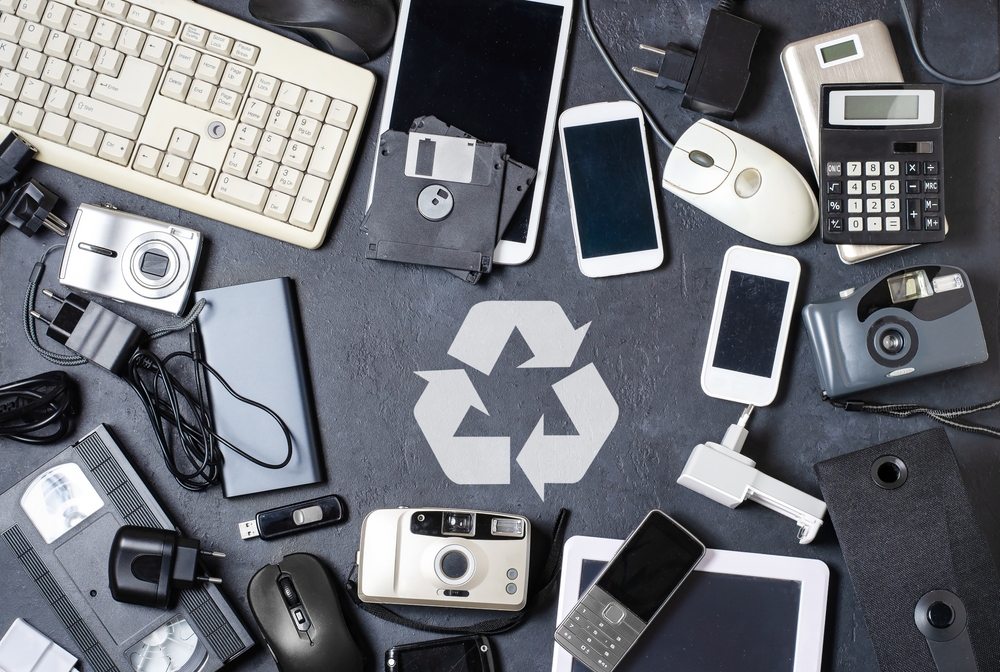
Despite the environmental benefits of digital transformation, it also brings new challenges, particularly the increase in electronic waste (e-waste).
As businesses become more dependent on electronic devices such as computers, smartphones, and tablets, these items are replaced more frequently due to rapid technological obsolescence.
The disposal of these devices, especially their lithium-ion batteries, presents significant recycling challenges due to the complex materials involved.
Mark Hall, co-founder of Business Waste, added: ” To truly capitalise on the environmental benefits of digital transformation, businesses and policymakers must focus on improving e-waste recycling technologies and developing better waste management strategies.
“By doing so, we’ll move towards a digital future that is both technologically advanced and environmentally sustainable.”
While digital transformation offers a myriad of environmental benefits—from reducing paper and packaging waste to lowering carbon emissions—it also brings new challenges, particularly in managing the surge of e-waste.
As businesses continue to evolve in the digital age, it is crucial to adopt sustainable practices that address both the opportunities and the pitfalls of this transformation.
By prioritising responsible e-waste management and investing in innovative recycling technologies, companies can ensure that their digital future is not only efficient and innovative but also environmentally responsible.
A new report by sustainable waste management company Biffa highlights significant opportunities to reduce plastic packaging waste in the UK.
Standardisation of plastic packaging materials across the country emerges as the largest potential contributor, with Biffa estimating that via adopting this, up to 0.8 million tonnes of plastic waste could be diverted from landfills by 2029.
This process would involve designing products for easier recycling by using consistent materials throughout.
Specifically, clear caps reduce contamination in recycled high-density polyethene plastic, allowing bottles and caps to be recycled together into new products.
The report, ‘The UK Journey to Circularity’, outlines a nine-point plan with achievable timelines for businesses, consumers, and the government.
Increasing recycling to reduce waste
Extending the existing Plastic Packaging Tax (PPT), which mandates a minimum recycled content percentage in plastic packaging, could significantly boost recycling rates.
Biffa suggests increasing the mandated recycled content from the current estimated 40% to 75%, potentially saving an additional 0.5 to 0.75 million tonnes of plastic waste.
Beyond standardisation and legislation, Biffa’s plan explores other interventions:
Shift towards reusable packaging: This could divert an estimated 0.13 million tonnes of waste from landfills.
‘Consumer pays’ schemes: Consumers paying for disposal services could incentivise responsible waste management, potentially recovering 0.35 million tonnes of waste.
Investment in non-mechanical recycling technologies: New technologies could handle complex plastics that are currently unrecyclable, potentially saving another 0.35 million tonnes.
Carla Brian, head of Biffa Project Partnerships, explained: “Requirements for new infrastructure are necessary but hinge on when, and to what extent, changes in the supply chain are made.
“Efforts to make plastic packaging more circular could simplify (with standardisation, for example) or lessen the burden on existing waste management infrastructure.”
We need new legislation to moderate plastic packaging production
The report acknowledges the role of government legislation in achieving the targets.
Upcoming initiatives such as Simpler Recycling will lay the groundwork for a more circular economy while future legislation can further accelerate this progress.
Overlapping policies, including deposit return schemes and extended producer responsibility, can achieve similar goals if implemented effectively.
New steel recycling technology from the University of Toronto could revolutionize the industry by removing impurities electrochemically, fostering higher-grade production and aiding in global sustainability efforts.
Engineering professor Gisele Azimi and her research team at the University of Toronto have developed a novel electrochemical method to extract contaminants like copper from steel scrap.
Researchers at the University of Toronto’s engineering department have developed a novel steel recycling technique that could help decarbonize various manufacturing sectors and promote a circular steel economy. The approach is detailed in a recent study published in Resources, Conservation & Recycling, and was co-authored by Jaesuk (Jay) Paeng, William Judge, and Professor Gisele Azimi.
It introduces an innovative oxysulfide electrolyte for electrorefining, an alternative way of removing copper and carbon impurities from molten steel. The process also generates liquid iron and sulfur as by-products.
“Our study is the first reported instance of electrochemically removing copper from steel and reducing impurities to below alloy level,” says Azimi, who holds the Canada Research Chair in Urban Mining Innovations.
Challenges in Current Steel Production
Currently, only 25% of steel produced comes from recycled material. But the global demand for a greener steel is projected to grow over the next two decades as governments around the world endeavor to achieve net-zero emission goals.
Steel is created by reacting iron ore with coke — a prepared form of coal — as the source of carbon and blowing oxygen through the metal produced. Current standard processes generate nearly two tonnes of carbon dioxide per tonne of steel produced, making steel production one of the highest contributors to carbon emissions in the manufacturing sector.
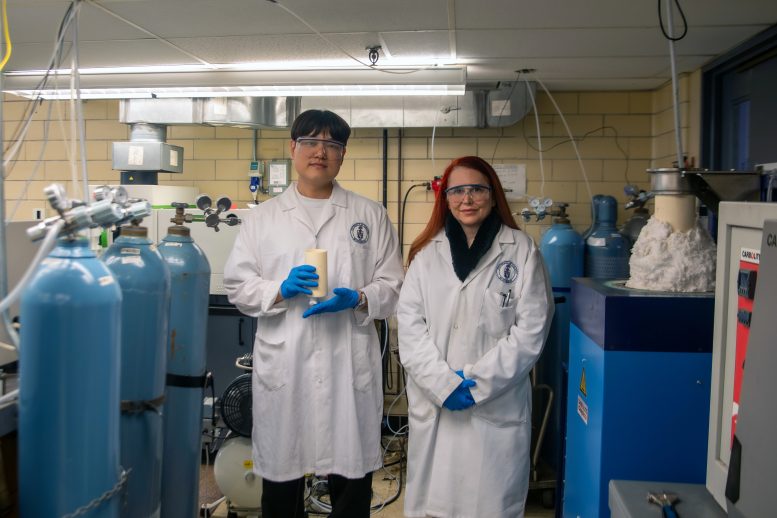
From left to right: University of Toronto PhD candidate Jaesuk (Jay) Paeng stands next to Professor Gisele Azimi and holds the team’s newly designed electrochemical cell that can withstand temperatures up to 1600 degrees Celsius while electrochemically removing contaminants from steel using slag-based electrolyte. Credit: Safa Jinje / University of Toronto Engineering
Traditional steel recycling methods use an electric arc furnace to melt down scrap metal. Since it is difficult to physically separate copper material from scrap before melting, the element is also present in the recycled steel products.
“The main problem with secondary steel production is that the scrap being recycled may be contaminated with other elements, including copper,” says Azimi. “The concentration of copper adds up as you add more scrap metals to be recycled, and when it goes above 0.1 weight percentage (wt%) in the final steel product, it will be detrimental to the properties of steel.”
Advantages of the New Method
Copper cannot be removed from molten steel scrap using the traditional electric arc furnace steelmaking practice, so this limits the secondary steel market to producing lower-quality steel product, such as reinforcing bars used in the construction industry.
“Our method can expand the secondary steel market into different industries,” says Paeng. “It has the potential to be used to create higher-grade products such as galvanized cold rolled coil used in the automotive sector, or steel sheets for deep drawing, used in the transport sector.”
To remove copper from iron to below 0.1 wt%, the team had to first design an electrochemical cell that could withstand temperatures up to 1600 degrees Celsius.
Inside the cell, electricity flows between the negative electrode (cathode) and the positive electrode (anode) through a novel oxysulfide electrolyte designed from slag — a waste derived from steelmaking that often ends up in cement or landfills.
“We put our contaminated iron that has the copper impurity as the anode of the electrochemical cell,” says Azimi. “We then apply an electromotive force, which is the voltage, with a power supply and we force the copper to react with the electrolyte.”
“The electrolyte targets the removal of copper from the iron when we apply electricity to the cell,” adds Paeng.
“When we apply electricity on the one side of the cell, we force the copper to react with the electrolyte and come out from iron. At the other end of the cell, we simultaneously produce new iron.”
Azimi’s lab collaborated with Tenova Goodfellow Inc., a global supplier of advanced technologies, products, and services for metal and mining industries. Looking forward, the team wants to enable the electro-refining process to remove other contaminants from steel, including tin.
“Iron and steel are the most widely used metals in the industry, and I think the production rate is as high as 1.9 billion tonnes per year,” says Azimi. “Our method has great potential to offer the steelmaking industry a practical and easily implementable way to recycle steel to produce more of the demand for high-grade steel globally.”
Reference: “Electrorefining for copper tramp element removal from molten iron for green steelmaking” by Jaesuk Paeng, William D. Judge and Gisele Azimi, 22 April 2024, Resources, Conservation and Recycling. DOI: 10.1016/j.resconrec.2024.107654
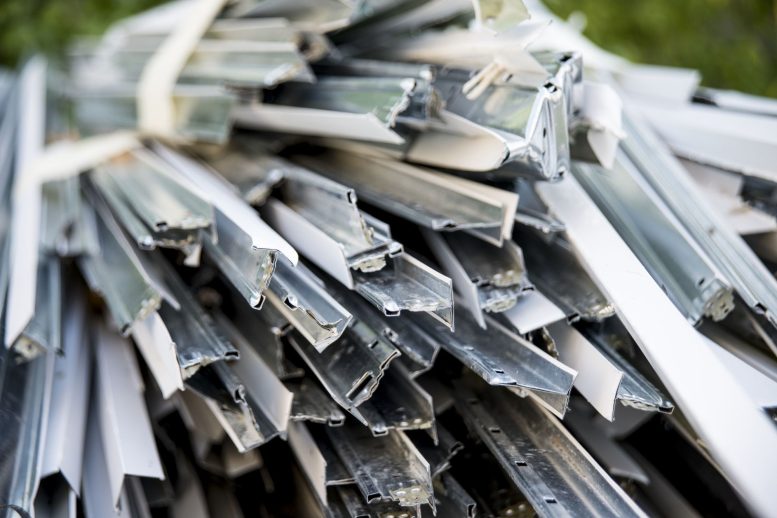
Speira has announced it will inject €40m to fund additional aluminium recycling capacity and transform its Rheinwerk plant.
The significant investment is expected to drive a total saving of up to 1.5 million tonnes of CO2 per year at the site, a significant milestone in establishing a circular economy for aluminium.
Boris Kurth, Head of the can business at Speira and the recycling and foundry operations at Rheinwerk, explained: “We want to become the number 1 in aluminium recycling in Europe.
“Over the past 20 years, we have already built furnaces with leading recycling capacity in Europe and Europe’s most modern sorting plant for UBC scrap, substituting the highly energy-intensive primary production of aluminium.
“We are consistently pursuing this path and emphasising our commitment to the circular economy with the fourth recycling furnace at Rheinwerk.”
Adding a fourth aluminium recycling furnace at Rheinwerk
The furnace is set for construction in 2025, with production beginning in early 2026.
Speira is also upgrading the third of four existing casting centres to optimise recycling alloys, helping Rheinwerk further reduce its ecological footprint.
Once complete, Rheinwerk’s enhanced recycling capacity will save up to 1.5 million tonnes of CO2 compared to producing the same amount of aluminium from primary sources.
The new furnace and the remodelling of the casting plant are step one of the company’s expansion plans.
“With its strategic location in the heart of Europe, we are expanding Rheinwerk into a leading recycling hub for our industry, which is our long-term goal for our complete transformation,” said Kurth.
New scrap warehouse
One-third of the phased-out smelter will house a new scrap warehouse, providing storage and facilities for sampling incoming scrap and preparing it for melting.
Kurth explained: “The long halls allow us to think and plan big. This huge new scrap warehouse creates space for the ‘feed’ for all of our recycling furnaces – not just the new one.
“We need the sampling of those types of scrap that have already completed one or more life cycles. These ‘post-consumer scraps’ are a source that we want to utilise even more.”
Additionally, the storage areas for skimmings are being expanded in the foundry.
Beverage cans have a fast life cycle, taking about 60 days from production to filling, retail sale, consumption, disposal, and recycling.
This rapid cycle means the same aluminium can be recycled multiple times a year, maximising the ecological benefits of advanced technology.
Speira is also dedicated to improving the recyclability of beverage cans. Coordinated by European Aluminium, the company researches recycling-friendly alloys and promotes return deposit schemes for this valuable light metal.
A team from the University of Cambridge has introduced a groundbreaking method to manufacture green concrete on a large scale, potentially revolutionising efforts to achieve net-zero emissions.
This novel approach to low-emission concrete leverages electric arc furnaces (EAFs), commonly used for steel recycling, to also recycle cement—the most carbon-intensive component of concrete.
Described by researchers as ‘an absolute miracle’, this innovative process substitutes used cement for lime flux, a material traditionally used in steel recycling to eliminate impurities.
Typically, lime flux becomes a waste byproduct known as slag. By replacing it with recycled cement, the end product is a recycled material suitable for new sustainable concrete production.
Concrete’s carbon footprint
Concrete, composed of sand, gravel, water, and cement, derives the majority of its emissions from the cement despite it being a minor component by volume.
Cement production involves clinkering, a process where limestone and other raw materials are heated to approximately 1,450°C, releasing significant CO₂ as limestone transforms into lime.
Concrete ranks as the second most-used material globally, just behind water, and accounts for roughly 7.5% of human-caused CO₂ emissions.
The challenge of reducing emissions from concrete while maintaining global supply is a significant obstacle in the quest for decarbonisation.
While alternatives like fly ash can replace about half the cement in concrete, global supplies are insufficient to meet the annual demand of approximately four billion tonnes.
Innovative green concrete production
The new cement recycling technique incurs no additional costs for concrete or steel production.
Moreover, it substantially reduces emissions from both industries by minimising the need for lime flux.
Recent trials conducted by the Materials Processing Institute demonstrated that recycled cement could be efficiently produced in an EAF, marking the first successful large-scale production of this kind.
If powered by renewable energy, this method could eventually yield zero-emission cement.
Experimentation with various slags and lime mixtures in the Materials Processing Institute’s EAF confirmed that combining cement clinker with iron oxide produces an effective steelmaking slag, which, when cooled rapidly, results in reactivated cement.
Future prospects and commercialisation
The Cambridge Electric Cement project has scaled up rapidly, aiming to produce one billion tonnes annually by 2050, which is about a quarter of current cement production.
The researchers have filed a patent to facilitate the commercialisation of this sustainable cement process, supported by Innovate UK and the Engineering and Physical Sciences Research Council (EPSRC), part of UK Research and Innovation (UKRI).
To achieve a circular plastics industry, no ‘one-size-fits-all’ solution will do, but a combination of different approaches will be required.
In 2022, 400.3 Mt of plastics were produced worldwide (Source: Plastics Europe). Unsurprisingly, consumers and legislative authorities are demanding change and more careful use of resources to achieve a plastics industry that is as climate-neutral as possible. The Institute for Materials Technology and Plastics Processing (IWK, part of OST-Eastern Switzerland University of Applied Sciences) is working on contributing to this goal.
The competence spectrum of the IWK is divided into the following eight research fields: Injection Moulding/PUR, Compounding/Extrusion, Composite Technology/Lightweight Construction, Joining Technology, Metal Manufacturing Technologies, 3D-printing/Additive Manufacturing, Simulation & Design, and Material Analysis & Component Testing.
The ambition for all the competence areas is to combine science and practice for innovative industrial-oriented, close-to-production solutions and, through that, address the current challenges of the plastics industry with optimised materials, material combinations and production technologies.
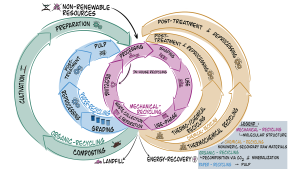
Alongside reduction and reuse, recycling is one of the most important strategies for achieving the goal of a circular and sustainable plastics economy. The Compounding and Extrusion team at the IWK, led by Professor Daniel Schwendemann, focuses on a holistic approach to identifying the most suitable pathway for circularity for each customer-specific application. In the upcoming paragraphs, some exemplary projects are presented. Each of them explores a different recycling route based on the following graphic.
Mechanical recycling – Is it possible to close the loop or even upcycle?
Mechanical recycling is a well-established process in the plastics industry in which products at their end of life are collected, cleaned, sorted, and converted into new raw materials again. While the ideal scenario would be a cradle-to-cradle material flow or even an upcycling of the used material, for most of the applications, mechanical recycling is either associated with down-cycling or there are no recycling streams at all.
Fig. 1: Plastic Recycling Loops
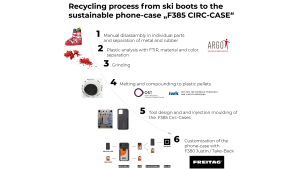
The F385 CIRC-CASE IPHONE®, a phone cover made from discarded ski boots, which was developed in co-operation of IWK with FREITAG®, is one of the projects addressing this issue and demonstrates that a closed loop circle for old TPU ski boots is feasible.
In the first step, the ski boots are collected and sorted at ARGO in Davos (a workshop for people with disabilities). The boots are disassembled, and all metal parts are separated. Afterwards, the polymer type is detected with the help of FTIR, and the parts are sorted by colour and shredded in a mill. The obtained flakes are then processed in the compounder at the IWK to remove possible residual contamination and to receive homogenous pellets.
The iPhone covers, which are then produced via injection moulding, are made of 100% recycled TPU and can be recycled again at their end-of-life within Freitag’s established Take-Back system.
In addition to creating a closed material loop, the project also shows the potential of local production since the whole value creation takes place within 150km around Zurich in Switzerland.
One of the major challenges in mechanical recycling is odour reduction, especially for polyolefin materials like PE and PP. In a project with Tide Ocean SA and the IWK, possible process optimisations and material modifications were evaluated. The goal was for the ocean-bound rPE and rPP material from Tide Ocean SA to fulfil the high requirements of the automotive industry standard VDA270.
Fig. 2: Recycling process – From ski boots to iPhone case
As part of a defined set of experiments, different screw configurations, degassing options, activation concepts, and the application of an entertainer for the removal of volatile organic compounds (VOC; source of odour development) were tested. As a result, material and process optimisation concepts were developed to meet the requirements of VDA270.
In addition to this project, Tide Ocean SA and IWK developed an innovative upcycling process and quality standards for collecting, sorting, compounding, and injection moulding that allows the production of high-quality products from ocean-bound rPET. The granules can replace virgin plastics without loss of quality in a variety of production processes, including 3D printing, textile fabrication, and injection moulding.
An example of successful co-operation is a watch from Maurice Lacroix, in which the bezel, housing, crown, end, and closure parts are made from recycled ocean-bound rPET material.
Organic recycling – What is the impact of bioplastics?
The use of bioplastics to replace conventional fossil-based materials is by now state-of-the-art in the plastics industry. However, bioplastics are also associated with various controversies, including competition with food and unclear disposal/recycling routes. The FluidSolids AG is tackling this by offering materials based on secondary resources that are 100% home-compostable. Together with the IWK, the compounding process was optimised, and scale-up was achieved. Disposable cutlery made of FluidSolids material can be found in Swiss supermarkets today.
Paper recycling – Paper as a replacement for plastics?
Especially in the field of packaging, regulations and consumers are pushing for a reduction in the use of plastics and a change to alternative materials. In that context, paper and paper-based materials are gaining increasing importance and potential for the polymer industry. However, replacing plastics with paper is not trivial since the material and processing properties are completely different.
Founded by the ‘Neue Regionalpolitik’ (NRP) of the canton Fribourg, the IWK, together with the iRAP (Haute école d’ingénierie et d’architecture Fribourg) and 11 companies investigated the feasibility of the potential of paper in plastic processes. Existing paper-based materials were analysed, and their processability was tested successfully (injection moulding, extrusion, thermoforming).
Challenges and needed adaptions regarding tools, material composition, and process parameters were identified and translated into the next steps, which are currently being worked on in follow-up projects. The project showed that while paper-based materials will certainly not replace plastics in all (packaging) applications, they are a useful addition to the existing material and property portfolio.
Chemical recycling – the future?
Chemical recycling is one of the big hopes for a circular plastics industry since it offers the possibility of recycling mixed plastic waste and getting recycled materials with virgin properties, something that is (currently) not possible with mechanical recycling.
There is a variety of chemical recycling processes available, but none of them are on a commercial scale yet. This makes a final comparison between chemical and mechanical recycling regarding their environmental impact nearly impossible. However, it must be expected that chemical recycling will most likely have a higher energy demand and should, therefore, only be installed as a complementary recycling route to mechanical recycling, for example, in textile recycling, where mechanical recycling is difficult due to the often-high cotton content.
Fig. 3: Maurice Lacroix Aikon Tide Blue Black (Source: Maurice Lacroix; #tide)
Summarising: the plastics industry has several possible pathways toward circularity. No ‘circle’ should be favoured above another one without considering the boundary conditions of the individual application. All the more, the synergies between the existing as well as emerging recycling technologies can act as a positive driver for sustainability.
Please note, this article will also appear in the 18th edition of our quarterly publication.
Cement being produced in an electric arc furnace at the Materials Processing Institute, UK, for the first time
Materials Processing Institute
A new technique can produce cement using waste from demolished buildings, which researchers say could save billions of tonnes of carbon by 2050.
“We have definitely proved that cement can be recycled into cement,” says Julian Allwood at the University of Cambridge. “We are on course for making cement with zero emissions, which is amazing.”
Producing cement is highly polluting – responsible for 7.5 per cent of total greenhouse gas emissions – but until now there was no known way to produce it at scale without impacts on the climate.
Making cement requires “clinker”, which is made by heating a mix of raw materials, including limestone and clay, to 1450°C (2650°F). Both the heat requirements and the chemical reactions involved in making clinker result in carbon emissions, and clinker production accounts for 90 per cent of cement’s total carbon footprint.
Allwood and his colleagues have developed an alternative process to make clinker, which involves reusing cement paste from demolished buildings. This paste has an identical chemical composition to lime flux, a substance used to remove impurities from recycled steel.
As the steel melts, the flux made from old cement forms a slag that floats on the top of the recycled steel. Once ground into a powder, the slag is identical to clinker. It can then be used to make Portland cement, the most common form of cement.
If the recycled steel and cement are produced using an electric furnace, powered by renewable or nuclear energy, the process is almost entirely free of emissions. “The idea is really simple,” says Allwood.
Laboratory trials have proved the process works. It offers a “drop in” solution that could be used with conventional equipment, and a global switch to this process could save up to 3 gigatonnes of carbon dioxide a year, the team calculates.
The research team is now working on industrial trials via a spin-out company, Cambridge Electric Cement, with partners such as construction firms Balfour Beatty and Tarmac. “Within the next few weeks, we are starting a set of trials which will be producing batches of 30 tonnes per hour,” says Allwood.
Scaling up the new cement-making process depends in part on the growth of recycled steel-making, which currently accounts for about 40 per cent of global steel production. Allwood says production rates will at least double over the next 30 years, and most likely treble, as the industry decarbonises.
Yet some challenges lie ahead. The recycled cement process requires furnace temperatures of 1600 to 1750°C (2900 to 3200°F), slightly hotter than traditional cement production. This will increase power costs, says Leon Black at the University of Leeds, UK.
Other hurdles include establishing supply chains for waste cement, attracting the necessary capital investment and convincing a notoriously cautious industry to adopt a new process on a large scale.
“They have overcome one barrier in as much as they have made a material that has the same composition as Portland cement,” says Black. “The devil is in the details: the energy requirements, the logistics, the scaling up.”
People took part in a rally in Ottawa to support ending plastic pollution
Canadian Press/Shutterstock
Delegates from nearly every country are gathered in Canada to hammer out the details of a global treaty to address ballooning plastic pollution. One source of division at the summit, which concluded 29 April, was how to address the greenhouse gas emissions generated by producing and using plastic, a growing and under-recognised driver of climate change.
“When people think about plastic, they think about what they see visually,” says Alice Zhu at the University of Toronto in Canada. But extracting and processing the fossil fuels and other chemicals used to make plastic produces substantial greenhouse gas emissions, as does generating the energy required to make plastic products. Plastic now accounts for around 10 per cent of total demand for oil and natural gas; coal is also increasingly used to power plastic production.
Incinerating plastic waste is another source of greenhouse gas emissions. As it degrades, plastic in the environment can also produce carbon dioxide and methane emissions. Plastic may even reduce how much carbon ecosystems can store, although these effects are poorly quantified, says Zhu.
The numbers on emissions from producing plastic are clearer. In a study published this month, Nihan Karali at Lawrence Berkeley National Laboratory in California and her colleagues estimated plastic production in 2019 generated the equivalent of 2.24 billion tonnes of CO2, or about 5 per cent of global greenhouse gas emissions. That is roughly 4 times more emissions than were produced by aviation that year.
Assuming no changes to how plastic is produced, they found these emissions could triple by 2050 with increases in plastic production. Since most of the emissions are associated with extracting and processing the fossil fuels and other chemicals used to make plastics, they also found decarbonising the power grid has only a small effect on projected emissions.
The global plastic treaty now under debate could offer a “historic” chance to limit those emissions, the researchers wrote. In 2022, more than 175 countries agreed to join a legally binding treaty that would address plastic pollution across the full life cycle of the material, with final details to be agreed by the end of this year.
However, a group of petroleum-producing countries, including China and Russia, argued during negotiations that the treaty should only address plastic waste through clean-up and recycling, and not limit or change production, which is the main source of greenhouse gas emissions from plastic. A group of countries including the UK and EU have argued the treaty should include provisions to reduce production to keep emissions in line with global climate targets.
“There’s so many things on the table, and climate is certainly not being discussed too much,” says Neil Nathan at the University of California, Santa Barbara, who attended the meeting to advocate for an ambitious treaty.
According to modelling from Nathan and his colleagues, he says a strong treaty that limits production and take other steps, like mandating that plastic products contain a high proportion of recycled material, could keep emissions at their current levels. He says the plastics treaty would be “a failure” if it didn’t address production.
Sarah-Jeanne Royer at the University of California, San Diego says reducing the use of new plastic through recycling or switching to more sustainable materials to make plastic, such as bioplastics or captured CO2, would also reduce greenhouse gas emissions, even if the treaty didn’t address them explicitly.
However, Paul Stegmann at TNO, a research organisation in the Netherlands, cautions that some alternatives to plastic, such as steel, may generate more emissions, depending on how they are reused and recycled. “In the end we need policies that ensure that we do not just shift the problem elsewhere but that reduce the system-wide impact of our society,” he says.
In 1980, Disney World in Orlando, Florida, started work on a new way to generate power for the theme park, cutting its use of oil, the price of which had soared. The Solid Waste Energy Conversion Plant took trash, including plastic, and used a method called pyrolysis to turn it into combustible gases. It opened in 1982, but closed a year later, as the cost of running it mounted.
Their argument is disingenuous. The failure of Disney’s plant had more to do with a subsequent fall in oil prices than technological or environmental problems. Pyrolysis has improved a lot since the 1980s. And in any case, Disney’s plant was designed to produce fuel, which isn’t classed as advanced recycling.
As we report in our feature “The incredible new tech that can recycle all plastics, forever”, advanced recycling is a rapidly innovating industry that could help to solve the global plastics crisis. It has the potential to take millions of tonnes of discarded plastic, most of which ends up in landfill, incinerators or the environment, and turn it back into a clean, fresh version by breaking it down to its molecular constituents. The goal is a circular economy where there is no longer any need to make “virgin” plastic from oil.
It isn’t a panacea. There are issues around such plants generating toxic waste, their energy use and the perpetuation of conventional plastics ahead of newer, greener alternatives. Campaigners are right to argue that we would be better off phasing out plastics altogether. But practical considerations mean they aren’t going away any time soon, and most advanced recycling technologies are better for the environment than the alternatives.
There is a serious discussion to be had around advanced recycling, not least whether it should be factored into a forthcoming global treaty on plastic pollution. Let’s just make sure it is based on the facts, not Disney stories.