Tag: Research management

  • How researchers in remote regions handle the isolation

    How researchers in remote regions handle the isolation

    [ad_1]

    A view of the Concordia research centre at night with the Milky Way seen overhead

    Concordia research station is a French–Italian outpost on the Antarctic Plateau.Credit: ESA/IPEV/PNRA–S. Thoolen

    Modern science can’t be done in seclusion. Researchers everywhere have to stay connected to academia globally, but some are sidelined by geography and, as a consequence, by economics or politics. Some live and work thousands of kilometres from major research centres, some must base themselves in the back of beyond for fieldwork, and some have to overcome a systemic lack of resources or support as a result. Technology has removed many barriers, but isolation still has consequences. Scientists in remote locations have to be especially resilient, resourceful and willing to go the extra mile to stay in touch.

    Nature spoke to four scientists in different parts of the world who cope with various forms of isolation. They discuss their approach to their work and the challenges of living at outposts of science.

    FLAVIA MORELLO: Paying a price for being far away

    Archaeologist at the University of Magallanes, Punta Arenas, Chile.

    Close up of Flavia Morello on a boat

    Flavia Morello works in Wulaia Bay near Chile’s Navarino Island.Credit: Flavia Morello

    I’m an archaeologist in the Tierra del Fuego region of Chile. At a latitude of 53° S, I’m based about 2,000 kilometres south of Santiago, the city where I was born and raised. My institution, the University of Magallanes, is in Punta Arenas, which has a population of about 130,000 people. It’s the only city of any size in the area. There’s a lot of empty land around us, which adds to the feeling of isolation.

    It’s a 4-hour drive — including border stops and ID inspections — from our main campus to the closest university, the National University of South Patagonia in Rio Gallegos, Argentina. Every couple of years, either I’ll go over there or researchers from there might come here. But we’re more likely to see each other at conferences in other countries.

    I did my PhD at Panthéon-Sorbonne University in Paris, but I always planned to come back to Chile. I was especially drawn to this remote area, for personal and professional reasons. As a researcher, I’m amazed and captivated by egalitarian hunter-gatherer societies. Tierra del Fuego was a land of hunter-gatherers, going back thousands of years. I’m passionate about uncovering their way of life.

    In 2023, I travelled to Rome to present my findings on tools and artefacts that reflect the industry and ingenuity of Tierra del Fuego residents going back up to 13,000 years ago. The various groups faced significant geographical barriers, including ice sheets and the Straits of Magellan that separated island communities from the mainland and from each other, but we found strong evidence of intermingling and cooperation, including similarities in tool-making techniques.

    It’s important to stay connected despite my location. I try to go to one international conference a year. The one in Rome attracted thousands of people. In April, I attended the annual meeting of the Society for American Archaeology in New Orleans, Louisiana, a gathering for archaeologists who work anywhere in the Americas.

    I collaborate with other researchers through the Cape Horn International Center, comprising a consortium of eight Patagonian universities as well as an international network coordinated by the University of North Texas in Denton. We take biological, archaeological, anthropological and other approaches to biodiversity and conservation. I contribute the long-term perspective on humans in the environment. It’s one thing to do DNA analysis on a human bone from 10,000 years ago, but that DNA doesn’t show whether that person was a hunter or a mariner, or what tools they used. I help to provide the context.

    Still, I pay a price for being far from the capital. Chile is highly centralized around Santiago and the government doesn’t have the vision to support distant places such as Tierra del Fuego. Inequality increases with latitude. Transport is expensive, but I have to travel great distances for conferences and other necessities. I try to find multiple purposes for every trip. If I have to go somewhere for a conference, I’ll try to study artefacts at a nearby museum or perhaps conduct fieldwork.

    Because there’s a very limited pool of potential graduate students in the area, I struggle to attract and sustain a team for laboratory research and fieldwork. It’s very expensive for people to travel and live here. I try to build working relationships that encourage researchers to come here and stay, but it’s a challenge.

    GÉRARD ROCAMORA: A lot of people wouldn’t last a day out here

    Science director and chair of the Island Biodiversity and Conservation Centre, University of Seychelles.

    Close-up of Gerard Rocamora holding a rare Indian Pond Heron

    Gérard Rocamora with an Indian pond heron (Ardeola grayii) on Grande Soeur Island in the Seychelles.Credit: Gerard Rocamora

    Researchers from other parts of the world are often envious when they find out I live and work in the Seychelles, an island country in the middle of the Indian Ocean. It’s beautiful, but I’m not on a holiday. I can hear the ocean from my bed at night, but I haven’t been to the beach for fun in months.

    I’m trained as a scientist, but I see myself first and foremost as a conservationist. My main mission is to protect and restore biodiversity on the islands of Seychelles and beyond.

    A lot of people wouldn’t last a day out here. We’re at the forefront of climate change. The sea is rising, torrential rains wash away the soil and it’s hot all the time. A typical day is 35 °C with 85% humidity. My laptops often have to be replaced after one year because of the humidity. I sleep with mosquito nets but I’ve still had two bouts of dengue fever. I’m not sure I could survive a third.

    From here, it’s about 2,100 kilometres to the Kenyan coast and the University of Nairobi, the nearest major university. The University of Seychelles has few students and limited resources.

    To overcome this isolation and lack of local support, I co-founded the Island Conservation Society in 2001. And in 2014, I founded the Island Biodiversity and Conservation Centre at the University of Seychelles. Both have been instrumental for building international collaborations and receiving funding from international agencies and private donors.

    I also co-wrote a book, Invasive Alien Species in Seychelles, to bring attention to my work in this part of the world. My efforts with the ICS and the IBC have made a real difference.

    To protect native species, I have led successful efforts to eradicate alien vertebrates — including cats, rats, barn owls and lizards — from 14 islands in the Seychelles. The results have been incredibly gratifying. For example, we removed rats and cats from two islands in the Cosmoledo Atoll in 2007. Since then, the numbers of red-tailed tropicbirds (Phaethon rubricauda) have increased dramatically, and masked boobies (Sula dactylatra) and brown boobies (Sula leucogaster) have recolonized the largest island. Walking on to a restored island and seeing all of the birds and crabs everywhere — it’s intense. It feels like being a young person in love.

    Since 2019, I’ve been collaborating with researchers in France, Norway, the United States and the United Kingdom to study the foraging range and movements of white-tailed tropicbirds (Phaethon lepturus), which are poorly understood in this part of the world. We found that they are roaming far beyond protected waters, a sign that current protections are insufficient.

    It’s important to have scientists stationed in remote places. If researchers want to come here to study some aspect of the Seychelles — even topics beyond my area of expertise — I can serve as a point of contact. The simple fact that we are here opens the door to others.

    GABRIELE CARUGATI: Like living on another planet

    Glaciologist and atmospheric chemist at Concordia Station, Antarctica.

    Portrait of Gabriele Carugati

    Gabriele Carugati works in sub-zero climates.Credit: Marco Buttu, PNRA

    My colleagues and I have been at the Concordia Station — a French–Italian research outpost on the Antarctic Plateau — since early November 2023, and we’ll stay until late November 2024. We’re about 950 kilometres inland and about 560 kilometres from the nearest other human beings, who work at Russia’s Vostok Station. For 9 of those months, the 13 of us at Concordia will be completely on our own. Nobody will be visiting and nobody will be leaving.

    I work in this environment so that I can take snow samples and ice cores to study climate change, both in modern times and the distant past. Carbon dioxide levels in deep ice cores can tell us about the atmosphere one million years ago. I also study particulate matter in the air — it’s like a blank slate here because there’s no human activity, and this helps us to better understand the natural atmosphere. Temperatures in winter can get to −80 °C, or even −100 °C with the wind chill. It’s really dangerous, but we take a lot of precautions.

    The closest comparison is to living on another planet. The astronauts in the International Space Station — who orbit at an altitude of about 400 kilometres — are closer to other people than we are, any time they fly over a city. The European Space Agency uses us as a case study to better understand the psychological isolation that astronauts might endure on a Martian research base. We underwent thorough psychological testing before the mission, and we regularly fill in questionnaires and take tests to see whether isolation has affected our cognitive abilities and our concept of time.

    We have treadmills here, and everyone exercises. We also have a greenhouse where we grow fresh vegetables, and the dedicated chef here is amazing. We eat about twice the normal amount of calories every day to meet the physical demands, but we’re still losing muscle mass. The oxygen at this altitude is about 30% below what it is at sea level, and that takes a toll.

    Mental and physical health are big challenges, but we’re doing well so far, and staying focused on our work helps. We miss some things from normal life, such as friends and family, but it’s not a problem yet. The isolation is even relaxing sometimes. You can focus on your work and yourself, free from all the other obligations and problems of daily life.

    I’ve dreamt of coming to Antarctica since I was 11. It’s a great accomplishment for me to be here, and to be the station leader. I’m excited for the rest of the mission.

    LAMECH MWAPAGHA: Making inroads, but feeling left behind

    Genomics researcher at the Namibia University of Science and Technology in Windhoek.

    Portrait of Lamech Mwapagha in the lab

    Lamech Mwapagha is a geneticist in Namibia.Credit: Festus S. Shafodino

    When I present posters at international conferences, I have a lot of lively interactions with other scientists. People assume there’s not much research happening in southern Africa, especially in Namibia. They are often surprised when they see the work that we do in genomics.

    I’ve made inroads in my field, but I do feel isolated and left behind. Genomics requires an extensive amount of infrastructure and funding, and we just don’t have the equipment. For example, I’m currently looking at antimicrobial resistance in waste water. It’s crucial to understand the diversity of bacteria in waste water, and I had to send samples to facilities in Ghana that have more-advanced sequencing capabilities than I do.

    I’m also collaborating with researchers at the International Centre for Genetic Engineering and Biotechnology (ICGEB) in Trieste, Italy, for a project on the role of human papillomavirus in head and neck cancers. One of my students won a fellowship to spend three months there, so she was able to do proteomics work that she couldn’t do at our institution.

    I’ve been fortunate to attend a number of international meetings, including ICGEB conferences in Trieste and Keystone Symposia on Molecular and Cellular Biology in Keystone, Colorado, and Hanover, Germany. My university doesn’t have the funds to cover travel, so I have to look for conferences that can offer funding or else find my own grants. Even if you don’t meet the age criterion or other specific requirements of a travel grant, you can write to the conference organizers to explain your financial situation and why you need to attend — sometimes, it works. I also recommend joining a research society in your field. It might offer travel grants as a benefit, although these tend to be competitive.

    I don’t feel too isolated geographically. It’s about a 2-hour plane ride from here to the University of Cape Town in South Africa, where I earned my PhD. I still have colleagues and collaborators there. The biggest ‘distance’ between myself and other genomics researchers is funding. I could go a lot further.

    [ad_2]

    Source link
  • Guidelines for academics aim to lessen ethical pitfalls in generative-AI use

    Guidelines for academics aim to lessen ethical pitfalls in generative-AI use

    [ad_1]

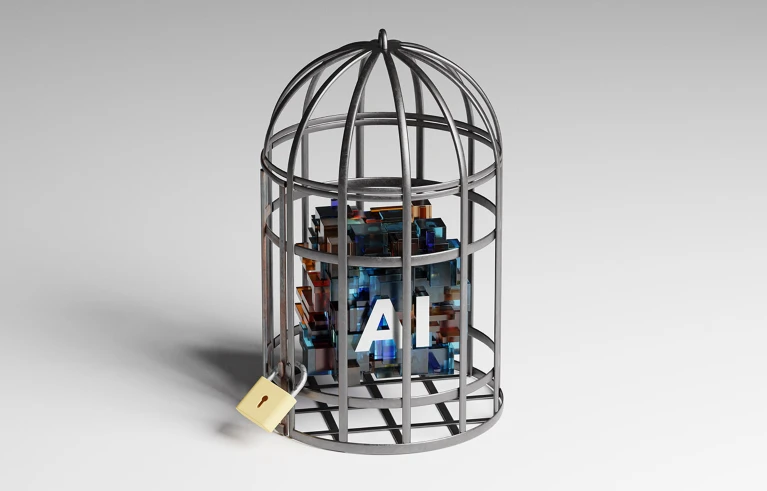
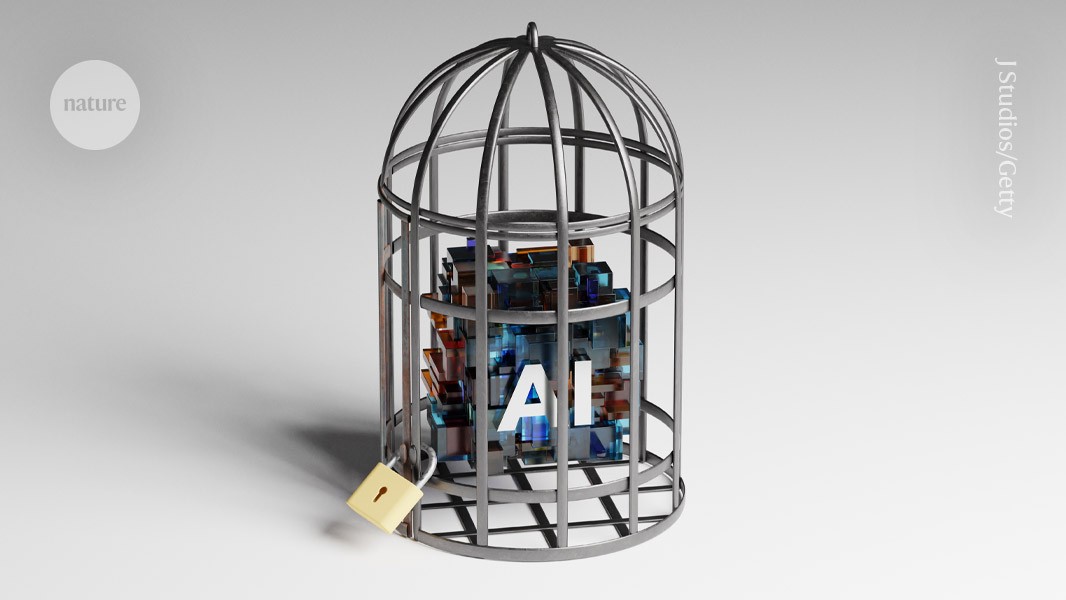
    A computer rendered illustration of a digital cube labelled AI locked in a birdcage.

    New guidelines aim to safeguard researchers and study participants from AI risks.Credit: J Studios/Getty

    A new toolkit to help academics to use generative artificial intelligence (genAI) more ethically is being developed by researchers in the United Kingdom.

    “Generative AI is so new, we just don’t have any guidance,” says Wendy Moncur, a cybersecurity researcher at the University of Strathclyde in Glasgow, UK, who is leading the project. Academics are already considering the potential quandaries with use of genAI tools, she says, “but wouldn’t it be a useful thing, if they had a little checklist to say, ‘These are the things you need to think about; these are the strengths; and these are the threats.’”

    The project focuses on issues that might arise when genAI tools — such as ChatGPT, made by OpenAI in San Francisco, California, and Google’s Gemini, which are powered by large language models (LLMs) — are used to analyse and process personal information from study volunteers.

    It was inspired by an ongoing study, led by Moncur, that is looking into how people going through major life transitions — such as being diagnosed with cancer or undergoing gender reassignment — can manage their privacy online.

    In the work, Moncur and her team are using genAI tools to create teaching materials, on the basis of participants’ stories, that are intended to guide others through similar life changes.

    The participants had shared details about their experiences — such as how their work and relationships were affected — under the assurance that the information would be shared with others only in an anonymized form. But before the team started feeding this information into a genAI program, Moncur suddenly feared that, if the tool pieced together publically available information with the anonymized data that it was being fed, the participants might accidentally be reidentifiable.

    The team was also concerned about LLMs’ tendency to ‘hallucinate’ — generating nonsensical or incorrect information — which could potentially slander reidentified participants. And LLMs can change the meaning of the information fed into them, because they are influenced by social and other biases inherent in their design. For example, Moncur says the program that her team used would distort what the participants had said, making their stories more positive than the participants had intended. “ChatGPT has a bit of a ‘Pollyanna thing’ going on, in that it doesn’t like unhappy endings,” says Moncur. “So, it needs a bit of a nudge to produce a credible story.”

    Outlining the issues

    Moncur’s concerns prompted her to team up with computer scientists Ali Farooq and Ryan Gibson at the University of Strathclyde and Burkhard Schafer, a legal scholar at the University of Edinburgh, UK, to collaborate on solutions. Funded by the UK National Research Centre on Privacy, Harm Reduction and Adversarial Influence Online, they launched a ten-month project to develop guidelines for researchers and university ethics committees, due to be completed in August.

    In March, the European Commission’s European Research Area Forum released guidelines on the responsible use of AI, which will feed into the work that Moncur and her team are doing.

    Moncur says the project has three main objectives: to address the lack of expertise in identifying privacy risks caused by using genAI in research; to address data-management requirements in UK research, many of which don’t account for the growing use of genAI; and to address the legal risks for institutions that are using genAI to analyse or process participant data.

    The project is designed to look at AI use in research broadly, but will include focus areas, such as how to protect privacy when using AI to process medical data, says Farooq.

    The team is doing a literature review to characterize how researchers are using genAI to handle personal data, and is planning to interview academics who serve on ethics committees at UK universities.

    Informed by the insights from these projects, the team will develop a toolkit based on analysis of strengths, weaknesses, opportunities and threats, which ethics committees and researchers can consult when they are reviewing or planning projects that will involve genAI technologies. The team plans to make this tool freely available online.

    Much-needed guidance

    Robert Davison, an information-systems scientist at the City University of Hong Kong, welcomes these efforts to create more-robust ethical oversight for genAI use. “It’s highly likely that it will become normal [to use this technology],” says Davison. But he recalls a point made in an editorial published in January1, which he co-authored: “We do not wish to see a situation where we are lulled into thinking that genAI use is ‘normal’, and that researchers do not need either to pay particular attention to it, or to report their use of it.”

    Davison is keen to see ethical norms be established around genAI use, but is wary of a siloed approach to setting these standards. Broader ethical standards would be ideal, he says, but adds that it’s unclear who would be best placed to provide — and enforce — such guidelines.

    For now, Moncur and her colleagues will target university ethics committees. “Researchers are under such pressure to be efficient — they’re overloaded,” says Moncur. “If you’ve got a tool [such as AI] that’s going to make things more efficient, then it makes sense to use the tool. But we need information to help us use the tools responsibly, and in a way that allows us to do good science.”

    Nature Index’s news and supplement content is editorially independent of its publisher, Springer Nature. For more information about Nature Index, see the homepage.

    [ad_2]

    Source link

  • Pay researchers to spot errors in published papers

    Pay researchers to spot errors in published papers

    [ad_1]

    In 2023, Google awarded a total of US$10 million to researchers who found vulnerabilities in its products. Why? Because allowing errors to go undetected could be much costlier. Data breaches could lead to refund claims, reduced customer trust or legal liability.

    It’s not just private technology companies that invest in such ‘bug bounty’ programmes. Between 2016 and 2021, the US Department of Defense awarded more than US$650,000 to people who found weaknesses in its networks.

    Just as many industries devote hefty funding to incentivizing people to find and report bugs and glitches, so the science community should reward the detection and correction of errors in the scientific literature. In our industry, too, the costs of undetected errors are staggering.

    That’s why I have joined with meta-scientist Ian Hussey at the University of Bern and psychologist Ruben Arslan at Leipzig University in Germany to pilot a bug-bounty programme for science, funded by the University of Bern. Our project, Estimating the Reliability and Robustness of Research (ERROR), pays specialists to check highly cited published papers, starting with the social and behavioural sciences (see go.nature.com/4bmlvkj). Our reviewers are paid a base rate of up to 1,000 Swiss francs (around US$1,100) for each paper they check, and a bonus for any errors they find. The bigger the error, the greater the reward — up to a maximum of 2,500 francs.

    Authors who let us scrutinize their papers are compensated, too: 250 francs to cover the work needed to prepare files or answer reviewer queries, and a bonus 250 francs if no errors (or only minor ones) are found in their work.

    ERROR launched in February and will run for at least four years. So far, we have sent out almost 60 invitations, and 13 sets of authors have agreed to have their papers assessed. One review has been completed, revealing minor errors.

    I hope that the project will demonstrate the value of systematic processes to detect errors in published research. I am convinced that such systems are needed, because current checks are insufficient.

    Unpaid peer reviewers are overburdened, and have little incentive to painstakingly examine survey responses, comb through lists of DNA sequences or cell lines, or go through computer code line by line. Mistakes frequently slip through. And researchers have little to gain personally from sifting through published papers looking for errors. There is no financial compensation for highlighting errors, and doing so can see people marked out as troublemakers.

    Yet failing to keep abreast of this issue comes at a huge cost. Imagine a single PhD student building their work on an erroneous finding. In Switzerland, their cumulative salary alone will run to six figures. Flawed research that is translated into health care, policymaking or engineering can harm people. And there are opportunity costs — for every grant awarded to a project unknowingly building on errors, another project is not pursued.

    Like technology companies, stakeholders in science must realize that making error detection and correction part of the scientific landscape is a sound investment.

    Funders, for instance, have a vested interest in ensuring that the money that they distribute as grants is not wasted. Publishers stand to improve their reputations by ensuring that some of their resources are spent on quality management. And, by supporting these endeavours, scientific associations could help to foster a culture in which acknowledgement of errors is considered normal — or even commendable — and not a mark of shame.

    I know that ERROR is a bold experiment. Some researchers might have qualms. I’ve been asked whether reviewers might exaggerate the gravity of errors in pursuit of a large bug bounty, or attempt to smear a colleague they dislike. It’s possible, but hyperbole would be a gamble, given that all reviewer reports are published on our website and are not anonymized. And we guard against exaggeration. A ‘recommender’ from among ERROR’s staff and advisory board members — none of whom receive a bounty — acts as an intermediary, weighing up reviewer findings and author responses before deciding on the payout.

    Another fair criticism is that ERROR’s paper selection will be biased. The ERROR team picks papers that are highly cited and checks them only if the authors agree to it. Authors who suspect their work might not withstand scrutiny could be less likely to opt in. But selecting papers at random would introduce a different bias, because we would be able to assess only those for which some minimal amount of data and code was freely available. And we’d spend precious resources checking some low-impact papers that only a few people build research on.

    My goal is not to prove that a bug-bounty programme is the best mechanism for correcting errors, or that it is applicable to all science. Rather, I want to start a conversation about the need for dedicated investment in error detection and correction. There are alternatives to bug bounties — for instance, making error detection its own viable career path and hiring full-time scientific staff to check each institute’s papers. Of course, care would be needed to ensure that such schemes benefited researchers around the world equally.

    Scholars can’t expect errors to go away by themselves. Science can be self-correcting — but only if we invest in making it so.

    Competing Interests

    The author declares no competing interests.

    [ad_2]

    Source link
  • How to set up your new lab space

    How to set up your new lab space

    [ad_1]

    The first time that J.W.T. flew to California to check out her new laboratory, she looked around with astonishment. “Oh gosh,” she thought, “now I have to figure out how to fill this space!”

    A recently hired faculty member has several challenges to face. They have to find a place to live, and perhaps schools for their children. They need to arrange for their research materials and personal belongings to be shipped to their new home. And they have to make an empty lab space their own.

    Planning the layout is more than simply an exercise in ‘lab Tetris’: a well-organized workspace frees lab members to focus on science. And when everyone is fully invested in their work, a thriving scientific community can grow.

    J.W.T. spent a lot of time thinking about what was most important for her lab space — even before accepting the position. Her priorities included functionality and flexibility; yours might be different. Being cost-conscious, she also wanted to avoid purchasing equipment or supplies that were already shared among labs in her department or were otherwise available.

    M.C., a research specialist, was J.W.T.’s first lab member. Together, we shaped the space to our needs — here’s how we did it.

    Planning

    Our first task was to think about the kinds of experiment that we would be doing. Our lab studies the genomic drivers of paediatric brain tumors, and our experiments fall into four main categories: bacterial, plasmid-free, tissue culture and western blotting. We created a spreadsheet with four tabs, one for each category. In each tab, we drew up an exhaustive list of items that we would need, including equipment and consumables. For example, in the tissue-culture tab, we added everything from biosafety cabinets to pipette tips.

    Pro tip number 1: send your spreadsheet to the operations or administrative team at your new institution to find out whether anything on your list is available as shared equipment. Using shared equipment saved us a lot of start-up money and space, and helped us to avoid future maintenance expenses.

    Design

    Our lab consists of one main room with five benches and a small side room. To visualize the space, we drew a floor plan, which we edited as we made decisions about where to place things.

    The backbone of our work is tissue culture, so we dedicated the side room to it. Tissue culture requires many pieces of equipment — including biosafety cabinets, incubators, a centrifuge, a microscope and a cell counter — that we couldn’t put elsewhere. Moreover, culturing cells and maintaining sterility in a biosafety cabinet require focus, and we felt that a separate space would minimize distractions.

    Next, we determined which benches we would use for our other experiments. Bacteria can be a source of contamination, so we assigned bacterial work to Bench 5, which was located farthest from the tissue-culture area. We also wanted to separate the bacterial workbench from the plasmid-free area, because bacteria are used to generate plasmids. The plasmid-free area is where we perform DNA- and RNA-extraction experiments, which can yield false results if they are contaminated by plasmids. So, we assigned the plasmid-free workspace to Benches 1 and 2. That left Benches 3 and 4 for western blotting.

    This arrangement might seem obvious in hindsight, but designing our layout step by step allowed us to think about how the physical space could help or hinder our experiments and avoid future contamination problems.

    Equipment installation

    Our next task was to decide where to put our two biggest pieces of equipment, a refrigerator and a −20 °C freezer. We had originally planned to put them next to each other — but that would have meant that they could not be opened at the same time. We also wanted the exit doors and high-traffic areas to be free of large obstacles. After trying out several arrangements, we decided to place the refrigerator and freezer on opposite sides of the entrance, with clearance on either side.

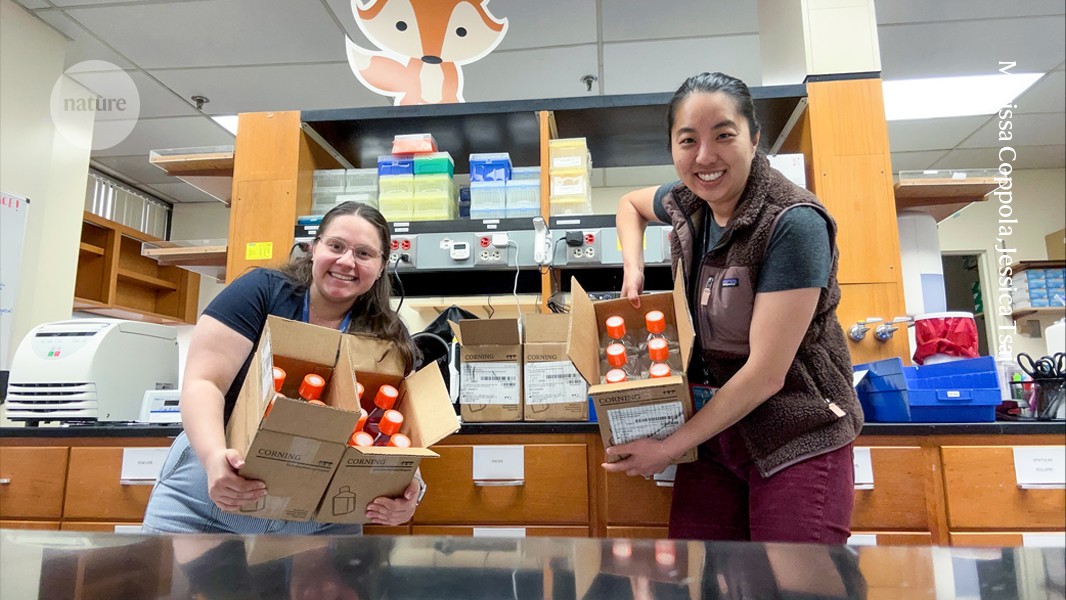
    Jessica Tsai and Marissa Coppola pose for a photo next to a pallet piled high with boxes of lab supplies

    More than 225 kilograms of consumable supplies were fit into the new space.Credit: Marissa Coppola, Jessica Tsai

    Almost immediately, our plans were muddied. Days after finalizing the refrigerator and freezer locations, our department offered us another refrigerator. We had been planning to purchase a mini-fridge to place beneath the bench for bacterial work, but could not turn down the chance to save money by taking free equipment — even if it was too large for its intended location. We ultimately decided that the new fridge would fit perfectly next to the freezer, a placement that would free up space under the bacterial bench for extra consumables.

    Pro tip number 2: try several set-ups for equipment and supplies. Your final configuration will probably be the result of a number of iterations, and that’s OK.

    Storing supplies

    Once our equipment had been placed, we realized that we had a lot of empty wall space. We asked the carpentry team to add rows of open shelving wherever they could, effectively tripling our storage space.

    Our last organizational hurdle was deciding how to fill the space with consumables and supplies. We started in the tissue-culture room, because a lot of plasticware is needed to grow brain tumour cells. We use two kinds of culture plate, ultra-low attachment and adherent, which look identical but have very different functions and prices. Our priority in the tissue-culture room was to separate these plastics, so people wouldn’t accidentally grab the wrong type of plate — avoiding confusion and failed experiments. We also needed to allocate space for other supplies. So we grabbed a pack of sticky notes and used our supply spreadsheet to label drawers and shelves with tentative locations for items.

    We then tested out working in the space, to see whether our system made sense. Often, it didn’t. For example, we originally labelled some shelves as storage for serological pipettes. But we quickly realized that these could be kept in large drawers, and that the shelves would be better for storing bulkier items. We used the same approach to organize the remaining lab benches. Finally, we replaced the sticky notes with large adhesive labels with removable inserts, so we could easily change how things were organized. Clear labelling means there is a place for everything, and everything has its place.

    Let the science begin

    Lab organization can seem intimidating, or even boring — but it’s neither. For one thing, it gave us the opportunity to meet people in our neighbouring labs: when we needed inspiration, we checked out how their spaces were organized. These steps were not completed in a day, but took months. And although we are satisfied with our current layout, it could change as the lab grows.

    Let’s face it: research is difficult. Taking the time to mindfully set up a new space, with organization as a top priority, is an investment in efficiency. Most importantly, your team will be able to work together cohesively, tackling tough scientific questions with minimal friction. Your future self — and lab members — will thank you.

    [ad_2]

    Source link
  • US halts funding to controversial virus-hunting group: what researchers think

    US halts funding to controversial virus-hunting group: what researchers think

    [ad_1]

    Peter Daszak with papers at a desk in front of the House Select Subcommittee regarding the Coronavirus Pandemic.

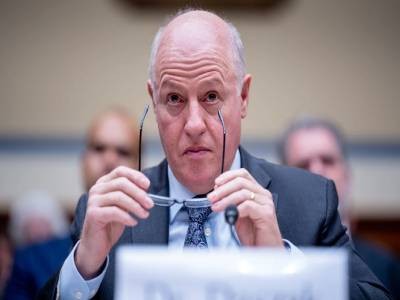
    EcoHealth Alliance president Peter Daszak testified before a congressional panel on 1 May, two weeks before the US government suspended the organization’s federal funding.Credit: Andrew Harnik/Getty

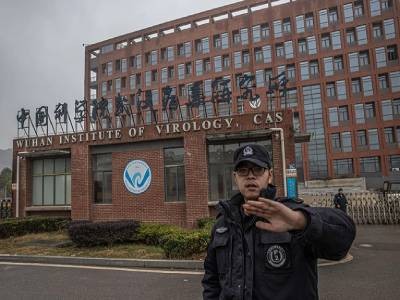
    The US Department of Health and Human Services (HHS) has suspended federal funding for EcoHealth Alliance, a New York City-based nonprofit organization that came under scrutiny during the COVID-19 pandemic for collaborating with a virology laboratory in China accused of potentially leaking the SARS-CoV-2 coronavirus. Researchers who spoke to Nature are divided in their reaction to the decision: some think that the HHS made the right call given EcoHealth’s apparent failure to comply with terms of a grant it was awarded, undermining public trust; others say that the decision seems to be unfairly wrapped up in politics.

    In a memo detailing the decision, Henrietta Brisbon, the HHS’s suspension and debarment official, argued that EcoHealth did not provide adequate oversight of research activities at the Wuhan Institute of Virology (WIV), in China. The WIV was a subrecipient on a federal grant awarded to EcoHealth by the National Institutes of Health (NIH), meaning that it was a partner given funds to carry out some of the research. The document also describes how EcoHealth repeatedly failed to provide information pertaining to the research conducted under the grant that was requested by the NIH.

    The decision by the HHS comes two weeks after EcoHealth’s president, infectious-disease specialist Peter Daszak, was grilled during a hearing run by a US House of Representatives subcommittee investigating the origins of the COVID-19 pandemic. During that session, Republican representatives suggested that EcoHealth had conducted risky research with the WIV and Democrats criticized the nonprofit’s lack of transparency.

    In announcing the latest suspension of funding to EcoHealth, the HHS also proposed debarring the organization from federal funding — a more definitive halting of grant money for a period generally of up to 3 years. Debarments of grantees are usually reserved for serious violations: according to a 2022 report, the HHS issued 134 debarments between 2015 and 2019, most of them owing to a criminal conviction or civil judgment.

    In a statement, an EcoHealth spokesperson said that the organization is disappointed by the HHS’s decision and will be contesting the proposed debarment. “We hope we will get a fair chance to present the volumes of evidence we have that all of these allegations are false, and that they do not rise to the level of something that should lead to an organization being debarred in this way,” Daszak told Nature.

    It is important for research organizations to demonstrate that they have a robust oversight system, says social scientist Filippa Lentzos, a specialist in biosecurity at King’s College London, “even more so when we’re talking about research with pandemic risks, where potentially the entire world could be affected by an accident”. She adds that the decision to suspend funding seems appropriate: “Whatever the particulars of the EcoHealth Alliance case, it is clear the institution has lost the confidence of the HHS, politicians on both sides of the aisle and many other stakeholders to act safely, securely and responsibly.”

    EcoHealth could have done a better job of explaining its work to the NIH and to the public, acknowledges Lawrence Gostin, a health-law and policy specialist at Georgetown University in Washington DC. But, in his view, the suspension has a strong political bent to it. “It’s not clear to me at all whether this decision was based on science, ethics or politics,” he says. “There’s been this drumbeat of criticism of EcoHealth Alliance, particularly from congressional Republicans, and there’s been this myth that the WIV was responsible for the pandemic, but all of the evidence points in the opposite direction,” to a natural spillover of SARS-CoV-2 from wild animals to humans, he adds.

    Two-year delay

    EcoHealth had been collaborating with scientists in China to study pathogens with pandemic potential for years when, in 2014, it received a grant from the NIH to investigate bat coronaviruses. The NIH would eventually suspend this grant in April 2020, in the early months of the pandemic. This came at a time when then-president Donald Trump had been publicly implying that China might be responsible for the pandemic. The funding was reinstated in May 2023 under extensive restrictions, and the WIV was debarred from receiving US funding through subawards later that year.

    The current suspension was motivated by the alleged lack of compliance with the 2014 grant’s terms and conditions. One key problem listed by the HHS is EcoHealth’s submission of a grant progress report more than two years past the deadline. The HHS said that this report contains information suggesting that an experiment conducted by the WIV possibly led to enhanced growth of a modified virus beyond a replication limit set by the NIH. EcoHealth and the WIV were modifying a coronavirus linked to Middle East respiratory syndrome (MERS), to study the potential origins of this type of virus in bats. When reviewing progress on the grant, the NIH told EcoHealth that if any virus generated under the grant showed evidence of replication beyond the set threshold, the nonprofit should ensure that all experiments were halted and communicate the issue to the agency, which was not done. This led the HHS to conclude that the research “likely violated protocols of the NIH regarding biosafety”.

    An EcoHealth spokesperson said that it is untrue that the nonprofit violated the terms of the grant, given that the experiments did not rise to a level that would be considered significant enough to report as unusual. Regarding the delay in submitting the report, the spokesperson said that EcoHealth made every effort to file the report on time, “but these were stymied by contradictory advice from NIH grant management officials, and an online system [for submitting the report] that is confusing and error-prone, leading to multiple instances where the system locked us out.”

    The HHS memo says that, according to a forensic audit performed by the NIH, EcoHealth was never locked out of the system.

    Federal auditors have cited the NIH for its part in not pursuing the late report and recommended that the agency intensify its monitoring of foreign institutions that receive NIH funds.

    Responding to the HHS’s allegation that EcoHealth failed to adequately respond to the NIH’s requests for information and materials related to the WIV’s research, the spokesperson said that, considering the geopolitical pressure on US–China relations during the pandemic, and that the HHS, the World Health Organization (WHO) and the intelligence community were all unable to get evidentiary information out of the WIV, “it is outrageous to propose this as grounds to debar our organization”. (The WHO organized an initial investigation into the origins of the COVID-19 pandemic in China, but further efforts were stymied by that country’s lack of cooperation.)

    Questions of oversight

    Amesh Adalja, an infectious-disease specialist at the Johns Hopkins Center for Health Security in Baltimore, Maryland, says that any grant recipient is expected to comply with a series of conditions — which include submitting reports in a timely fashion and overseeing partner institutions — and that the HHS memo seems to indicate that EcoHealth did not fully meet those standards. “There’s enough listed there to call into question what type of stewardship was going on with that taxpayer money,” he says.

    EcoHealth Alliance has played an important role in illuminating scientists’ understanding of novel viruses, Gostin says. In addition to work on coronavirus surveillance in wildlife, the group has studied the spillover of Nipah virus and other pathogens to humans. He worries that the suspension could disincentivize research aimed at pandemic preparedness and prevention done in partnership with other countries. The next pandemic could easily arise in a country that trades wild animals, like China, so the type of research and surveillance that EcoHealth does is important, he says. The decision sends “a chilling signal to any future researcher that might want to better understand zoonotic viruses in the Chinese region”, he adds.

    Before the suspension, EcoHealth had three active NIH-funded grants aiming to study the risk of emerging viruses in countries such as Bangladesh, Myanmar and Vietnam. Since 2008, the organization has been awarded a total of US$90.3 million in federal funding, $19.59 million of which was from the HHS.

    [ad_2]

    Source link

  • US funders to tighten oversight of controversial ‘gain-of-function’ research

    US funders to tighten oversight of controversial ‘gain-of-function’ research

    [ad_1]

    Biohazard suits hang in a Biosafety Level 4 laboratory in the U.S.

    A new US policy, which goes into effect in one year, provides stricter oversight of risky pathogen research conducted in biosafety facilities.Credit: Associated Press/Alamy Stock Photo

    After more than four years of deliberations, US officials have released a policy that outlines how federal funding agencies and research institutions must review and oversee biological experiments that could potentially be misused or spark a pandemic.

    The policy, which will apply to all research funded by US agencies and take effect in May 2025, broadens oversight of these experiments. The policy singles out work involving high-risk pathogens for special oversight and streamlines existing policies and guidelines, adding clarity that researchers have been seeking for years.

    “This is a very welcome development,” says Jaime Yassif, vice-president of global biological policy and programmes at the Nuclear Threat Initiative, a research centre in Washington DC that focuses on national security issues. “The US is the biggest funder of life sciences research [globally], so we have a moral obligation to guard against risks.”

    Balancing act

    Manipulating pathogens such as viruses inside an enclosed laboratory facility, sometimes by making them more transmissible or harmful (called gain-of-function research), can help scientists to assess their risk to society and develop countermeasures such as vaccines or antivirals. But the worry is that such pathogens could accidentally escape the laboratory or even become weaponized by bad actors.

    Policymakers have had a difficult time developing a clearly-articulated review system that evaluates the risks and benefits of this research, while ensuring that fundamental science needed to prepare for the next pandemic and to advance medicine isn’t paralyzed. The latest policy, released on 6 May by the US Office of Science and Technology Policy (OSTP), is the next chapter in a long-running balancing act in the United States between totally banning high-risk pathogen research and assessing it with standards that some say are too ambiguous.

    In 2014, after several accidents involving mishandled pathogens at US government laboratories, the White House announced a moratorium on research that could make certain pathogens — such as influenza and coronaviruses — more dangerous, given their potential to unleash an epidemic or pandemic. At the time, some researchers said the ban threatened necessary flu-surveillance and vaccine research.

    The government ended the moratorium in early 2017 after the US National Science Advisory Board for Biosecurity (NSABB), a panel of experts that advises the US government, concluded that very few experiments posed a risk. That year, the US Department of Health and Human Services (HHS) instead implemented a review framework by which it would evaluate proposals from scientists seeking federal funding for experiments involving potential pandemic pathogens. This framework applied to proposals to any agency housed under the HHS, including the National Institutes of Health (NIH) — the largest public funder of biomedical research in the world.

    After researchers raised concerns about the transparency of this review process, the NSABB was asked to revisit these policies and guidelines in 2020, but the COVID-19 pandemic delayed any action until 2022. During that time, the emergence of the SARS-CoV-2 coronavirus and the ensuing debate over whether it had leaked from a lab in China, put biosafety at the top of researchers’ minds worldwide. The NIH, in particular, was scrutinized during the pandemic for its role in funding potentially risky coronavirus research. In response, some Republican lawmakers have — so far unsuccessfully — put forward legislation that would once again place a moratorium on research that might increase the transmissibility or virulence of pathogens.

    A ‘step forwards’

    The latest policy aims to address concerns that have arisen over the past decade about lax oversight, ambiguous wording and lack of transparency.

    It breaks potentially problematic research into two categories. The first includes research on biological pathogens or toxins that could generate knowledge, technologies or products that could be misused. The second includes research on pathogens with enhanced pandemic potential.

    Research falls into the first category if it meets several criteria. For example, it must involve high-risk biological agents, such as smallpox and anthrax, that are on a specific list, and it must have particular experimental outcomes, such as increasing an agent’s deadliness.

    Research that falls into the second category includes pathogens that could be modified in a way that is “reasonably anticipated” to make them more dangerous. That criterion means that even research on pathogens that are not typically considered dangerous — seasonal influenza, for example — can fall into the second category. Previously, pathogen surveillance and vaccine-development research were not subject to additional oversight in the United States; the latest policy eliminates this carveout, but clarifies that both surveillance and vaccine research are “typically not within the scope” of research in the second category.

    Layers of review

    Scientists and their institutions are responsible for identifying research that falls into these categories, the policy states. Once the funding agency confirms that a research proposal fits into either category, that agency will request a risk-benefit assessment and a risk mitigation plan for the research from the investigator and institution. If a proposal is deemed to fit into the second category, it will undergo an additional review before the project is greenlit. A report of all federally-funded research that fits into the second category will be made public every year.

    This new directive also mandates that agencies funding biological research beyond the HHS, such as the US Department of Defense, must abide by the same rules — a huge step forwards, says Tom Inglesby, the director of the Johns Hopkins Center for Health Security in Baltimore, Maryland. But it applies only to federally-funded research; the policy recommends but does not require non-governmental organizations and the private sector to follow the same rules.

    Federal agencies and research institutions will now create their own implementation plans to comply with the policy by its effective date in 2025. Yassif says that the policy’s success hinges on how these stakeholders implement it.

    Nevertheless, the policy sets a worldwide standard and might inspire other countries to re-evaluate their current approaches to oversee life-sciences research, says Filippa Lentzos, a biosecurity researcher at King’s College London who chairs an advisory group for the World Health Organization (WHO) on the responsible use of life-sciences research. WHO member states will consider a proposal at the World Health Assembly in Geneva, Switzerland, later this month that would urge nations to cooperate on development of international standards for biosecurity.

    [ad_2]

    Source link
  • France’s research mega-campus faces leadership crisis

    France’s research mega-campus faces leadership crisis

    [ad_1]

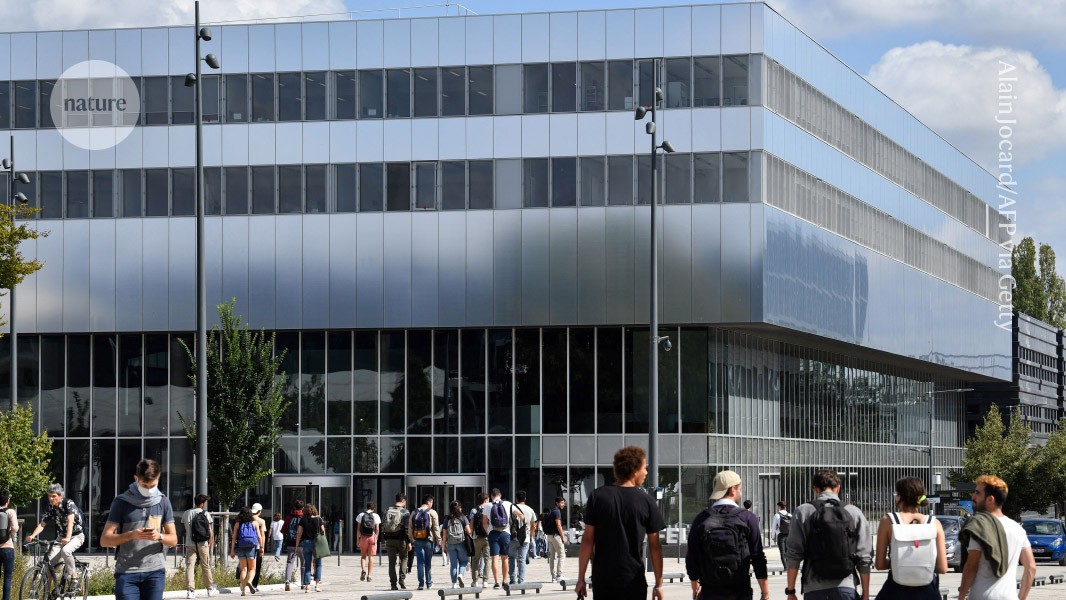
    Students walk past the Paris-Saclay University in Saclay, on the outskirts of Paris.

    Paris-Saclay University formed from a merger of several institutions.Credit: Alain Jocard/AFP via Getty

    The board of directors of Paris-Saclay University, one of Europe’s biggest research campuses, has failed to elect a president after three rounds of voting. The result reflects an ongoing row over the leadership and management structure of Paris-Saclay, which was formed by merging more than a dozen institutions in 2020.

    The two candidates had disagreed about how best to solve problems around staff morale and working conditions at the university but, in a vote on 30 April, neither received enough support to be named president. Yves Bernard, an electrical engineer and former director of Polytech Paris-Saclay, one of the institutions that merged to form the university, won more votes than former president Estelle Iacona in all three voting rounds, but failed to score the 19 out of 38 votes needed for an outright victory.

    The stalemate means the recruitment process must start afresh. Paris-Saclay’s temporary administrator, Camille Galap, who has been at the helm since Iacona’s term ended in March, has said that a new call for candidates will be published as soon as possible.

    “Clearly, the recruitment process will take quite some time,” says Patrick Couvreur, a pharmacologist at Paris-Saclay. “It is not good news for the university, after all the work that has been accomplished to give it an international dimension.” Couvreur supported Iacona for the presidency.

    Flawed organization

    Saclay accounts for around 13% of French research and brings together 220 labs, nearly 50,000 students, 8,100 researchers and members of academic staff and 8,500 technical and administrative staff members. The mega-campus has arguably achieved its goal of shining on the world stage: it was the first French university to appear on the Academic Ranking of World Universities’ top 20 list, in 2020, and has done so every year since, placing 15th in 2023.

    But Paris-Saclay’s complex structure has led to a number of issues for its researchers. Paris-Saclay completely subsumed ten faculties and institutes of the Paris-Sud University, while Four of France’s grandes écoles — elite higher-education institutions — along with the Institute of Advanced Scientific Studies (Institut des Hautes Études Scientifiques) and two associate universities were brought under the same banner, but retained control over their budget and recruitment.

    The leadership has become increasingly multilayered, says Couvreur, which has increased the number of managers and the administrative burden on staff at all levels. “This is leading to burnout, and is a disincentive to young scientists, who complain they have to undertake work they weren’t hired for.”

    In 2021, a study by Paris-based human-resources consultancy Degest concluded that working conditions for staff members had deteriorated since the merger. Despite a massive communications campaign, staff had only a hazy idea of what the Paris-Saclay project was all about, the study said. They also lacked motivation because they felt management did not listen to them, and they questioned the purpose of a number of plans, such as creating links between the various components of the institution, and creating new graduate schools and a bachelor’s-degree institution. Some researchers feared a lack of resources for research, excessive time spent on coordinating operations and bidding for funding, competition between teams for the cash available and heavier administrative workloads.

    Competing visions

    The two presidential contenders had quite different visions for the future of the university, and views on how to address its problems. Bernard calls for a federated rather than centralized structure, with individual institutions working side by side. The distance of decision-making centres and central services from labs and teaching entities complicates management and procedures, Bernard says.

    Iacona’s expired term as president began after she took over the post from education and research minister Sylvie Retailleau, who headed Paris-Saclay until 2022. In her reelection campaign, she said she is against “massive change” and rejects the idea of returning to a federated structure.

    “I am in favour of adjusting what we have already in order to build an integrated — not a centralized — structure, where we all decide on policy together, and award the same degrees at each level,” she says.

    The university’s board of directors is divided on which is the best approach, and so far shows no signs of rallying behind a single candidate. It is possible that a future contest will include new contenders. Iacona is undecided about whether she will continue her reelection bid, but Bernard intends to stand again. “I can’t identify any particular point in my programme that posed a problem,” he says, adding that he needs “to think about that before deciding on any adjustments”.

    [ad_2]

    Source link

  • My PI yelled at me and I’m devastated. What do I do?

    My PI yelled at me and I’m devastated. What do I do?

    [ad_1]

    Cartoon of a scientist turning into a dragon and yelling at another scientist.

    Illustration: David Parkins

    The problem

    Dear Nature,

    I started working as a research technician in a neuroscience laboratory in the midwestern United States several years ago. I am the only person in the lab who knows how to do certain assays and I often juggle multiple projects at a time. Most days, I’m completely exhausted by the afternoon. Because I had no previous research experience before joining the lab, it’s hard to gauge whether I’m being overworked or if I should have more support for my tasks.

    A few months ago, I ended up making a big mistake in one of my experiments. When my principal investigator (PI) found out, she exploded. She criticized my organizational skills and told me that she didn’t see a passion or spark for doing research in me. I was caught totally off guard because she had never yelled at me like this before. She was supportive when I applied to PhD programmes, but now she was questioning whether I would be a good candidate. It felt like a personal attack, and I’m devastated. I know what I did was wrong, but when I tried to communicate that I felt overworked in the lab and was hurt by her reaction, she disregarded my feelings. What do I do? — Sincerely, a troubled technician

    The advice

    Nature reached out to three people with experience in negotiating conflict to get their opinions — they all agreed that mistakes happen in science, but that they can be handled in a productive and positive way.

    “As a psychologist, I understand the profound impact that harsh negative feedback can have on an individual’s self-esteem, professional identity and confidence to progress,” says Chad Ebesutani, the director of the Seoul Counseling Center. To navigate this situation, he says that you must first acknowledge and process your emotions. It’s natural to feel upset, devastated and confused. Finding someone you can trust to talk to about your feelings can help you to clarify how you feel and gain perspective on your abilities, he says.

    Ebesutani recommends approaching your PI to have a conversation when you feel ready. “Express how the feedback made you feel without being confrontational. You can acknowledge the mistake but also express the need for constructive feedback that helps you grow. Although you don’t have control over how your PI will respond, working up the courage to address this with your PI directly can further develop one’s professional character and resiliency when confronted with such difficult situations,” he says.

    It might also help to reflect on the broader context of why the mistake occurred. During your time in the lab, you gained trust and were allowed to take on multiple projects, but the increased level of responsibility (and perhaps a lack of supervision of your workload) might have led to your feeling overwhelmed and exhausted, contributing to the mistake, suggests Ebesutani. “Learning how to employ healthy boundaries to keep your workload manageable could be part of your professional journey forward,” he adds.

    For example, “if it is difficult for you to say ‘no’, you can learn to say ‘yes’ with a twist”, he says. Instead of taking on another project immediately, he suggests that you ask your PI if you can start the project in a few weeks, after you’re able to wrap up your current workload.

    “Everyone makes mistakes, it’s part of the learning process and completely acceptable,” says Alessandra Filardy, an immunologist at the Federal University of Rio de Janeiro in Brazil. She recommends that you do your best to avoid letting the unprofessional behaviours of others — such as someone shouting at you — prevent you from pursuing your goals in research.

    Edmond Sanganyado, an environmental toxicologist at Northumbria University in Newcastle upon Tyne, UK, agrees. “You need to learn from your mistakes, but don’t let the mistake define you.” It can be easy to start questioning your skills and your career path after you’ve made a mistake, he says. He suggests that you take a moment to reflect on all the successes you’ve had during your time as a research technician.

    Sanganyado thinks that part of his job as PI is to be a role model for his students and to create an egalitarian environment in which they feel comfortable sharing their feelings with him. “I always tell my students, ‘I respect you. You are the expert in your area. If I was the expert, I would be the one at the lab bench doing the work.’”

    But all three scientists acknowledge that the power dynamics in academic environments can make it hard for graduate students and junior lab members to tolerate difficult lab environments and have conversations with their supervisors about their feelings and experiences. If you feel that it’s not possible to work things out by speaking to your PI directly, they recommend seeking out a departmental adviser, ombudsperson or another mentor at the university to report the issue.

    If the lab environment does not improve after you’ve processed your feelings and discussed your experience with your PI, then you might consider moving to a different lab.

    All three of Nature’s interviewees agree that your PI’s behaviour was unprofessional and detrimental to your well-being. They all recommend building a network of friends, family members, colleagues and mentors who can provide emotional support and guidance during challenging situations inside, and outside, the lab.

    [ad_2]

    Source link

  • Plagiarism in peer-review reports could be the ‘tip of the iceberg’

    Plagiarism in peer-review reports could be the ‘tip of the iceberg’

    [ad_1]

    Mikołaj Piniewski is a researcher to whom PhD students and collaborators turn when they need to revise or refine a manuscript. The hydrologist, at the Warsaw University of Life Sciences, has a keen eye for problems in text — a skill that came in handy last year when he encountered some suspicious writing in peer-review reports of his own paper.

    Last May, when Piniewski was reading the peer-review feedback that he and his co-authors had received for a manuscript they’d submitted to an environmental-science journal, alarm bells started ringing in his head. Comments by two of the three reviewers were vague and lacked substance, so Piniewski decided to run a Google search, looking at specific phrases and quotes the reviewers had used.

    To his surprise, he found the comments were identical to those that were already available on the Internet, in multiple open-access review reports from publishers such as MDPI and PLOS. “I was speechless,” says Piniewski. The revelation caused him to go back to another manuscript that he had submitted a few months earlier, and dig out the peer-review reports he received for that. He found more plagiarized text. After e-mailing several collaborators, he assembled a team to dig deeper.

    The team published the results of its investigation in Scientometrics in February1, examining dozens of cases of apparent plagiarism in peer-review reports, identifying the use of identical phrases across reports prepared for 19 journals. The team discovered exact quotes duplicated across 50 publications, saying that the findings are just “the tip of the iceberg” when it comes to misconduct in the peer-review system.

    Dorothy Bishop, a former neuroscientist at the University of Oxford, UK, who has turned her attention to investigating research misconduct, was “favourably impressed” by the team’s analysis. “I felt the way they approached it was quite useful and might be a guide for other people trying to pin this stuff down,” she says.

    Peer review under review

    Piniewski and his colleagues conducted three analyses. First, they uploaded five peer-review reports from the two manuscripts that his laboratory had submitted to a rudimentary online plagiarism-detection tool. The reports had 44–100% similarity to previously published online content. Links were provided to the sources in which duplications were found.

    The researchers drilled down further. They broke one of the suspicious peer-review reports down to fragments of one to three sentences each and searched for them on Google. In seconds, the search engine returned a number of hits: the exact phrases appeared in 22 open peer-review reports, published between 2021 and 2023.

    The final analysis provided the most worrying results. They took a single quote — 43 words long and featuring multiple language errors, including incorrect capitalization — and pasted it into Google. The search revealed that the quote, or variants of it, had been used in 50 peer-review reports.

    Predominantly, these reports were from journals published by MDPI, PLOS and Elsevier, and the team found that the amount of duplication increased year-on-year between 2021 and 2023. Whether this is because of an increase in the number of open-access peer-review reports during this time or an indication of a growing problem is unclear — but Piniewski thinks that it could be a little bit of both.

    Why would a peer reviewer use plagiarized text in their report? The team says that some might be attempting to save time, whereas others could be motivated by a lack of confidence in their writing ability, for example, if they aren’t fluent in English.

    The team notes that there are instances that might not represent misconduct. “A tolerable rephrasing of your own words from a different review? I think that’s fine,” says Piniewski. “But I imagine that most of these cases we found are actually something else.”

    The source of the problem

    Duplication and manipulation of peer-review reports is not a new phenomenon. “I think it’s now increasingly recognized that the manipulation of the peer-review process, which was recognized around 2010, was probably an indication of paper mills operating at that point,” says Jennifer Byrne, director of biobanking at New South Wales Health in Sydney, Australia, who also studies research integrity in scientific literature.

    Paper mills — organizations that churn out fake research papers and sell authorships to turn a profit — have been known to tamper with reviews to push manuscripts through to publication, says Byrne.

    However, when Bishop looked at Piniewski’s case, she could not find any overt evidence of paper-mill activity. Rather, she suspects that journal editors might be involved in cases of peer-review-report duplication and suggests studying the track records of those who’ve allowed inadequate or plagiarized reports to proliferate.

    Piniewski’s team is also concerned about the rise of duplications as generative artificial intelligence (AI) becomes easier to access. Although his team didn’t look for signs of AI use, its ability to quickly ingest and rephrase large swathes of text is seen as an emerging issue.

    A preprint posted in March2 showed evidence of researchers using AI chatbots to assist with peer review, identifying specific adjectives that could be hallmarks of AI-written text in peer-review reports.

    Bishop isn’t as concerned as Piniewski about AI-generated reports, saying that it’s easy to distinguish between AI-generated text and legitimate reviewer commentary. “The beautiful thing about peer review,” she says, is that it is “one thing you couldn’t do a credible job with AI”.

    Preventing plagiarism

    Publishers seem to be taking action. Bethany Baker, a media-relations manager at PLOS, who is based in Cambridge, UK, told Nature Index that the PLOS Publication Ethics team “is investigating the concerns raised in the Scientometrics article about potential plagiarism in peer reviews”.

    An Elsevier representative told Nature Index that the publisher “can confirm that this matter has been brought to our attention and we are conducting an investigation”.

    In a statement, the MDPI Research Integrity and Publication Ethics Team said that it has been made aware of potential misconduct by reviewers in its journals and is “actively addressing and investigating this issue”. It did not confirm whether this was related to the Scientometrics article.

    One proposed solution to the problem is ensuring that all submitted reviews are checked using plagiarism-detection software. In 2022, exploratory work by Adam Day, a data scientist at Sage Publications, based in Thousand Oaks, California, identified duplicated text in peer-review reports that might be suggestive of paper-mill activity. Day offered a similar solution of using anti-plagiarism software, such as Turnitin.

    Piniewski expects the problem to get worse in the coming years, but he hasn’t received any unusual peer-review reports since those that originally sparked his research. Still, he says that he’s now even more vigilant. “If something unusual occurs, I will spot it.”

    [ad_2]

    Source link

  • Why it’s essential to study sex and gender, even as tensions rise

    Why it’s essential to study sex and gender, even as tensions rise

    [ad_1]

    Person in a black t-shirt holding a sign protests outside the school districts educational support complex in Katy.

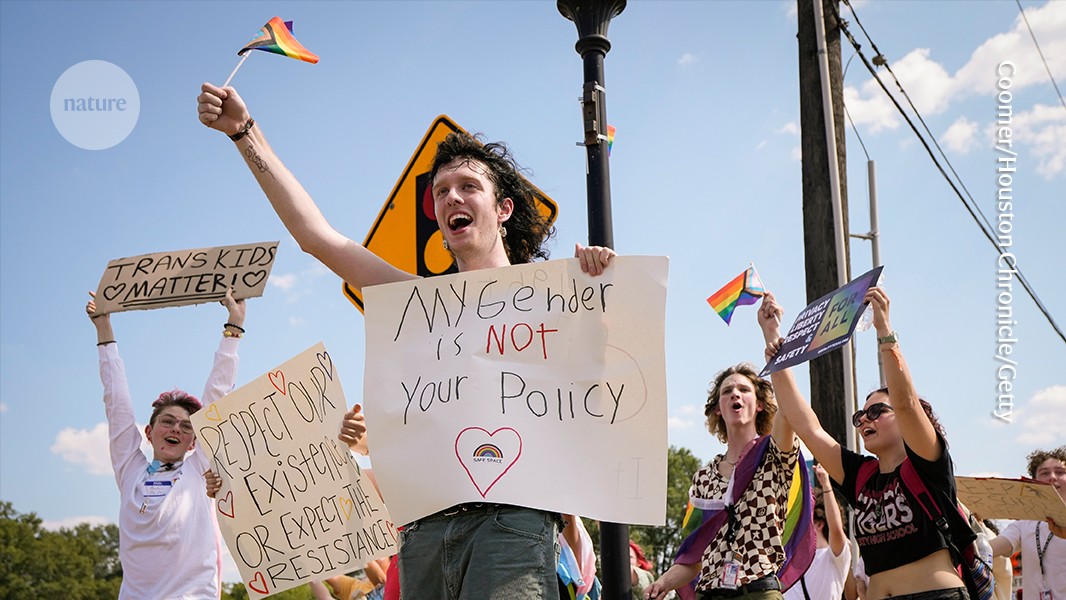
    In 2023, students protested against a new policy in Texas, where parents would be notified if their child asks to be identified as transgender.Credit: Brett Coomer/Houston Chronicle/Getty

    This week, Nature is launching a collection of opinion articles on sex and gender in research. Further articles will be published in the coming months. The series will highlight the necessity and challenges of studying a topic that is both hugely under-researched and, increasingly, the focus of arguments worldwide — many of which are neither healthy nor constructive.

    Some scientists have been warned off studying sex differences by colleagues. Others, who are already working on sex or gender-related topics, are hesitant to publish their views. Such a climate of fear and reticence serves no one. To find a way forward we need more knowledge, not less.

    Nearly 20 researchers from diverse fields, including neuroscience, psychology, immunology and cancer, have contributed to the series, which provides a snapshot of where scholars studying sex and gender are aligned — and where they are not. In time, we hope this collection will help to shape research, and provide a reference point for moderating often-intemperate debates.

    In practice, people use sex and gender to mean different things. But researchers studying animals typically use sex to refer to male and female individuals, as defined by various anatomical and other biological features. In studies involving humans, participants are generally asked to identify their own sex and/or gender category. Here, gender usually encompasses social and environmental factors, including gender roles, expectations and identity.

    For as long as scientific inquiry has existed, people have mainly studied men or male animals. Even as recently as 2009, only 26% of studies using animals included both female and male individuals, according to a review of 10 fields in the biological sciences1. This bias has had serious consequences. Between 1997 and 2000, for instance, eight prescription drugs were removed from the US market, because clinical testing had not revealed women’s greater risk of developing health problems after taking the drugs.

    The tide, however, is turning. Many journals, including those in the Nature Portfolio, and funders, such as the US National Institutes of Health, have developed guidelines and mandates to encourage scientists to consider sex and, where appropriate, gender in their work.

    These efforts are reaping benefits2. Studies, for example, are showing that a person’s sex and/or gender can influence their risk of disease and chances of survival when it comes to many common causes of death — including cardiovascular conditions and cancer.

    Despite this, many researchers remain unconvinced that the inclusion of sex and gender information is important in their field. Others, who are already doing so, have told Nature that they’re afraid of how their work is perceived and of how it could be misunderstood, or misused.

    Because researchers who are exploring the effects of sex and gender come from many disciplines, there will be disagreements. An often-raised and valid concern, for example, is that when researchers compare responses between female and male animals, or between men and women, they exclude those whose sex and/or gender doesn’t fall into a binary categorization scheme. Another is that variability between individuals of the same sex could be more important than that between sexes.

    Sometimes sense does seem to get lost in the debates. That the term sex refers to a lot of interacting factors, which are not fully understood, does not invalidate its usefulness as a concept3. That some people misinterpret and misuse findings concerning differences between sexes, particularly in relation to the human brain, should not mean denying that any differences exist.

    Tempering the debate

    Many of the questions being raised, however, are important to ask, especially given concerns about how best to investigate biological differences between groups of humans, and the continued — and, in some regions, worsening — marginalization of people whose sex and/or gender identity doesn’t fall into narrowly defined norms. Often, such questions and concerns can be addressed through research. For example, studies might find that variability between individuals of the same sex in diet, or body weight, say, are more important predictors of how likely they are to develop anaemia than whether they are male or female.

    The problem, then is not the discussions alone: science exists to examine and interrogate disagreements. Rather, the problem is that debates — and work on sex and gender, in general — are being used to polarize opinions about gender identity. As Arthur Arnold, a biologist at the University of California, Los Angeles, and his colleagues describe in their Comment article, last September, legislation banning gender-affirming medical care for people under 18 years old was introduced in Texas on the basis of claims that everyone belongs to one of two gender groups, and that this reality is settled by science. It isn’t. Scientists are reluctant to study sex and gender, not just because of concerns about the complexity and costs of the research, but also because of current tensions.

    But it is crucial that scholars do not refrain from considering the effects of sex and gender if such analyses are relevant to their field. Improved knowledge will help to resolve concerns and allow a scholarly consensus to be reached, where possible. Where disagreements persist, our hope is that Nature’s collection of opinion articles will equip researchers with the tools needed to help them persuade others that going back to assuming that male individuals represent everyone is no longer an option.

    [ad_2]

    Source link