An algorithm ranks the reputation of peer reviewers on the basis of how many citations the studies they have reviewed attracted.
The tool, outlined in a study published in February1, could help to identify which papers could become high impact during peer review, its creators say. They add that, during peer review, authors should put the most weight on the recommendations and feedback from reviewers of previous papers that have been highly cited.
The study authors extracted citation data from 308,243 papers published by journals of the American Physical Society (APS) between 1990 and 2010 that had accumulated more than 5 citations each. Information about the referees of these papers was not available, so the authors used an algorithm to create imaginary reviewers, which rated papers on the basis of an algorithm that was trained on citation data from the APS data set. Using the review scores that these papers received in real life (a score of 1 being poor and 5 being outstanding), the study authors compared how closely the imaginary reviewers’ scores correlated to the actual scores the papers received.
To rank the imaginary reviewers, the study authors tracked the citations accumulated by the papers published between 1990 and 2000 and checked the review scores they were given. Imaginary reviewers that gave high review scores to papers that went on to attract a high number of citations were given a high ranking.
The authors then tested how effective these reputation rankings were in predicting citation numbers of papers refereed by the same imaginary reviewers in the second decade of the data. The study found that the imaginary reviewers’ recommendations on the 2000–10 papers were in line with the actual citation counts of these papers over that time span, says study co-author An Zeng, an environmental scientist at Beijing Normal University. This suggests that the algorithm is good at predicting high-impact papers, he adds.
More eyes on peer reviewers
Previous attempts to quantify and predict the reach of studies have been widely criticized for relying too heavily on citation-based metrics, which, critics say, exacerbate existing biases in academia. A 2021 study2 found that non-replicable papers are cited more than replicable studies, possibly because they have more ‘interesting’ results.
Zeng acknowledges the limitations of focusing on citation metrics, but says that it’s important to evaluate the work of peer reviewers. Solid studies are sometimes rejected because of one negative review, he notes, but there’s little attention given to how professional or reliable that reviewer is. “If this algorithm can identify reliable reviewers, it will give less weight to the reviewers who are not so reliable,” says Zeng.
Journal editors often use search tools to identify candidates to peer review papers, but they have to manually decide who to contact. If referee activities were ranked and quantified, this would make it easier for journal editors to choose, Zeng points out.
However, ranking reviewers on their reputation is likely to exacerbate the inequities and biases that exist in peer review, says Anita Bandrowski, an information scientist at the University of California, San Diego.
As previous data have shown, most of the responsibility of the peer-review process in science falls to a small subset of peer reviewers — typically men in senior positions in high-income nations that are geographically closer to most journal editors.
Bandrowski notes that the algorithm might favour those with a long history of reviewing, because they’ve had more time to accumulate citations on their refereed papers. “The oldest reviewers by this metric would be the best reviewers and yet the oldest reviewers are going to be retired or dead,” she says.
Zeng disagrees that his approach will make the selection of peer reviewers more inequitable than it is now. After implementing the reputation ranking, editors might find that some reviewers who are not frequently invited have high reputation scores — in some cases better than those who are inundated with referee requests, he says.
Capturing the nuance
Laura Feetham-Walker, a reviewer-engagement manager at the Institute of Physics Publishing in Bristol, UK, worries that the algorithm might not account for incremental studies, negative findings and replications of previous studies, all of which are crucial for science, albeit often not highly cited.
“Under their system, a reviewer who gave a favourable recommendation on an incremental study — for example, for a journal that does not have novelty as an editorial criterion — would go down in the reviewer reputation ranking, simply because that manuscript would be unlikely to accrue large numbers of citations when published,” she says.
Neither does the ranking account for researchers who have never reviewed before, Feetham-Walker adds, or at least those who have never reviewed for a particular publisher.
“We know that a reviewer’s ability to provide a helpful review is dependent not just on their expertise, but also their availability and interest in the subject matter. We also know that reviewers are human, and their reviewing behaviour can change over time depending on various factors,” Feetham-Walker says. “A nuanced algorithm that took all of this into account, as well as adding new reviewers to enrich the pool, would be of genuine value to publishers.”
Inspired by the nutrition-facts labels that have been displayed on US food packaging since the 1990s, John Willinsky wants to see academic publishing take a similar approach to help to inform readers on how strictly a paper meets scholarly standards.
A team at the Public Knowledge Project, a non-profit organization run by Willinsky and his colleagues at Simon Fraser University in Burnaby, Canada, has been investigating how such a label might be standardized in academic publishing1.
Willinsky spoke to Nature Index about what he hopes to achieve with the initiative.
Why should academic papers have publication-facts labels?
I, like many others, have grown concerned about research integrity. Through transparency, we want to show how closely journals and authors are adhering to the scholarly standards of publishing. We want to help readers, including researchers, the media and the public, to decide whether an article is worth reporting on or citing.
The facts that we have selected for the label include publisher and funder names, the journal’s acceptance rate and the number of peer reviewers. The label also shows whether the paper includes a competing-interests statement and an editor list, where the journal is indexed and whether the data have been made publicly available. Averages for other participating journals are listed, for comparison.
It’s important that such information is readily available. When we conducted an exercise with secondary-school students, asking them to find these facts for a single academic article online, many of them took 30 minutes to do so. Some couldn’t find the information. This finding justifies the need for the label: it shouldn’t take half an hour to establish that a journal adheres to scholarly standards.
How did you create the label?
The US nutrition-facts label has been proved to change people’s behaviour, specifically their food-purchasing habits2. Given that so much work went into the label’s development, I thought it would be wise to build on its design.
On the basis of our early consultations with researchers, editors, science journalists, primary-school teachers and others, we created a prototype with eight elements that reflect scholarly publishing standards. We’re now gathering feedback, and might decide to change some of the facts, or to add others. Some people, for example, suggested that we include the number of days that the peer-review process took to complete.
Is AI ready to mass-produce lay summaries of research articles?
We’ve built in ways to automatically generate the label, to ensure that the format is standardized across journals and articles and to make the label available in several languages. We have created a third-party verification system, too, to ensure that authors’ identities are not revealed to peer reviewers and vice versa. This relies on authors, reviewers and editors using ORCID, the service that provides unique indicators with which to identify researchers.
The label will be displayed on the article landing page of the journal website and will be included in the article PDF.
How are you trialling the label’s use?
We’ve completed work with ten focus groups involving journal editors and authors in the United States and Latin America. We also interviewed 15 science journalists about what kinds of fact they’d want to see at a glance.
We built the label specifically for journals using the scholarly publishing workflow system Open Journal System (OJS), run by the Public Knowledge Project. By the middle of the year, we hope to launch a pilot programme involving more than 100 journals using the OJS. The goal is to explore the prospects of industry-wide implementation of the label by next year.
How could journals be compelled to display such a label?
Unlike the nutrition-facts label, which was mandated by the US government, the publication-facts label is the result of voluntary concern about research integrity in the publishing industry.
Although many groups, such as the International Association of Scientific, Technical and Medical Publishers and the Committee on Publication Ethics, manage concerns about research integrity by releasing guidelines on best practices and accumulating tools to flag suspicious activity, we feel that they have not addressed the fact that open access is public access. We need to adapt our practices to cater to the needs of different audiences, not just those in academia.
Although we’re initially building the label for OJS journals, it is an open-source plug-in that other publishing platforms will easily be able to adapt. The software is currently listed as being ‘under development’ on GitHub and will be shared there on release.
We want to show the publishing industry that we’ve piloted this in our own environment and that it is readily adaptable. We want to show that, although you could build your own label, for the sake of comprehensibility, it’s better to have a common format.
This interview has been edited for length and clarity.
The Compact Muon Solenoid (CMS) detector enabled the discovery of the Higgs boson at CERN, Europe’s particle-physics lab near Geneva.Credit: Richard Juilliart/AFP via Getty
Roughly 100 metres underground, in a tunnel that crosses the border between Switzerland and France, lies the largest machine ever built. The Large Hadron Collider (LHC) compresses and collides tiny bits of matter to recreate the fundamental particles that appeared just one-trillionth of a second after the Universe was created.
It’s all part of a day’s work at CERN, Europe’s particle-physics laboratory near Geneva, which is home to the LHC. The lab, which celebrates its 70th anniversary this year, continues to attract scientists who are eager to uncover the nature of particles that comprise matter. Along with more than 2,600 staff members and 900 fellows, CERN hosted nearly 12,000 visiting scientists from 82 countries in 2022. According to indexed papers on the Web of Science database, the researchers publish, on average, around 1,000 papers each year that explore the origin of the Universe, antimatter, dark matter, supersymmetry and beyond. And their ranks include eminent scientists such as Tim Berners-Lee, credited with inventing the World Wide Web, and physicist Peter Higgs, who died on 8 April.
Peter Higgs obituary: physicist who predicted boson that explains why particles have mass
“Particle physics is basically exploring back in time,” says Alain Blondel, a particle physicist who has worked at CERN and the University of Geneva in Switzerland. “The science we do, together with cosmology, astrophysics and many other fields, explores how the Universe was born and how it works. These are questions that have fascinated people for generations”.
Discoveries made at CERN, such as the production of antihydrogen and the development of the World Wide Web, have affected not only the scientific world, but society as a whole. Yet, the inaccessibility of CERN to the majority of the public has led to an almost mythical perception of the organization, says Andri Pol, a photographer based in Switzerland. Pol spent two years capturing the inner workings of CERN for his 2014 book Inside CERN. “You jump into another world and you feel like an alien,” he says. “I don’t know anything about physics, chemistry or mathematics. But you feel the creativity. There’s a lot of energy not only in the machines, but also the people.”
Brain gain
Retaining and attracting scientific talent was a key driving force behind the creation of CERN. During and after the Second World War, many scientists fled Europe to pursue careers in the United States. In the early 1950s, a small group of European scientists put forth a proposal to create a physics laboratory to unite scientists throughout Europe. On 29 September 1954, 12 member states signed a convention establishing CERN near Geneva (see ‘CERN’S growth’).
Source: CERN
Part of the decision to build CERN in Switzerland was the country’s central location in Europe and its neutrality during the war. In fact, CERN’s convention states, “The Organization shall have no concern with work for military requirements.”
“CERN has this aspect of science for peace,” says Rainer Wallny, a physicist at the Swiss Federal Institute of Technology (ETH) Zurich who chaired the Swiss Institute of Particle Physics in 2020–21. “You are not doing anything military related; you work for the curiosity.”
Now, CERN is governed by a council of 23 member states that provide financial contributions and make decisions regarding the organization’s activities, budget and programmes. CERN’s projected annual revenue for 2023 was 1.39 billion Swiss francs (US$1.53 billion), all of which it spends.“I think it is a great model for international collaboration,” says Wallny. “It has a lot of facilities available that are beyond the scope of individual user groups. No one has a particle accelerator in their backyard.”
The LHC, which is the most powerful particle accelerator in the world, consists of a 27-kilometre ring of superconducting magnets. Inside, two particle beams shoot trillions of protons towards one another at nearly the speed of light, causing some to collide and transform their energy into new particles. Along with the LHC, CERN has eight other particle accelerators, two decelerators, an antimatter factory and a vast array of engineering and computing infrastructure.
These resources bring together thousands of scientists from around the world to tackle big questions in particle physics. Research efforts at CERN led to the discovery of weak neutral currents in 1973, the W and Z bosons in 1983 and three types of neutrino in 19891–3. These findings provided support for the standard model of physics, a theory developed in the 1970s that describes the fundamental particles of the Universe and the four forces that shape their interactions. Then, in July 2012, scientists at CERN found evidence for the last key force in the standard model — the Higgs boson4.
“I’m fascinated by the concept of having these large, international collaborations working on a scientific puzzle,” says Lea Caminada, a particle physicist at the University of Zurich and the Paul Scherrer Institute in Villigen, Switzerland. Caminada and her research group develop pixel detectors for the Compact Muon Solenoid (CMS), a particle detector experiment at the LHC that does research on the standard model, dark matter and extra dimensions. “Doing high-energy physics is unique. It’s really the energy frontier, and there is no other facility in the world where you can do this,” she says.
The CMS collaboration involves more than 5,900 physicists, engineers, technicians and students from 259 institutions across 60 countries. The collaboration publishes around 100 papers each year and celebrated its 1,000th publication in November 2020. But organizing and contributing to large-scale projects is no simple feat. “It’s not always easy to work at CERN. It’s very hard to organize experiments this big,” Caminada says. For instance, she explains, everyone involved in the CMS experiment can review manuscript drafts and provide feedback before submission of a paper. “But I think it creates opportunities for people in different countries.”
A fount of knowledge
Thea Klæboe Åarrestad’s first experience at CERN was during an undergraduate internship in July 2012. During the paid programme, she took three weeks of classes, met with fellow physicists and attended lectures from specialists in the field. It also happened to be the year CERN announced the discovery of the Higgs boson. “Peter Higgs was there. The press of the free world was there. People were sleeping in lines outside the main auditorium to catch the speech,” she says.
The Gargamelle chamber at CERN, operational during the 1970s, detected neutrinos.Credit: CERN PhotoLab
Åarrestad went on to earn her PhD from the University of Zurich in 2019, where she worked on the CMS experiment at CERN, and then became a research fellow at CERN from 2019 to 2021. “My daughter was five months old when I started commuting to CERN. I spent eight hours on the train every day,” she says. “My friends questioned whether I could do exactly the same work for a company, and I can honestly say no, I can’t.”
Now, as a particle physicist at ETH Zurich, Åarrestad studies how to use machine learning to improve data collection and analysis methods at CERN. “The environment there is fantastic. You go for a coffee and everyone has ideas and thoughts to discuss. I was always very passionate about physics, and being at CERN just made me even more passionate about it because I shared it with so many others,” she says.
Reverberating impacts
The impact of CERN goes well beyond the smashing together of tiny particles. “Such a vibrant intellectual node radiates out to the universities,” says Wallny. He often sends his graduate students to CERN, where they can gain experience in a large, international setting. “There’s a lot of education happening, and not just in science and engineering. You interact with people from other cultures and learn how to express yourself in English,” he adds.
According to Wallny, lessons from organizing large-scale collaborations at CERN can also be applied to other areas of science, such as quantum computing. “In these large experiments, you have to invent your own governance. You have a bunch of usually quite anarchistic academics who still have to play by some rules. You have to give yourself a constitution and a collaboration board. These approaches can easily be copied in other emerging fields of science,” he says.
Investing in projects such as CERN has benefits for society that expand beyond the bounds of academia. Massimo Florio, an economist at the University of Milan in Italy, calculates the costs and benefits of large-scale research infrastructure projects. In 2018, Florio and his colleagues evaluated how procurement orders from CERN for the production of the LHC affected knowledge production, patent filings, sales and profits for more than 350 supplier companies5.
Nature Spotlight: Switzerland
“There is clear evidence that after they got an order from CERN, even 10 years later, it was transformative for them,” says Florio. “Even if you give zero value to the discovery of the Higgs boson, the knowledge generated along the way has immediate benefits to society.”
Over the past 70 years, technologies developed at CERN to tackle technical and computing challenges have been applied throughout the world. Perhaps the most notable is the World Wide Web, which was developed by computer scientist Tim Berners-Lee in 1989 to rapidly share knowledge among scientists. In medicine, the technologies from particle accelerators and detectors are used in positron emission tomography scanners and radiation methods for cancer treatments, such as hadron therapy6.
Satisfying curiosity
As CERN embarks on its eighth decade of research, the organization is planning to upgrade its accelerators to add to knowledge about the fundamental particles that make up the Universe. Towards the end of 2025, the LHC will be shut down and upgraded to a high-luminosity LHC over about four years. The upgrades aim to increase the machine’s luminosity tenfold, which would result in a larger number of collisions, allowing scientists to observe new events and rare events, such as those producing a Higgs boson, in more detail. “If we’re ever going to produce new physics, we need a lot of data. And in order to get a lot of data, we need more collisions,” says Åarrestad. She notes that upgrades to the LHC will result in almost quadruple the number of collisions that occur now.
Feasibility studies are also being conducted for the potential development of the Future Collision Collider (FCC), a massive, 91-kilometre particle accelerator7. A later phase of the proposed FCC is a hadron collider that could have roughly seven times the collision energy of the LHC. But there are concerns about the costs and environmental impacts of the FCC proposals8, as well as particle-physics research more broadly. “There are a lot of humans that would benefit from that money. It costs energy and affects the environment to do fundamental physics,” says Åarrestad. “But I think it is something we should continue in the future despite the cost and the energy consumption, because in the end, as humans, what are we if we’re not curious about where we’re from?”
Furthermore, says Pol, basic research often leads to real-world advances. “Sometimes, something new comes out of basic, theoretical research — one never knows. So, you have to give people who are really skilled a chance to try and find out what makes us what we are,” he says.
That sentiment holds for non-scientists, as well. While working on a contribution to the 2023 book Collisions: Stories from the Science of CERN, Lucy Caldwell, a novelist and playwright based in Ireland, had the opportunity to visit the organization. There, she met several scientists and published a fictional piece on the basis of her experiences. “As humankind, we tend to tell the same stories over and over in different variations,” she says. “Being able to go somewhere like CERN and talk to the scientists right at the cutting edge of knowledge gives you, as a writer, new images, new words and new concepts. It gives you ways to make old stories fresh again and ways to tell new stories. And I think that’s important for all of us.”
Jitao David Zhang (left) with his apprentices Jannick Lippuner (centre) and Giulia Ferraina.Credit: Matthew Lee
Giulia Ferraina and Jannick Lippuner, both 19, are my latest apprentices in the pharmaceutical research unit of F. Hoffmann-La Roche, a global company, at its headquarters in Basel, Switzerland. Both are in their fourth and final year of vocational education and training (VET), specializing in informatics and communication technology. Coaching them, just like discovering drugs, is a rewarding part of my job as a research scientist.
Giulia and Jannick attend vocational schools for one or two days a week. Besides studying professional topics, such as how to build a computer network or an app, they also acquire life knowledge and skills. These include setting a household budget, forming a family or partnership and even starting their own company.
The rest of their time is divided between working in my team as software developers for drug discovery and attending the company’s dedicated learning centre. Besides writing software that helps to find better drugs, they learn advanced informatics topics, such as cybersecurity and artificial intelligence (AI), and acquire crucial skills such as project management and presentation. Within four years, they will become software engineers with industrial work experience.
Vocational education is common in German-speaking countries. At around the age of 16, teenagers in Switzerland make a choice between general education in an upper secondary school and a VET apprenticeship in one of more than 250 professions. Defined and organized by a partnership between the Swiss federal government, professional associations and individual regions of Switzerland called cantons, VET combines on-the-job training with classes in schools. Each profession has its own educational plan, which specifies a nationwide standard of skills to be mastered by the apprentices. After finishing the training, which takes between two and four years depending on the profession, and passing a final exam, apprentices receive a diploma that certifies their qualification to work or to pursue higher education. Apprentices are paid a salary, which usually starts at 600–1,000 Swiss francs (around US$700–1,170) per month and increases in each year of training.
I stumbled on the apprenticeship culture in Germany while doing my PhD in computational biology in the 2000s at the German Cancer Research Centre in Heidelberg. Until then, I had no real idea about vocational training — but I did harbour some unfair stereotypes. When I was in secondary school in Tianjin, a city in northern China with prosperous industries and booming businesses in the 1990s, vocational training was often seen as an inferior choice to general education. An apprenticeship was stigmatized as the last resort for low achievers and problematic children. My stereotypes were banished as soon as I started working with and coaching apprentices in Heidelberg. The young people amazed me with their technical expertise and diligent work, and became co-authors of scientific software and publications. Coaching them improved my leadership and communication skills, especially across cultures, because neither German nor English, spoken by the apprentices, was my first language.
Nature Spotlight: Switzerland
I moved to Basel to take up an industry position in 2011. It soon became clear to me that Swiss people also consider the apprenticeship a respected education. Statistics confirm my impression. Two-thirds of young people in Switzerland opt for an apprenticeship, and one-third of businesses train them. Despite the trend in recent years for more students to choose general education over vocational training, high-quality apprenticeship openings remain competitive. My company trains around 300 apprentices across 15 professions in the Basel area every year. For 6 informatics and computer-technology positions, we usually receive more than 100 applications.
Giulia and Jannick are my fourth and fifth trainees. In their third year, Jannick automated a bioinformatics pipeline (see go.nature.com/49uegts) and Giulia developed several software widgets for chemists that help them to predict the properties of molecules to be synthesized. Currently, both are building a system that helps biologists to visualize and interpret omics data. Apprentices advance scientific research while honing their skills. Their education is an early-access, paid-for opportunity to gain the combination of theoretical knowledge and practical skills that is normally offered by universities.
Giulia and Jannick learn much from solving real-world problems such as fixing a bug. They learn more from making mistakes and getting feedback in a working environment. After attentive learning followed by good sleep (the working hours of underage apprentices are legally limited to a maximum of 9 hours a day), they become capable, productive and keen to learn more.
Doing an apprenticeship is not without risks and downsides. I can imagine that, for some 16-year-olds, it must be a formidable task to decide on a profession and to become self-disciplined and professional almost overnight. Also, the quality of education can vary by profession, school and company. Moreover, some might consider apprenticeships outdated in an age of automation and disruptive technologies such as AI potentially replacing human jobs. A German friend of mine who learnt book binding had to do another apprenticeship and study to get a job as an accountant. Will my apprentices and their peers face a similar fate?
Although the honest answer to this is ‘I don’t know’, two observations make me cautiously optimistic.
First, the Swiss apprenticeship system is constantly evolving. The educational plans are updated every few years with feedback from all parties. Teachers and vocational trainers such as me meet, exchange and receive continuous education regularly. Apprentices are incentivized to explore and adopt new technologies to enhance their productivity. For instance, apprentices in information and communications technology can already use tools such as ChatGPT in their final examination, as long as they declare the prompts they have used. A springboard from classroom to career, apprenticeship prepares one for changes in life.
Second, the apprenticeship system fosters individual growth. Beyond learning from experienced colleagues and working under supervision, apprentices are encouraged to lead activities — for instance, building a website for a project or advising schoolchildren about their career choices. Besides day-to-day work, my apprentices and I are required to hold a formal discussion every semester. We examine their professional and personal development, give each other feedback (from which I learn a lot about myself) and set goals for the coming six months. Apprentices acquire soft skills such as creativity, empathy, compassion, resilience and teamwork that will serve them well in life.
I am therefore convinced that an apprenticeship, if done right, is a valuable education. The short feedback circuit between what is needed and what is taught, as well as an education focusing on self-actualization and collaboration, prevent the formation of a chasm that is sometimes apparent between academia and industry1. Pondering my own journey to become a research scientist in industry, I wish that I had learnt earlier about how to recognize and solve real-world problems, the power of knowledge gained from experience, the importance of building trust-based relationships and the fulfilment gained by focusing on the growth and development of people around me.
Like most of my previous apprentices, Giulia and Jannick both want to attend university when their apprenticeships end. Before that, Jannick is with us for another year (including a six-month company internal exchange in the United States) before undertaking his military or civil service, which is mandatory for men of his age in Switzerland. Giulia will study informatics part-time while working as a software developer at our company. Both have promising careers ahead: ex-apprentices abound among Swiss political and business leaders. Other countries, including the United Kingdom, the United States and China, are also expanding and updating vocational training programmes. The world should perhaps take more notice of the Swiss model.
Researching the institutions you’re applying for can help you personalize your application.Credit: Getty
Academic careers are meant to follow a set trajectory: PhD student, postdoctoral researcher, tenure-track job. But when we were thinking about what to do after our PhDs, we decided to skip the postdoc stage and go straight for tenure-track jobs owing to visa restrictions (Q.L., an international student at the time) and financial considerations (V.R., who had the looming pressure to pay student loans while supporting a family). Our mentors and peers were sceptical. A faculty member advised one of us (Q.L.) against it. Even we weren’t sure we could do it — but we did. By the end of our PhDs, we had received 15 tenure-track offers between us.
At a professional-development workshop, we were able to tell the discouraging faculty member that we would be starting our laboratories, not working as postdocs. His response — “I guess I was wrong” — was a moment of vindication for us. In proving others wrong, we had also disproved our own doubts of success.
We’ve previously shared our advice for maintaining an organized and successful job hunt. Here, we aim to demystify the interview process, showing that, even when the road seems impossible, there are routes to achieving your goals. We think that, with determination, support and a clear understanding of one’s values and goals, the academic-job market can be navigated successfully, even for those who, like us, choose to forgo the typical postdoc route.
Divas, captains, ghosts, ants and bumble-bees: collaborator attitudes explained
PhD students aspiring to tenure-track positions must recognize that, beyond the standard interview preparation, you should have a good record of research. We were unusual PhD graduates: by the time V.R. applied, she had published about 90 peer-reviewed papers after working full-time as a data analyst before starting her PhD (she also worked part-time during the PhD). In addition, V.R. had received several nationally competitive awards and fellowships. Q.L. had published more than 25 peer-reviewed papers, released 2 software packages (with more than 30,000 downloads), developed 3 web apps for statistical analysis and received prestigious research awards and funding.
Both of us also had master’s degrees in quantitative methods.
We aim to demystify the pre-interview screening and on-campus interviews. Interviewing can be nerve-wracking, and so we provide practical advice and insights on the basis of our personal experiences.
Research the institutions, departments and locations
Before a prescreening interview, do your homework on the institutions and departments. Familiarize yourself with faculty members and their research. Identify centres and institutes that complement your work and early-career programmes that would help you as you launch your career. Also, research the location and be ready to answer questions about why you want to live there. For example, we noticed that interviews were more likely to come from universities in states that we already had ties to — by having studied there or having lived in a nearby state. Personal motivations might make or break an interview; because faculty searches are costly, the search committee might take into consideration the likelihood of you coming to, living in and staying around the area.
People, passion, publishable: an early-career researcher’s checklist for prioritizing projects
Don’t start your job talk from scratch
Job talks are central to the faculty job search. The talk typically summarizes the core themes of your research and discusses your published, ongoing and future work as a cohesive and engaging narrative. At the end of the talk, you should have convinced the department that your work is important and fundable, that you will thrive at their institution, that you would be a great fit as a colleague and that you can teach students. Using materials from previous talks can ensure that you are familiar with the details, help you to feel more at ease and hopefully allow you to discuss your work more confidently. V. R. used some of her slides from talks she gave for her master’s degree, qualifying exams and dissertation proposal. Q.L. made slides from past posters and presentations that had already been refined and rehearsed.
Anticipate common interview questions
Prepare for a range of interview questions, and have a cohesive story ready about your research and why moving to that institution fits with your future research. In first-round online screening interviews, it was common to get questions about our teaching philosophy, future goals and fit with the department as well as why we would want to live in that particular location. We received fewer questions than we expected during in-person interviews; those were more about allowing us to ask questions about the department, culture, institution and what it’s like living in the area. We both had lists of questions that we asked depending on whether we were talking to, students or faculty members (junior, senior, out-of-area or teaching).
Demonstrate enthusiasm and engagement
Show genuine enthusiasm for the position and the opportunity to contribute to the institution’s academic community, both ahead of and during an interview. Engage with the interviewers by asking thoughtful questions about their research, departmental culture, teaching or the resources available. This demonstrates your interest in becoming an active and valued member of the department. Many in-person interviews involved one-on-one discussions with faculty members, as well as group interviews with students. V.R. learnt the hard way that yes, some might even ask inappropriate, and sometimes illegal, questions — on topics such as age, marriage or children. It’s helpful to have prepared answers, or deflections, for such questions.
Violeta Rodriguez is now a tenure-track assistant professor.Credit: Violeta Rodriguez
Prepare for on-campus interviews
If you progress to the on-campus interview stage, prepare extensively by reviewing the itinerary, schedules and departmental expectations. Plan interactive and engaging research and teaching presentations tailored to the specific audience, showcasing your ability to communicate complex ideas effectively. Bring a notebook or tablet to write questions and answers to consider if you get an offer. Have your travel bags ready, because interview offers might come with little notice.
Prepare to be tired
Our interviews generally lasted one or two days. There is talking, walking and eating! Even when you are excited about a particular interview, the process can take a toll on you. If you can, schedule some rest time, and wear professional but comfortable clothes and shoes during interview days.
A year in the life: what I learnt from using a time-tracking spreadsheet
Negotiate job offers effectively
If you receive job offers, you must negotiate effectively to secure the best possible terms. Look up salary expectations and the cost of living in the area to inform your negotiation. Consider negotiating not only the financial aspects, but also your teaching load, research support, start-up funds and professional-development opportunities. Communicate your needs and expectations while remaining professional and open to a collaborative negotiation process. Be ready to negotiate over the phone or through e-mail.
Leverage multiple offers
If, like we did, you find yourself with multiple job offers, it’s essential to understand that each offer can serve as leverage in negotiations. Sharing — without fully disclosing the names of the places where you have other opportunities — can prompt institutions to improve their offers. Approach this carefully, ensuring that you communicate in a way that is professional and not confrontational. Express enthusiasm for each opportunity while highlighting your desire to make the best decision on the basis of a comprehensive evaluation of all offers. We used these negotiations as opportunities to find the institutions that would best support our research.
Three actions PhD-holders should take to land their next job
Seek guidance and support
Throughout the job-search process, seek guidance and support from mentors, faculty advisers or career consultants. They can provide valuable insights, review your negotiation strategies and offer advice from their own experiences. When considering benefits across multiple institutions, such as health insurance and retirement plans, we consulted financial advisers to determine our best paths.
Overall, we think that, with a strategic, personalized approach, complemented by a willingness to learn from each experience, PhD students can enhance their appeal to hiring committees, turning the daunting journey towards tenure-track positions into a series of informed, strategic steps. And if you can find a friend during this process, as we found in each other — to vent to, compare notes with, talk you out of your moments of self-doubt and offer encouragement — consider yourself extra lucky!
By staying organized in their job hunt, both authors received several job offers.Credit: Getty
We met during the last year of our PhD training, after securing placements at the University of Illinois Chicago’s Department of Psychiatry for our predoctoral internships — the final step of our clinical doctoral programmes. V. R. came from the University of Georgia in Athens and was pursuing a PhD in clinical psychology, and Q. L. came from Vanderbilt University in Nashville, Tennessee, and was working towards a PhD in clinical science and quantitative methods. It was amid the academic rigour and personal stress of the last year of our programmes that we became friends. We bonded over being immigrants and not speaking English as our first language while navigating the complexities of academia. We both wanted to forgo postdoctoral training and instead immediately become junior professors. Now, we’re assistant professors: V. R. is at the University of Illinois Urbana-Champaign, and Q. L. is at Boston University in Massachusetts.
The odds we faced in the academic job market had seemed insurmountable, particularly to immigrants, and we had been cautioned by mentors and even junior faculty members about the challenge ahead. But we succeeded: we received a combined total of 27 in-person interviews, leading to 15 tenure-track assistant-professor offers across departments of psychology, paediatrics or psychiatry, schools of education and academic medical centres. (You can check out our hints for nailing job interviews in our other article.)
How to move labs
Despite the positive outcome, the process was stressful, fast and unpredictable. Our friendship became a sanctuary: amid the daunting job market and our own self-doubt, we understood and encouraged each other. We want to offer what our friendship provided us — understanding, support and encouragement — to researchers hoping to stay in academia after earning a PhD, so we are sharing our reflections and insights.
We must first make clear: no amount of job-search tips and tricks can substitute for good science and a strong publication record. To gauge our readiness, we looked up the CV of the most recent hire in each department that we applied to. We also made sure we had backup offers of postdoctoral positions. While navigating this process, we learnt that institutions were interested in candidates who planned to pursue external funding.
Qimin Liu is now an assistant professor.Credit: Qimin Liu
We had both obtained federal and private funding before — making us more competitive. We urge aspiring professors to prioritize their research contributions, external fellowship and grant applications and academic achievements above all.
To readers who’ve successfully navigated this process, many of our reflections and insights could seem obvious. However, this kind of advice can be the hardest to follow during a fast-moving job hunt, with several moving pieces involved and new considerations and job offers or advertisements emerging unexpectedly. Treat this as a checklist before beginning to fill out job applications.
Tips and tricks
Start your search early. Allow ample time to prepare for the job hunt; research potential options, such as jobs in academic medical centres, standard department positions or tenure-track jobs in related fields; and submit applications. Plan to reply to job ads long before the first deadline. Starting early gives you time to collect and incorporate feedback from mentors and colleagues.
Training: Free course on peer review
Prepare your networks. The academic job market can be unpredictable, with opportunities emerging unexpectedly. It is important to think about who can write letters for you — sometimes at short notice. Most of our applications required three letters of recommendation from all applicants. Others requested letters from only shortlisted candidates.
Plan ahead. The final drafts of materials took, on average, one to two months in total to prepare and polish. The initial drafts took about 8 hours, and the research statement required a total of 16 hours. (The research statement summarizes your research programme, the work you’ve done so far and what you plan to pursue in future. It can also highlight why a particular institution is well-suited to support your work.) Preparing drafted statements in advance made it easier to adapt them to different positions later — tweaking materials for specific positions took 30–60 minutes per application.
Research potential job opportunities. Don’t just rely on word-of-mouth or googling specific positions to find things you’re interested in applying to. Use online job boards (such as HigherEdJobs or Nature Careers), and tap into your professional network by sending e-mails or LinkedIn messages to your mentors and colleagues, letting them know you’re on the job market. Scour social media and department websites to find available positions. We both posted on X (formerly Twitter) that we were job hunting, and several people reached out with opportunities.
Develop job application ‘templates’. Create a set of well-crafted templates for your application materials, such as cover letters and statements, on which you can easily fill in your name, relevant details and where you’ve previously worked. Having adaptable documents allowed us to respond quickly to new postings.
Tailor your application materials. Templates can take you only so far. Take the time to customize your application materials, including your CV, cover letter (each of ours was one page long) and research statement, to highlight your relevant skills, experiences and research contributions. Tailoring your materials to each position demonstrates genuine interest and increases your chances of standing out to hiring committees. Generic applications are easy for hiring managers to reject. Mentioning centres or institutes that align with your research; available resources, such as early-career programmes, that you want to take advantage of; and the names of people whom you are interested in working with can help to personalize your application materials.
Stay organized. Maintain a well-organized system to track application deadlines, requirements and submission statuses. Be ready to remind your letter writers to submit their recommendations. Keep a calendar or spreadsheet to ensure that all required materials are submitted on time and to track when to follow up. An example spreadsheet is provided below.
Practise for interviews and job talks. Run mock interviews with your peers or mentors. Practise answering common interview questions and develop concise, compelling responses that highlight your expertise, teaching abilities and fit. Treat these seriously — you’re likely to be nervous in the real interview, so try to recreate that while rehearsing, perhaps by inviting a relatively unknown colleague or professor to join the practice runs. V. R. recorded her job talk on Zoom and sent it to others for feedback.
Practising your job talk — a presentation of your academic research that is often a spoken version of your research statement — until you know it backwards and forwards will prepare you for the unexpected. In addition, rehearsing how you plan to respond to different questions, and practising saying that you want people to hold their questions until the end, can be helpful.
Prepare a start-up budget to get your lab running. Many academic positions include a start-up fund for incoming faculty members. It is typically used for summer salary and staffing or research costs. You might be asked for an estimated budget before, during or after the interview stage — so you should have one ready in advance. When preparing your budget, keep in mind the spending norms at the institution and for your discipline. Ask for more than you think you need, because this amount will often be reduced during negotiations.
As we look back on our job-hunting experiences, we are reminded of how much we grew in this process, in ways that are not related to just our jobs — and this growth continued in our interviews.
Johnblack Kabukye struggles to explain to his colleagues back home in Uganda why he’s doing a two-year stint as a postdoctoral researcher in Sweden. “If you say you’re doing a master’s or a PhD, it’s clear what that means,” says the digital-health specialist, who worked as a physician for a decade before switching to research. But a postdoc? “It’s not a thing that is understood,” he says.
The skills he’s learning at Stockholm University while building electronic health tools tailored to patients’ needs are certainly useful for his job as a physician and informatician at the Uganda Cancer Institute (UCI) in Kampala. But the postdoc format itself — a short-term position designed to bridge the gap between doctoral student and tenured academic — makes little sense in Uganda, where it is common to have a permanent teaching job at a university before even embarking on a PhD.
“I have not heard of a single postdoc opportunity in Uganda,” Kabukye says.
Career resources for African scientists
That could soon change across Africa. The number of people gaining PhDs in the continent is growing, and so is the need for postdoctoral employment. “There is definitely greater awareness of the postdoc position, and more and more postdocs,” says Gordon Awandare, pro-vice-chancellor in charge of academic and student affairs at the University of Ghana in Accra.
But as the continent’s postdoctoral employment needs have grown, so too have fears that the problems created by a proliferation of postdoc positions in other parts of the world — which critics say trap young researchers in a cycle of poorly paid, short-term positions with no job security — could also arise in African countries.
Breaking ground
Postdoc frustration is a recurring theme in studies that look at early-career researchers. Two global surveys of postdoctoral students by Nature, one published in 2020 and the other last year, found that more than one-third of respondents were dissatisfied with their lot. A lack of job security, career-advancement opportunities and funding were the most-cited reasons.
Nature’s surveys underscore the dearth of postdoctoral researchers in Africa. Of the 3,838 postdocs surveyed in June last year, only 91 were based on the continent. The number of respondents (who were self-selecting) were too few, and too geographically concentrated in three countries — South Africa, Nigeria and Egypt — to be viewed as representative of the continent. Yet, they offer tantalizing glimpses of an emerging segment of the global research workforce.
For example, African postdocs were older than the global average, with more than 40% aged 41 or older. They were also more likely to be doing their postdoc in their home country (68% in Africa compared with 39% globally) and they were much less likely, than the global average, to be employed on fixed-term fellowships or contracts (see ‘Employment matters’). Their pay also stands out: 60% said they earned less than US$15,000 per year — the lowest option survey-takers could tick, and a fraction of what most postdocs are paid in Europe and North America. Lower costs of living play some part in the lower salaries, but not enough to justify the gap (see ‘A continental shift’).
Postdocs in Africa were also more likely to report having a second job alongside their postdoc than were other respondents, on average (33% of respondents in Africa, compared with 10% of respondents overall). The most common reason was to provide extra income (71%), while 57% said their second job gave their skills and career prospects a boost. However, notes Awandare, the tendency of many African postdocs to have permanent academic positions before becoming a postdoc could be a confounding factor in this measure.
Yet, and perhaps surprising given their low pay, Africa-based postdocs were the most optimistic about their futures of all respondents from the geographical regions represented. Overall, 64% of Africa-based respondents reported that they felt positive about their future job prospects, compared with 41% globally. Postdocs in Africa were twice as likely to say that their postdoc roles were better than they imagined (25% compared with 12% overall). And 42% of respondents in Africa felt that they had better prospects than previous generations of postdocs, far exceeding the 15% global average.
That optimism makes sense to Awandare, who thinks that postdocs in his country might feel more important than do their peers who work in large laboratories overseas. In addition to his leadership role at the University of Ghana, he founded and runs the West African Centre for Cell Biology of Infectious Pathogens at the university. He says postdocs at the centre are treated the same as faculty members. “In some advanced institutions, they wouldn’t get that recognition and status,” he notes.
And even though their salaries are low by international standards, postdocs at his centre can be better paid than entry-level permanent university staff who only teach, he says. This is because postdocs tend to be paid out of lucrative international grants. “Ten to fifteen years ago, many of these positions would have been overseas — but now funders, to their credit, increasingly provide positions on the continent,” he says.
A different set-up
Employment structures also differed between Africa and the rest of the world, according to Nature’s survey. Although similar proportions of postdocs were employed in academia in Africa as they were globally (around 90%), the proportion of part-time postdocs was higher in Africa — 12% compared with the global average of 5%. One of them is Felista Mwingira, a parasitologist at the University of Dar es Salaam in Tanzania. She exemplifies how African early-career researchers have been forging ahead in their research careers in the absence of a formal structure of postdoc positions.
Mwingira obtained her PhD in 2014 from the University of Basel in Switzerland at the age of 33 — which she says is very young for researchers in Tanzania. By the time she started her studies, she was already permanently employed by her university in Tanzania, and was able to return to that post after finishing her PhD. Back home, she could take three months paid maternity leave for each of her two children, born four years apart. And although juggling pregnancies and bringing up children with the demands of an academic career was a challenge, it meant she had job security — something postdocs at the same stage in their lives in other parts of the world often lack.
Falling behind: postdocs in their thirties tire of putting life on hold
Mwingira’s work after her PhD was not technically a postdoc. But as her children got older, she sought out a mentorship arrangement at her university that provides her with research training and, sometimes, extra money from the projects she works on. It’s not a formal postdoc, but she hopes it will help her to attain the publication ‘points’ required in the Tanzanian university system to progress up the academic career ladder — something that does not depend on more-senior positions becoming available. She hopes to be promoted in the near future, but says she would also like to embark on a full-time postdoc position to “sharpen my scientific skills”.
So far, Mwingira considers herself lucky. Her children are now four and eight, and while she says that her life as an early-career academic still has ups and downs, she is thankful for the stability she has enjoyed so far in her career. “I think that I’m better off compared to postdocs in high-income countries.”
That feeling of being better off than people elsewhere certainly does not translate to sub-Saharan Africa’s most prominent research nation: South Africa. There, postdoc numbers have been rising for a couple of decades, growing from around 300 in 1999 to nearly 3,000 in 2019 (ref. 1), and national surveys reveal postdoc frustrations that mirror those raised globally, with some country-specific gripes to boot.
Heidi Prozesky is a research scholar at the Centre for Research on Evaluation, Science and Technology at Stellenbosch University. She is one of the people behind South Africa’s first PhD tracer study, published in its final form in July 2023, which tracked the whereabouts of nearly 6,500 PhDs who had graduated in the country between 2010 and 2019. That survey found that around 20% had accepted at least one postdoctoral fellowship, either at home or abroad, on completing their PhDs, with a steady growth seen over the two decades. The postdocs spent a median of three years in the position, although one-quarter reported spending more than four years. One-third reported having accepted more than one postdoc — often, they said, because other work was not available.
Career resources for postdoctoral researchers
A common refrain in the South African survey, which echoes the findings of Nature’s global surveys, is that postdocs feel like they are in limbo: neither students nor staff. In reality, postdocs in South Africa are technically students. This saves them from paying tax on their income, which are stipends, not salaries. But this designation also breeds resentment, because it means postdocs are treated like students: they can’t apply for grants and typically have no funding to travel to conferences or attend workshops.
In addition to the lack of opportunities, postdoc pay in South Africa is low compared with living costs. Last year, the National Research Foundation’s non-taxable postdoc stipends started at 200,000 rand (US$10,700). Female postdocs are allowed up to four months paid maternity leave. However, basic private medical insurance does not come as standard, meaning that postdocs have to pay for it out of their stipends if they want to avoid state health care, which many people in South Africa view as woefully inadequate. The stories of some postdocs “would make you cry”, says Palesa Mothapo, who heads research support and management at Nelson Mandela University in Port Elizabeth, South Africa. “These people have PhDs. And they end up going hungry.”
Growing pains
South Africa’s predicament stems partly from bottlenecks in the academic careers system. The number of people with a PhD graduating annually more than tripled between 2000 and 2018, increasing the demand for postdoctoral work. Postdoc positions have also increased, but further up the career ladder, the number of roles has been static. A study published this year1 in the South African Journal of Science found that the number of postdoc positions grew ten times faster between 2007 and 2019 in the country than did the growth in entry-level permanent jobs in academia.
Palesa Mothapo at Nelson Mandela University in Port Elizabeth, South Africa, says there needs to be more discussion around transferable skills for African postdocs.Credit: Stefan Els
But many also view South Africa’s postdoc malaise as a consequence of incentive structures in the country that place a premium on research publications. Postdocs have become cheap, low-commitment hires for universities that want to boost their output of research publications, which in South Africa earn the host institutions or departments cash subsidies from the government. Postdocs often have publication targets written into their appointments, Mothapo says. “But those papers don’t translate to money for the postdoc. It goes to the institution, to the host.”
There is some cause for cheer. Last December, the National Research Foundation announced it would raise its minimum annual postdoc stipend to 320,000 rand per year for new fellowships from 2024. But simply increasing postdoc stipends is unlikely to create more academic positions for postdocs who are looking for more job security. And the bottleneck seems to be worse for some groups. According to Prozesky, South Africa attracts a lot of postdocs from the rest of the African continent. Most come with the expectation that it will lead to a permanent job. The PhD tracer study found that many people from the rest of Africa end up disillusioned and feeling discriminated against. They struggle to move on from the postdoc status, and can face long delays in visa approvals when moving between posts. “They call it academic xenophobia,” says Prozesky.
Charles Teta, a Zimbabwean environmental chemist who did two postdocs in South Africa after a PhD in his home country, says that he noticed that South African citizens were less likely to take the postdoc route than were immigrants like him. “South Africans are more likely to get lectureship posts,” without having any postdoc experience, he says. In addition, a growing number of funding streams are not open to non-citizens — even those who are permanent residents. Eventually, those restrictions cause people to leave, he says.
Teta left South Africa last year to cover the maternity leave of an environmental-science lecturer at Queen Mary University of London. There, he enjoys the opportunity to teach — something he wasn’t expected to do during his postdocs. It’s been a happy choice so far, and he hopes to find another, similar position when his current one ends. He doesn’t miss the research treadmill, which, he says, “did not translate to mental and financial well-being”.
A call for creativity
Mothapo says that the rigid focus on research in South African postdoc roles is part of their problem. “The universities are not creative,” she says. Because postdocs are limited in how they can teach, and can’t apply for their own funding, she notes, they are missing out on learning skills that are beneficial for staying in academia, and that could open up alternative career paths in industry.
More-creative programmes have been trialled across the continent. Since 2019, the US National Institutes of Health (NIH), the Bill & Melinda Gates Foundation in Seattle, Washington and the African Academy of Sciences have been running the African Postdoctoral Training Initiative (APTI). The programme combines a two-year postdoc at a NIH institute in the United States with a two-year research grant that fellows can take back home to build their own research programmes. Notably, it is open only to researchers who have permanent positions already.
Postdoc career optimism rebounds after COVID in global Nature survey
Daniel Amoako-Sakyi, an immunologist at the University of Cape Coast, Ghana, embarked on an APTI fellowship in late 2023. He is a postdoc in mid-life, and the fellowship has proved to be a good fit. He is a few months into his position at the National Institute of Allergy and Infectious Diseases in Bethesda, Maryland, where he will spend the next two years looking at biological reasons for the variance in efficacy seen in new malaria vaccines. His 15-year-old daughter has enrolled in a US high school, and his spouse, a fellow academic, aims to split her time between the United States and Nigeria.
In Bethesda, Amoako-Sakyi has none of the resource constraints that limit him in Ghana. Antibodies that would take months to ship to his home country arrive on his doorstep overnight. He expects the opportunity will supercharge his career, and hopes he’ll be able to take on some postdocs of his own when he returns home. He doesn’t expect it will be difficult to find them. “I think most researchers are looking for the right environment to flourish,” he says.
What comes next?
There are few certainties about the future of African postdocs. Those who spoke to Nature hope that their postdoc training will accelerate their careers — by helping them to win grants, get promotions and expand their research networks. In Uganda, Kabukye hopes to have organized funding and collaborators by the end of his postdoc so that he can carry on his research designing and implementing digital-health tools in resource-constrained settings. “Ideally, I would have positions at the UCI and at another university, to foster collaboration and exchange,” he says.
Physician Johnblack Kabukye from Uganda is doing a postdoc building electronic health tools at Stockholm University in Sweden.Credit: Johnblack Kabukye
However, with most of the continent’s research funding still coming from sources outside Africa — with the exception of a handful of countries, such as South Africa and Egypt — it’s likely that foreign funding will keep driving the creation of postdoc opportunities. And that can mean the positions aren’t always tailored to local needs.
Mothapo says that she often hears research funders talk about the need to create more postdoc positions. However, there is not enough discussion around the particular needs that African postdocs will have, especially the transferable skills that they will need if they want to transition to sectors such as industry. “I’m worried about their destinations,” she says.
Mwingira echoes her concern. She thinks that more formalized postdocs in Tanzania could lead to bottlenecks in the training system, as has been seen in South Africa and elsewhere. “Those problems will arise in Tanzania, too, but worse, because of the low salaries,” she says.
But Amoako-Sakyi does not think that the creation of more African postdocs has to result in frustration as they compete for rare academic posts. Many might already be employed by universities at that point in their careers. A postdoc could allow them to win grants from funders so that they can set up their own research groups and create opportunities for the next generation. He also thinks that the biotechnology industry in countries such as Ghana will grow, further increasing the demand for researchers in the country.
Nor does Amoako-Sakyi think that African postdocs need to end up in the same negative landscape that postdocs occupy elsewhere in the world. Such fears are not unfounded, he says, because concepts are often brought to the continent and adopted without thinking about the local context. But as his own fellowship shows, there are ways to tailor postdocs to African settings. “We should be very intentional about how we do it and try to correct old mistakes.”
“Indonesia comprises more than 17,000 islands. Because so much of the country is surrounded by water, it’s important to pay attention to coastal areas. Many coastal cities, including Jakarta, are experiencing subsidence owing to geological processes and coastal dynamics. Rising sea levels, changing tides and flooding, resulting from climate change, are already causing suffering along the northern coast of Java.
I started studying the impacts of climate change on Indonesia’s coastal areas in 2005, as a PhD student at the Justus Liebig University Giessen, Germany. I’m continuing this work today as head of the Geospatial Information Agency of Indonesia.
My colleagues and I maintain 260 tide-gauge stations around the country, and plan to establish 32 more in 2024. These unstaffed stations provide real-time data every 5 seconds, and the information is used by various agencies and researchers to monitor sea-level rise, subsidence patterns, tsunamis, earthquakes and the impacts of climate change.
Before we can set up a tide-gauge station, we have to ensure that it is located at precise coordinates so that it matches the elevations of the other stations. In this photo, I am helping to set up a new gauge at the Muara Angke harbour in Jakarta by using a GPS tool on a tripod to measure the station’s coordinates. The tool allows me to get horizontal and vertical measurements at the millimetre scale.
I also use data from the tide gauges to create a reference map that is used by all the ministries and other agencies in Indonesia to develop their own maps. These maps will help to address future climate-change challenges in Indonesia by showing precise patterns of coastline measurements, marine resources, coastal settlements, erosion and flooding.”
This interview has been edited for length and clarity.
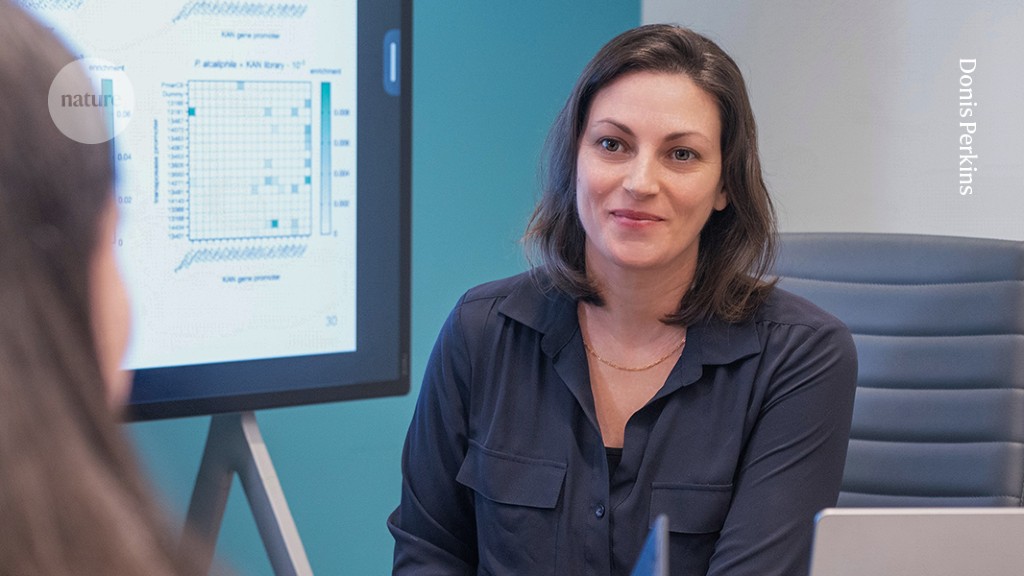
Cultivarium chief scientific officer Nili Ostrov works to make model organisms more useful and accessible for scientific researchCredit: Donis Perkins
Nili Ostrov has always been passionate about finding ways to use biology for practical purposes. So perhaps it wasn’t surprising that, when the COVID-19 pandemic hit during her postdoctoral studies, she went in the opposite direction from most people, moving to New York City to work as the director of molecular diagnostics in the Pandemic Response Lab, providing COVID-19 tests and surveilling viral variants. She was inspired by seeing what scientists could accomplish and how much they could help when under pressure.
Now the chief scientific officer at Cultivarium in Watertown, Massachusetts, Ostrov is bringing that sense of urgency to fundamental problems in synthetic biology. Cultivarium is a non-profit focused research organization, a structure that comes with a finite amount of time and funding to pursue ‘moonshot’ scientific goals, which would usually be difficult for academic laboratories or start-up companies to achieve. Cultivarium has five years of funding, which started in 2022, to develop tools to make it possible for scientists to genetically engineer unconventional model organisms — a group that includes most microbes.
Typically, scientists are limited to working with yeast, the bacterium Escherichia coli and other common lab organisms, because the necessary conditions to grow and manipulate them are well understood. Ostrov wants to make it easier to engineer other microbes, such as soil bacteria or microorganisms that live in extreme conditions, for scientific purposes. This could open up new possibilities for biomanufacturing drugs or transportation fuels and solving environmental problems.
What is synthetic biology and what drew you to it?
Synthetic biology melds biology and engineering — it is the level at which you say, “I know how this part works. What can I do with it?” Synthetic biologists ask questions such as, what is this part useful for? How can it benefit people or the environment in some way?
During my PhD programme at Columbia University in New York City, my team worked with the yeast that is used for brewing beer — but we asked, can you use these yeast cells as sensors? Because yeast cells can sense their environment, we could engineer them to detect a pathogen in a water sample. In my postdoctoral work at Harvard University in Cambridge, Massachusetts, we investigated a marine bacterium, Vibrio natriegens. A lot of time during research is spent waiting for cells to grow. V. natriegens doubles in number about every ten minutes — the fastest growth rate of any organism.
Could we use it to speed up research? But using V. natriegens and other uncommon research organisms is hard work. You have to develop the right genetic-engineering tools.
How did the COVID-19 pandemic alter your career trajectory?
It pushed me to do something that I otherwise would not have done. During my postdoctoral programme, I met Jef Boeke, a synthetic biologist at New York University. In 2020, he asked me whether I wanted to help with the city’s Pandemic Response Lab, because of my expertise in DNA technology. I’m probably one of the only people with a newborn baby who moved into Manhattan when COVID-19 hit.
That was an amazing experience: I took my science and skills and used them for something essential and urgent. In a couple of months, we set up a lab that supported the city’s health system. We monitored for new variants of the virus using genomic sequencing and ran diagnostic tests.
Seeing what science can do when needed — it was beautiful. It showed me how effective science can be, and how fast science can move with the right set-up.
How did that influence what you’re doing now with Cultivarium?
COVID-19 showed me how urgently needed science can be done. It’s about bringing together the right people from different disciplines. Cultivarium is addressing fundamental problems in science, which is usually done in academic settings, with the fast pace and the dynamic of a start-up company.
We need to make progress on finding ways to use unconventional microbes to advance science. A lot of bioproduction of industrial and therapeutic molecules is done in a few model organisms, such as E. coli and yeast. Imagine what you could achieve if you had 100 different organisms. If you’re looking to produce a protein that needs to be made in high temperatures or at an extreme pH, you can’t use E. coli, because it won’t grow.
How is Cultivarium making unconventional microbes research-friendly?
It took my postdoctoral lab team six years to get to the point where we could take V. natriegens, which we initially didn’t know how to grow well or engineer, and knock out every gene in its genome.
At Cultivarium, we’re taking a more systematic approach to provide those culturing and engineering tools for researchers to use in their organism of choice. This kind of topic gets less funding, because it’s foundational science.
So, we develop and distribute the tools to reproducibly culture microorganisms, introduce DNA into them and genetically engineer them. Only then can the organism be used in research and engineering.
Developing these tools takes many years and a lot of money and skills. It takes a lot of people in the room: a biologist, a microbiologist, an automation person, a computational biologist, an engineer. As a non-profit company, we try to make our tools available to all scientists to help them to use their organism of choice for a given application.
We have funding for five years from Schmidt Futures, a non-profit organization in New York City. We’re already releasing and distributing tools and information online. We’re building a portal where all data for non-standard model organisms will be available.
Which appeals to you more — academic research or the private sector?
I like the fast pace of start-up companies. I like the accessibility of expertise: you can bring the engineer into the room with the biologists. I like that you can build a team of people who all work for the same goal with the same motivation and urgency.
Academia is wonderful, and I think it’s very important for people to get rigorous training. But I think we should also showcase other career options for early-career researchers. Before the pandemic, I didn’t know what it was like to work in a non-academic set-up. And once I got a taste of it, I found that it worked well for me.
This interview has been edited for length and clarity.
The duration and value of a grant are not likely to alter the research strategies of recipients in the United States.Credit: DigitalVision/Getty
Offering professors more money or time isn’t likely to dramatically change how they do their research, a survey of US-based academics has found.
The survey, described in a preprint article posted on arXiv in December1, was completed by 4,175 professors across several disciplines, including the natural sciences, social sciences, engineering, mathematics and humanities.
The study’s authors, Kyle Myers and Wei Yang Tham, both economists at Harvard Business School in Boston, Massachusetts, say the aim was to investigate whether senior scientists would conduct their research differently if they had more money but less time, or vice versa.
The research comes amid interest from some funders in tweaking the amount of time and money awarded to scientists to incentivize them to do more socially valuable work. For instance, in 2017, the Howard Hughes Medical Institute in Chevy Chase, Maryland, announced that it had extended its grants from five to seven years, arguing that the extra time would allow researchers to “take more risk and achieve more transformative advances”.
Acknowledging that the most reliable way to test how grant characteristics might affect researchers’ work is to award them actual grants — which was not feasible — Myers and Tham instead presented them with hypothetical scenarios.
The survey respondents were asked what research strategies they would pursue if they were offered a certain sum of grant money for a fixed time period. Both the value and duration were randomly assigned. The hypothetical grants were worth US$100,000 to $2 million and ran between two and ten years.
To capture the changes in strategy, the survey provided the participants with five options that they could take if they successfully obtained the hypothetical grant. These included pursuing riskier projects — for example, those with only a small chance of success – or ones that were unrelated to their current work and increasing the speed or size of their ongoing projects.
The survey revealed that longer grants increased the researchers’ willingness to pursue riskier projects — but this held true only for tenured professors, who can afford to take a gamble because they tend to have long-term job security, an established reputation and access to more resources. The authors note, however, that any change in research strategy that resulted from receiving a longer grant was not substantial.
Non-tenured professors were not swayed towards risk-taking when they received longer grants. This finding suggests that longer grant designs don’t take into account the pressures that come with shorter employment contracts, says Myers. “If you’re a professor who’s on a 1- or 2-year contract, where you have to get renewed every year, then the difference between a 5-year or 10-year grant is not as important as performing in the next year or two,” he says.
Both tenured and non-tenured professors said longer, larger grants would slow down how fast they worked, “which suggests a significant amount of racing in science is in pursuit of resources”, the authors say, adding that this effect was also minor.
Myers and Tham report that the professors were “very unwilling” to reduce the amount of grant funding in exchange for a longer duration. “Money is much more valuable than time,” they conclude. They found that the professors valued a 1% increase in grant money nearly four times more than a 1% increase in grant duration. The study concludes that the researchers didn’t seem a to view the length of a single grant as “an important constraint on their research pursuits given their preferences, incentives and expected access to future funding sources”.
Experimenting with grant structures
Carl Bergstrom, a biologist at the University of Washington in Seattle who has studied science-funding models, says it’s interesting that substantial changes in grant structure generally yielded little to no change in the researchers’ hypothetical behaviour. “I just don’t know what to make of that,” he says, noting that it’s unclear whether this finding is a result of the study design, or is saying something about scientists’ attitude towards change. “One consistent explanation of all of this would be that fairly reasonable changes in the structure of one particular individual grant don’t do enough to change the overall incentive structure that scientists face for them to alter their behaviour.”
Bergstrom adds that modifying grant structures can still be a valuable exercise that could result in different kinds of candidate applying for and securing funding, which in turn might affect the kind of research that is produced. Myers and Tham didn’t examine whether modifying grant structures would affect the diversity of the pool of candidates, but they have investigated the nuances of risk-taking in research in another study, also posted as a preprint in December2. Researchers were surveyed about their appetite for risky science and how it affected their approach to grants. The survey found a strong link between the perceived risk of research and the amount of time spent applying for grants.
To get a clearer understanding of whether the findings of the surveys would hold in the real world, funders would need to modify actual grants, says Myers. He acknowledges that this would be a big commitment and a risk, but doing so could have significant benefits for science.
There is growing interest in finding more efficient and effective grant structures. In November, the national funder UK Research and Innovation launched a new Metascience Unit, which is dedicated to finding more sophisticated and efficient ways to make funding and policy decisions. The following month, the US National Science Foundation announced that it would be conducting a series of social and economic experiments to determine how its funding processes can be improved.
As for the survey, Myers hopes the findings can provide insights to inform such initiatives. “As long as we’ve reduced uncertainty about what is the best way forward, that is very valuable,” he says. “We hope that our hypothetical experiments are motivation for more real-world experiments in the future.”