Scandium Canada has filed a provisional patent entitled ‘Aluminium alloy powders for additive manufacturing. Methods of producing the same and uses thereof’, to use aluminium scandium alloys for 3D printing.
In addition to advancing its Crater Lake scandium and rare earth project, Scandium Canada has developed two aluminium scandium (Al-Sc) alloys and their powders, specifically for additive manufacturing (3D printing) applications, in collaboration with McMaster University, Ontario, Canada.
This has resulted in a significant body of intellectual property developed over the last three years.
Guy Bourassa, Scandium’s CEO, commented: “We are very excited about this new step in the company’s development. It confirms our objective to be recognised as a leader in the scandium markets, not only by developing the largest hard rock primary scandium project in the world but also by developing applications for scandium.
“Scandium is the metal of the future, and we are deeply engaged in its development and market growth.
“Over the next few months, Scandium Canada will explore options with commercial and research partners in Canada and abroad to monetise its 100% owned intellectual property to generate revenues and offtake agreements separate from its mining activities.”
New possibilities for aluminium scandium alloys
Luc Duchesne, PhD, Chief Science Officer, added: “The commercial emergence of aluminium powders in 3D printing represents a significant advancement in additive manufacturing technology.
“With the filing of patents such as the one by Scandium Canada Ltd., the potential for using aluminium alloy powders for 3D printing applications using aluminium scandium alloys has increased.
“This development creates new possibilities for manufacturing lightweight, high-strength components, particularly in aerospace, automotive, and maritime industries. 3D printing has the potential to revolutionise the way metal components are manufactured, offering greater design flexibility and efficiency in production processes.”
Scandium Canada is thankful for the contribution of multiple collaborators over the last three years, particularly McMaster University.
Scandium Canada Ltd. has announced significant progress in establishing a fully integrated scandium supply chain, from mining to various downstream applications.
The company’s flagship project, Crater Lake, located in northeastern Quebec, stands out as one of the few primary scandium deposits globally.
This project aims to address the growing concerns of manufacturers who seek reliable scandium supplies for integration into their value chains.
Guy Bourassa, CEO of Scandium Canada, explained: “We strongly believe in the development of a scandium ecosystem including multiple producers and users to promote a sustainable scandium market.
“Our results are an important step towards establishing a fully integrated scandium supply chain to realise the full potential of our Crater Lake project.
“Our research efforts support developing new market applications of aluminium scandium alloys. Developing new markets for aluminium scandium alloys is crucial because potential users have hesitated to rely two on foreign sources of scandium.
“By establishing domestic sources and integrating them into various industries, we can ensure a stable and reliable supply of this valuable material, encouraging broader adoption and innovation.”
Advancements in 3D printing
Since 2021, Scandium Canada has been collaborating with McMaster University to revolutionise the 3D printing of aluminium-scandium powders.
These powders, developed by Scandium Canada, are proprietary and tailored for producing parts that are challenging to manufacture using traditional methods.
The company is proud to report the successful 3D printing of two aluminium alloys modified with scandium. Previous attempts faced issues with solidification cracking, but these have now been resolved.
A comprehensive summary of this breakthrough has been submitted to patent lawyers for review, with potential patent applications on the horizon. The company is now focused on integrating these findings into industries with short adoption cycles.
Active discussions with industrial players are underway to test the printed products and assess their properties for various applications.
Innovative industrial uses for aluminium-scandium alloys
Scandium Canada has identified multiple industrial uses for aluminium-scandium alloys, with one significant application being in the frames of solar panels.
These alloys offer a combination of lightweight and high-strength properties, making them ideal for enhancing the efficiency and performance of solar panel frames.
As the solar panel industry continues to grow rapidly, there is an urgent need to reduce its carbon footprint. Incorporating aluminium-scandium alloys into solar panel frames can help achieve this goal by reducing the overall weight and improving the durability of the frames.
The company is currently designing test alloys to extrude complex profiles for solar panel frames, which will be tested by a major solar panel manufacturer. Details of this agreement and the testing programme will be shared with the market as progress is made.
Solar photovoltaic industry’s growth
The global solar photovoltaic industry has experienced substantial year-on-year growth, driven by the increasing adoption of renewable energy and advancements in solar technology.
With growing environmental awareness and supportive government policies, the industry has seen significant expansion. This growth contributes to reducing carbon emissions and providing sustainable energy solutions.
Additionally, the declining costs and improved efficiency of solar panels have further fuelled the global growth of the solar photovoltaic industry, positioning solar energy as a key player in the global energy landscape.
Scandium Canada remains committed to driving innovation and sustainability through its integrated scandium supply chain, supporting the future of renewable energy and advanced manufacturing technologies.
Scandium Canada is developing one of the largest primary sources of scandium in the world.
In the mining-friendly jurisdiction of Québec, Scandium Canada Ltd. is currently developing one of the largest primary sources of scandium in the world, with its Crater Lake Project.
The project is unique as it is one of the only primary scandium deposits in the world and the only one that is as advanced down the development path as it is.
Scandium in Canada
Scandium, number 21 on the periodic table, has been identified as a critical metal by the governments of Canada, the US, and the EU.
Critical metals, such as copper, aluminum, manganese, indium, rare earth elements, helium, lithium, cobalt, graphite, and scandium all play key roles in carbon reduction efforts, and therefore, securing safe national supplies is an important goal for multiple countries.
When combined with aluminum, scandium creates different alloys that hold unique properties. Aluminium-scandium (AlSc) alloys create materials that are lightweight, strong, and corrosion resistant. Scandium is also a good conductor of electricity and heat. Aluminium-scandium (AlSc) wires could replace copper in the wiring of electric motors, significantly reducing the weight.
AlSc alloys are utilised in the manufacturing of high-performance components for aerospace, aircraft, missiles, and satellites. Green energy technology could also benefit from these alloys in electric vehicles (EV) frames and battery casings, as well as wind turbine parts. Scandium-oxide is currently used in solid oxide fuel cells.
Current scandium production is entirely the result of the production of another mineral. Being a by-product has numerous implications in terms of supply consistency, security, and the ability to respond to market demand with increased production.
Today, scandium is mainly obtained from Russia and China. Primary sources of scandium, such as the one found at the Crater Lake Project, are essential to the growth of the aluminium-scandium alloys markets, and the many potential commercial uses of the alloys.
Before industry commits to components that require an aluminium-scandium alloy, a dependable, long-term supply must be available. Crater Lake represents such a source of scandium; a safe, dependable, and long-term supply.
For example, AIRBUS SA has patented aluminum-scandium alloys for both welding of aircraft structures and as AM (advanced manufacturing) powders for 3D printing as a platform lightweighting product. Such a use-case scenario can only be implemented when large commercial quantities become available.
Scandium Canada’s team believes that a stable source of scandium will allow OEM players to begin incorporating Aluminium-scandium components into their product offerings with the confidence that they can access a supply of the AI-Sc alloy for an extended period. In support of this perspective, the company is engaging in discussions with potential end users, with the intention of signing agreements or LOIs for the scandium master alloy (AlSc 2%) it will produce.
Carbon neutrality, and the future
Mr Guy Bourassa, CEO of Scandium Canada, believes that scandium is the metal of the future due to its unique properties and applications that centre around carbon neutrality.
The limited supply has constrained the market utilisation to date. With a dependable supply, the expected potential market is significant. Primary sources of scandium such as the Crater Lake Project are the reliable sources that the sector needs.
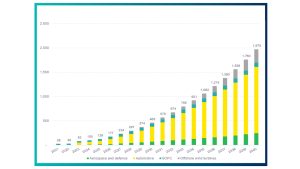
Scandium demand projections show a very significant need for new supply to meet 2040 potential demand, current capacity needs to increase by a factor of over 50, which will require the development of primary sources
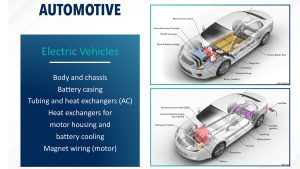
It is anticipated that the Automotive industry could be a large consumer of aluminium-scandium alloys as the number of parts where the alloys can be incorporated are extensive. Components such as the chassis, battery casing, and heat exchangers are just a few examples. The reduction of weight, especially for EV, and more efficient components will have a significant impact on the performance and range of EVs.
Similarly, the aerospace industry could benefit from the integration of aluminum-scandium alloy parts. Reducing the weight of an aeroplane will significantly reduce its carbon emissions and operating costs.
The potential additional uses are numerous and will contribute positively to the global end goal of a reduction in green house gases
Quebec: A unique mining opportunity
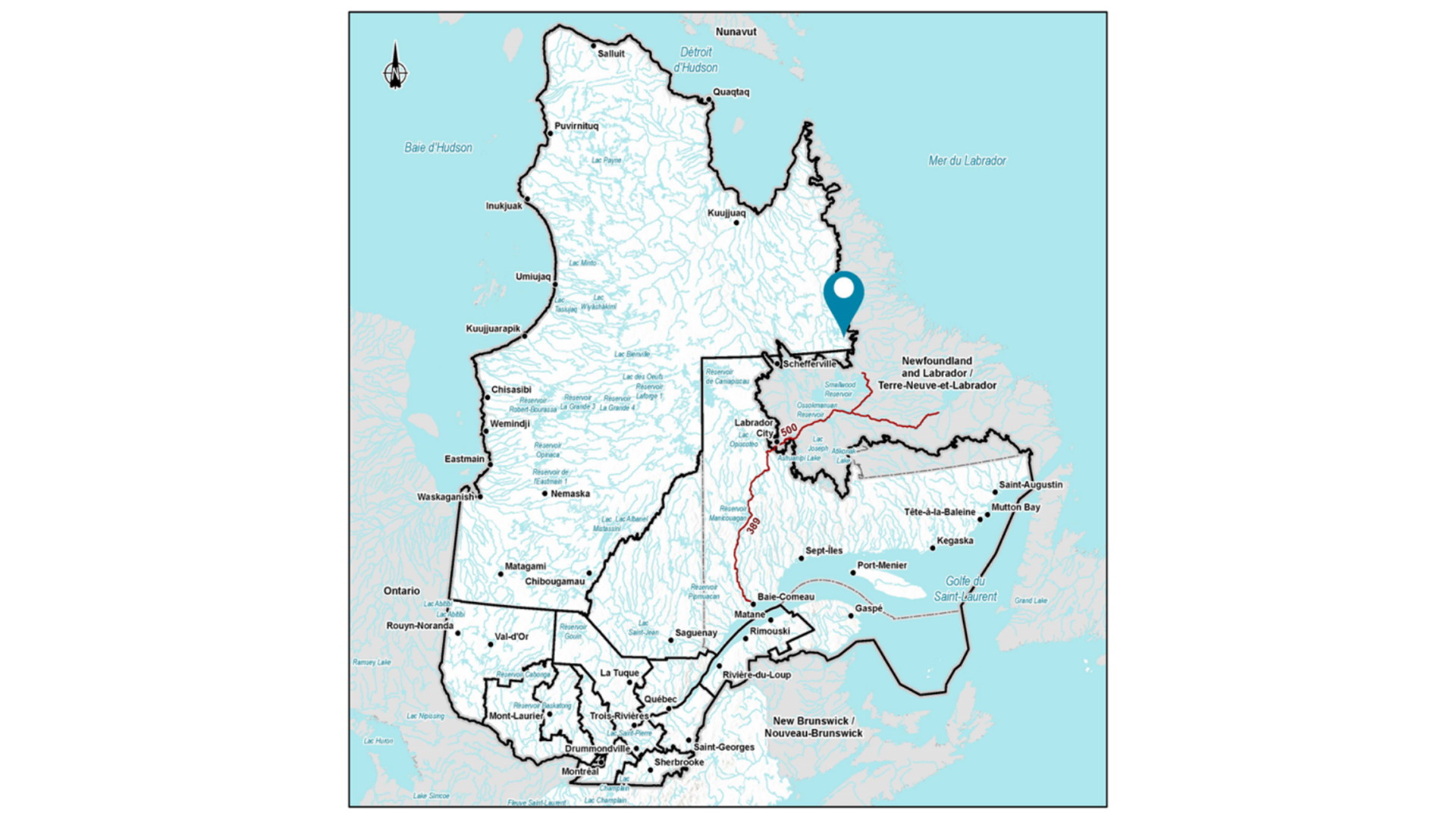
The company’s Crater Lake Project is located in Quebec, about 200km north of the town of Schefferville. The project has significant blue-sky potential both in the amount of scandium-oxide that can be produced as well as the life of the mine.
The project has progressed from an exploration stage to a development stage over the last few years. A preliminary economic assessment (PEA) on the project was released in 2022, a 43-101 resource estimate update was filed in June 2023 and work to complete a pre-feasibility study is currently underway.
The current life of mine is 25 years with over 40 years in potential resources; however, this is based on the resource estimate contained within a 350m long zone in one of multiple showings identified within the 47km² mining rights owned. The project’s full strike zone is 14km in length. The potential for significant growth in the project capacity is untested, as there are multiple additional zones to drill. The company feels it has barely scratched the surface of the project’s full potential.
At present, the resource is open in all directions and at depth where it thickens and gets richer in concentration. The company will run an in-fill drilling programme for the summer 2024 season to convert inferred resources to be measured and indicated in the TG Zone, where the initial mine will be developed.
The Provincial Governments of Quebec, Newfoundland, and Labrador, as well as the Government of Canada currently offer numerous grant programmes specifically for critical minerals projects. These grants are designed to support mine development and construction. The grants cover infrastructure, ground work, and technology implementation. These grants require a percentage of matched funds to be raised by the company. Scandium Canada has submitted applications in for a number of these relevant grants.
Relationship with First Nations
The corporation is aware of and adheres to the principles of the United Nations Declaration on the Rights of Indigenous Peoples as recently ratified by Canada, particularly with regards to obtaining the free, prior, and informed consent of the Indigenous peoples for the development and use of their lands, territories, and other resources.
The corporation recently signed a pre-development agreement with the Naskapi Nation of Kawawachikamach in order to establish a framework, through various undertakings to continue the current relationship in a mutually beneficial manner with regards to the corporation’s activities on the Crater Lake property.
Furthermore, in the spirit of current and future co-operation, the corporation and the Naskapi Nation of Kawawachikamach have negotiated that pre-development agreement to be a binding declaration of the principles they intend to build on for the negotiations of a final agreement – a Socio-Economic Participation Agreement (SEPA), also commonly known as an Impact and Benefit Agreement (IBA) for the property – at the earliest reasonable opportunity and before the commencement of any construction works.
Upcoming catalysts
This year’s focus will be the Pre-Feasibility Study (PFS) and activities that support the PFS completion. On site work will include geotechnical work and infill drilling, as metallurgical pilot tests are being conducted in Lakefield SGS facilities. On site work will begin in early summer 2024.
In addition, the company will continue to seek potential partnerships and pursue ongoing discussions with communities to advance pre-development agreements.
Please note, this article will also appear in the 18th edition of our quarterly publication.
Scandium Canada Ltd. has announced the signing of a significant Pre-Development Agreement with the Naskapi Nation of Kawawachikamach regarding its Crater Lake scandium and rare earth project in Québec, Canada.
This milestone agreement paves the way for pre-development activities on the Crater Lake project’s property, highlighting a collaborative effort between the company and the indigenous community.
CEO Guy Bourassa commented: “I am very glad that we have been able to come to this initial Agreement in a positive and timely manner, clearly confirming our mutual interest in the development of the Crater Lake Project in respect of the parties’ benefit and coexistence on the territory. We are excited and are looking forward to the next season of activities at Crater Lake.”
Mutually respectful relationships established
The Agreement fosters a mutually respectful relationship between Scandium Canada and the Naskapi Nation concerning all pre-development activities related to the Crater Lake project.
Recognising the Naskapi Nation’s inherent aboriginal and treaty rights over certain territories within the project area, the Agreement sets the foundation for collaborative communication and consultation to ensure mutual benefit while acknowledging the importance of the environment and traditional territory.
Scandium Canada commits to including all interested parties in discussions regarding its pre-development activities. This inclusive approach demonstrates the company’s commitment to engaging with stakeholders and addressing community concerns throughout the project’s lifecycle.
While the Pre-Development Agreement focuses on early-stage activities, it is essential to note that the construction, operation, and decommissioning of any mine or related facility will be addressed in a separate Socio-Economic Participation Agreement (SEPA), also known as an Impact and Benefit Agreement (IBA).
This Agreement will be negotiated and concluded before Scandium Canada proceeds with potential mine implementation and authorisation.
Crater Lake project overview
The Crater Lake project stands as one of the largest primary scandium projects globally. With an NI 43-101 compliant Preliminary Economic Assessment (PEA) completed in 2022 and ongoing work towards a pre-feasibility study, the project holds significant promise for the region.
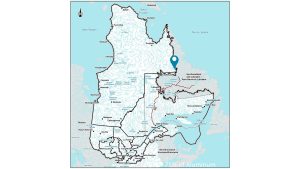
Situated in northern Québec, approximately 200 km Northeast of Schefferville and 400 km south of Kuujjuaq, the project’s location is strategically positioned for development.
Credit: Scandium Canada
Naskapi Chief Theresa Chemaganish added: “Our Nation has a long history with mining activity which has left scars on our land and on our hearts.
“Until recently, mining exploration was conducted with minimal respect for our rights, despite the fact that our ancestors have occupied Nuchimiyuschiiy, our traditional territory, for millennia, alongside our Innu, Cree, Inuit and more recently, non-Indigenous neighbours.
“The Pre‑Development Agreement between the Naskapi Nation and Scandium Canada demonstrates that reciprocity is a core value and is reflected in their intent to include the Naskapi Nation in all steps of the development of the project while also offering the Naskapi Nation the opportunity to determine if the project will go ahead. That is the true spirit of partnership, where both parties plan, decide and benefit together.”
The signing of the Pre-Development Agreement between Scandium Canada and the Naskapi Nation marks a significant step forward for the Crater Lake project.
With a focus on mutual respect, collaboration, and environmental stewardship, this Agreement sets a positive precedent for responsible resource development in Canada.
As discussions continue, all stakeholders remain engaged in shaping the project’s future in a manner that benefits both the community and the company.