Tag: Solar Energy

  • Cutting-edge facility for solar batteries launched in Bavaria

    Cutting-edge facility for solar batteries launched in Bavaria

    [ad_1]

    Bavaria is set to become a global hub for groundbreaking energy research by establishing the SolBat Center, a pioneering facility dedicated to advancing solar batteries and optoionics.

    Supported by the Bavarian Ministry of Economic Affairs, the initiative is a collaboration between the Technical University of Munich (TUM) and the Max Planck Society (MPG). This cutting-edge centre aims to revolutionise energy storage by exploring new ways to harness and store solar energy more efficiently and flexibly.

    In a major show of support, Bavaria’s Minister of Economic Affairs Hubert Aiwanger announced that the Free State of Bavaria is funding the SolBat Center with up to €8m.

    Aiwanger commented: “Today, we are facing unprecedented challenges in the areas of energy and sustainability. To develop new energy solutions, modern materials are just as important as new concepts for energy conversion and storage.

    “I am convinced that the SolBat initiative will make a strong contribution to finding solutions for the massively increased energy storage requirements of the future.

    “With our financial support for infrastructure measures at TUM’s Garching campus, we are helping to position Bavaria at the forefront of innovation in solar energy storage.”

    Solar batteries: The next frontier in energy storage

    At the heart of the SolBat Center’s mission lies the study of solar batteries, an emerging technology with immense potential.

    Unlike traditional setups where solar cells generate electricity and batteries store it, solar batteries combine both functions into a single, integrated component.

    These systems chemically store sunlight as electrochemical energy without converting it into electricity first, significantly improving efficiency.

    Solar batteries hold promise for mitigating fluctuations in solar power caused by weather or daily cycles.

    By enhancing the ion movement within materials, this technology not only stabilises energy output but also improves the overall efficiency of renewable energy systems.

    Inside a solar battery

    Solar batteries operate by integrating solar cells with battery components. When sunlight hits the device, photons excite electrons in the light-absorbing layer, triggering electrochemical reactions.

    In this process, ions – such as lithium or oxygen – move within the battery material, storing energy.

    The innovative aspect of solar batteries lies in their ability to use light to control both electron excitation and ion movement simultaneously.

    This dual functionality minimises energy loss compared to conventional systems, where separate devices handle generation and storage. The light also accelerates ion movement within the solid-state material, improving charging and discharging speeds.

    When the energy stored in the battery is needed, the process reverses: ions return to their original state, releasing the stored energy as electricity.

    This seamless integration of light absorption and storage offers a compact, efficient solution for energy needs, particularly in off-grid applications.

    Optoionics: Unlocking new possibilities

    The research focus at the SolBat Center extends beyond solar batteries to include optoionics, a field that bridges optoelectronics and solid-state ionics.

    Optoionics explores how light can control ion behaviour, opening doors to innovative applications in energy storage, photocatalysis, sensor technology, and even artificial intelligence (AI).

    This interdisciplinary approach leverages AI-driven simulations and experimental research to design materials and processes that optimise energy storage systems.

    By combining expertise from multiple scientific fields, the centre aims to create highly integrated solar-powered devices that are efficient, reliable, and adaptable.

    Jennifer Rupp, holder of the Chair of Solid State Electrochemistry at TUM and Fellow at the Fritz Haber Institute of the Max Planck Society, added: “The fusion of solar and battery technologies will open up a new dimension for the future of sustainable energy supply.

    “The concept of our globally unique centre is based on the close integration of basic research and technology development. We see this as an opportunity to make energy systems significantly more compact and efficient.”

    A global leader in sustainable energy

    Led by esteemed scientists from TUM and MPG, the SolBat Center represents a unique innovation platform.

    The collaboration emphasises a holistic approach, addressing the entire value chain from basic research to practical application.

    Bavaria’s investment in solar battery technology reflects a commitment to advancing renewable energy solutions and solidifying its position as a leader in the global energy transition.

    With solar batteries and optoionics at its core, the SolBat Center could transform how the world captures, stores, and utilises solar energy, paving the way for a cleaner, more sustainable future.

    [ad_2]

    Source link

  • UK makes crucial investment into overseas solar and wind farms

    UK makes crucial investment into overseas solar and wind farms

    [ad_1]

    In the journey to clean energy and net-zero emissions, the UK has announced it is investing in large solar and wind farms in the Philippines.

    As part of the UK-Philippines renewable energy collaboration, the largest solar wind farm to date will be constructed, along with four new wind farms across the country, which will reach a total of 380 MW.

    The collaborations were celebrated through two separate events held by the British Embassy in Manila.

    The development of these solar and wind farms underscores the UK’s commitment to driving sustainable energy solutions across the world and supporting the transition to cleaner, greener power sources.

    Expanding renewable energy capacity in the Philippines

    This partnership, backed by an equity investment of $150m, marks a significant step forward in expanding the Philippines’ renewable energy capacity.

    The solar and wind farms, which secured offtake agreements through the Department of Energy’s Green Energy Auction Program (GEAP), exemplify the potential of partnerships to advance clean energy initiatives.

    At one of the events, Actis also celebrated the groundbreaking of the Terra Solar Project in Nueva Ecija, which is set to become the largest solar energy farm in the Philippines.

    This project, developed by Solar Philippines New Energy Corporation, is supported by Actis’ monumental $600m equity investment.

    The UK’s role in the global energy transition

    The Terra Solar Project will provide affordable, reliable, and sustainable power to millions of Filipinos, reinforcing the UK’s role as a key partner in the Philippines’ renewable energy transition.

    The groundbreaking ceremony highlighted Actis’ long-term commitment to sustainable infrastructure and clean energy in the Philippines.

    His Majesty’s Ambassador to the Philippines, Laure Beaufils, explained, “The United Kingdom is proud to partner with the Philippines in its renewable energy journey.

    “These investments in solar and wind farms reflect our shared vision for a sustainable future and underscore the strong ties between our two nations.

    Beaufils added: “Projects like these not only provide clean energy to millions but also create opportunities for innovation and progress in the fight against climate change.”

    Both projects demonstrated the transformative impact of UK-Philippines partnerships in renewable energy.

    The Embassy also celebrated Citicore’s achievement in securing $12m in UK investment through its IPO, further solidifying the UK’s support for the Philippines’ clean energy ambitions.

    Other UK initiatives to accelerate global climate resilience

    The announcement of the solar and wind farms in the Philippines is just one of the recent initiatives the UK has taken to accelerate the global energy transition.

    This week, The UK government pledged £239m in funding to halt and reverse deforestation in forest-rich nations, supporting global efforts to tackle climate change.

    The funding will protect and restore forests in countries like Colombia and Indonesia, recognising their critical role as ‘carbon sinks’ that absorb more CO2 from the atmosphere annually than the UK and USA emit combined.

    Furthermore, the UK will lead support for countries on the front lines of the climate crisis to transition to clean energy in a new package of support unveiled by Energy Secretary Ed Miliband at COP29.

    The funding will help climate-vulnerable countries, including African nations and small island states, develop new low-carbon technologies, including innovations in energy storage, zero-emission generators, and clean transport.

    It will also support innovations such as material and system efficiencies, which will be instrumental in decarbonising steel, chemicals, cement and concrete industries.

    The funding comes after the UK announced an ambitious target to reduce its emissions by 81% by 2035 – showing leadership in tackling climate change while harnessing a range of benefits for the UK, including better jobs, cheaper bills and higher growth.

    Together, the construction of the solar and wind farms and other recent initiatives symbolises the UK’s commitment to innovation, sustainability, and a greener future for all.

    [ad_2]

    Source link

  • EU invests €133m into Dutch photonic chips

    EU invests €133m into Dutch photonic chips

    [ad_1]

    The European Union is set to invest €133m in production facilities for photonic chips in the Netherlands.

    The PIXEurope consortium, which consists of parties from 11 countries, including the Netherlands, has been selected for contract negotiations to develop a European pilot plant for photonic chips.

    The funding is part of a total of €380m and falls under the Chips Joint Undertaking.

    It comes one month after Italy-based start-up Ephos raised $8.5m to create glass-based photonic chips at scale.

    The importance of photonic chips in a low-carbon future

    Photonic chips use light rather than electrons to perform calculations, with advantages in speed and power consumption.

    This makes them ideal for use in areas such as data centres and motoring.

    According to Dirk Beljaarts, the Dutch economy minister, “photonics is a technology of strategic importance” for the Netherlands.

    He said: “We aim to gain a strong European competitive position in this area. From knowledge, innovation, supply to final production, this is necessary for the jobs and income of the future, for solving social challenges and our national security.”

    Promoting research and development in the semiconductor industry

    The investment forms part of a total amount of €380m to set up pilot photonic chip production plants throughout Europe, under the Chips Joint Undertaking, which centres around a European public-private partnership to promote research and development in the semiconductor industry.

    Europe has been making a concerted effort over the past few years to be a leader in the semiconductor space.

    In 2023, the region adopted the EU Chips Act, which aims to increase the EU’s share of global chip production from 10pc to at least 20pc by the end of the decade.

    Since the Chips Act was enacted, the EU signed a deal with India to build robust supply chains and foster innovation together.

    The €43bn act is designed to invest in industry players and research labs, including the Tyndall National Institute in Cork.

    [ad_2]

    Source link

  • IEA highlights uneven global progress in clean energy deployment

    IEA highlights uneven global progress in clean energy deployment

    [ad_1]

    The International Energy Agency’s (IEA) recent report on clean energy deployment reveals a complex landscape of growth and challenges in the first half of 2024.

    While the deployment of clean energy technologies is on the rise worldwide, the report exposes significant variations across regions and technologies.

    This uneven progress underscores the need for supportive policies to help countries accelerate their clean energy transitions.

    Solar power and electric vehicles drive clean energy growth

    According to the IEA’s Clean Energy Market Monitor, solar photovoltaics (PV) and electric vehicles (EVs) are leading the global clean energy surge.

    Solar PV installation has seen substantial growth, with new capacity additions up by 36% compared to the same period last year.

    In the United States, solar deployment surged by an impressive 80%. This growth is attributed to lower equipment costs and expanded manufacturing, which have made solar energy more accessible for both residential and commercial users.

    Similarly, EV sales have seen a robust increase, growing by 25% globally. This trend is especially prominent in China, where EVs accounted for nearly 45% of all car sales in the first half of 2024, crossing 50% in recent months.

    The report highlights that clean energy transitions are gaining momentum in emerging markets as well; EV sales in developing economies doubled compared to last year.

    Regional disparities in clean energy deployment

    Despite these advancements, the IEA report highlights notable disparities among regions. Europe, for instance, has experienced setbacks in certain clean technologies.

    Heat pump sales in Europe dropped by nearly 50% compared to the first half of 2023, while EV sales grew only modestly by 3%.

    Germany’s reduced EV sales had a dampening effect on the overall growth rate in Europe despite stronger EV adoption in the United Kingdom, Belgium, and the Netherlands.

    In contrast, India and China are making strides in solar PV capacity. India saw a 90% increase in solar PV installations, while China’s additions grew by over 30% during the first six months of 2024.

    This growth is partly due to plummeting solar module prices in China, which have more than halved over the past year, making solar technology more affordable for households and businesses alike.

    Falling equipment prices support green energy expansion

    One positive trend identified in the IEA report is the decreasing cost of clean energy equipment, which is aiding faster deployment.

    The Clean Energy Equipment Price Index, a quarterly tracker introduced by the IEA, shows that the first half of 2024 witnessed a 20% drop in solar PV prices, a nearly 10% decline in grid-scale battery storage prices, and a 5% decrease in wind turbine costs.

    In China, the steep drop in solar module prices has been instrumental in accelerating solar PV installations, which in turn has led to cost savings for users.

    Lower equipment costs also benefit the renewable electricity sector, enabling countries to build cleaner power systems.

    However, the report notes that this price drop has impacted manufacturer profit margins, particularly in China’s solar PV sector. Meanwhile, China’s battery manufacturers reported stronger profit margins, reflecting resilience in that segment of the clean energy market.

    Real-time data reflects carbon emission trends

    The IEA’s Real-Time Electricity Tracker, another key feature of the report, reveals notable progress in reducing power sector emissions. This tracker estimates carbon dioxide (CO2) emissions from electricity generation in countries that collectively produce half of the world’s electricity.

    According to the latest data, CO2 emissions in the power sectors of these countries were over 1% lower in 2024 compared to the previous year.

    In the European Union, renewable energy accounted for nearly 50% of total electricity generation from January to October, marking a milestone in the region’s energy transition.

    Coal and natural gas usage in the EU has dropped significantly, reaching a record low of 23% of total electricity generation, while wind and solar contributed approximately 30%.

    The road ahead for clean energy deployment

    The IEA’s latest findings underscore the potential for clean energy technologies to drive global decarbonisation.

    However, they also highlight the urgent need for policy support to overcome challenges in certain regions and sectors. Investments in infrastructure, like EV charging networks and electricity grid upgrades, are crucial for sustaining growth.

    With falling equipment prices and increased manufacturing capacity, countries have a golden opportunity to advance clean energy deployment and foster a more sustainable future.

    [ad_2]

    Source link

  • Manufacturing chemicals with solar energy and carbon dioxide

    Manufacturing chemicals with solar energy and carbon dioxide

    [ad_1]

    The FlowPhotoChem research project aims to capture carbon dioxide and sunlight to manufacture chemicals, replacing harmful fossil fuels.

    FlowPhotoChem is a multi-national, EU-funded research project developing better ways to manufacture chemicals using carbon dioxide (CO2) and sunlight. There is great potential to replace much of the fossil fuels used today to make fuels and useful chemicals by using solar energy and advanced catalysts to convert CO2 into, for example, ethylene, as a precursor for plastics.

    FlowPhotoChem (FPC) partners achieved this by combining intensely concentrated sunlight, a modular assembly of three types of flow chemical reactors, new catalysts that are cheaper and more durable than today’s best catalysts, and extensive computer modelling to configure, optimise and manage the reactors. Flow reactors are chemical reactors where the reaction continues on an ongoing basis as raw materials and products flow into and out of the reaction chambers.

    FPC System: Modelling and optimisation

    The FlowPhotoChem integrated system features a serial arrangement of a photo-electrochemical (PEC), a photocatalytic (PC), and an electrochemical (EC) reactor. The development of the individual reactors was guided from a systems modelling perspective. A system model was created using simplified reactor models. This allowed the team to identify ways to improve solar-to-ethylene efficiency and the production rate at the reactor and system levels.

    Experimental results testing the integrated system in the  High-Flux Solar Simulator (HFSS) at DLR were used to validate and refine system models, which form a valuable basis for the further development of the modular FPC approach.

    Results

    Researchers at the DLR Institute of Future Fuels conducted two experimental campaigns in the HFSS, after elaborating suitable irradiation strategies and additional optics for the light-driven reactors, as well as designing an experimental set-up with all components required for flexible and safe operation.

    At first, the medium-scale PC reactor from the Polytechnic University of Valencia (UPV) was tested under up to 80 suns, confirming the solar production of carbon monoxide via the reverse water-gas shift reaction. In a second campaign, the integrated FPC system was operated to produce ethylene in a green manner from water, carbon dioxide, and sunlight.

    In these tests, the PEC reactor from EPFL/SoHHytec was irradiated using 400-fold concentrated artificial sunlight, whereas an improved PC reactor from UPV (adapted by DLR for pressurised operation) again received up to 80 suns. The electric input for the EC reactor from eChemicles/University of Szeged was assumed to be generated by PV modules.

    Based on the experimental campaign results and projected improvements in the integration of reactors, the team estimated the potential to reach a solar-to-ethylene conversion efficiency of 4.4%. When considering other C2+ products such as ethanol, propanol and acetate, the efficiency exceeds 5%, while including all products such as hydrogen and methane, the overall solar-to-chemical efficiency jumps to over 10%.

    Meeting African stakeholders in Uganda

    Exponentially increasing the amount of renewable energy and fuels implemented globally is urgently needed. Access to green and affordable energy is a must in the just energy transition across the globe, and active co-operation programmes between European and African stakeholders can be the clear drivers to support this challenging task.

    On 10-11 September in Kampala, Uganda, FlowPhotoChem organised a hybrid workshop to share the modular flow reactor system concept and results and to network with African industrial entities that were in a position to exploit the findings and take the technology forward. More than 100 delegates attended the hybrid meeting hosted by Kyambogo University.

    Session facilitators included FlowPhotoChem partners and invited speakers from Africa and Europe. Some showcased successful case studies in the renewable energy and fuels research domains and shared key advantages and challenges encountered during the design and implementation of the case study projects; others demonstrated key outputs from research projects at different stages of technology development and presented opportunities in funding and new ideas for collaboration.

    FlowPhotoChem success

    Partner testimonials

    Kyambogo University’s Dr Justus Masa reflected on the benefits of working with FlowPhotoChem. He said: “The support I received enabled us to improve our research infrastructure and the general quality of research provision. Through the collaborations that exist from the consortium, it was made possible to perform experiments we were not previously able to.

    “We were also able to establish some lasting collaborations. For example, we signed a memorandum of understanding with the University of Galway to exchange staff and students, as well as to collaborate on research.”

    Dr Jelena Stojadinovic, CEO and Founder of MEMBRASENZ, said: “Our collaboration with renowned project partners helped us identify high-performing membrane materials and strategies for new product exploitation.”

    Dr Urša Podbevšek, Research Scientist at Johnson-Matthey, also praised the project, stating: “Participating in the FlowPhotoChem project has been very beneficial. It enabled us to assess opportunities in the solar fuels and chemical space. The main technical benefits included developing catalysts and electrodes for the electrochemical reduction of carbon dioxide and carbon monoxide, as well as developing capabilities for testing these materials in electrolysers.”

    It’s an exciting time for FlowPhotoChem and its partners. For more information, and to keep up to date with exciting project developments, visit our website.

    Please note, this article will also appear in the 20th edition of our quarterly publication.

    [ad_2]

    Source link

  • Ukraine Is Decentralizing Energy Production to Protect Itself From Russia

    Ukraine Is Decentralizing Energy Production to Protect Itself From Russia

    [ad_1]

    As soon as the Russian invasion of Ukraine started, Yuliana Onishchuk knew she had to help her country. News coverage of the initial occupation of the Kyiv region showed that Irpin City and Bucha, just outside the capital, had sustained huge damage, and it was clear to Onishchuk that critical infrastructure would need to be repaired. “I saw the schools, and I was sure that we would have to rebuild them,” Onishchuk says. She saw an opportunity. “I realized: We have to rebuild them in a new way.”

    Putting her expertise as an energy lawyer and solar power project manager to good use, Onishchuk set up an NGO, the Energy Act for Ukraine Foundation. “I was already in renewables, and I love renewables.” The foundation would help rebuild schools and hospitals and equip them with solar panels, offering them energy independence while at the same time helping Ukrainians understand the importance of clean energy.

    Then, in October 2022, Russia started attacking Ukraine’s energy system. Very quickly half of the country’s grid was damaged. In 2023, attacks moved from hitting just the grid to targeting energy production. Millions of Ukrainians faced widespread blackouts across the freezing winter months of 2023.

    With the country plunged into energy poverty, designing schools and hospitals with energy independence wasn’t just a smart step on the road to the green transition—it was a vital solution for keeping them functioning during the invasion. And so now, the foundation’s mission is two-fold: to rebuild Ukraine with both sustainability and energy security in mind.

    Ahead of speaking at the WIRED & Octopus Energy Tech Summit in Berlin on October 10, Yuliana sat down with WIRED to discuss the foundation’s work. This interview has been edited for length and clarity.

    WIRED: How badly has Russia’s invasion impacted the energy supply in Ukraine?

    Yuliana Onishchuk: Before the war, 55 percent of Ukraine’s generation was nuclear, and one of the biggest nuclear power plants, which supplied more than half of this nuclear power, was Zaporizhzhia. Now it is occupied.

    Again, before the invasion, 35 percent of energy generation was from thermal power plants, which became a particular focus of Russia this year. They realized that this supply was exactly what they should attack, because you can hardly protect that 35 percent, and it is not as dangerous to target as nuclear.

    We lost 80 percent of the wind power because almost all wind turbines are located in the south. Mostly, the south is occupied. Solar farms that are situated on the east and south were either attacked or stolen—they dismantled solar panels and stole them.

    So, we lost a lot. Russia has destroyed 50 percent of our electricity-generation capacity.

    This must make life incredibly difficult for people.

    With the Zaporizhzhia plant occupied, for the past two years we have repaired extra generation units at other nuclear plants, as not all units were on when the war started. We could not be without the 55 percent of our energy generation that comes from nuclear—it’s a huge amount. Now, as far as I know, all units in all plants are on in Ukraine.

    Image may contain Accessories Jewelry Necklace Person Teen Outdoors and Electrical Device

    Yuliana Onishchuk.Photograph courtesy of the Energy Act for Ukraine Foundation

    That has helped us to get out of blackouts that were happening in May, June, and July of this year. For almost three months, we experienced very long-lasting blackouts for up to 12 hours. Right now, we don’t have lots of large blackouts; only the settlements, villages, and cities that are at the frontline areas are in blackouts all the time.

    But we still have a percentage of the rest of the population that is experiencing blackouts because the generation units—whether it’s renewables or thermal power plants—are being attacked, together with the distribution grids. For the past three months, absolutely every city in the country experienced a blackout.

    [ad_2]

    Source link

  • Secure your tickets for The Business Booster 2024

    Secure your tickets for The Business Booster 2024

    [ad_1]

    Innovation News Network is delighted to announce that we are a media partner for The Business Booster.

    The Business Booster, hosted by EIT InnoEnergy, is where transactions in sustainable energy happen! The two-day event is your unique opportunity to meet over 150 technologies spanning the entire energy value chain, including the industrial scale-ups driving Europe’s energy transition.

    InnoEnergy has been recognised as the most active global energy investor for the third consecutive year. Its portfolio companies have collectively secured over €25bn in investments and are projected to save 2.1 gigatons of CO2e annually by 2030, and now is your chance to meet them!

    Taking place in Barcelona on 16 and 17 October, The Business Booster will bring together 1,500+ attendees from over 40 countries, consisting of start-ups, industry representatives, investors, policymakers and regulators.

    Attendees will take part in B2B meetings, hear from world‐class speakers, witness live panel debates, hear start‐ups pitch and discover innovations at the exhibition and product display area. Running for over a decade, The Business Booster boasts over 3,200 B2B meetings.

    Under the theme ‘Economic growth, geopolitical resilience, clean energy transition – trilemma or opportunity?’  The Business Booster 2024 will focus on sustainable energy innovation, with a particular focus on green industrial policies, industrial unicorns Made in Europe, the reshoring of the photovoltaic industry, the battery value chain, the impact of AI on energy consumption, and the green hydrogen value chain.

    We are a proud partner of The Business Booster 2024! As a valued member of our community, secure an exclusive 15% discount on your tickets using the code ([email protected]) when you register: https://tbb.innoenergy.com

    [ad_2]

    Source link

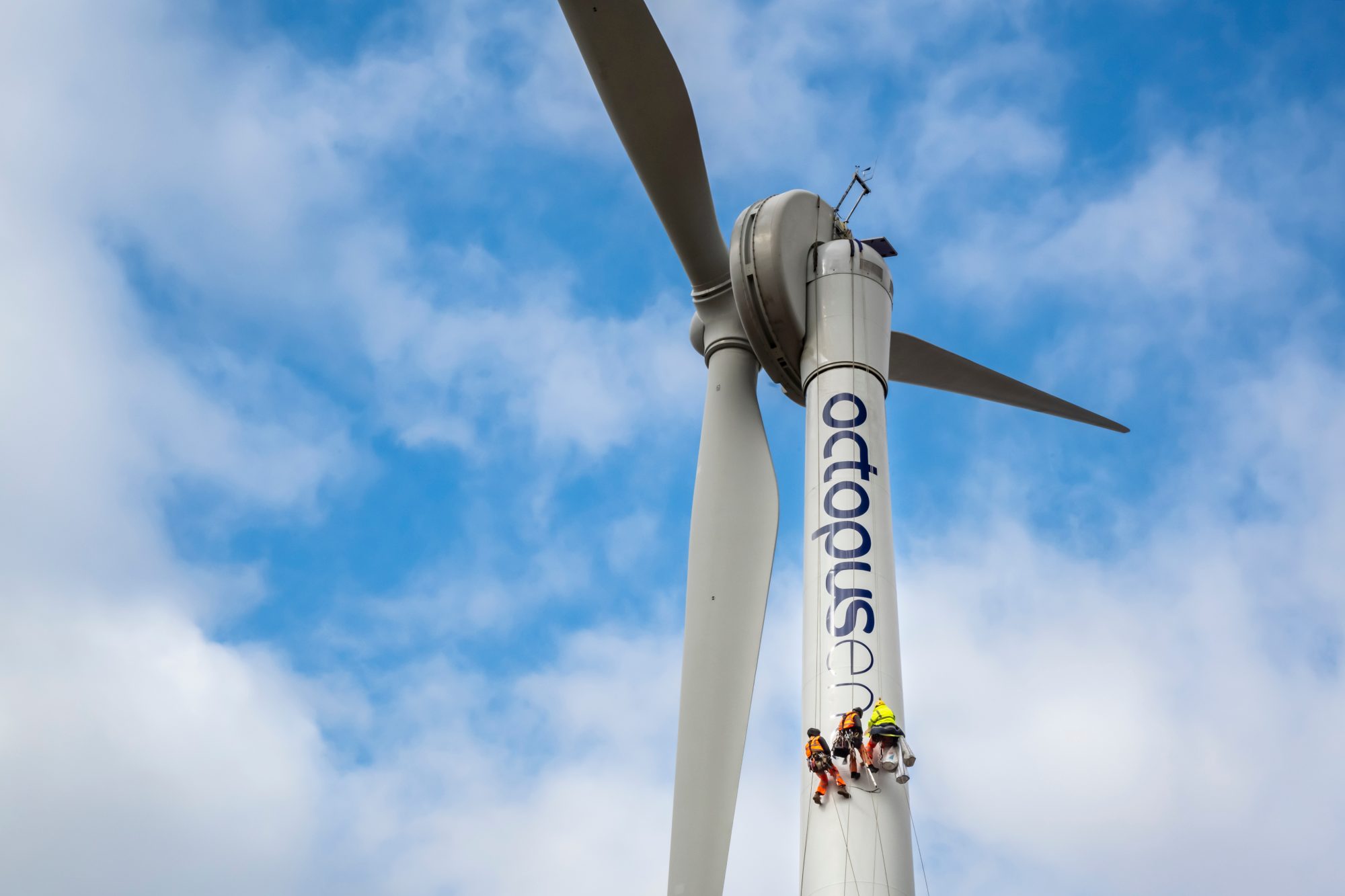
  • Octopus Energy invests £2bn in UK renewable energy projects

    Octopus Energy invests £2bn in UK renewable energy projects

    [ad_1]

    In a significant move to advance the UK renewable energy sector, Octopus Energy’s generation arm has announced a massive £2bn investment into clean energy projects by 2030.

    This development marks a major step in Britain’s transition towards green energy, aligning with government goals to enhance the nation’s solar and wind energy capacity.

    Zoisa North-Bond, CEO of Octopus Energy Generation, emphasised the significance of the investment: “The UK is on the verge of a green energy revolution.

    “This £2bn investment in homegrown renewables will help boost our energy security and pave the way for a more affordable energy future.

    “Solar and onshore wind are among the cheapest energy sources available. By building closer to demand, we can maximise green electricity when it’s abundant and lower bills for customers nationwide.”

    New solar farms to power 80,000 homes

    As part of this ambitious investment, Octopus Energy has finalised deals for the development of four new solar farms, which are being constructed in partnership with renewable energy developer BayWa r.e.

    These solar projects will be located in Bristol, Essex, East Riding of Yorkshire, and Wiltshire, contributing significantly to the UK’s renewable energy landscape.

    Combined, these solar farms will deliver a total capacity of 222 MW. Additionally, a 30 MW battery will be installed at one of the sites to store surplus energy and ensure a stable supply.

    Construction for three of these farms is set to begin later this year, with the fourth starting in 2025.

    Credit: Octopus Energy

    The farms are expected to be operational between 2025 and 2026 and will collectively generate enough electricity to power 80,000 homes.

    The environmental impact of these projects is also significant, with the power generated by the new solar farms expected to offset emissions equivalent to taking 35,000 fossil fuel cars off the road annually.

    Supporting the UK’s solar capacity targets

    This move by Octopus Energy comes as the UK Government pushes forward with its ambitious goal of tripling the country’s solar capacity by 2030.

    Solar energy is becoming a cornerstone of UK renewable energy efforts, and Octopus’ latest investments are a key contribution to meeting these national targets.

    With the expansion of solar farms across multiple regions, the UK is positioning itself as a leader in renewable energy, and Octopus Energy is helping drive this forward with its substantial financial backing and strategic developments.

    Battery storage to strengthen the energy grid

    In addition to solar projects, Octopus Energy is expanding its energy storage capabilities. The company is beginning construction on a new 12 MW battery in Cheshire.

    This battery will have the capacity to store enough energy to power nearly 10,000 homes daily, playing a crucial role in balancing the grid by storing excess green energy when it’s abundant and releasing it when demand increases.

    This type of energy storage is vital for ensuring that renewable energy sources like solar and wind are fully utilised, preventing waste and ensuring consistent power supply even when the sun isn’t shining or the wind isn’t blowing.

    A growing portfolio of renewable energy projects

    With these latest developments, Octopus Energy is further solidifying its position as a leader in UK renewable energy.

    The company now supports 138 solar farms, 16 onshore wind farms, three offshore wind farms, and three battery storage projects across Britain. In addition, they manage thousands of rooftop solar projects, reflecting their wide-reaching influence in the sector.

    Octopus Energy’s renewable investments are managed under its Octopus Energy Development Partnership (OEDP) and Sky fund (ORI SCSp).

    The company recently increased its stake in Exagen, a British solar and energy storage developer, to 100% through the OEDP fund, signalling its commitment to accelerating renewable energy development.

    Alongside its solar and battery projects, Octopus Energy is continuing to expand its wind energy portfolio.

    The company plans to submit applications for new wind turbine installations following recent reforms to onshore wind planning in England.

    These new turbines will be part of Octopus’ innovative ‘Fan Club’ scheme, which offers customers living near the turbines discounts of up to 50% on their energy bills when the wind is strong.

    Octopus Energy’s £2bn investment is a significant boost for the UK renewable energy sector, reinforcing the country’s commitment to achieving its clean energy goals.

    Through new solar farms, battery storage systems, and wind energy projects, Octopus is driving innovation and ensuring a greener future for the UK.

    [ad_2]

    Source link

  • US invests $40m funding into nation’s solar supply chain

    US invests $40m funding into nation’s solar supply chain

    [ad_1]

    The US Government has announced a $40m investment in the solar supply chain, spearheaded by the Department of Energy (DOE).

    This initiative aims to enhance the sustainability, efficiency, and longevity of solar energy technologies while supporting the growth of domestic manufacturing.

    The funding will be channeled into four research and development projects focused on improving the lifecycle of photovoltaic (PV) solar systems and fostering material recovery from decommissioned systems.

    Improving the sustainability of solar PV systems

    One key aspect of the DOE’s plan to reinforce the solar supply chain is the allocation of $16m to four projects, with $8m coming from the Bipartisan Infrastructure Law.

    This funding will go toward enhancing the sustainability of PV systems through the Materials, Operation, and Recycling of Photovoltaics (MORE PV) program.

    The goal of this initiative is to cut the cost of recycling PV modules in half by 2030 and minimise the environmental impact when these systems reach the end of their lifecycle.

    Extending the lifespan of solar panels by making them more resistant to wear and easier to repair is a significant part of the strategy.

    The initiative also aims to slow the flow of PV panels into the waste stream by addressing common causes of early failures, such as damage from extreme weather.

    Furthermore, the funding will support research into improving the durability of PV systems, ensuring that solar energy remains a sustainable solution over time.

    The Solar Partnership to Advance Recycling and Circularity (Solar PARC) is another initiative included in the MORE PV program.

    This partnership, which consists of 30 organisations, including the Electric Power Research Institute, focuses on enhancing the circularity of solar systems by improving material recovery processes and establishing end-of-life management practices for PV components.

    Projects receiving funding

    Four key projects have been selected for funding to enhance the domestic solar supply chain:

    • Case Western Reserve ($4 million)
    • kWh Analytics ($2.4 million)
    • University of North Carolina at Charlotte ($1.3 million)
    • Electric Power Research Institute ($8 million)

    These projects will play a crucial role in developing more durable, sustainable PV technologies.

    Incentivising solar manufacturers

    In addition to these research projects, the DOE has announced a $3m American-Made Promoting Registration of Inverters and Modules with Ecolabel (PRIME) Prize.

    This prize will encourage solar manufacturers to register their products through the Global Electronics Council’s EPEAT ecolabel standard.

    Ecolabels, which certifies that products meet specific environmental performance standards, will help solar companies reduce the environmental impact of their technologies and streamline end-of-life management.

    Another aspect of the investment is the continued support for solar innovation through the American-Made Solar Prize program.

    Now in its seventh round, the program has awarded $21.6m in cash prizes to innovators in solar hardware and software technologies.

    This year, two finalist teams—Fram Energy and Gritt Robotics—each received $500,000 for their solutions aimed at overcoming challenges to equitable solar energy deployment.

    With Round 8 of the competition now open for applications, the DOE continues to incentivise advancements that will drive the future of the US solar supply chain, fostering sustainable growth in the industry.

    The United State’s $40m investment in the solar supply chain underscores its commitment to building a resilient, sustainable, and competitive solar industry.

    These initiatives not only support the development of longer-lasting, more environmentally friendly PV systems but also boost domestic manufacturing, ultimately contributing to a cleaner energy future.

    [ad_2]

    Source link

  • AI Cracks the Chemistry Code to Better, Longer-lasting Solar Panels

    AI Cracks the Chemistry Code to Better, Longer-lasting Solar Panels

    [ad_1]

    Abstract Chemistry Solar Energy Concept
    By integrating AI with automated synthesis, researchers at the University of Illinois significantly enhanced the stability of solar energy molecules, shedding light on the chemical factors influencing photostability. Credit: SciTechDaily.com

    Researchers have leveraged artificial intelligence to enhance the photostability of molecules for solar energy applications, achieving molecules four times more stable than previous ones.

    Their novel approach involved AI-driven closed-loop experimentation and automated chemical synthesis to uncover the underlying chemical principles of stability, offering fresh insights into molecular design for organic solar cells.

    Artificial intelligence is a powerful tool for researchers, but with a significant limitation: The inability to explain how it came to its decisions, a problem known as the “AI black box.” By combining AI with automated chemical synthesis and experimental validation, an interdisciplinary team of researchers at the University of Illinois Urbana-Champaign has opened up the black box to find the chemical principles that AI relied on to improve molecules for harvesting solar energy.

    Advancements in Light-Harvesting Molecule Stability

    The result produced light-harvesting molecules four times more stable than the starting point, as well as crucial new insights into what makes them stable — a chemical question that has stymied materials development.

    The interdisciplinary team of researchers was co-led by U. of I. chemistry professor Martin Burke, chemical and biomolecular engineering professor Ying Diao, chemistry professor Nicholas Jackson and materials science and engineering professor Charles Schroeder, in collaboration with along with University of Toronto chemistry professor Alán Aspuru-Guzik. They published their results today (August 28) in the journal Nature.

    “New AI tools have incredible power. But if you try to open the hood and understand what they’re doing, you’re usually left with nothing of use,” Jackson said. “For chemistry, this can be very frustrating. AI can help us optimize a molecule, but it can’t tell us why that’s the optimum — what are the important properties, structures and functions? Through our process, we identified what gives these molecules greater photostability. We turned the AI black box into a transparent glass globe.”

    UIUC Jackson Group
    Illinois researchers have opened up the AI “black box” to gain valuable new insight about chemistry for solar energy applications. Pictured, from left: Professor Charles Schroeder, Changhyun Hwang, Seungjoo Yi, professor Ying Diao, professor Nick Jackson, Tiara Charis, and Torres Flores. Credit: Michelle Hassel

    Solving Photostability With Closed-Loop Experimentation

    The researchers were motivated by the question of how to improve organic solar cells, which are based on thin, flexible materials, as opposed to the rigid, heavy, silicon-based panels that now dot rooftops and fields.

    “What has been hindering commercialization of organic photovoltaics is problems with stability. High-performance materials degrade when exposed to light, which is not what you want in a solar cell,” said Diao. “They can be made and installed in ways not possible with silicon and can convert heat and infrared light to energy as well, but the stability has been a problem since the 1980s.”

    Accelerating Discovery with Modular Chemistry and AI

    The Illinois method, called “closed-loop transfer,” begins with an AI-guided optimization protocol called closed-loop experimentation. The researchers asked the AI to optimize the photostability of light-harvesting molecules, Schroeder said. The AI algorithm provided suggestions about what kinds of chemicals to synthesize and explore in multiple rounds of closed-loop synthesis and experimental characterization. After each round, the new data were incorporated back into the model, which then provided improved suggestions, with each round moving closer to the desired outcome.

    The researchers produced 30 new chemical candidates over five rounds of closed-loop experimentation, thanks to building block-like chemistry and automated synthesis pioneered by Burke’s group. The work was done at the Molecule Maker Lab housed in the Beckman Institute for Advanced Science and Technology at the U. of I.

    “The modular chemistry approach beautifully complements the closed-loop experiment. The AI algorithm requests new data with maximized learning potential, and the automated molecule synthesis platform can generate the new required compounds very quickly. Those compounds are then tested, the data goes back into the model, and the model gets smarter — again and again,” said Burke, who also is a professor in the Carle Illinois College of Medicine. “Until now, we’ve been largely focused on structure. Our automated modular synthesis now has graduated to the realm of exploring function.”

    Unveiling the Secrets of Molecular Stability

    Instead of simply ending the query with the final products singled out by the AI, as in a typical AI-led campaign, the closed-loop transfer process further sought to uncover the hidden rules that made the new molecules more stable.

    As the closed-loop experiment ran, another set of algorithms was continuously looking at the molecules made, developing models of chemical features predictive of stability in light, Jackson said. Once the experiment concluded, the models provided new lab-testable hypotheses.

    “We’re using AI to generate hypotheses that we can validate to then spark new human-driven campaigns of discovery,” Jackson said. “Now that we have some physical descriptors of what makes molecules photostable, that makes the screening process for new chemical candidates dramatically simpler than blindly searching around chemical space.”

    To test their hypothesis about photostability, the researchers investigated three structurally different light-harvesting molecules with the chemical property they identified — a particular high-energy region — and confirmed that choosing the proper solvents made the molecules up to four times more light-stable.

    “This is a proof of principle for what can be done. We’re confident we can address other material systems, and the possibilities are only limited by our imagination. Eventually, we envision an interface where researchers can input a chemical function they want and the AI will generate hypotheses to test,” Schroeder said. “This work could only happen with a multidisciplinary team, and the people, resources, and facilities we have at Illinois, and our collaborator in Toronto. Five groups came together to generate new scientific insight that would not have been possible with any one of the sub-teams working in isolation.”

    Reference: “Closed-loop transfer enables AI to yield chemical knowledge” 28 August 2024, Nature.
    DOI: 10.1038/s41586-024-07892-1

    This work was supported by the Molecule Maker Lab Institute, an AI Research Institutes program supported by the U.S. National Science Foundation under grant no. 2019897.

    [ad_2]

    Source link