Tag: Stomach Cancer

  • Study highlights potential of community-based H. pylori screening to reduce gastric cancer risk

    Study highlights potential of community-based H. pylori screening to reduce gastric cancer risk

    [ad_1]

    What if we could eliminate a major risk factor for stomach cancer in Black, Asian, Latino and other vulnerable populations? A new study from Sylvester Comprehensive Cancer Center at the University of Miami Miller School of Medicine shows the feasibility of reaching out to high-risk communities with free, accessible testing and treatment for Helicobacter pylori bacterium infection – a major risk factor for gastric cancer.

    Shria Kumar, M.D., a physician-scientist at Sylvester, sees patients with gastric cancer in her South Florida clinical practice, and often is struck by the severity of their illness. Frequently, their stomach cancer has progressed to an advanced stage, where there are fewer – and less effective – treatment options for this potentially deadly disease.

    That grim reality led her to wonder if targeting the cancer’s major risk factor, Helicobacter pylori bacterium infection, could make inroads in susceptible communities.

    Kumar and her Sylvester colleagues launched a community-based study to test for and treat H.pylori among vulnerable South Florida populations, including Black, Asian and Latino residents. Their findings, published April 3 in Clinical Gastroenterology and Hepatology, indicate that they could identify and eliminate these infections within a community setting, but not for all affected individuals.

    “Our results show promise for screening and treating high-risk people in the communities where they live or work,” said Kumar, a member of Sylvester’s Cancer Control Program who served as the study’s lead and corresponding author. “Additionally, our approach could inform future efforts to scale up H. pylori screening throughout Miami and beyond.”

    Cancer link

    According to Kumar and study collaborators, including senior author David Goldberg, M.D., and lead research coordinator Damian Cohen, M.D., H. pylori infection is known to cause gut inflammation and increased risk of ulcers. It also is “one of the strongest links to cancer risk known in medicine,” Kumar said.

    A previous study conducted by Kumar and colleagues found that patients treated for H. pylori had an almost 75% reduced risk of developing gastric cancer. Their findings aligned with numerous other studies showing that eliminating H. pylori prevents disease development.

    Japan and other East Asian countries with a high prevalence of the bacterium routinely screen people for H. pylori infection during their regular doctor visits.

    In the U.S., however, where the bacterium is less prevalent, people are only tested for H. pylori when they exhibit common symptoms for infection, including upset stomach, stomach pain or related secondary complications such as ulcers. That approach, Kumar noted, overlooks vulnerable U.S. populations associated with higher incidences of H. pylori, especially Blacks, Asians and Latinos.

    Community outreach

    Miami is the perfect enclave to test community-based strategies to eliminate H. pylori. It’s home to many ethnic and racial minorities who have higher incidences of the bacterium, as well as immigrants from highly affected countries.”


    Shria Kumar, M.D., physician-scientist at Sylvester

    For the study, Kumar and colleagues visited health fairs and community centers, while also deploying Sylvester’s Game Changer Vehicles, which bring cancer screenings and information to underserved communities.

    The researchers used portable breath-test machines to screen participants for H. pylori and immediately provided them with free treatment regimens if they tested positive. They were asked to return to a testing site several weeks later to ensure the bacterium had been eliminated.

    Overall, the Sylvester team tested 155 people and found that about one-third – 52 – were H. pylori-positive. They were given a drug combination to treat the bacterium. Of those, 23 people returned to a site for retesting after treatment, and all but one had eliminated their infections.

    Moving forward

    The study’s approach produced mixed results. “It highlighted the potential for community-based H. pylori screening and treatment while also identifying potential pitfalls,” Kumar said. “Many people were still left behind.”

    Ten people did not complete treatment, she noted, and the research team lost contact with 19 others.

    Potential barriers to greater participation and success with this ongoing study include the need for retesting over time and the complexity of treatment, which requires taking pills several times a day, Kumar explained. The researchers hope to find ways to improve treatment compliance and reduce patient burden. 

    Study co-author Goldberg remains hopeful that H. pylori testing will become a routine U.S. screening with advancements that simplify testing and treatment. “These things tend to evolve over time with new technology and knowledge.”

    Source:

    Journal reference:

    Kumar, S., et al. (2024) Barriers to Community-Based Eradication of Helicobacter pylori Infection. Clinical Gastroenterology and Hepatology. doi.org/10.1016/j.cgh.2024.03.008.

    [ad_2]

    Source link

  • Groundbreaking study finds link between common bacteria and stomach cancer

    Groundbreaking study finds link between common bacteria and stomach cancer

    [ad_1]

    A new study has discovered that a type of bacteria commonly found in the body, which usually does not pose problems for healthy people, plays a significant role in causing stomach cancer, the fifth most common cancer in the world.

    Groundbreaking study finds link between common bacteria and stomach cancer
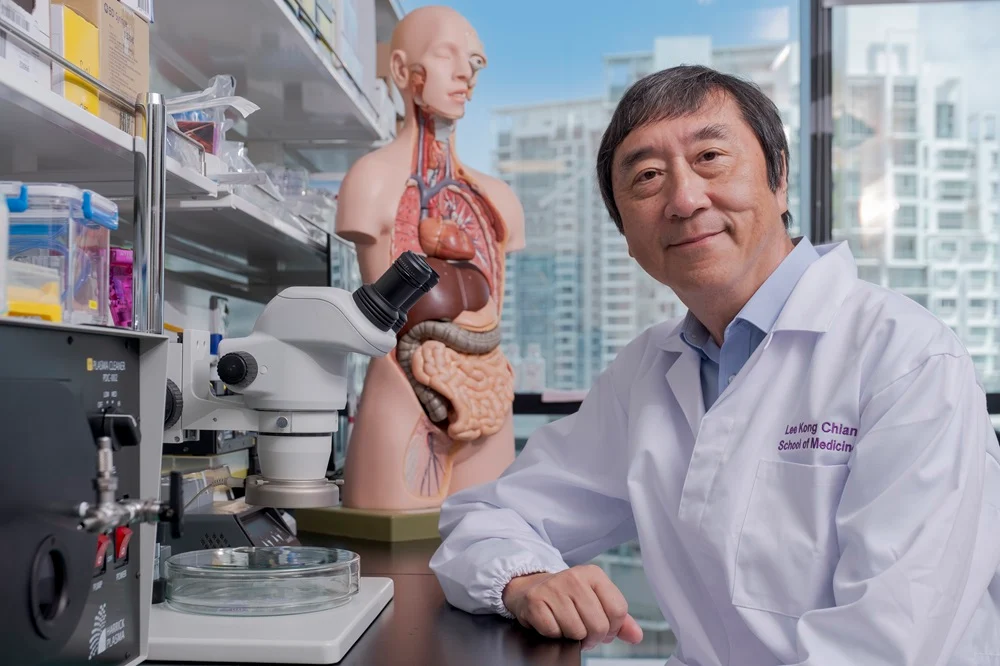
    Professor Joseph Sung, NTU Singapore’s Senior Vice President (Health and Life Sciences) and Dean of the Lee Kong Chian School of Medicine, is the co-lead of the study which found that Streptococcus anginosus bacteria play a significant role in causing stomach cancer. (Image Credit: NTU Singapore)

    Streptococcus anginosus bacteria exist alongside other germs in the mouth, throat, intestines and vagina. Occasionally, they may cause mild infections like sore throats and skin infections. For patients with underlying health conditions or compromised immune systems, the bacteria can lead to more serious infections, such as those that damage the heart and brain.

    However, research co-led by Nanyang Technological University, Singapore (NTU Singapore) and the Chinese University of Hong Kong (CUHK) showed that S. anginosus is involved in stomach infections in mice that cause cell damage and changes known to encourage gastric cancer. This includes gastric inflammation, in which the stomach lining is irritated. The condition damages gastric lining cells and causes some of them to gradually transform into cancer cells.

    Mice experiments also revealed that the bacteria spurred the growth of stomach cancer cells, doubling the size and weight of tumors in some cases.

    But the researchers also found that disrupting a protein on the bacteria’s surface, which they need to interact with stomach lining cells, reduced S. anginosus’ ability to contribute to stomach cancer.

    The findings add to the number of bacteria species known to cause gastric cancer. Another bacteria species, Helicobacter pylori, is known to cause gastric ulcers in people. These painful sores increase patients’ risk of developing gastric cancer. Whether other bacteria are involved has remained unclear until now.

    “Our latest findings in mice shed light on another pathogen that contributes to stomach cancer, and how it does so,” said the study’s co-lead, Professor Joseph Sung, NTU’s Senior Vice President (Health and Life Sciences).

    “This lays important groundwork for further studies in humans that will help clinicians better treat and prevent gastric cancer driven by bacteria,” added Prof Sung, who is also the Dean of NTU’s Lee Kong Chian School of Medicine.

    Professor Yu Jun, the study’s other co-lead who is Director of CUHK’s State Key Laboratory of Digestive Disease, said that the researchers will next “explore the therapeutic potential of targeting S. anginosus to reduce gastric inflammation and cancer risk”.

    The S. anginosus study, published in Cell in February 2024, contributes to one of the goals of the NTU 2025 strategic plan to address the needs and challenges of healthy living.

    Bacteria-induced abnormalities

    H. pylori bacteria are classified as carcinogenic (cancer-causing) to humans. But among people infected with the bacteria, only 1 to 3 per cent develop stomach cancer, which suggests that other factors are involved in its development.

    Past research has shown that 20 per cent of patients with chronic gastritis – a known contributor to gastric cancer – are not infected by H. pylori. Chronic gastritis refers to long-term inflammation of the stomach.

    Studies have also posited that other bacteria, including S. anginosus, could play a part in stomach tumor development too.

    To confirm S. anginosus’ role, Prof Sung and collaborating scientists from CUHK ran a series of experiments.

    The researchers infected the stomachs of mice with S. anginosus over two weeks and found mild to moderate gastric inflammation. This was similar to what was observed in mice infected with H. pylori over the same time frame.

    When S. anginosus infection of the mice was extended – by up to a year – persistent and prolonged inflammation of the stomach, or chronic inflammation, was observed three months after the initial infection. The level of inflammation was also similar to that of rodents infected by H. pylori only.

    But when mice were co-infected by both S. anginosus and H. pylori, the level of chronic gastric inflammation recorded after three months was two times greater than infection by either bacteria alone.

    As the S. anginosus infection progressed, anomalies that signal cancer development were also observed in the stomach. There was a surge in gastric cell numbers six months after the original infection, stomach acidity rose after nine months, and many cells of the stomach lining transformed into abnormal pre-cancerous cells after 12 months.

    The scientists observed another way that S. anginosus infection created an environment conducive to gastric cancer – by disrupting the population of other microorganisms in the stomach. The bacteria increased the number of stomach microbes that typically reside in the mouth while reducing the number of probiotic bacteria important for good gut health, like Lactobacillus.

    They demonstrated that S. anginosus was able to drive the growth of gastric tumors. When stomach cancer cells were implanted under the skin of mice or into the rodents’ stomach lining, infection by S. anginosus at those sites encouraged the tumors to grow, doubling their size and weight in some cases.

    The researchers also discovered that the bacteria needed a specific protein on their surface to physically bind to and invade stomach lining cells to promote gastric cancer development. When this protein was deficient in the bacteria, the germs’ ability to bind to stomach lining cells and encourage the growth of gastric cancer implants was impaired.

    Our results suggest that long-term S. anginosus infection causes intensive chronic gastritis that is comparable to H. pylori infection. In fact, these two pathogens might act collaboratively to promote gastric inflammation and, eventually, gastric cancer. This could change how we approach prevention and treatment of the disease.”

    Professor Joseph Sung, NTU’s Senior Vice President (Health and Life Sciences)

    He added that detecting S. anginosus in faeces could be useful for assessing whether a patient is at risk of gastric cancer in the future.

    Since S. anginosus is commonly found in the mouth, the bacterium could be swallowed through saliva and find its way into the stomach. So, one potential way to guard against stomach cancer from developing could be to practice good oral hygiene, said Prof Sung.

    Source:

    Journal reference:

    Fu, K., et al. (2024). Streptococcus anginosus promotes gastric inflammation, atrophy, and tumorigenesis in mice. Cell. doi.org/10.1016/j.cell.2024.01.004.

    [ad_2]

    Source link

  • Can dietary patterns impact stomach cancer risk?

    Can dietary patterns impact stomach cancer risk?

    [ad_1]

    In a recent review published in Frontiers in Oncology, researchers investigated eating patterns and indices related to gastric cancer and explored their association with stomach cancer risk.

    Study: Review of dietary patterns and gastric cancer risk: epidemiology and biological evidence. Image Credit: Peakstock/Shutterstock.comStudy: Review of dietary patterns and gastric cancer risk: epidemiology and biological evidence. Image Credit: Peakstock/Shutterstock.com

    Background

    Gastric cancer is a common cancer worldwide, accounting for considerable global mortality. Despite attempts to minimize Helicobacter pylori prevalence and enhance food storage, the incidence and fatality rates of stomach cancer have decreased.

    Epidemiological studies have found links between eating habits and stomach cancer risk. Individual dietary components, on the other hand, have produced inconsistent results in terms of the stated risk of stomach cancer.

    Assessing eating patterns yields more reliable effect estimates and outcomes, emphasizing the need for comprehensive cancer prevention recommendations.

    About the review

    In the present review, researchers reviewed existing data on the impact of diet on gastric cancer risk.

    Diet patterns can be posteriori (formed from cohort population data) or a priori (created using existing information about food, nutrients, and illness). Posteriori patterns are determined using statistical approaches such as principal component analysis, factor analysis, and cluster analysis.

    A priori patterns may derive from country-specific standards, chronic disease-preventive diets, or cultural eating habits.

    Association between a posteriori eating patterns and stomach cancer

    In case-control studies, healthy eating patterns minimized the risk of stomach cancer, but an “unhealthy” dietary pattern raised the risk.

    A comprehensive meta-analysis revealed that greater compliance with “prudent” diet patterns was related to a lower incidence of stomach cancer [odds ratio (OR) 0.8].

    In contrast, increased compliance with Western diets increased the risk of total stomach cancer (odds ratio, 1.5). The association between poor eating habits and stomach cancer risk was more robust for cardia stomach cancers (OR, 2.1) than for distal stomach cancers (OR, 1.4).

    Other meta-analyses showed that individuals consuming healthy foods had decreased stomach cancer risks (OR, 0.7) considerably.

    In contrast, following unhealthy diets increased stomach cancer risk (OR, 1.6). A 2017 meta-analysis found that “Western” diets increase gastric cancer risk.

    However, meta-analytical research of 13 case-control studies and eight studies of the prospective cohort type found that those abiding by “prudent” diets had a lower chance of developing stomach cancer.

    A priori dietary patterns, dietary indices, and gastric cancer

    The relationship between eating habits and stomach cancer risk is complicated and nuanced. There is limited research on the link between high health eating index (HEI) or alternate HEI (AHEI) scores and the risk of stomach cancer.

    A comprehensive review and meta-analysis found that higher adherence to HEI and AHEI dietary patterns was associated with a lower risk of total cancer-specific mortality.

    New case-control research from Iran found that eating the dietary approaches to stop hypertension (DASH) diet was related to a 54% lower incidence of stomach cancer.

    The DASH diet’s components, such as excessive salt intake, red meat consumption, and fruits, have been linked to an increased risk of stomach cancer.

    A Markov cohort state-transition model projected that a low sodium-DASH diet reduced stomach cancer risk by 25% in men and 21% in women.

    Meta-analyses indicate that Mediterranean diet (MD) followers are less likely to develop stomach cancer.

    MD vitamins and fibers reduce H. pylori colonization, whereas polyphenol-rich foods and extra-virgin olive oil (EVOO) reduce inflammation by inhibiting free radicals and lowering oxidative stress.

    Omega-3 fatty acids reduce triglyceride levels and inflammation, methionine reduces body weight and insulin resistance, branched-chain amino acids improve insulin sensitivity, and short-chain fatty acids reduce trimethylamine N-oxide (TMAO) and inflammation and regulate autoimmunity factors.

    Patterns based on biological markers

    Inflammation increases gastric cancer risk, particularly among men. Pro-inflammatory foods increase the incidence of intestinal and diffuse cancer subtypes.

    The upregulation of cytokines and chemokines, which recruit several hematopoietic and progenitor cell types to inflamed stomach tissues, may cause chronic inflammation.

    Gastric cancer-related inflammation includes inflammatory cytokines such as interleukin-1 (IL-1), IL-6, and tumor necrosis factor-alpha (TNF-α). IL-1 has an anti-tumor impact, whereas IL-6 is associated with tumor progression, invasion, and metastasis.

    The ketogenic diet (KD) is associated with anti-cancer treatment in advanced gastric cancer patients. The KD alters glucose metabolism and inhibits insulin signaling and insulin-like growth factor 1 (IGF-1), the primary energy source for tumor cells. KD reduces nicotinamide adenine dinucleotide phosphate (NADPH) generation to increase oxidative stress in tumor cells.

    Ad libitum KD therapy inhibits hypoxia-related and growth-driven proteins, influencing tumor progression.

    Ketones enter cancer cells by monocarboxylate transporters (MCTs), limit lactate export, reduce cancer survival time, and prevent the activation of NLR family pyrin domain containing 3 (NLRP3), nuclear factor kappa B (NF-kB) and Signal transducer and activator of transcription 3 (STAT3) activation, lowering IL-1β expression.

    The review findings indicate that dietary patterns can influence gastric cancer risk by influencing metabolites, gut microbiota, inflammation, and immune function.

    Inconsistency in results might be owing to various factors such as meal types, recollection bias, overall energy consumption, and other confounders. Large-scale prospective cohort studies could improve the validity of the findings.

    [ad_2]

    Source link