Tag: The Innovation Platform Issue 19

  • SMR designs suitable for Sweden’s future electricity production

    SMR designs suitable for Sweden’s future electricity production

    [ad_1]

    Work performed within the ANItA project identifies SMR designs suitable for electricity production in Sweden and points out the need for further research.

    In one of the ongoing initial projects within ANItA, a Swedish national competence centre for nuclear power technology, work is performed to identify small modular nuclear reactor (SMR) designs that are suitable for Sweden’s electricity generation in the relatively near future. The aim is, furthermore, to point out novelties compared with the current Swedish reactor fleet that might need further investigation.

    Suitable SMR designs

    SMRs are considered an option for adding new nuclear capacity in Sweden. The SMRs can be used for different purposes. In addition to electricity generation, the heat produced can be used for district heating to heat homes and commercial buildings or be supplied to various industrial processes, including hydrogen production. All these applications are investigated within ANItA.

    Various types of SMRs have been proposed, some based on the technology of current nuclear reactors and others intended for use in future Generation IV nuclear power systems. The types based on the technology of existing nuclear reactors usually belong to the classification known as Generation III+ reactors. Design descriptions of many, but not all, proposed SMRs have been compiled by IAEA.¹

    As the name suggests, SMRs differ from large-scale reactors in that they are smaller and more modular. This means that they have a smaller physical size as well as power output and, to a larger extent, will be built using pre-fabricated modules that will be assembled at the reactor construction site. These features imply potential advantages over large-scale reactors. The smaller size and output often make it easier to design reactors that are easier to operate and more easily can be used for other purposes than only electricity production. Importantly, the increased modularity also allows for shorter construction times.

    There are currently six operable large-scale reactors in Sweden, and six permanently shut down. All of these started operation between 1972 and 1985 and are of the type light-water reactor, meaning that they use light-water (i.e. normal water) as coolant and to moderate the energy of the neutrons released in the fission process taking place in the nuclear fuel. The term light-water reactors is used to distinguish them from heavy-water reactors, which use heavy water instead (i.e. water enriched in the hydrogen isotope deuterium).

    There are two main varieties of light-water reactors: boiling water reactors (BWRs) and pressurised water reactors (PWRs); both of these are used in Sweden. Light-water reactor technology is the most common reactor technology not only in Sweden but also worldwide.

    As the legislation in Sweden is adapted to land-based (as opposed to marine-based) light-water reactors, it will, from a licensing perspective, be less of an effort to deploy this type of SMR compared with other types. Additionally, to be easily deployable, the design needs to be at an advanced stage. Furthermore, the SMR should be developed by an organisation that has the capability of delivering the reactor, and that is based in a country from which it is politically acceptable to acquire nuclear technology.

    More than 25 land-based light-water SMR designs have been proposed. Of these, one BWR and four PWRs are used as reference designs in the work performed in this project. The five SMRs are (with the developing organisation within parentheses):

    1. BWRX-300 (GE-Hitachi)
    2. Rolls-Royce SMR (Rolls-Royce)
    3. AP300TM (Westinghouse)
    4. VOYGRTM (NuScale)
    5. NUWARDTM (EDF)

    Novelties in proposed SMR designs

    In the proposed light-water SMR designs, there are several notable novel features compared with the current and previous Swedish reactors. Some of these features are or have been in use in other reactors outside Sweden, whereas some are novel to the world. Many of the novelties can be expected to lead to a simplified construction or operation of the reactors. However, before they can be employed in a real reactor, it is necessary that the novelties are well understood from a technical perspective and that there are no regulatory hurdles to implement them.
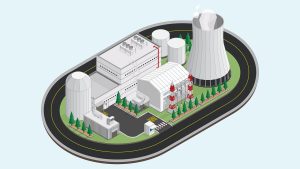
    SMR designs
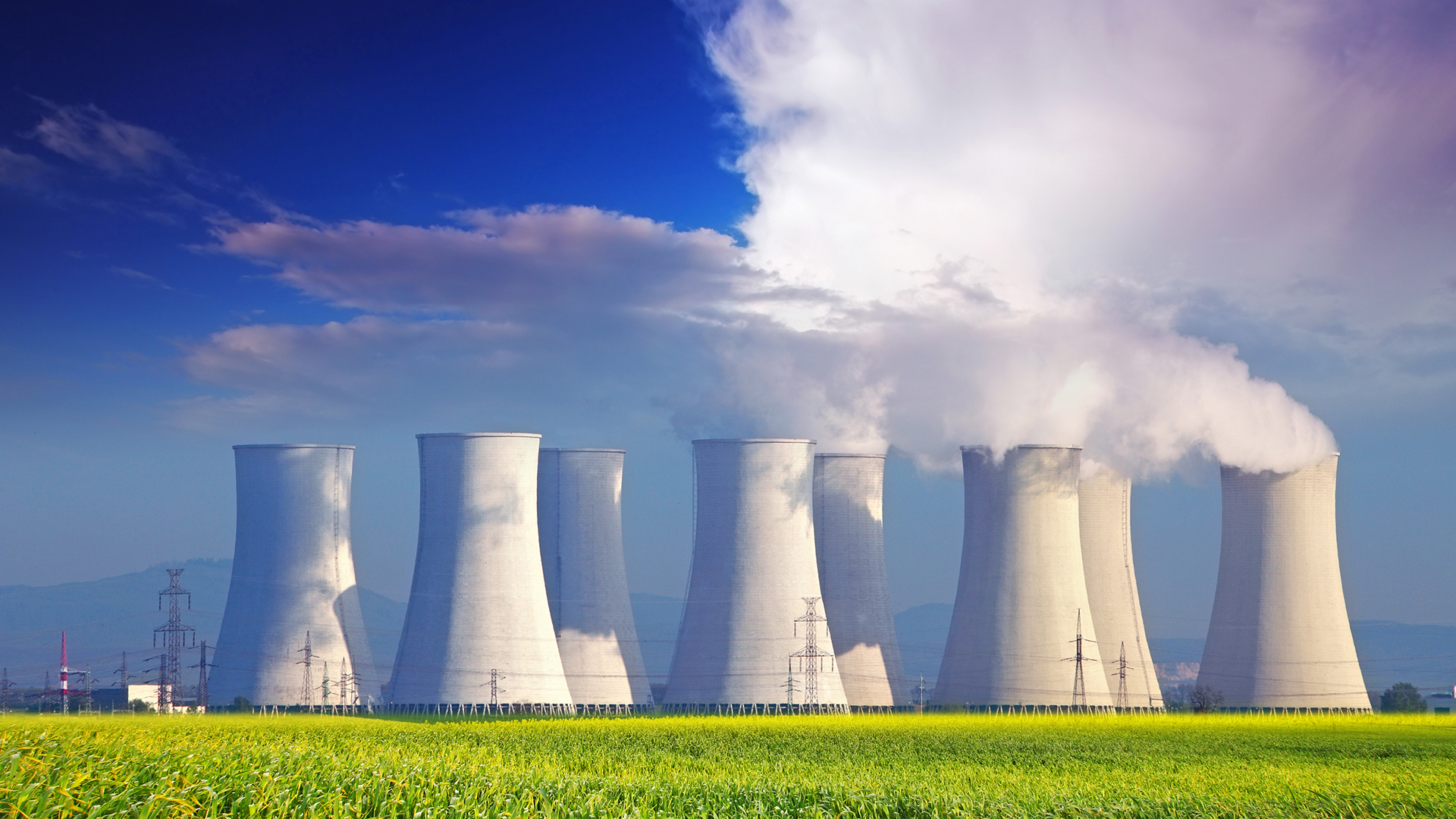
    © shutterstock/3Dalia

    Notable novel features of the proposed SMR designs compared with the current and previous Swedish reactors, apart from the smaller size and increased modular construction, include:

    •  Enhanced use of natural circulation
    •  Increased passive safety
    •  Novel reactor containment designs
    •  Integral PWR designs
    •  Novel types of water chemistry
    •  Having several reactors located in a common reactor building and controlled from a common control room
    •  Increased load-following capability
    •  Dry storage of used nuclear fuel

    Natural circulation means that no pumps are used to circulate the reactor coolant. It allows for a simplified reactor design and operation with fewer components and less maintenance need. Additionally, it allows for increased safety, not relying on the pumps.

    Passive safety, such that no operator action, external supply of electricity, or other auxiliary systems are needed to keep the reactor core cooled for three days or longer, is implemented in the SMR designs. Passive safety is, to a large extent, enabled by the use of natural circulation. Other features enabling passive safety include gravity and pressurised systems.

    The reactor containment is a structure that has the function of containing radioactivity in case of an accident. All Swedish reactors have containments made of pre-stressed concrete, whereas the SMR designs have containments made of steel or steel–concrete composite materials.

    In integral PWR designs, some of the main components, e.g., steam generators, drive mechanisms for control rods, and pressuriser, are located inside the reactor pressure vessel. Integral PWRs are much more compact than normal PWRs and the reactor is designed to be delivered as one unit that is connected to the non-nuclear parts of the power plant.

    The most notable novelty in water chemistry is the proposed use of boron-free PWR coolant in some SMRs. Boron is used in current PWRs to control the reactivity, i.e., the rate of the fission process. Some other novel types of water chemistry are also proposed. Water chemistry needs to be optimised to keep material degradation at a minimum. This is essential for the long-term operation of the reactors.

    Having several small reactors located in one common reactor building and controlled from one common control room can be efficient from the perspectives of construction and operation. The single control room makes it possible to operate the reactors using less staff.

    Load-following capability is the capability of adjusting the electrical output to the grid depending on the demand for electricity. To some extent, this flexibility already exists in current reactors. There are two main ways of load-following, one being to reduce the reactor power when the electricity demand decreases and the other to maintain the reactor at maximum power and use the steam for purposes other than producing electricity, for example, to produce hydrogen or provide heat to other industrial processes.

    The used nuclear fuel in Sweden is stored in water pools (so-called wet storage) at the interim storage facility Clab in Oskarshamn. Some SMR designs include dry storage of used fuel at the reactor site, as is done in several other countries. There are two major benefits of introducing dry storage in Sweden. Firstly, there will be no need to expand Clab or build a new wet-storage facility once its capacity is reached. Secondly, transportation of spent nuclear fuel will be less frequent. This could be especially beneficial if SMRs are deployed at new sites that are not connected to the current transportation infrastructure by sea.

    Need for further investigation

    Novel features can affect one or more of nuclear reactor licensing, construction, and operation. Maintenance of reactor components and management of radioactive waste are here considered part of the operation of the reactors.

    All of the novelties listed above, as well as the smaller size and the increased use of modularity, can affect the licensing and operation of the SMRs. The smaller size, the increased use of modularity, and the new containment designs will also affect the construction of the power plants.

    To successfully deploy SMRs in Sweden, it is important to address the potential barriers caused by the novel features. The novelties need to be well understood and their functionality proven, and they need to be permitted. There is thus a need for further investigation regarding technical features as well as the legislation concerning nuclear power. Additionally, the economic aspects of SMRs need to be considered. Some of the novelties and the corresponding potential barriers are the topics of other currently ongoing ANItA projects. Others are foreseen to be researched in future ANItA projects.

    Summary and conclusions

    SMRs are one option for adding new nuclear capacity to meet the future electricity demand in Sweden. Of the various SMR types proposed, light-water SMRs, i.e. reactors similar to but smaller and more modular than current large-scale reactors, are the most likely to be built in the relatively near future. Because of their similarities with current reactors, the proposed light-water SMRs should, for the most part, be rather straightforward to license, construct, and operate. However, there are some novel technical features in the proposed SMR designs that require further investigation for the successful deployment and operation of them in Sweden.

    A report explaining the novel technical features and the need for investigation in more detail will be available at the ANItA website around the end of this year as this part of ANItA (Project A2) nears completion.

    References

    1. Advances in Small Modular Reactor Technology Developments, IAEA, 2022, https://aris.iaea.org/Publications/SMR_booklet_2022.pdf

    Please note, this article will also appear in the 19th edition of our quarterly publication.

    [ad_2]

    Source link
  • Tracking, data sharing and IFF for space traffic management

    Tracking, data sharing and IFF for space traffic management

    [ad_1]

    3S Northumbria aims to help develop a global space traffic management system for sustainable space use.

    As the need for humanity to use space in a more sustainable and environmentally conscious fashion becomes ever more apparent, the question of how this should be achieved looms large. One key element that will be critical to sustainable space activity is a more ordered approach to the coordination and management of spacecraft orbiting the Earth.

    The need for an integrated approach to dealing with the number of space objects orbiting the Earth becomes ever more pressing when considering the large numbers of so-called mega-constellations that are either being put into orbit by operators such as SpaceX or that have been authorised and are in development from private companies across the globe.

    As a company with the principles of safety, security, and sustainability at its core, 3S Northumbria stands ready to assist in the development of a global system of space traffic management (STM), building upon extant international law and emerging normative behaviour. In this discussion piece, the founder of 3S Northumbria, Ralph ‘Dinz’ Dinsley, will outline the principal elements needed to establish an effective STM regime.

    Tracking

    Over recent years, space has become a crowded environment, with a significant increase in the number of satellites. The number of active space objects is only going to increase, thanks to the development of mega-constellations like SpaceX’s Starlink and OneWeb. As of June 2024, there are over 10,000 active satellites in orbit, and this number is expected to grow significantly.¹

    Each satellite adds to the density of objects in space, increasing the likelihood of a catastrophic collision. Enhancing the global space tracking capability is an essential pre-requisite for the effective management of these assets, enabling operators to predict potential collision risks accurately and precisely.

    It has long been recognised that effective space situational awareness (SSA) requires a wide range of data about the characteristics of the orbital environment. Enhancing SSA allows not only for the collision mitigation strategies but will also allow for greater transparency and confidence building measure that can lead to more stability in space. The detection, tracking and characterisation of objects in space, leading to good levels of SSA, allows for progressive approaches to space security.

    STM
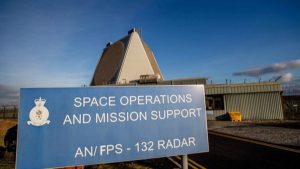
    RAF Fylingdales Ballistic Missile Warning Radar

    Currently, space surveillance and tracking (SST) is predominantly carried out by the military, utilising systems optimised for missile warning, with only a fraction of the data collected shared through open sources to support space sustainability.

    By ensuring sufficient SST out with military capabilities, the whole decision-making process that underpins any STM regime will be based on the best and most up-to-date data. The situation is slowly improving, but there still needs to be greater investment in all kinds of tracking, from radar to optical observation, across all the orbital regimes to ensure space safety and sustainability can be adequately achieved.

    Persistent and robust SST sits as a cornerstone of effective STM, providing crucial data to mitigate collision risks, manage space debris and provide detailed information to support new space activities. Prioritising investment in space-tracking infrastructure will be essential to navigating the challenges of an increasingly active and congested space environment.

    Data sharing

    Obtaining the best data possible, as quickly as possible, on the orbital environment is foundational to an effective STM regime. Yet the ability to share that SSA data amongst all stakeholders is no less important.

    If sustaining future space activities through avoiding catastrophic collisions is the primary goal of STM, then accurate and timely data sharing on the positions and trajectories of space objects is crucial for ensuring collision avoidance measures are executed precisely and effectively, whether under human direction or by means of an autonomous collision avoidance system. Ensuring that operators have access to the most up-to-date information allows informed decisions about potential avoidance manoeuvres to be made.

    The international and collaborative nature of space activity naturally lends itself to the sharing of data, and yet, due to the predominance of military space tracking assets, that rarely exists. Due to the significant increase in orbital traffic, we have left behind the paradigm of ‘space is big’, and we don’t need to worry about congestion, and all stakeholders need access to the information crucial to operating safely in space.

    By sharing such data widely, nations, private operators, and scientific actors can work together to provide harmonious strategies for dealing with the challenges posed by space debris and enhancing the overall safety and sustainability of human activity in outer space.

    There are several ways in which data sharing for the purposes of STM might be achieved. A centralised data repository, serving as a single point of truth for all space traffic data, would be a logical first step. Current attempts at providing a catalogue for such data, whilst laudable, do not have the currency needed for effective coordination or management of space traffic.

    Not only does data have to be provided comprehensively and precisely, but it must also be delivered in a timely fashion. To facilitate the sharing of data, standardised data formats and the work undertaken by bodies such as the Consultative Committee for Space Data Systems (CCSDS) are illustrative of the international space community recognising the need for interoperability not just in terms of hardware but across the entire industry.

    Encouraging work is occurring across the globe, with regulators and operators alike recognising the need for increased coordination and cooperation. The US Department of Commerce is already preparing to promulgate an approach to STM that will provide much-needed leadership in this area. This discussion will now suggest one area where innovation could provide a quantum leap in the management of space traffic by utilising existing technology used to manage airspace.

    A new approach: Promoting the use of IFF in space

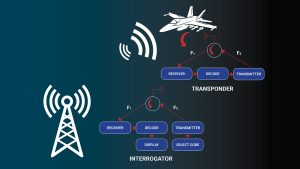
    Increased SST infrastructure and the creation of mechanisms to share the data amongst all users of space are two crucial elements of a successful STM regime. Both elements could be augmented by the integration of Identification Friend or Foe (IFF) technology. IFF is an identification system designed for command and control, which enables military and civilian air traffic control interrogation systems to identify aircraft as friendly and to determine their bearing and range from the ‘interrogator.’

    Introducing it alongside increased SST could provide significant enhancements to a space traffic management regime, further mitigate against space debris, reduce the potential for harmful collisions, and improve SSA overall.

    IFF

    IFF technology can be traced back to the end of the Second World War, and its core principles remain very much the same to this day. The ground-based radar sends out an interrogation signal, and a transponder on the aircraft – upon receiving this – would reply with a coded identification. Upon receipt of this response, the aircraft can be identified based on that code. This allows the identification and tracking of aircraft, leading to airspace being managed in a relatively efficient and safe way.

    Developing this technology for use in space could be done in the following ways. Either an interrogation signal could be transmitted by ground stations or by other satellites in orbit, or it could be operated passively with a transmitter from the satellite sending a code and positional data to be received on the ground.

    Satellites would have to be equipped with transponders capable of receiving interrogation signals and sending back the appropriate identification code or transmitting the signal. If interrogated, unique identification codes and other data could then be transmitted either back to the ground stations or relayed via satellites and used for identification and tracking.

    There are challenges in deploying ‘IFF for Space Objects’. First, this would be a prospective measure applying to future missions and not the 10000 operational satellites that are currently in orbit. The benefits of any IFF system would take time to percolate through. Operators would need to be convinced of the utility of such a system before committing to adding additional weight and power-hungry transponders to any satellite.

    However, the opportunity exists to develop unique power sources independent of the satellite power system lightweight transponders and GPS transceivers.   Additionally, the role of the regulator would be crucial in the broad acceptance of IFF for space. International standards and protocols need to be established to ensure compatibility between different companies, organisations, and nations.

    Ensuring the power source for the ‘IFF for Space objects’ is independent of the satellite power system is essential to ensuring the longevity of the system.  It needs to be able to transmit before a satellite is ‘operationalised on orbit’ and to continue transmitting long after the mission has been completed. Or if the mission fails to power up.  The resilience of the power source is essential to ensure future debris can be tracked.

    Following on from this, the transmission of signals across numerous orbital planes would require significant power and would add to an already congested electromagnetic environment. This would require close liaison with national regulators of the RF spectrum (Ofcom in the UK and the FCC in the US) and with the ITU to ensure no interference with other signals.

    IFF signals could also prove a tempting target for malicious space actors to interfere with, jam or spoof, adding a layer of complexity to an already delicate security situation.

    Conclusions

    As the space environment becomes ever more complex and different orbits of the Earth, become increasingly more populated, so does the need for a significant increase in SST infrastructure and the sharing of data regarding the Earth’s orbit. Adapting IFF technology for use in satellites provides a significant enhancement in the capabilities for both real-time identification and tracking of space objects and long-term sustainability efforts.

    The development of IFF for space would provide regulators, operators and those in the defence arena with a significant tool to deal with increasing congestion in space and ensure the transparent, safe and efficient management of space traffic. Whilst there are undoubted challenges, both technical and legal, the instigation of an IFF-style system could provide a significant step on the journey to the sustainable and secure use of outer space.

    References

    1. In 2019, there were fewer than 2000 active satellites across all orbital regimes

    Please note, this article will also appear in the 19th edition of our quarterly publication.

    [ad_2]

    Source link
  • Engaging molten salt aerosol-LIBS systems for future nuclear energy and technology

    Engaging molten salt aerosol-LIBS systems for future nuclear energy and technology

    [ad_1]

    Using a new LIBS system, the measurement of salts within nuclear power systems can be easier than ever. Professor Phonigikaroon of Virginia Commonwealth University discusses this new system and the potential it holds.

    Imagine being able to peer into the system of an advanced nuclear reactor design and monitor the composition of the molten salt that fuels it in real-time. This isn’t science fiction – it’s a capability that laser-induced breakdown spectroscopy (LIBS) could bring to the nuclear industry.

    LIBS is a powerful analytical technique. It uses a high-powered laser to blast a sample into a plasma, releasing a flash of light that acts as a fingerprint and reveals which elements are present. Scientists have already explored LIBS to analyse nuclear materials in molten salt. Still, there’s a catch: most of these studies required removing the salt from the reactor, a time-consuming process with a risk of contamination.

    A few scientists and engineers have attempted to use LIBS to analyse molten salt directly. They’ve pointed their lasers at the churning surface of the salt, but this approach has its downsides. The laser can create splashes, introducing errors and damaging equipment.

    There’s a better way. What if you could create an aerosol from the molten salt and then analyse that instead? This approach has shown promise, but it needs refinement. That’s where the team at Virginia Commonwealth University (VCU) comes in.

    VCU and the LIBS system

    The VCU researchers are on a mission to perfect the molten salt aerosol-LIBS setup. They’re focusing on measuring the concentration of cerium, an element that mimics the behaviour of plutonium and can be safely handled. By optimising their technique for cerium, they can create a blueprint for monitoring other nuclear materials.

    The potential impact is huge. Aerosol-LIBS could revolutionise nuclear engineering, replacing slow and dangerous sample extraction with real-time monitoring. It could make pyroprocessing technology and molten salt reactors both safer and more efficient. Opening up research opportunities to more students could also help train the next generation of nuclear scientists. The VCU team’s work is just the beginning – as they refine their technique and share their findings, they’ll bring the nuclear industry one step closer to a future where reactors run cleaner, safer, and smarter. And it’s all thanks to the power of a laser and the insight of LIBS.

    LIBS system
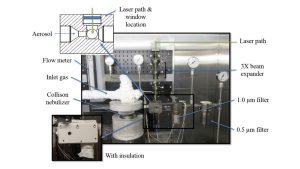
    Fig. 1: Experimental setup within the glovebox

    Experimental scheme

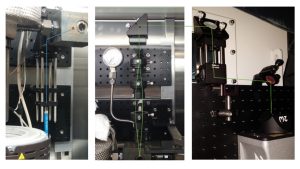
    This study utilised a modified molten salt aerosol-Laser Induced Breakdown Spectroscopy (LIBS) system, building upon the design of Williams and Phongikaroon.1,2 Key modifications included a redesigned sampling chamber with a sudden expansion nozzle to minimise mixing and laser light obstruction (see Fig. 1). The chamber featured three 19mm sapphire windows for improved optical access and ease of cleaning. Dual filtration (1.0µm and 0.5µm) ensured complete aerosol removal with minimal pressure drop. The system was insulated for easy access and operated within an argon atmosphere glove box. A Nd:YAG laser (532nm, 50±5mJ) was used for excitation, with a 3X beam expander added to the optical path (see Fig. 2). Emissions were collected via a 75mm lens, redirected by an elliptical mirror, and focused onto a 50µm fibre leading to an Andor Mechelle 5000 spectrometer with ICCD detection.

    Pressures were monitored at five system locations. The nebuliser inlet to sampling chamber differential was maintained at 12psi for consistent aerosol generation. System temperatures were controlled, with the sampling chamber operated below 500°C to prevent window damage.

    LIBS system
    Fig. 2: Optical configuration used in this work: (right) laser path exterior to the glovebox, (centre) turning mirror and 3X beam expander, and (left)
    plasma light collection

    Experiments employed LiCl-KCl eutectic salt with CeCl3 as a surrogate, with concentrations spanning 0.1-5wt%. Salts were prepared in an inert glovebox, dried, melted, and homogenised. The nebuliser design required the salt ingot to be broken into smaller pieces for loading.

    Initial experiments optimised the LIBS gate delay (100ns to 25µs). Calibration curves were then generated by averaging 300 shots per repetition, with seven repetitions per sample. Additional data was collected after five hours of operation for one sample. Post-experiment, deposited salt was recovered, and all components were cleaned. Material balance was tracked, though some loss was unavoidable due to thin film deposition on stainless steel components. Salt samples from various system locations were dissolved in nitric acid and diluted for ICP-MS analysis using an Agilent 7900 instrument.

    Outcomes and achievements

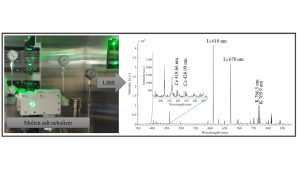
    Univariate and multivariate calibration models were developed and successfully tested. The best univariate calibration curve was generated using the Ce 446.02nm line and yielded a limit of detection (LOD) of 0.013wt% Ce with a root mean squared error of cross-validation (RMSECV) – leave-one-out cross-validation – of 0.059wt% Ce. For the multivariate calibration approach, a partial least squares (PLS) model was generated using seven latent variables. The RMSECV for the PLS model was determined to be 0.052wt% Ce using Venetian blinds cross-validation with ten splits in the data and with 10% being left out per split. The LOD determined in this work are in the lower range for Ce – as found in the literature. This work has demonstrated that the molten salt aerosol-LIBS system is capable of quantitative measurements in real-time (see Fig. 3).

    LIBS system
    Fig. 3: Graphical highlight

    References

    1. A. N. Williams, S. Phongikaroon. 2017 “Laser-Induced Breakdown Spectroscopy (LIBS) in a Novel Molten Salt Aerosol System,” Applied Spectroscopy, 71, 744-749.
    2. A. N. Williams, S. Phongikaroon. 2018 “Laser-Induced Breakdown Spectroscopy (LIBS) Measurement of Uranium in Molten Salt,” Applied Spectroscopy, 72, 1029-1039.

    [ad_2]

    Source link