Tag: the moon

  • Running around a ‘wall of death’ could keep moon settlers fit

    Running around a ‘wall of death’ could keep moon settlers fit

    [ad_1]

    A research participant runs around a circular wall with a bungee cord to simulate the reduction in weight on the moon

    Alberto E. Minetti et al.

    Future moon settlers could exercise by running around the inside of a circular wall – and just a few laps a day could counteract some of the negative effects of low lunar gravity.

    The moon’s gravitational pull is about one-sixth as strong as that of Earth. This means lunar astronauts’ bodies support much less weight, and an extended stay would cause their muscles to atrophy and their bones to get less dense. Microgravity conditions also affect the way blood flows around the body, harming the cardiovascular system.

    Taking inspiration from the “wall of death” stunt performed by motorcycle riders, Gaspare Pavei at the University of Milan in Italy and his colleagues have come up with a novel way for lunar settlers to combat these ill effects.

    High-speed motorcycles can travel along a circular wall without slipping thanks to a combination of friction and centripetal force. People can’t run quickly enough to do that on Earth, says Pavei. “But we wanted to see if it was feasible for us to do it on the moon.”

    The team members hired an amusement park wall of death that was roughly 9.7 metres in diameter and 5 metres high. They separately attached two volunteers by a bungee cord to a pole high above the wall to support their weight, which made them functionally 83 per cent lighter – equivalent to their weight on the moon.

    Both runners were able to complete a few laps around the wall at speeds of around 6 metres per second.

    The force experienced by the volunteers while in contact with the wall was similar in magnitude to gravity on Earth. “What we recreated by running horizontally on the vertical wall is a sort of artificial gravity,” says Pavei.

    On the moon, that would be enough force to counter the main issues of low gravity, such as bone density loss and cardiovascular fitness, he says. “Running twice a day, for a few minutes at a time, should be enough.”

    The exercise could also be used to help astronauts prepare for their return to Earth, he says.

    “From the perspective of experimental design and scientific analysis, this study looks robust, important and relevant,” says Ilan Kelman at University College London. “Especially considering the limited space in any lunar settlement, this experiment is a helpful and needed contribution to understanding time and cost-efficient ways of keeping moon settlers healthy.”

    Topics:

    [ad_2]

    Source link
  • Birthplace of red asteroid Kamo‘oalewa pinned to specific moon crater

    Birthplace of red asteroid Kamo‘oalewa pinned to specific moon crater

    [ad_1]

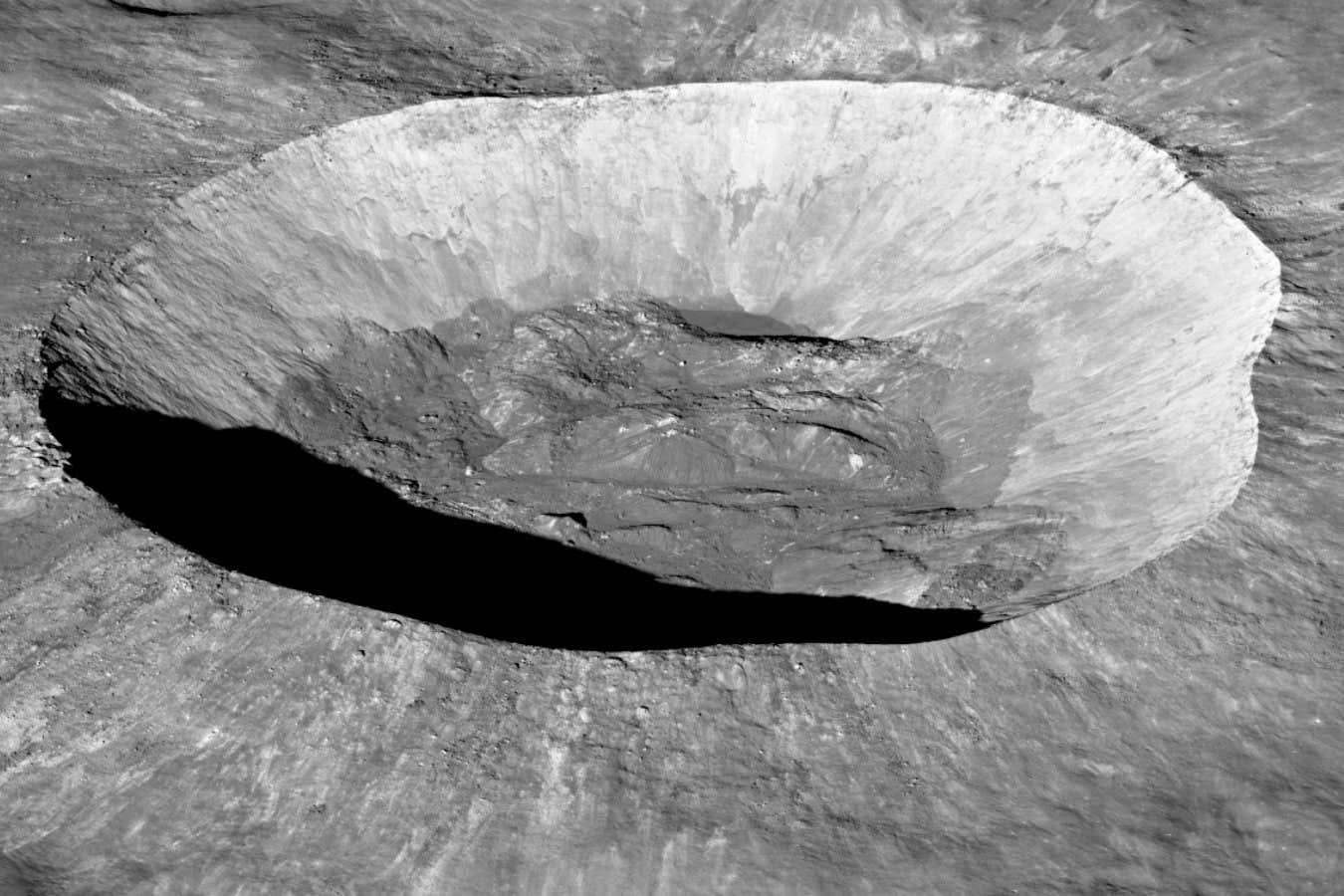
    The redness of asteroid 469219 Kamo‘oalewa marks it out as probably originating on the moon, and now we might know the exact impact crater it was launched from

    [ad_2]

    Source link

  • Japan’s SLIM moon lander has shockingly survived a third lunar night

    Japan’s SLIM moon lander has shockingly survived a third lunar night

    [ad_1]

    New Scientist Default Image

    The SLIM lander is continuing to snap photos of the moon’s surface

    JAXA

    Somehow, Japan’s Smart Lander for Investigating Moon (SLIM) has survived three lunar nights, an astonishing feat. Moon landers typically survive for one lunar day – about two Earth weeks – because night on the moon is so cold that it ruins spacecraft batteries and electronics.

    Very few moon landers are built to survive nighttime temperatures on the moon, which can dip as low as -133°C (-208°F). SLIM is no exception to this – it has no heaters or special insulation designed to keep the spacecraft’s electronics warm.

    The original plan was that lunar night would mark the end of the lander’s mission, so when night fell less than two weeks after SLIM’s 19 January landing, nobody expected it to wake up again. But on 25 February, the sun rose over SLIM’s resting place near the south pole of the moon, and it turned back on.

    Surprised, SLIM’s operating crew on Earth got to work instructing the lander to take images and measurements of its surroundings until the next lunar night, when surely the mission would truly be over. In late March, the sun rose once again, and once again the lander turned on and began transmitting data back to Earth.

    By all metrics, that made the mission a shocking success, even after a difficult landing that left the spacecraft sitting on a slant. It still had another surprise waiting, though – on 23 April, after a third lunar night, SLIM was resuscitated once again.

    The official SLIM account on X posted, “SLIM has maintained its primary functions even after three overnight stays, which was not anticipated in its design.” A new picture of the surface of the moon, accompanying that post, indicates that the lander is hard at work once again gathering data that will not only help us understand the moon, but also how to build a spacecraft that can survive lunar night.

    Topics:


    [ad_2]

    Source link

  • Japan’s SLIM moon lander surprisingly survived a second lunar night

    Japan’s SLIM moon lander surprisingly survived a second lunar night

    [ad_1]

    New Scientist Default Image

    View of the moon’s surface taken from the SLIM lander’s tilted position

    JAXA

    Most landers we send to the moon operate for a single lunar day – about two Earth weeks – before being overtaken and killed by the extreme cold of lunar night. But Japan’s Smart Lander for Investigating Moon (SLIM) has now survived two nights on the moon and continues to send images back to Earth, an incredible feat.

    SLIM is Japan’s first lunar lander, making it the fifth country to land a spacecraft on the moon. When it touched down on 19 January, it was tilted, so the solar panels did not provide enough power to keep it running for more than a few hours. After nine days, the sun had moved through the sky enough to start it back up again.

    But after just three Earth days, lunar night began. Nighttime temperatures on the moon drop down as low as -133°C (-208°F), which can ruin spacecraft batteries and electronics. Generally, moon landers shut down for lunar night and never wake again, but when the sun rose over SLIM on 25 February, it turned back on.

    This in itself was a surprise – the lander was not specifically designed to survive lunar night, and its original mission was meant to end when night fell. So when another night approached, it seemed this would be the end for SLIM.

    But on 27 March, the official SLIM account posted the image above on X, with the caption: “We received a response from SLIM last night confirming that SLIM was successful in its second overnight. Last night, the sun was still high and the equipment was hot, so we hurriedly used the navigation camera to take pictures of the usual scenery for a short time.” It seems that in the next few Earth days, the lander should be able to restart its analysis of its surroundings.

    Some spacecraft use radioactive elements to stay warm, but SLIM does not, making its survival particularly astonishing. “It is a major achievement, given that they are not using a radioisotope heater,” says Haym Benaroya at Rutgers University in New Jersey. “The outcome is important and impressive given that this is a major design consideration for electronics (and people) surviving the lunar night.” Analyses of how SLIM survived where so many other spacecraft have failed could help us understand how to keep warm on the moon.

    Topics:

    • the moon/
    • space exploration


    [ad_2]

    Source link

  • NASA’s Artemis astronauts will try to grow plants on the moon

    NASA’s Artemis astronauts will try to grow plants on the moon

    [ad_1]

    Artist's concept of an Artemis astronaut deploying an instrument on the lunar surface

    An artist’s concept of an Artemis astronaut deploying an instrument on the lunar surface

    NASA

    NASA has selected the first science experiments that astronauts will bring to the moon as part of the Artemis III mission. This mission, currently planned for 2026, will mark the first time humans have walked on the lunar surface since the Apollo 17 mission in 1972.

    The first of the three scientific instruments is called Lunar Effects on Agricultural Flora (LEAF). In this experiment, astronauts will grow plants on the surface of the moon, observing their ability to photosynthesise and grow, and how they respond to the stress of lower gravity and space radiation.

    This won’t be the first time plants have been grown in space – astronauts have been growing vegetables aboard the International Space Station for a decade, and China’s Chang’e 4 mission sprouted seeds on the moon in 2019. Those seeds didn’t last long, though, so if all goes well, LEAF will give us our first glimpse of the full growth cycle of plants on the moon.

    The second experiment is the Lunar Environment Monitoring Station (LEMS), a small seismometer designed to measure moonquakes near the lunar south pole. Characterising how the ground moves during those quakes will help researchers understand the underground structure of the area.

    The final instrument, called the Lunar Dielectric Analyzer (LDA), will measure how electrically conductive the soil is. Ice bound to dust particles drastically increases the ability of the soil to conduct electricity, so the LDA will help the hunt for deposits of frost and measure changes in the soil as the sun rises and sets over the lunar surface.

    “These three deployed instruments were chosen to begin scientific investigations that will address key Moon to Mars science objectives,” said NASA’s Pam Melroy in a statement. The ultimate goal of the Artemis programme is to lay the groundwork for a long-term human presence on the moon, which will, in turn, teach us how to prepare for crewed missions to Mars.

    Topics:

    [ad_2]

    Source link

  • Two lunar landers have fallen over – but they’re still doing okay

    Two lunar landers have fallen over – but they’re still doing okay

    [ad_1]

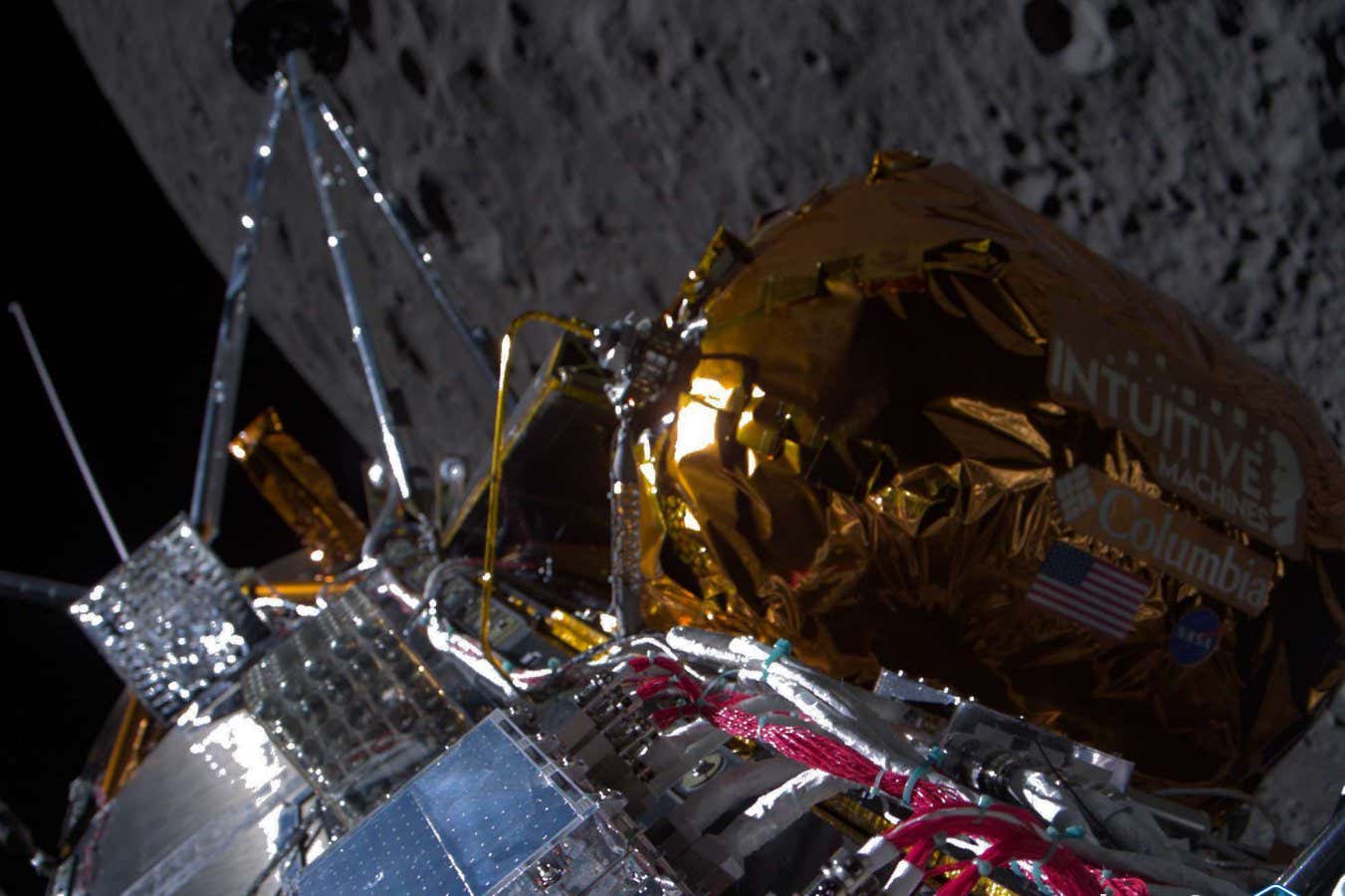
    An image taken by the Odysseus lander moments after it tipped over

    Intuitive Machines

    Both of the landers currently on the surface of the moon have ended up lying on their sides, but they still appear to be functioning surprisingly well.

    The Smart Lander for Investigating Moon (SLIM) launched by the Japan Aerospace Exploration Agency (JAXA) touched down on the moon on 19 January, marking a milestone for Japan as its first lunar lander. US company Intuitive Machines landed its Odysseus spacecraft – nicknamed Odie – on the lunar surface on 22 February, becoming the first private company to successfully put a spacecraft on the moon.

    Despite being on its side, Odysseus’s solar panels have been functioning since it landed. However, the antenna that is supposed to point towards Earth to transmit data isn’t oriented correctly, slowing the flow of information. Odysseus has been taking data and slowly sending images back to Earth, but its solar panels will soon be bathed in the frigid darkness of lunar night.

    “Once the sun sets on Odie, the batteries will attempt to keep the vehicle warm and alive, but eventually it’ll fall into a deep cold,” said mission director Tim Crain in a press conference on 23 February. “Of course, the next time the sun illuminates the solar arrays, we’ll turn our dishes to the moon, just to see if the radios and the batteries and the flight computers survive that deep cold.” Odysseus is expected to stop transmitting on 27 February, according to a post on X from Intuitive Machines.

    The two landers are both near the moon’s south pole, but they are far enough away from one another that their days begin and end at different times – as the sun goes down on Odysseus, it will still be midday where SLIM is settled.

    But because it was also tilted on its side when it landed, SLIM’s solar panels were not collecting any sunlight, so a few hours after its landing, its operators shut it down to preserve battery life. The hope was that if the solar panels did become illuminated as the sun moved across the sky, it could turn on again. This occurred nine days later, but only lasted for a few days before the lander was plunged into lunar night, with temperatures dropping as low as -133°C (-208°F) – far too cold for the spacecraft to continue to function.

    But it appears to have survived the deep freeze. On 25 February, the official SLIM account on X posted that a signal had been received from the lander. However, the post also stated: “As it was still midday on the moon, the temperature of the communication equipment was extremely high, so communication was terminated after only a short period of time.”

    As the day wanes over the SLIM lander, its operators will try once again to establish communication. If this works, it may lend some hope that the Odysseus lander could survive lunar night as well. With several other landing attempts this year failing, that hope is much needed. In all, there are 10 missions planned for the the south pole of the moon this year, and in two more years the Artemis III mission aims to return astronauts to the moon for the first time in more than 50 years.

    Topics:

    [ad_2]

    Source link

  • Where are all the exomoons? The hunt for worlds orbiting alien planets

    Where are all the exomoons? The hunt for worlds orbiting alien planets

    [ad_1]

    New Scientist Default Image

    YEARS ago, when David Kipping lived in London, he would walk home through the city and look up at the moon. As an astronomer, its faintly glowing presence served as a nightly source of inspiration. “It was a reminder that moons were waiting for us around exoplanets,” he says. “It just made sense that we should look for them.”

    Finding exomoons – natural satellites of worlds beyond our solar system – would be thrilling. For a start, they may play a key role in determining the habitability of host planets by damping their wobbles, fostering a stable climate in the same way that our moon has done for Earth. They might also come in weird and wonderful configurations, such as rings of moons and moons with their own moons. But most excitingly, it is possible that some of them are more hospitable to life than exoplanets.

    Kipping, now at Cornell University in New York, is part of a small community of astronomers who search for exomoons. The statistics, at least, are on their side: we have found some 5500 exoplanets so far, and some of these could have dozens of moons. The trouble is, proving their existence isn’t straightforward. The two sightings Kipping has made so far are hotly disputed.

    But now, hope is on the horizon, with a host of new ways to search for these objects – from watching rogue planets that have abandoned their stars to monitoring the gravitational wobbles of exoplanets. Armed with these new techniques, and with new telescopes on the way, the moon…

    [ad_2]

    Source link

  • Why we’re finally on the cusp of finding exomoons around other planets

    Why we’re finally on the cusp of finding exomoons around other planets

    [ad_1]

    New Scientist Default Image

    YEARS ago, when David Kipping lived in London, he would walk home through the city and look up at the moon. As an astronomer, its faintly glowing presence served as a nightly source of inspiration. “It was a reminder that moons were waiting for us around exoplanets,” he says. “It just made sense that we should look for them.”

    Finding exomoons – natural satellites of worlds beyond our solar system – would be thrilling. For a start, they may play a key role in determining the habitability of host planets by damping their wobbles, fostering a stable climate in the same way that our moon has done for Earth. They might also come in weird and wonderful configurations, such as rings of moons and moons with their own moons. But most excitingly, it is possible that some of them are more hospitable to life than exoplanets.

    Kipping, now at Columbia University in New York, is part of a small community of astronomers who search for exomoons. The statistics, at least, are on their side: we have found some 5500 exoplanets so far, and some of these could have dozens of moons. The trouble is, proving their existence isn’t straightforward. The two sightings Kipping has made so far are hotly disputed.

    But now, hope is on the horizon, with a host of new ways to search for these objects – from watching rogue planets that have abandoned their stars to monitoring the gravitational wobbles of exoplanets. Armed with these new techniques, and with new telescopes on the way, the moon…

    [ad_2]

    Source link

  • Odysseus spacecraft is the first private mission to land on the moon

    Odysseus spacecraft is the first private mission to land on the moon

    [ad_1]

    New Scientist Default Image

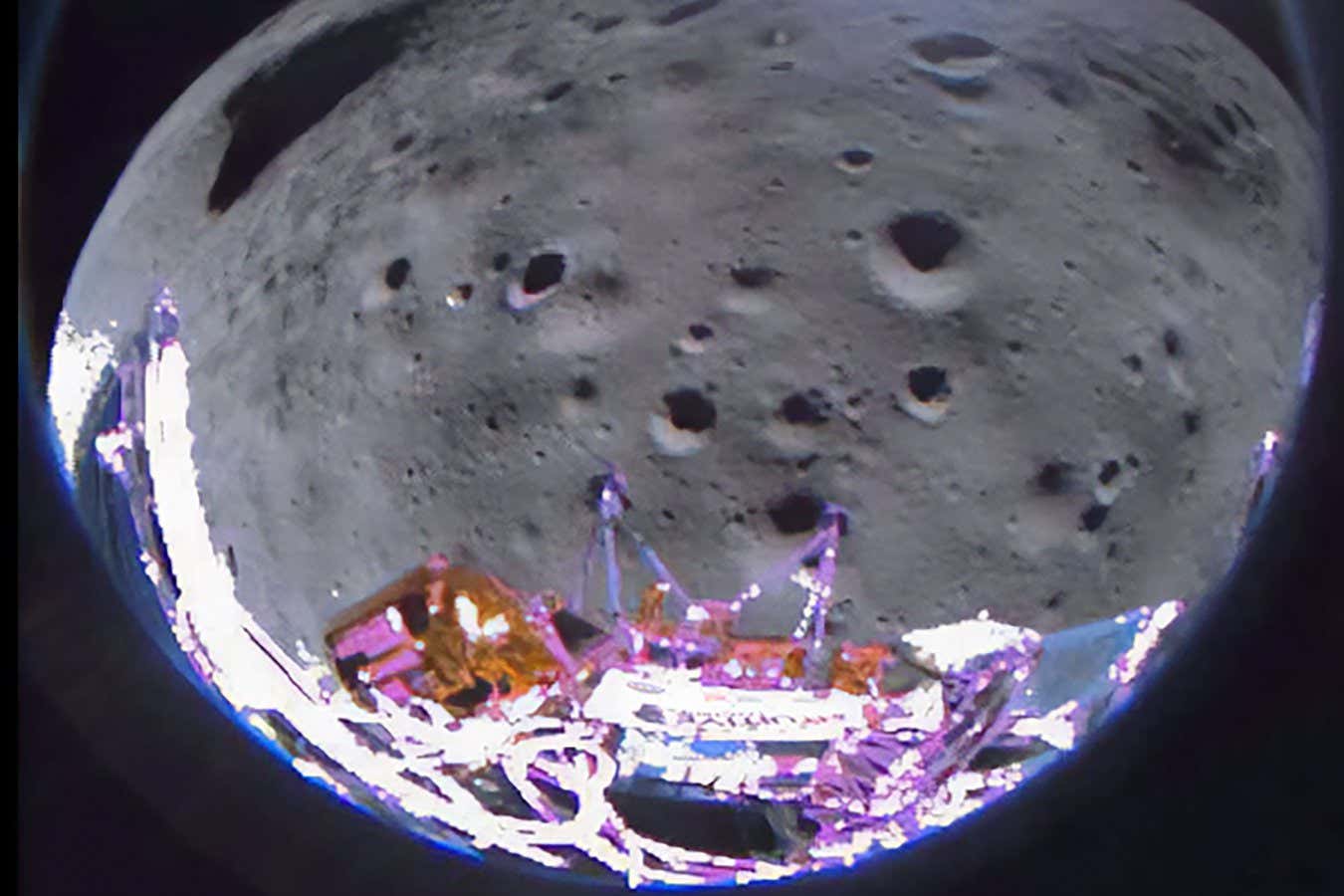
    A picture taken by the Odysseus spacecraft while in orbit around the moon

    Intuitive Machines

    Intuitive Machines’ Odysseus lander has touched down on the moon. This is the first time that a private firm has landed a spacecraft on the lunar surface, a welcome success after a recent string of high-profile landing failures by other companies.

    The Odysseus craft launched for this flight, called the IM-1 mission, atop a Falcon 9 rocket on 14 February. It arrived in lunar orbit on 21 February before landing near the south pole of the moon on 22 February.

    The live feed from mission control was tense, as the planned landing time slipped by with no communication from the lander. Eventually, several minutes after Odysseus was supposed to land, mission director Tim Crain in Intuitive Machines’ mission control said, “We’re picking up a signal – it’s faint, but it’s there.”

    The signal showed that the spacecraft had touched down on the moon, but the state of the craft is still unknown. Nevertheless, the landing was a success. “I know this was a nail-biter but we are on the surface,” said Intuitive Machines CEO Stephen Altemus. “Welcome to the moon.”

    Before this landing, three other companies attempted to send landers to the moon. SpaceIL’s Beresheet craft launched in 2019 and ispace’s Hakuto-R mission launched in 2022, but each of them crash-landed and was wrecked.

    Astrobotic’s Peregrine lander didn’t even make it that far after its January launch – a fuel leak forced its operators to return it to Earth to burn up in the atmosphere. With the success of IM-1, Intuitive Machines joins an elite club – only the national space agencies of the Soviet Union, the US, China, India and Japan have successfully landed on the moon before.

    Now that it has landed safely, the second part of the IM-1 mission can begin. Odysseus carried six NASA payloads and six commercial payloads with it to the moon. Some of these, such as devices to assist with the landing and a camera to take photographs of the landing, have already served their purpose. A few have succeeded just by making it to the moon – perhaps most notably a collection of 125 tiny sculptures by artist Jeff Koons. Others, including instruments to measure how the environment around the moon affects its surface, begin their missions now.

    The IM-1 mission is part of NASA’s Commercial Lunar Payload Services (CLPS) initiative, through which government contracts are awarded to private companies with the aim of building space flight capabilities through public-private partnerships. Three more lunar landings are planned through CLPS in 2024, one of which is Intuitive Machines’ mission to harvest water ice from the south pole of the moon.

    Topics:

    [ad_2]

    Source link

  • Moon mission: Intuitive Machines is about to launch its Odysseus spacecraft

    Moon mission: Intuitive Machines is about to launch its Odysseus spacecraft

    [ad_1]

    The Odysseus spacecraft is scheduled to launch to the moon on 14 February

    SpaceX

    The US company Intuitive Machines will soon attempt to become the first private firm to land a spacecraft on the moon. Three previous efforts by other companies have failed, highlighting the treacherous path ahead of Intuitive Machines’s Nova-C lander.

    The spacecraft, nicknamed Odysseus, is scheduled to launch from Cape Canaveral in Florida on 14 February. It will travel atop a Falcon 9 rocket manufactured by SpaceX. If the mission, called IM-1, goes well, Odysseus should land near the south pole of the moon on 22 February.

    The goal of the IM-1 mission, aside from proving that a private company can land on the moon, is to carry six NASA payloads and five commercial payloads to the lunar surface. The NASA instruments include tools to study how the landing itself blows up plumes of moon dust, several devices to help the craft land safely and a device to measure radio waves and how they affect the lunar surface. The commercial payloads include a camera that will be tossed off the lander before it touches down to take photographs of the landing, 125 tiny sculptures by artist Jeff Koons and a chip designed to establish an archive of human knowledge on the moon.

    IM-1 is part of NASA’s Commercial Lunar Payload Services (CLPS) initiative, which awards government contracts to private companies with the goal of accelerating exploration and developing a lunar economy. This is the second CLPS mission – the first, Astrobotic’s Peregrine lander, suffered a fuel leak shortly after its January launch that prevented it from reaching the moon.

    There have been two other attempts by private companies to land on the moon – SpaceIL’s Beresheet craft and ispace’s Hakuto-R – but both crash-landed and were destroyed. If Odysseus succeeds where the others failed, Intuitive Machines’s next step is to send another Nova-C lander, equipped with a drill to harvest underground ice, to the moon’s south pole. That mission is planned for March 2024.

    Topics:

    [ad_2]

    Source link