Tag: Université de Sherbrooke

  • Interdisciplinary research to study cancer in all its complexity

    Interdisciplinary research to study cancer in all its complexity

    [ad_1]

    The mission of the Université de Sherbrooke Cancer Research Institute (IRCUS) is to develop synergistic and innovative interdisciplinary research to reduce the impact of cancer on affected people. Everything is in place to make it happen.

    To understand, detect and treat a disease as complex as cancer, it makes sense to combine different areas of expertise. It is essential to study cancer comprehensively to achieve major advances in oncology. This is the reason why IRCUS members join forces to study the disease from every angle.

    With diverse and complementary backgrounds ranging from basic research to patient treatment, IRCUS brings together more than 100 researchers from a variety of disciplines, working to better understand, detect and monitor cancer; develop innovative and effective treatments; and help physicians provide the best care for patients.

    A research vision that accelerates breakthroughs and optimises investments

    Teams at IRCUS are studying a number of areas of research, including RNA and protein biology, epithelial cancers and biological models, and diagnostic and therapeutic approaches, from a molecular, cellular, pharmacological, clinical, psychosocial and legal perspective. The areas of research are interrelated, so the fields of expertise are shared, as well as techniques, state-of-the-art equipment, data and approaches from different research phases.

    Professor Jean-Pierre Perreault, Vice-President, Research and Graduate Studies, said: “At the Université de Sherbrooke, our approach to university research combines a culture of partnership and collaboration, shared infrastructure, and an interdisciplinary vision.

    “With this approach in mind, our cancer research institute provides teams with innovative ways of collaborating and supports their efforts by strategically investing in infrastructure, providing easy access to state-of-the-art facilities and technologies, research platforms, data and resources, and stimulating multidisciplinary collaboration. It translates into accelerated project implementation and optimised investment by partners and donors.”

    A continuum that drives innovation within the healthcare system

    The cross-functional expertise at IRCUS is also evident in its proximity to the Faculty of Medicine and Health Sciences, as well as the university hospital affiliation.
    interdisciplinary research
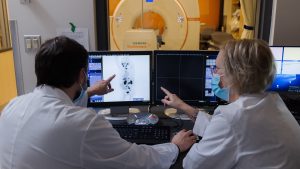
    Thanks to our interdisciplinary approach and expertise, we are developing technologies that detect more accurately rare or difficult-to-treat cancers, such as metastatic cancers. The dark masses visible on the image are cancerous tumours

    Professor François-Michel Boisvert, Scientific Director of the Institute, said: “A clinical research centre and a molecular imaging centre complete this highly collaborative and agile ecosystem, which facilitates the launch and implementation of large-scale interdisciplinary projects. Hundreds of students, postdoctoral fellows, residents, professionals, patient-partners and members of the nursing staff (healthcare professionals) collaborate in our researchers’ work.”

    This continuum enables IRCUS to validate discoveries quickly and propels innovation forward, resulting in their integration into the healthcare system, benefiting people affected by cancer.

    Significant advances thanks to interdisciplinary networks

    There are many scientific breakthroughs by teams at IRCUS, particularly in the field of cancer detection, where a number of the Institute’s researchers and collaborators are attracting the attention of major organisations and research groups.

    A new bladder cancer detection test that uses biomarkers in urine to detect the disease more quickly and less invasively is one example. The highly marketable test designed by a team with expertise in medicine, biochemistry, cell biology, mathematics and the Université de Sherbrooke’s Proteomics research platform could save many lives. The World Health Organization decided to collaborate with the Université de Sherbrooke to make the test usable and available to all population groups.

    Our cutting-edge expertise in magnetic resonance imaging (MRI), neurosurgery and neuro-oncology, as well as in artificial intelligence (AI) and health, has been harnessed in a major study, leading to a significant breakthrough in the understanding and treatment of glioblastoma – a rare and highly aggressive form of brain cancer. The project also led to an unprecedented breakthrough in the field: Federated Learning analysis of over 25,000 MRI results, leading to a 33% increase in the tumour boundary detection rate. The algorithm developed in this study enables the profiling of three very precise tumour sub-regions. Identifying a tumour’s boundaries is an essential step, because treatment depends on the precision with which a tumour is detected and categorised. Identifying a tumour’s boundaries more accurately accelerates the treatment process.
    interdisciplinary research
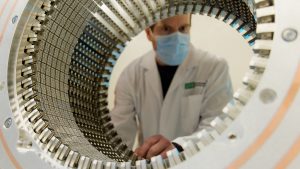
    Our teams designed and developed a technology that achieved the most significant improvement in spatial resolution in brain PET imaging in 20 years. Thanks to their work, it will now be possible to detect brain tumours more accurately, as well as identify brain structures involved in various neurodegenerative diseases

    These are just a few examples from a variety of innovative projects developed by major collaborations between our teams.

    Our cutting-edge research platforms at the centre of major projects

    The Université de Sherbrooke believes that combining expertise and research infrastructures, through technology platforms, is the most effective way to make cutting-edge research accessible to the research community and industry. They are essential for developing partnerships with other research centres, industrial partners and institutions, both in Canada and abroad.
    interdisciplinary research
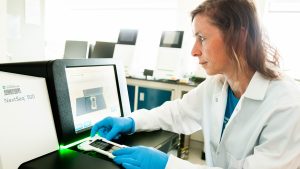
    We provide a wide range of state-of-the-art equipment and technologies, as well as the expertise of a highly qualified team of operators. Over the last 30 years, the Université de Sherbrooke has built an excellent reputation in RNA research. It plays an important role in the expansion of RNA science in Canada. Our RNomics Platform is known, for example, for its superior analysis quality

    For example, our RNomics Platform (transcriptome analysis) offers a wide range of sequencing services specialised in RNA variant detection and high-throughput screening. The platform processes over five million PCR reactions for research teams worldwide and is the source of the world’s first high-throughput direct PCR screening for splice variants. It has contributed to the discovery of splice variants on biomarkers of breast and ovarian cancer. Furthermore, it has managed and carried out several large-scale projects for major Canadian grant agencies, such as Genome Canada and the Canada Foundation for Innovation.

    Our expertise, interdisciplinary vision, research platforms and integrated approach are interrelated and make the Université de Sherbrooke and IRCUS the ideal partnership in the fight against cancer.

    For more information or to discuss partnering with our innovative university, please contact us at [email protected].

    Please note, this article will also appear in the 20th edition of our quarterly publication.

    [ad_2]

    Source link
  • Quantum advancements at Université de Sherbrooke

    Quantum advancements at Université de Sherbrooke

    [ad_1]

    Professor Maia Vergniory leads pioneering research at Université de Sherbrooke in topological quantum materials, poised to revolutionise quantum technology and drive interdisciplinary innovation.

    Navigating the 21st century, our reliance on silicon-based technology faces significant challenges due to intrinsic physical barriers. The size of atoms imposes constraints on device miniaturisation: Addressing these problems could demand a departure from silicon, the fundamental building block of contemporary devices. The use of other categories of more efficient materials, such as quantum materials, is therefore essential. Advances in these areas will help develop environmentally friendly technologies, addressing pressing issues of climate change and energy demand. However, discovering which compounds are suitable for quantum applications, among the tens of thousands of chemically stable compounds, has always been a daunting task. Overcoming the challenge of discovering workable quantum materials is key to developing new quantum technologies.

    Canada Excellence Research Chair

    This challenge is being met head-on by the Canada Excellence Research Chair (CERC) in Topological Quantum Matter, led by Professor Maia Vergniory at the Université de Sherbrooke, one of Canada’s top ten research universities¹ and a pioneer in quantum technology. Backed by a major grant of $4m over eight years, the CERC enables Professor Vergniory and her team to pursue ambitious research aiming to advance quantum materials science through the development of topological quantum chemistry to discover topological materials.

    Professor Maia Vergniory

    Professor Maia Vergniory holds a prominent position in the global field of quantum condensed matter. Her remarkable achievements include co-creating topological quantum chemistry (TQC), a new research field, twice gracing the cover of the prestigious journal Nature for her highly cited scientific papers, and earning significant recognition for her contributions to science, such as the L’Oréal-UNESCO For Women in Science Award in 2017, and being named a Fellow of the American Physical Society in 2022.

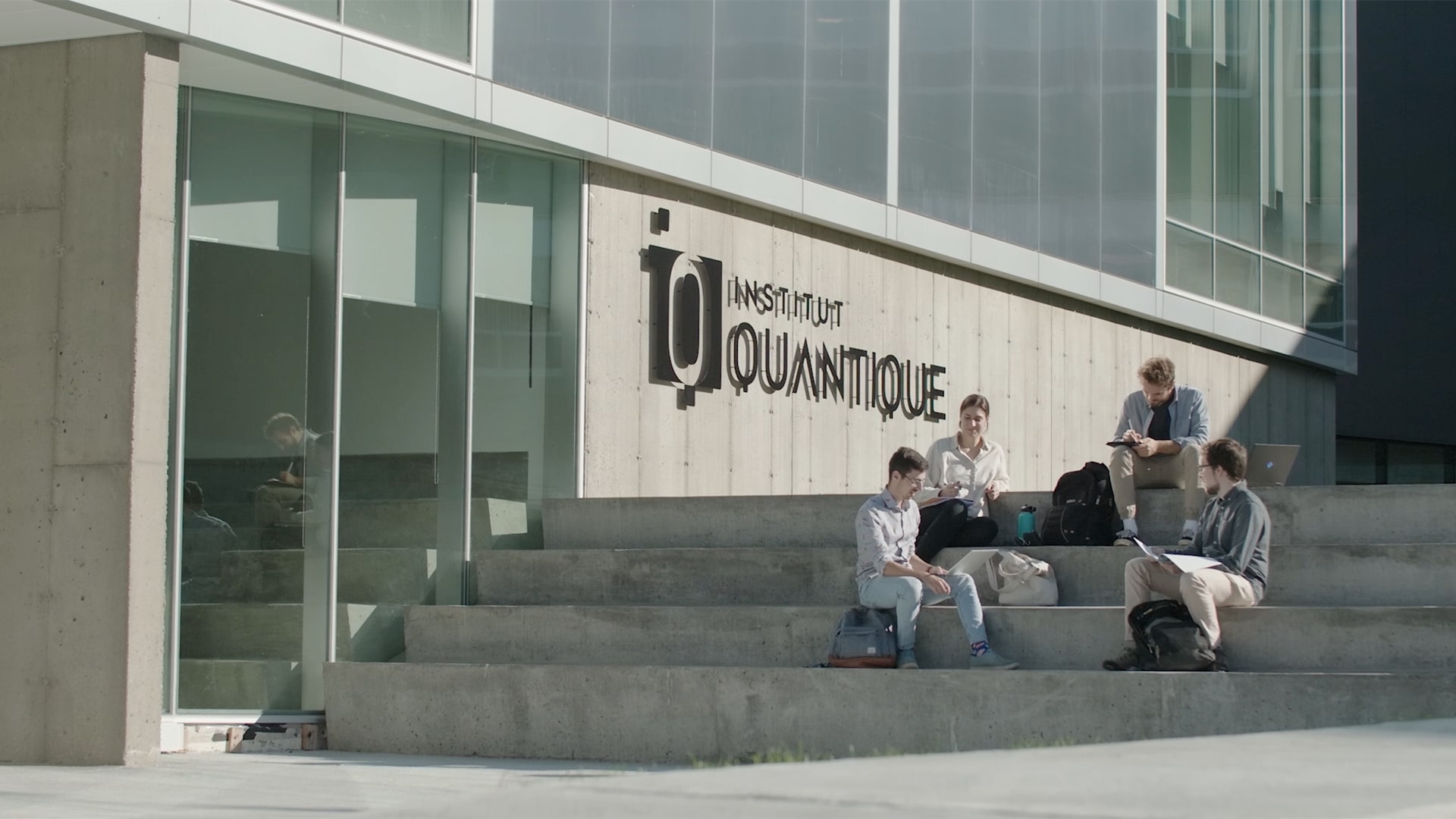
    The Université de Sherbrooke’s Institut quantique (IQ), an establishment recognised worldwide as a leader in the field of quantum science with state-of-the-art facilities and strong industry connections, provides an ideal environment for Professor Vergniory’s interdisciplinary research. Her team, comprising talented students and researchers, focuses on theoretical and simulation-based studies to design new quantum devices and materials. These efforts contribute to advancements in quantum sensing, fault-tolerant quantum computing, and other cutting-edge technologies. The IQ’s unique interdisciplinary quantum research environment will facilitate the transition from theory to experimentation.

    Exploring new quantum materials through Topological Quantum Chemistry

    Professor Vergniory is a trailblazer in the field of topological quantum chemistry, a discipline that merges quantum mechanics with materials science. It provides a clear path to understanding the electronic structures of materials by connecting their topological properties with their chemical and orbital symmetries, using both graph and group theory. This new framework enhances our understanding of materials like topological insulators and semimetals by unifying the chemists’ focus on local bonding and interactions with the physicists’ emphasis on electronic band structures. It allows us to classify and predict topological phases, aiding the discovery of new topological materials. These recently discovered materials exhibit unique electronic properties, featuring insulating interiors and conductive surfaces that are highly resistant to defects and interactions. Such characteristics hold immense potential for applications in a variety of fields.

    Bridging theory and practical applications

    Currently, the transition of topological materials towards quantum technologies is in its infancy. Professor Vergniory’s goal is to stimulate this transition by discovering new functional topological materials. This highly interdisciplinary project sits at the nexus of physics, chemistry, and computer science. Using topological quantum chemistry, her team has already identified that, among the materials in the Inorganic Crystal Structure Database (ICSD) – the largest repository of fully identified inorganic crystal structures – about 50% display topological properties. The electronic structure and topological properties of these materials have been uploaded to a public website.

    Despite this success, much work remains, and topological quantum chemistry has thus far relied on Density Functional Theory (DFT) calculations, which fail in materials with strong electronic correlations. An important objective is to incorporate electronic correlations into the theory and to bridge TQC-based materials discovery with the design of technologically useful devices. This involves developing new theoretical and numerical frameworks to study the electronic and magnetic properties of real materials in low dimensions and designing new metamaterials.

    “It’s very exciting because we are pushing the limits of knowledge,” stated the researcher. “There are still many questions remaining, and we have no idea what the outcome will be.”

    The unique properties of topological materials enable a range of transformative applications. Their robust electronic states can enhance the efficiency of microelectronic components, improve the performance of catalysts, refine thermoelectric converters, and lead to the development of innovative magnetic storage media. By incorporating electronic correlations into topological quantum chemistry, Professor Vergniory aims to unlock the potential of quantum materials with strong electronic interactions, such as high-temperature superconductors, further expanding the scope of quantum technologies while contributing to the creation of eco-friendly technologies.

    A vision for the future

    The Université de Sherbrooke’s excellence in research and strategic investments in quantum technologies make it a prime candidate for international partnerships. The university’s successful track record in securing funding from prestigious programmes like the CERC underscores its capability to lead ambitious projects that address global challenges. By highlighting Professor Vergniory’s groundbreaking work, the Université de Sherbrooke invites researchers and institutions worldwide to collaborate in advancing the frontiers of science and technology. Moreover, Professor Vergniory is recruiting students to join her research group.

    Her work epitomises the university’s commitment to innovation, collaboration, and interdisciplinary research. It is not just a step forward in theoretical materials science but a leap towards practical, sustainable technology solutions for the future, opening the way to hitherto unforeseen areas of science.

    For more information or to discuss partnering with our innovative university, please contact us at [email protected].

    References

    1. According to Research Infosource (Top 50 Research Universities 2023)

    Please note, this article will also appear in the 19th edition of our quarterly publication.

    [ad_2]

    Source link