Tag: Wind Energy

  • UK and New Zealand to collaborate on offshore wind energy

    UK and New Zealand to collaborate on offshore wind energy

    [ad_1]

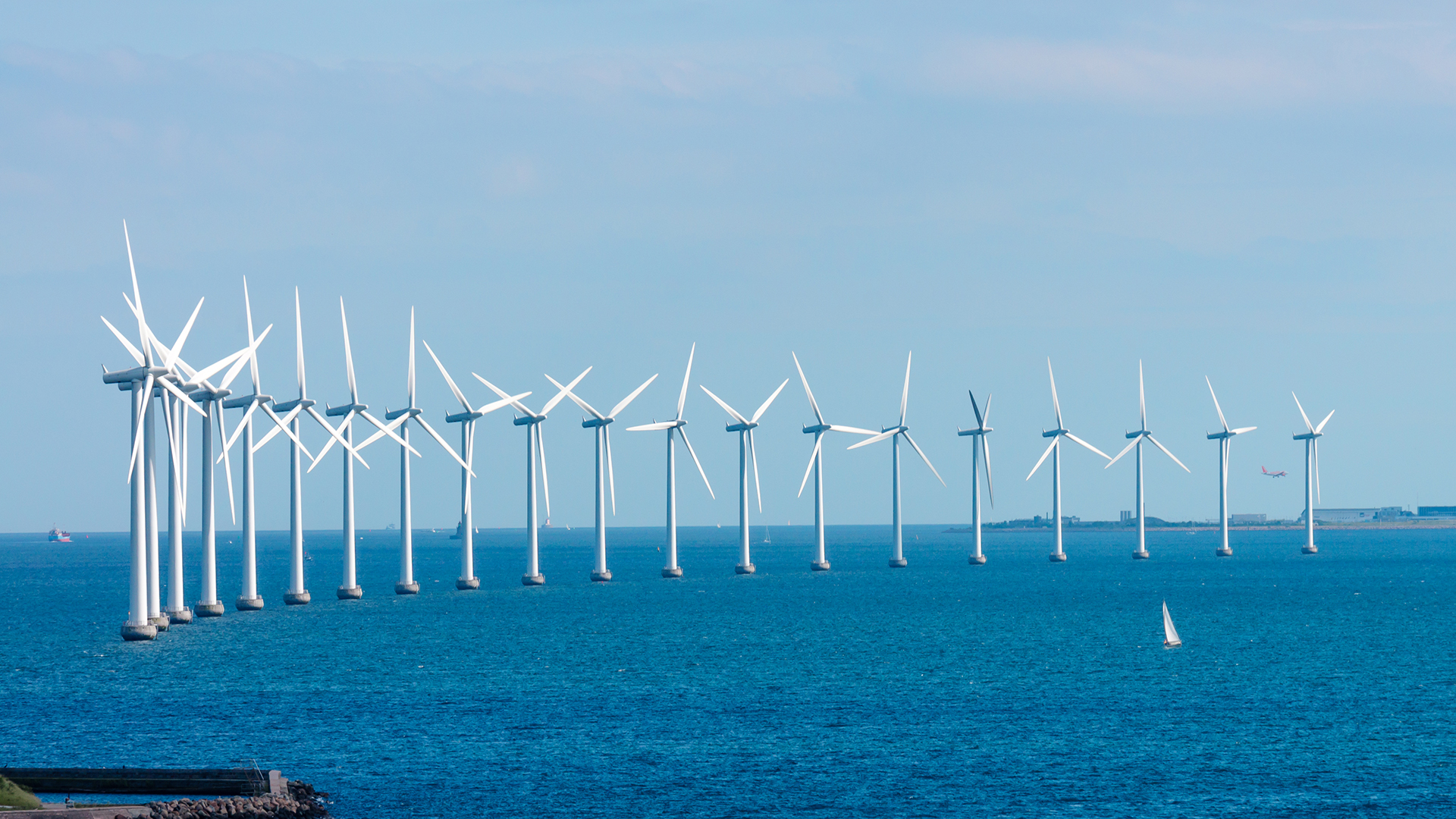
    The UK Government has unveiled plans to collaborate with New Zealand to develop the offshore wind energy sector.

    A new report developed by energy consultancy Xodus has highlighted New Zealand’s significant opportunity to unlock its offshore wind industry.

    With world-leading expertise in the field and being the world’s second-largest offshore wind market, the UK is uniquely positioned to help New Zealand reap the benefits of its abundant renewable sources.

    Harnessing New Zealand’s offshore wind potential

    With 15,000 km of coastline, New Zealand has immense potential to harness world-class wind resources, positioning itself to achieve its climate goals and foster a green economy.

    According to the report, New Zealand has the key components to rapidly advance its offshore wind industry: abundant resources, rising demand, a supportive regulatory framework, and a strong social mandate.

    Leveraging the UK’s wind expertise

    With 13.9 GW of offshore wind energy fully commissioned by 2023, the UK has developed a highly capable supply chain.

    The UK government is focused on meeting its own growing energy needs, which are projected to triple by 2030, while also exporting its expertise to countries like New Zealand.

    By 2030, the UK Government has set the ambitious target of quadrupling its offshore wind capacity to 60 GW.

    The UK can offer crucial expertise to support New Zealand’s offshore wind development. This includes financing strategies, price stability mechanisms, supply chain development, and regulatory alignment.

    British High Commissioner to New Zealand, HE Iona Thomas OBE, explained: “Tackling climate change is an urgent need. And it does not need to result in an economic cost. Recently, the UK has shown that we can grow the economy while also halving emissions since 1990.

    “Achieving the goals that both New Zealand and the UK have set ourselves requires unprecedented, transformational change.

    “As the global shift towards sustainable energy accelerates, the offshore wind sector in New Zealand is ready to respond. The UK stands ready to use our experience to tackle the challenges and take a strategic approach needed to unlock the potential that New Zealand has.

    “Together, in partnership with friends, New Zealand and the UK have an opportunity to showcase to the world what a world-leading offshore wind industry can look like.”

    By combining New Zealand’s vast wind resources with the UK’s extensive offshore wind expertise, both nations can drive transformational change, addressing climate challenges while fostering economic growth.

    Together, the UK and New Zealand are poised to showcase the future of renewable energy on the world stage.

    [ad_2]

    Source link
  • UK announces record-breaking funding for clean energy

    UK announces record-breaking funding for clean energy

    [ad_1]

    The Energy Secretary has announced a budget of over £1.5bn to deliver homegrown clean energy projects and boost energy security.

    A series of new homegrown clean energy projects will boost energy security, secure cheap power for families, and unlock economic growth and jobs for the country.

    Ed Miliband today announced the budget for this year’s renewable energy auction is being increased by £500m to over £1.5bn – a record budget – helping build new green infrastructure as part of the mission to deliver clean power by 2030.

    Moving towards more use of clean energy

    Funding will accelerate the delivery of clean, cheap, low-carbon electricity to families and businesses generated by renewable energy technologies such as wind turbines and solar panels.

    Investing in clean energy is part of the government’s plans to make Britain a clean energy superpower. This will boost the country’s energy independence so that families and businesses are never left that vulnerable again.

    This includes £1.1bn for offshore wind – the backbone of the UK’s clean energy mission –  which has more budget available than all of the previous auctions combined, sending a strong signal to the industry to invest in UK waters.

    Last week, the government launched Great British Energy in partnership with the Crown Estate, which is estimated to create up to 20-30GW of new offshore wind developments reaching seabed lease stage by 2030.

    Clean power by 2030

    The uplift comes on the day of the first meeting of the Clean Energy Mission Board – chaired by the Energy Secretary and attended by Ministers from across Whitehall – as part of plans for a mission-driven government.

    The board will meet to ensure a relentless focus on delivering the mission of clean power by 2030 and accelerating towards net zero.

    Energy Secretary Ed Miliband said: “We are backing industry to build in Britain, with the biggest budget yet.

    “This will restore the UK as a global leader in green technologies and deliver the infrastructure we need to boost our energy independence, protect billpayers, and become a clean energy superpower.”

    How will the funding be allocated?

    Industry will now bid for a share of the funding through the Government’s sixth renewable auction, known as the Contracts for Difference scheme.

    This scheme provides developers with initial subsidies for clean electricity projects across Britain, with a built-in design to keep costs low for billpayers.

    These subsidies are paid back when wholesale electricity prices are higher than the agreed Contract for Difference price.

    This was seen over Winter 2022/2023 when Contracts for Difference payments reduced the amount needed to fund government energy support schemes by around £18 per typical household.

    The scheme’s design means the central government’s budget will not be impacted. Findings from a Treasury spending audit revealed £22bn of unfunded pledges inherited from the previous government.

    Overall, the funding uplift represents more than a 50% increase on the budget previously set in March. It will drive clean energy investment in the UK, support high-quality jobs in industrial heartlands and coastal communities, and protect household bills from volatile fossil fuel prices.

    [ad_2]

    Source link

  • Innovate UK funds Celtic Sea floating offshore wind project

    Innovate UK funds Celtic Sea floating offshore wind project

    [ad_1]

    Innovate UK has announced it will award funding to support the development of a floating offshore wind platform for applications in the Celtic Sea.

    The funding will be utilised to establish the Launchpad project, which will ensure a local supply chain for the development and deployment of the unique and flexible floating offshore wind platform – PelaFlex.

    The £800,000 project will be led by Marine Power Systems, with Swansea University’s Department of Mechanical Engineering collaborating with Ledwood Mechanical Engineering, Tata Steel UK, ABP (Associated British Ports) Port Talbot, and the Port of Milford Haven.

    The project aims to unblock the marine energy potential of South-West Wales by developing local supply chains and capitalising on local skills and expertise.

    Graham Foster, Chief Technology Officer at Marine Power Systems, commented: “We are really excited to receive support through Innovate UK.

    “With the deployment of floating offshore wind in the Celtic Sea becoming a reality, the time is absolutely right to work with the local supply chain to optimise the detailed design of our technology and maximise its deliverability.

    “A good example of that is that we are confident that through this project, we will be able to optimise our platform design to increase the amount of local steel used to fabricate it from around 10% to over 50%.”

    Launchpad aims

    Launchpad will enhance PelaFlex’s structural efficiency by focusing on the challenging conditions in the Celtic Sea and reducing material and deployment costs.

    This effort includes using strip steel manufactured in Port Talbot, components fabricated by local suppliers, and assembly and deployment through existing ports in southwest Wales.

    Design and fabrication support

    Swansea University will contribute design input by applying the latest advancements in structural design modelling.

    Ledwood, based in Pembrokeshire, will provide feedback to maximise local supplier support for fabrication.

    Floating offshore wind platform assembly and deployment

    Input from Associated British Ports and the Port of Milford Haven will ensure that the platform can be assembled and deployed from these locations, minimising the required investment.

    Mark Davies of Ledwood Mechanical Engineering, added: “Launchpad represents another step forward for the emerging floating offshore wind industry.

    As a locally-based engineering company, we are pleased to be working with MPS, Tata Steel, the Port of Milford Haven, ABP Port Talbot and Swansea University to help build a local supply chain by capitalising on the skills, expertise and infrastructure that we have here in South-West Wales.

    “This is an exciting time for us, and we hope the region can take advantage of the opportunities that will soon emerge.”

    Supporting decarbonisation and industrial development

    The project will support Tata Steel UK’s vision to decarbonise Port Talbot’s steel production, including producing green strip steel using an electric arc furnace.

    It also aims to position the town as an industrial hub for offshore wind development and deployment.

    [ad_2]

    Source link

  • Driving low-carbon electricity generation in the UK

    Driving low-carbon electricity generation in the UK

    [ad_1]

    EDF in the UK details its plans for low-carbon electricity generation and discusses the partnerships helping them achieve this.

    EDF in the UK is part of EDF Group, the world’s biggest electricity generator. In the UK, the company employs around 14,000 people at locations across England, Scotland, Wales and Ireland.

    EDF is proud to be Britain’s biggest generator of zero-carbon electricity, with more than 1GW of renewable generation in operation and over 5GW in construction, planning and development across a range of technologies, including onshore and offshore wind, solar and battery storage.

    It is in the midst of constructing the largest offshore wind farm in Britain – the 450 MW Neart na Gaoithe project off the Firth of Forth in Scotland that features 54 wind turbines and will be capable of powering up to 475,000 homes.

    The power to succeed in generating low-carbon electricity

    EDF is helping Britain achieve net zero by leading the transition to a cleaner, low-emission, electric future. In its drive to tackle climate change, EDF generates low-carbon electricity from five nuclear power stations, more than thirty onshore wind farms and two offshore wind farms.

    It is further leading the UK’s nuclear renaissance with the construction of a new nuclear power station at Hinkley Point C, the first in a new generation of nuclear power stations.

    It is also in advanced plans for a replica at Sizewell C in Suffolk. Hinkley Point C and Sizewell C will provide low-carbon electricity to meet 14% of UK demand and power around 12 million homes.

    low-carbon electricity

    By replacing fossil fuel power, Sizewell C will avoid around nine million tonnes of carbon emissions each year, compared to a traditional gas-fired power station.

    Easing its customers to a greener future

    During its move towards a greener future, it is important that EDF provides its third-party intermediaries (TPIs) – including switching websites, energy brokers and energy efficiency advice providers – an optimum way to interact with end users.

    Since the summer of 2023, it has been migrating its five million customer accounts onto the cutting-edge Kraken energy technology platform, which it licenses from Octopus Energy Group.

    It was hoped that the Kraken platform would allow EDF to adapt to future energy requirements and help tackle climate change.

    Yet, any large-scale migration is not without its problems. EDF, therefore, needed a secure and reliable solution to ease the migration to Kraken, as well as one that could provide ongoing portal maintenance and improvements. Plus, it wanted to ensure optimal market insight reporting to enhance our visibility.

    The need for a dynamic solution

    Matt Rose, Partner Success Lead at EDF, and his team looked at various solutions. However, it was the Sales360 platform from POWWR that stood out.

    “We have a very strong and long-standing relationship with POWWR. We originally began working with them through a standard energy broker relationship and have since purchased a number of the company’s software and data services,” commented Rose.

    Through the Sales360 Broker Portal, EDF can easily enter information, get pricing, accept deals, send contracts for signature, enrol in the billing system, and complete sales.

    EDF can also discover which TPI is most readily quoting and selling its products and at what commission rate.

    The analytics tool also allows EDF to compare its performance and offerings with the wider market to identify areas for improvement.

    Being forward-thinking and innovative

    By coupling the advances in science and engineering with the emergence of new digital innovations and leveraging the UK ecosystem of Research and Innovation through strong and strategic partnerships, EDF is delivering research and groundbreaking innovations to our internal business units, policymakers, partners and customers in order to help Britain generate low-carbon electricity for net zero.

    POWWR’s Sales360 solution seamlessly integrates between EDF’s various systems, so that the company can obtain automated pricing, contract generation, data validation, and updated statuses.

    “POWWR’s Sales360 web portal provides centralisation of our contract submission and maintenance activity, plus improved TPI accessibility to our various SME solutions,” explained Rose. “Sales360 Market Insights further provides us with vastly improved market intelligence so that we can align our business growth and development opportunities.”

    EDF is looking to continue to further optimise its energy sales opportunities and tighten up on sales quality even more in the months to come. It has the perfect partner to ensure that.

    [ad_2]

    Source link

  • £86m unveiled for groundbreaking wind turbine test facility

    £86m unveiled for groundbreaking wind turbine test facility

    [ad_1]

    The world’s most advanced wind turbine test facility will be built in Blyth, Northumberland, as part of an £86m investment in wind power R&D facilities that will slash CO2 emissions and grow the economy.

    The new test facility, based at the Offshore Renewable Energy (ORE) Catapult’s National Renewable Energy Centre, will test, validate, and certify turbines and is expected to prevent 2.5 million tonnes of CO2 emissions—twice the amount of CO2 emitted by the Newcastle population in a year.

    The funding will go towards building a 150-metre blade test facility that will replicate the harsh conditions at sea, with potential for future expansion to 180 metres.

    This will mean the facility is capable of testing the largest blades currently on the market and in near-future development.

    Dr Adam Staines, UKRI Infrastructure Portfolio Director, explained: “The project in Blyth demonstrates that investment in the right infrastructure can reduce CO2, support greater energy independence and drive economic benefits.”

    Building a UK offshore wind supply chain

    The new R&D infrastructure will support the growth of UK supply chains and the industry’s goal of 60% of offshore wind farm content coming from the UK.

    Currently, it’s the second-largest offshore wind market in the world and represents more than 40% of European offshore wind capacity.

    It will also encourage investment in our country’s fast-growing offshore wind sector, benefiting our businesses and, in turn, our economy while supporting the UK’s commitment to reaching net zero by 2050.

    The wind turbine test facility—the only site in the world testing both turbine blades and drive trains—will create at least 30 new jobs in Blyth and support five PhDs a year. It will also open doors for highly skilled and highly paid local jobs to help level up the UK.

    Science, Research and Innovation Minister Andrew Griffith said: “This innovation will strengthen the UK’s energy security in an uncertain world and help us pivot towards the cleaner energy that can preserve our planet for generations to come.”

    Introducing larger, more efficient wind turbines

    Testing the larger blades and more powerful drive trains before the turbines are put to work offshore helps manufacturers accelerate the introduction of the new wave of larger, more efficient machines, which generate more power and reduce the chance of failure in practice.

    Designs are well advanced with a view to commencing construction this summer and to the major upgrade to its 15MW drive train test facility, with both expected to be fully commissioned by 2028.

    “The test facility will deliver the most advanced research and development infrastructure and expertise to the offshore wind industry, capturing the jobs and economic growth from the transition to a net zero economy,” concluded Andrew Jamieson, ORE Catapult Chief Executive.

    [ad_2]

    Source link

  • NREL manufactures wind turbine blades with help from robots

    NREL manufactures wind turbine blades with help from robots

    [ad_1]

    Researchers from the U.S. Department of Energy’s National Renewable Energy Laboratory have used robots to help automate the manufacture of wind turbine blades.

    Using robots in the wind turbine manufacturing process eliminates human-difficult working conditions and has the potential to improve the product’s consistency.

    Although robots have been used in the wind energy sector to paint and polish blades, automation has not been widely adopted.

    The new research has revealed that robots can also trim, grind, and sand blades. This occurs after the two sides of the blade are made using a mould and then bonded together.

    The paper is published in the journal Wind Energy.

    Benefits of automating the post-moulding process

    The post-moulding operations to manufacture wind turbine blades require workers to use scaffolding and wear respiratory gear.

    Automation of these operations will boost employee safety and well-being and help retain skilled labour.

    Daniel Laird, director of the National Wind Technology Center at NREL, said: “Though it may not be obvious, automating some of the labour in blade manufacture can lead to more US jobs because it improves the economics of domestic blades versus imported blades.”

    The robotic system would provide consistency in blade manufacturing, which is not possible when all the work is done by humans.

    A robot could use tougher and more aggressive abrasives than a human could tolerate.

    How does the robot work?

    The research was conducted at the Composites Manufacturing Education and Technology (CoMET) facility at NREL’s Flatirons Campus.

    The robot worked on a five-metre-long blade segment.

    Although wind turbine blades are considerably longer, this segment worked as a test as blades bend and deflect under their own weight.

    Because of this, a robot would have to be programmed to work on the bigger blades section by section.

    A series of scans were used to create a 3D representation of the blade’s position and to identify the front and rear sections of the airfoil.

    From there, the team programmed the robot to perform various tasks, and it was judged on speed and accuracy.

    The team found areas for improvement in the future, particularly when it came to grinding parts of the blade.

    “As we’ve gone through this research, we’ve been moving the goalposts for what this system needs to do to be effective,” said Hunter Huth, a robotics engineer at NREL and lead author of the paper.

    The research was funded by the U.S. Department of Energy’s Advanced Materials and Manufacturing Technologies Office.

    [ad_2]

    Source link

  • Offshore wind energy tender to power Denmark’s entire electricity demand

    Offshore wind energy tender to power Denmark’s entire electricity demand

    [ad_1]

    Denmark has launched a major tender for offshore wind energy that could power the country’s entire electricity demand.

    Currently, Denmark has around 3 GW of offshore wind energy capacity, with 1 GW of offshore wind being able to power around one million European homes.

    Denmark’s recently announced offshore wind tender could award up to 10 GW – more than enough to energise the nation’s population of roughly 5.9 million people.

    The remaining surplus in energy could then be exported to neighbouring countries, providing significant financial benefits.

    The energy could also be used to generate renewable hydrogen and green fuels, which will be essential as Denmark aims to o reduce CO2 emissions by 70% from 1990 levels by 2030.

    Boosting Denmark’s offshore energy capacity

    The offshore energy auction will add 6 GW of power to the Danish electricity grid, with six wind farm areas tendered in the auction.

    Three of these wind farm areas are located in the North Sea, two in the Kattegat and one in the Baltic Sea.

    Developers who are successful in the auction will have the option to install more wind capacity in their tendered areas than the volumes initially outlined by the government.

    The offshore wind farms are scheduled to be completed by 2030, and participants must state the price they are willing to pay to the state over 30 years to win the right to build the farms.

    The auction will feature improved pre-qualification criteria to ensure social and environmental standards.

    This includes guaranteeing compliance with human rights and includes measures to combat social dumping.

    A 20% stake in each of the projects will be owned by the Danish government.

    Economic impacts

    The offshore wind energy tender is expected to generate significant financial and societal benefits for Denmark.

    The auction is expected to attract major investments of over €13bn and create around 12,000 jobs.

    The launch of the tender marks a pivotal moment in Denmark’s journey towards a sustainable future.

    With the potential to power the entire nation and even export surplus energy to neighbouring countries, this initiative underscores Denmark’s commitment to combatting climate change and embracing renewable energy sources.

    [ad_2]

    Source link

  • New method for wind turbine blade recycling

    New method for wind turbine blade recycling

    [ad_1]

    Lithuanian researchers have developed an innovative method using pyrolysis to solve the challenge of wind turbine blade recycling.

    Wind turbine blades have a vital role in the transition to clean energy.

    However, when the blades reach the end of their operational lifespan, disposal becomes a serious concern.

    Wind turbine blades, made with composite materials such as layers of fibreglass or carbon fibre reinforced with epoxy, can be used for 20 to 25 years.

    Although these materials ensure strength and lightness, they also complicate the recycling of them.

    Pyrolysis for wind turbine blade recycling

    Until a few years ago, wind turbine blades were almost impossible to recycle.

    Conventional disposal methods like landfilling pose environmental risks and resource depletion.

    Because of this, researchers are looking for new recycling methods.

    In 2022, Dr Samy Yousef, a researcher at Kaunas University of Technology (KTU) Faculty of Mechanical Engineering and Design, and a team of researchers from the Lithuanian Energy Institute, completed several experiments to develop a new solution.

    The team used a special catalyst to break down old composite materials in a pyrolysis process. This separated valuable components for reuse and recycled old composite materials into useful energy.

    Testing on a real wind turbine blade

    Previous experiments using blade samples provided insights into their composition and pyrolysis process.

    However, a limited availability of samples interfered with the identification of the actual recycling outcome.

    In 2023, the team continued their experiments on real wind turbine blade fragments provided by Danish Company European Energy A/S.

    “In our new research, experiments were performed on fragments of real wind turbine blades, allowing the yield and composition of final products to be determined,” said Dr Yousef.

    Styrene is a significant environmental risk

    The blades’ analysis revealed that unsaturated polyester resins are significant in the production of wind turbines in the Baltic region. This is because they are cost-effective compared to epoxy resin.

    However, styrene, which is a major component in polyester resin, poses environmental and health risks.

    “When disposed of in landfills, it becomes highly toxic for humans and can cause lung cancer. In addition, styrene can pollute and poison groundwater and soil,” explained Dr Yusef.

    Environmental impact of the team’s blade treatment

    The team successfully extracted styrene from blades in the form of styrene-rich oil using a pyrolysis reactor.

    “The main goal of the research was to find a way to extract carbon fibres and resin from old wind turbine blades that are difficult to dispose of because they contain toxic substances and aren’t biodegradable,” said Dr Yousef.

    During the experiments, the fibres, carbon, and fibreglass were also recovered and purified through an oxidation process. This offered a sustainable filler material to enhance the mechanical properties of composite materials.

    As well as this, the environmental impact of blade treatment using the pyrolysis process was calculated. Dr Yousef’s team used the life cycle assessment to calculate the environmental potential of blade waste pyrolysis compared to landfill disposal.

    “Results revealed remarkable improvements in various environmental indicators, with enhancements that range between 43–51%. This is a great achievement,” highlighted a KTU researcher.

    However, the strategy still raises some environmental challenges due to post-treatment processes like washing and oxidation.

    “These issues need to be carefully managed, and only then should future developments take place,” concluded Dr Yousef.

    [ad_2]

    Source link

  • Can machine learning commercialise vertical-axis wind turbines?

    Can machine learning commercialise vertical-axis wind turbines?

    [ad_1]

    EPFL researchers have used a genetic learning algorithm to identify optimal pitch profiles for the blades of vertical-axis wind turbines, which are usually vulnerable to strong gusts of wind despite their high energy potential.

    If you imagine an industrial wind turbine, you likely picture the windmill design, technically known as a horizontal-axis wind turbine (HAWT).

    However, the first wind turbines, developed in the Middle East for grinding grain, were vertical-axis wind turbines (VAWT), meaning they spun perpendicular to the wind rather than parallel.

    Engineering issues with vertical-axis wind turbines

    Due to their slower rotation speed, VAWTs are less noisy than HAWTs and achieve greater wind energy density, meaning they need less space for the same output both on- and off-shore.

    The blades are also more wildlife-friendly because they rotate laterally rather than slicing down from above, making them easier for birds to avoid.

    With these advantages, why are vertical-axis wind turbines largely absent from today’s wind energy market?

    Sébastien Le Fouest, a researcher in the School of Engineering Unsteady Flow Diagnostics Lab, explains that it comes down to an engineering problem – air flow control – that he believes can be solved with a combination of sensor technology and machine learning.

    In a paper recently published in Nature Communications, Le Fouest and UNFOLD head Karen Mulleners describe two optimal pitch profiles for VAWT blades, which achieve a 200% increase in turbine efficiency and a 77% reduction in structure-threatening vibrations.

    “Our study represents, to the best of our knowledge, the first experimental application of a genetic learning algorithm to determine the best pitch for a VAWT blade,” Le Fouest said.

    Turning issues into advantages

    Le Fouest explained that while Europe’s installed wind energy capacity is growing by 19 gigawatts per year, this figure needs to be closer to 30 GW to meet the UN’s 2050 carbon emissions objectives.

    He stated: “The barriers to achieving this are not financial, but social and legislative – there is very low public acceptance of wind turbines because of their size and noisiness.”

    Despite their advantages, vertical-axis wind turbines suffer a severe drawback –they only function well with moderate, continuous airflow.

    The vertical axis of rotation means that the blades constantly change orientation in relation to the wind. A strong gust increases the angle between airflow and the blade, forming a vortex called a dynamic stall. These vortices create transient structural loads that the blades cannot withstand.

    To tackle this lack of resistance to gusts, the researchers mounted sensors onto an actuating blade shaft to measure the air forces acting on it.

    They generated a series of ‘pitch profiles’ by pitching the blade back and forth at different angles, speeds, and amplitudes. Then, they used a computer to run a genetic algorithm that performed over 3,500 experimental iterations.

    Like an evolutionary process, the algorithm selected the most efficient and robust pitch profiles and recombined their traits to generate new and improved ‘offspring’.

    This approach allowed the researchers to identify two pitch profile series that contribute significantly to turbine efficiency and robustness, turning the biggest weakness of vertical-axis wind turbines into a strength.

    Le Fouest explained: “Dynamic stall – the same phenomenon that destroys wind turbines – at a smaller scale can actually propel the blade forward.

    “Here, we really use the dynamic stall to our advantage by redirecting the blade pitch forward to produce power.”

    He concluded: “Most wind turbines angle the force generated by the blades upwards, which does not help the rotation.

    “Changing that angle not only forms a smaller vortex, but it simultaneously pushes it away at precisely the right time, resulting in a second region of power production downwind.”

    [ad_2]

    Source link

  • Examining the impact of decommissioned offshore structures

    Examining the impact of decommissioned offshore structures

    [ad_1]

    A new study suggests that decommissioned offshore structures offer limited long-term ecological benefits if they are simply left in the ocean to serve as artificial reefs.

    Researchers carried out a comprehensive analysis of existing studies on the environmental impacts of marine offshore structures – including oil and gas platforms and offshore wind farms – worldwide.

    It highlighted that such installations could offer some ecological benefits – including increasing the diversity and abundance of fish species – in areas where the seafloor is mostly comprised of sand.

    However, there was limited conclusive evidence that oil and gas platforms and offshore wind farms could provide further substantial benefits if they are left in the sea after being decommissioned.

    The research, ‘A global meta-analysis of ecological effects from offshore marine artificial structures,’ was published in Nature Sustainability.

    Managing end-of-life structures

    The study was carried out by researchers at the University of Plymouth, Plymouth Marine Laboratory and the Centre for Environment, Fisheries and Aquaculture Science (Cefas).

    They analysed data from more than 530 scientific studies on the effects of marine artificial structures in the sea.

    These ranged from oil and gas platforms and offshore wind farms established during the 20th and 21st centuries to accidental shipwrecks – some of which had lain on the seabed for over 400 years – and purpose-built artificial reefs.

    In particular, the available evidence did not allow the researchers to draw clear conclusions on how offshore structures compare to natural rocky reefs – a key element in being able to determine whether they can function as artificial reefs.

    As a result, they say more detailed investigations are needed into the best way to manage such structures at end-of-life, as repurposing them into artificial reefs may not provide the intended benefits.

    Learning from past mistakes with new offshore structures

    The research is particularly timely, with global governments and other agencies setting targets of achieving net-zero emissions by 2050 as part of their decarbonisation agendas, resulting in the decommissioning of existing offshore structures and the construction of thousands of new ones.

    Dr Anaëlle Lemasson, Postdoctoral Research Fellow at the University of Plymouth and the study’s lead author, said: “Many of the structures we see in the ocean today were put in place at a time when environmental considerations weren’t in people’s minds.

    “There were also no legal requirements covering possible environmental impacts or what might happen to these structures once they reached the end of their useful lives.

    “That is certainly changing, and transitions away from fossil fuels mean it is vital we have this debate now.”

    The research was carried out as part of the Decommissioning – Relative Effects of Alternative Management Strategies (DREAMS) project, a consortium of industry and academics looking at the ecological effects of manmade structures in the North Sea.

    It uncovered a considerable amount of research looking at the impact of the offshore structures; however, very little research demonstrated the direct effects of decommissioning.

    [ad_2]

    Source link