Tag: wind power

  • US Offshore Wind Farms Are Being Strangled With Red Tape

    US Offshore Wind Farms Are Being Strangled With Red Tape

    [ad_1]

    This article is republished from The Conversation under a Creative Commons license.

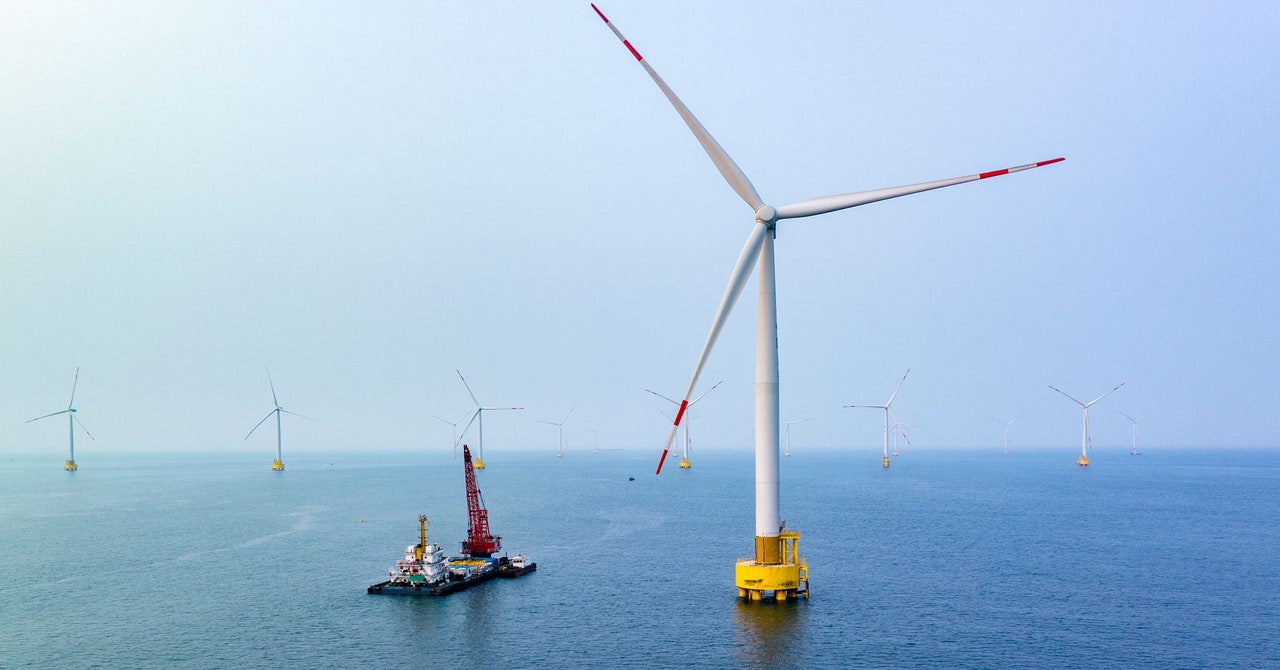
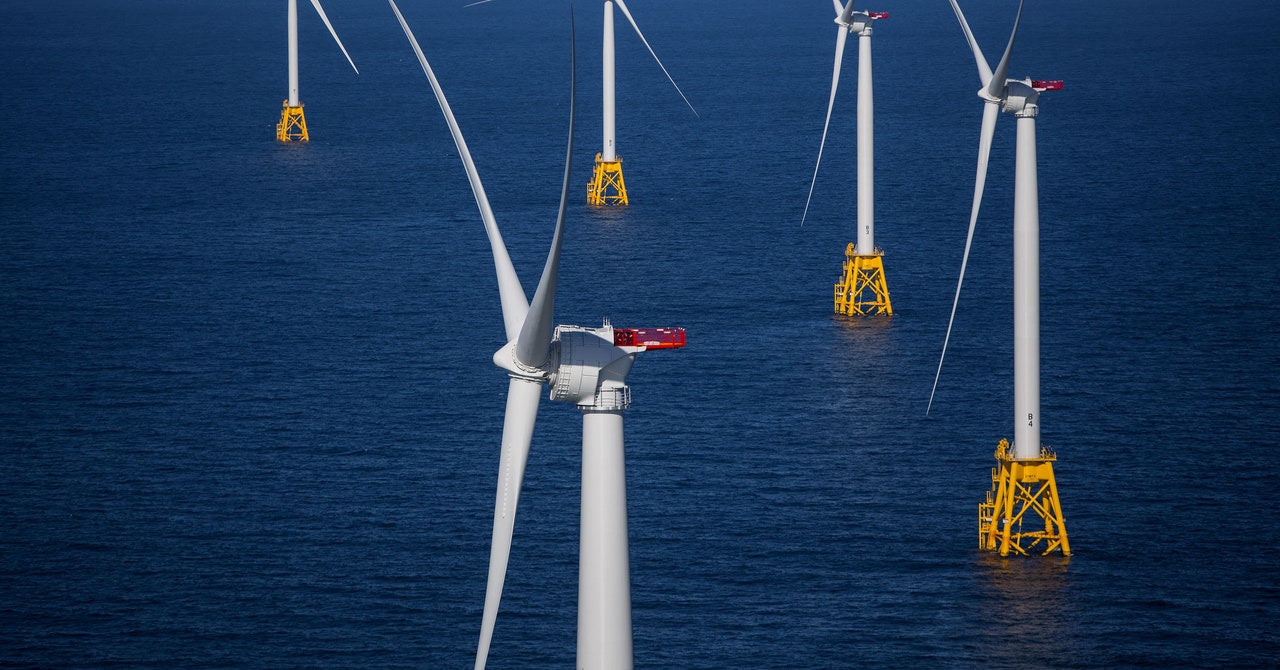
    America’s first large-scale offshore wind farms began sending power to the Northeast in early 2024, but a wave of wind farm project cancellations and rising costs have left many people with doubts about the industry’s future in the US.

    Several big hitters, including Ørsted, Equinor, BP, and Avangrid, have canceled contracts or sought to renegotiate them in recent months. Pulling out meant the companies faced cancellation penalties ranging from $16 million to several hundred million dollars per project. It also resulted in Siemens Energy, the world’s largest maker of offshore wind turbines, anticipating financial losses in 2024 of around $2.2 billion.

    Altogether, projects that had been canceled by the end of 2023 were expected to total more than 12 gigawatts of power, representing more than half of the capacity in the project pipeline.

    So, what happened, and can the US offshore wind industry recover?

    I lead the University of Massachusetts Lowell’s Center for Wind-Energy Science, Technology, and Research (WindSTAR) and Center for Energy Innovation, and follow the industry closely. The offshore wind industry’s troubles are complicated, but it’s far from dead in the US, and some policy changes may help it find firmer footing.

    A Cascade of Approval Challenges

    Getting offshore wind projects permitted and approved in the US takes years and is fraught with uncertainty for developers, more so than in Europe or Asia.

    Before a company bids on a US project, the developer must plan the procurement of the entire wind farm, including making reservations to purchase components such as turbines and cables, construction equipment, and ships. The bid must also be cost-competitive, so companies have a tendency to bid low and not anticipate unexpected costs, which adds to financial uncertainty and risk.

    The winning US bidder then purchases an expensive ocean lease, costing in the hundreds of millions of dollars. But it has no right to build a wind project yet.

    Before starting to build, the developer must conduct site assessments to determine what kind of foundations are possible and identify the scale of the project. The developer must consummate an agreement to sell the power it produces, identify a point of interconnection to the power grid, and then prepare a construction and operation plan, which is subject to further environmental review. All of that takes about five years, and it’s only the beginning.

    For a project to move forward, developers may need to secure dozens of permits from local, tribal, state, regional, and federal agencies. The federal Bureau of Ocean Energy Management, which has jurisdiction over leasing and management of the seabed, must consult with agencies that have regulatory responsibilities over different aspects in the ocean, such as the armed forces, Environmental Protection Agency, and National Marine Fisheries Service, as well as groups including commercial and recreational fishing, Indigenous groups, shipping, harbor managers, and property owners.

    [ad_2]

    Source link

  • It Takes Guts to Fix Wind Turbines for a Living

    It Takes Guts to Fix Wind Turbines for a Living

    [ad_1]

    Maybe you think they’re majestic. Maybe you think they’re an eyesore. No matter how you feel about wind turbines, there’ll be a lot more of them in coming years. And someone will have to keep each one of them spinning. In fact, wind turbine repair technician is estimated to be one of the fastest-growing jobs in the US this decade, with at least 5,000 new roles by 2032. One onshore wind veteran who’s been doing the work for 13 years spills to WIRED about what it’s like.

    First things first: If you hate heights, being a wind turbine technician is probably not the career for you. Sure, we’ve had people who aren’t comfortable with heights be successful in the job. But I can safely say you’re climbing up 300 feet a day. (Sometimes literally: Older wind farms have turbines that you get up using ladders, although most places now use an elevator or trolley system.)

    A mechanical background or an electrical background is helpful. I got a job with a builder right out of high school and worked my way up until the housing market fell off around 2008. That’s when I decided to enroll in a one-year vocational program to train in power generation, with a big focus on wind energy. I was hired immediately after school and basically traveled the United States as a wind technician. Around that time, there was a big push for wind generation. And really, that push hasn’t stopped. We’re in a world right now where we’re just trying to keep up. I really want to cement renewables as the primary means of power generation moving forward. Some of my best days at work have been when I get to be the first boots on the ground touching some new technology, figuring it out, and coming up with answers before anybody else does.

    It’s a blue-collar job, right? It’s a 7-to-3, 7-to-5 day, five days a week. You’re required to take on-call and overtime assignments on the weekend. So you’re out in the field, you’re out in the elements. That’s the biggest challenge. In the Midwest, I go from one extreme to the other—the hot, humid summer months and then freezing cold months. You dress for the weather. Almost every company I’ve worked for gives you an allowance for gear like balaclavas, hand warmers, foot warmers, coverall bibs, heavy jackets.

    On a typical day, you get in and assess the health of the wind farm with your team. (You usually work in teams of two or three—and you spend more time with them than you do your own family.) If a turbine has a problem and isn’t running, you address that first. Most of the time, though, you’re out there just doing routine maintenance. You know how your car needs an oil change, tire rotation, air filter change? The same kind of thing applies to wind turbines. We have to grease the bearings. We torque all the bolts and make sure nothing got loose. We change the oil and clean the turbine. If a farm has 100 turbines, say, then you have 200 maintenance checks to do that year. One check typically takes a whole day, and you’re doing that four, five days in a row. The work can get monotonous. It’s labor-intensive, too. If something like a gearbox or generator fails, those are big, heavy components—those can be the hardest days.

    The job has gotten better over the years. Companies are starting to make the turbine fit the technician. So, you know, you don’t have to maneuver your body in a way that’s not natural. Or they make things easier to access from a ladder so you don’t put yourself in a compromising position. The job is not just about returning turbines to service. It’s about doing that and going home the same way you came to work.

    You can be at an owner-operator, where you report to the same site every day, or you can be a traveling wind tech. There are contract companies that have people who do anything from component repair to major overhaul projects.

    For an owner-operator in the US, you can expect anywhere from $25 all the way up to $50 an hour. If you’ve had more than five years in the industry, and you’re very competent in your trade, you can probably expect to make somewhere in that $35 to $40 range. If you’re in the union—I’m in the Utility Workers Union of America—it’s between $50 and $65 an hour. I’ve worked both union and nonunion jobs.

    I have 13 years in this field, my colleague has 10, and we’re kind of considered the veterans, which is not typical in most industries. There’s this sense of newness still, and there seems to be so much opportunity for somebody who wants to make a career for themselves. You know, the sky is really the limit.

    —As told to Caitlin Kelly

    [ad_2]

    Source link

  • World’s biggest onshore wind turbine blades unveiled in China

    World’s biggest onshore wind turbine blades unveiled in China

    [ad_1]

    Blades that will form part of the world’s largest onshore wind turbines

    SANY Renewable Energy

    The world’s largest-ever onshore wind turbine blades have been manufactured in China. At 131 metres in length, each foil would dwarf Big Ben or the Statue of Liberty.

    Once installed in central China in the coming months, each of the structures, including a 15-megawatt turbine and three blades, will have a diameter of over 260 metres.

    The SY1310A onshore wind turbine blade was made by SANY Renewable Energy at its factory in Bayannur in northern China.

    The company said in a statement that the increased blade length meant greater demands for stiffness and strength as well as the need for protection from extreme weather events such as lightning.

    “The blade has applied multiple advanced technological innovations including a high-performance airfoil with a thick blunt trailing edge, optimized airfoil layout, and overall increased thickness,” it said.

    Peter Majewski at the University of South Australia says the advantage of such large wind turbines is that the bigger they are, the fewer are needed. “But the bigger they are, the more visible they are and so there has to be social acceptance for such large structures to be built,” he says.

    “These are huge structures and putting them up is expensive and taking them down is just as expensive.”

    While wind turbine blades can continue to get larger, the logistics of transporting such massive blades make their use challenging, says Majewski. He also says that manufacturers and society must consider what will be done with these structures as they age.

    Majewski has studied the issue of recycling wind turbine blades. In a 2022 study, he and his colleagues predicted that, by 2050, when existing turbines reach the end of their 20 to 30-year lifespan, there will be tens of thousands of tonnes of wind farm blades that may need to go to landfill.

    However, he welcomed the use of recycled polyurethane as part of the construction of these newly unveiled blades.

    Topics:

    [ad_2]

    Source link

  • The US Has Big Plans for Wind Energy—but an Obscure 1920s Law Is Getting in the Way

    The US Has Big Plans for Wind Energy—but an Obscure 1920s Law Is Getting in the Way

    [ad_1]

    The reason for the Jones Act’s longevity, says Colin Grabow, a research fellow at the Cato Institute, a libertarian think tank, is that while it tends to benefit only a few people and businesses, the act goes unnoticed because there are many payers sharing the increased costs.

    The Jones Act is one in a string of protectionist laws—dating back to the Tariff Act of 1789—designed to bolster US marine industries. The Jones Act’s existence was meant to ensure a ready supply of ships and mariners in case of war. Its authors reasoned that protection from foreign competition would foster that.

    “Your average American has no idea that the Jones Act even exists,” Grabow says. “It’s not life-changing for very many people,” he adds. But “all Americans are hurt by the Jones Act.” In this case, that’s by slowing down the United States’ ability to hit its own wind power targets.

    Grabow says those most vocal about the law—the people who build, operate, or serve on compliant ships—usually want to keep it in place.

    Of course, there’s more going on with the country’s slow rollout of offshore wind power than just a century-old shipping law. It took a slew of factors to sink New Jersey’s planned Ocean Wind installations, says Abraham Silverman, an expert on renewable energy at Columbia University in New York.

    Ultimately, says Silverman, rising interest rates, inflation, and other macroeconomic factors caught New Jersey’s projects at their most vulnerable stage, inflating the construction costs after Ørsted had already locked in its financing.

    Despite the setbacks, the potential for offshore wind power generation in the United States is massive. The NREL estimates that fixed-bottom offshore wind farms in the country could theoretically generate some 1,500 gigawatts of power—more than the United States is capable of generating today.

    There’s a lot the United States can do to make its expansion into offshore wind more efficient. And that’s where the focus needs to be right now, says Matthew Shields, an engineer at NREL specializing in the economics and technology of wind energy.

    “Whether we build 15 or 20 or 25 gigawatts of offshore wind by 2030, that probably doesn’t move the needle that much from a climate perspective,” says Shields. But if building those first few turbines sets the country up to then build 100 or 200 gigawatts of offshore wind capacity by 2050, he says, then that makes a difference. “If we have ironed out all these issues and we feel good about our sustainable development moving forward, to me, I think that’s a real win.”

    But today, some of the offshore wind industry’s issues stem, inescapably, from the Jones Act. Those inefficiencies mean lost dollars and, perhaps more importantly in the rush toward carbon neutrality, lost time.

    [ad_2]

    Source link