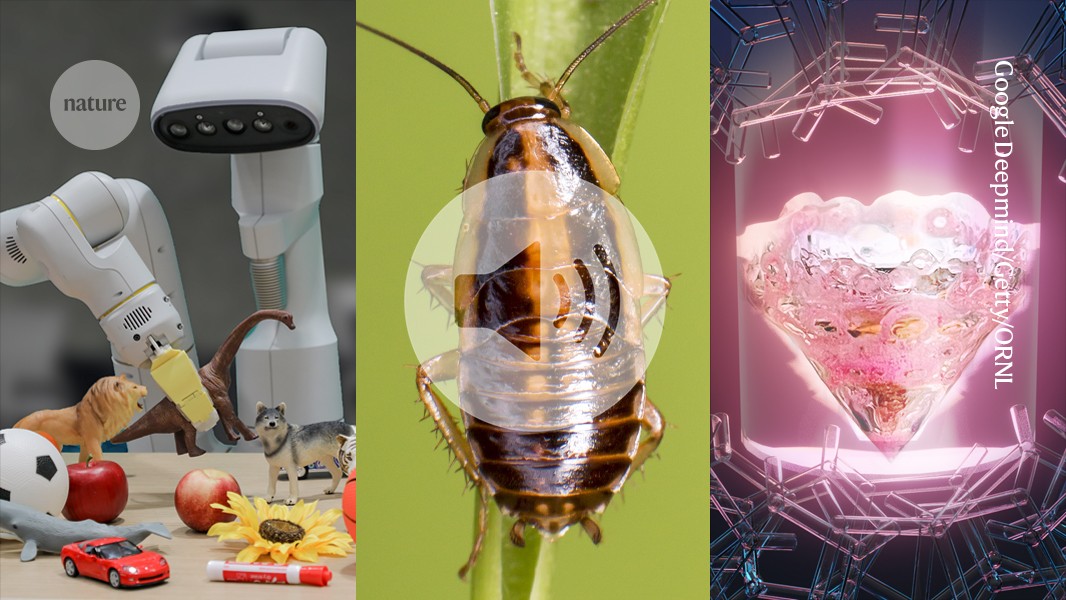
00:25 What the rise of AI language models means for robots
Companies are melding artificial intelligence with robotics, in an effort to catapult both to new heights. They hope that by incorporating the algorithms that power chatbots it will give robots more common-sense knowledge and let them tackle a wide range of tasks. However, although impressive demonstrations of AI-powered robots exist, many researchers say there is a long road to actual deployment, and that safety and reliability need to be considered.
News Feature:The AI revolution is coming to robots: how will it change them?
16:09 How the cockroach became a ubiquitous pest
Genetic research suggests that although the German cockroach (Blattella germanica) spread around the world from a population in Europe, its origins were actually in South Asia. By comparing genomes from cockroaches collected around the globe, a team could identify when and where different populations might have been established. They show that the insect pest probably began to spread east from South Asia around 390 years ago with the rise of European colonialism and the emergence of international trading companies, before hitching a ride into Europe and then spreading across the globe.
Nature News:The origin of the cockroach: how a notorious pest conquered the world
20:26: Rare element inserted into chemical ‘complex’ for the first time
Promethium is one of the rarest and most mysterious elements in the periodic table. Now, some eight decades after its discovery, researchers have managed to bind this radioactive element to other molecules to make a chemical ‘complex’. This feat will allow chemists to learn more about the properties of promethium filling a long-standing gap in the textbooks.
Nature News:Element from the periodic table’s far reaches coaxed into elusive compound
Subscribe to Nature Briefing, an unmissable daily round-up of science news, opinion and analysis free in your inbox every weekday.
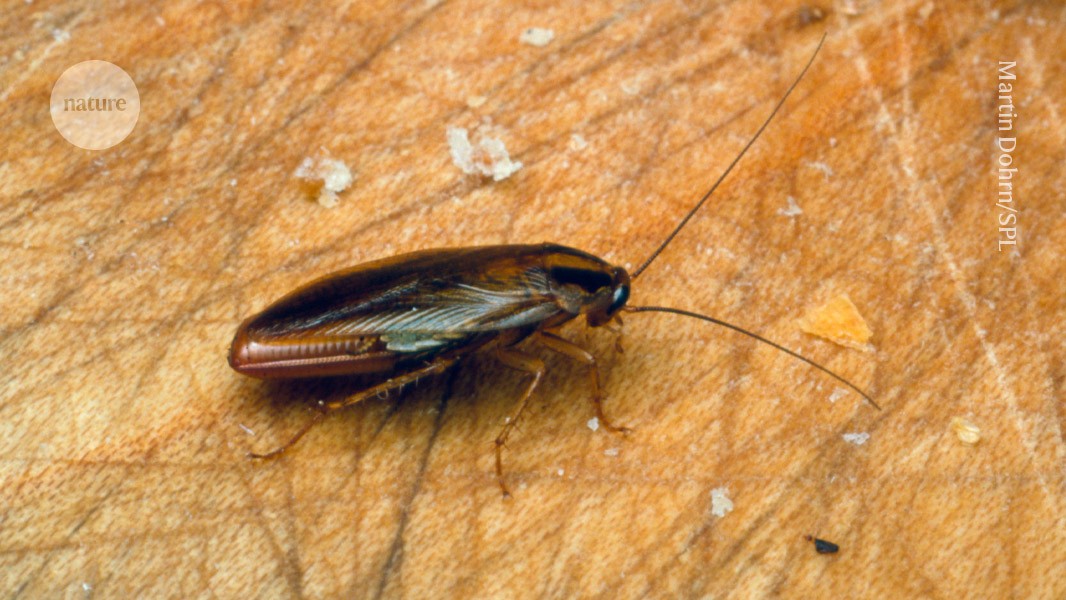
The German cockroach (Blattella germanica) is found all over the globe — but its origins have been mysterious.Credit: Martin Dohrn/Science Photo Library
A ubiquitous household pest has unexpected origins. A cockroach that lives in human dwellings all over the world is known as the German cockroach — but it did not come from Germany originally. A study published today1 in the Proceedings of the National Academy of Sciences suggests that the creature originated South Asia and spread globally because of its affinity for human habitats.
Swedish biologist Carl Linnaeus was the first scientist to describe the cockroach — which he named Blattella germanica — in 1776 in Europe, hence the assumption about its German origins. “They did not originate from there, but they were domesticated there and then started to spread across the world,” says study co-author Qian Tang, an evolutionary biologist now at Harvard University in Boston, Massachusetts.
Tang and his colleagues analysed the genomes of 281 German cockroaches collected from 17 countries, including Australia, Ethiopia, Indonesia, Ukraine and the United States. They used the similarities and differences between the genomes to calculate when and where different populations might have been established.
They found that closest living relative of the German cockroach is probably the Asian cockroach Blattella asahinai, which is still found in South Asia. Blattella germanica probably split off from it around 2,100 years ago.
The Asian cockroach (Blattella asahinai) is the closest living relative of the German cockroach.Credit: Apurv Jadhav/ephotocorp via Alamy
Then, around 1,200 years ago, B. germanica hitchhiked west into the Middle East with the commercial and military traffic of the Islamic Umayyad and Abbasid caliphates. It began to spread east from South Asia around 390 years ago, with the rise of European colonialism and the emergence of international trading companies such as the Dutch and British East India Companies. Around a century later, the German cockroach hitched a ride into Europe, and from there spread around the world.
Cleo Bertelsmeier, a researcher of invasive species at the University of Lausanne in Switzerland, says it was exciting to see how the study was able to map the genetic data to historical events. The use of genomics was essential to understanding the dispersal of the German cockroach, because “this is already quite an ancient invasion, they became so abundant that there is no way, without such tools, to know that this is not a native species from Europe”, she says.
German cockroaches owe their success to their extraordinary adaptability, says Franz Essl, an ecologist at the University of Vienna. They readily adapt to highly modified environments, such as human-occupied niches; they have a short reproductive cycle; and they are very opportunistic, qualities that “also make them prone to be transported as hitchhikers to new places”, says Essl. “That’s a perfect combination of ingredients for making a species very successful in a human-shaped world.”
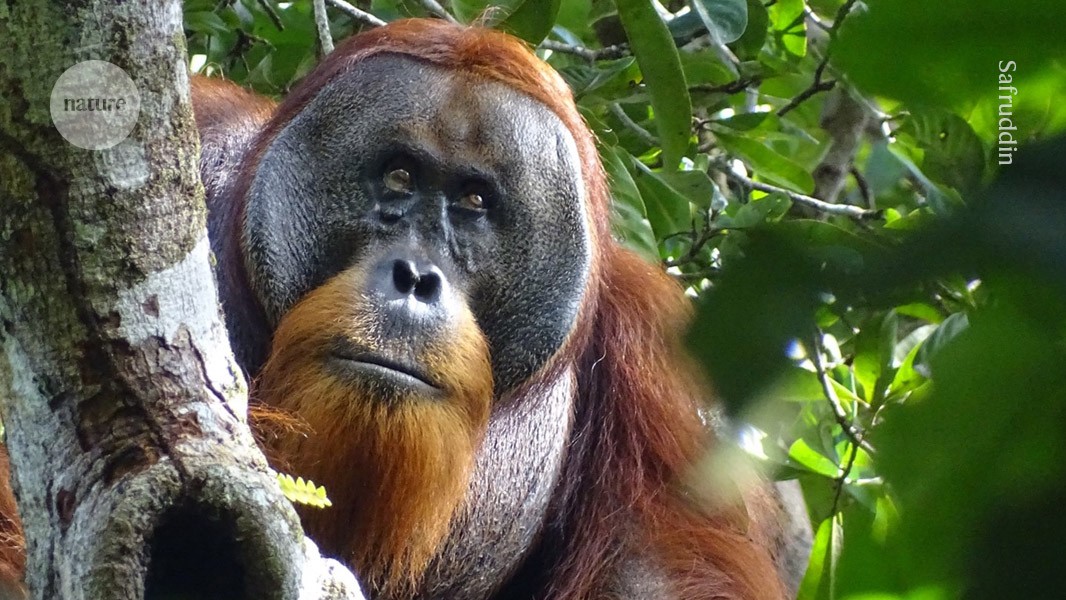
An orangutan in Sumatra surprised scientists when he was seen treating an open wound on his cheek with a poultice made from a medicinal plant. It’s the first scientific record of a wild animal healing a wound using a plant with known medicinal properties. The findings were published this week in Scientific Reports1.
“It shows that orangutans and humans share knowledge. Since they live in the same habitat, I would say that’s quite obvious, but still intriguing to realize,” says Caroline Schuppli, a primatologist at the Max Planck Institute of Animal Behavior in Konstanz, Germany, and a co-author of the study.
In 2009, Schuppli’s team was observing Sumatran orangutans (Pongo abelii) in the Gunung Leuser National Park in South Aceh, Indonesia, when a young male moved into the forest. He did not have a mature male’s big cheek pads, called flanges, and was probably around 20 years old, Schuppli says. He was named Rakus, or ‘greedy’ in Indonesian, after he ate all the flowers off a gardenia bush in one sitting.
In 2021, Rakus underwent a growth spurt and became a mature flanged male. The researchers observed Rakus fighting with other flanged males to establish dominance and, in June 2022, a field assistant noted an open wound on his face, possibly made by the canines of another male, Schuppli says.
Rakus with his wound, two days before he was observed applying a poultice of medicinal leaves.Credit: Armas
Days later, Rakus was observed eating the stems and leaves of the creeper akar kuning (Fibraurea tinctoria), which local people use to treat diabetes, dysentery and malaria, among other conditions. Orangutans in the area rarely eat this plant.
In addition to eating the leaves, Rakus chewed them without swallowing and used his fingers to smear the juice on his facial wound over seven minutes. Some flies settled on the wound, whereupon Rakus spread a poultice of leaf-mash on the wound. He ate the plant again the next day. Eight days after his injury, his wound was fully closed.
The research group has seen no other orangutans in the national park self-medicate using akar kuning in 21 years of observation. This could be because wild orangutans in the region are rarely injured. Or perhaps Rakus is the only one who knows of this treatment, which could be a behaviour he picked up before he moved into the area.
“It is the first study to scientifically demonstrate that an animal is using a plant with medicinal properties applicable to wounds, and putting those on the wounds and consistently treating over a period of time,” says Michael Huffman, who studies animal self-medication at the Institute for Tropical Medicine at Nagasaki University in Japan.
Huffman says self-medication is seen in many species. Canadian snow geese (Anser caerulescens) swallow leaves whole to expel tape worms2. Dusky-footed wood rats (Neotoma fuscipes) line their nests with aromatic plants to fumigate parasites3. And chimpanzees (Pan troglodytes) in Gabon have been observed rubbing insects near their wounds2, potentially as treatment.
Humans might even have discovered some remedies by watching animals, he says. “Probably our ancestors were looking at other animals and learning about medicines.” When social animals communicate, “that information sticks and can last over generations”.
Nature, Published online: 24 April 2024; doi:10.1038/d41586-024-01021-8
A parachute-like skin membrane, the patagium, evolved independently in several marsupial species. Genomic analysis suggests that this trait came about through different changes to the regulation of the same gene.
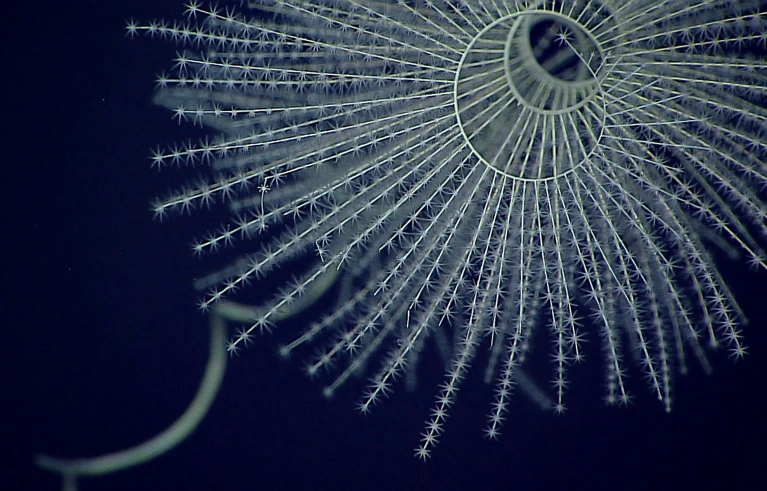
A bioluminescent octocoral, Iridogorgia magnispiralis.Credit: NOAA Office of Ocean Exploration and Research, Deepwater Wonders of Wake
Some 540 million years ago, an ancient group of corals developed the ability to make its own light1.
Scientists have previously found that bioluminescence is an ancient trait — with one group of tiny crustaceans first making their own light an estimated 267 million years ago. But this new finding pushes back the origins of bioluminescence even further by around 270 million years.
“We had no idea it was going to be this old,” says Danielle DeLeo, an evolutionary marine biologist at Florida International University in Miami, who led the study, which was published on 24 April in Proceedings of the Royal Society B. “The fact that this trait has been retained for hundreds of millions of years really tells us that it is conferring some type of fitness advantage.”
Bioluminescence has evolved independently at least 100 times in animals and other organisms. Some glowing species, such as fireflies, use their light to communicate in the darkness. Other animals, including anglerfish, use it as a lure to attract prey, or to scare away predators.
However, it’s not always clear why bioluminescence evolved. Take octocorals. These soft-bodied organisms are found in both shallow water and the deep ocean, and produce an enzyme called luciferase to break down a chemical to make light. But whether glowing octocorals use their light to attract zooplankton as prey or for some other purpose is unclear.
First light
Searching for answers, DeLeo and her colleagues analysed a large data set of genetic sequences and the sparse octocoral fossil record to reconstruct the animals’ evolutionary history. They then used a computer model to determine how likely it was that ancestral species were bioluminescent.
The model revealed that the common ancestor of all octocorals — which lived around 540 million years ago — was probably bioluminescent. The finding suggests that luciferase-based biofluorescence evolved early and was lost by non-bioluminescent descendants of ancient glowing octocorals.
The study shows that bioluminescence has been around since at least the Cambrian period (around 540 million to 485 million years ago), when the first animal species developed eyes. That’s surprising, says evolutionary biologist Todd Oakley, at the University of California, Santa Barbara, because bioluminescence is a trait that “tends to blink on and off” across evolutionary time.
Luciferase is just one way animals make light. Other organisms use different chemistry to get their telltale glow. In the case of octocorals, the luciferase system could have evolved for the production of an antioxidant, says DeLeo. Later, the light-generating aspect of the reaction would have become useful for communication.
In any case, the deep origin of bioluminescence suggests that it could be one of the oldest forms of communication on Earth, she says. “If you’re producing light — whether or not it’s intentional — you are signalling other animals,” she says. “Like, ‘Hey! I’m over here!”
Growing evidence indicates that insects such as bees show some forms of consciousness, according to a new scientific statement.Credit: Phil Savoie/Nature Picture Library
Crows, chimps and elephants: these and many other birds and mammals behave in ways that suggest they might be conscious. And the list does not end with vertebrates. Researchers are expanding their investigations of consciousness to a wider range of animals, including octopuses and even bees and flies.
Armed with such research, a coalition of scientists is calling for a rethink in the animal–human relationship. If there’s “a realistic possibility” of “conscious experience in an animal, it is irresponsible to ignore that possibility in decisions affecting that animal”, the researchers write in a document they call The New York Declaration of Animal Consciousness. Issued today during a meeting in New York City, the declaration also says that there is a “realistic possibility of conscious experience” in reptiles, fish, insects and other animals that have not always been considered to have inner lives, and “strong scientific support” for aspects of consciousness in birds and mammals.
As the evidence has accumulated, scientists are “taking the topic seriously, not dismissing it out of hand as a crazy idea in the way they might have in the past,” says Jonathan Birch, a philosopher at the London School of Economics and Political Science and one of the authors of the declaration.
The document, which had around 40 signatories early today, doesn’t state that there are definitive answers about which species are conscious. “What it says is there is sufficient evidence out there such that there’s a realistic possibility of some kinds of conscious experiences in species even quite distinct from humans,” says Anil Seth, director of the Centre for Consciousness Science at the University of Sussex near Brighton, UK, and one of the signatories. The authors hope that others will sign the declaration and that it will stimulate both more research into animal consciousness and more funding for the field.
Blurry line
The definition of consciousness is complex, but the group focuses on an aspect of consciousness called sentience, often defined as the capacity to have subjective experiences, says Birch. For an animal, such experiences would include smelling, tasting, hearing or touching the world around itself, as well as feeling fear, pleasure or pain — in essence, what it is like to be that animal. But subjective experience does not require the capacity to think about one’s experiences.
The consciousness wars: can scientists ever agree on how the mind works?
Non-human animals cannot use words to communicate their inner states. To assess consciousness in these animals, scientists often rely on indirect evidence, looking for certain behaviours that are associated with conscious experiences, Birch says.
One classic experiment is the mirror test, which investigates an animal’s ability to recognize itself in a mirror. In this experiment, scientists apply a sticker or other visual mark on an animal’s body and place the animal in front of a mirror. Some animals — including chimpanzees (Pan troglodytes)1, Asian elephants (Elephas maximus)2 and cleaner fishes (Labroides dimidiatus)3 — exhibit curiosity about the mark and even try to remove it. This behaviour suggests the possibility of self-awareness, which might be a sign of consciousness.
In an experiment with crows (Corvus corone)4, the birds were trained to make a specific head gesture whenever they saw a coloured square on a screen, a task they carried out with high accuracy. While the birds performed the task, scientists measured the activity in a region of their brain associated with high-level cognition. The birds’ brain activity correlated with what the birds were reporting, not with what they were actually shown. This suggests that they were aware of what they were perceiving, another potential marker of consciousness.
Invertebrate inner lives?
Another experiment showed that octopuses (Octopus bocki)5, when picking between two chambers, avoided one where they had previously received a painful stimulus in favour of one where they were given an anaesthetic. This suggests that they experience and actively avoid pain, which some researchers think indicates conscious experience.
Research shows that octopuses avoid pain, which some scientists take as a sign of consciousness.Credit: Brandon Cole/Nature Picture Library
Investigations of fruit flies (Drosophila melanogaster) show that they engage in both deep sleep and ‘active sleep’, in which their brain activity is the same as when they’re awake6. “This is perhaps similar to what we call rapid eye movement sleep in humans, which is when we have our most vivid dreams, which we interpret as conscious experiences,” says Bruno van Swinderen, a biologist at the University of Queensland in Brisbane, Australia, who studies fruit flies’ behaviour and who also signed the declaration.
Some suggest that dreams are key components of being conscious, he notes. If flies and other invertebrates have active sleep, “then maybe this is as good a clue as any that they are perhaps conscious”.
Animal minds
Other researchers are more sceptical about the available evidence on animal consciousness. “I don’t think there is basically any decisive evidence so far,” says Hakwan Lau, a neuroscientist at the Riken Center for Brain Science in Wako, Japan.
Lau acknowledges that there is a growing body of work showing sophisticated perceptual behaviour in animals, but he contends that that’s not necessarily indicative of consciousness. In humans, for example, there is both conscious and unconscious perception. The challenge now is to develop methods that can adequately distinguish between the two in non-humans.
Seth responds that, even in the absence of definitive answers, the declaration might still have a positive influence in shaping policies relating to animal ethics and welfare.
For van Swinderen, the time is right to consider whether most animals might be conscious. “We are experiencing an artificial-intelligence revolution where similar questions are being asked about machines. So it behoves us to ask if and how this adaptive quality of the brain might have evolved in nature.”
Frans de Waal made an early but influential entrance onto the international scientific stage with his first book, Chimpanzee Politics (1982), which documented the intricate social manoeuvring of chimpanzees in Burgers’ Zoo in Arnhem, the Netherlands, during his PhD and postdoc years. de Waal showed that the chimpanzees often acted in ways similar to social strategies devised by Renaissance diplomat Niccolò Machiavelli, as their alliances shifted in their pursuit of power.
For the rest of his career, de Waal expertly toggled between publishing peer-reviewed research and a dozen other books that elegantly communicated discoveries about the behaviour and minds of animals to a growing lay readership. His and others’ research has progressively narrowed the percieved gap in cognitive ability between humans and non-human apes and other animals. de Waal has died aged 75.
How humans lost their tails — and why the discovery took 2.5 years to publish
Throughout the first half of the twentieth century, research on animal intelligence was epitomized by experiments in which a single animal in a cage was given a physical problem, such as picking the odd one out among several objects — echoing human intelligence tests. de Waal’s analyses suggested that the most complex challenges to chimpanzees’ intellect lay less in the physical domain and more in their complex social lives. Today, the nature and scope of social intelligence, in both humans and other animals, is a major area of research.
de Waal’s later contributions contrasted with his initial focus. Peacemaking Among Primates (1989) documented his discovery of reconciliatory behaviour, in which two individuals would make up after a fight, embracing and grooming each other. Another phenomenon that he observed was consolation, in which a third party approached the loser to embrace or groom them. de Waal interpreted such actions as subtle adjustments that finessed individuals’ complex social lives, similar to those seen in humans.
Born in ’s-Hertogenbosch in the Netherlands, Frans de Waal trained as a zoologist at the Radboud University Nijmegen and the University of Groningen before undertaking a PhD at Utrecht University, supervised by Dutch biologist Jan van Hooff. Both were committed to the ethological approach of their Nobel-prize-winning countryman, Niko Tinbergen, who recommended that any study of animals should begin with careful observation of their unfettered behaviour. In a revised 1989 edition of Chimpanzee Politics, de Waal pointed out that the behavioural anecdotes in his writing did not represent the main basis of his scientific conclusions. On the contrary, his observations, quantitative data, behavioural experiments and statistical analyses were, crucially, built on the foundation of naturalistic observation.
Consciousness: what it is, where it comes from — and whether machines can have it
After de Waal moved to the Wisconsin National Primate Research Center in Madison in 1981, he extended his research on reconciliation to several thousand aggressive episodes recorded in groups of monkeys. These revealed that the likelihood of reconciliation varied between species. To test the roles of instinct and learning in this behaviour, de Waal reared juveniles of two species together: stump-tail macaques (Macaca arctoides), which commonly reconcile, and rhesus macaques (Macaca mulatta), which do not. The conciliatory tendency of the latter tripled with exposure to the higher frequency of reconciliation among the stump-tails.
de Waal also explored the process of learning from others: the foundation of culture. His contributions ranged from compelling records of chimpanzees imitating others to large-scale experiments seeding alternative forms of tool use in different chimpanzee groups. Results demonstrated the cultural spread of novel tool use, generating local traditions and complementing the evidence for putative chimpanzee cultures in the wild, where demonstrating a causal role of social learning is more difficult. These studies were completed in de Waal’s field station colonies after he moved to Emory University in Atlanta, Georgia, in 1991. In The Ape and the Sushi Master (2001), de Waal synthesized other discoveries about primate culture, paying homage to the pioneering work of Japanese primatologists and establishing enduring links with them.
Biggest ever study of primate genomes has surprises for humanity
He returned to the theme of culture in his last work, Different (2022), in which he tackled the potentially treacherous topics of sex and gender. Noting evidence for primates culturally assimilating appropriate behaviour for their sex, he argued that this is a manifestation of what we mean by gender — yet another phenomenon that is not unique to humans. Nor, as he showed, are homosexuality and gender transitions.
de Waal’s research portfolio extended to diverse species, notably elephants, capuchin monkeys and bonobos (Pan paniscus), tackling typically human concepts such as morality, fairness and empathy. In Our Inner Ape (2005), he offered a nuanced analysis of what humans inherited from our common ancestor with the bonobo and the chimpanzee, our closest living relatives. As de Waal and others have shown, the two ape species display a remarkable diversity of behavioural tendencies. The many puzzling contradictions of human behaviour, from altruism and kindness to violence and genocide, become more comprehensible, de Waal argued, when viewed through the lens of the evolutionary ancestry that we can infer from all we have discovered about our contemporary primate cousins.
Despite his many honours, de Waal wore his fame lightly. He was modest and genial, with a flair for defusing tense academic debates with the wry humour that is on display in his popular TED talks. He vigorously supported the careers of a generation of behavioural scientists. A fitting epitaph might be the title of one of his books: Good Natured (1996). “One thing that I’ve seen often in my career is claims of human uniqueness that fall away and are never heard from again,” he said in 2014. “We always end up overestimating the complexity of what we do … I’ve brought apes a little closer to humans but I’ve also brought humans down a bit.”
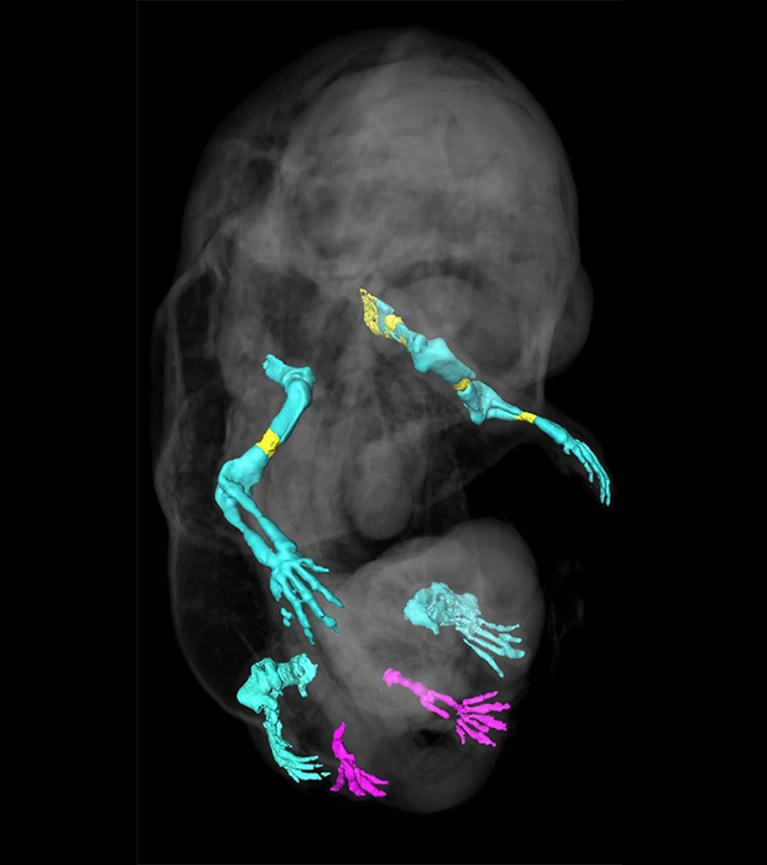
This six-legged animal isn’t an insect: it’s a mouse with two extra limbs where its genitals should be. Research on this genetically engineered rodent, which was published on 20 March in Nature Communications1, has revealed a way in which changes in DNA’s 3D structure can affect how embryos develop.
Developmental biologist Moisés Mallo, at the Gulbenkian Science Institute in Oeiras, Portugal, and his colleagues were studying one of the receptor proteins, Tgfbr1, in a signalling pathway that is involved in many aspects of embryonic development. The scientists inactivated the Tgfbr1 gene in mouse embryos about halfway through development to see how the change affected spinal-cord development.
Then, Mallo’s graduate student, Anastasiia Lozovska, came to his office to tell him she’d found that one of the bioengineered embryos had genitals that looked similar to two extra hind limbs. Her finding sent the research down an unexpected path. “I didn’t choose the project, the project chose me,” Mallo says.
A 3D reconstruction of the skeleton of the genetically altered embryo shows its extra and normal limbs (magenta and turquoise, respectively).Credit: Anastasiia Lozovska et al/Nat. Comms
Researchers have long known that, in most four-limbed animals, both the external genitalia (penis or clitoris) and hind limbs develop from the same primordial structures.
When Mallo’s team looked further into the six-legged mouse phenomenon, they found that Tgfbr1 directs these structures to become either genitalia or limbs by altering the way that DNA folds in the structure’s cells. Deactivating the protein changed the activity of other genes, resulting in extra limbs and no true external genitalia.
The researchers hope to determine whether Tgfbr1 and its relatives affect DNA structure in other systems such as metastatic cancer, and in immune function. They are also examining whether the same mechanism underlies the development of the reptilian hemipenis, a double penis that, in snakes, forms from primordial organs in lieu of legs.
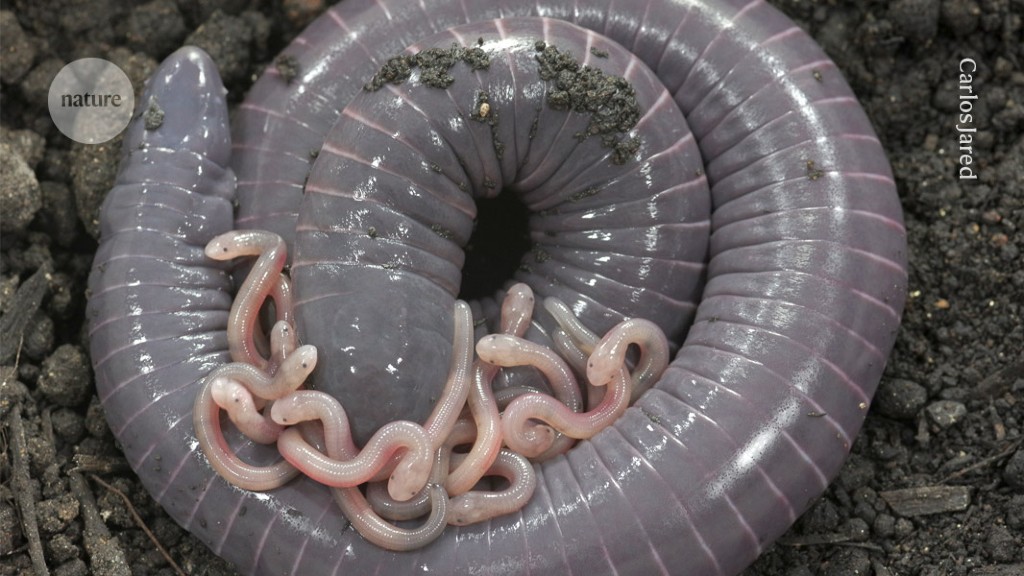
The worm-like caecilian Siphonops annulatus is the first amphibian described to produce ‘milk’ for offspring hatched outside its body.Credit: Carlos Jared
An egg-laying amphibian found in Brazil nourishes its newly hatched young with a fatty, milk-like substance, according to a study published today in Science1.
Lactation is considered a key characteristic of mammals. But a handful of other animals — including birds, fish, insects and even spiders — can produce nutrient-rich liquid for their offspring.
That list also includes caecilians, a group of around 200 limbless, worm-like amphibian species found in tropical regions, most of which live underground and are functionally blind. Around 20 species are known to feed unborn offspring — hatched inside the reproductive system — a type of milk. But the Science study is the first-time scientists have described an egg-laying amphibian doing this for offspring hatched outside its body.
The liquid is “functionally similar” to mammalian milk, says study co-author Carlos Jared, a naturalist at the Butantan Institute in São Paulo, Brazil.
An unusual diet
In the 2000s, researchers showed that in some caecilians, the young hatched with teeth and that they fed on a nutrient-rich layer of their mother’s skin2 around every seven days. “It sounded a little strange — babies eating just once a week,” says Marta Antoniazzi, a naturalist also at the Butantan Institute. “That wouldn’t be sufficient for the babies to develop as they do.”
Antoniazzi, Jared and their colleagues wanted to investigate these young amphibians’ bizarre feeding habits in more detail, so they collected 16 nesting caecilians of the species Siphonops annulatus and their young at cacao plantations in the Atlantic Forest in Brazil. The researchers then filmed the animals and analysed more than 200 hours of their behaviour.
The footage revealed that as well as munching on their mother’s skin, S. annulatus young could get their mother to eject a fat- and carbohydrate-rich liquid from her cloaca — the combined rear opening for the reproductive and digestive systems — by making high-pitched clicking noises. The young would also stick their heads into the cloaca to feed.
The finding that S. annulatus is “both a skin feeder and now a milk producer is pretty amazing”, says Marvalee Wake, an evolutionary biologist at the University of California, Berkeley. It is probably just one of the caecilians’ many biological quirks. “Most species have not been studied at this level of detail,” says Wake. “So, who knows what else they’re doing.”