


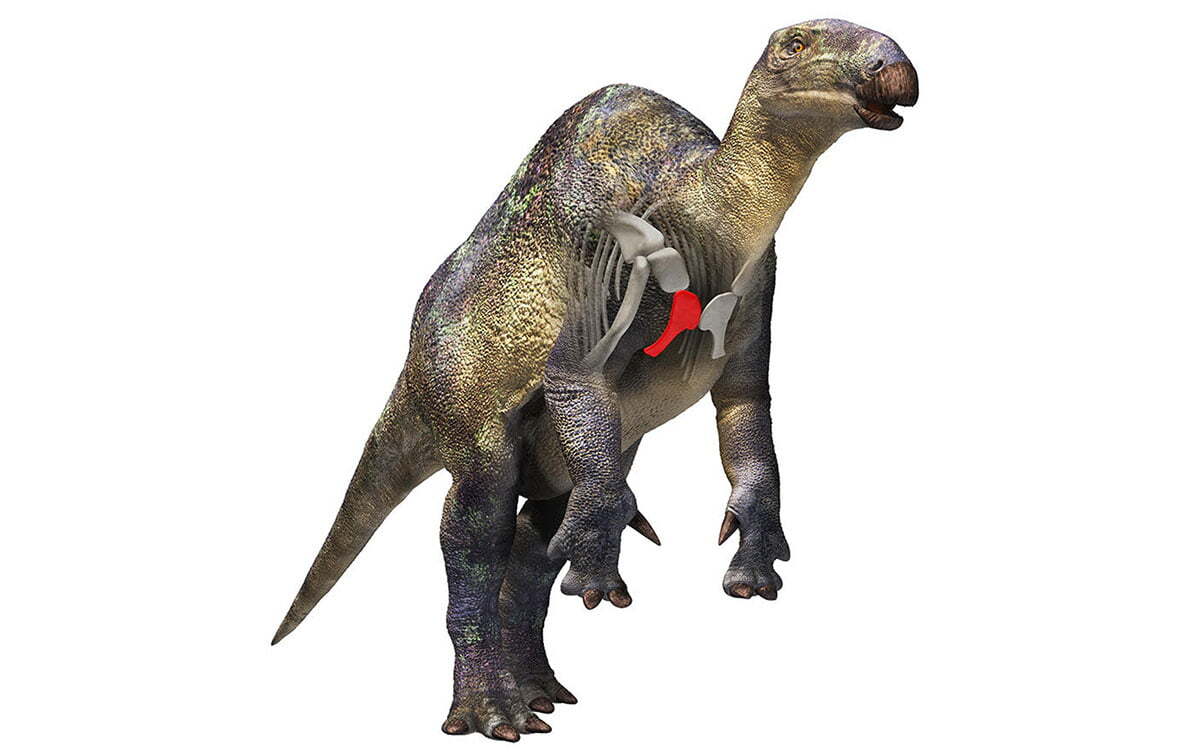
Iguanodons might not be the flashiest dinosaurs, but these duck-billed beasts were fairly plentiful during the Cretaceous period. Equipped with sturdy flat teeth and long, strong jaws designed for ruminant chewing, members of the family iguanodontidae spread out across the multiple landmasses that made up the megacontinent Laurasia during this time. Now, according to a new study published in Paleontological Research, there may be a new member of the family: a diminutive cousin from Japan.
During the Cretaceous, Japan wasn’t an island at all. It was still attached to Laurasia, making up a good chunk of the eastern coast. Mudstone and sandstone from the Ashizawa Formation located in northeastern Honshu preserved the prehistoric life that lived along this coast, including the specimen in this study—a single hatchet-shaped bone that languished in museum collections for more than two decades. Today, though, it’s been meticulously studied by an international team of researchers, including paleontologists from the University of Tsukuba.
Read more: “Here’s Why There Aren’t Any Tiny Dinosaurs”
According to their analysis, the bone is the right half of the dinosaur’s sternum. Comparing its physical characteristics to other species, they determined the iguanodon it belonged to was significantly smaller, less than 10 feet long (the largest iguanodons grew to be well over 30 feet long).
Unfortunately, they’re not entirely sure if this specimen belongs to a new species or a juvenile member of an existing species, but they do believe it points to growing diversity among iguanodons and their relatives in prehistoric Asia during the Cretaceous.
Welcome to the family, little guy.
Enjoying Nautilus? Subscribe to our free newsletter.
Lead image: Masato Hattori