



Nasa has named its latest flagship space telescope after the American scientist Nancy Grace Roman. Roman’s contributions to astrophysics should have made her famous, yet many people will never have heard of her.
For decades, astronomers have been spoiled with stunning data and imagery from the Hubble Space Telescope, which was launched into Earth orbit in 1990. In 2021, the James Webb space telescope (JWST) was sent into space as Hubble’s successor. Since then, JWST has identified some of the earliest stars and galaxies to form after the Big Bang and has made a host of other amazing discoveries.
JWST is designed to look at individual objects in extraordinary detail, but the Roman telescope is designed to survey the sky at scale. By monitoring vast areas of the cosmos, astronomers can piece together a broader picture of how the universe changes. The capabilities of the two telescopes are therefore complementary.
The new observatory’s name honours a scientist who battled discrimination in a male-dominated field, eventually becoming Nasa’s first chief astronomer.
Roman was born in Nashville, Tennessee, to a music teacher mother and a father who was a mathematician and physicist. She earned a bachelor’s degree in astronomy from Swarthmore College, Pennsylvania, in 1946.
Nasa
She gained her PhD at the University of Chicago, completing her graduate studies at the university’s Yerkes Observatory, where she worked on mapping the motions of stars.
In her early research, Roman compared the way that stars moved in the sky with what they were made of. This led to the finding that there were different populations of stars within the Milky Way.
Roman also found that the quantities of “heavy” chemical elements (in astronomy, those elements that are heavier than helium) in these stars were linked to the speed and direction at which they were moving away.
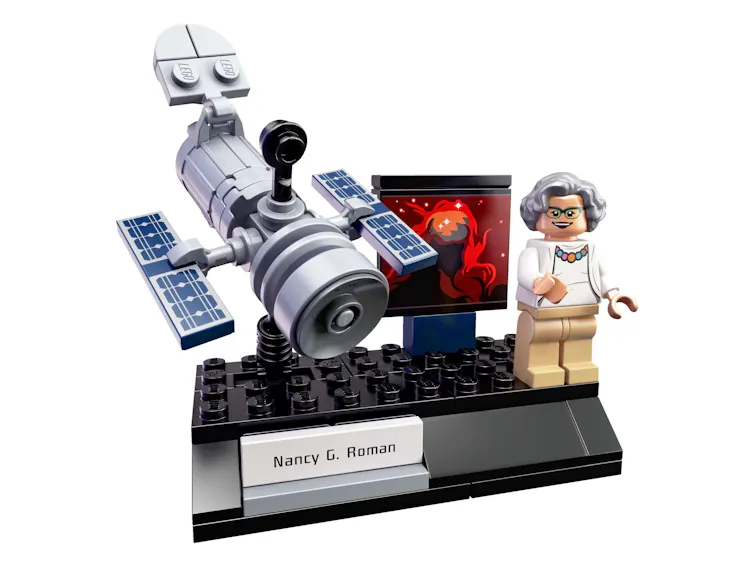
Lego, Author provided (no reuse)
This allowed a mathematical model to be produced that essentially reversed time, to look at how stars were born from the same nebula. Roman had discovered that all the stars in a given area are not the same age, leading to observational evidence about how our galaxy is structured.
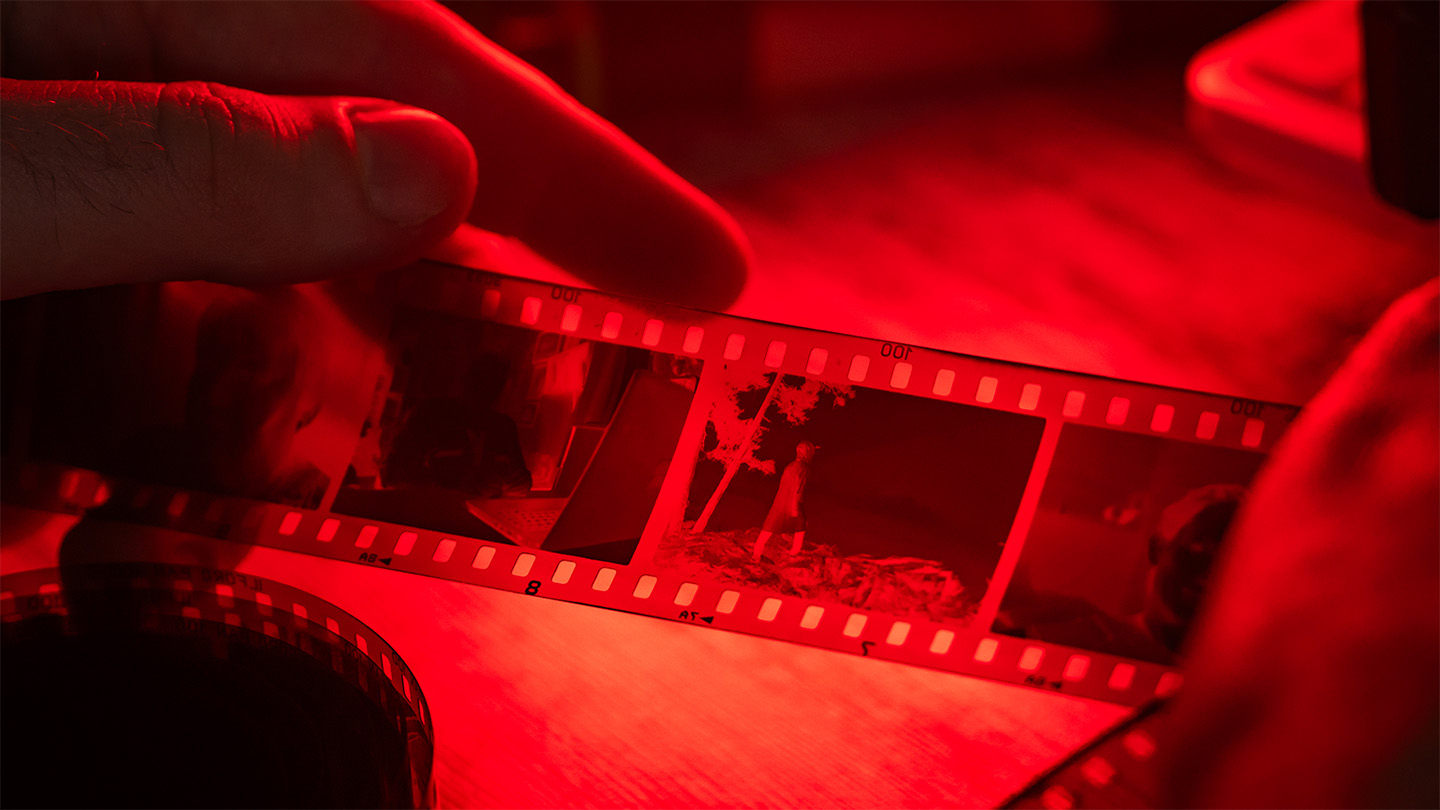
Roman collected large quantities of astronomical observations at a time when the process for doing so – which was based around photographic plates rather than digital cameras – was much more time-consuming than it is today.
For the identification of the stars, Roman made use of a method called UV excess, which is still used today as a fast way to identify different star types.
During her time as a faculty member at the the University of Chicago’s Yerkes Observatory, Roman was subjected to wage inequality. She once estimated that she made no more than 60% of what her male colleagues earned. She also felt that she would never get tenure due to her gender.
In a 2017 interview, Roman said she brought her salary concerns to her department chair at the time, the Nobel prize-winning physicist Subrahmanyan Chandrasekhar. He told her: “We don’t discriminate against women. We can just get them for less.”
This contributed to Roman leaving for a more secure position at the Naval Research Laboratory, in Washington DC. In this new role, the head of microwave spectroscopy, she used radio waves to increase the accuracy of the measured distance from the Earth to the Moon. She also mapped large sections of the Milky Way in radio waves.
A new role model
When Nasa was formed in 1958, most of the science section was recruited from the Naval Research Laboratory. The leadership of this group sounded Roman out about setting up an astronomy programme at the new agency.
In 1959, she moved to Nasa, as the head of observational astronomy. Her title was changed to chief of astronomy after a year. Roman was the first woman to hold any executive position at Nasa at a time when the gender pay gap in the US was 60 cents to the dollar and women were subjected to serious discriminatory practices in the workplace – as elsewhere.
During this time, Roman was solely responsible for deciding which astronomers’ projects would or would not get funding from Nasa. Today, the process is carried out by peer review panels who whittle candidates down through shortlisting rounds.
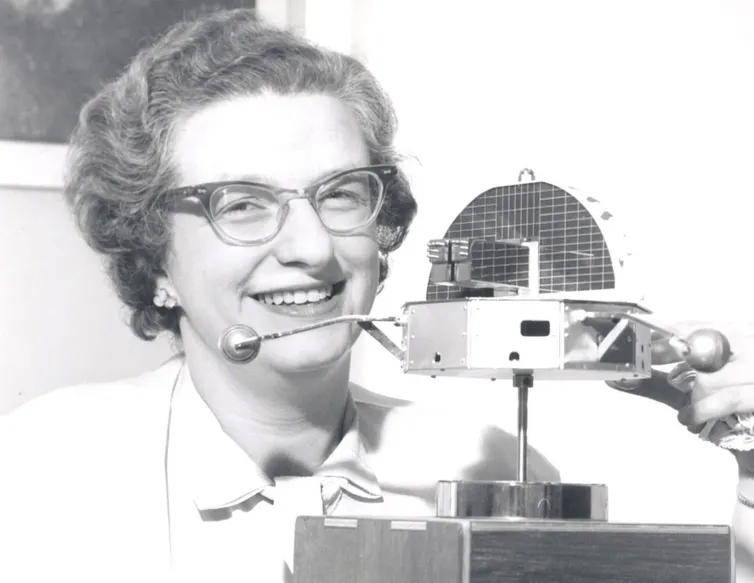
Nasa
Roman oversaw the development and launch of some of the first space telescopes. The idea of putting a telescope in orbit had first been suggested by the American physicist and astronomer Lyman Spitzer in 1946.
This was before the first satellite had even been launched into orbit. Space telescopes have many advantages: they avoid the distorting effects of Earth’s atmosphere, allowing observatories to gather clearer, sharper images.
Roman initially worked on launching several smaller space telescopes that observed the sky at ultraviolet and X-ray wavelengths. She also helped launch the Kuiper Aircraft Observatory, which enabled observations of stars at infrared wavelengths (those slightly longer than visible red light).
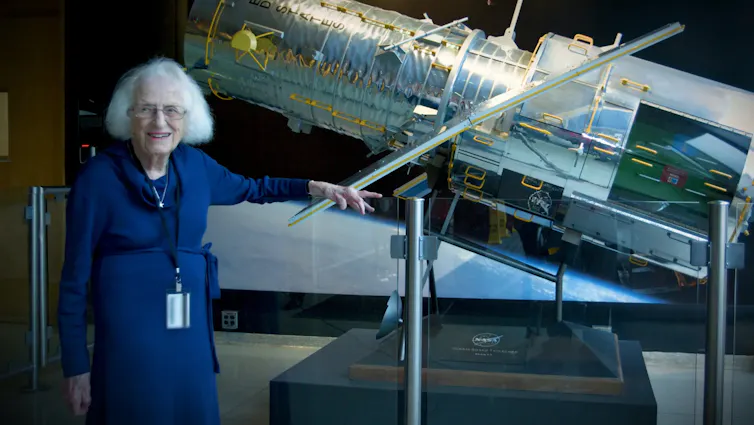
Nasa
These missions offered proof of concept for what were, at the time, cutting edge observation techniques. They also justified larger amounts of money being spent on subsequent missions. Roman worked in a skilful way to gather support for the Hubble Space Telescope (initially known as the Large Space Telescope) by giving public talks and canvassing astronomers.
Nasa’s science chief Ed Weiler would later dub Roman the “mother of Hubble” based on these efforts. She remained an enthusiastic advocate for women in science, and astronomy in general, up until her death in 2018.
The naming of this new telescope finally recognises an exceptional astronomer and architect of the era of space-based observatories. Hopefully it will also raise awareness of her life and achievements.