



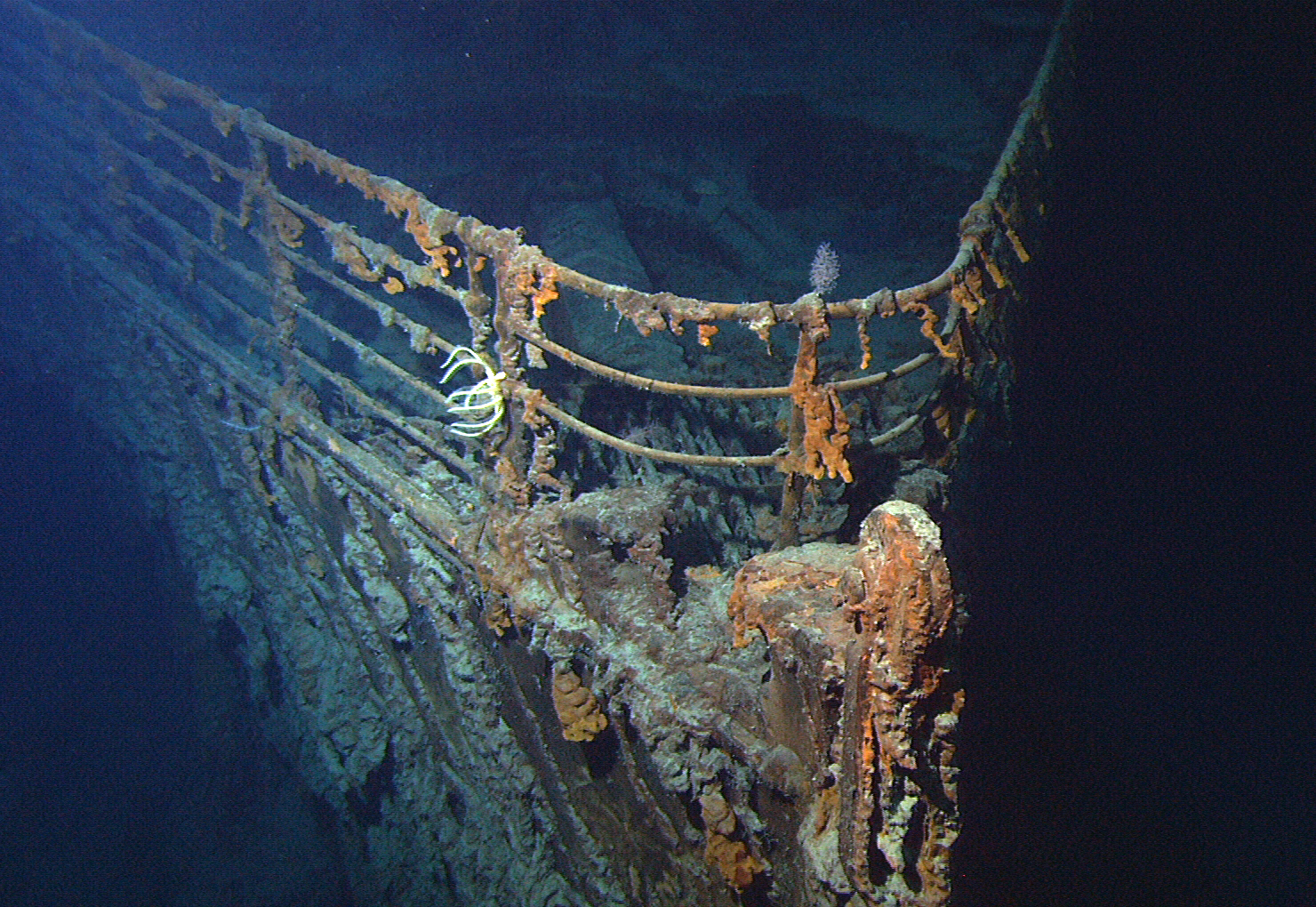
This week in 1985, oceanographers Jean-Louis Michel and Robert Ballard made a discovery of untold cultural impact: the wreckage of ill-fated oceanliner RMS Titanic.
The pair found the ship some 73 years after it collided with an iceberg and sank to the bottom of the Atlantic. The wreckage ended up around 12,500 feet under the surface, about 370 miles from the coast of Canada.
Finding the long-lost ship wasn’t a simple task. For one, sonar scanning didn’t work, so Michel and Ballard decided instead to look for the debris that had spilled out of the Titanic, guessing (correctly) that this would cover a much wider area than the actual wreck. After a week of seeing nothing, the Titanic’s boiler was spotted on September 1st, and the researchers followed the debris trail back to the ship.
Read more: “The Iceberg Cowboys Who Wrangle the Purest Water on Earth”
The discovery immediately told us a lot more about the events of April 1912—including the fact that the ship had split into two as it sank. What’s more, many of the interiors toward the bow of the ship were in surprisingly good condition.
Numerous proposals have been put forth to try and raise the Titanic—some of which involved magnets, balloons, and ping-pong balls—but very few got past the drawing-board stage. Now considered too fragile to move, the Titanic wreckage is protected by a UNESCO convention and a joint U.S.-U.K. agreement.
Enjoying Nautilus? Subscribe to our free newsletter.
Lead Image: NOAA/Institute for Exploration/University of Rhode Island