



Medical experts in the US have expanded their recommendations for who should receive migraine treatment and what preventative drugs they should be prescribed.
A panel of experts has systematically analyzed the available evidence and made several key updates to a 2012 joint guideline from the American Academy of Neurology (AAN) and the American Headache Society (AHS).
The new recommendations are published in a special article for the journal Headache and are endorsed by the American Academy of Family Physicians.
“Migraine is the most common reason for people to see a neurologist, and is encountered even more commonly in primary care settings,” explains AHS president, neurologist Matthew Robbins of Weill Cornell Medicine.
“Newer treatment options have revolutionized the care for millions of people in the US and worldwide.”
The hope is that these new guidelines make it easier for patients who are experiencing debilitating headaches or migraines to receive effective preventative treatments – even if they don’t technically have migraine attacks or a chronic condition.
Chronic migraines are headaches that occur more than 15 days a month for more than three months.
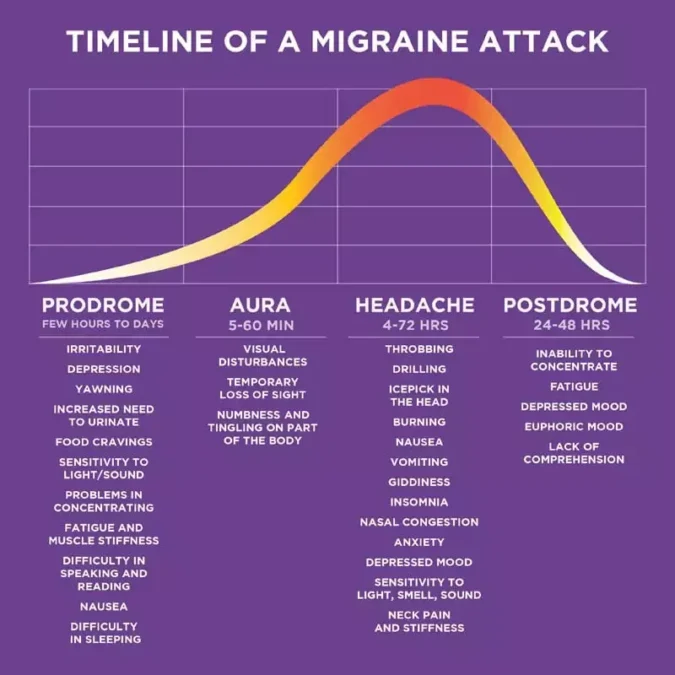
Not all of these headaches have to be true migraines, but at least 8 must have migraine features, like throbbing on one side of the head, nausea, or sensitivity to light and sound.
Today, however, the new guidelines argue that more patients could benefit from preventative treatment, even if they don’t experience that many migraines a month.
According to the guidelines, clinicians in the US should now offer preventive treatments to patients with migraine who experience four or more moderate-to-severe headaches or migraine attacks a month, or who otherwise experience substantial migraine-related disability, according to the update.
The new clinical recommendations are not legally binding, but AAN president Natalia Rost, a neurologist at Massachusetts General Hospital, says they are “an important resource for neurologists and other clinicians working to provide the best possible care.”
The rationale for these changes is based on the fact that many clinical trials for migraine prevention only require four or more migraines a month for participants to be eligible, and the effects are impressive.
Studies have also shown that the frequency of episodic headaches per month is a key predictor of whether someone’s condition becomes chronic.
“Preventative treatments may prevent the transition from episodic to chronic migraine,” the guideline authors explain.
So, under the new guidelines, people who suffer from migraine attacks or severe headaches should have expanded access to newer treatments, too.
 frameborder=”0″ allow=”accelerometer; autoplay; clipboard-write; encrypted-media; gyroscope; picture-in-picture; web-share” referrerpolicy=”strict-origin-when-cross-origin” allowfullscreen>
CGRP-targeting drugs are the first medications developed specifically for migraine prevention.
Atogepant, erenumab, fremanezumab, galcanezumab, and eptinezumab are now recommended as first-line pharmaceutical options for those experiencing migraines.
One is a daily tablet, another is an infusion, and the rest are injections. In clinical trials, they have produced some of the strongest evidence of efficacy for preventing migraine attacks yet.
For those with chronic migraines, botox is also a treatment that clinicians should now offer to patients. It was not included in the 2012 guidelines, but it was recommended by the AAN for headaches in 2016.
Unfortunately, because migraine patients respond so differently to preventative treatments, finding the right pharmaceutical can take a bit of trial and error.
They don’t always work the same for every individual, and some come with unwanted side effects.
The more options, the better.
“The research shows many different types of medications may be effective for preventing migraine attacks and reducing symptoms,” says guideline author and headache medicine specialist Rebecca Burch of the University of Vermont.
“The guideline includes recommendations for both previously established and newer medications. If one type of medication is not working well, a different type may still be effective. It is important for clinicians and patients to know that there are many options.”
The 2026 guidelines broke down the most effective treatments for episodic or chronic cases.
For episodic migraines, the drugs with the best evidence of high efficacy were atogepant, eptinezumab, erenumab, fremanezumab, galcanezumab, propranolol, topiramate, and valproate.
For chronic migraines, the same drugs (except propranolol) are suggested, plus botox is another option.
The authors then further explain which of these pharmaceuticals has the most side effects, or possible long-term or unknown harms.
For patients who experience fibromyalgia and migraine, the new guidelines recommend amitriptyline.

“The use of medications to treat acute migraine attacks too frequently is termed “medication overuse”,” argue the 2026 recommendations.
“The frequent use of medications to treat acute migraine attacks is one indication that preventive treatment should be offered or optimized.”
Migraine is a lifelong disorder that fluctuates in frequency, severity, and duration, the 2026 guidelines further explain.
After six months of preventive treatment, clinicians should discuss the possible benefits and risks of tapering, including the possibility that migraine attacks may become more frequent after stopping medication (although there is limited evidence of this).
Related: This Drug Reduces Symptoms Before a Migraine Strikes, Study Shows
“There are a variety of effective preventive medications that work in different ways, including newer classes of medications that have been released in the past several years,” says guideline author and neurologist Tamara Pringsheim from the University of Calgary in Canada.
“For people experiencing frequent migraine attacks or attacks that affect the ability to function normally, this guideline can help clinicians determine which preventive medications may be able to help.”
The guidelines are published in Headache.
This article was fact-checked by Clare Watson and edited by Clare Watson. While we pride ourselves on our process, we are only human. If you spot a mistake, please let us know.