
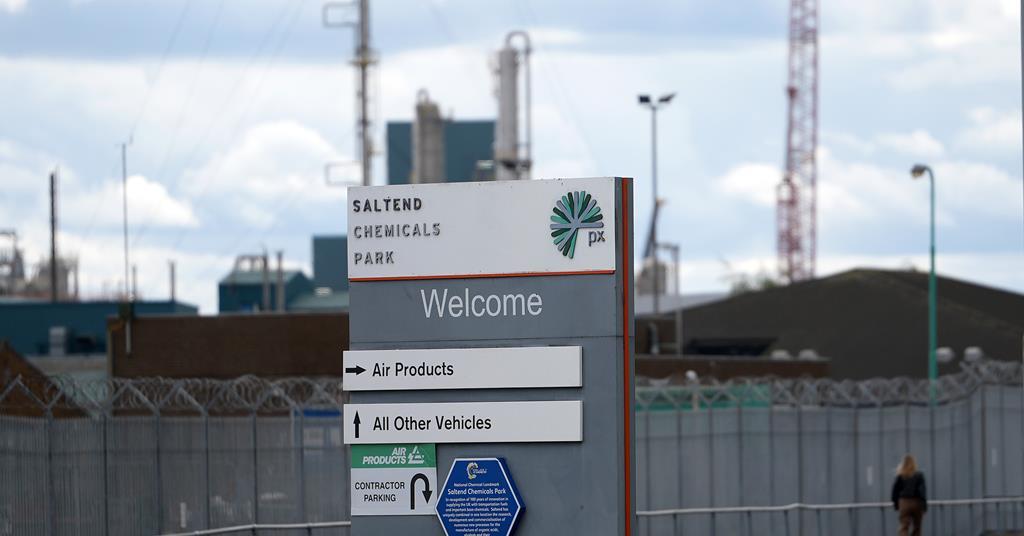
Petrochemical giant Ineos is halting production at its plants that produce acetic acid, acetic anhydride and ethyl acetate in Hull, UK. Ineos says these are the last world-scale acetyls plants in Europe, and produce crucial raw materials for a wide variety of industrial applications. The company has blamed the decision on high gas prices in the UK, which it says are 12 times higher than in the US and eight times more expensive than coal-based production in China.
The UK plants will not yet be permanently closed, and could re-open if gas prices fall sufficiently or Ineos can source its own fuel more cheaply than UK wholesale prices. The approximately 250 directly employed Ineos Acetyls staff at Hull will be retained for now. Ineos claims that its plants are among the most efficient in the world, with the lowest carbon emissions – the company says products from its Hull plants have half the carbon footprint of that produced in the US, and one eighth that of Chinese production (it’s not clear whether these figures relate to material from Ineos’s own plants in those regions, or competitors’ production).
The closure is another potentially serious blow for the UK and European chemicals industry, which has seen multiple plants producing the most basic of chemical building blocks close over the last decade. While for now, it may be possible to replace these supplies with imports, that introduces fragility to the supply chains of all the industries that those products support.
Ineos acquired the plants, which are part of the Saltend chemicals cluster on Humberside, from BP in 2021, alongside BP’s aromatics business. The deal included BP’s Cativa XL process for reacting methanol with carbon monoxide to produce acetic acid, which requires less heat and electricity than competing technologies. Ineos now licenses this process to other producers worldwide – including to the Eastman Chemical plant in Texas City, US, that Ineos acquired in 2023.
The company’s carbon footprint reduction claims stem from a £30 million investment in 2025, which switched the process to run on hydrogen rather than natural gas. Generally, hydrogen is better employed for chemistry than as a fuel. But Ineos has spare hydrogen available onsite, since it generates the carbon dioxide it needs for various processes by converting methane to syngas (a mix of carbon monoxide and hydrogen). However, since both its feedstock and fuel ultimately come from methane, its costs are strongly dependent on natural gas prices.
Ineos’s plants do not exist in isolation – they are part of a chemical cluster in Saltend, which was recognised by the Royal Society of Chemistry’s Chemical Landmarks scheme in 2014, for 100 years of innovation and supplying the UK with important base chemicals. As more of the plants within these clusters close down, companies lose efficient interconnections and the shared services they rely on become proportionally more expensive, putting further pressure on the sector and creating knock-on effects that could lead to further closures.