

In this interview, Dr. Daniel Some, Senior Principal Product Manager at Waters Corporation, speaks to NewsMedical about the importance of bringing real-time analytics to downstream bioprocess monitoring.
Could you introduce your role at Waters Corporation and explain how your work has contributed to developing and applying the ultraDAWN™ Detector platform?
My current role is product manager for the RT-MALS system – the ultraDAWN PAT Detector platform and real-time OBSERVER™ Software that drives it. I work with customers to identify their needs and work with our engineering and software teams to implement them. Then I introduce the technology to process development and PAT scientists and help them understand how they may benefit, whether by accelerating process development or improving product yield and quality.
What specific gaps in conventional offline analysis was the ultraDAWN Detector designed to address in downstream bioprocessing?
Offline analysis can be comprehensive and powerful for deep product characterization, but it can become a real bottleneck when process developers depend on it for timely feedback on what is happening – to the sample, in the process. This manifests in two ways: sampling frequency and analytical turnaround time.
In the conventional approach, fractions are collected for offline analytics and sent off to the analytical support lab after the run is complete. Fractions, by necessity, are limited in number, sometimes just a few and sometimes several dozen, but, in any case, the frequency of sampling is often slow compared to the time scale of process dynamics. RT-MALS, by contrast, measures as rapidly as five times per second throughout the process run. That translates to denser process data that more fully captures process dynamics.
The turnaround time on fraction analysis can be hours to weeks – well after the process is complete and sometimes lagging behind the next process development iterations, meaning that the next runs are not planned with knowledge of what exactly happened in the previous run. While a DoE approach to optimization pre-plans the test matrix, a more efficient Bayesian approach needs to know the outcome of the last run to design the next. RT-MALS provides real-time results that immediately inform the next process run and can be used for real-time process control.
The ultraDAWN Detector can measure product attributes such as molar mass and AAV payload characteristics in real time. How does access to these direct measurements change process development and decision-making?
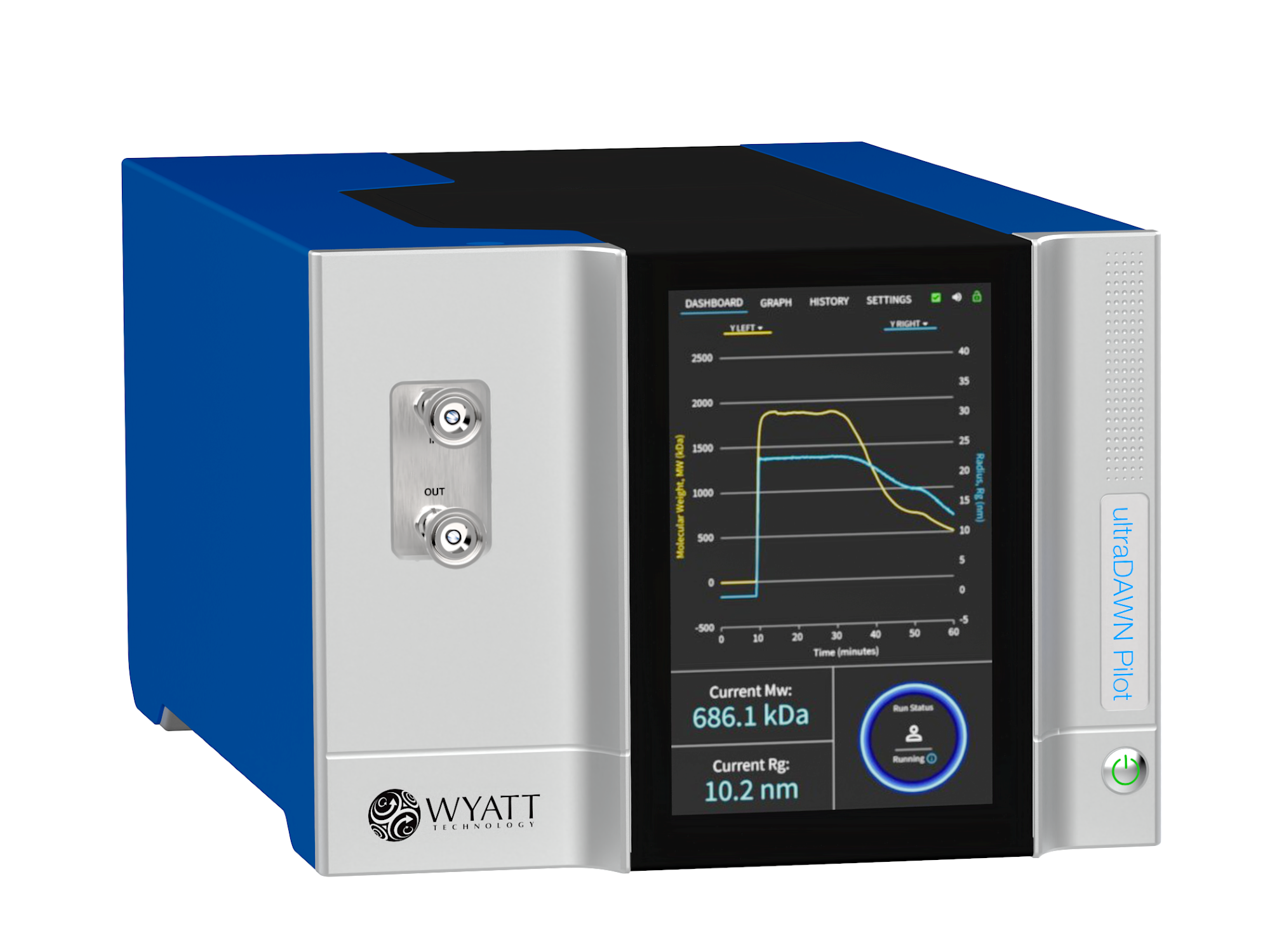
It’s a game-changer for accelerating process development because, before the advent of the ultraDAWN Detector, process developers didn’t have access to these biophysical attributes in real time. On the one hand, the inline/online biophysical analytics provided by an ultraDAWN Detector deliver high-resolution process characterization, but on the other, they add no wait-time cost. With smarter process development iterations, fewer optimization steps are needed; hence, both the cost and duration of process development are reduced significantly. The time to return on investment for an ultraDAWN Detector often clocks in at just a few months to a year.
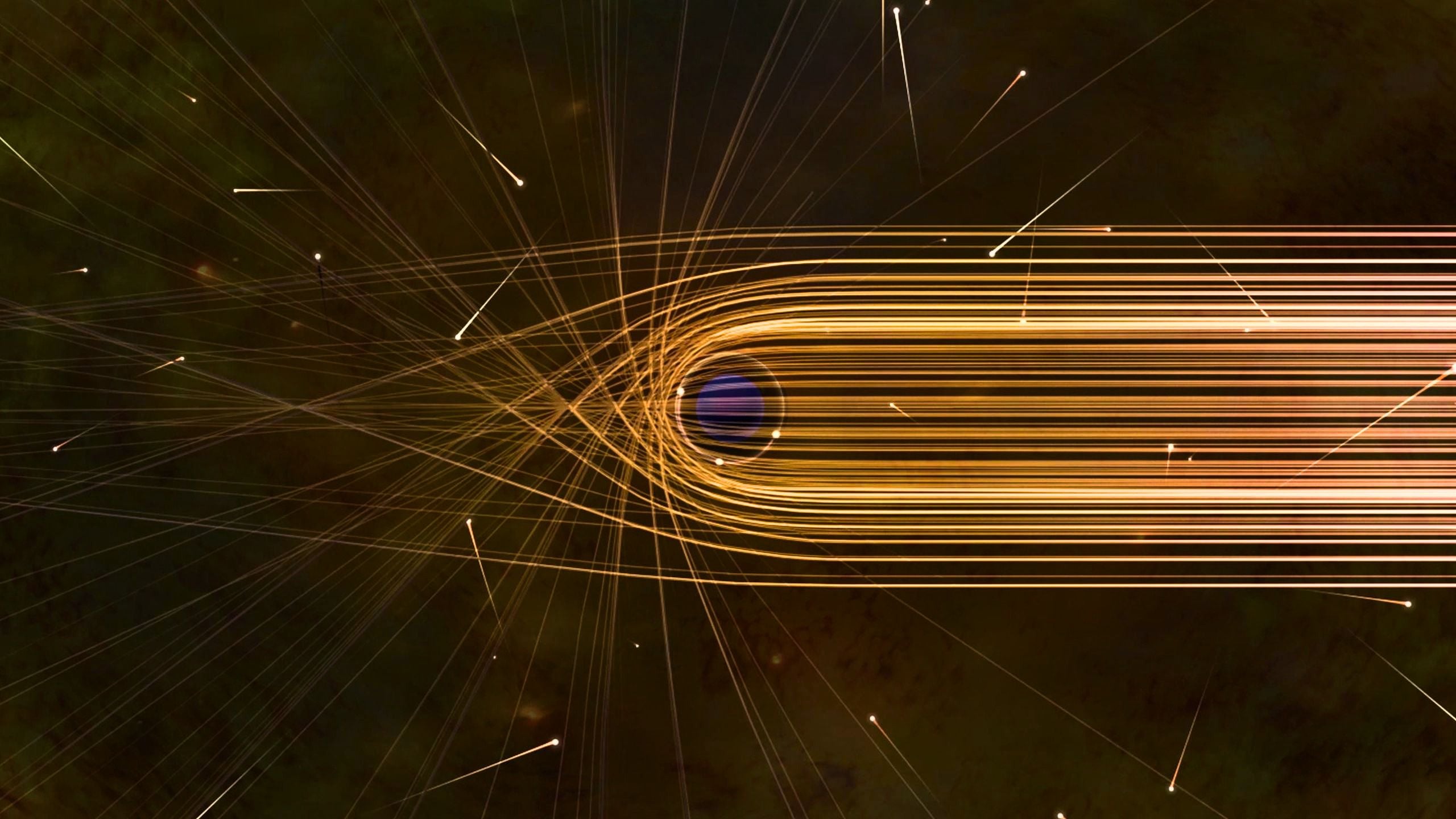
Image Credit: Waters | Wyatt Technology
How do the inline and online ultraDAWN Detector configurations differ, and what determines the best setup for operations such as chromatography, UF/DF, formulation, and fill-finish?
For downstream unit operations, “inline” generally means fully integrated into the process flow path, while “online” means a slipstream is actively diverted to the detector via an auxiliary pump. In some cases, the auxiliary pump may be controlled directly by the OBSERVER Software. In both configurations, measurements can be continuous at high sampling frequency, typically once per second but as fast as five times per second.
Typically, the inline configuration is used with process chromatography; the online configuration is used with UF/DF, final formulation, fill-finish, or reaction-based processes, such as conjugation, polymerization, or depolymerization steps, and for microfluidic or similar in-flow mRNA-LNP encapsulation – different users choose different configurations according to their specific needs. Circumstances may dictate a non-typical configuration for any given unit operation.
What are the main technical and operational challenges involved in extending the platform from the bench-scale ultraDAWN Detector to the higher-flow ultraDAWN Pilot Detector?
Conceptually, this is quite straightforward: the ultraDAWN Pilot Detector integrates inline with a scaled-up flowing process in quite the same way an ultraDAWN Detector does with a bench-scale process. The main thing to look out for is the different pressure limitations encountered when scaling up – due to different column, pump, and/or tubing types, system tolerance to backpressure generally decreases at higher flows. In some cases, we may incorporate a flow splitter to partially bypass the ultraDAWN Detector in order to accommodate high flows with low backpressure tolerance, wherein the ‘through’ and ‘bypass’ paths reconnect at the output of the instrument.
How does the addition of RT-DLS to ultraDAWN Detector complement RT-MALS, particularly for measuring hydrodynamic radius and polydispersity in LNPs, viral vectors, and other heterogeneous samples?
MALS determines molecular weight (MW) from 1 kDa to 1 GDa and particle or molecular radius from about 8 nm to 250 nm. For heterogeneous solutions, it determines an average MW or size that tends to be weighted toward the larger species, making it particularly useful for identifying viral vectors in an HCP background or protein aggregates co-located with monomers. Key benefits of MALS include its independence from flow and its wide dynamic range for concentration and turbidity. However, MALS does not measure polydispersity.
DLS provides a few additional biophysical characterization capabilities: it can measure radius over a wider size range, from 0.5 to 1000 nm; it provides a measure of polydispersity known as the polydispersity index (PDI), which is based on size; and it can even provide a rough size distribution. Furthermore, the hydrodynamic size and polydispersity measured by DLS may be critical quality attributes of certain nanoparticle modalities such as LNP, so adding DLS opens up the potential for real-time release of some products.
However, DLS is highly sensitive to flow and has a low dynamic range. While the maximum flow rate for accurate measurements varies somewhat with particle size, in general the maximum flow is quite low relative to typical process flows, except in smaller-scale preparative chromatographic operations (0.5 to 1 or 2 mL/min). We offer two DLS measurement modes: continuous in-flow, limited to lower flow rates, and periodic stop-flow. The latter accesses the full DLS size range and decouples from process flow rate.
Because DLS is sensitive to flow, how do continuous low-flow and periodic stop-flow modes make RT-DLS practical within ultraDAWN Detector-based process monitoring?
In the online configuration, where an auxiliary pump delivers a slipstream to the detector, the slipstream can be set up for a low flow, which is convenient but limited. The response time increases and the maximum particle size decreases. However, the pump may be controlled to provide a fairly high flow, periodically stopping to permit DLS measurement; here MALS provides its attributes with a shorter response time while DLS can provide the full size range.
If the ultraDAWN Detector is inline with the process, and the process flow is correspondingly low (which may be true for certain R&D-scale chromatographic processes), continuous measurement may be feasible. If the process flow is too fast for continuous measurement, we incorporate a bypass valve that is controlled by the OBSERVER Software to periodically bypass the ultraDAWN Detector – when that happens, flow in the instrument pauses and DLS can be measured.
Beyond the instrument itself, where have you seen real-time light scattering make the greatest difference across applications such as AAV purification, UF/DF, LNP formulation, and polysaccharide processing?
The operative phrase is “process insights with no extra analytical effort”. That means faster process optimization and, in some cases, real-time, CQA-based, model-free process control. The benefits vary by application, so I’ll share a few examples.
- AAV purification: insights that start with empty and full titers during every second of chromatography from loading to elution, and extend to identification of aggregates and abnormal capsids
- Purification of lentivirus, adenovirus, and similar: identification of column loading breakthrough and dynamic binding capacity; discrimination between eluting product and impurities, especially aggregates; and identification of titer and aggregation during UF/DF and final formulation.
- LNP-mRNA encapsulation: continuous monitoring to ensure nanoparticle formation and identify deviations from target particle size for close process control.
- Purification of extracellular vesicles: discrimination between true EVs and non-EV particles
- Protein purification, especially polishing: rapid optimization of resins and buffers in process development and CQA-based, model-free pooling in running processes.
- Polysaccharide and polysaccharide-protein conjugates: real-time process endpoint determination for depolymerization and conjugation, eliminating cumbersome and costly offline analytics while greatly speeding up the process run.
All applications are plug-and-play – no need to calibrate models with extensive preliminary testing or invest in complex analyses. The results appear on screen and can be exported to the process controller in real time.
Looking ahead, how could real-time monitoring of critical quality attributes influence scale-up, automated control, continuous manufacturing, and real-time release strategies?
In my opinion, real-time monitoring of CQAs and other attributes will unlock significant gains in cost, speed, and reliability of biopharmaceutical scale-up and production. In fact it is essential for robust automated control and continuous manufacturing, where reliance on simply monitoring process parameters and plugging them into models can lead to deviations that are only detected in final QC, which can be very costly.
Where can readers find more information?
The Wyatt website offers good resources.
About Dr. Daniel Some
Dr. Daniel Some is Sr. Principal Product Manager at Waters Corporation, where he leads product and application development, as well as scientific and technical marketing, for light-scattering based, real-time process analytical technology. He also developed Wyatt’s instrumentation and software for characterizing biomolecular interactions and served as Wyatt’s first Director of Marketing. Dan studied undergraduate physics at the Technion – Israel Institute of Technology and obtained his Ph.D. in physics from Brown University, then carried out postdoctoral research at Los Alamos National Laboratory and the Weizmann Institute of Science. Prior to joining Wyatt he was involved in defense technology and the development of processed wafer inspection tools for the semiconductor industry.
About Waters | Wyatt Technology
Wyatt Technology Corporation develops instrumentation, software and techniques for the characterization of macromolecules and nanoparticles, in solution, based on light scattering and related technologies. The physical properties determined by Wyatt’s products include absolute molar mass of proteins, polymers and other macromolecules; size and charge (zeta potential); protein-protein and other biomolecular interactions; composition of conjugated proteins and co-polymers; and macromolecular conformation.
Products and services
Wyatt’s product line includes instruments and software for:
- on-line multi-angle light scattering (MALS), used in conjunction with analytical liquid chromatography to quantify absolute molar mass, size, conformation, conjugation and aggregation
- traditional (cuvette-based) and high-throughput (microwell plate-based) dynamic light scattering (DLS) to determine size (radius) and size distributions, protein melting temperature and stability-indicating parameters
- electrophoretic mobility (PALS) to determine molecular charge/zeta potential
- composition-gradient light scattering for label-free analysis of biomolecular interactions
- field-flow fractionation for separation of macromolecules and nanoparticles from 1-1000 nm, used in conjunction with on-line light scattering and other detection technologies to quantify molar mass and size
Wyatt also offers, on a limited basis, sample analysis services utilizing its unique technologies.